
The Great Pyramid required 2.3 million limestone blocks—but quarrying stone was just one industry in Egypt’s first industrial economy. Behind Khufu’s monument stood copper smelters, bakeries feeding 100,000 workers, and specialized rope factories that made the impossible engineering feat reality.
1. Limestone Quarrying Operations at Tura Employed Thousands

Workers extract limestone blocks at Tura quarry.
The Tura quarries, located 13 kilometers south of Cairo, produced the brilliant white casing stones that once covered the Great Pyramid’s exterior. Workers extracted limestone blocks using copper chisels and wooden wedges soaked in water, which expanded to crack the stone along natural fault lines. During the Fourth Dynasty reign of Khufu around 2580 BCE, quarry operations employed an estimated 4,000 workers who extracted blocks weighing up to 15 tons each. These quarries remained active for over 3,000 years, supplying stone for nearly every major monument in ancient Memphis.
Source: britannica.com
2. Copper Mining in Sinai Produced 500 Tools Per Month
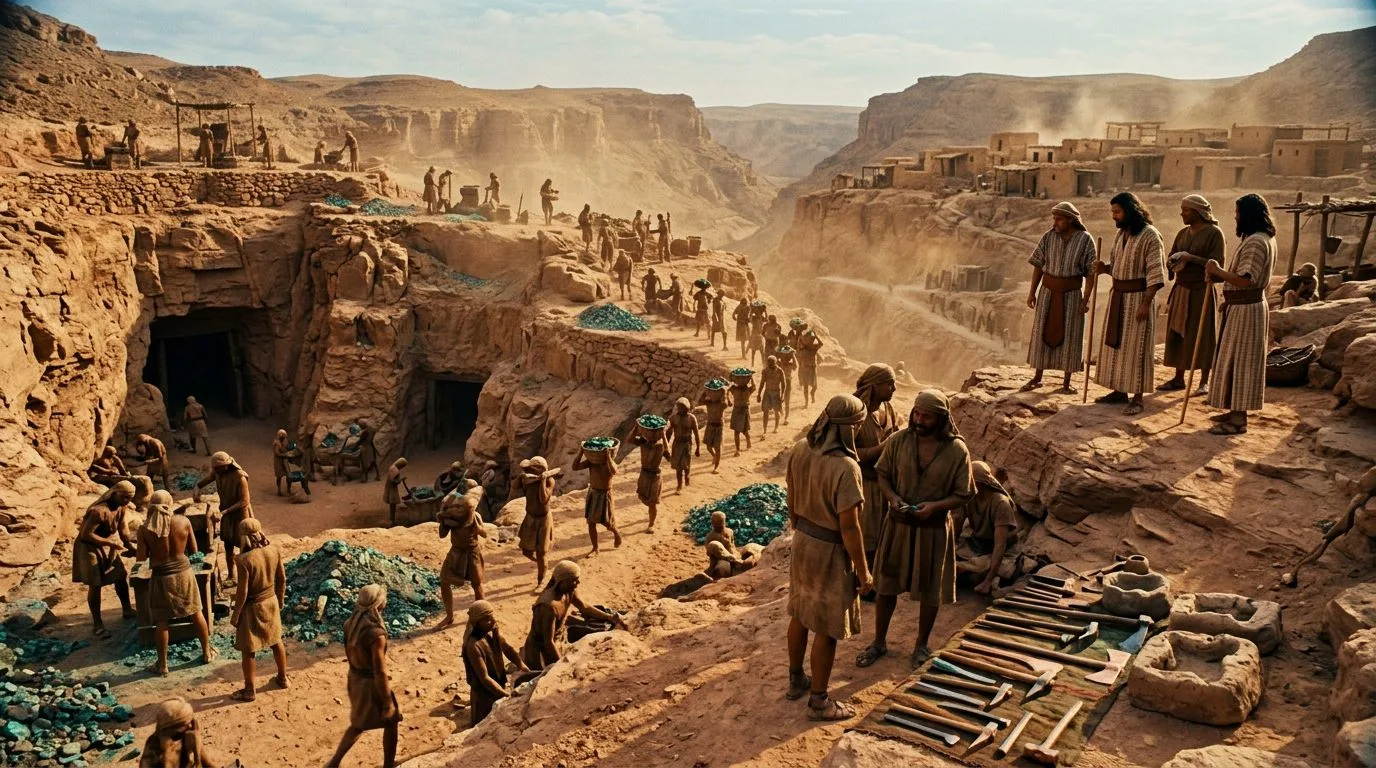
Ancient Sinai copper mines yielded tools at scale.
Egypt’s copper mines at Wadi Maghareh in the Sinai Peninsula supplied the metal essential for cutting limestone and granite. Miners extracted malachite ore from underground shafts reaching 30 meters deep, then smelted it in charcoal furnaces reaching temperatures of 1,200 degrees Celsius. Archaeological evidence from approximately 2600 BCE shows workshops near Giza produced copper chisels, saws, and drills at industrial scale—one analysis suggests a single workshop could forge 500 cutting tools monthly. Without this copper industry, workers would have been limited to stone hammers, making pyramid construction impossibly slow.
Source: smithsonianmag.com
3. Papyrus Rope Factories Wove 50-Meter Cables for Hauling
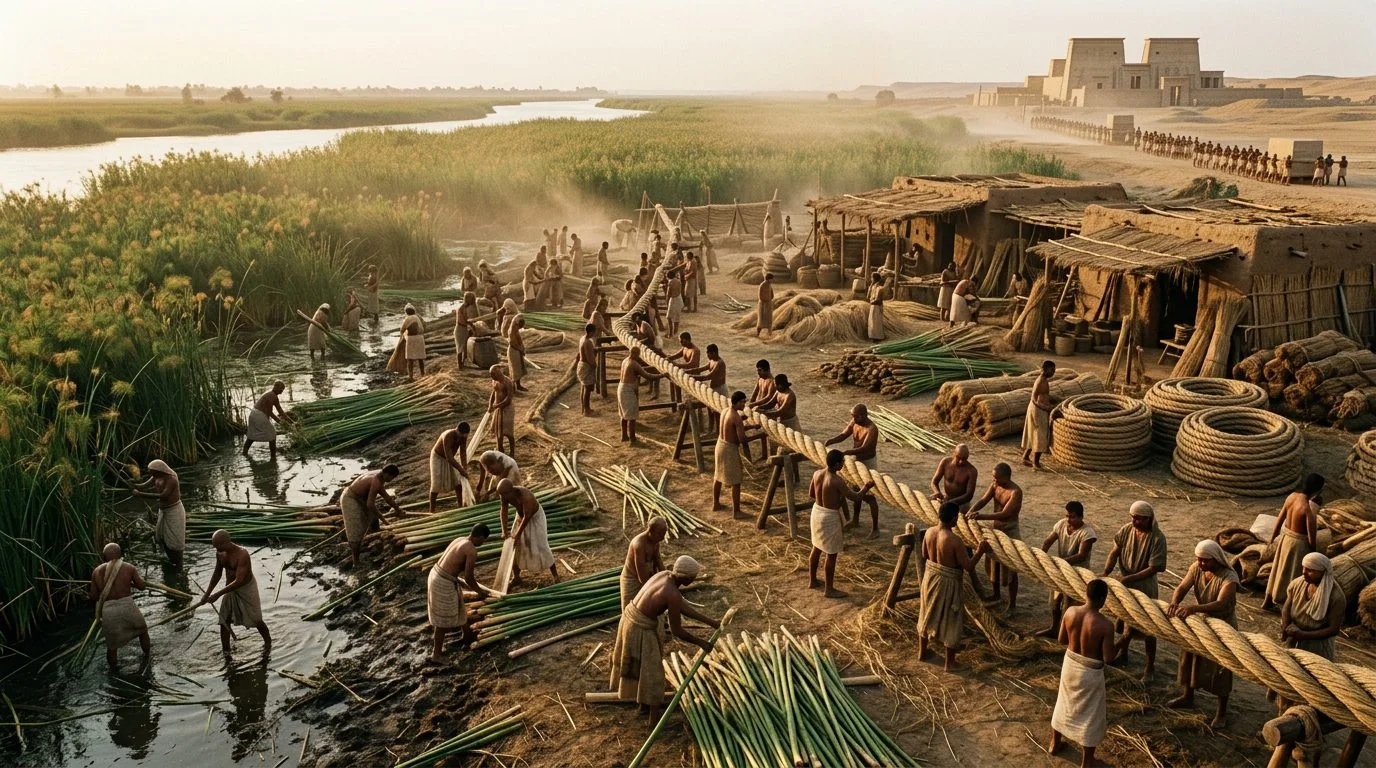
Ancient papyrus rope production facility.
The papyrus marshes of the Nile Delta became Egypt’s rope manufacturing hub, producing the thick cables needed to drag multi-ton blocks. Workers harvested papyrus stems up to 5 meters tall, split them into strips, and twisted them into ropes using a technique that created cables 50 meters long and 8 centimeters thick. Experimental archaeology in the late twentieth century demonstrated that papyrus ropes could support weights exceeding 3 tons without breaking. Production facilities near Memphis during the reign of Sneferu around 2613 BCE likely employed hundreds of specialists who braided rope continuously to meet pyramid construction demands.
Source: history.com
4. Industrial Bakeries Produced 21,000 Loaves Daily
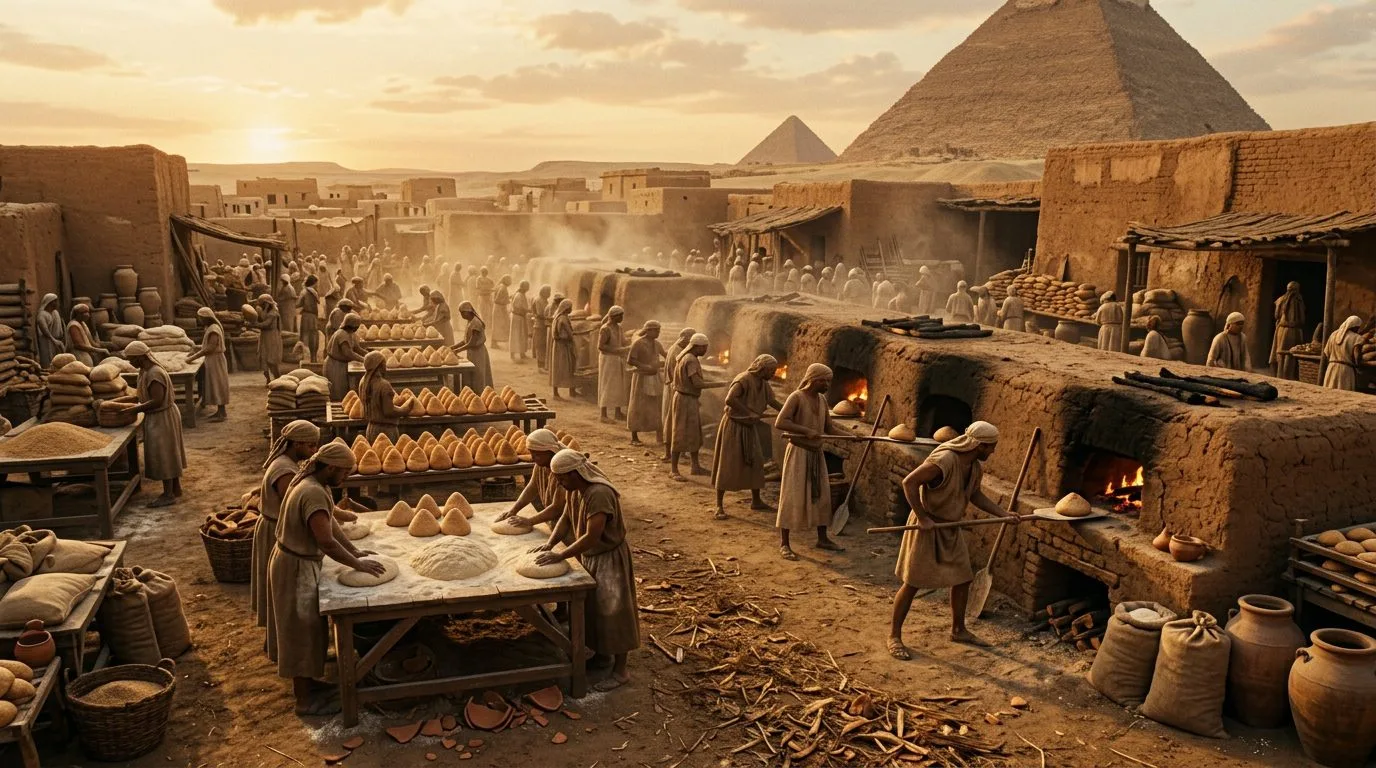
Industrial Bakeries Produced 21,000 Loaves Daily
Feeding pyramid workers required bakery operations on a scale never before seen in human history. Archaeological excavations at the Giza workers’ village uncovered bakery complexes with over 40 bread molds arranged in rows, designed for mass production. Workers ground emmer wheat using stone querns, mixed dough in large ceramic vessels, and baked conical loaves in clay ovens that could process 500 loaves simultaneously. Based on the estimated workforce of 100,000 during peak construction around 2560 BCE, these bakeries needed to produce approximately 21,000 loaves of bread every single day just to prevent starvation among the laborers.
Source: smithsonianmag.com
5. Beer Brewing Operations Served as Currency and Calories
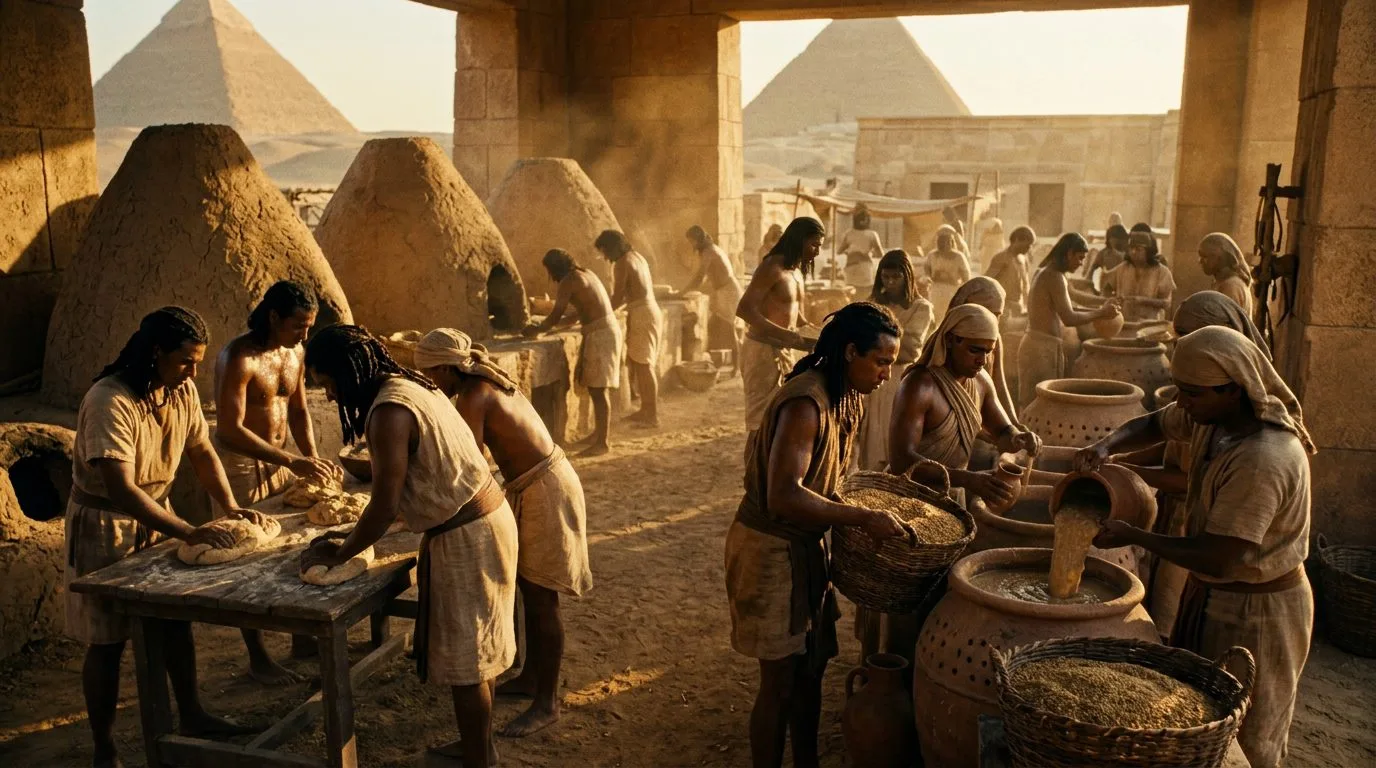
Ancient breweries sustained economies and diets.
Beer wasn’t just refreshment—it was payment, nutrition, and a safe alternative to contaminated water. Brewing installations at Giza produced a thick, porridge-like beer from barley bread that was partially baked, crumbled into water, and fermented in massive ceramic vats holding up to 50 liters. Workers received a daily ration of approximately 4 liters of beer, providing essential calories and nutrients. Records from the Old Kingdom around 2500 BCE show beer brewing employed specialized workers who managed fermentation temperatures and yeast cultures, creating what historians call Egypt’s first biotechnology industry.
Source: history.com
6. Wooden Sledge Manufacturing Required Lebanese Cedar Imports
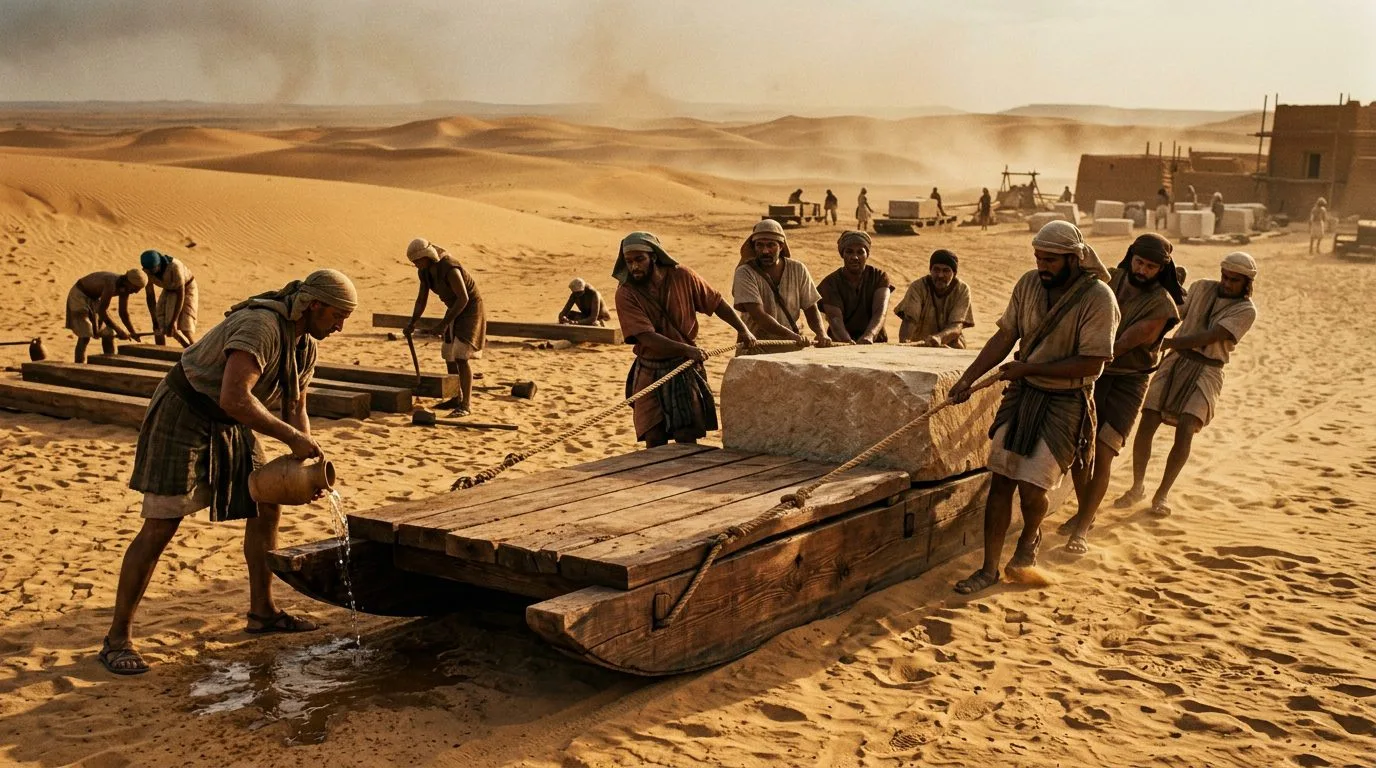
Lebanese cedar logs arrive for sledge production.
Moving 2.5-ton limestone blocks across desert sand required wooden sledges built from Lebanon’s cedar forests, since Egypt lacked suitable timber. Carpenters constructed sledges 3 meters long with curved front runners, reinforced with copper brackets at stress points. Trade records from the port of Byblos during the Fourth Dynasty show Egypt imported approximately 40 shiploads of cedar annually—each shipload containing enough timber for 200 sledges. Workers discovered that wetting sand in front of sledges reduced friction by 50 percent, a technique depicted in tomb paintings from around 1900 BCE showing water-pourers preceding sledge teams.
Source: britannica.com
7. Gypsum Mortar Production Created the Pyramid’s Bonding Agent
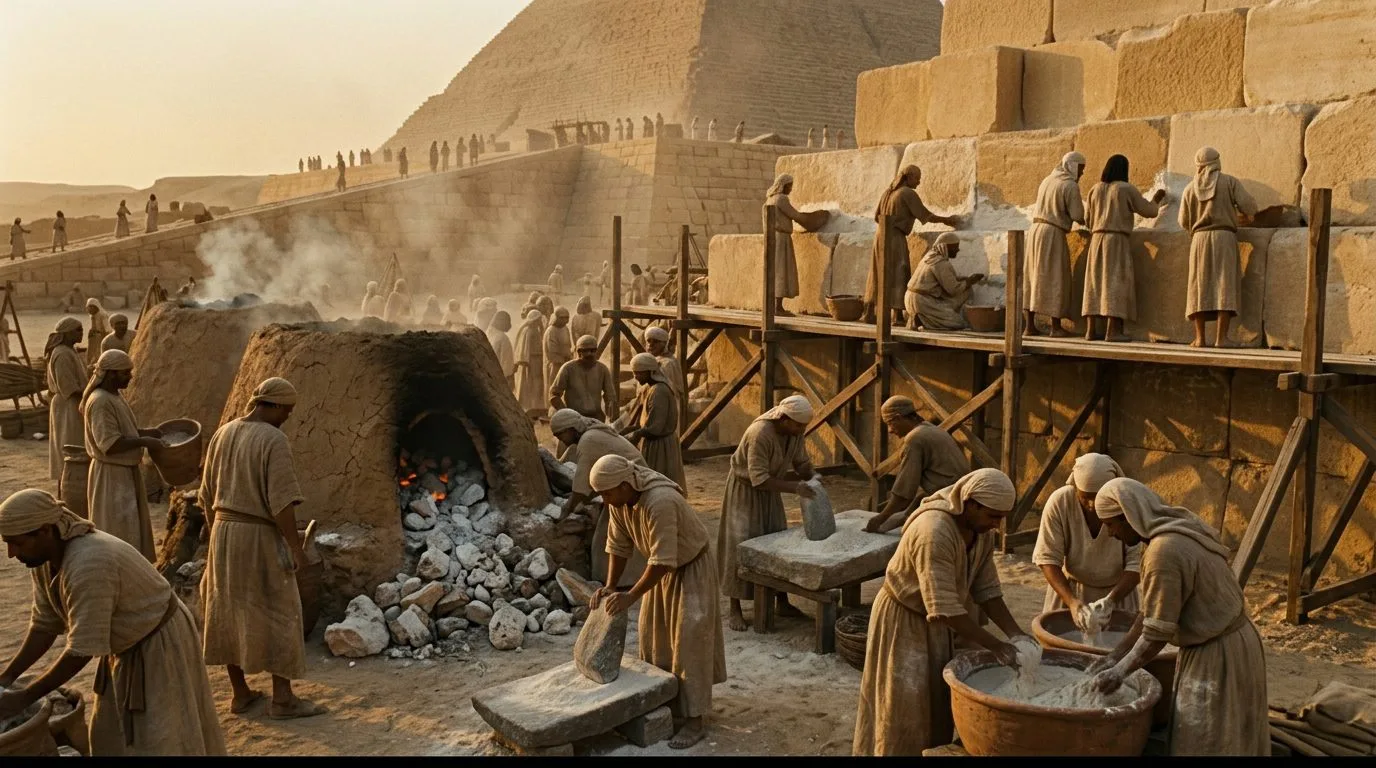
Ancient workers mixed gypsum to bond stone blocks.
The Great Pyramid’s 2.3 million blocks weren’t simply stacked—they were bonded with gypsum mortar so precise that a knife blade cannot fit between stones. Workers mined gypsum from deposits near the Faiyum oasis, then heated it to 150 degrees Celsius in kilns to drive off water molecules, creating plaster of Paris. Estimates suggest the Great Pyramid required 500,000 tons of mortar, meaning production facilities around 2560 BCE processed approximately 55 tons of gypsum daily for two decades. This mortar industry employed specialists who understood the critical timing—mixed gypsum had just 10 minutes of workability before hardening permanently.
Source: smithsonianmag.com
8. Nile Boat Builders Launched 1,000 Cargo Vessels
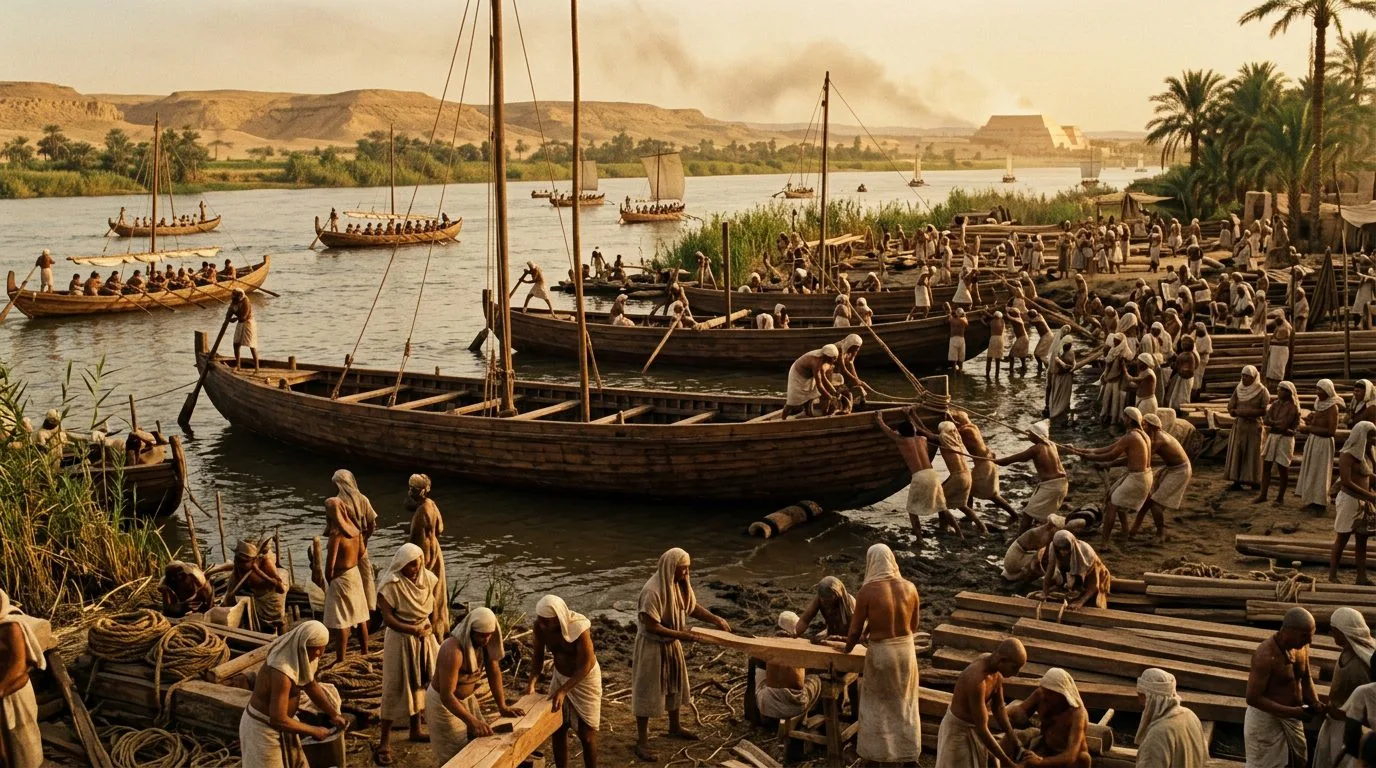
Nile Boat Builders Launched 1,000 Cargo Vessels
Transporting millions of tons of limestone from Tura quarries to Giza required a massive fleet of wooden cargo boats navigating the Nile. Shipwrights constructed vessels 20 meters long using a mortise-and-tenon joinery technique, with hulls made from acacia wood and reinforced with papyrus caulking. The Khufu ship discovered in the mid-twentieth century near the Great Pyramid measured 43.6 meters and was assembled from 1,224 individual pieces—demonstrating the sophisticated carpentry skills of Fourth Dynasty boat builders around 2500 BCE. Archaeological surveys suggest the pyramid construction fleet exceeded 1,000 vessels, creating Egypt’s first shipping industry.
Source: history.com
9. Pottery Workshops Crafted 3 Million Water Jars Annually
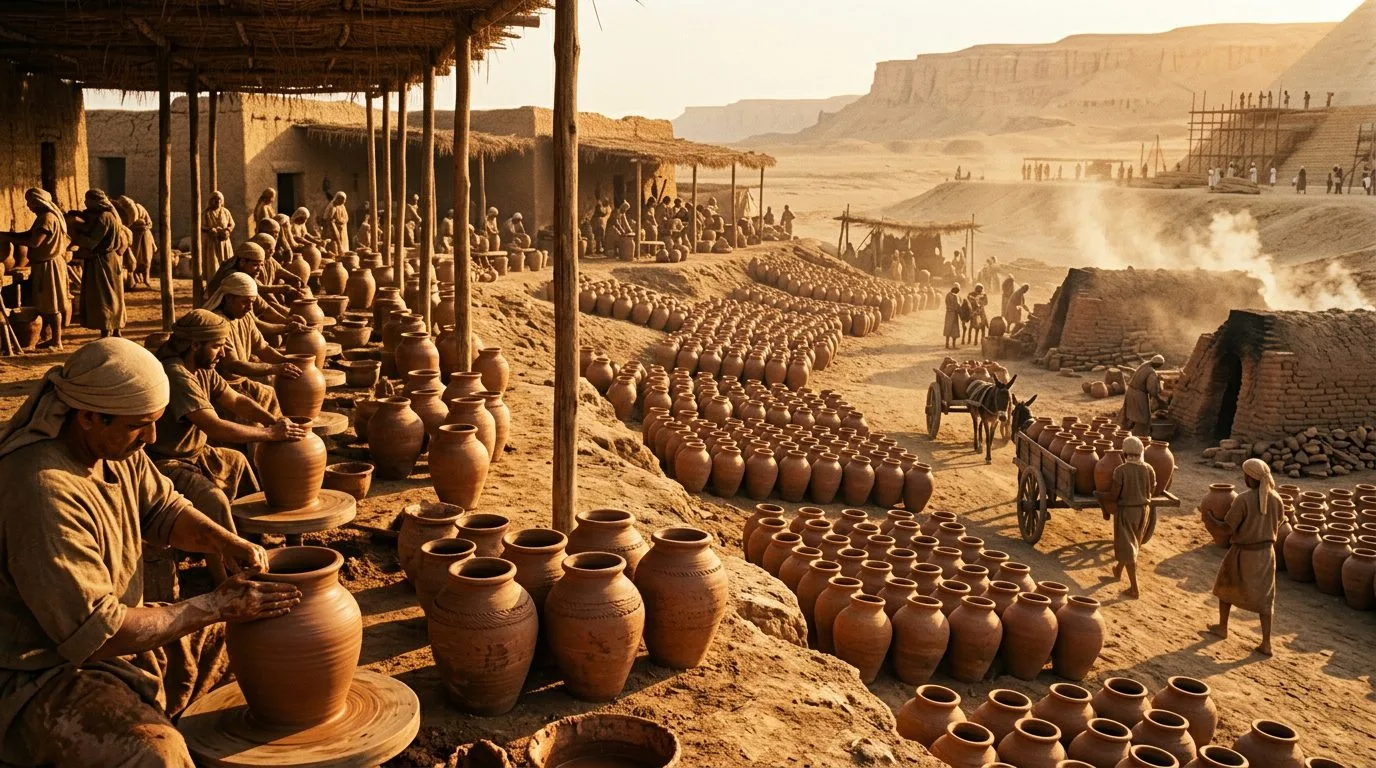
Ancient potters mass-produced water jars daily.
Desert construction sites required constant water delivery, creating enormous demand for ceramic storage vessels. **potter’s wheel**s at workshops near Memphis spun continuously, producing water jars with 10-liter capacity from Nile clay mixed with sand temper. Kilns fired at 900 degrees Celsius could process 200 vessels per firing, operating in 24-hour cycles. Based on calculations that 100,000 workers each needed 5 liters of water daily in desert heat, pottery workshops during the reign of Khufu around 2570 BCE produced approximately 3 million water jars annually—making ceramics one of ancient Egypt’s largest industries by output volume.
Source: britannica.com
10. Textile Weaving Produced 200,000 Linen Garments Per Year
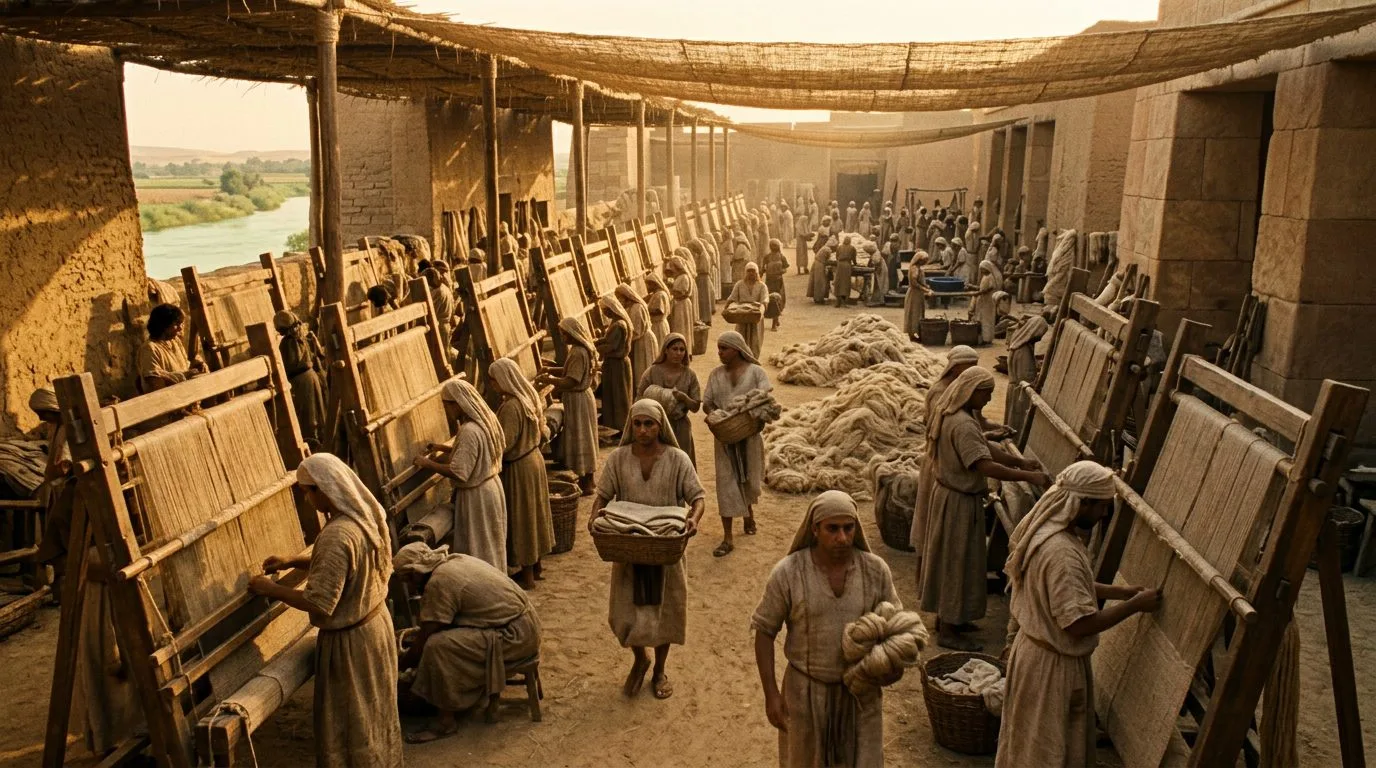
Textile Weaving Produced 200
Clothing a workforce of 100,000 laborers required textile production at industrial scale, with linen being the only fabric suitable for Egypt’s brutal heat. Weavers cultivated flax along the Nile, processed stems through retting pools for 2 weeks, then spun fibers on drop spindles into thread. Horizontal ground looms operated by two weavers could produce 3 meters of fabric daily. Archaeological evidence from worker cemeteries around 2550 BCE shows laborers wore simple linen kilts that required approximately 2 meters of fabric each—meaning textile workshops needed to produce 200,000 new garments annually just to replace worn-out clothing, making weaving one of pyramid construction’s most labor-intensive support industries.
Source: smithsonianmag.com
Did You Know?
Did you know that pyramid construction consumed more beer than stone? The 4 liters of daily beer ration for 100,000 workers meant breweries produced 400,000 liters daily—more liquid volume than the 330,000 liters of water displaced by each day’s stone placement. Even stranger: the gypsum mortar between pyramid blocks remains harder today than the limestone it bonds, meaning the ancient Egyptian chemical industry created a substance more durable than the monument itself.