
Ancient craftsmen possessed industrial knowledge that baffles modern engineers. From concrete that grows stronger in seawater to steel that could slice through European swords, these lost manufacturing secrets represent technological achievements that vanished with the empires that created them.
1. Roman Self-Healing Concrete That Grows Stronger in Seawater

Ancient Roman concrete structures submerged in
Roman maritime structures built in 25 BCE still stand today while modern concrete crumbles after 50 years in seawater. The Romans created opus caementicium using volcanic ash from Pozzuoli mixed with lime and seawater, triggering a chemical reaction that produces aluminum tobermorite crystals. These crystals grow over time, actually strengthening the concrete and filling microscopic cracks. The Pantheon‘s massive unreinforced dome, cast in 128 CE, remains the world’s largest at 142 feet in diameter. Modern scientists attempting to reverse-engineer this formula discovered that the Romans precisely calibrated the ratio of volcanic ash to lime at 2.5:1, but the exact sourcing and preparation methods remain disputed.
Source: smithsonianmag.com
2. Damascus Steel That Could Slice Through European Armor
Swords forged in Damascus between 900 CE and 1750 CE could bend 90 degrees without breaking and slice through lesser European blades like cloth. Blacksmiths used wootz steel ingots imported from India, containing precise carbon content between 1.5% and 2.0%, combined with trace elements of vanadium and tungsten carbide. The characteristic watery patterns resulted from carbon nanotubes and cementite nanowires, structures not deliberately created again until the modern era. Production ceased around 1750 CE when the Indian mines producing the specific ore composition were exhausted. Modern metallurgists can replicate the appearance but not the exact molecular structure that gave Damascus blades their legendary flexibility and cutting power.
Source: britannica.com
3. Greek Fire That Burned on Water and Couldn’t Be Extinguished

Greek Fire That Burned on Water and
Byzantine naval forces deployed an incendiary weapon in 672 CE that burned at temperatures exceeding 1000 degrees Celsius and continued burning on water, terrorizing Arab fleets for 400 years. The formula, created by Kallinikos of Heliopolis, was guarded as a state secret so effectively that it died with the Byzantine Empire in 1453 CE. Historical accounts describe it being projected through bronze tubes mounted on ships, igniting upon contact with air. Water intensified rather than extinguished the flames, suggesting a petroleum base combined with calcium oxide that reacts violently with water. Only three Byzantine emperors ever knew the complete formula, and revealing it carried the death penalty.
Source: britannica.com
4. Tyrian Purple Dye Worth More Than Gold Per Ounce

Tyrian Purple Dye Worth More Than Gold Per Ounce
Phoenician dye-makers in Tyre extracted a purple pigment from murex sea snails starting around 1570 BCE that became the most expensive substance in the ancient world, valued at 10 to 20 times its weight in gold. Producing one ounce of dye required crushing approximately 12,000 snails, which were harvested during a specific 10-day period each year when their glands contained peak concentrations of the precursor molecule. The shells were aged in lead vats for exactly three days at controlled temperatures between 40 and 50 degrees Celsius. The exact fermentation process involving urine, salt, and timing sequences was lost when the Islamic conquest of 638 CE destroyed Tyre’s dye workshops.
Source: smithsonianmag.com
5. Chinese Earthquake Detector That Worked 1,700 Years Before Modern Seismographs
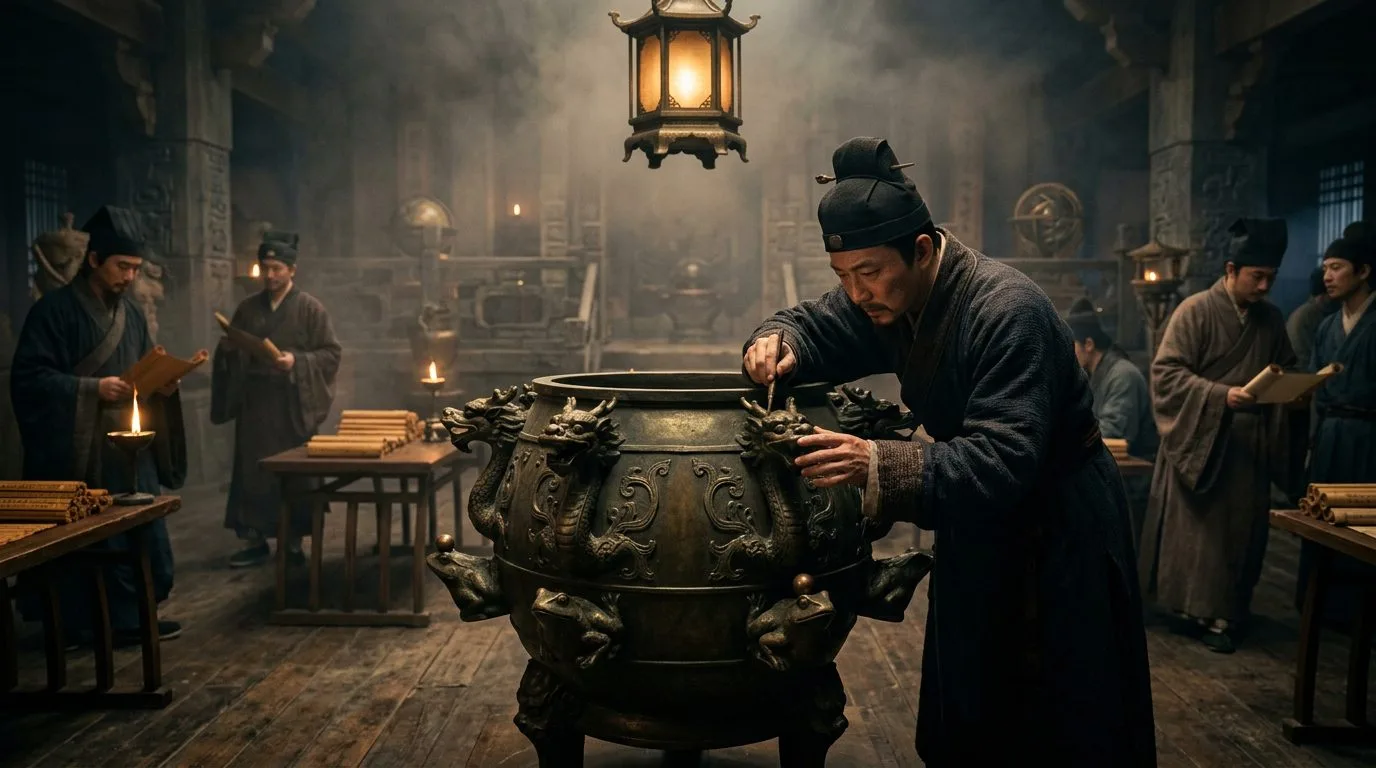
Chinese Earthquake Detector That Worked 1
Zhang Heng invented a bronze earthquake detector in 132 CE that could identify the direction of tremors from up to 400 miles away, predating modern seismographs by 17 centuries. The device stood 6 feet tall with eight dragon heads holding bronze balls positioned above eight bronze toads with open mouths. An internal pendulum mechanism, possibly involving a delicate inverted cone balanced on a pivot point, would release a ball from the dragon facing the earthquake’s direction. Historical records confirm it detected a quake 300 miles west of Luoyang days before messengers arrived with news. The exact internal mechanism was never recorded and disappeared during the Three Kingdoms period around 220 CE.
Source: britannica.com
6. Egyptian Faience Glazing That Created the First Synthetic Pigment
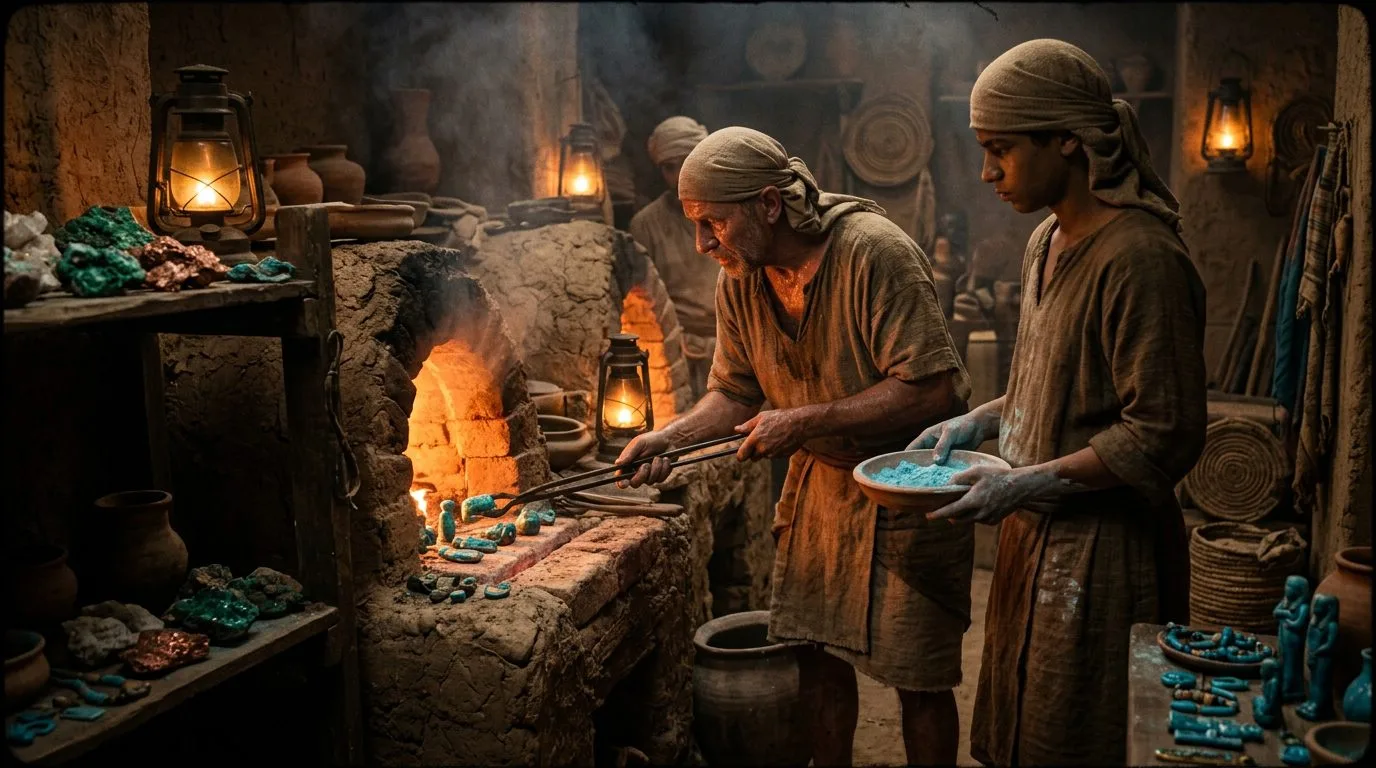
Ancient blue faience glaze revolutionized pigment
Egyptian craftsmen developed faience glazing techniques by 4000 BCE, creating brilliant blue-green surfaces through controlled alkali-silica reactions at temperatures between 800 and 1000 degrees Celsius. The process involved coating crushed quartz with copper compounds, natron salt, and lime, then firing in reducing atmospheres with precise oxygen control. Egyptian blue pigment, synthesized through this process, was the first artificial pigment in human history and remained the brightest blue available until Prussian blue in the early modern period. The exact fuel sources, kiln designs, and temperature regulation methods that produced consistent results across 3,000 years vanished after 30 BCE when Roman conquest disrupted traditional workshops.
Source: britannica.com
7. Mesoamerican Rubber Vulcanization 3,000 Years Before Modern Rediscovery

Mesoamerican Rubber Vulcanization 3
The Olmec civilization processed latex from Castilla elastica trees into durable rubber by 1600 BCE using a vulcanization technique not rediscovered in Europe until the modern era. They mixed raw latex with juice from morning glory vines containing sulfur compounds, creating a chemical cross-linking process that prevented the rubber from melting or becoming brittle. Rubber balls used in ceremonial games from 1000 BCE show elasticity comparable to modern vulcanized rubber. Different vine-to-latex ratios produced materials ranging from soft, elastic balls to hard, durable soles for sandals. The exact proportions, processing temperatures, and curing times were oral knowledge that disappeared with the Spanish conquest in 1521 CE.
Source: smithsonianmag.com
8. Antikythera Mechanism’s Gear-Cutting Precision Lost for 1,400 Years
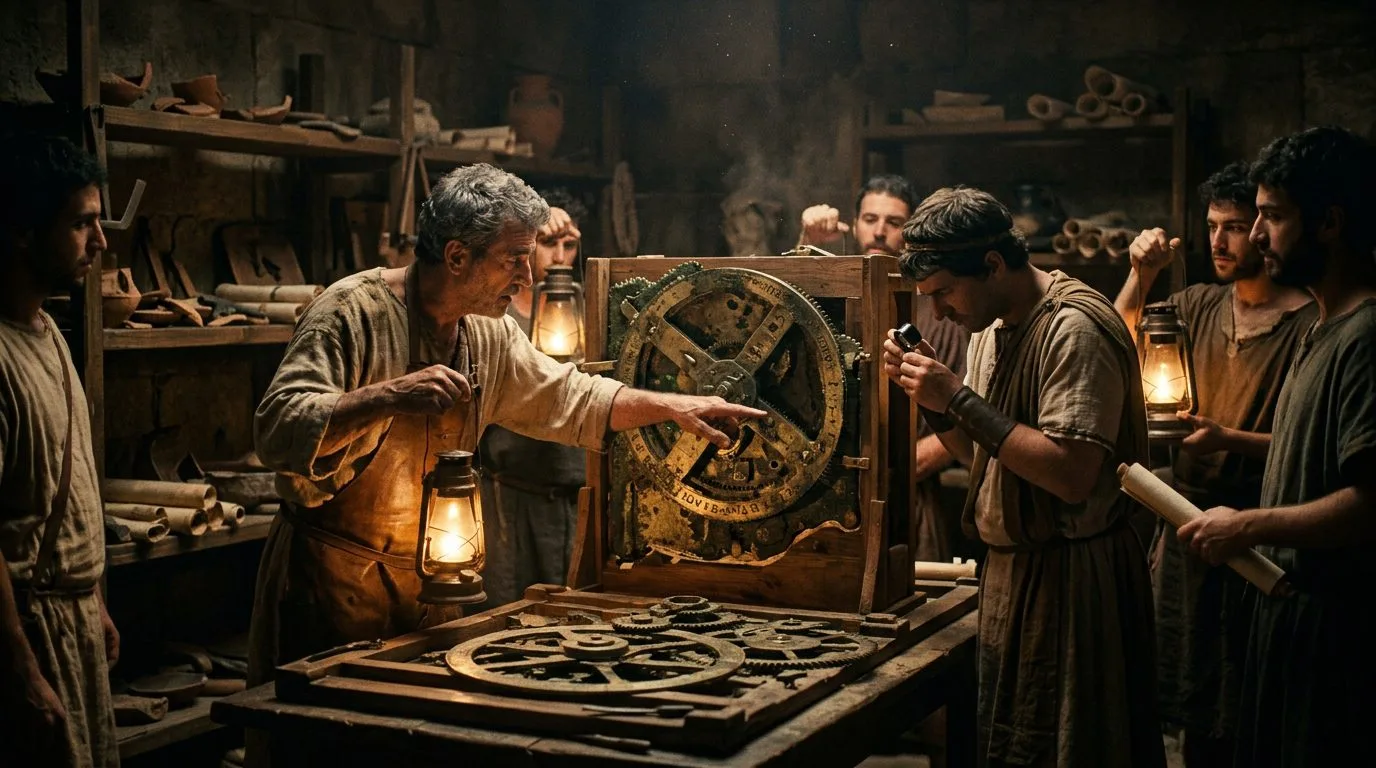
Ancient Greek gears showcase lost technology.
Greek engineers built an analog computer between 150 BCE and 100 BCE with 37 precision bronze gears that predicted astronomical positions decades in advance, representing mechanical complexity not matched until medieval cathedral clocks. The device calculated the positions of the Sun, Moon, and planets using a differential gear system with tooth counts precisely calibrated to astronomical ratios like 254:19 for the Metonic cycle. Gears measured 1 millimeter thick with teeth cut to tolerances of 0.1 millimeters using unknown fabrication methods. The mechanism tracked four separate astronomical cycles simultaneously through an epicyclic gearing arrangement that wasn’t reinvented until the Renaissance period. No comparable gear-cutting precision appears in archaeological records until medieval clockmaking.
Source: britannica.com
9. Stradivarius Varnish Formula That Modern Chemistry Cannot Replicate

Master craftsmen guarded the secret formula.
Antonio Stradivari created approximately 1,100 violins between 1666 CE and 1737 CE using a varnish formula that contributes to their unmatched acoustic properties, now valued at over 15 million dollars per instrument. Chemical analysis reveals the varnish contains fossilized volcanic ash, tree resins, insect secretions, and mineral particles applied in 6 to 12 microscopically thin layers. The wood was treated with borax and other mineral solutions before varnishing, creating a chemical bond that alters vibration transmission at frequencies between 2,000 and 4,000 Hertz. Stradivari left no written records of proportions, application methods, or drying times between layers. Over 150 modern formulas attempt to recreate the varnish, but spectroscopic analysis shows none match the original molecular structure.
Source: smithsonianmag.com
10. Maya Blue Pigment That Resists Acids, Solvents, and 1,500 Years of Weathering

Maya Blue Pigment That Resists Acids
Maya chemists synthesized an extraordinarily stable blue pigment by 800 CE through bonding indigo dye with palygorskite clay at temperatures around 190 degrees Celsius, creating molecular structures that modern paint manufacturers cannot reproduce. The pigment decorating temples at Chichen Itza remains brilliant after 1,200 years of tropical weathering while resisting concentrated nitric acid that destroys most organic dyes. The process required heating indigo and clay in precise 1:4 ratios within a narrow temperature window of 20 degrees for exactly 90 minutes. Spanish accounts from the early colonial period describe the production process as religiously significant, restricted to specialized priests who took their knowledge to their graves during the colonial persecution.
Source: britannica.com
Did You Know?
The aluminum tobermorite crystals in Roman concrete continue growing 2,000 years later, meaning ancient harbor structures are actually stronger today than when first built. Damascus steel contained carbon nanotubes that materials scientists only learned to manufacture deliberately in recent centuries, suggesting ancient blacksmiths accidentally created nanotechnology through empirical experimentation. These lost industrial secrets weren’t primitive versions of modern technology—in many cases, they represent manufacturing sophistication that our current methods still cannot match.