
Before Silicon Valley, before the Renaissance, before Rome—there was Mesopotamia. Between the Tigris and Euphrates rivers, ancient Sumerians, Babylonians, and Assyrians invented technologies so fundamental we’ve forgotten they had to be invented at all.
1. Cuneiform Writing: The First System to Record Human Thought
Cuneiform Writing
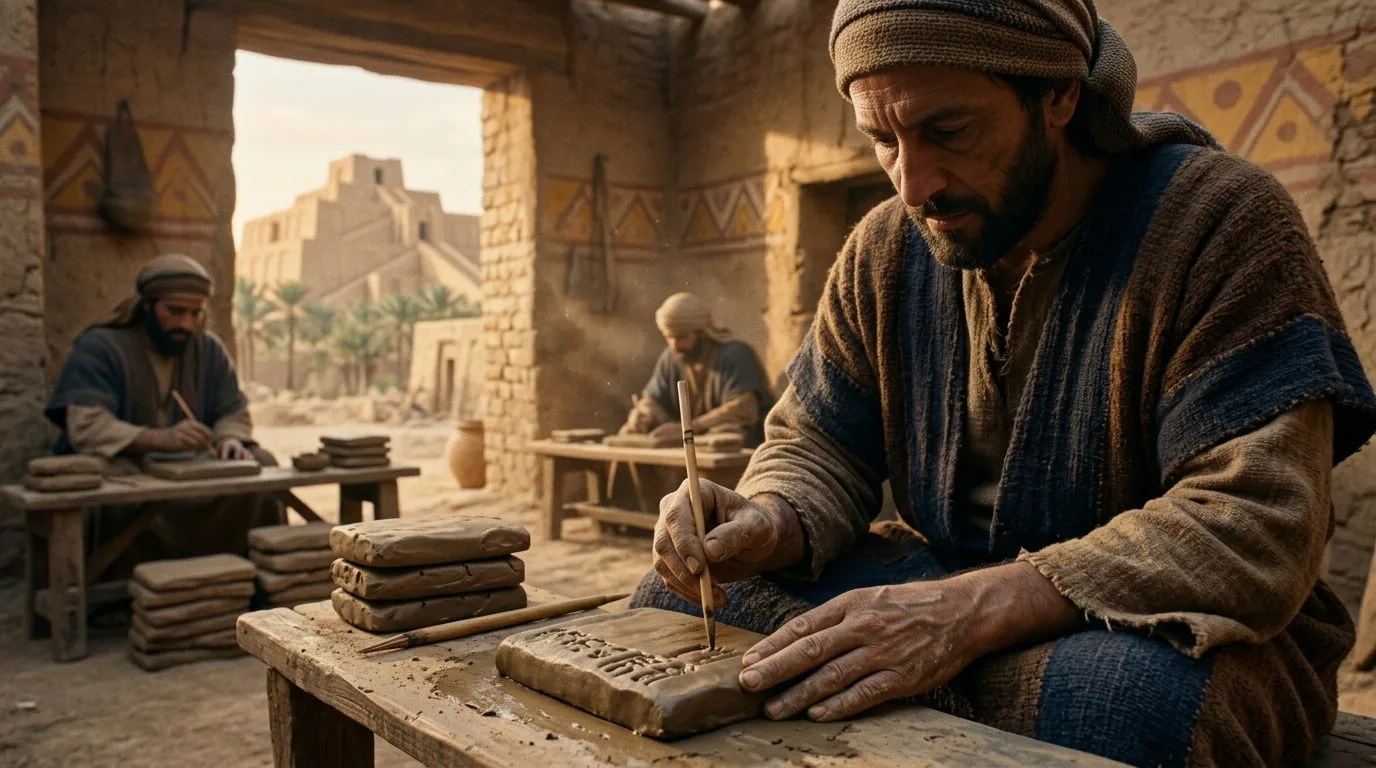
Around 3200 BCE, Sumerian scribes in the city of Uruk pressed wedge-shaped marks into wet clay tablets, creating the world’s first writing system. Cuneiform began as simple pictographs for counting grain and livestock but evolved into a sophisticated script capable of recording poetry, laws, and astronomical observations. The Epic of Gilgamesh, humanity’s oldest known work of literature, was written in cuneiform on 12 clay tablets. Over 3,000 years, this versatile script adapted to write at least 15 different languages across Mesopotamia, from Akkadian to Hittite. Without cuneiform, we would have no written record of civilization’s first 2,000 years—no contracts, no royal decrees, no love letters from ancient Babylon.
Source: britannica.com
2. The Wheel: Mesopotamia’s 3500 BCE Transportation Revolution
The Wheel
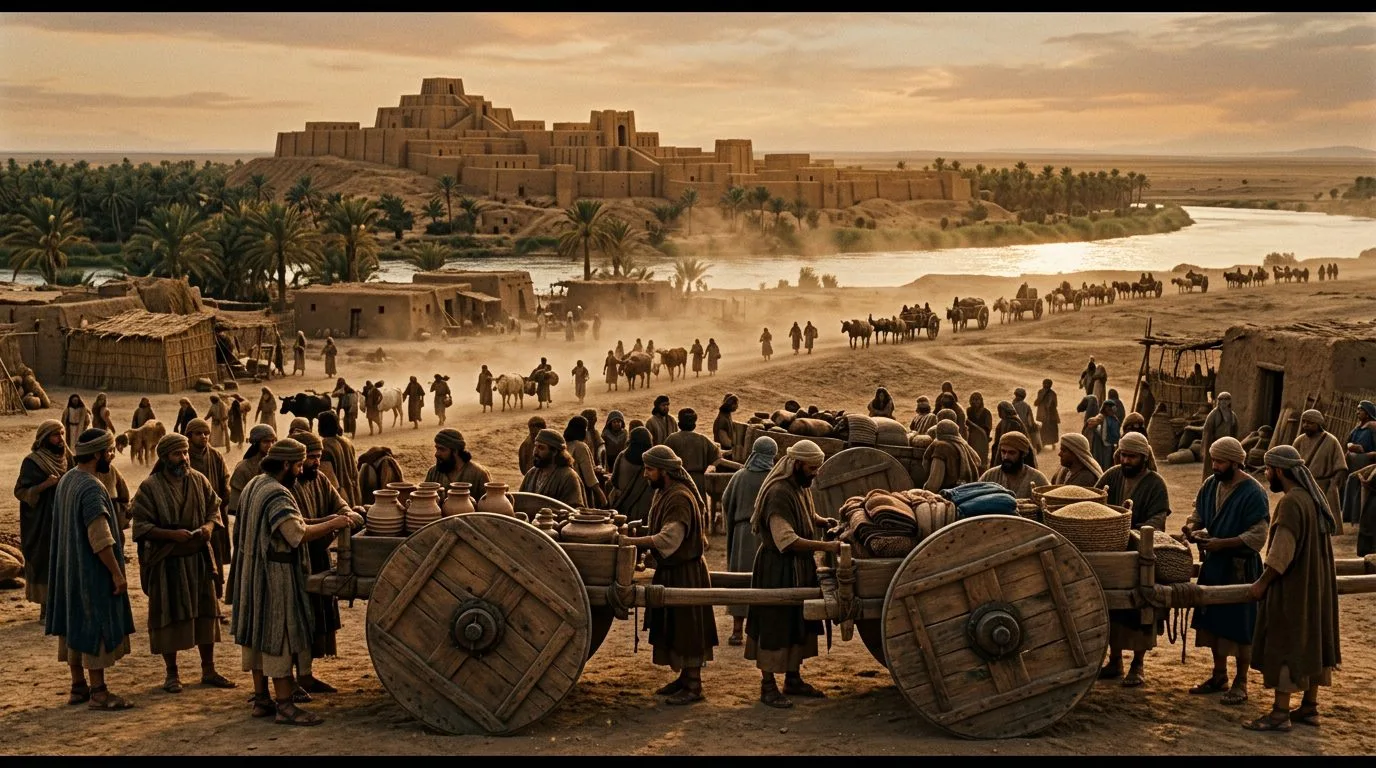
The potter’s wheel appeared first in Mesopotamia around 3500 BCE, but within centuries, Sumerian craftsmen mounted wheels horizontally on axles to create the world’s first vehicles. Archaeological evidence from the city of Ur shows sophisticated four-wheeled wagons by 3000 BCE, complete with wooden wheels made from three planks held together by copper brackets. The Sumerian language even had specific words for different wheel types: ‘gigir’ for a two-wheeled chariot and ‘ereqqu’ for a four-wheeled wagon. This innovation didn’t just move goods faster—it transformed warfare, enabled long-distance trade routes, and created the first roads. By 2000 BCE, spoked wheels had replaced solid wooden ones, reducing weight by 50 percent and revolutionizing chariot design across the ancient world.
Source: britannica.com
3. Bronze Metallurgy: The Alloy That Defined an Era
Bronze Metallurgy: The Alloy That Defined an Era
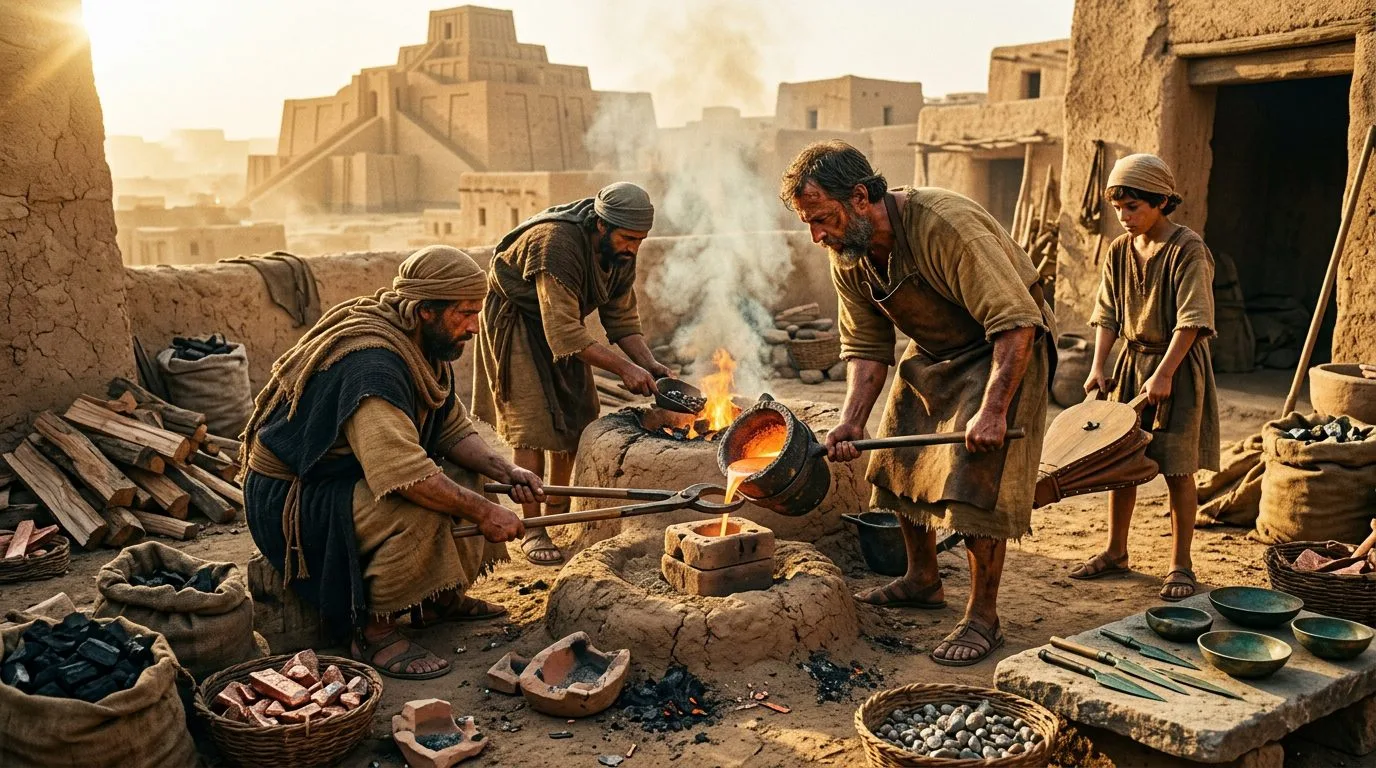
Around 3300 BCE, Mesopotamian metallurgists discovered that mixing copper with approximately 10 percent tin created bronze—a metal harder and more durable than either component alone. This wasn’t accidental chemistry; it required controlled furnace temperatures exceeding 1,000 degrees Celsius and sophisticated knowledge of ore properties. The city of Susa became a major bronze production center by 2800 BCE, exporting weapons, tools, and decorative objects throughout the ancient Near East. Bronze axes could fell trees three times faster than stone tools, bronze plows increased agricultural yields, and bronze swords gave armies decisive battlefield advantages. The demand for tin, which wasn’t locally available, created the first international trade networks stretching from Afghanistan to the Mediterranean, fundamentally connecting ancient civilizations.
Source: britannica.com
4. Sexagesimal Mathematics: Why Your Clock Has 60 Minutes
Sexagesimal Mathematics
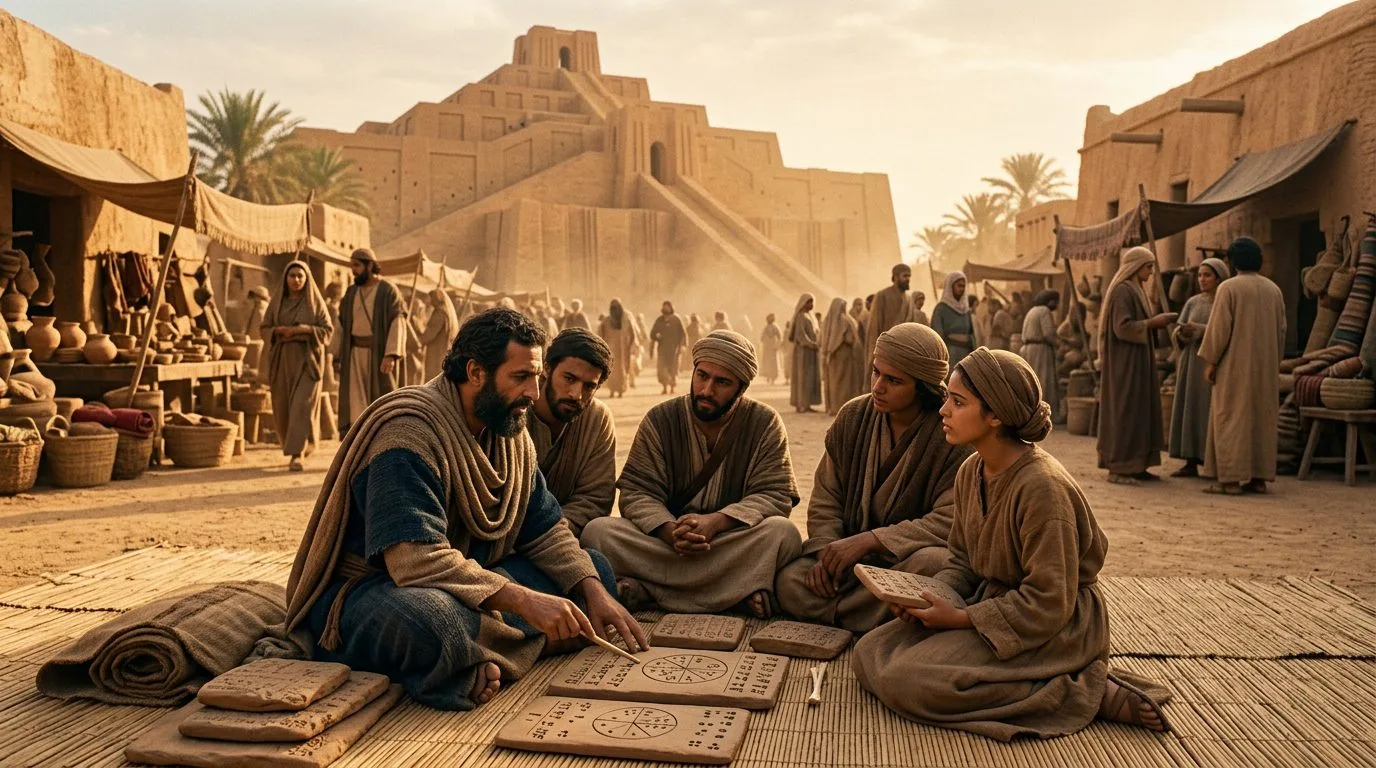
Every time you check the clock, you’re using Sumerian mathematics from 3000 BCE. The sexagesimal system—based on the number 60—originated in ancient Mesopotamia and persists today in our measurements of time and angles. Why 60? It’s divisible by 1, 2, 3, 4, 5, 6, 10, 12, 15, 20, and 30, making calculations extraordinarily practical for a civilization without calculators. Clay tablets from the Old Babylonian period around 1800 BCE reveal sophisticated mathematical tables, including reciprocals, multiplication charts, and even approximations of square roots accurate to six decimal places. Babylonian astronomers used base-60 to track celestial movements with remarkable precision, predictions that influenced Greek astronomy centuries later. Modern computers use base-2, but we still divide circles into 360 degrees and hours into 60 minutes—a 5,000-year-old system that refuses to die.
Source: britannica.com
5. Irrigation Canals: Engineering That Fed Empires
Irrigation Canals: Engineering That Fed Empires
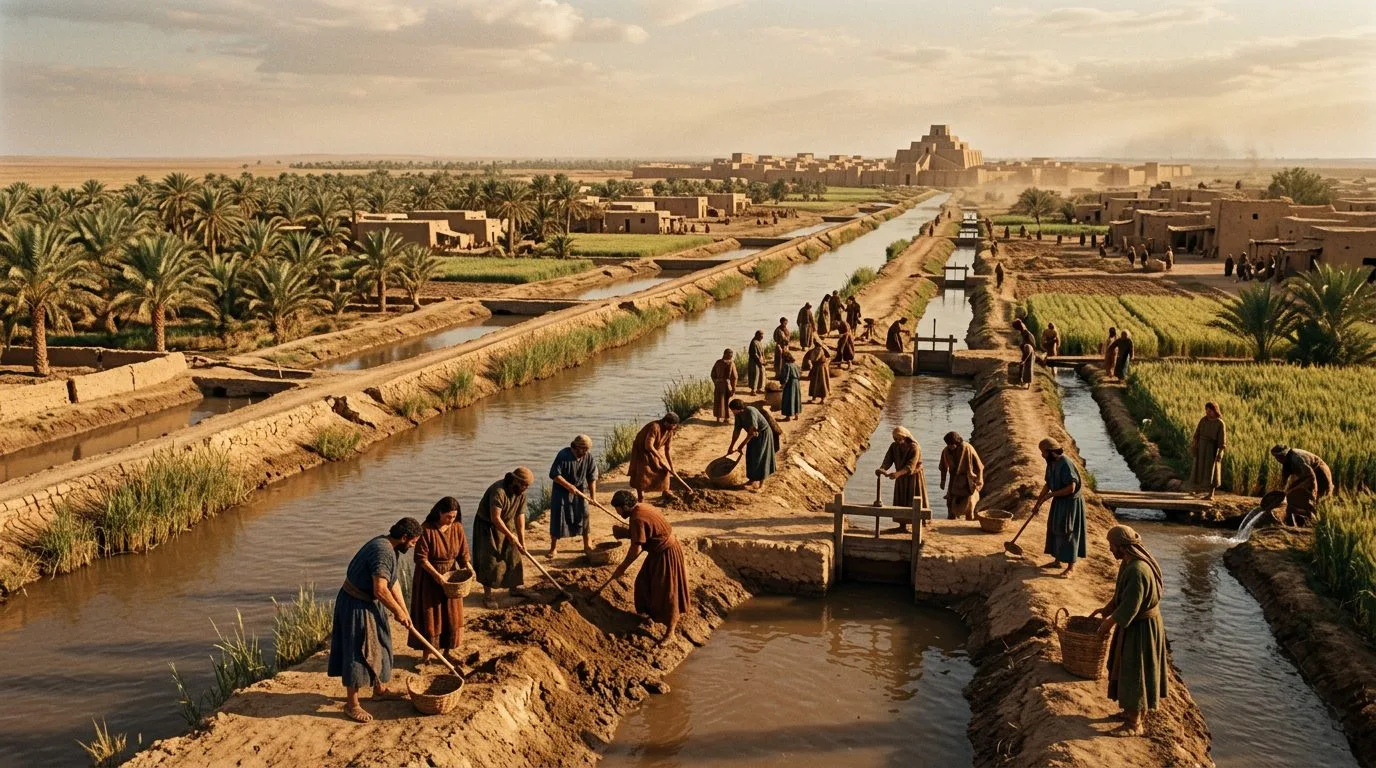
Southern Mesopotamia receives barely 6 inches of rainfall annually, yet it became civilization’s breadbasket through revolutionary irrigation engineering starting around 6000 BCE. The Sumerians constructed an elaborate network of canals, dikes, and reservoirs that channeled Tigris and Euphrates floodwaters to fields miles away from the riverbanks. By 2400 BCE, some canals stretched over 100 miles, requiring coordinated labor forces of thousands and sophisticated surveying techniques to maintain proper water flow gradients. King Hammurabi‘s law code from 1750 BCE included 15 specific regulations about canal maintenance, with severe penalties for negligence—one article prescribed death for a farmer whose breach flooded a neighbor’s field. This hydraulic engineering supported populations exceeding 50,000 in cities like Uruk and Lagash, creating the agricultural surplus that freed people to become scribes, priests, merchants, and artisans.
Source: smithsonianmag.com
6. The Code of Hammurabi: 282 Laws That Defined Justice
The Code of Hammurabi
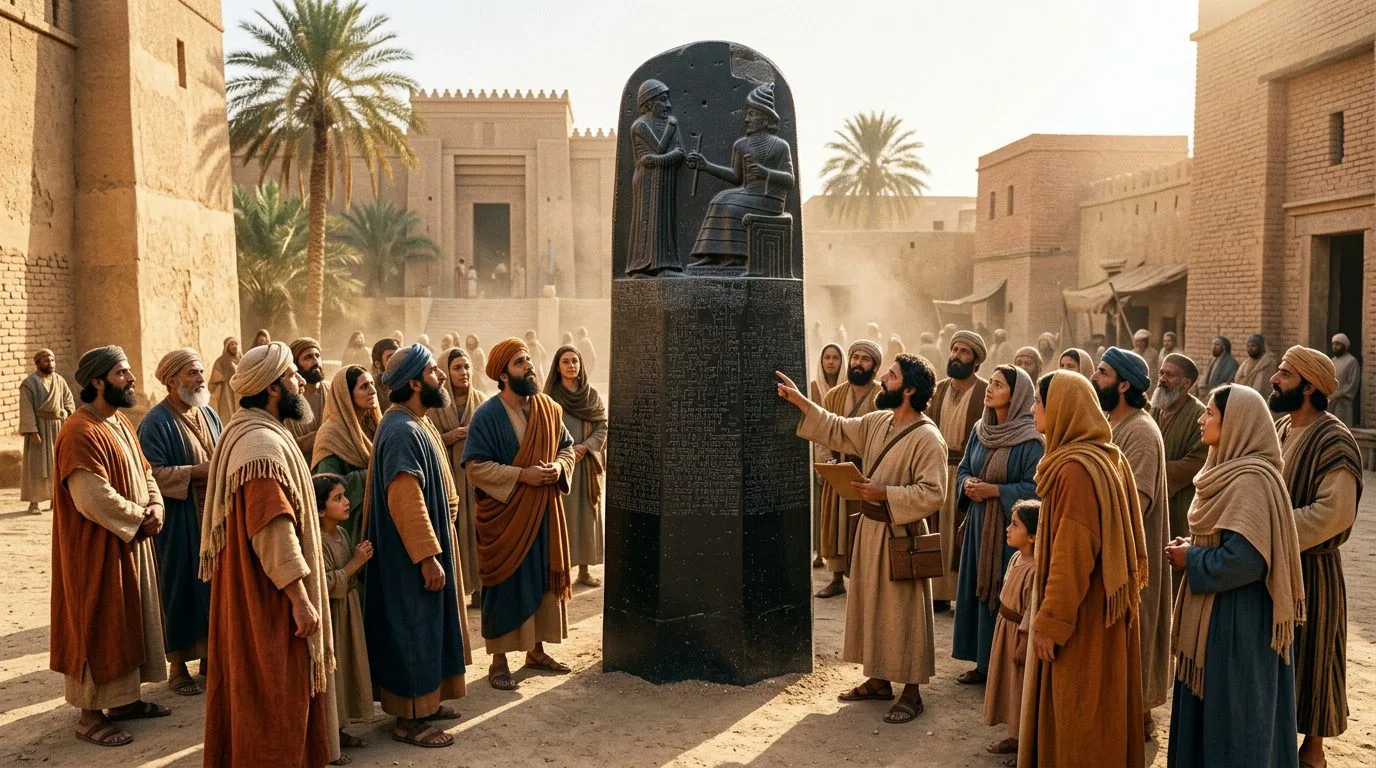
In 1750 BCE, Babylonian King Hammurabi commissioned a black basalt stele standing 7 feet tall, inscribed with 282 laws that would influence legal thinking for millennia. This wasn’t the first law code—that honor goes to the Code of Ur-Nammu from 2100 BCE—but Hammurabi’s was the most comprehensive and widely distributed. The famous ‘eye for an eye’ principle appears in Law 196, but the code covered everything from surgical malpractice fees (Law 215 set the price at 10 shekels of silver for saving a nobleman’s life) to building safety standards (Law 229 prescribed death for architects whose houses collapsed and killed occupants). The code recognized three social classes and applied different penalties based on status, revealing the complex stratification of Babylonian society. Copies were erected in temples throughout Mesopotamia, making law public and accessible—a revolutionary concept when most justice was arbitrary and oral.
Source: britannica.com
7. Cylinder Seals: Ancient Mesopotamia’s Tamper-Proof Signatures
Cylinder Seals
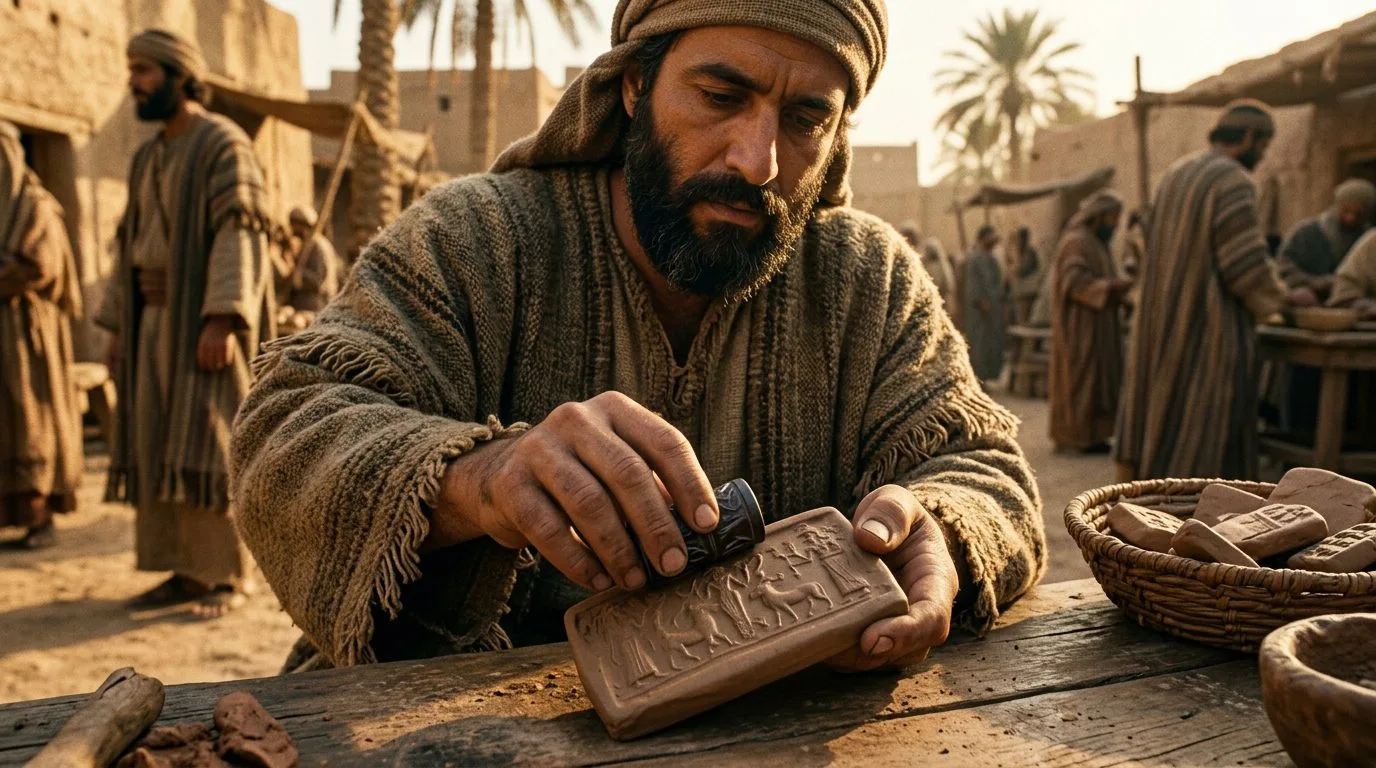
Around 3500 BCE, Mesopotamian administrators invented cylinder seals—small carved stone cylinders that, when rolled across wet clay, produced unique continuous images functioning as personal signatures. These weren’t simple stamps; master carvers created intricate scenes featuring gods, heroes fighting lions, and geometric patterns in stones barely 2 inches tall. Each seal was unique and nearly impossible to forge, making them ideal for authenticating contracts, sealing storage jars, and marking property. Archaeologists have recovered over 2,000 distinct cylinder seals from the city of Nippur alone, suggesting widespread literacy and bureaucratic complexity by 2500 BCE. Wealthy Mesopotamians wore their seals on cords around their necks or wrists—losing your seal was like losing your credit cards and driver’s license simultaneously. The technology spread throughout the ancient Near East and remained in use for over 3,000 years, finally displaced by signet rings in the Persian period.
Source: britannica.com
8. Beer Brewing: The Beverage That Built Civilization
Beer Brewing: The Beverage That Built Civilization
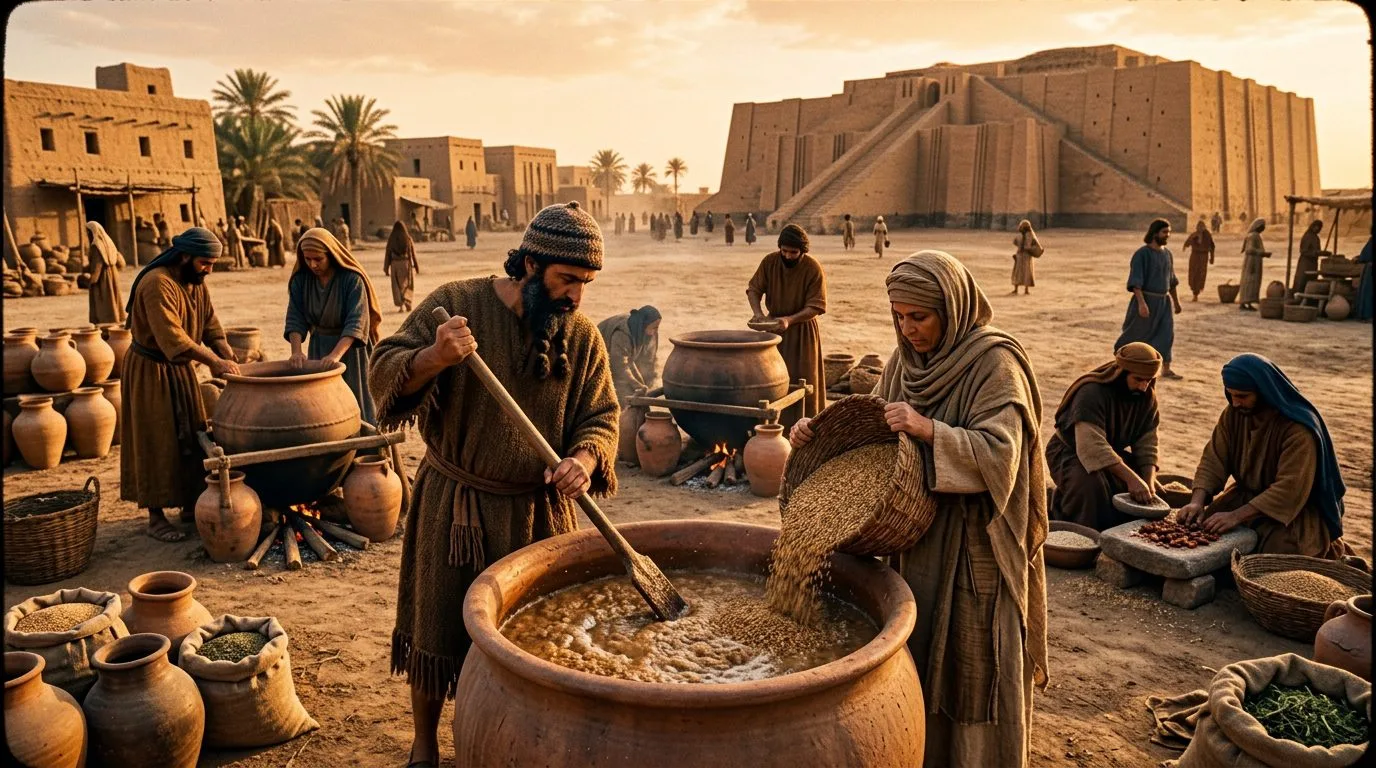
Mesopotamians didn’t just brew beer—they worshipped it. Around 4000 BCE, Sumerians discovered that fermented barley created a nutritious, mildly alcoholic beverage safer than water and packed with calories. The ‘Hymn to Ninkasi‘ from 1800 BCE is simultaneously a poem honoring the goddess of beer and a detailed brewing recipe, describing the process of baking barley bread (bappir), soaking it in date-sweetened water, and fermenting the mixture in large clay vessels. Chemical analysis of residues from a 3,500-year-old vessel from Godin Tepe revealed calcium oxalate—a telltale signature of barley beer. Workers building monumental structures received beer daily as payment, and Mesopotamian laborers expected similar rations. Beer wasn’t recreational—it was liquid bread, a dietary staple that provided up to 40 percent of daily caloric intake and made contaminated river water drinkable through fermentation.
Source: smithsonianmag.com
9. Astronomical Calendars: Mapping Time Through the Stars
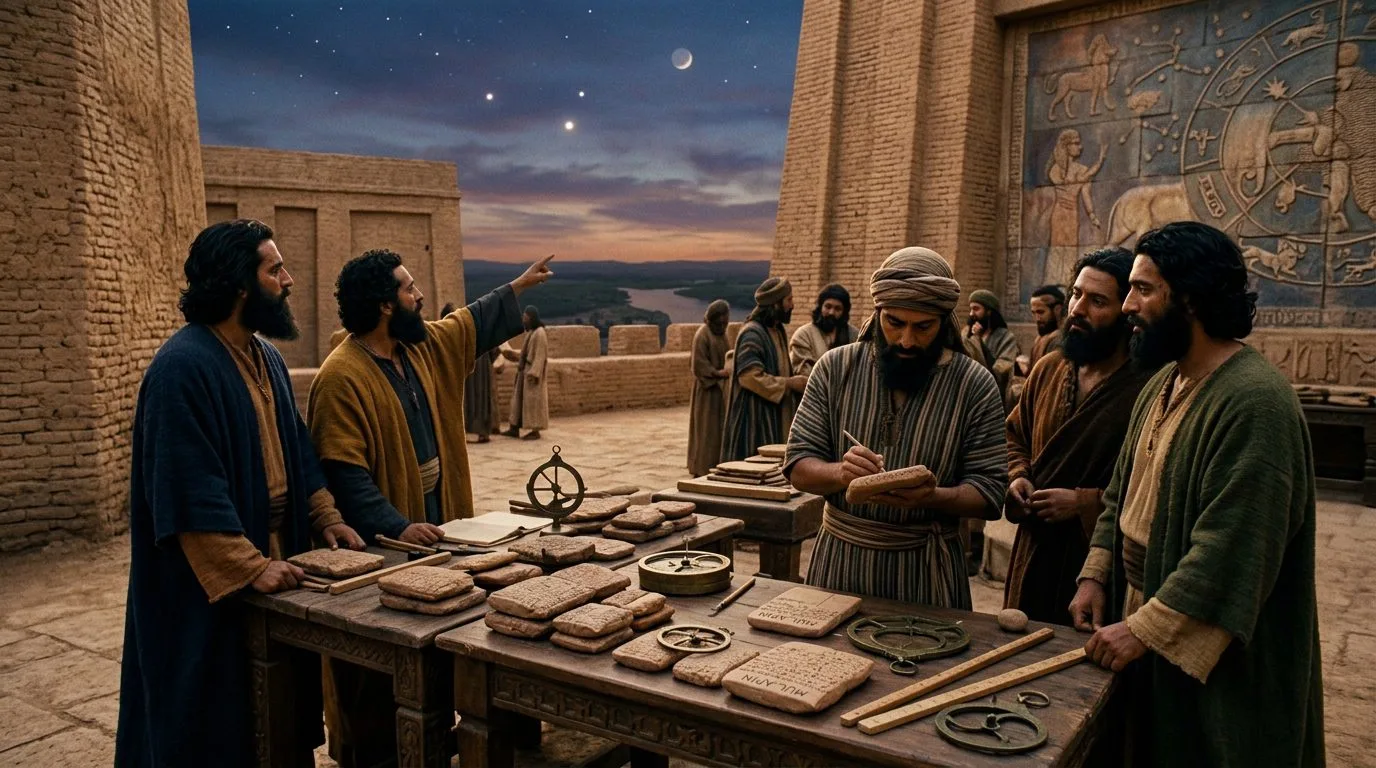
Astronomical Calendars
Babylonian astronomers around 1800 BCE created the most accurate calendar of the ancient world by meticulously tracking Venus, Jupiter, and lunar cycles on thousands of cuneiform tablets. The MUL.APIN tablets, compiled around 1000 BCE, catalog 66 stars and constellations, predict solstices and equinoxes, and describe planetary movements with mathematics. These observations led to the creation of the zodiac—12 constellations through which the sun passes annually—a system still used in astrology today. Babylonian astronomers could predict lunar eclipses years in advance and calculated the lunar month as 29.530594 days—off from our modern measurement by mere seconds. The seven-day week, named after the seven celestial bodies visible to the naked eye, originated in Mesopotamia around 600 BCE. Greek astronomers like Hipparchus relied heavily on Babylonian data, which ultimately influenced Islamic and European astronomy centuries later.
Source: britannica.com
10. Place-Value Notation: The Mathematical Innovation Behind Modern Numbers

Place-Value Notation
Around 2000 BCE, Babylonian mathematicians invented place-value notation—the revolutionary idea that a symbol’s position determines its value. In their sexagesimal system, the same cuneiform symbol could represent 1, 60, or 3600 depending on placement, similar to how ‘5’ can mean five, fifty, or five hundred in our decimal system. This innovation enabled calculations impossible with earlier counting methods and created the conceptual foundation for zero. While Babylonians initially left blank spaces where we’d write zero, they later developed a placeholder symbol around 300 BCE—two slanted wedges indicating ‘nothing.’ This mathematical breakthrough took another 500 years to reach India, where it evolved into the zero we use today. Without place-value notation, algebra, calculus, and computer programming would be impossible—every mathematical operation we perform relies on this Mesopotamian insight from millennia past.
Source: britannica.com
Did You Know?
Did You Know? The Mesopotamian invention that almost didn’t happen was the wheel—but not for transportation. Mesopotamians used wheels for pottery 300 years before anyone thought to turn them sideways and attach them to carts, proving that even obvious innovations require creative leaps. Ironically, the region that gave us writing, mathematics, and the calendar completely forgot its own history; by the early centuries CE, no one could read cuneiform, and ancient Babylon became a legend rather than a memory until archaeologists rediscovered it buried under Iraqi sand.