
Long before telescopes, ancient builders oriented temples, tombs, and stone circles to track celestial events with impossible precision. These astronomical alignments reveal knowledge that shouldn’t have existed—and purposes we’re still trying to decode.
1. Stonehenge’s Heel Stone Captures Midsummer Dawn
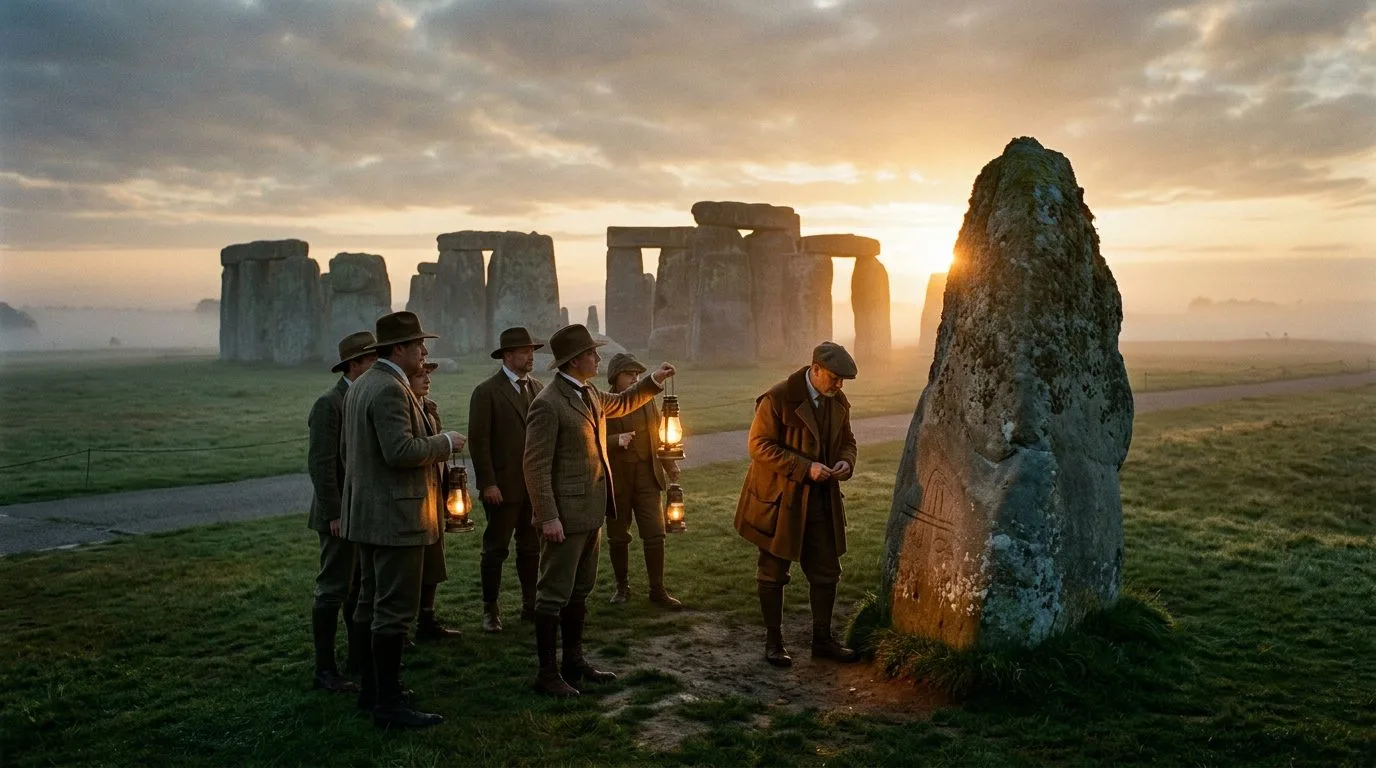
Stonehenge’s Heel Stone Captures Midsummer Dawn
Standing at the northeast entrance of Stonehenge, the Heel Stone marks the exact point where the sun rises on the summer solstice—a phenomenon witnessed for over 4,500 years. Built around 2500 BCE on Salisbury Plain, this massive sarsen stone weighs approximately 35 tons and stands outside the main circle precisely aligned to capture the longest day of the year. What baffles researchers is the architectural precision required to orient the entire monument to this single celestial event without mathematical instruments. The alignment suggests Neolithic Britons possessed sophisticated astronomical knowledge, yet we have no evidence of how they acquired or calculated such measurements.
Source: britannica.com
2. Newgrange’s Winter Solstice Illuminates the Dead
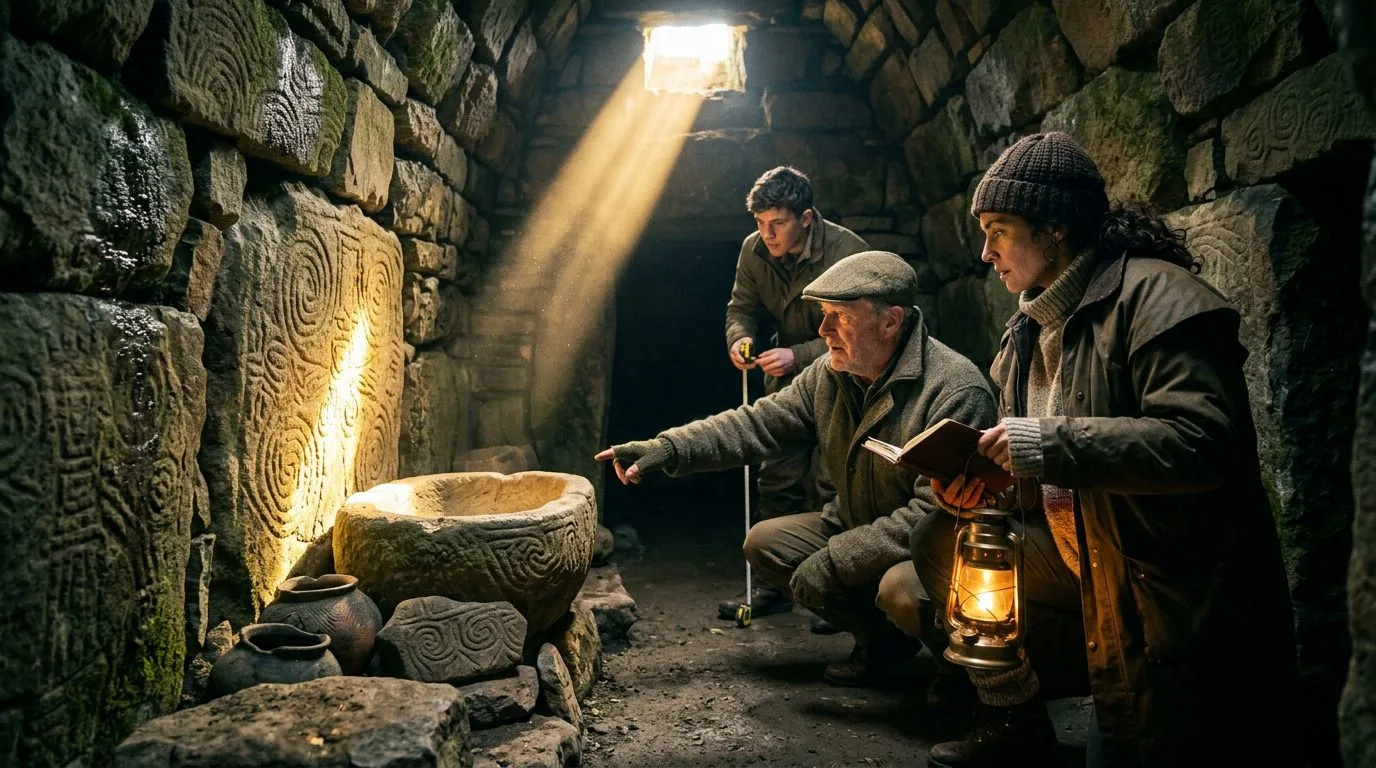
Newgrange’s Winter Solstice Illuminates the Dead
For exactly 17 minutes each winter solstice morning, a shaft of sunlight penetrates the roof-box entrance of Newgrange and illuminates the burial chamber 19 meters inside the passage tomb. Constructed around 3200 BCE in Ireland’s Boyne Valley, this monument predates both Stonehenge and the Egyptian pyramids by centuries. The roof-box opening measures just 20 centimeters high, yet builders positioned it with such precision that the beam travels the entire length of the corridor and strikes a triple spiral carved into the back wall. What mystifies archaeologists is the purpose—whether this was a ritual rebirth ceremony for the dead, an agricultural calendar marker, or something entirely different that our modern perspective cannot comprehend.
Source: history.com
3. Angkor Wat’s Equinox Reveals Cosmic Mountain
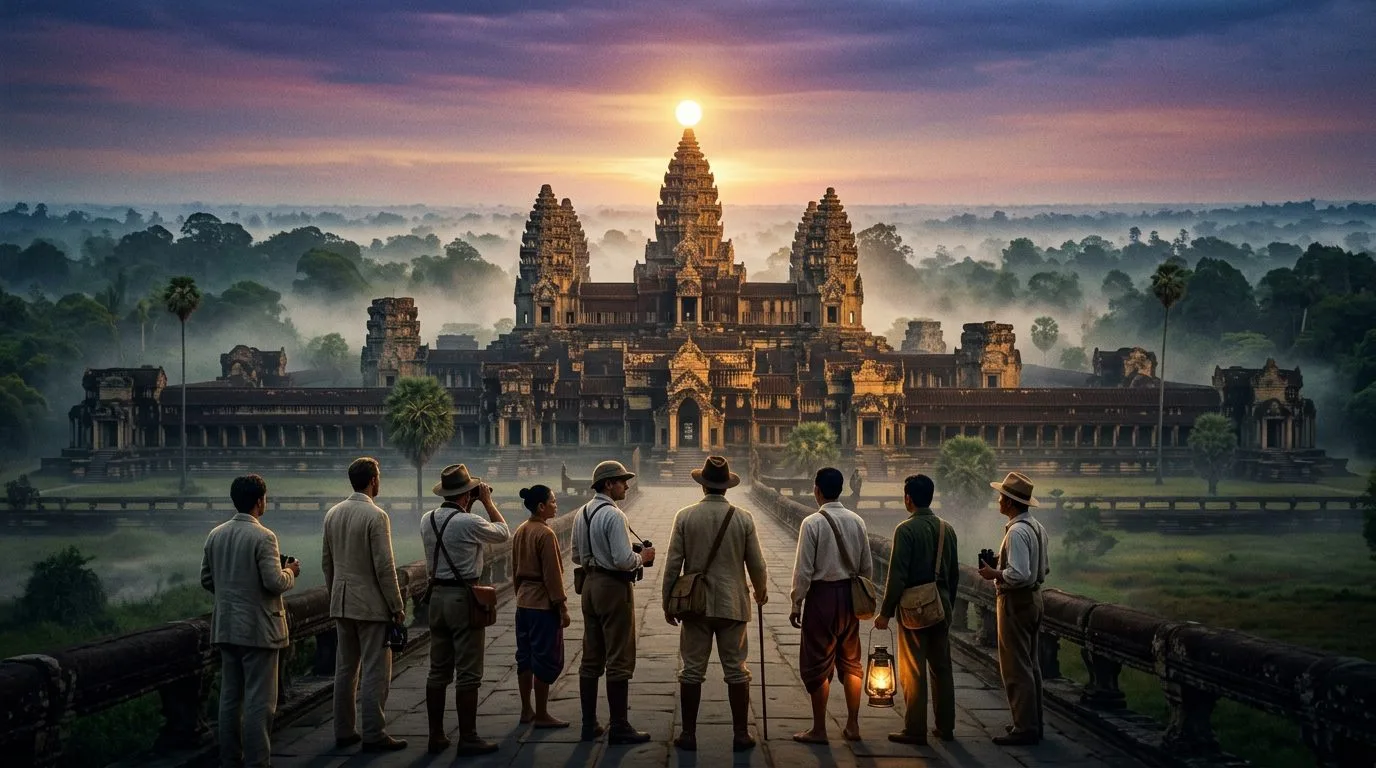
Angkor Wat’s Equinox Reveals Cosmic Mountain
On the spring equinox, observers standing at the western entrance of Angkor Wat witness the sun rising directly over the central tower’s peak, aligning the temple with Mount Meru—the cosmic mountain at the center of Hindu and Buddhist cosmology. Built by King Suryavarman II around 1150 CE, this massive temple complex covers 162.6 hectares and contains over 5 million tons of sandstone. The entire structure was oriented 0.75 degrees south of true east, a deviation that precisely captures the spring equinox sunrise rather than due east. This deliberate misalignment reveals that Khmer architects prioritized celestial events over cardinal directions, encoding astronomical knowledge into the kingdom’s spiritual center.
Source: smithsonianmag.com
4. Karnak’s Great Axis Points to Rebirth
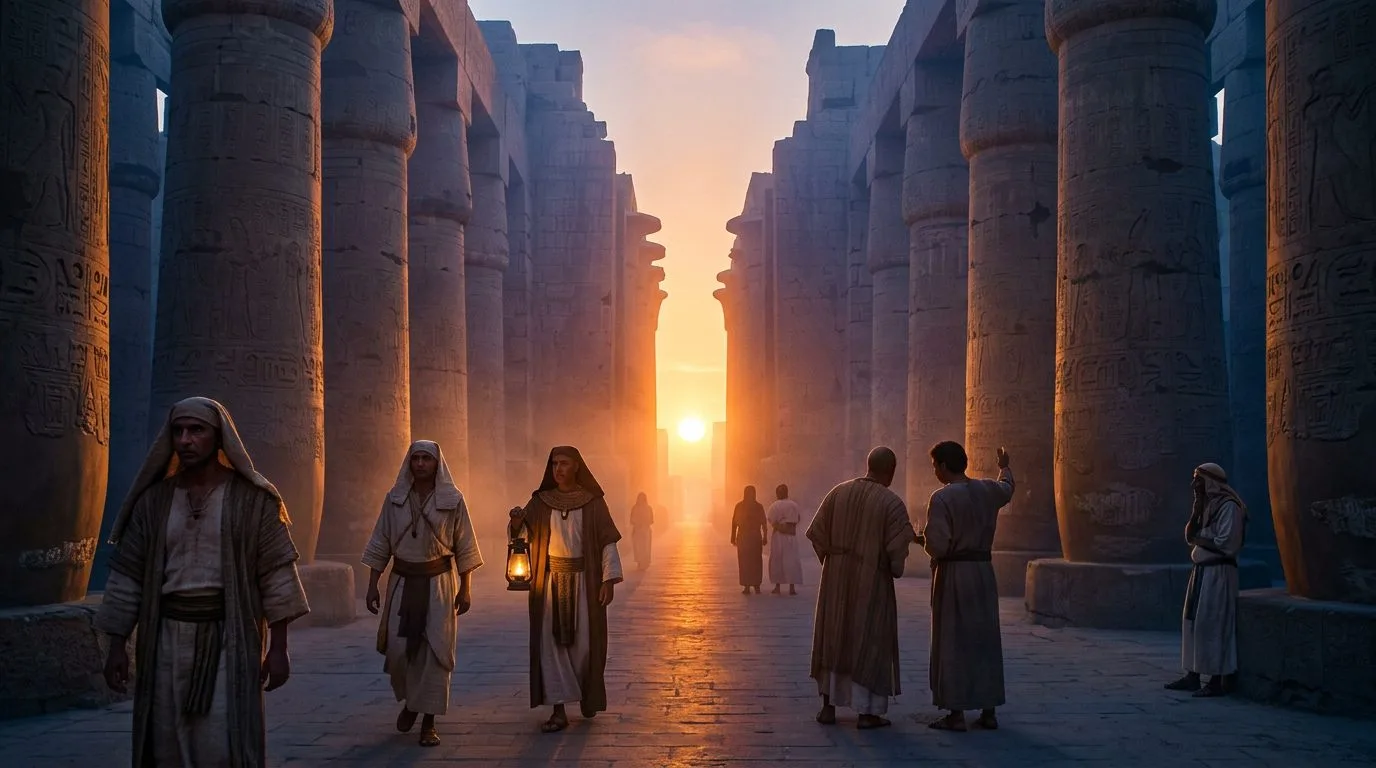
Karnak’s Great Axis Points to Rebirth
The main axis of the Karnak Temple complex in Luxor stretches 1.5 kilometers in perfect alignment with the winter solstice sunrise, a phenomenon ancient Egyptians connected to the daily rebirth of Ra. Construction began around 2055 BCE under Mentuhotep II, with successive pharaohs adding temples along this precise east-west corridor for nearly 2,000 years. The Great Hypostyle Hall alone contains 134 massive columns, each positioned to preserve the original solar alignment despite the complex’s expansion. What puzzles Egyptologists is the multi-generational coordination required—each ruler who added to Karnak maintained the alignment with mathematical precision across centuries, suggesting a continuous astronomical priesthood passing down exact measurements and celestial observations.
Source: britannica.com
5. Chichen Itza’s Serpent Descends at Equinox
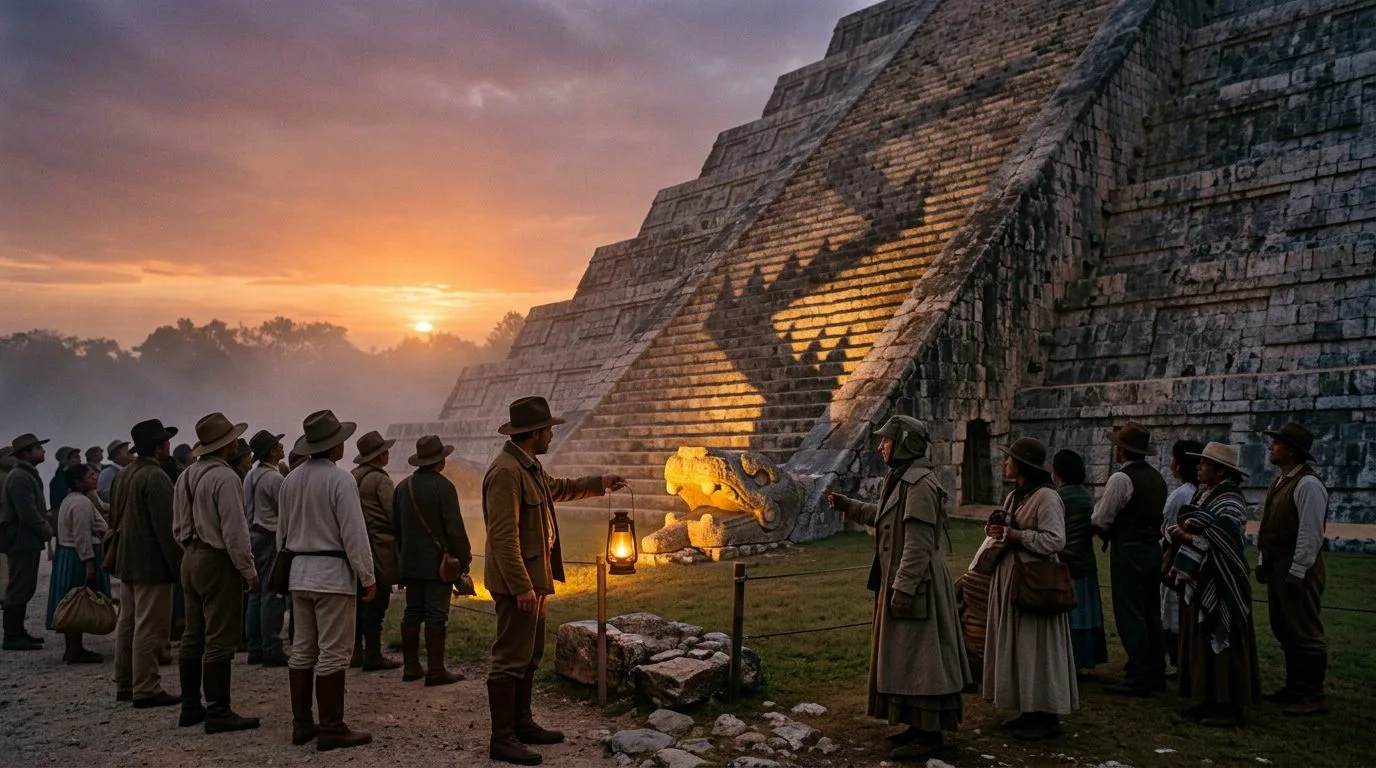
Chichen Itza’s Serpent Descends at Equinox
Twice yearly during the spring and autumn equinoxes, the setting sun creates seven triangular shadows on the northern staircase of El Castillo pyramid that form the body of a serpent descending to meet the carved stone head at the base. Built by the Maya around 1000 CE, this 24-meter pyramid contains exactly 365 steps when counting all four sides plus the platform—matching the solar year. The phenomenon lasts approximately 3 hours and occurs due to the precise 23.5-degree angle of the pyramid’s edges interacting with the equinox sun angle. Archaeologists debate whether this was intentional design or fortunate accident, but the pyramid’s orientation exactly 20.5 degrees east of north suggests deliberate astronomical calculation.
Source: history.com
6. Göbekli Tepe Records Ancient Catastrophe
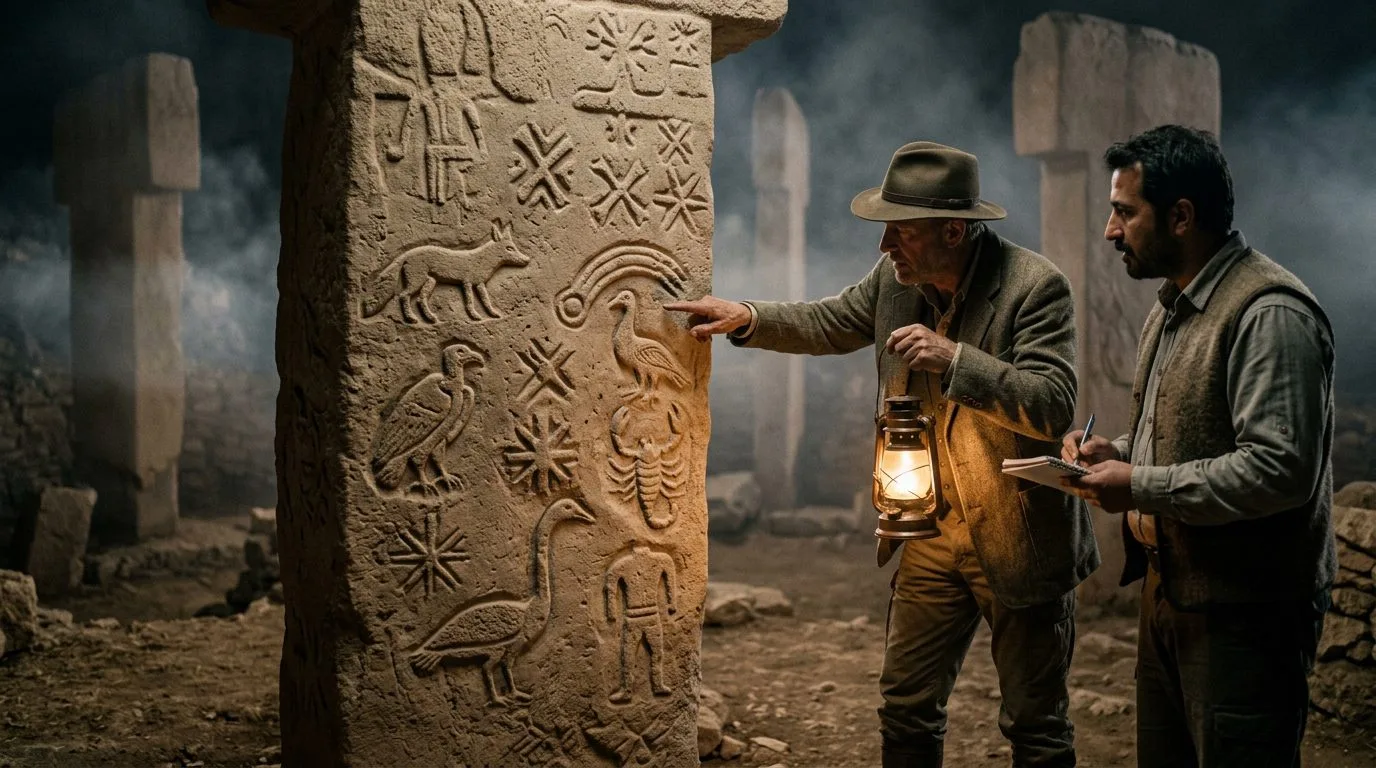
Göbekli Tepe Records Ancient Catastrophe
Pillar 43 at Göbekli Tepe features carved symbols that researchers interpret as a star map recording a comet impact event around 10,950 BCE—matching geological evidence of the Younger Dryas climate catastrophe. This T-shaped limestone pillar, erected around 9600 BCE in southeastern Turkey, displays animal reliefs that align with constellation positions on that specific date. The vulture carving points to what astronomers identify as the summer solstice position 13,000 years ago, while other symbols match Scorpius and Sagittarius. What baffles archaeologists is that hunter-gatherers supposedly incapable of complex astronomy created the world’s oldest known temple containing sophisticated stellar knowledge, suggesting catastrophic events may have been precisely observed and recorded millennia before writing developed.
Source: smithsonianmag.com
7. Abu Simbel Crowns Ramesses With Sunlight
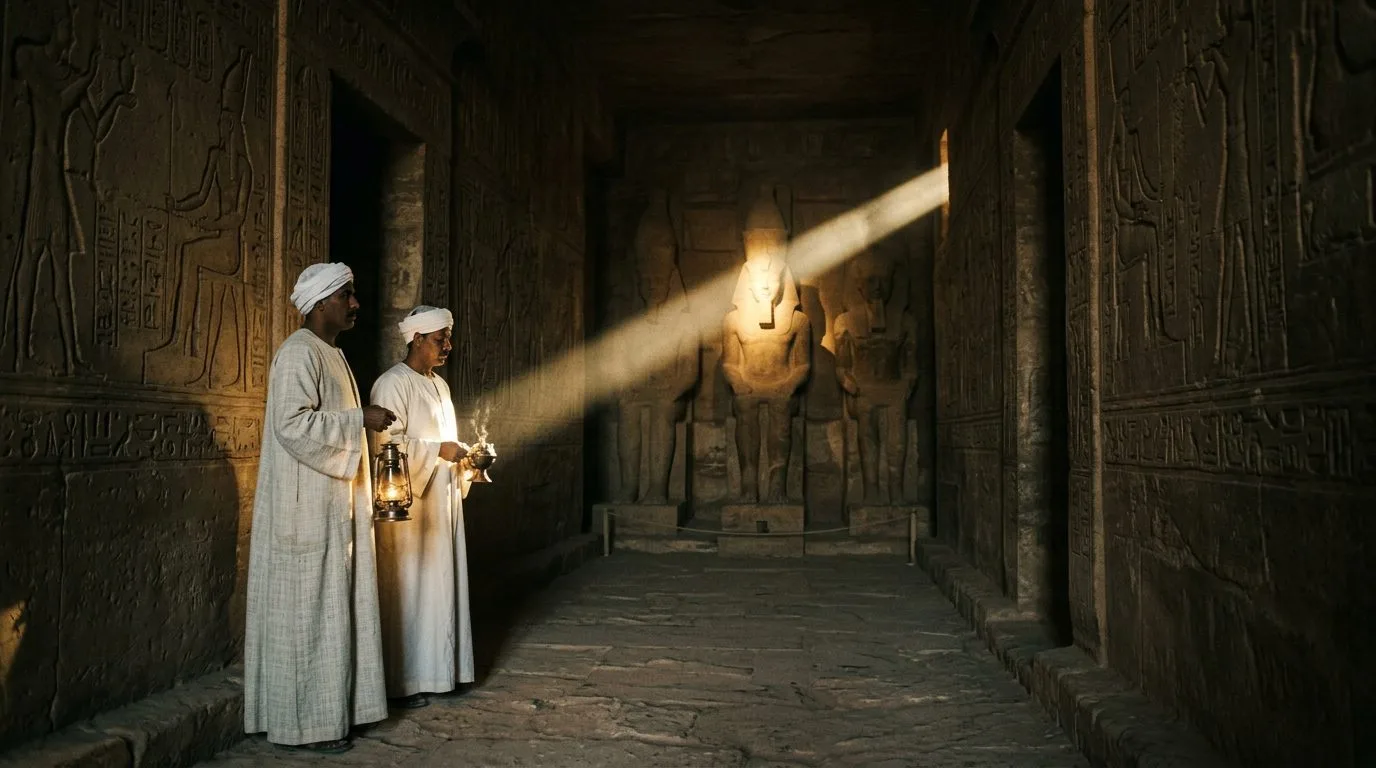
Abu Simbel Crowns Ramesses With Sunlight
Twice each year on the dates of Ramesses II‘s coronation and birthday, sunlight penetrates 65 meters into the Abu Simbel temple and illuminates three of the four statues in the sanctuary—lighting Ramesses II, Ra-Horakhty, and Amun while leaving Ptah, god of darkness, in shadow. Carved directly into a sandstone cliff around 1264 BCE, the temple was designed so these dates celebrated Ramesses II’s coronation and birthday. Each statue stands 20 meters tall at the facade, yet the alignment required calculations accounting for the Nile’s position and the cliff’s angle. The precision survived until the modern era when UNESCO relocated the entire temple to higher ground, shifting the illumination dates by one day despite engineers’ best efforts to preserve the original astronomical function.
Source: britannica.com
8. Machu Picchu’s Stone Tethers the Sun
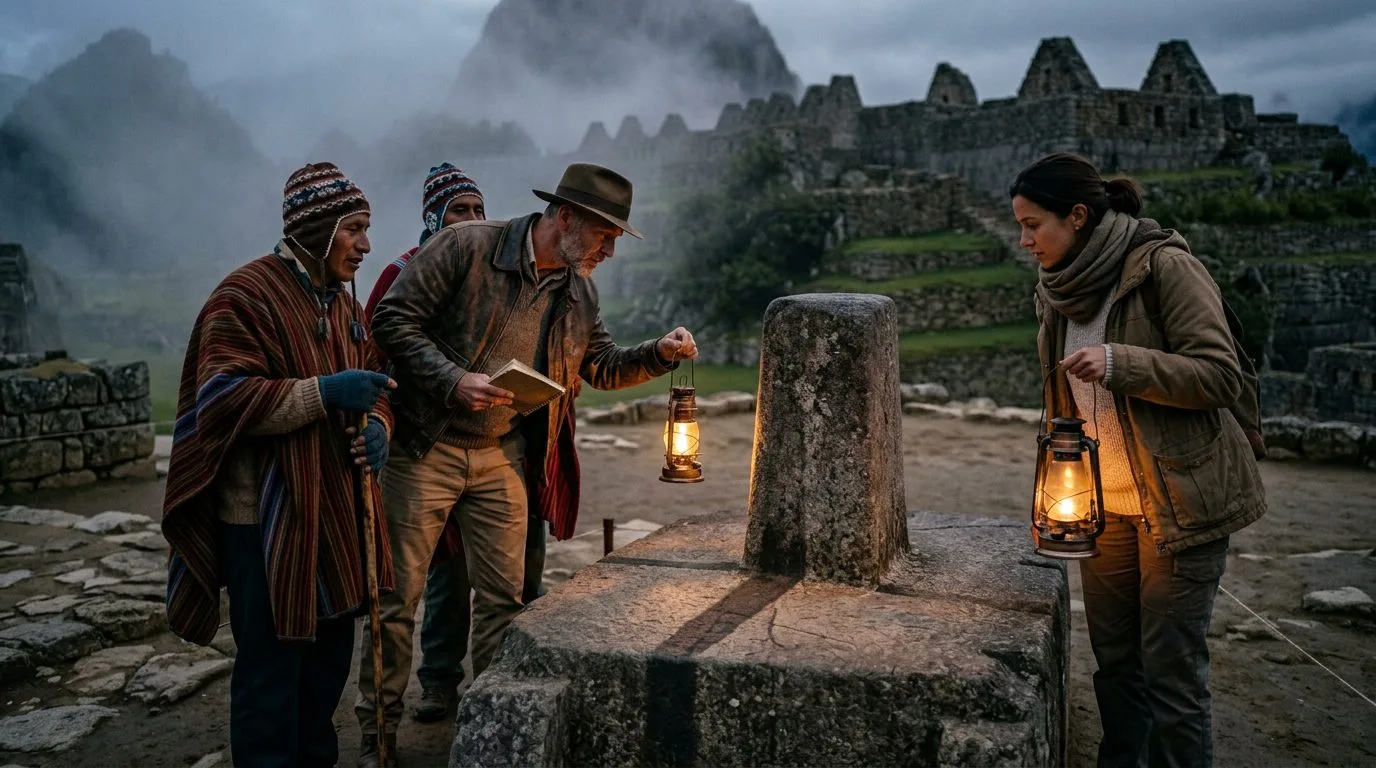
Machu Picchu’s Stone Tethers the Sun
The Intihuatana stone at Machu Picchu functions as a precise astronomical calendar, with its four corners aligned to the cardinal directions and its central pillar casting shadows that track solstices and equinoxes. Built around 1450 CE at 2,430 meters elevation, this carved granite outcrop—whose name means “hitching post of the sun”—allowed Inca astronomers to determine planting seasons and ceremonial dates. At noon on the equinoxes, the pillar casts almost no shadow, while on winter solstice the shadow extends to its maximum length pointing due north. What mystifies researchers is the Inca’s motivation to destroy similar stones at other sites during the Spanish conquest, suggesting the Intihuatana held power beyond simple timekeeping that threatened colonial control.
Source: history.com
9. Cahokia’s Woodhenge Marks America’s First Observatory

Cahokia’s Woodhenge Marks America’s
At Cahokia Mounds in the Mississippi valley, a reconstructed circle of 48 wooden posts tracked solstices, equinoxes, and possibly lunar cycles for North America’s largest pre-Columbian city. Originally erected around 1100 CE, this timber circle measured 125 meters in diameter with a central observation post that aligned with specific outer posts to mark celestial events throughout the year. At its peak, Cahokia housed 20,000 people who relied on this agricultural calendar for crop planning. Archaeologists discovered five successive **Woodhenge**s built on the same spot, each slightly adjusted—suggesting continuous astronomical refinement over generations. The mystery deepens because this sophisticated knowledge vanished when Cahokia was abandoned around 1350 CE, leaving no written records to explain either the city’s astronomical expertise or its sudden collapse.
Source: smithsonianmag.com
10. Mnajdra Temple’s Doorway Frames Cosmic Order
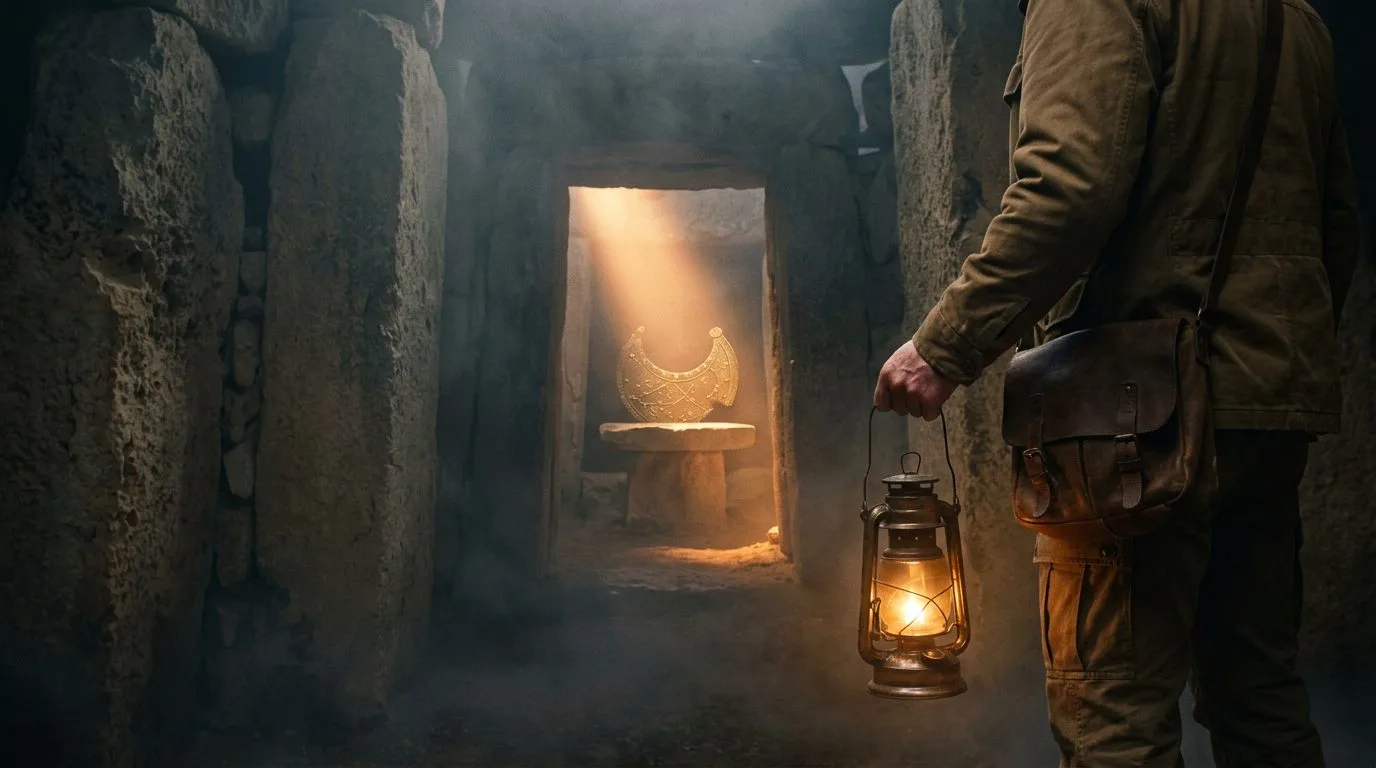
Mnajdra Temple’s Doorway Frames Cosmic Order
During the spring and autumn equinoxes, sunlight passes through the main entrance of Malta’s Mnajdra Temple and illuminates the central axis, while solstice sunrises light up the edges of megaliths flanking the doorway. Constructed around 3600 BCE from globigerina limestone, this temple complex sits 500 meters from the Mediterranean coast with its facade oriented 108 degrees southeast. The lower temple contains stones weighing up to 20 tons positioned so equinox light strikes specific altar stones in sequence as the sun rises. What baffles researchers is the duplication of this alignment across multiple chambers—the builders created redundant astronomical markers suggesting the equinox held significance beyond agricultural timing, possibly representing cosmic balance in a belief system completely lost to modern understanding.
Source: britannica.com
Did You Know?
The Inca deliberately destroyed most Intihuatana stones during the Spanish conquest—except the one at Machu Picchu, hidden so well the conquistadors never found it. This suggests these astronomical instruments held power beyond mere calendar-keeping, functioning as spiritual or political tools that threatened colonial control. Even more remarkably, many of these alignments maintain accuracy across thousands of years despite Earth’s axial precession, meaning ancient architects somehow compensated for celestial changes they theoretically couldn’t have observed within a single lifetime.