
Before factories, blacksmith guilds controlled Europe’s industrial backbone. These organizations decided who could forge swords, shoe horses, or craft armor—wielding economic power that rivaled nobility and shaped kingdoms for centuries.
1. The Worshipful Company of Blacksmiths – London’s Iron Authority
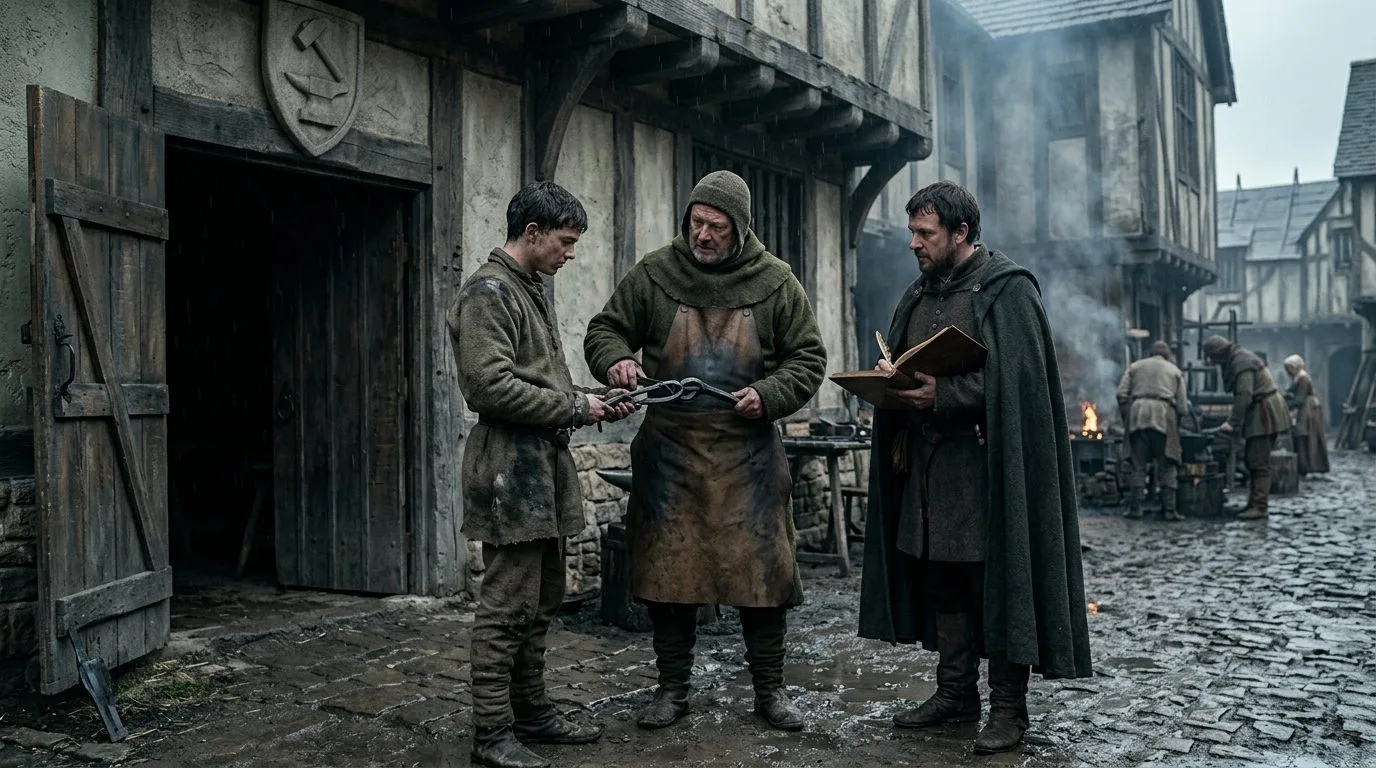
The Worshipful Company of Blacksmiths –
Founded in 1299 CE, London’s Worshipful Company of Blacksmiths regulated every piece of ironwork sold within the city walls. The guild required seven years of apprenticeship before a smith could hang his own shingle, creating a bottleneck that kept iron prices artificially high. By 1434 CE, the Company employed 847 registered smiths who paid annual dues of four shillings each—enough to fund charitable hospitals and influence Parliamentary votes. When Henry VIII needed cannons for his navy, he bypassed traditional armories and contracted directly with the Company, which delivered 230 iron pieces in just eighteen months. Their hallmark stamp on metalwork became a guarantee of quality that merchants demanded across Europe.
Source: britannica.com
2. Nuremberg Ironworkers Guild – Germanic Engineering Excellence
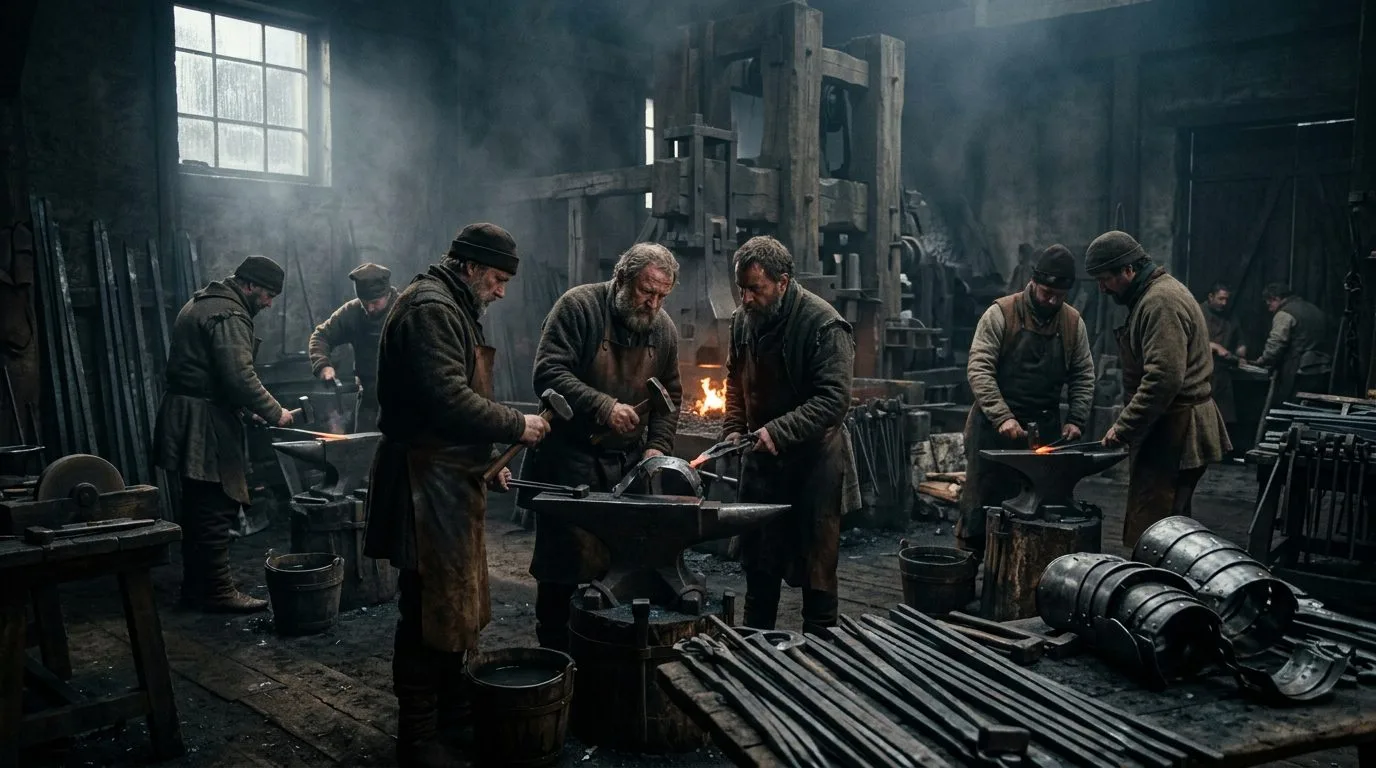
Nuremberg Ironworkers Guild – Germanic
Nuremberg‘s Eisenhammer guild emerged in 1285 CE as the Holy Roman Empire’s most technically sophisticated metalworking organization. These smiths pioneered the use of water-powered trip hammers that could strike iron 120 times per minute, revolutionizing production speed. By 1350 CE, the guild operated 43 forges along the Pegnitz River, each specializing in specific products—locks, hinges, or surgical instruments. Their apprentices studied geometry and metallurgy in guild schools, a radical departure from purely practical training elsewhere. Emperor Charles IV granted them exclusive rights to forge imperial regalia in 1355 CE, cementing their reputation. Nuremberg steel became synonymous with precision, commanding prices triple that of English ironwork in Venetian markets.
Source: britannica.com
3. Parisian Forge Masters – Arming French Royalty
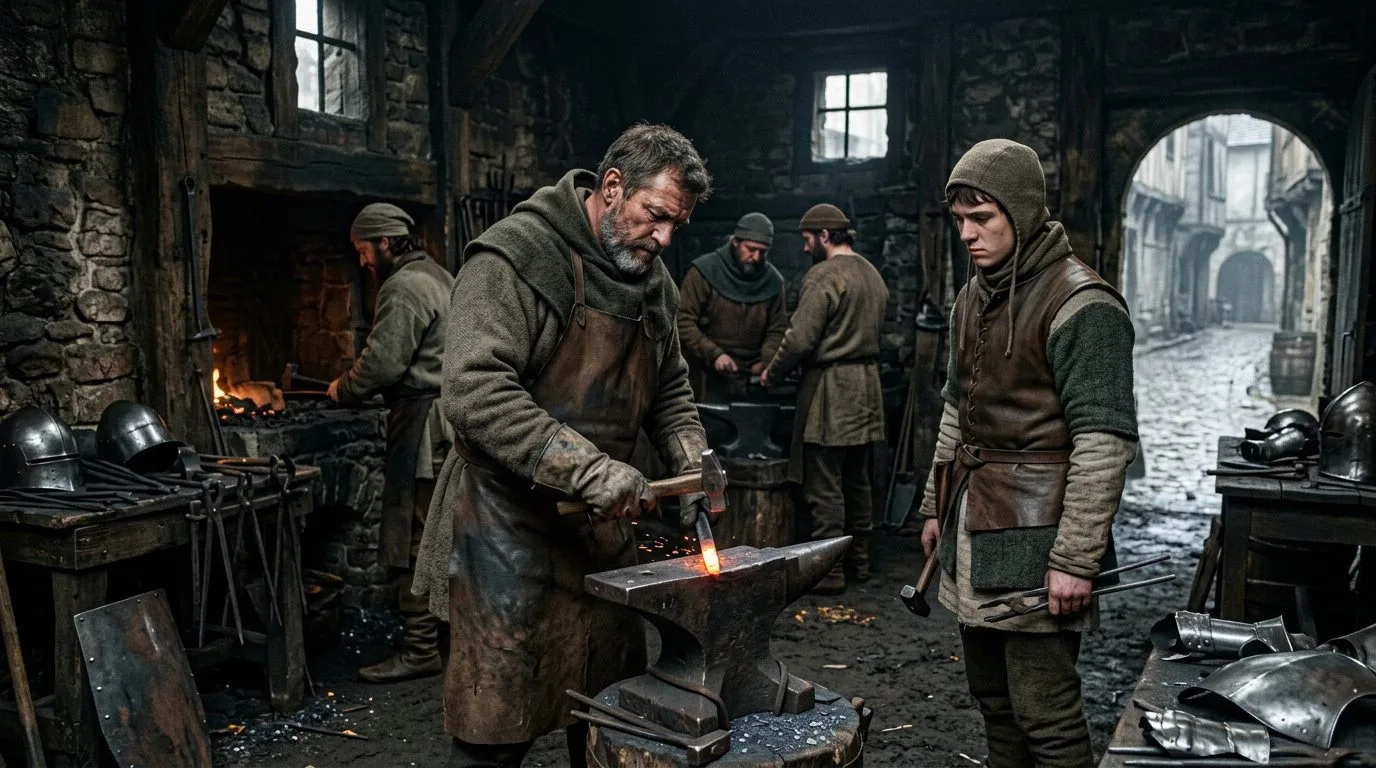
Parisian Forge Masters – Arming French
Paris’s Maîtres-Forgerons guild supplied the French crown with weapons from 1137 CE onward, operating 67 forges clustered near the Île de la Cité. When Philip II prepared for the Third Crusade in 1190 CE, the guild delivered 8,000 swords and 12,000 spearheads in just fourteen months. Their master smiths enjoyed tax exemption and direct access to royal iron mines in Burgundy, advantages that provincial smiths bitterly contested. The guild enforced strict quality standards—any blade that bent or broke in testing resulted in immediate expulsion and confiscation of the smith’s tools. By 1340 CE, Parisian forged weapons equipped one-third of French cavalry at the Battle of Crécy, though English longbows rendered much of that armor ineffective.
Source: britannica.com
4. Toledo Sword Makers – Spanish Steel Perfection
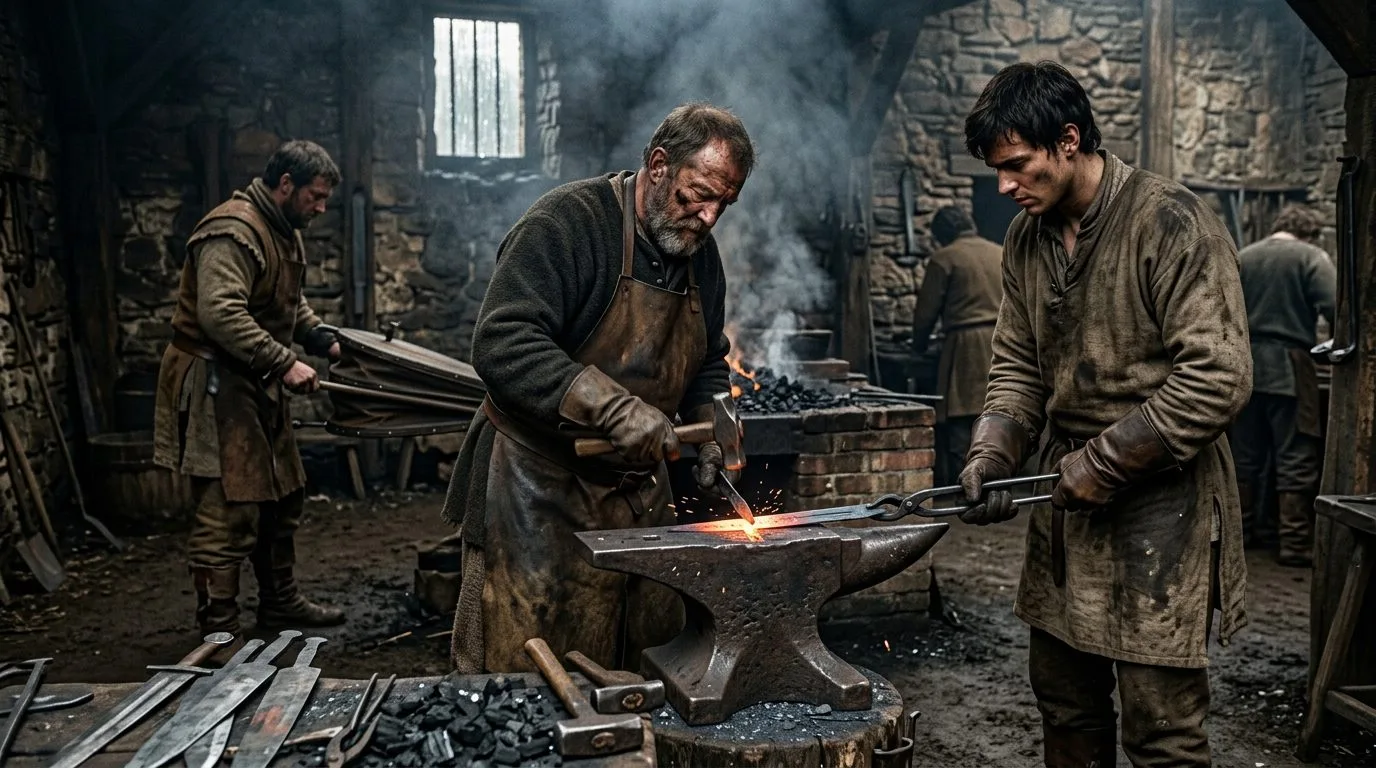
Toledo Sword Makers – Spanish Steel
Toledo‘s sword smiths mastered steel-making techniques inherited from Moorish metallurgists, founding their guild in 1150 CE under Alfonso VII of Castile. These craftsmen developed a unique tempering process using Tagus River water, which contained specific mineral concentrations that produced exceptionally flexible blades. A properly forged Toledo sword could bend 90 degrees without snapping—a feat demonstrated before skeptical buyers. The guild restricted membership to just 34 master smiths at any time, ensuring exclusivity and astronomical prices. El Cid‘s legendary sword Tizona, forged around 1080 CE, established Toledo’s reputation long before the guild formalized. By 1400 CE, a single Toledo blade cost 45 gold florins, equivalent to a skilled mason’s annual wages.
Source: britannica.com
5. Milan Armor Guild – Plate Armor Revolutionaries
Milan Armor Guild – Plate Armor
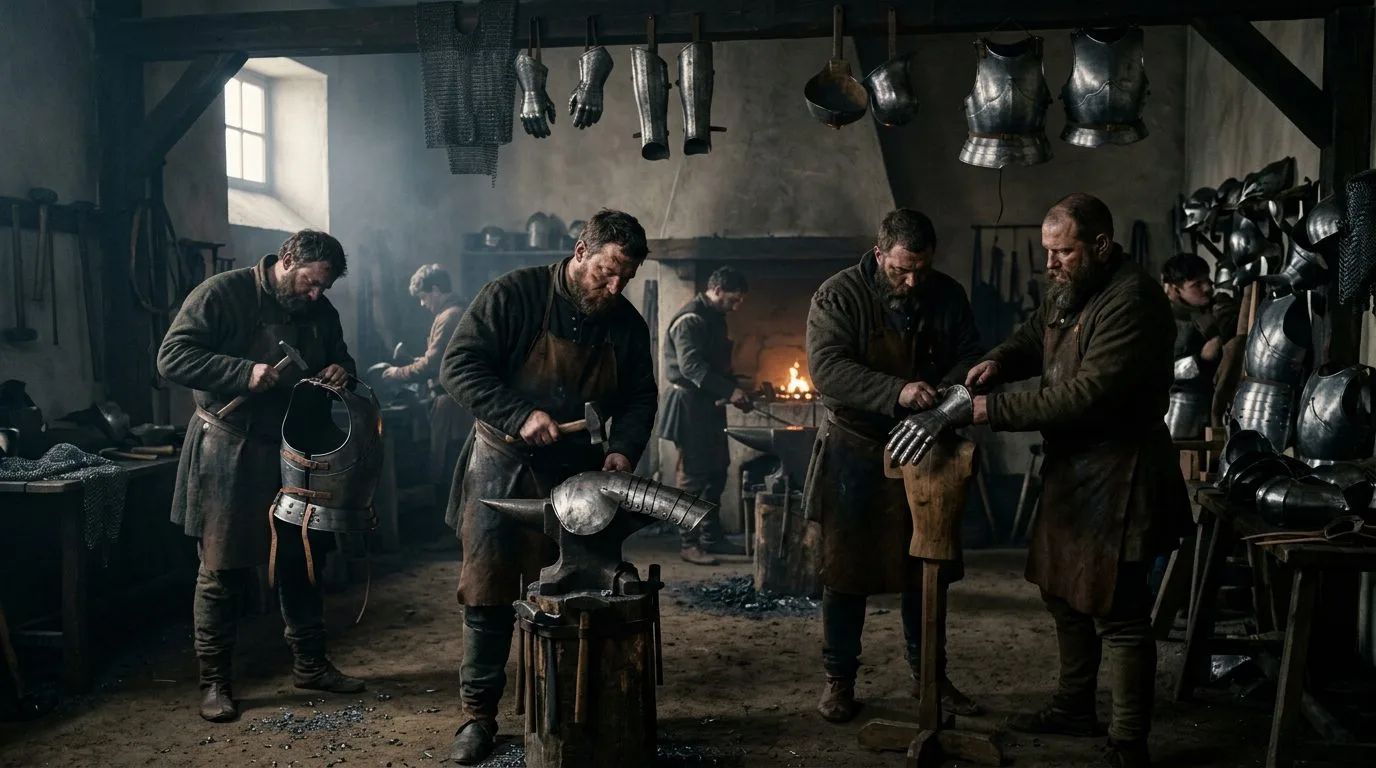
Milan‘s armorer guild, established in 1261 CE, transformed warfare by perfecting articulated plate armor that protected knights without sacrificing mobility. Their workshops produced the first full suits of plate armor around 1420 CE, replacing outdated chainmail with interlocking steel plates that could deflect crossbow bolts. Milanese master Tommaso Missaglia employed 230 apprentices and journeymen in his workshop by 1450 CE, creating armor assembly lines centuries before industrialization. A complete Milanese suit weighed 55 pounds but distributed weight so effectively that knights could mount horses unassisted. The guild jealously guarded their polishing techniques, which produced mirror-bright surfaces that deflected blows more effectively than rougher finishes. European nobility paid 200 ducats for a Milanese suit—enough to purchase a small vineyard.
Source: britannica.com
6. Flemish Nailmakers Brotherhood – Construction’s Invisible Power

Flemish Nailmakers Brotherhood –
Bruges‘s Nagelsmiede guild monopolized nail production across Flanders from 1302 CE, controlling the construction industry’s most essential component. Medieval buildings required thousands of hand-forged nails—a single church roof consumed 40,000 nails of varying sizes. The guild operated 89 specialized forges by 1380 CE, with different smiths producing specific nail types: roofing, shipbuilding, or barrel-making nails. Apprentices spent their first year mastering a single nail size before progressing to others. This specialization allowed experienced smiths to forge 1,200 nails daily, far exceeding generalist output. The brotherhood’s strike in 1360 CE halted construction across Flanders for six months, forcing Count Louis II to grant them perpetual tax exemptions. Their economic leverage proved that even mundane products wielded political power.
Source: britannica.com
7. Cologne Toolmakers Guild – Agricultural Innovation Hub
Cologne Toolmakers Guild – Agricultural
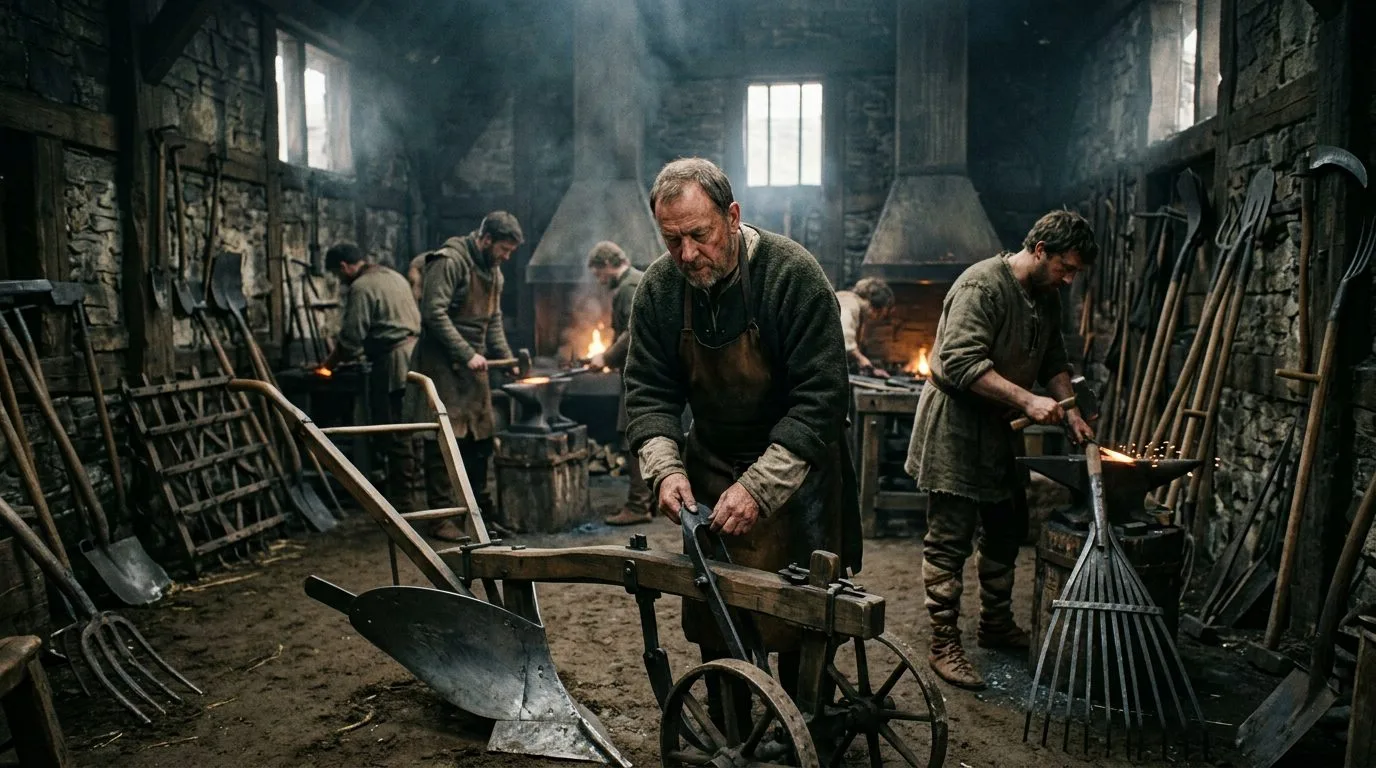
Cologne‘s Werkzeugschmiede guild, chartered in 1256 CE, specialized in agricultural implements that transformed farming efficiency across the Rhineland. Their improved plow shares, forged with hardened iron edges, could cut through heavy clay soils that wooden plows barely scratched. The guild maintained 52 forges by 1330 CE, producing 30,000 scythes, sickles, and hoes annually for distribution throughout the Holy Roman Empire. Master smith Heinrich Kolfhaus invented an adjustable plow moldboard in 1342 CE that increased crop yields by 15 percent on sloped fields. The guild required smiths to spend harvest seasons in farming villages, observing how tools performed and gathering feedback for improvements. This integration of maker and user created an iterative design process remarkably similar to modern product development.
Source: britannica.com
8. Venice Arsenal Smiths – Maritime Metallurgy Powerhouse
Venice Arsenal Smiths – Maritime Metallurgy
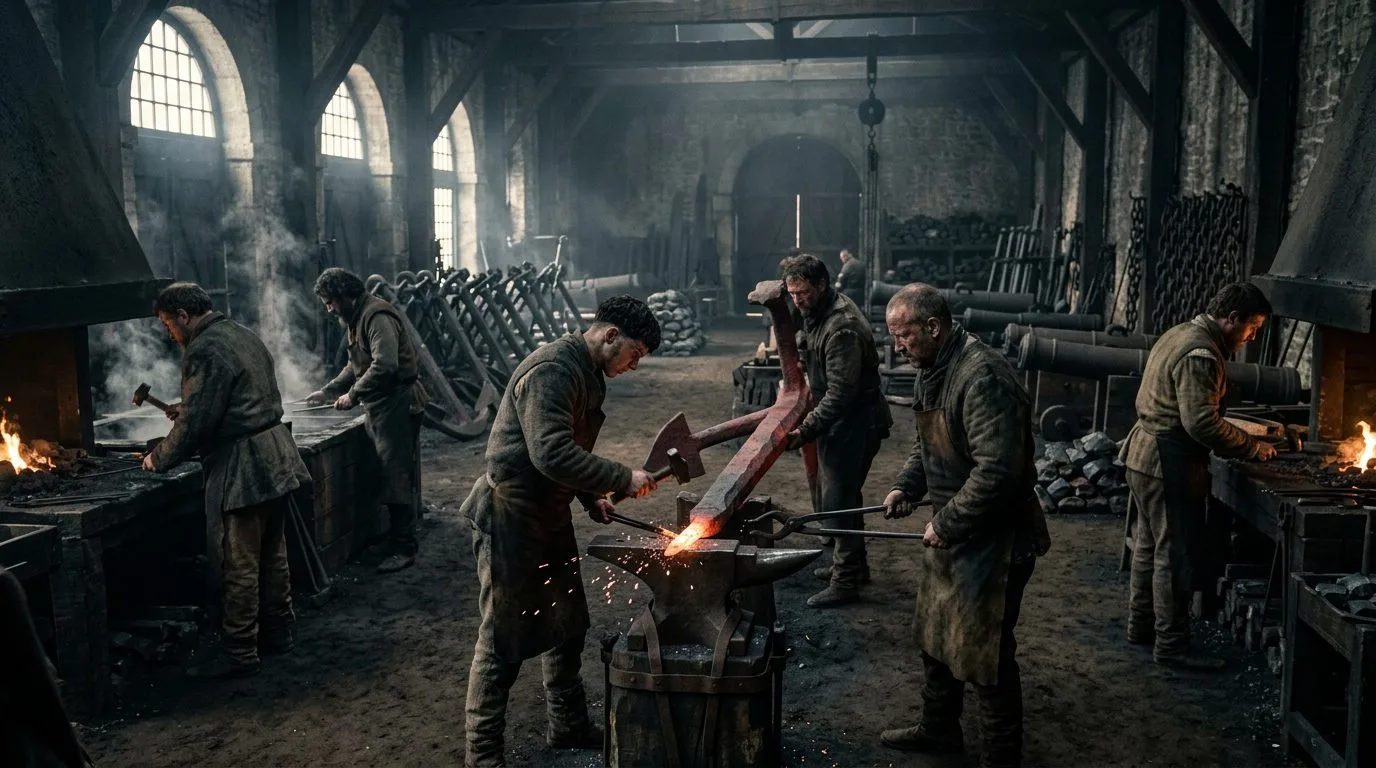
The Venice Arsenal‘s smith collective, operating from 1104 CE, constituted Europe’s first industrial-scale metalworking operation. These specialized craftsmen forged the iron components for Venice‘s merchant and military fleets—anchors weighing 400 pounds, chain links three inches thick, and thousands of nails per ship. By 1320 CE, the Arsenal employed 1,600 smiths working in coordinated teams that could completely outfit a war galley in a single day. Their standardized production methods—identical anchor designs, interchangeable fittings—anticipated mass manufacturing by five centuries. The Arsenal’s innovation extended to metallurgy: smiths developed copper-based alloys resistant to saltwater corrosion, extending ship lifespans from 12 to 25 years. This maritime supremacy made Venice a Mediterranean superpower until Ottoman expansion shifted trade routes.
Source: britannica.com
9. Scottish Horseshoe Guild – Cavalry’s Essential Service
Scottish Horseshoe Guild – Cavalry’s
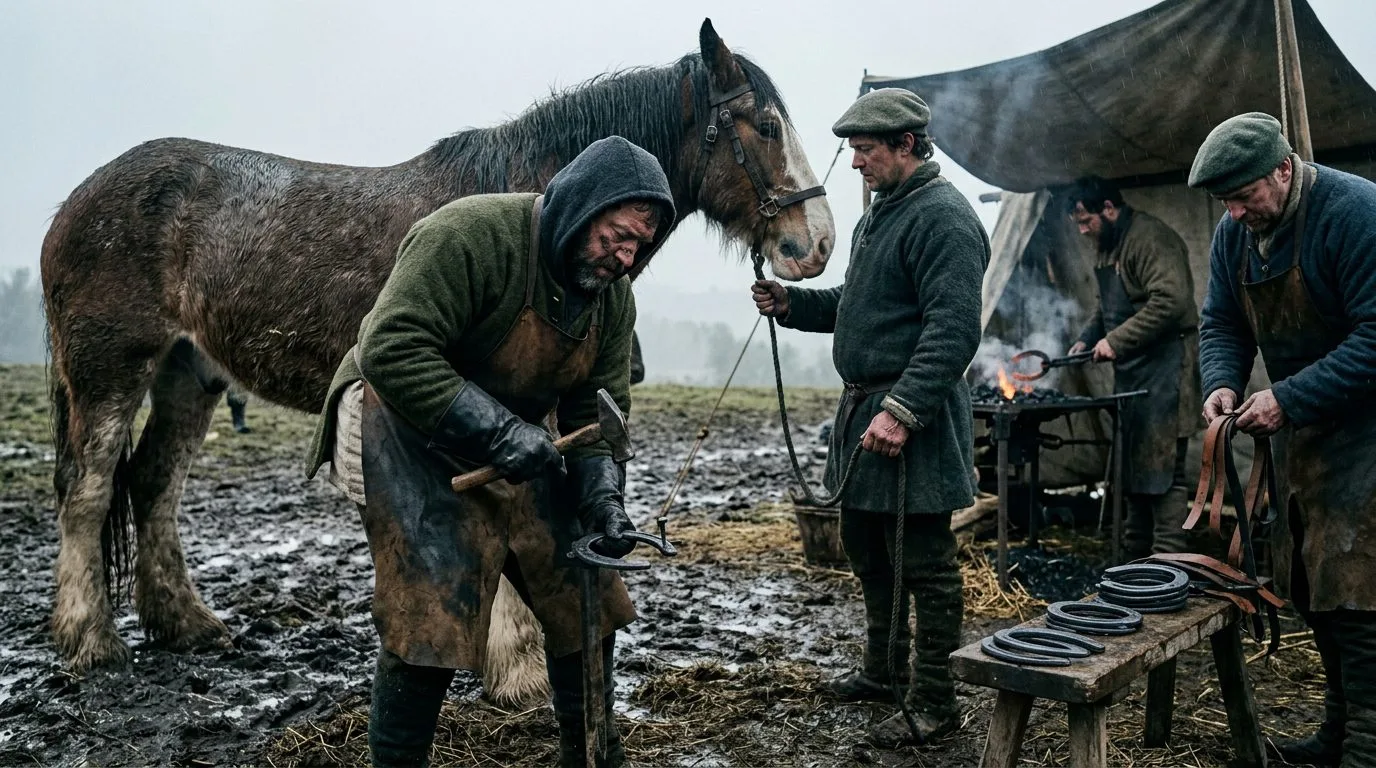
Scotland‘s Horseshoe Smiths Guild, incorporated in 1456 CE under James II, provided critical support for Scottish cavalry and agriculture. Farriers forged specialized shoes for different terrains—smooth roads required different designs than muddy battlefields or rocky highlands. The guild operated 37 forges across Scotland by 1480 CE, with master farriers accompanying armies on campaign to replace the 800 horseshoes that a 200-horse cavalry unit wore out monthly. They developed cold-climate shoeing techniques using textured shoes that prevented horses from slipping on ice, giving Scottish forces mobility advantages during winter campaigns. Edinburgh’s guild hall stored 12 tons of Swedish iron specifically for horseshoe production, as its consistent quality prevented lameness. An improperly shod warhorse could cost a knight his life, making farriers indispensable battlefield specialists.
Source: britannica.com
10. Bohemian Mining Smiths – Underground Tool Specialists
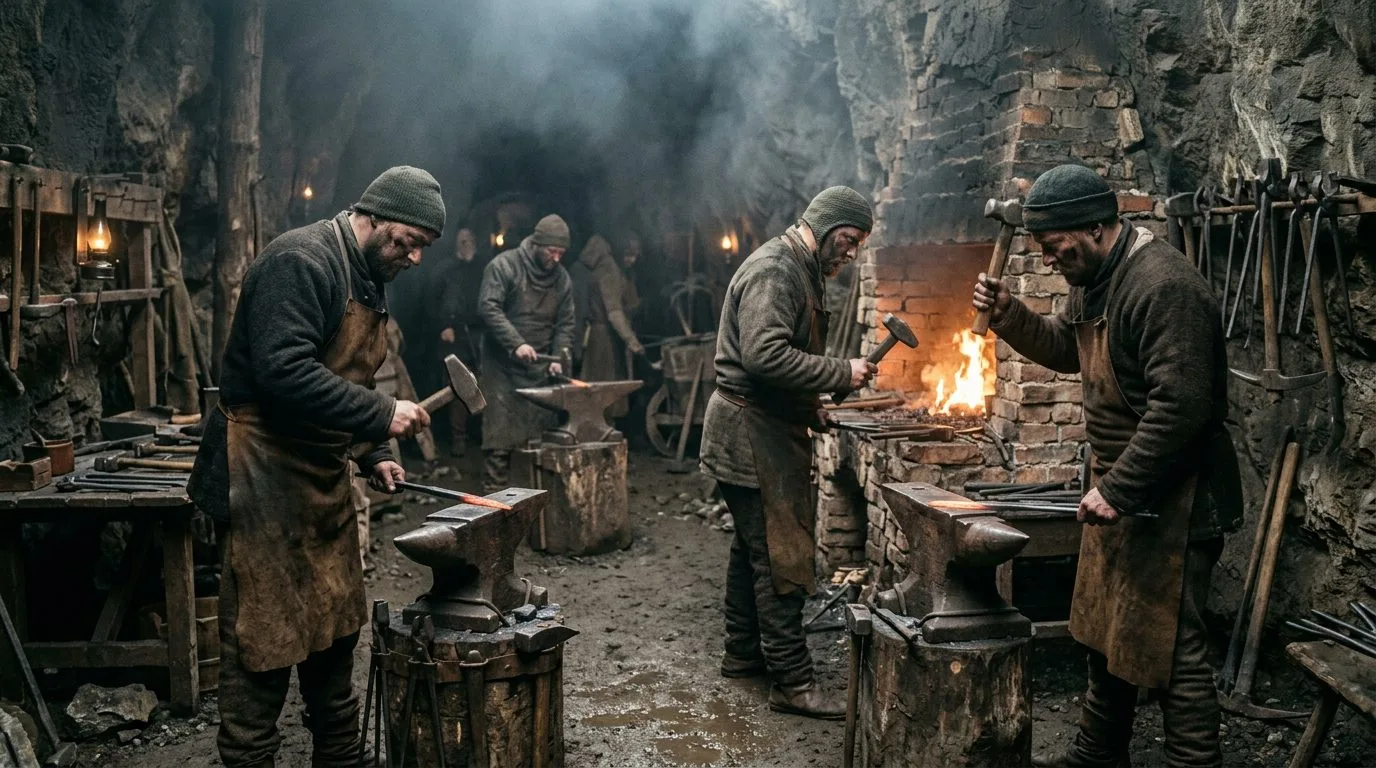
Bohemian Mining Smiths – Underground Tool
Bohemia‘s Bergschmiede guild, established in 1240 CE in Kutná Hora, forged specialized tools for Central Europe’s richest silver mines. Mining required unique implements—hardened picks that could strike rock 10,000 times without dulling, drill bits that bored through granite, and ventilation shaft hardware. The guild operated 28 forges by 1300 CE, employing smiths who descended into mines to repair broken tools on-site rather than halting production. They developed alloy recipes that balanced hardness with flexibility, preventing tools from shattering against rock faces. Master smith Václav Horník invented a ratcheting drill in 1348 CE that doubled boring speed, accelerating mine expansion. The guild’s work extracted 20 tons of silver annually by 1400 CE, funding Bohemian kings and making Prague one of Europe’s wealthiest cities until the Hussite Wars disrupted production.
Source: britannica.com
Did You Know?
Did You Know? The Parisian Forge Masters guild maintained a secret emergency forge inside Notre Dame Cathedral, designed to repair royal armor during sieges without leaving consecrated ground. This forge operated until 1429 CE, when Joan of Arc’s arrival rendered such defensive preparations obsolete. The irony? The guild that armed French kings for centuries couldn’t prevent a teenage peasant girl from changing warfare forever—proving that sometimes inspiration outweighs the finest metallurgy money could buy.