
In 1878, a young Parisian woman named Berthe Morisot sold a painting for more than her male Impressionist colleagues—yet her name appears in few art history textbooks. This pattern repeated throughout modern art history. While male artists dominated gallery walls and auction houses, brilliant women were quietly revolutionizing painting, sculpture, and design. These pioneers didn’t just create beautiful works; they fundamentally challenged how art could be made and what subjects deserved immortalization on canvas. From Swedish séances that produced the world’s first abstract paintings to Mexican self-portraits that redefined the genre, these ten remarkable artists broke through suffocating societal barriers to create masterpieces that changed how we see the world. Some worked in secret, hiding their radical innovations from conservative critics. Others battled sexist gallery owners who refused to exhibit their work alongside men. Many have been criminally overlooked until recent decades, their contributions erased or minimized by historians who couldn’t imagine women as artistic revolutionaries. Their stories reveal not just exceptional talent, but extraordinary courage. They painted through wars, personal tragedies, and relentless discrimination. They invented entirely new artistic movements, pioneered techniques that male artists later claimed credit for, and mentored generations of younger creators. What you’re about to discover will fundamentally change your understanding of modern art history—because without these ten women, the art world as we know it simply wouldn’t exist.
1. Berthe Morisot Became the First Woman Impressionist and Outsold Monet
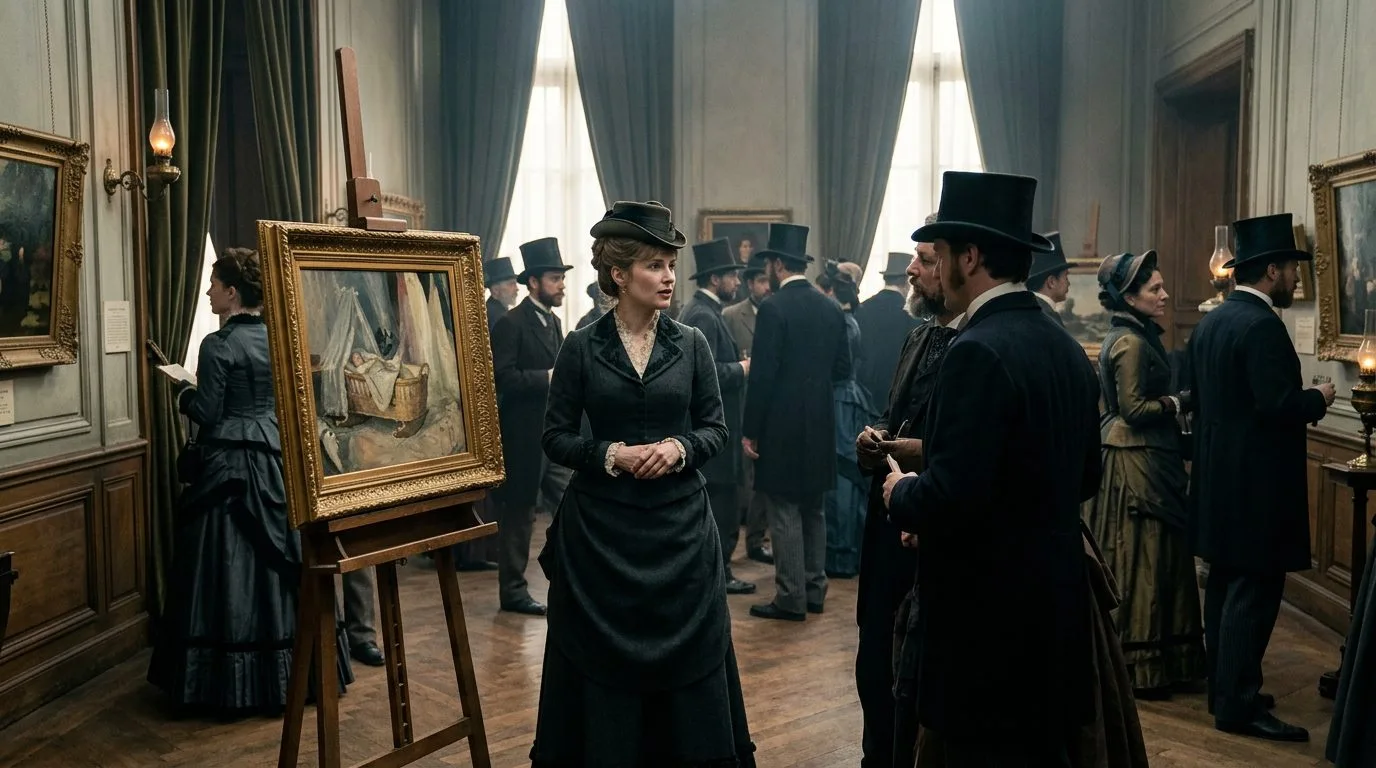
Berthe Morisot’s bold brushwork captivated
When Berthe Morisot exhibited at the first Impressionist exhibition in 1874, critics dismissed her work as a bourgeois woman’s hobby. They were catastrophically wrong. Born in 1841 in Bourges, France, Morisot became the only woman among the founding Impressionists, exhibiting alongside Claude Monet, Pierre-Auguste Renoir, and Edgar Degas. Her radical approach to light, color, and brushwork helped define the movement that revolutionized Western art.
Unlike her male colleagues who painted cafés and countryside, Morisot focused on the private sphere where women lived—nurseries, gardens, and drawing rooms. She transformed intimate domestic moments into profound meditations on modern life using loose, expressive brushstrokes.
2. Mary Cassatt Convinced American Millionaires to Buy Impressionist Art and Changed Museum Collections Forever
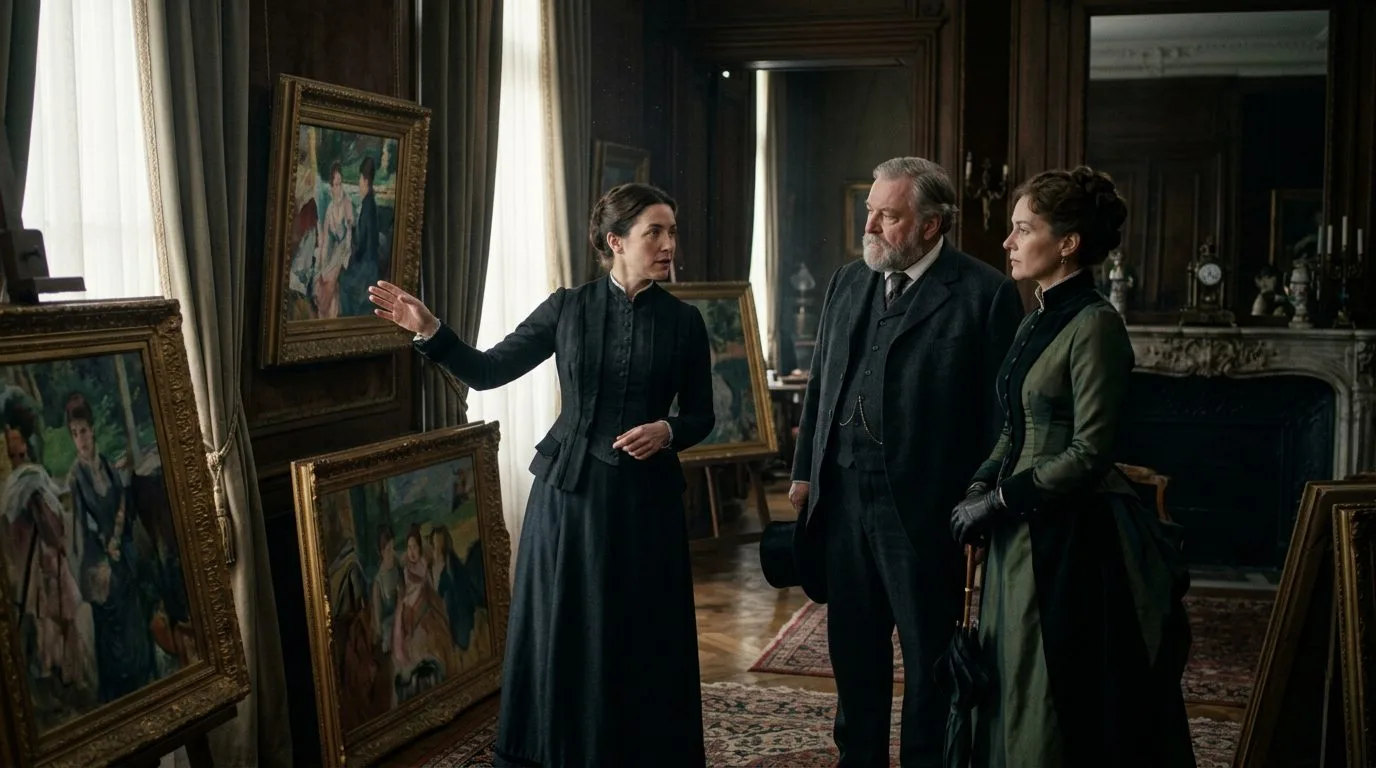
Mary Cassatt promoting Impressionist masterpieces.
Mary Cassatt didn’t just create groundbreaking art—she fundamentally altered what Americans collected. Born in Pennsylvania in 1844, she moved to Paris in 1866 to study painting. When Edgar Degas invited her to exhibit with the Impressionists in 1877, she became the only American and one of only three women in their inner circle.
Cassatt revolutionized how mothers and children were painted, moving beyond sentimental Madonna-and-child clichés. Her 1890 masterpiece “The Child’s Bath” featured bold, flattened forms inspired by Japanese prints—a radical choice that influenced modern design for decades. She produced 225 paintings and over 200 prints, mastering drypoint, aquatint, and etching. Her 1891 color print series was so virtuosic that even rival Degas called them “impeccable.”
But her impact extended beyond her own work.
3. Hilma af Klint Painted the World’s First Abstract Art in Secret—Years Before Kandinsky
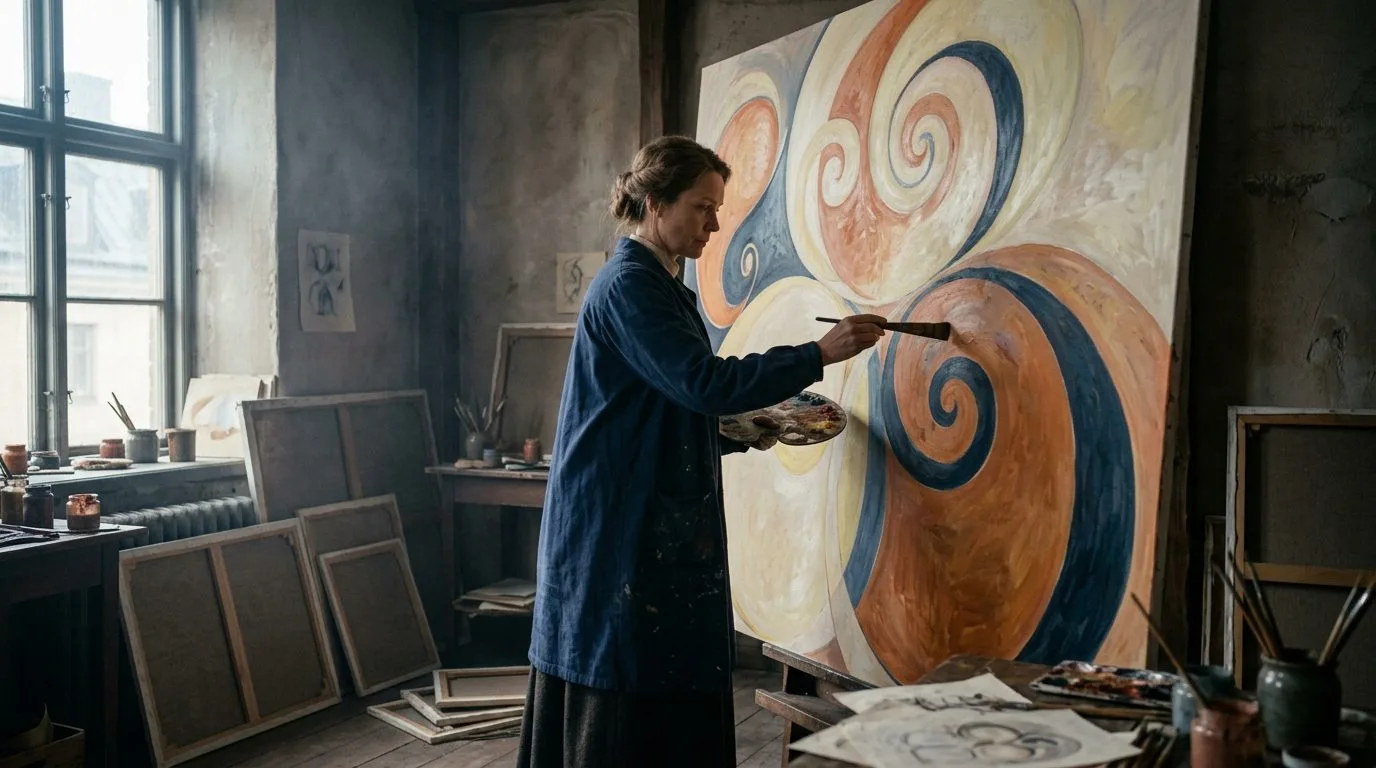
Hilma af Klint’s hidden abstract paintings
In 1906, Swedish artist Hilma af Klint began creating massive abstract paintings in Stockholm—four years before Kandinsky. Trained at Stockholm’s Royal Academy of Fine Arts, af Klint deliberately kept her revolutionary work hidden, believing the world wasn’t ready for it.
Working with a spiritualist group called “The Five,” af Klint claimed spiritual beings commissioned her to create paintings for a temple. Between 1906 and 1915, she completed “Paintings for the Temple,” a series of 193 large works (many over ten feet tall) featuring geometric forms, spirals, and bold colors with no recognizable objects. She developed complex symbolic systems using colors and shapes to represent spiritual concepts like cosmic unity and masculine/feminine duality.
By her death in 1944, af Klint had produced over 1,000 abstract paintings and 26,000 pages of notes.
4. Käthe Kollwitz Created Haunting Prints That Documented Working-Class Suffering and Influenced Political Art Worldwide
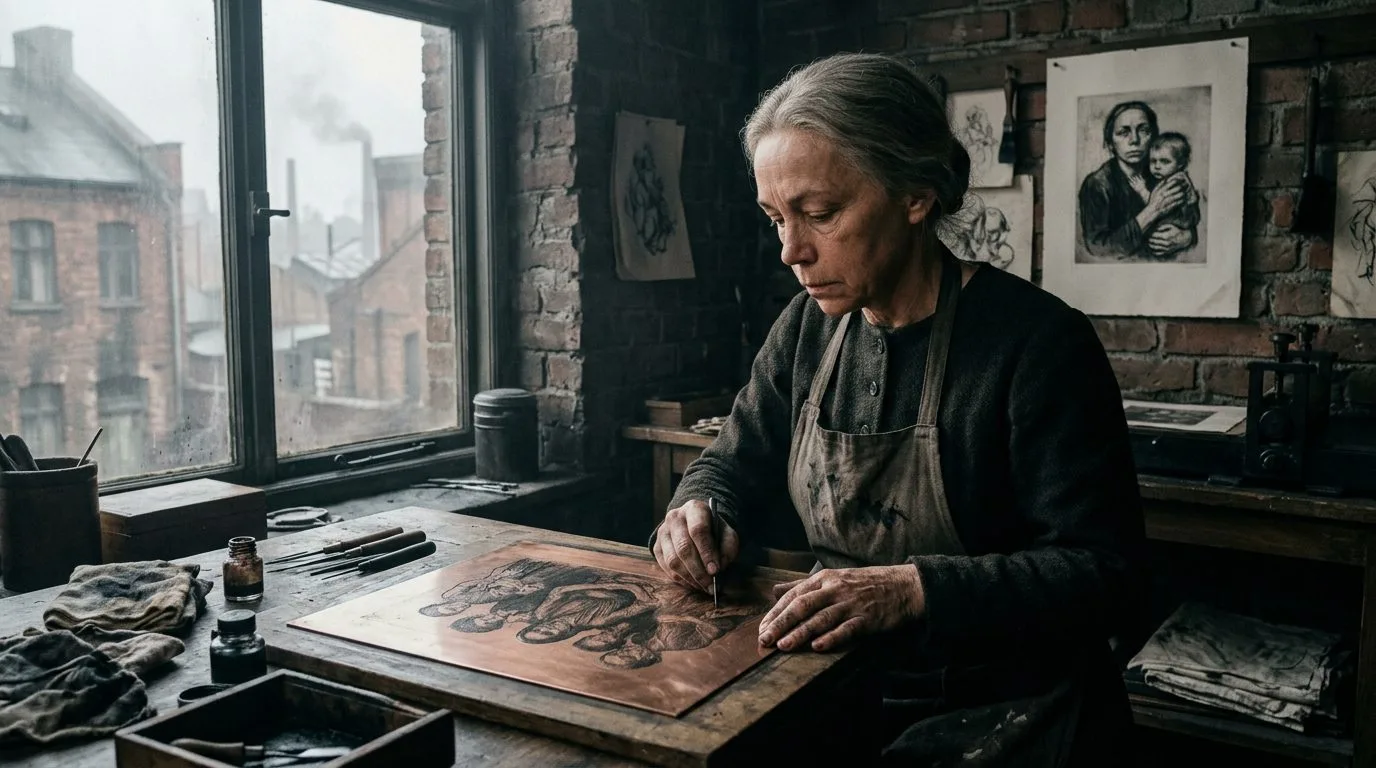
Kollwitz’s powerful prints captured working-class
Käthe Kollwitz wielded an etching needle like a weapon against injustice. Born in 1867 in Königsberg, Prussia, she devoted her career to depicting poverty, war, and suffering that official institutions ignored. Her 1897-1898 print series “A Weavers’ Uprising” depicted the 1844 Silesian rebellion with such raw power that Kaiser Wilhelm II personally blocked her gold medal, deeming it too sympathetic to revolution.
Kollwitz lost her son Peter in World War I in 1914, deepening her pacifist convictions. Her subsequent works, including the sculpture “The Grieving Parents” (1932), became universal symbols of loss. Her 1903 print “Woman with Dead Child” remains one of art history’s most powerful images of grief. Unlike her male Expressionist contemporaries, Kollwitz grounded her work in specific social realities—unemployment, hunger, maternal mortality, and war’s brutality.
5. Sonia Delaunay Invented Simultaneous Contrast Painting and Built a Fashion Empire
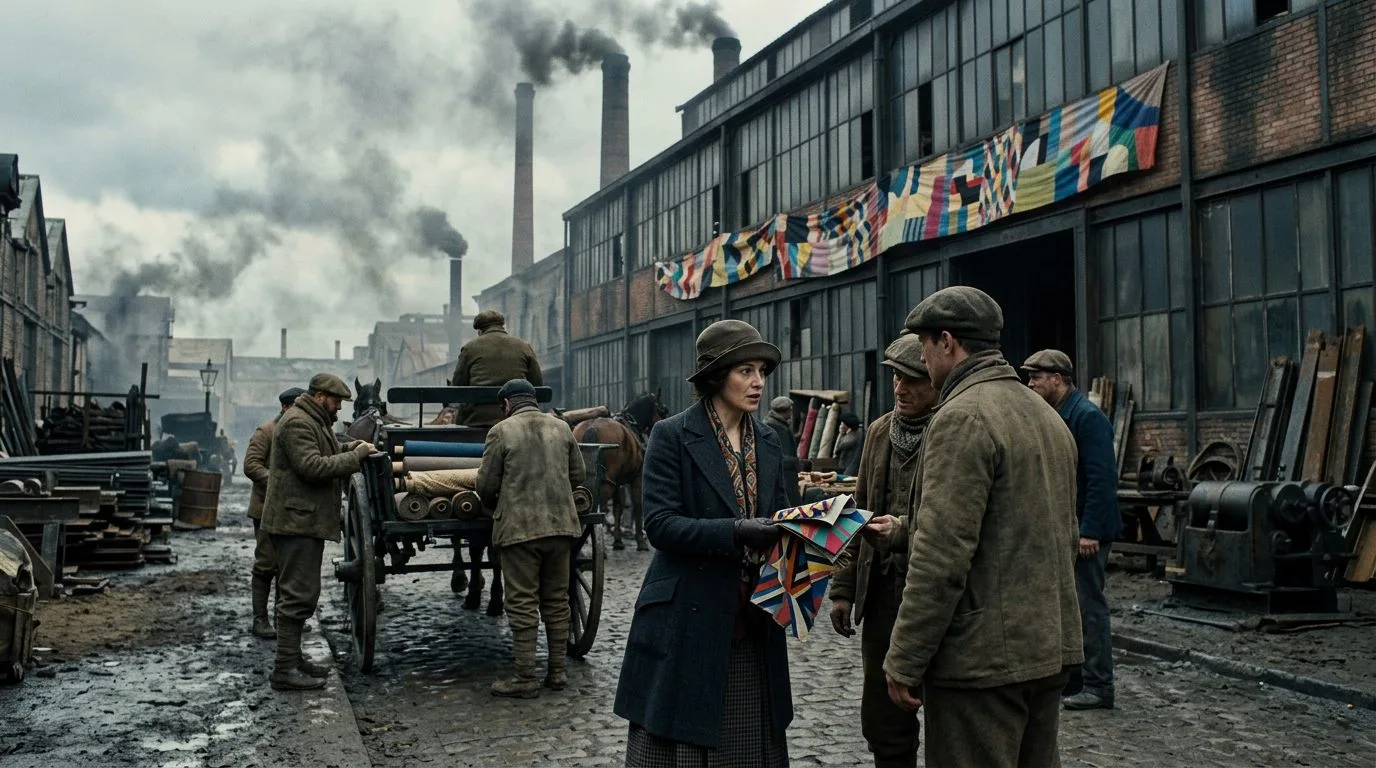
Sonia Delaunay revolutionized color theory.
Sonia Delaunay didn’t recognize boundaries between fine art, fashion, and design—so she obliterated them entirely. Born Sarah Stern in 1885 in Odessa, Ukraine, she moved to Paris in 1905 and married artist Robert Delaunay in 1910. Together they pioneered Orphism, a colorful offshoot of Cubism emphasizing vibrant hues and geometric abstraction. But Sonia took the movement beyond canvas, applying its principles to clothing, textiles, furniture, and automobiles.
In 1911, she created a patchwork quilt for her infant son using brightly colored fabric scraps—effectively the first Orphist artwork. She developed the theory of “simultaneous contrast,” exploring how adjacent colors interact and intensify each other, a principle she applied to over 150 paintings created between 1911 and 1979.
6. Frida Kahlo Turned Personal Suffering Into Revolutionary Self-Portraits That Redefined the Genre
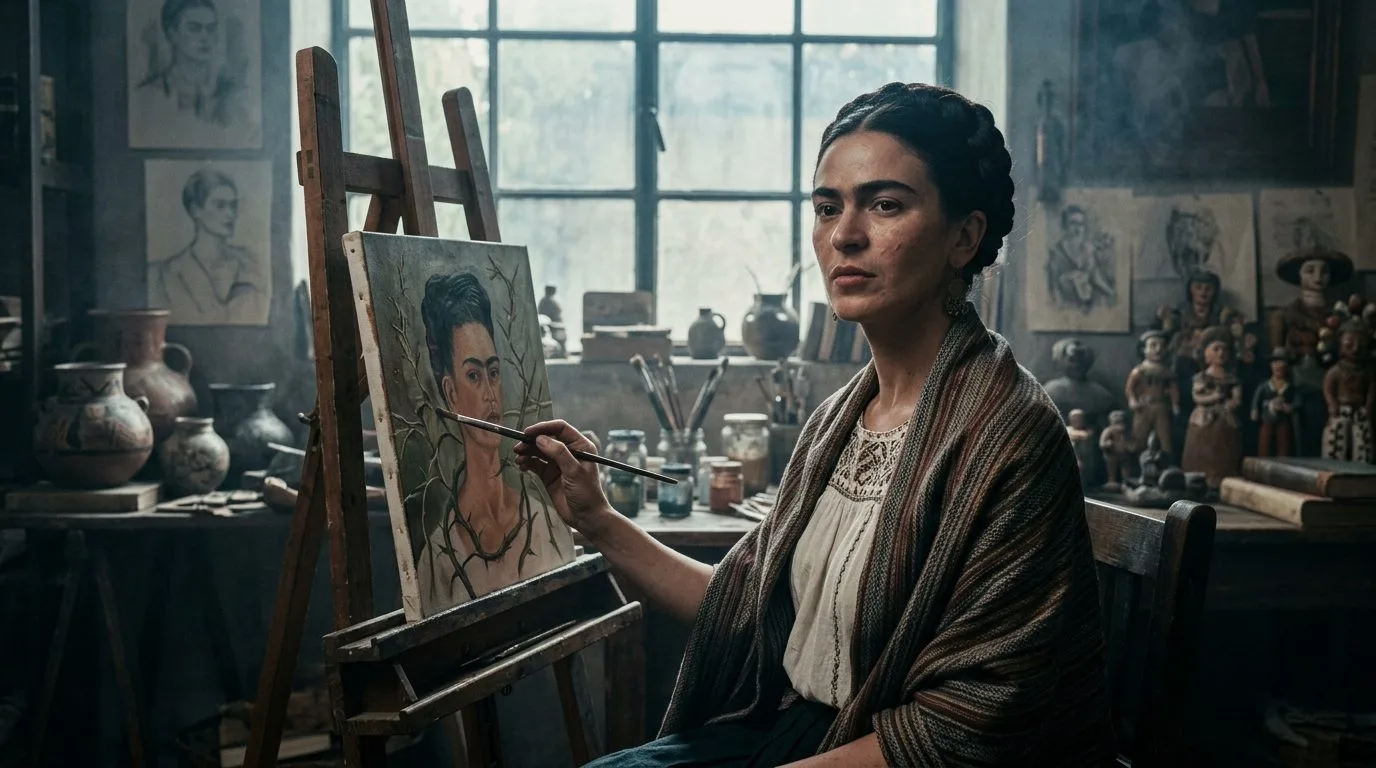
Kahlo’s raw self-portraits transformed pain into
Frida Kahlo painted herself 55 times, not out of vanity but as brutal investigations of identity, suffering, and survival. Born in 1907 in Coyoacán, Mexico, she survived polio at age six and a devastating bus accident at 18 that damaged her spine, confining her to lifelong pain. Painting from bed using a specially constructed easel and mirror, she developed a revolutionary visual language blending Mexican folk art, pre-Columbian symbolism, and Catholic imagery.
Her masterpiece “The Two Fridas” (1939) depicts two versions of herself with exposed, connected hearts bleeding onto white dresses—one in European clothing, one in traditional Tehuana dress. It explored her mixed heritage, marriage to muralist Diego Rivera, and fractured identity in ways no self-portrait had attempted.
7. Georgia O’Keeffe Painted Flowers So Large They Forced Viewers to See Nature Differently
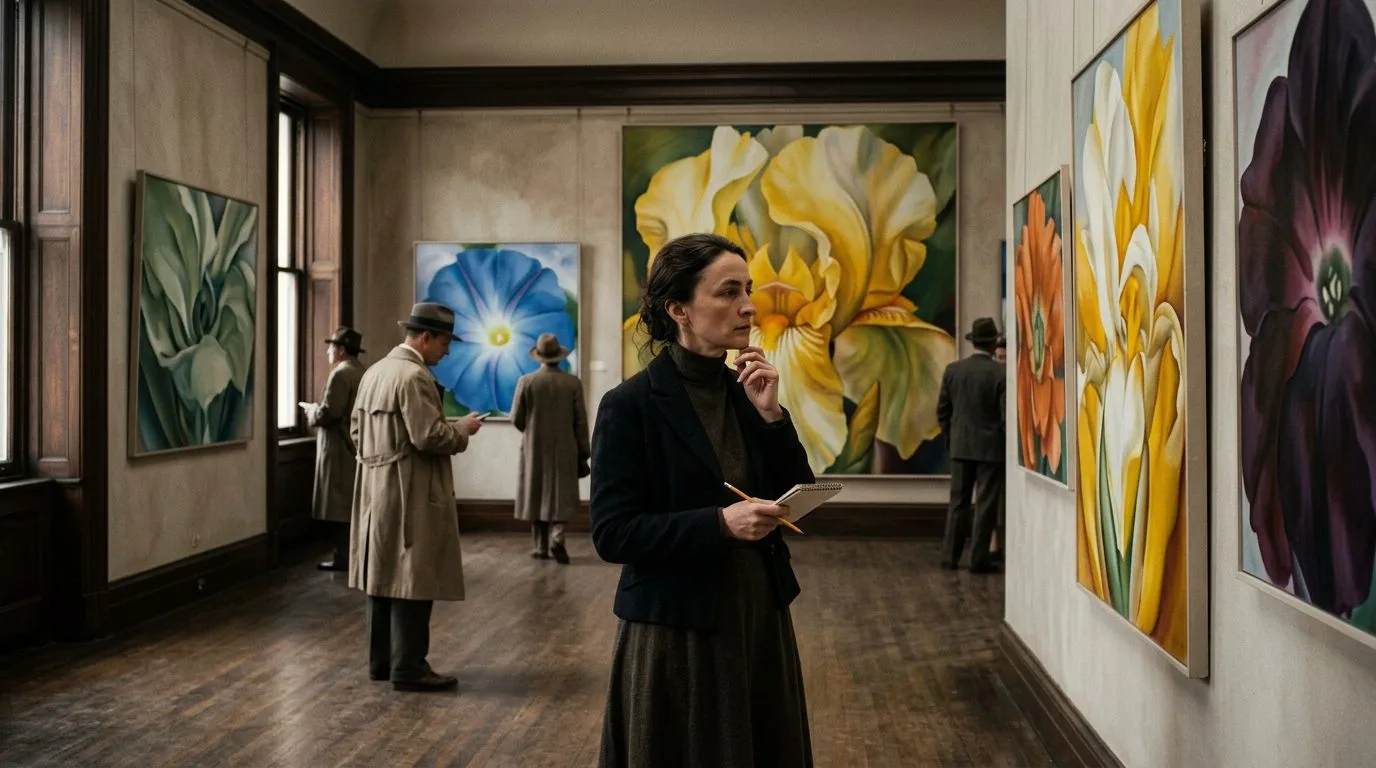
O’Keeffe’s oversized blooms reveal hidden details
When Georgia O’Keeffe exhibited her enormous flower paintings in 1920s New York, critics immediately sexualized them. O’Keeffe found this ridiculous. Born in 1887 in Wisconsin, she studied in Chicago and New York before developing a style that transformed American modernism. Her insight was simple: people stopped really looking at flowers. Her solution? Paint them enormous, forcing viewers to confront details they’d ignored. Her 1924 “Red Canna” depicts the flower at massive scale with senuous curves and dramatic shadows—not about sexuality, but about attention.
She created over 200 flower paintings between 1918 and the 1950s, investigating color, organic forms, and natural architecture. After visiting New Mexico in 1929, she painted the desert landscape with the same intensity: bleached skulls, stark horizons, and adobe churches.
8. Tamara de Lempicka Created the Definitive Art Deco Portrait Style and Lived As Boldly As She Painted
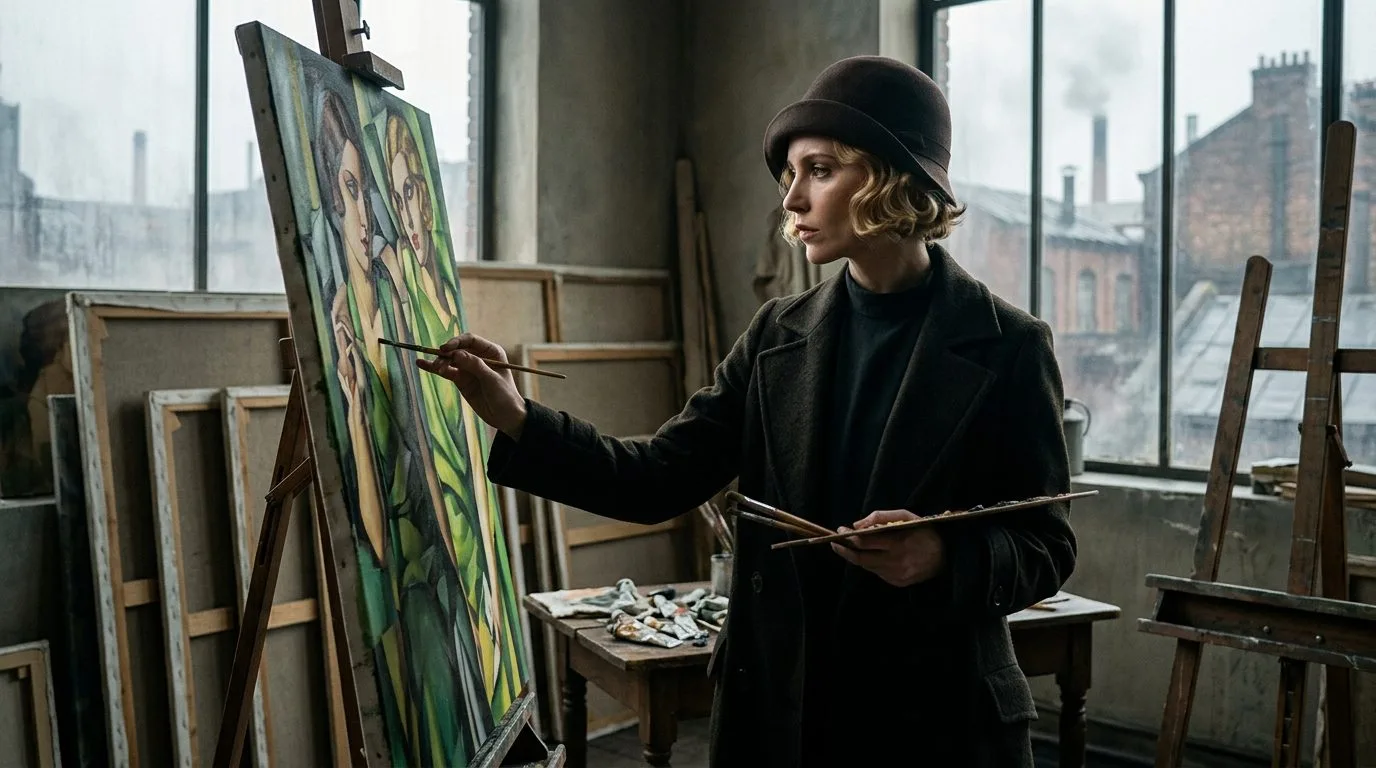
Tamara de Lempicka’s bold self-portraits defined
Tamara de Lempicka painted the Jazz Age exactly as it wanted to see itself—sleek, sophisticated, and dangerously glamorous. Born Maria Górska in Warsaw in 1898, she fled the Russian Revolution in 1918 and reinvented herself as a Paris society portrait painter. Her iconic 1925 “Auto-Portrait (Tamara in a Green Bugatti)” shows her confidently behind the wheel, and its sharp angles and bold colors defined Art Deco portraiture. The painting made her internationally famous when it appeared on the cover of German magazine “Die Dame.”
Lempicka developed a distinctive style combining Cubist fragmentation with neoclassical polish, creating elongated figures with porcelain skin against geometric backgrounds. Her wealthy clients—European aristocrats and American industrialists—wanted portraits that made them look modern and powerful.
9. Leonora Carrington Painted Surrealist Masterpieces After Escaping a Nazi Asylum
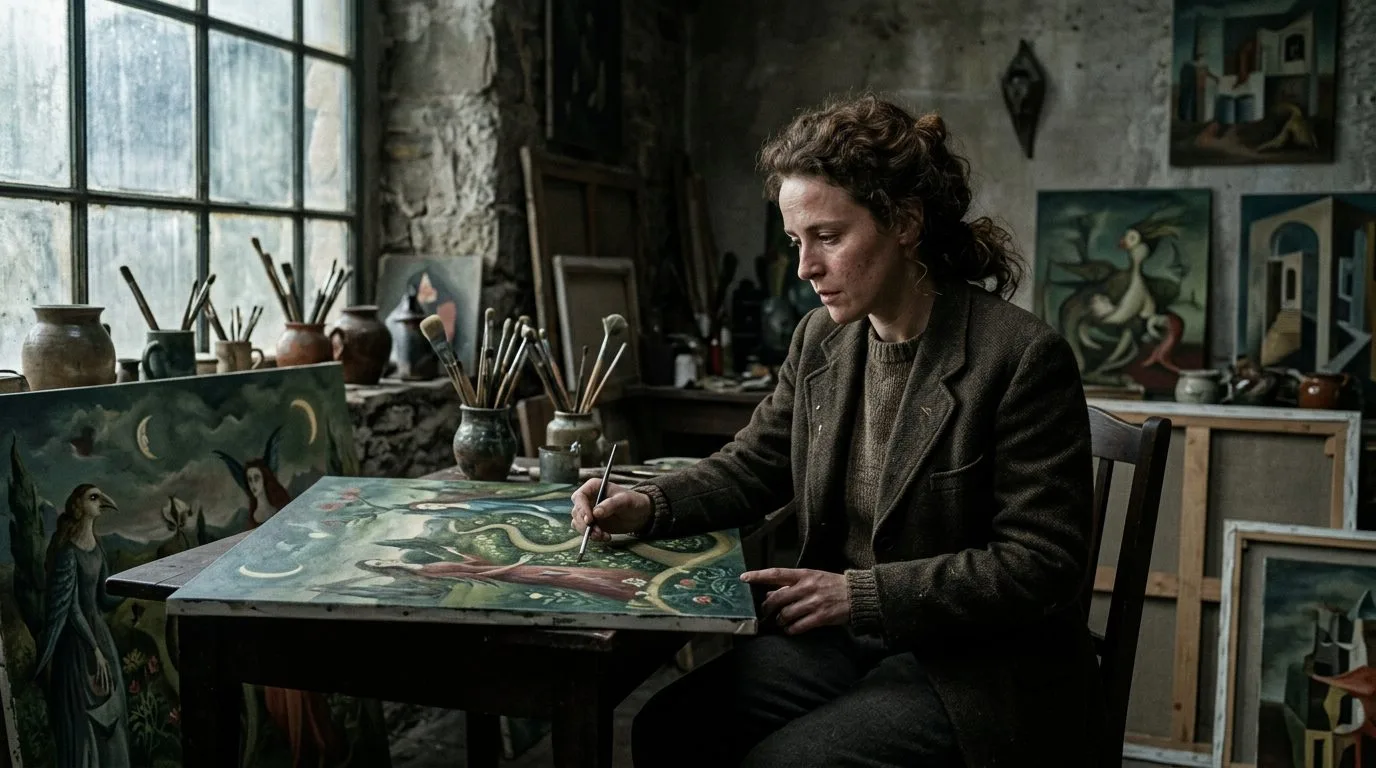
Leonora Carrington’s surreal paintings emerged
Leonora Carrington’s life was more surreal than her paintings—which featured women transforming into horses, houses sprouting from trees, and cosmic rituals. Born in 1917 in Lancashire, England, she rebelled against her wealthy family by joining the Surrealist movement in Paris in 1937. She became involved with artist Max Ernst, but when Nazis arrested him in 1940, Carrington suffered a breakdown. Her family committed her to a Spanish asylum where she endured brutal convulsive therapy before escaping to Portugal, then New York, and finally Mexico City in 1942, where she lived for the next 69 years.
Her paintings rejected the male Surrealist tradition of depicting women as passive muses. Instead, Carrington created powerful female protagonists controlling magical forces.
10. Lee Krasner Pioneered Abstract Expressionism While Her Husband Got the Credit
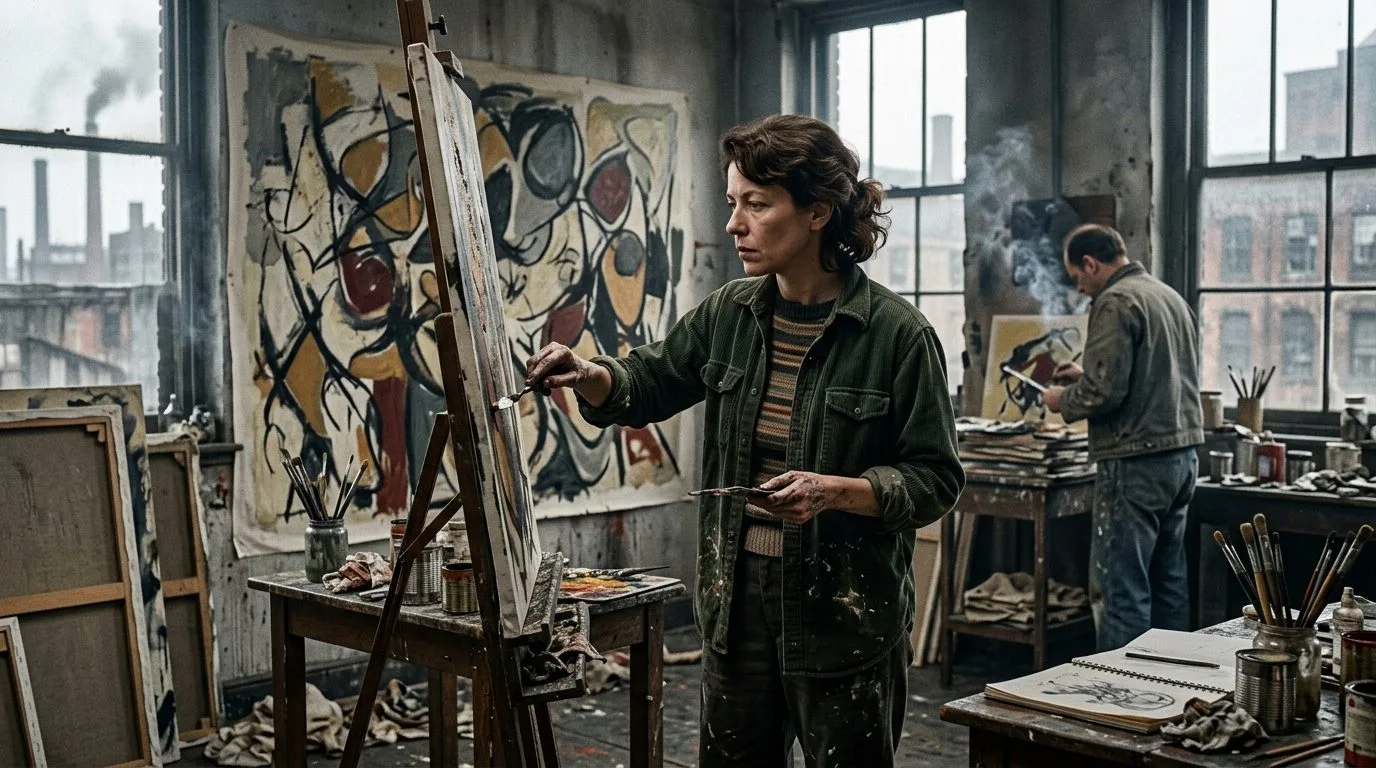
Lee Krasner’s Abstract Expressionist Works
Lee Krasner was creating radical abstract paintings in 1946—before most Abstract Expressionists had abandoned representational imagery. Born in Brooklyn in 1908 to Russian-Jewish immigrants, she studied at Cooper Union and the National Academy of Design, then worked on WPA murals during the Depression. By the early 1940s, she’d developed a mature abstract style with biomorphic forms and gestural brushwork that would define postwar American painting.
Then she married Jackson Pollock in 1945, and art history tried to erase her. Her 1946 painting “Noon” features dense layers creating an all-over composition—a revolutionary approach she developed independently of Pollock’s drip paintings, which wouldn’t appear until 1947. Her “Little Image” paintings (1946-1950) were small canvases with intricate marks that influenced numerous artists.
Did You Know?
These ten artists didn’t just create beautiful works—they fundamentally transformed how art could be made, what subjects deserved serious treatment, and who could claim the title of artistic revolutionary. From Berthe Morisot’s radical Impressionist visions in the 1870s to Lee Krasner’s pioneering abstractions in the 1940s, they invented movements, techniques, and visual languages that male artists often received credit for developing. Their exclusion from art history wasn’t accidental oversight; it was systematic erasure based on gender. Even when they achieved commercial success, critical recognition, and technical innovations that exceeded their male contemporaries, historians minimized their contributions or attributed their achievements to husbands, lovers, and male colleagues. The recent surge in exhibitions, scholarship, and auction prices for these artists represents not the discovery of lost talent, but the correction of deliberate historical injustice. Today, as museums revisit their collections and art historians rewrite canonical narratives, these ten women are finally receiving their deserved recognition as the revolutionaries they always were. Their courage, creativity, and refusal to accept artistic limitations continue inspiring contemporary artists worldwide—proving that genius transcends the barriers societies construct to contain it.