
Hollywood gave us Russell Crowe’s heroic Maximus, but real gladiatorial games were far stranger. Female fighters performed topless, blood sold as medicine, and thumbs up meant death. The arena held secrets that would shock even Romans.
1. Female Gladiators Fought Topless to Prove Their Gender
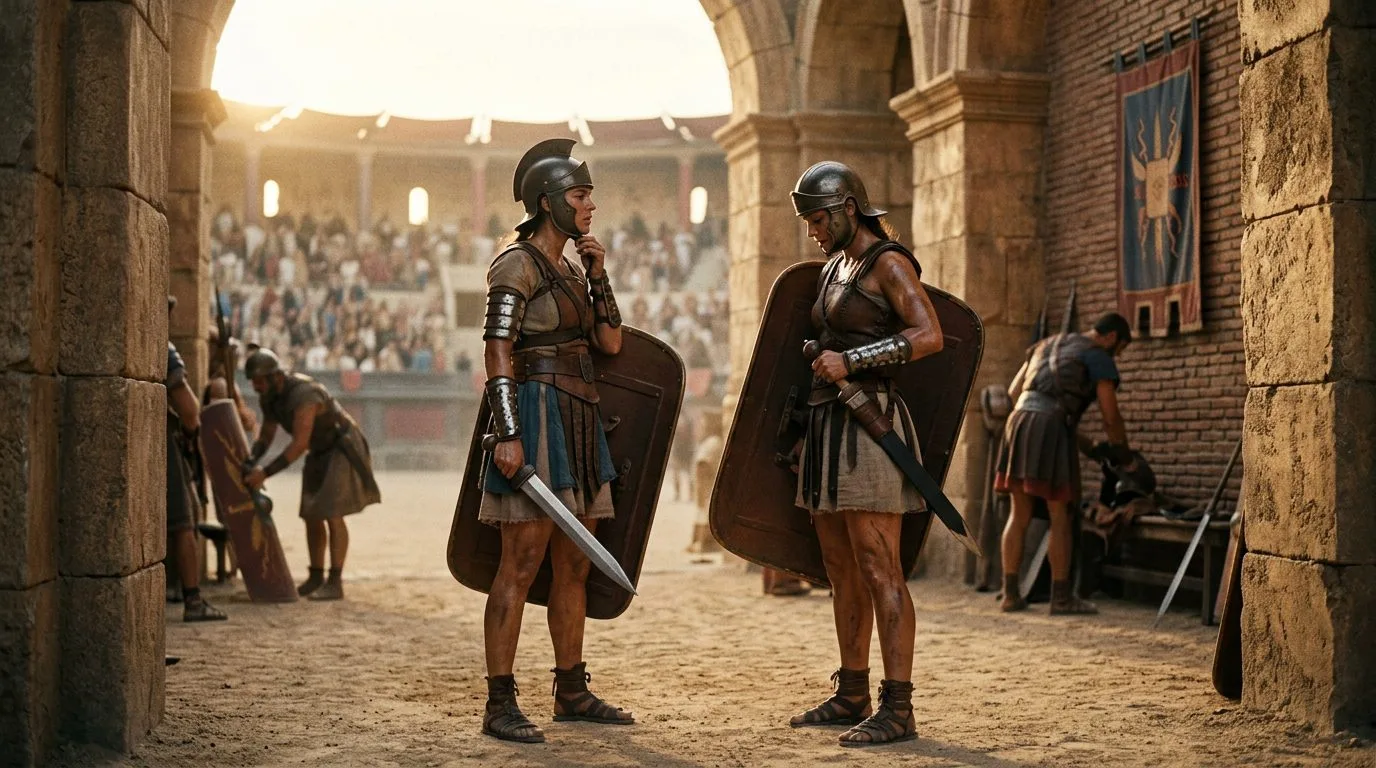
Ancient female gladiators fought bare-chested.
Women gladiators, called gladiatrices, fought bare-chested in the arena to prove they weren’t men disguised as women. Emperor Septimius Severus banned female gladiators in 200 CE after they became too popular, threatening traditional Roman gender roles. A marble relief from Halicarnassus depicts two women fighters named Amazon and Achillia battling with swords and shields. These fighters trained in the same schools as men but faced additional humiliation—stripping before crowds of 50,000 spectators. Archaeological evidence from Londinium shows gladiatrix graves contained lamp oil and burned ritual offerings, suggesting Romans viewed them as both entertainers and outcasts worthy of posthumous honor.
Source: smithsonianmag.com
2. Gladiators Were Intentionally Fattened Like Livestock
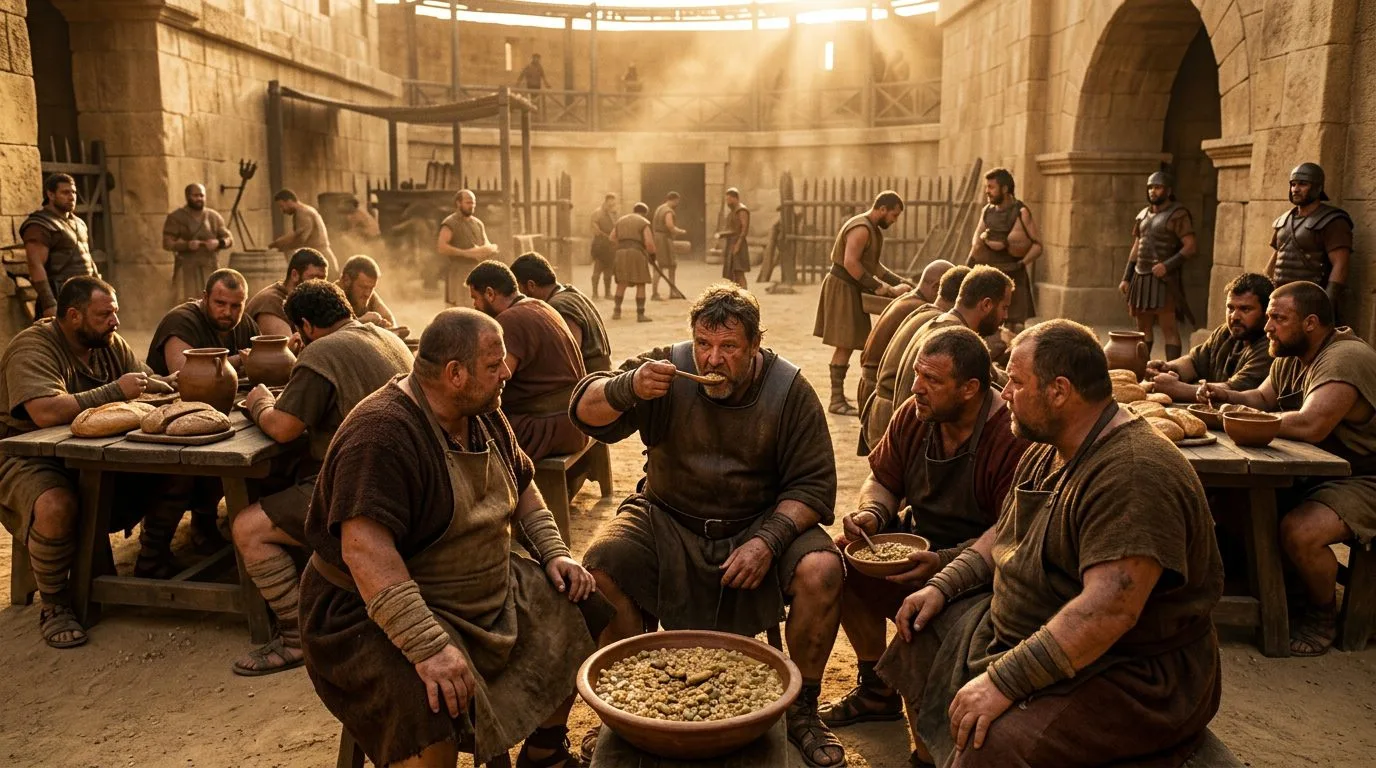
Ancient gladiators consumed high-calorie diets
Gladiators consumed a high-calorie barley and bean diet designed to make them overweight by modern standards, with body fat percentages reaching 25 percent or higher. This protective fat layer kept sword cuts shallow and increased blood flow for dramatic effect without causing fatal wounds. Bone analysis from a gladiator cemetery in Ephesus dating to 200 CE revealed elevated strontium levels, proving fighters ate mainly plant-based gruel called “hordearii” or “barley men.” A 180-pound gladiator needed roughly 3,500 calories daily—more than a Roman legionary. The fat absorbed blade impacts and created spectacular superficial bleeding that satisfied crowds without killing valuable fighters who cost 2,000 denarii to train.
Source: history.com
3. Gladiator Blood Sold as Miracle Medicine and Love Potion
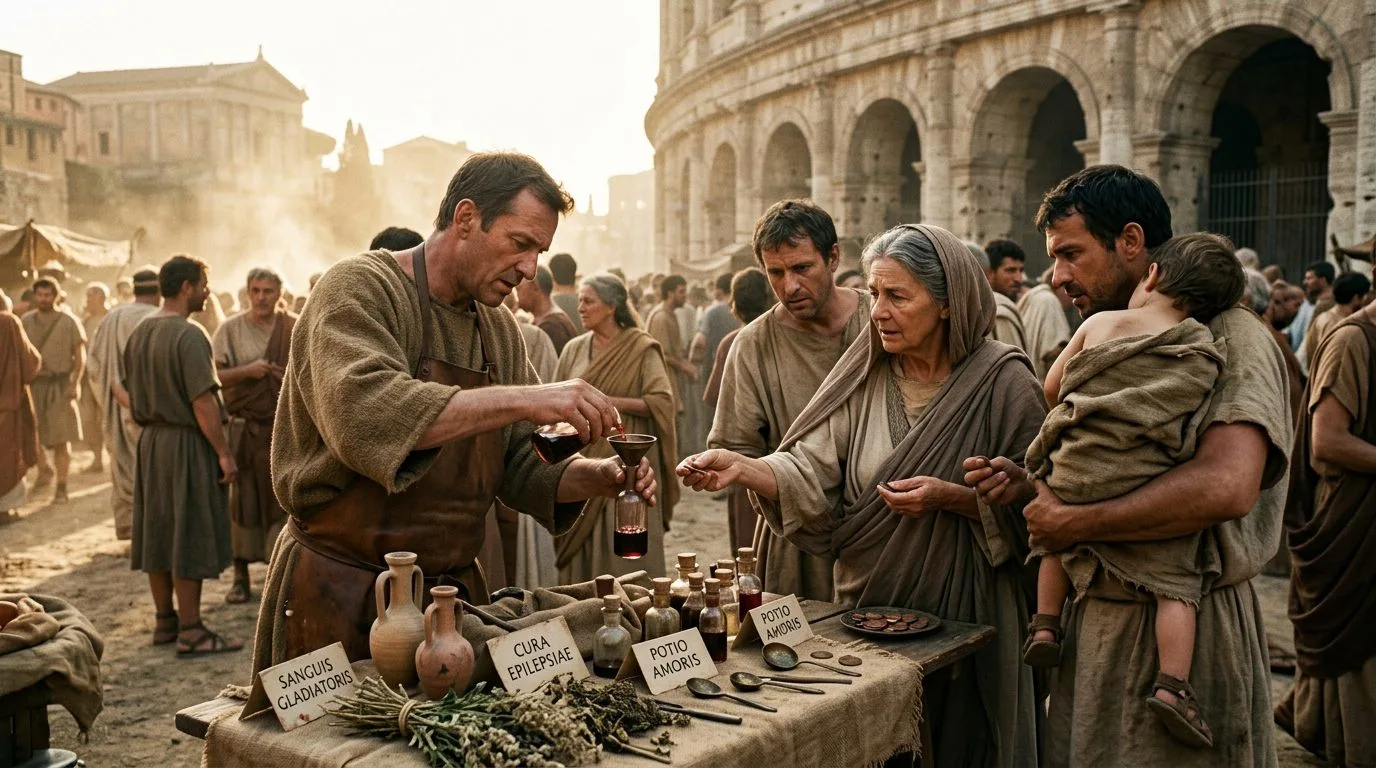
Ancient Romans drank gladiator blood for health.
Roman physicians like Pliny the Elder recommended drinking fresh gladiator blood to cure epilepsy, believing the fighter’s strength transferred to the sick. Vendors sold blood immediately after fights for 5 to 10 asses per cup, and desperate epileptics rushed into the arena to drink it warm from dying gladiators. Women purchased blood mixed with wine as an aphrodisiac, while fathers fed it to weak sons to increase masculinity. The Colosseum employed specialized blood collectors called “harenarii” who bottled and sold approximately 200 liters per major event. This practice continued until 404 CE when Emperor Honorius banned gladiatorial combat, though blood from executed criminals remained available until the 6th century.
Source: britannica.com
4. Referees Stopped Fights and Awarded Technical Knockouts
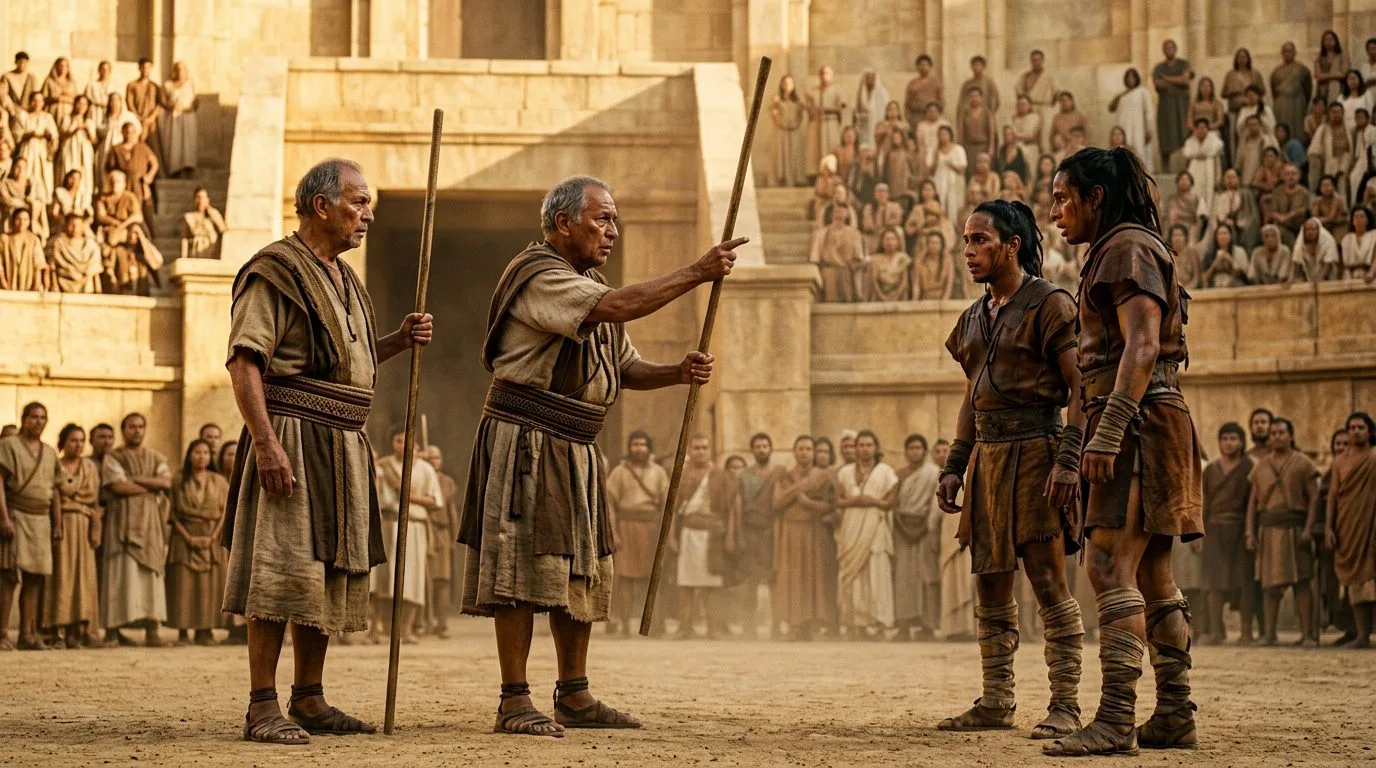
Referees halted bouts to protect fighters.
Two referees called “summa rudis” and “secunda rudis” enforced strict combat rules with long wooden staffs, stopping matches when fighters violated regulations or suffered excessive wounds. The senior referee could declare “stans missus”—a standing draw where both gladiators left alive without a decisive winner, occurring in roughly 1 in 5 matches. Graffiti from Pompeii records 47 fights where referees awarded technical victories when one combatant couldn’t continue due to heat exhaustion in 120-degree arena temperatures. Referees wore white tunics and carried staffs measuring 6 feet long to separate fighters from safe distances. Corrupt referees accepted bribes of 500 denarii to favor specific gladiators, leading Emperor Domitian to execute three officials in 89 CE.
Source: history.com
5. Thumbs Up Actually Signaled Death, Not Mercy
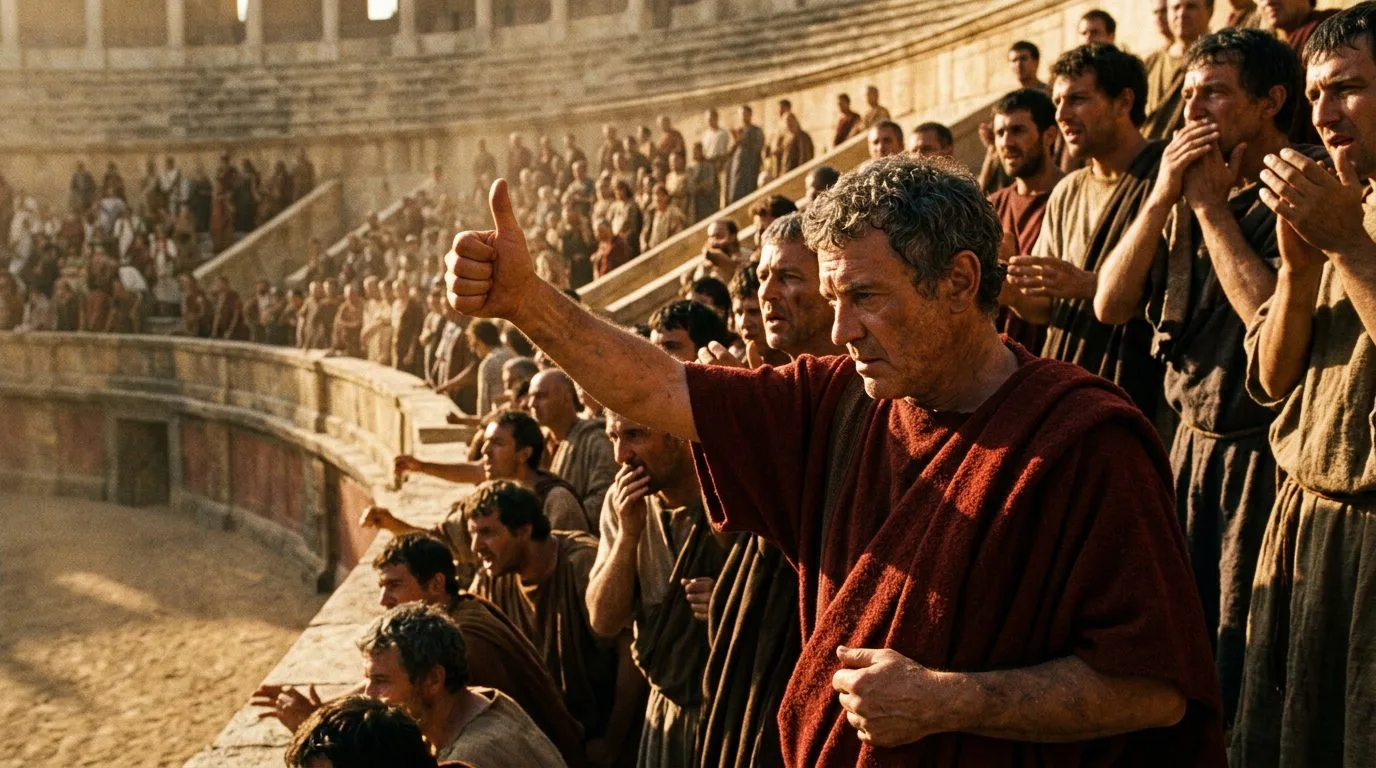
Thumbs Up Actually Signaled Death, Not Mercy
Modern movies reversed the thumb signals—Romans thrust thumbs upward to mimic a raised sword demanding death, while hiding the thumb inside a closed fist granted mercy. The Latin phrase “pollice verso” meant “turned thumb” but scholars debate whether it turned up, down, or sideways to indicate the kill command. A 19th-century painting by Jean-Léon Gérôme popularized the incorrect thumbs-down interpretation that Hollywood adopted. Contemporary accounts by Juvenal describe crowds waving handkerchiefs and shouting “mitte” for mercy, occurring in approximately 40 percent of defeats. Emperors typically followed popular opinion, though Caligula reportedly ordered executions against crowd wishes 15 times during his 4-year reign from 37 to 41 CE.
Source: smithsonianmag.com
6. Vegetarian Diets Built Protective Fat Layers for Combat
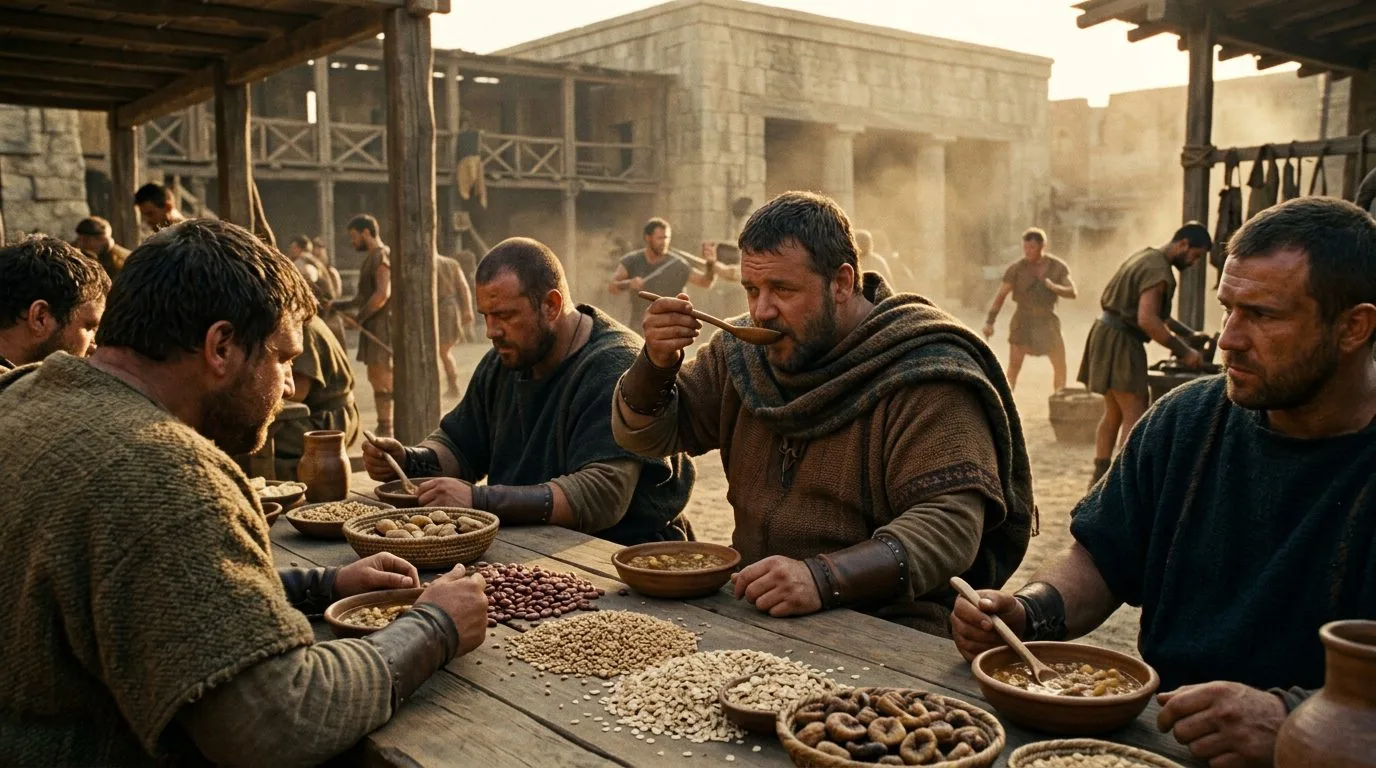
Ancient warriors relied on vegetarian fare for
Gladiators rarely ate meat, subsisting instead on beans, barley, oats, and dried fruit to build subcutaneous fat that protected vital organs during combat. Analysis of 70 skeletons from a gladiator graveyard in Turkey revealed bone collagen isotopes matching plant-based diets, with meat consumption less than 2 percent. Fighters drank a calcium ash tonic called “gladiatorentrunk” made from burned plant matter to strengthen bones against fractures. This vegetarian regimen cost ludus owners only 15 denarii monthly per gladiator compared to 60 denarii for meat-fed legionaries. The high-carbohydrate diet produced fighters weighing 200 pounds with 20 to 30 percent body fat—ideal for surviving non-lethal wounds that created spectacular blood sprays entertaining 80,000 spectators at the Colosseum.
Source: history.com
7. Criminals Reenacted Myths With Guaranteed Real Deaths
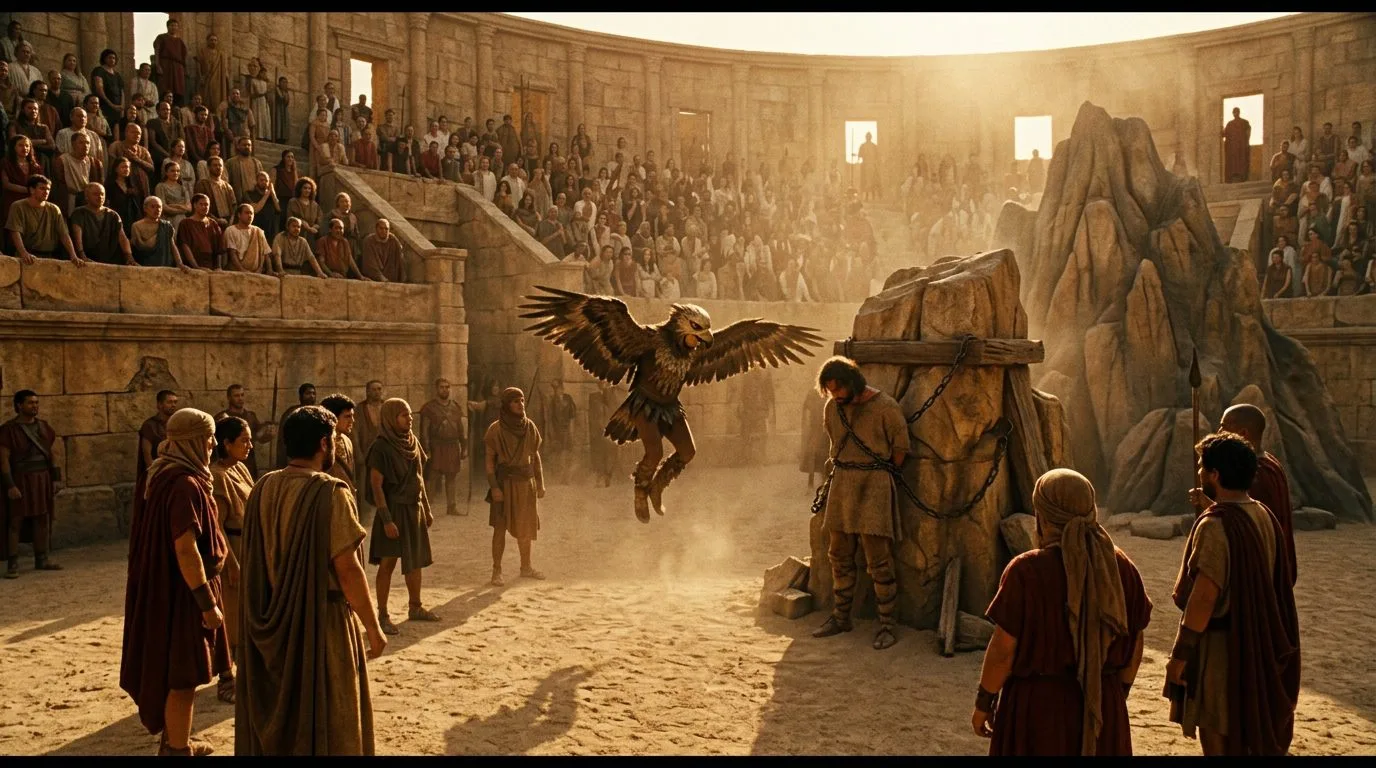
Deadly Performances: When Crime Met Mythology
Convicted criminals performed fatal mythological reenactments called “noxii” where the condemned played characters doomed to die exactly as the myth described. A thief might play Prometheus chained to a rock while a trained bear devoured his liver, or a murderer portrayed Icarus wearing real wax wings that melted over flames, causing him to fall onto sharpened stakes. The poet Martial described watching a criminal dressed as Orpheus torn apart by bears in 80 CE during the Colosseum’s opening games. These “fatal charades” occurred during the midday lull when wealthy Romans lunched, entertaining lower-class crowds with 30 to 40 executions disguised as theater. Emperor Claudius reportedly watched 200 mythological executions in a single day during his 13-year reign ending in 54 CE.
Source: britannica.com
8. Celebrity Gladiators Earned Fortunes and Fanatic Followings
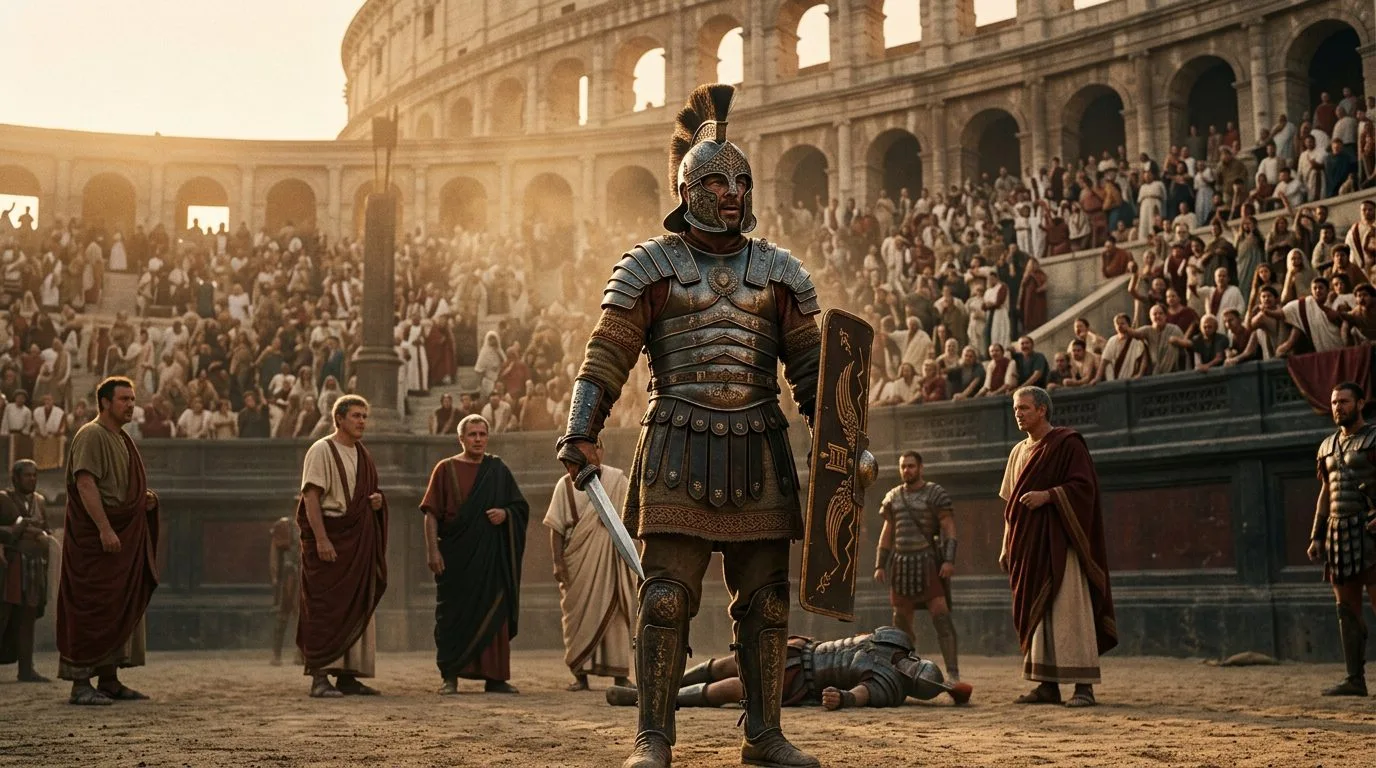
Famous gladiators amassed wealth and devoted fans.
Successful gladiators like Flamma accumulated prize money worth 100,000 sestertii—equal to 25 years of a soldier’s salary—and rejected freedom four times to continue fighting. Graffiti in Pompeii declares “Celadus the Thracian makes the girls swoon,” while women left love notes scratched into arena walls for their favorite fighters. The emperor Commodus fought as a gladiator 735 times between 180 and 192 CE, charging the treasury 1 million sestertii per appearance while demanding guaranteed victories. Victorious gladiators received palm branches, prize money of 2,000 to 5,000 denarii, and endorsement deals with wine merchants and olive oil producers. Top fighters owned slaves, villas, and businesses, with the champion Narcissus earning enough to purchase his freedom and open three gladiator schools.
Source: smithsonianmag.com
9. Massive Naval Battles Flooded Arenas With Thousands of Fighters
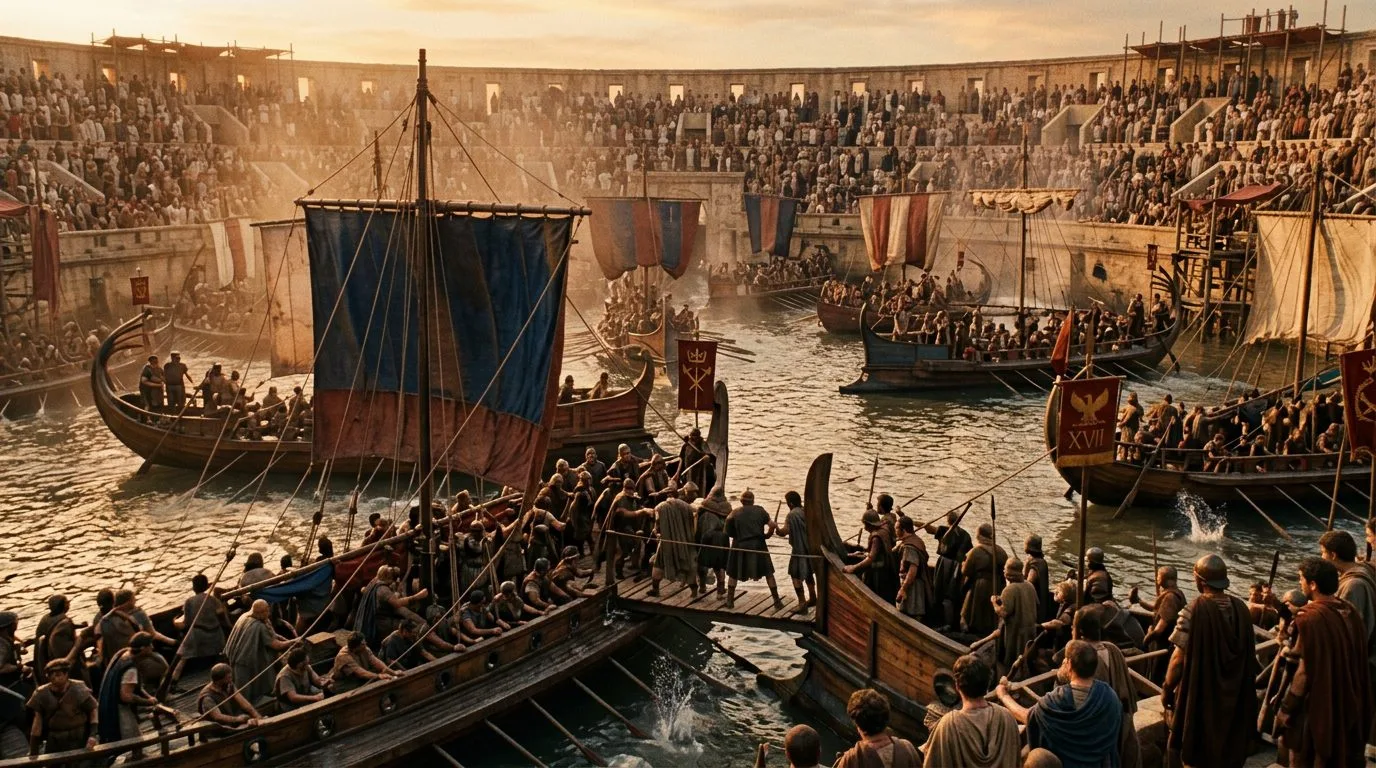
Ancient arenas staged epic water battles with
Engineers flooded entire arenas for “naumachia”—staged naval battles featuring up to 19,000 fighters aboard full-scale warships recreating historical conflicts. Julius Caesar excavated an artificial lake on the Campus Martius in 46 BCE, filling it with water pumped from the Tiber River for 3,000 combatants and 2,000 rowers to reenact battles between Egyptian and Phoenician fleets. Emperor Augustus staged the largest naumachia in 2 BCE using a basin measuring 1,800 by 1,200 feet—larger than 35 football fields—where 30 warships and 3,000 men fought to the death. The Colosseum’s lower level could be flooded with 7 feet of water through underground aqueduct channels, though this capability ended around 80 CE when permanent underground structures made flooding impossible.
Source: history.com
10. Gladiator Schools Outnumbered Modern Gyms Per Capita
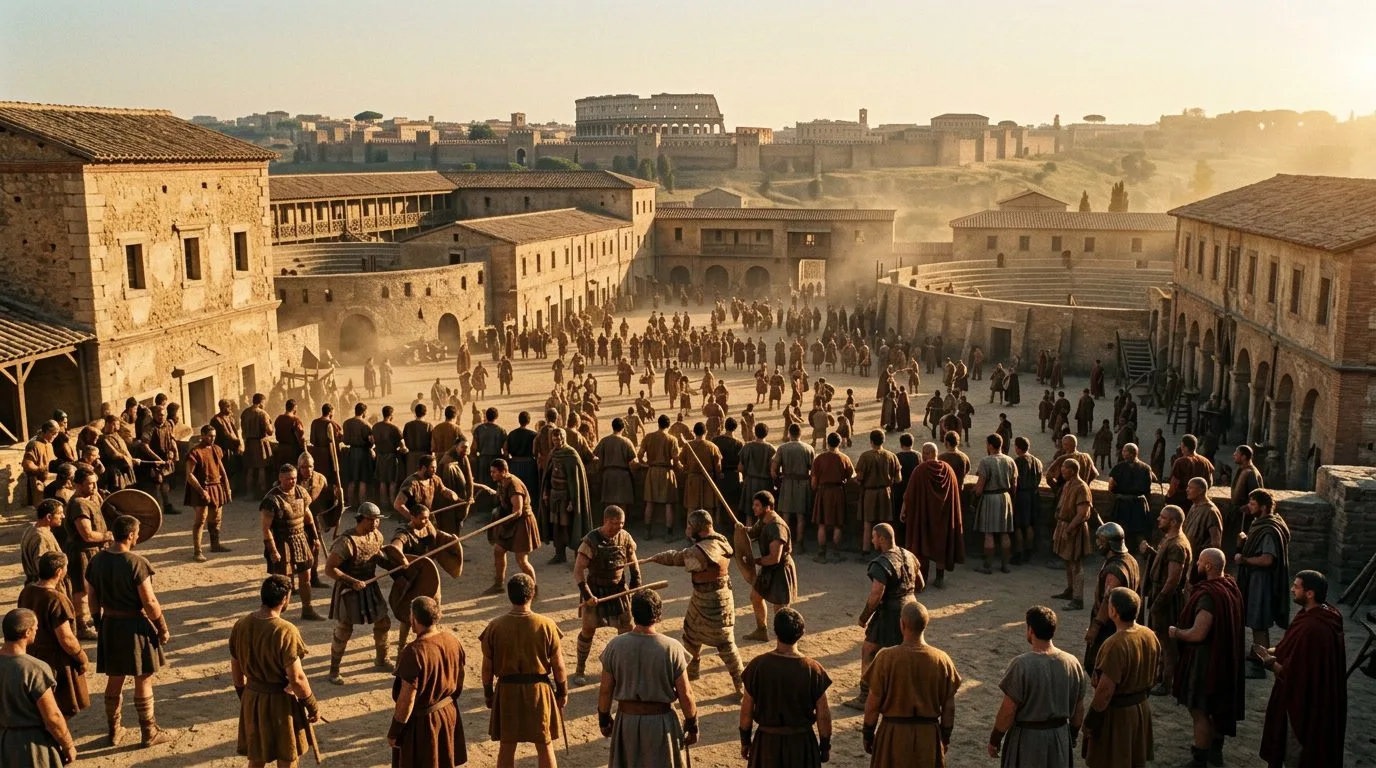
Ancient Rome’s ludus gladiatorius rivaled modern
Rome housed over 100 gladiator schools called “ludi” by 100 CE, giving the city one training facility per 10,000 residents—triple the ratio of modern fitness centers. The Ludus Magnus, largest gladiator school, stood four stories tall with 140 training cells, underground tunnels to the Colosseum, and a practice arena accommodating 3,000 spectators who paid to watch gladiators train. Schools owned between 50 and 400 fighters worth 800,000 to 6 million sestertii in total human inventory. Trainers called “doctores” specialized in specific fighting styles, earning 1,000 denarii monthly—five times a legionary’s pay. The lanista Gnaeus Alleius Nigidius Maius owned Pompeii’s premier ludus with 89 gladiators, offering rental fighters to neighboring cities for 50,000 sestertii per event until Mount Vesuvius buried his business in 79 CE.
Source: britannica.com
Did You Know?
Did You Know? The last recorded gladiator fight occurred in 404 CE when a Christian monk named Telemachus jumped into the arena to stop the bloodshed—and was stoned to death by angry spectators. His martyrdom so shocked Emperor Honorius that he permanently banned gladiatorial combat, ending a tradition that had lasted 668 years. Ironically, the games designed to demonstrate Roman strength ultimately fell to one unarmed man’s courage.
Continue Exploring
For the weapons that created these brutal matchups — from the retiarius net to the secutor’s gladius — see 10 Roman gladiator weapons that decided life or death.