
At the height of their power, these civilizations commanded vast territories and built monumental cities. Then they vanished—abandoning thriving urban centers and leaving behind only ruins and unanswered questions that still puzzle historians today.
1. Indus Valley Civilization: The 4,000-Year-Old Mystery of Perfect City Planning
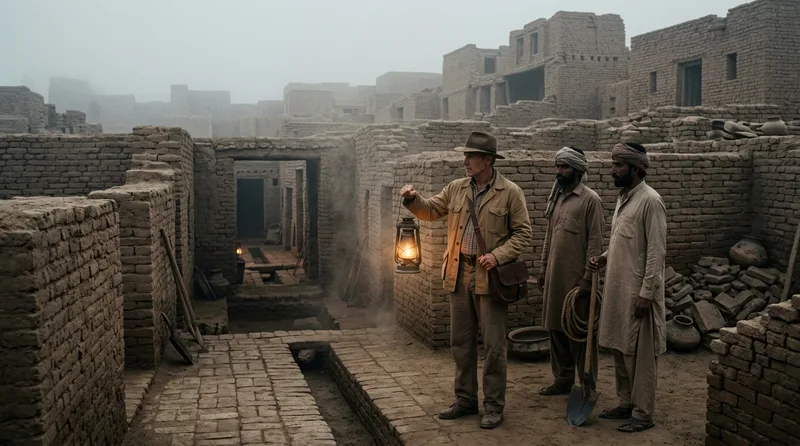
Around 1900 BCE, the inhabitants of Harappa and Mohenjo-daro—cities housing up to 40,000 people each—simply walked away from the most advanced urban centers of their time. These cities featured underground sewage systems, standardized fired-brick construction, and perfectly geometric street grids that wouldn’t be matched in sophistication until Roman times nearly 1,500 years later. Archaeologists have found no evidence of warfare, invasion, or natural catastrophe that could explain the abandonment. The civilization, which flourished from approximately 3300 to 1300 BCE across 1.5 million square kilometers of modern Pakistan and northwestern India, left behind over 1,400 settlements but not a single deciphered word of their script. Unlike contemporary Mesopotamian societies, the Indus Valley people built no palaces, temples, or monuments to rulers—suggesting an unusually egalitarian social structure. Their weights and measures were standardized across the entire civilization, indicating sophisticated trade networks and administrative control. Some researchers propose that the Ghaggar-Hakra river system dried up around 1900 BCE, forcing migration, while others point to evidence of gradually declining trade with Mesopotamia. What makes the disappearance particularly baffling is that there’s no archaeological evidence of a sudden collapse—no burned layers, no mass graves, no signs of epidemic. The population appears to have dispersed gradually into smaller rural settlements, taking their sophisticated urban planning knowledge with them into oblivion.
Source: britannica.com
2. Aksumite Empire: Africa’s Forgotten Superpower That Controlled Red Sea Trade
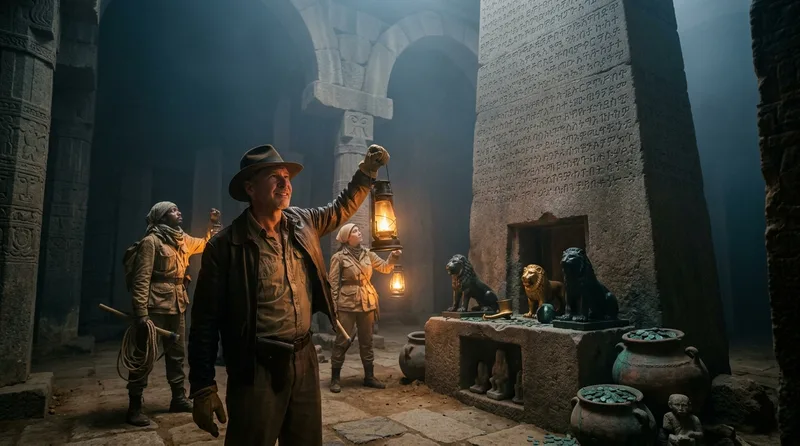
The Aksumite Empire, which dominated northeastern Africa and southern Arabia from roughly 100 to 940 CE, erected massive stone obelisks weighing up to 500 tons and stood as one of the four great powers of the ancient world alongside Rome, Persia, and China. King Ezana converted the empire to Christianity around 330 CE, making Aksum one of the first Christian states, yet by the 10th century, this once-mighty civilization had retreated into the Ethiopian highlands and faded from historical record. At its peak in the 4th century CE, Aksum controlled trade routes connecting the Roman Empire to India, minting its own gold, silver, and bronze coins that archaeologists have discovered as far away as India and the Arabian Peninsula. The capital city featured a seven-story palace, massive underground tombs, and the famous stelae—intricately carved granite monuments that remain engineering marvels. Arab chroniclers described Aksum as a thriving metropolis with thousands of inhabitants and extensive agricultural terraces feeding the population. The civilization’s decline coincided with the rise of Islamic powers that redirected trade routes away from the Red Sea ports Aksum controlled. Climate studies suggest severe droughts between 760 and 920 CE may have crippled agriculture, while deforestation from excessive fuel consumption for iron smelting possibly contributed to environmental collapse. What puzzles historians is the completeness of Aksum’s withdrawal—a civilization that once projected power across two continents simply disappeared from international consciousness, remembered only in local Ethiopian traditions.
Source: britannica.com
3. Mycenaean Greece: The Warriors Who Inspired Homer Then Vanished Into Legend
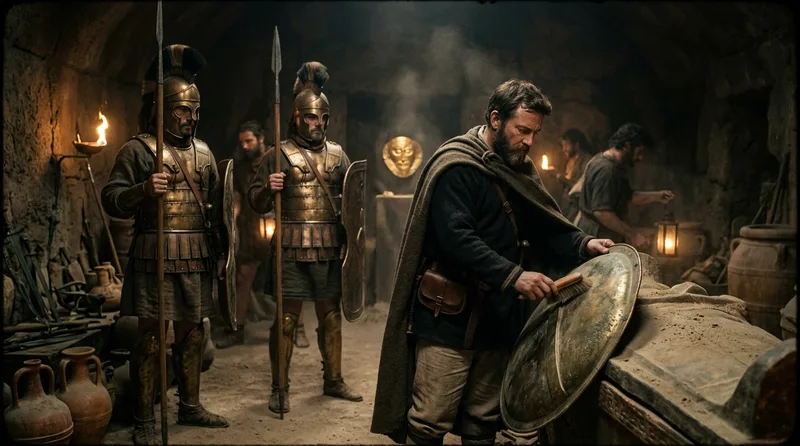
Around 1200 BCE, the Mycenaean civilization—the real-world inspiration for Homer’s Iliad—collapsed so completely that Greece entered a 400-year dark age where even the art of writing disappeared. These Bronze Age Greeks built fortress-palaces at Mycenae, Tiryns, and Pylos with walls so massive that later Greeks believed giants had constructed them, yet by 1100 BCE, nearly every major Mycenaean site showed evidence of violent destruction and abandonment. The Mycenaeans dominated the Aegean from approximately 1600 to 1100 BCE, conducting trade from Egypt to Italy and possibly launching the historical Trojan War around 1250 BCE. Their Linear B script, deciphered in the mid-20th century by Michael Ventris, revealed sophisticated palace bureaucracies tracking everything from chariot wheels to perfumed oils. Archaeological evidence shows that between 1250 and 1200 BCE, the Mycenaeans frantically reinforced their fortifications and even built underground water supplies at Mycenae and Athens—suggesting they knew disaster was approaching. The palaces burned, populations plummeted by an estimated 75 percent, and survivors abandoned coastal areas for defensible mountain villages. Theories for the collapse range from invasions by mysterious Sea Peoples documented in Egyptian records, to internal rebellions, to earthquakes, to drought-induced systems collapse. What makes the Mycenaean disappearance particularly significant is its regional impact—their fall triggered a domino effect that destabilized the entire Eastern Mediterranean, contributing to the Bronze Age Collapse that swept away multiple civilizations simultaneously.
Source: britannica.com
4. Moche Civilization: Peru’s Pyramid Builders Who Disappeared Before the Inca
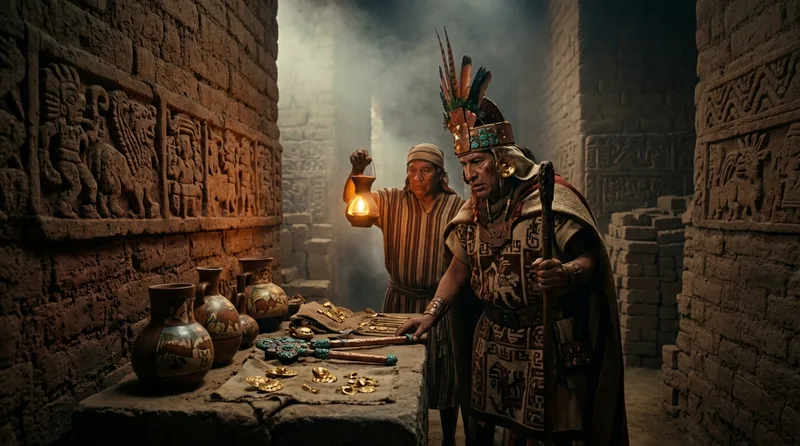
The Moche people constructed the largest adobe structure in the Americas—the Huaca del Sol, containing an estimated 130 million bricks—yet around 800 CE, they abandoned their magnificent ceremonial centers along Peru’s northern coast after thriving for over 700 years. Flourishing from approximately 100 to 800 CE, the Moche never formed a unified empire but rather maintained a shared culture across 350 kilometers of coastal desert, building impressive pyramids, creating sophisticated irrigation systems, and producing some of the finest pottery in pre-Columbian America. Their elaborate burial practices, revealed in the 1987 discovery of the Lord of Sipán tomb, showed rulers interred with hundreds of pottery vessels, gold and silver ornaments, and sacrificial victims—rivaling Egyptian pharaohs in opulence. Moche artists depicted their world in remarkable detail on pottery, showing everything from warfare and religious ceremonies to surprisingly explicit scenes of daily life, providing a visual encyclopedia of their culture. Around 650 CE, El Niño events brought catastrophic flooding followed by prolonged drought, as evidenced by a 30-year mega-drought identified in ice cores from the Quelccaya ice cap. Sand dunes began burying agricultural fields and canals, while earthquakes damaged irrigation infrastructure that required enormous communal labor to maintain. The Moche response varied by region—southern groups moved inland and continued for centuries, while northern populations apparently fragmented, with sites showing evidence of warfare and sacrifice increasing dramatically before final abandonment. The civilization that once sustained populations of tens of thousands simply dissolved, leaving their pyramids to be slowly buried by the desert sands.
Source: britannica.com
5. Cahokia: North America’s Lost Metropolis Larger Than Medieval London
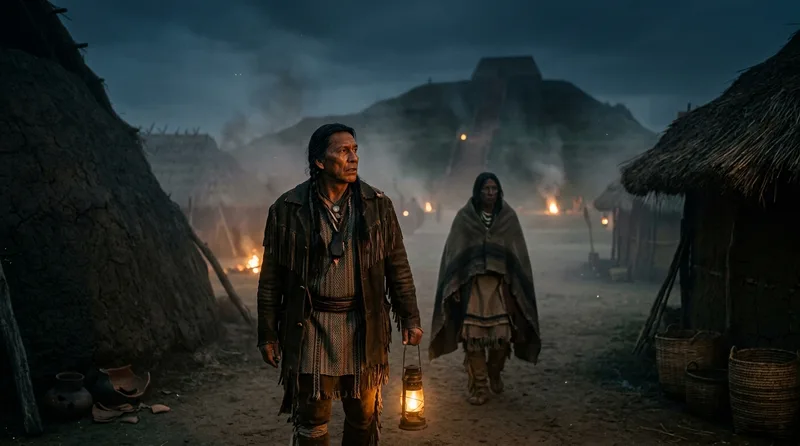
Around 1250 CE, Cahokia near modern St. Louis was home to an estimated 20,000 people—making it larger than London at the time—yet within 150 years, this sophisticated Native American city was completely abandoned, leaving behind only earthen mounds that early European settlers mistook for natural hills. The Mississippian culture at Cahokia, which peaked between 1050 and 1200 CE, constructed over 120 earthen mounds including Monks Mound, a terraced pyramid covering 14 acres and rising 100 feet high—the largest prehistoric earthen construction in the Americas. The city featured a sophisticated urban plan with a Grand Plaza covering 50 acres, residential neighborhoods, a wooden astronomical observatory called Woodhenge with 48 posts marking solar alignments, and a palisade wall requiring an estimated 20,000 logs that was rebuilt four times. Evidence suggests Cahokia’s influence extended across much of the eastern United States, with satellite communities adopting its architectural styles and participating in trade networks bringing materials from the Great Lakes to the Gulf Coast. Archaeological studies reveal environmental catastrophe contributed to abandonment—the population of 20,000 people and surrounding settlements totaling perhaps 50,000 deforested the region, hunted deer populations to near extinction, and polluted local waterways. A series of floods between 1200 and 1250 CE damaged agricultural fields, while a cold snap during the Little Ice Age around 1300 CE shortened growing seasons. By 1400 CE, Cahokia stood empty, and when French explorers arrived in the early 17th century, local tribes had no memory of who built the mysterious mounds.
Source: smithsonianmag.com
6. Angkor: The Jungle That Swallowed History’s Largest Pre-Industrial City
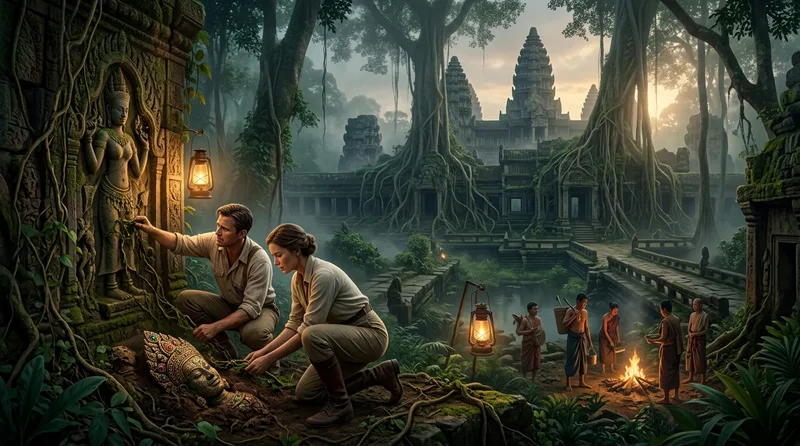
At its zenith in the 12th century CE, Angkor sprawled across 1,000 square kilometers and housed up to 750,000 people—making it the largest pre-industrial city in the world—yet by 1432 CE, the Khmer Empire had abandoned this magnificent capital to the encroaching jungle. The city, whose most famous temple Angkor Wat was completed around 1150 CE by King Suryavarman II, featured a sophisticated hydraulic system with hundreds of kilometers of canals, massive reservoirs called barays holding millions of cubic meters of water, and an agricultural infrastructure supporting multiple rice harvests annually. Angkor Wat itself, dedicated initially to the Hindu god Vishnu, covers 162 hectares and required an estimated 300,000 workers and 6,000 elephants to construct, with sandstone blocks transported from quarries 40 kilometers away. Recent LIDAR surveys revealed the true extent of Angkor’s urban sprawl, discovering temple complexes, road networks, and neighborhoods previously hidden beneath forest canopy. The empire’s collapse coincided with several converging crises in the 14th and 15th centuries—destructive wars with the neighboring Ayutthaya Kingdom, conversion from Hinduism to Theravada Buddhism that reduced temple-building and possibly temple maintenance, and most critically, climate upheaval. Tree ring studies and sediment cores show severe droughts alternating with intense monsoons between 1362 and 1392 CE, which likely damaged the elaborate water management system that Angkor’s survival depended upon. The final blow came in 1431 CE when Ayutthaya forces sacked the city, prompting Khmer kings to relocate to Phnom Penh, leaving Angkor’s temples to be slowly consumed by strangler figs and jungle.
Source: britannica.com
7. Tiwanaku Empire: Bolivia’s Mountain Metropolis That Defied Geography
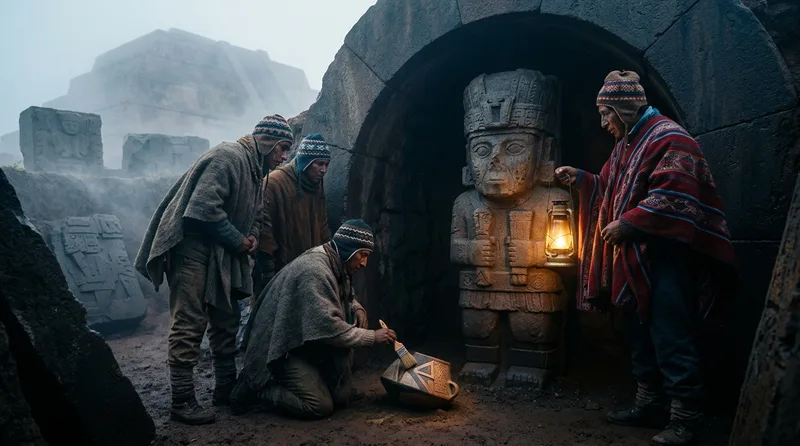
Perched at 3,800 meters above sea level near Lake Titicaca, Tiwanaku seemed an impossible location for a major civilization, yet from 500 to 1000 CE, this Bolivian empire dominated the Andes, supporting an estimated 40,000 people in its capital before mysteriously collapsing around 1000 CE. The city featured monumental stone architecture including the Akapana pyramid, a massive earthen platform faced with precisely cut andesite blocks and covering 18,000 square meters, along with the Gateway of the Sun, a single 10-ton block of andesite carved with intricate iconography that still baffles researchers. Tiwanaku engineers achieved remarkable agricultural success at extreme altitude by developing raised field systems called suka kollus—elevated platforms separated by water-filled canals that moderated temperature, prevented frost damage, and increased yields up to seven times compared to traditional methods. At its peak around 800 CE, Tiwanaku’s influence extended across much of modern Bolivia, southern Peru, northern Chile, and northwestern Argentina, with colonies and trading outposts spreading its distinctive religious iconography across the region. The civilization’s stone masons created blocks so precisely fitted that blades cannot slip between them, yet they accomplished this without iron tools, using only bronze implements and stone hammers. Around 1000 CE, a prolonged drought lasting decades struck the Altiplano region, as confirmed by sediment cores from Lake Titicaca showing dramatically reduced water levels between 950 and 1100 CE. The raised field system that enabled Tiwanaku’s success became its vulnerability—when water levels dropped, the sophisticated agricultural infrastructure failed. The population dispersed to smaller settlements around the lake, and by 1100 CE, the once-great capital stood abandoned.
Source: britannica.com
8. Minoan Civilization: The Sea Kings Whose Palaces Burned in a Single Generation

Around 1450 BCE, the palace at Knossos on Crete—a sprawling complex covering 20,000 square meters with over 1,300 rooms, advanced plumbing, and stunning frescoes—was destroyed along with nearly every other major Minoan site, ending a civilization that had flourished for over 1,000 years. The Minoans, who dominated the Aegean from approximately 2600 to 1450 BCE, built the first major European civilization, developing a still-undeciphered script called Linear A, constructing multi-story palaces with sophisticated drainage systems, and establishing trade networks reaching Egypt, Syria, and Anatolia. Sir Arthur Evans, who excavated Knossos beginning in the early 20th century, found evidence of sudden destruction—burned storage magazines still containing giant pithoi jars filled with olive oil, carbonized wooden beams, and collapsed walls. The civilization’s artistic achievements included vibrant frescoes depicting bull-leaping ceremonies, elegant pottery styles copied throughout the Mediterranean, and intricate gold jewelry requiring metallurgical techniques not matched for centuries. Most scholars now attribute the Minoan collapse to the volcanic eruption of Thera (modern Santorini) around 1600 BCE, which released energy equivalent to several hundred atomic bombs and generated tsunamis up to 15 meters high that devastated Crete’s northern coast, located just 110 kilometers away. However, the palaces were rebuilt after Thera only to be destroyed again around 1450 BCE, possibly by Mycenaean invasion or internal collapse following environmental damage. What makes the Minoan disappearance particularly poignant is how completely their culture vanished—their language died unread, their religion forgotten, and their sophisticated society replaced by the more militaristic Mycenaean Greeks.
Source: britannica.com
9. Classic Maya City-States: The Mysterious Collapse That Emptied 40 Cities
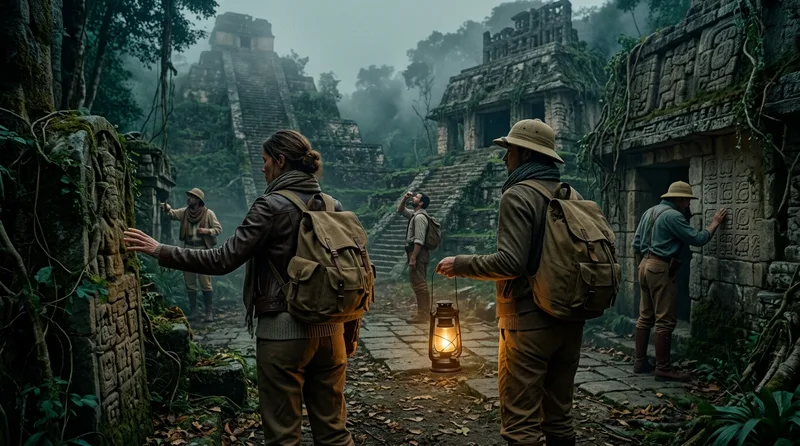
Between 800 and 900 CE, the Maya abandoned approximately 40 major cities across the Yucatan Peninsula and Guatemala, ending the Classic Period that had seen the civilization reach extraordinary heights of mathematics, astronomy, and architectural achievement. Cities like Tikal, which housed an estimated 100,000 people at its peak around 750 CE, featured pyramid temples rising over 60 meters high, intricate hieroglyphic inscriptions recording dynastic histories, and sophisticated water management systems including ten major reservoirs holding millions of liters. The Maya developed the concept of zero independently, created the most accurate pre-telescopic astronomical observations in the world, and maintained a complex Long Count calendar tracking cycles spanning millions of years. During the 8th century CE, Maya kings commissioned increasingly elaborate monuments—Copán’s Hieroglyphic Stairway, completed around 755 CE, contains over 2,200 individual glyphs making it the longest Maya text ever created. Yet construction abruptly ceased, with unfinished temples at multiple sites suggesting rapid abandonment. Sediment cores and stalagmite analysis reveal severe drought conditions between 800 and 1000 CE, with some periods experiencing 40 percent less rainfall than normal—catastrophic for agriculture supporting dense urban populations. The droughts coincided with intensifying warfare, as evidenced by increasing fortifications and violent imagery in art from the period. Population in the southern Maya lowlands collapsed by an estimated 90 percent, though Maya civilization continued in the northern Yucatan and Guatemalan highlands. The Classic Maya collapse remains one of archaeology’s great puzzles—how did a civilization that had weathered earlier droughts and conflicts fail so completely?
Source: britannica.com
10. Ancestral Puebloans: Chaco Canyon’s Architects Who Vanished Into Desert
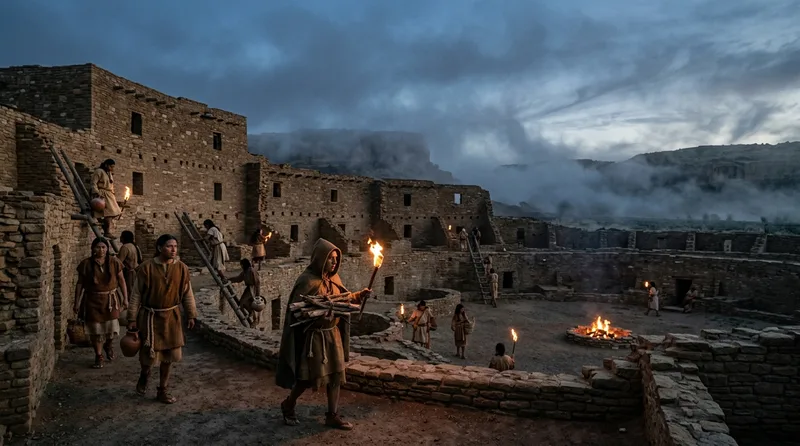
In Chaco Canyon, New Mexico, the Ancestral Puebloans constructed Pueblo Bonito around 850 CE—a massive D-shaped complex containing over 650 rooms and rising four stories high—yet by 1150 CE, they had abandoned this and other elaborate structures that had taken generations to build. The Chaco civilization, flourishing from approximately 850 to 1150 CE, engineered over 400 kilometers of ancient roads radiating from the canyon, built structures aligned to solar and lunar cycles, and created an architectural style requiring timber beams transported from forests over 80 kilometers away. Pueblo Bonito alone consumed an estimated 200,000 wooden beams, mostly ponderosa pine and spruce from the Chuska Mountains, hauled by hand since the Ancestral Puebloans lacked draft animals or wheeled vehicles. The great houses of Chaco featured sophisticated masonry with precisely fitted stone veneers, T-shaped doorways, and corner windows—architectural elements suggesting ceremonial rather than purely residential functions for structures that could theoretically house thousands but show evidence of far smaller permanent populations. Archaeological evidence indicates Chaco served as a ceremonial center where people from across the Four Corners region gathered periodically, possibly for religious ceremonies, astronomical observations, and redistribution of goods including macaws, copper bells, and cacao from Mesoamerica over 1,500 kilometers away. Tree ring studies show severe drought from 1130 to 1180 CE, while arroyo cutting eroded once-productive agricultural fields. Violence increased, with some sites showing evidence of warfare and even possible cannibalism. By 1200 CE, the Chacoans had migrated to areas with more reliable water sources, their descendants merging into modern Pueblo peoples who maintain oral traditions about the ancient canyon.
Source: britannica.com
Did You Know?
Did you know that when the Indus Valley Civilization collapsed around 1900 BCE, its inhabitants didn’t just abandon their cities—they apparently forgot how to write, with their sophisticated script disappearing completely and never being used again? Even more surprising, several of these vanished civilizations—the Maya, Ancestral Puebloans, and Tiwanaku—all collapsed during roughly the same period between 900 and 1200 CE, suggesting global climate patterns may have doomed distant cultures simultaneously. The next time you see ancient ruins, remember that we’re often closer in time to their builders than those builders were to the civilizations that inspired them.