
In 490 BCE, 10,000 Greeks faced 25,000 Persians at Marathon using a formation so effective it’s still studied today. While empires crumbled under invasion, some civilizations survived through defensive innovations that fundamentally changed warfare and preserved entire cultures.
1. Greek Phalanx Formation Crushed Persian Invasion at Marathon
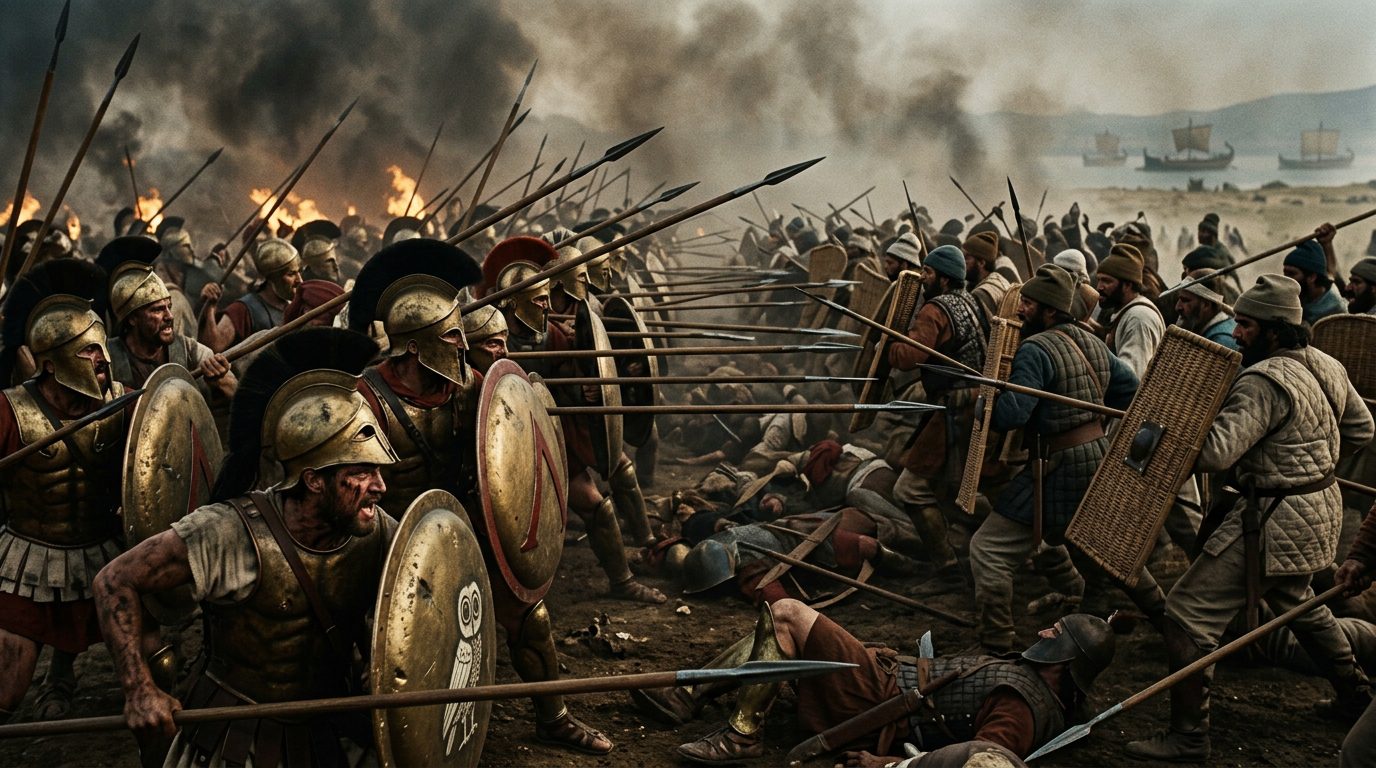
Greeks defeat Persians through superior tactics.
The Athenian general Miltiades deployed 10,000 hoplites in a revolutionary eight-deep phalanx formation on September 12, 490 BCE, creating an impenetrable wall of overlapping shields and spears. Each soldier’s bronze-faced aspis shield protected both himself and his neighbor, transforming individual warriors into a single armored organism. The Greeks strengthened their flanks while thinning the center, enveloping the Persian forces in a pincer movement that killed 6,400 invaders while losing only 192 defenders. This tactical innovation preserved Greek independence and prevented Persian domination of Europe for another decade.
Source: britannica.com
2. Roman Testudo Shield Formation Made Legions Nearly Invincible
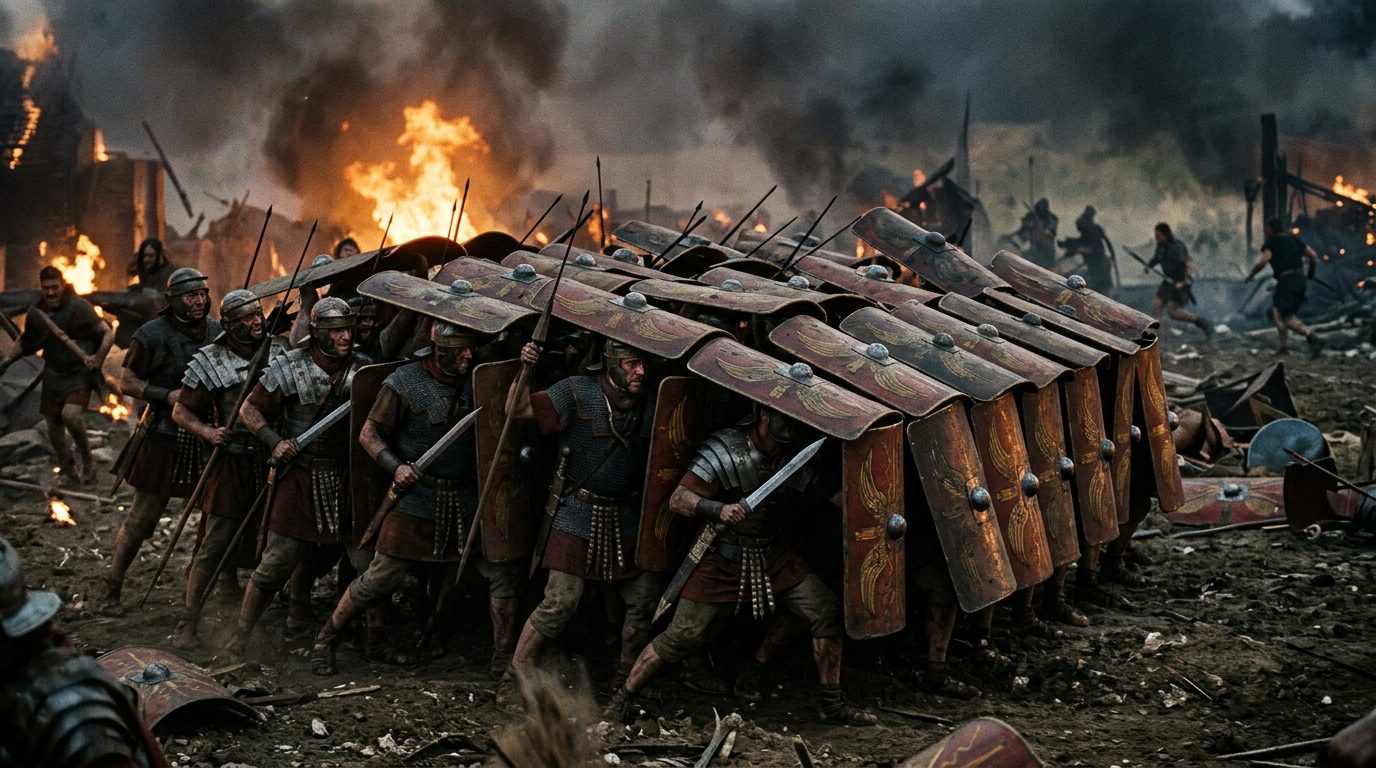
Soldiers locked shields in turtle formation for
Roman legionaries perfected the testudo or “tortoise” formation by 168 BCE, interlocking their rectangular scutum shields to create a mobile fortress that could advance under arrow storms. Soldiers on the sides and front held shields outward while those in the center raised theirs overhead, forming complete protection from missiles on all sides. Each scutum measured 41 inches tall and weighed 22 pounds, constructed from three layers of wooden strips covered in canvas and leather. This formation proved devastatingly effective during the siege of Masada in 73 CE, allowing Romans to build assault ramps while defenders rained projectiles harmlessly against the shield roof.
Source: britannica.com
3. Byzantine Greek Fire Incinerated Enemy Fleets for 800 Years
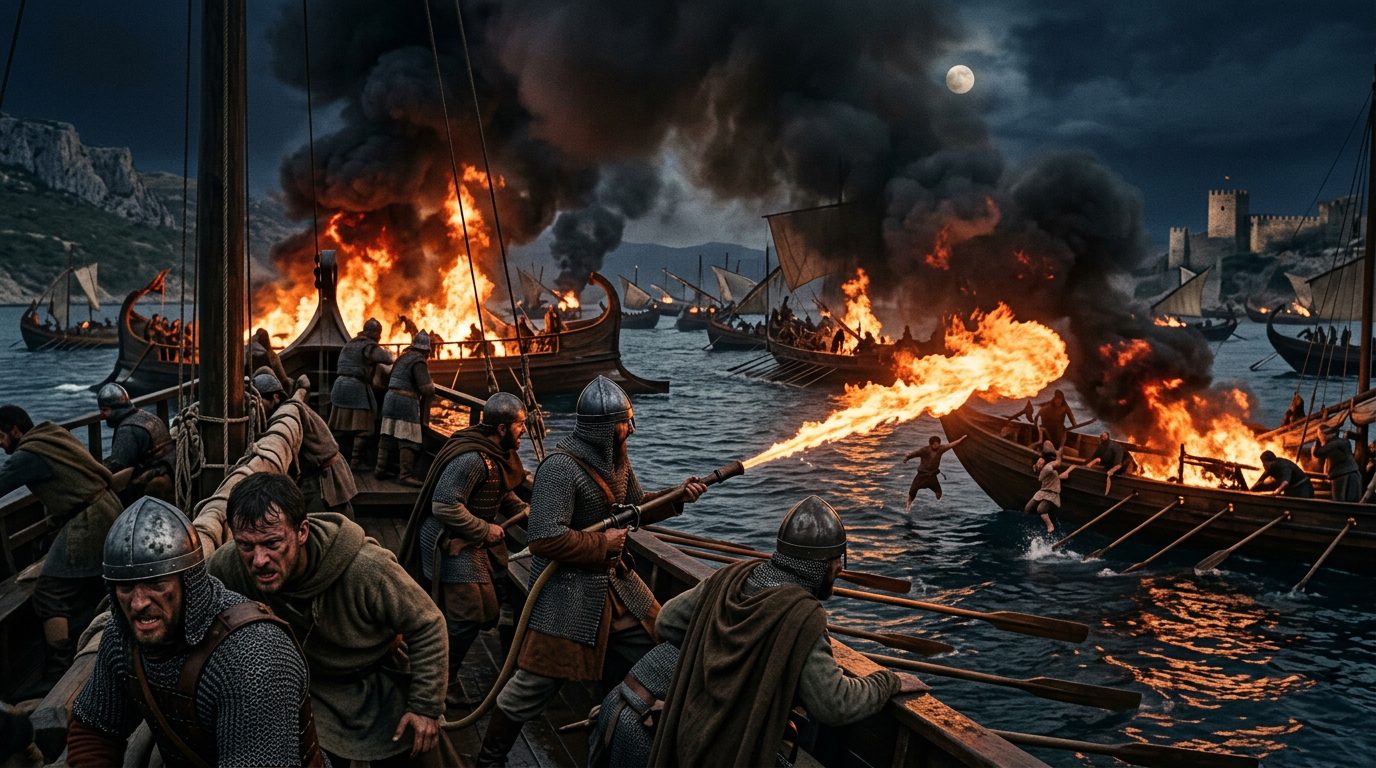
Mysterious incendiary weapon dominated naval
The Byzantine engineer Kallinikos of Heliopolis invented Greek fire around 672 CE, a liquid incendiary weapon that ignited on contact with water and burned so intensely it couldn’t be extinguished by conventional means. Pumped through bronze siphons mounted on Byzantine dromons, this mysterious compound—likely containing naphtha, quicklime, and sulfur—destroyed the Arab siege fleet during the First Arab Siege of Constantinople in 678 CE. The formula remained a closely guarded state secret for eight centuries, with only the imperial family and select technicians knowing its composition. This weapon single-handedly preserved Constantinople as Christianity’s eastern bulwark against Islamic expansion.
Source: britannica.com
4. Concentric Castle Design Made Medieval Fortresses Nearly Impregnable
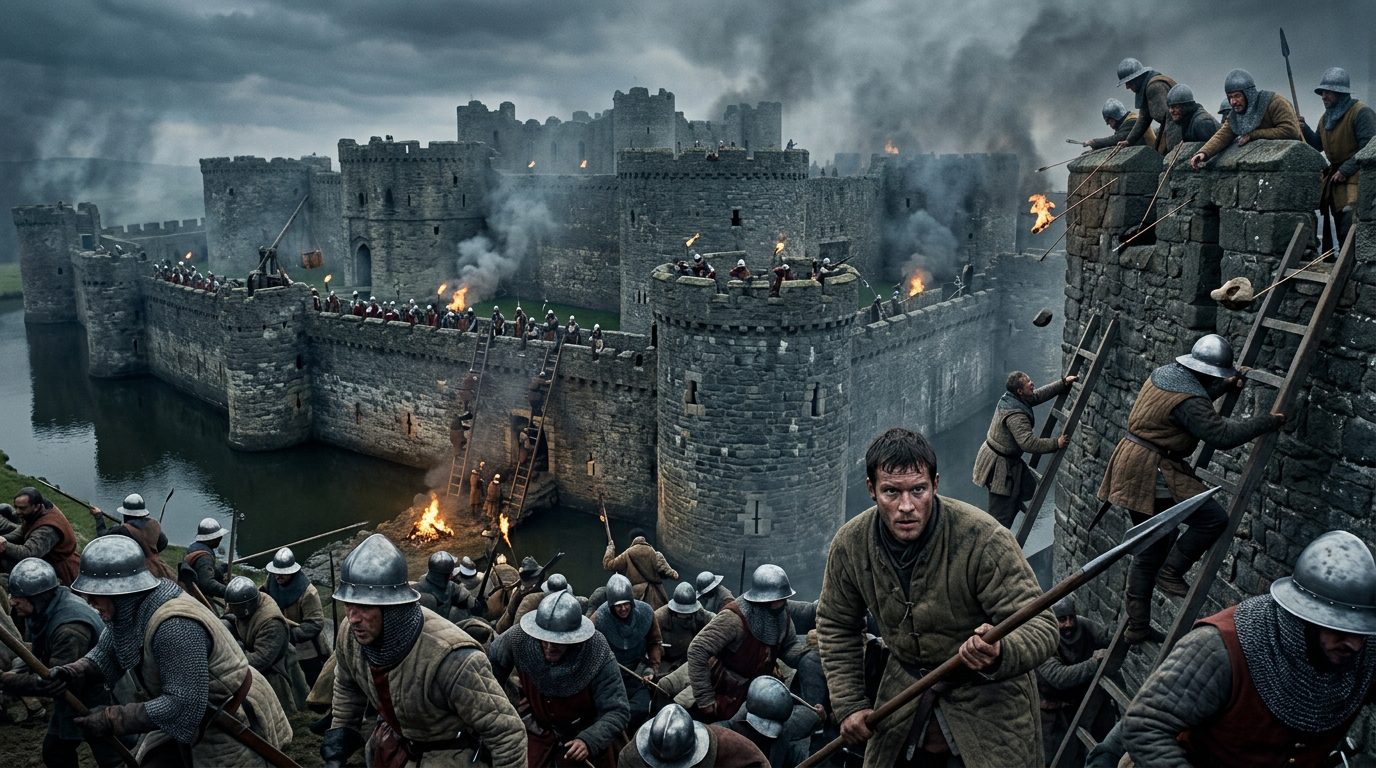
Medieval castle walls protected defenders.
Edward I of England revolutionized military architecture with concentric castles like Beaumaris, begun in 1295 CE, featuring multiple defensive rings that forced attackers to breach successive walls while defenders rained missiles from higher positions. The outer curtain wall stood 27 feet high while the inner wall reached 40 feet, creating overlapping fields of fire where archers could support each other from different elevations. These fortifications incorporated 14 separate obstacles including moats, drawbridges, murder holes, and portcullises that channeled invaders into kill zones. A garrison of just 40 men could defend against forces ten times their number, fundamentally shifting siege warfare economics in defenders’ favor.
Source: britannica.com
5. Mongol Feigned Retreat Tactic Annihilated Overconfident Armies
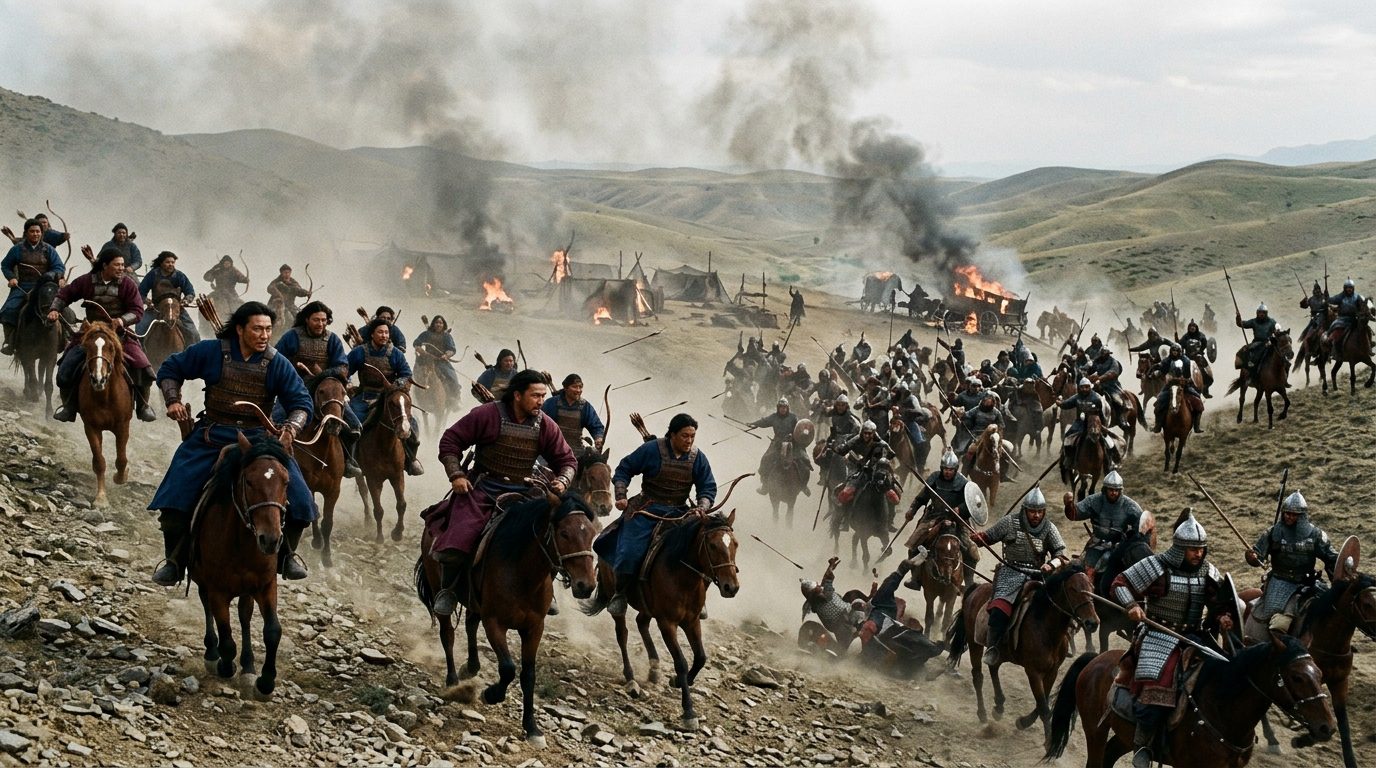
Mongol warriors execute their devastating feigned
Genghis Khan’s cavalry perfected the feigned retreat strategy that destroyed the Khwarezmian Empire’s 400,000-strong army at the Battle of Parwan in 1221 CE, luring overextended pursuers into ambushes by composite bow-armed horsemen. Mongol units would simulate panic and flee for miles, sometimes over multiple days, drawing enemy formations out of defensive positions before wheeling around to attack from all sides. Each Mongol warrior carried 60 arrows and could accurately fire while riding at full gallop in any direction, making their mobile archery platforms devastatingly effective against disorganized pursuers. This psychological warfare tactic exploited human aggression, transforming enemy victory celebrations into massacres that left no survivors to warn others.
Source: britannica.com
6. Chinese Mass-Produced Crossbows Equipped Armies of 100,000 Soldiers
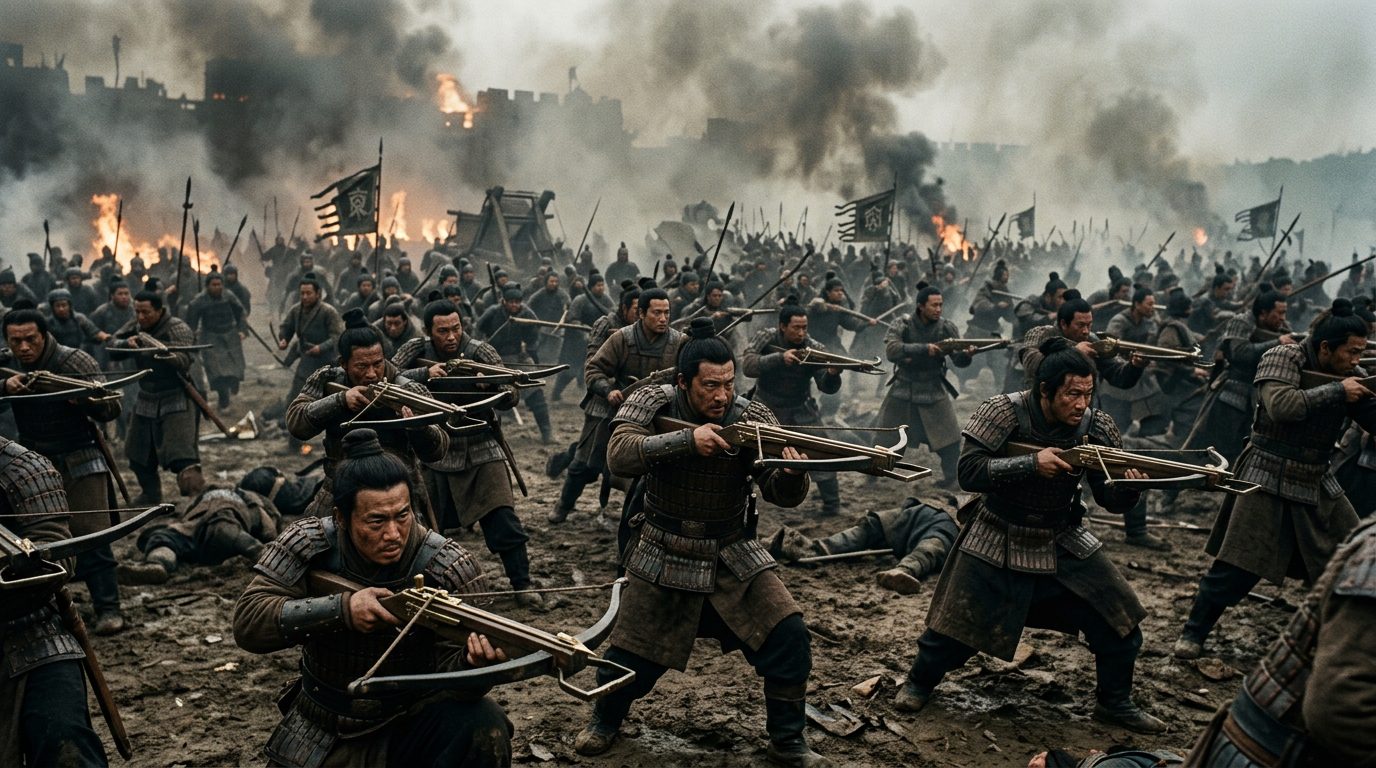
Ancient Chinese crossbow factory production line.
The Qin Dynasty established centralized crossbow manufactories around 221 BCE that produced standardized bronze trigger mechanisms with interchangeable parts, arming peasant conscripts with weapons requiring minimal training yet matching professional archers in killing power. Archaeological excavations at Emperor Qin Shi Huang’s tomb revealed 40,000 bronze crossbow triggers with tolerances accurate to 0.01 millimeters, demonstrating industrial-scale precision manufacturing two millennia before the Industrial Revolution. A crossbowman could penetrate armor at 200 meters and fire three bolts per minute, while training took weeks instead of the years required for traditional archery. This technological democratization of ranged warfare allowed China to field armies of unprecedented size that deterred steppe nomad invasions.
Source: britannica.com
7. Islamic Caravanserai Network Created Fortified Trade Route Defense System
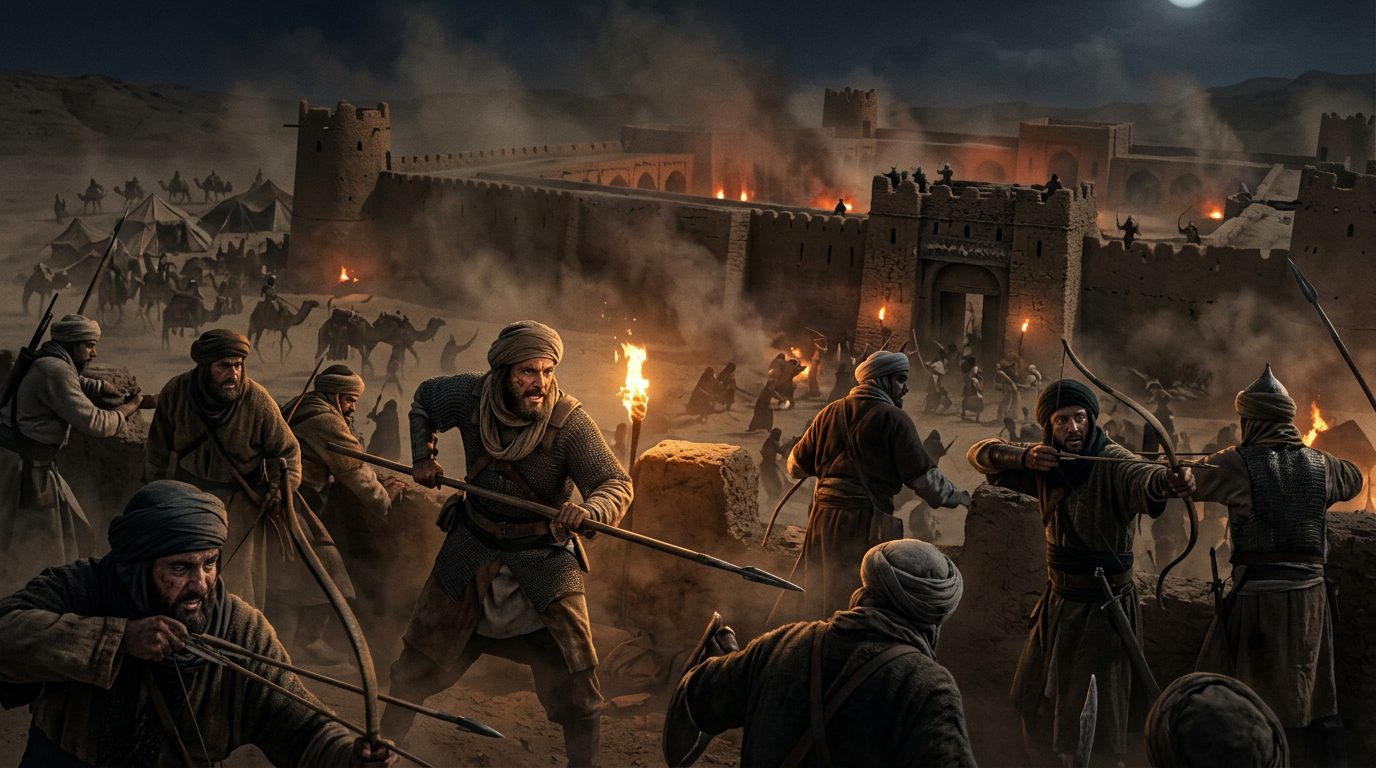
Medieval caravanserais fortified Silk Road trade.
The Abbasid Caliphate constructed over 2,000 **caravanserai**s between 750 CE and 1258 CE, spacing fortified waystation complexes exactly one day’s camel journey apart across 4,000 miles of Silk Road territory. Each caravanserai featured 20-foot-thick walls, watchtowers, single defensible gates, and internal wells that allowed 200 travelers and their animals to withstand bandit sieges for weeks. The Shah Abbas Caravanserai in Isfahan, built in 1629 CE, enclosed 15,000 square meters with rooms for 400 guests and stables for 500 camels, functioning as both fortress and economic hub. This architectural network transformed vulnerable desert routes into secure commercial corridors that generated tax revenues funding entire caliphates.
Source: britannica.com
8. Japanese Mountain Castles Exploited Terrain for Ultimate Defense
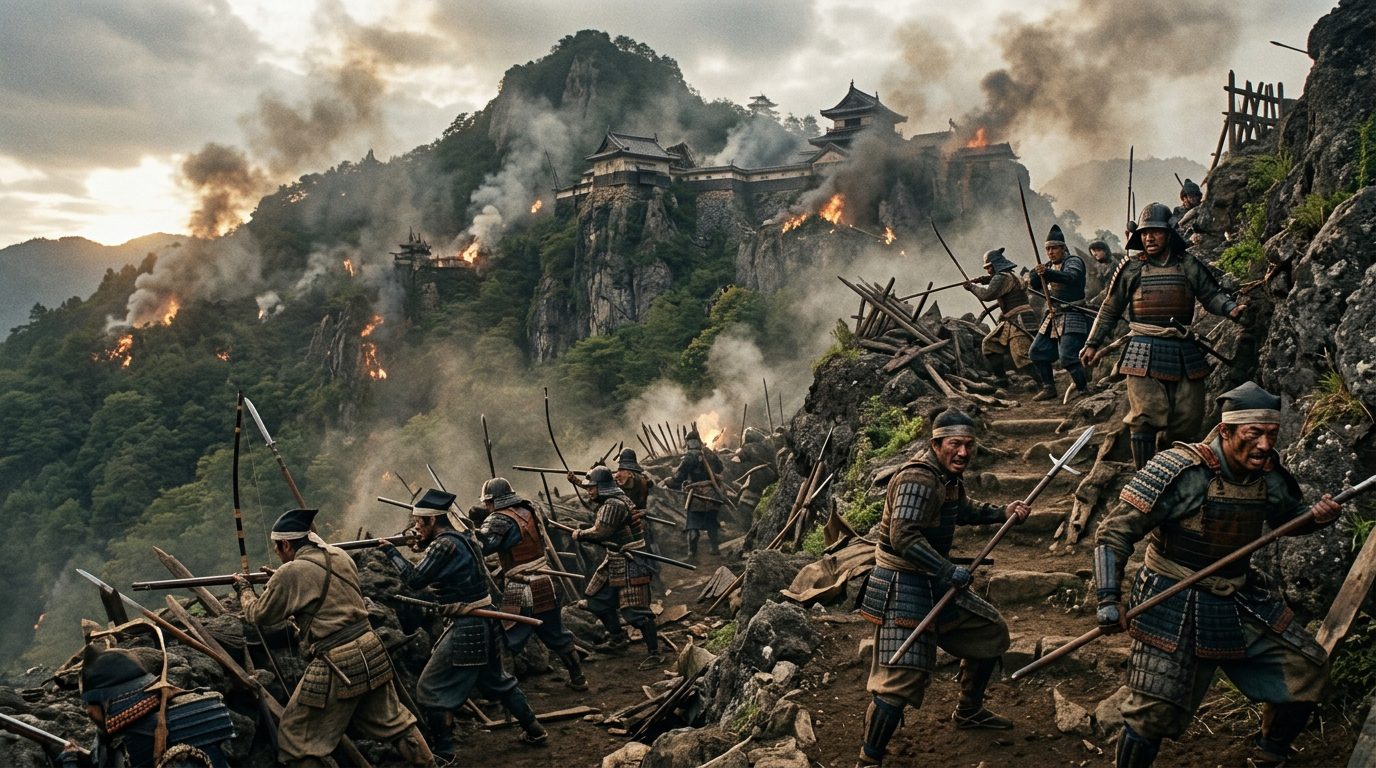
Fortified peaks designed for strategic advantage
The warlord Takeda Shingen positioned Iwadono Castle in 1570 CE atop Mount Iwadono at 2,730 feet elevation, creating a fortress accessible only by three narrow mountain paths that could be defended by 50 samurai against 5,000 attackers. Japanese engineers integrated natural rock formations into defensive walls, constructed multiple baileys at different elevations forcing invaders to fight uphill through successive choke points, and designed foundations that used mountain geology to resist earthquakes. Himeji Castle, completed in 1609 CE, featured a maze-like approach with 83 buildings and misleading paths designed to confuse and exhaust attackers while defenders attacked from elevated positions. This geographical military architecture made conquest economically impossible, preserving regional autonomy during Japan’s Sengoku period.
Source: britannica.com
9. Aztec Causeways Transformed Lake Geography Into Lethal Chokepoints
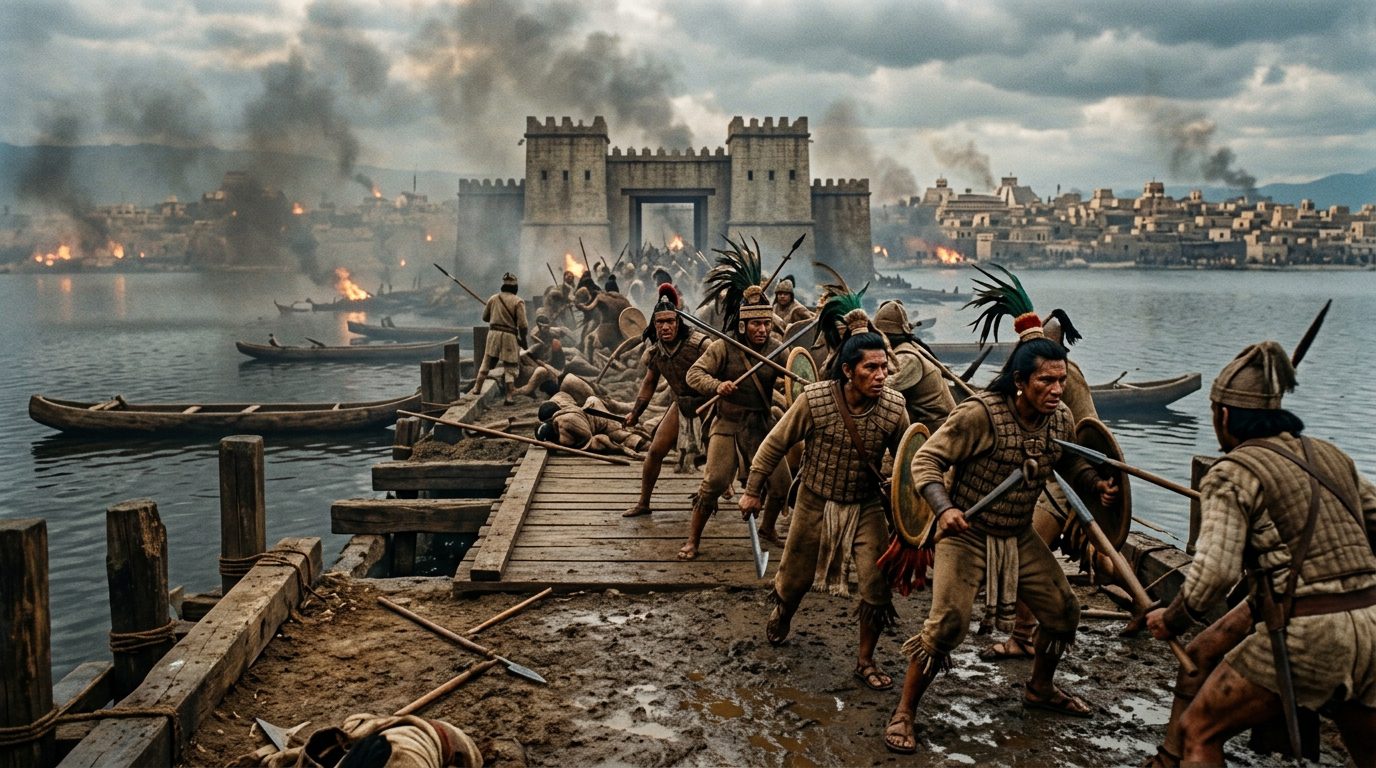
Aztec engineers built strategic waterways
The Mexica people constructed three removable causeways across Lake Texcoco to their island capital Tenochtitlan by 1428 CE, creating the only land approaches to a city of 200,000 inhabitants surrounded by water on all sides. Each causeway measured just 26 feet wide at critical points, forcing invading armies into narrow columns where Aztec warriors in canoes could attack flanks while defenders blocked frontal advance. Engineers designed wooden drawbridge sections that could be removed within minutes, stranding attackers on isolated causeway segments under fire from all directions. This geographic defense allowed 300,000 Aztecs to dominate 5 million subject peoples across central Mexico until Spanish conquistadors exploited the same causeways in 1521 CE.
Source: britannica.com
10. Ottoman Janissary Musket Formations Stopped European Cavalry Charges
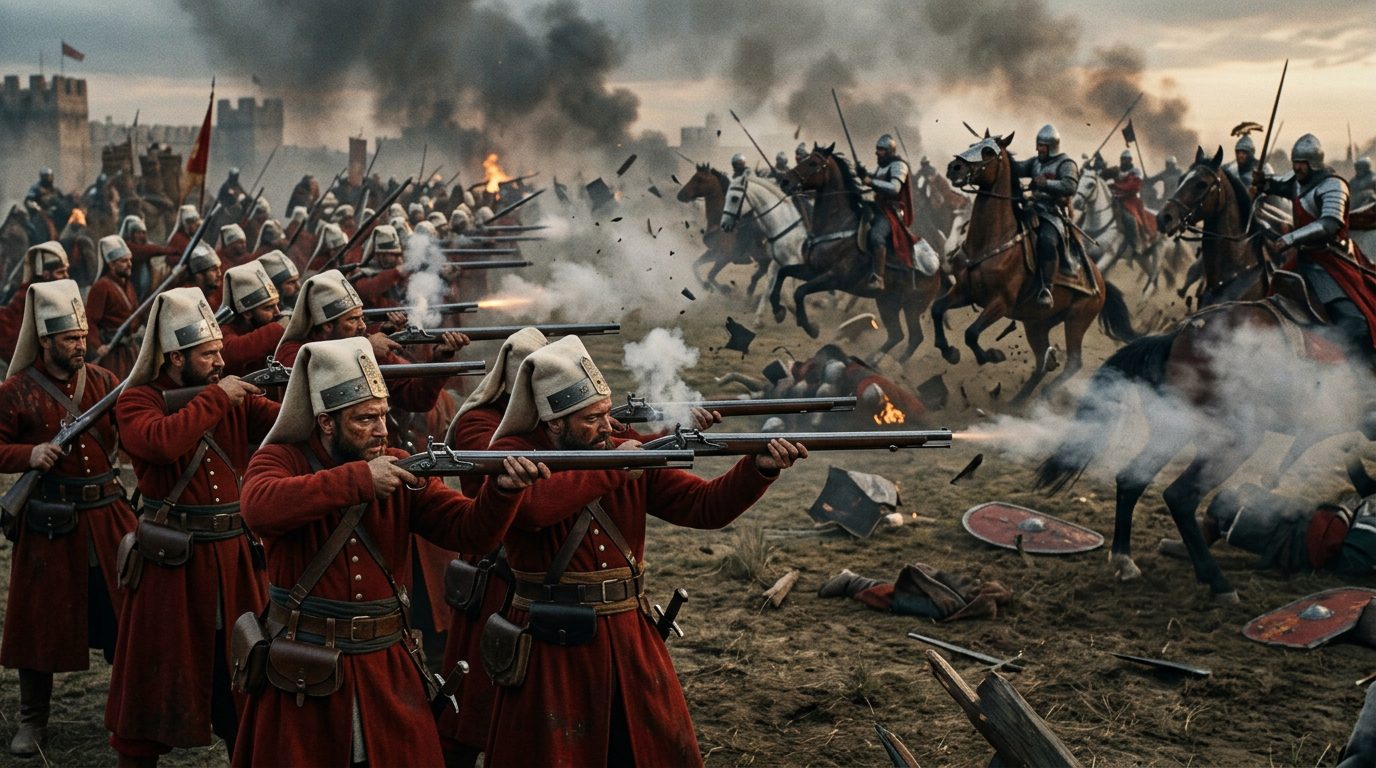
Disciplined musketeers repelled mounted knights.
Sultan Murad II organized Janissary infantry into three-deep musket formations at the Battle of Varna in 1444 CE, where synchronized volleys from 12,000 arquebusiers shattered the charging Polish-Hungarian cavalry and killed King Władysław III. Each Janissary received intensive firearms training from childhood, achieving reload times of 30 seconds and accuracy to 100 meters that превосходed European musketeers for two centuries. The Ottomans deployed wagons as mobile fortifications behind which Janissaries could reload while maintaining continuous fire, creating defensive positions that withstood repeated cavalry charges. This gunpowder infantry doctrine allowed the Ottoman Empire to expand across three continents and survive until 1922 CE, outlasting every medieval kingdom that opposed it.
Source: britannica.com
Did You Know?
The Mongol feigned retreat worked so well that European armies continued falling for it 50 years after Genghis Khan’s death, with commanders ignoring reports from survivors because victory seemed so close. Greek fire’s chemical formula died with the Byzantine Empire in 1453 CE and remains unknown today despite modern analysis of historical descriptions. Most remarkably, concentric castles made conquest so expensive that medieval warfare shifted from territorial expansion to diplomacy—walls quite literally forced civilization to become more civilized.