
Before Twitter threads changed discourse, revolutionary ideas spread through intimate Parisian drawing rooms. Enlightenment salons—hosted by brilliant women—became intellectual hothouses where philosophers debated natural rights and political reform, conversations that ignited revolutions across two continents.
1. Madame Geoffrin’s Salon: The Encyclopédie’s Secret Workshop

Madame Geoffrin’s Salon
Marie Thérèse Rodet Geoffrin transformed her Rue Saint-Honoré mansion into the epicenter of the Encyclopédie project starting in 1749. Every Monday, artists gathered; every Wednesday, the philosophes arrived—Diderot, d’Alembert, and their collaborators hammering out entries for their revolutionary compendium of human knowledge. Geoffrin, a merchant’s widow with no formal education, financed the project when royal censors threatened to shut it down, personally contributing over 100,000 livres. Her salon operated under a strict rule: guests could debate anything except religion and government, a clever fiction that allowed subversive ideas to flourish under the guise of intellectual abstraction. When the Encyclopédie finally published its 28 volumes, it contained the blueprint for modern democracy—all workshopped in Geoffrin’s drawing room.
Source: britannica.com
2. Julie de Lespinasse’s Salon: Where Mathematics Met Revolution
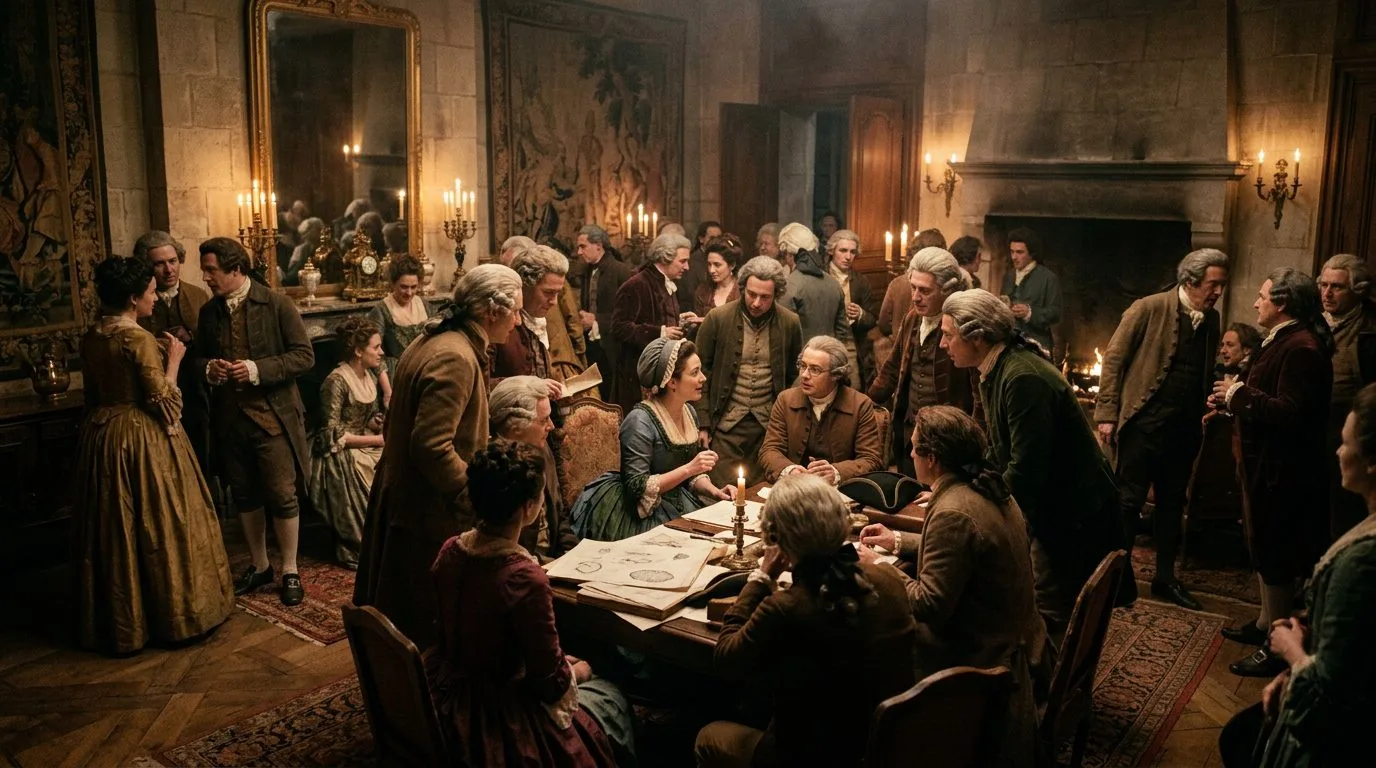
Julie de Lespinasse’s Salon
Julie de Lespinasse broke from Madame du Deffand’s salon in 1764 to establish the most intellectually rigorous gathering in Paris. From 5 to 9 PM daily, d’Alembert (who lived in her building and was possibly her lover) debated mathematical philosophy with the Marquis de Condorcet while political radicals like Turgot planned economic reforms. Lespinasse’s genius lay in orchestrating conversation—she never let discussions stagnate, redirecting 12 simultaneous debates while appearing to participate in all of them. Condorcet later credited her salon with developing his mathematical approach to voting theory, published in 1785 as Essai sur l’application de l’analyse. The salon’s emphasis on rational thought and measurable progress directly influenced the constitutional debates of 1789.
Source: britannica.com
3. Suzanne Necker’s Geneva Salon: Banking Meets Philosophy
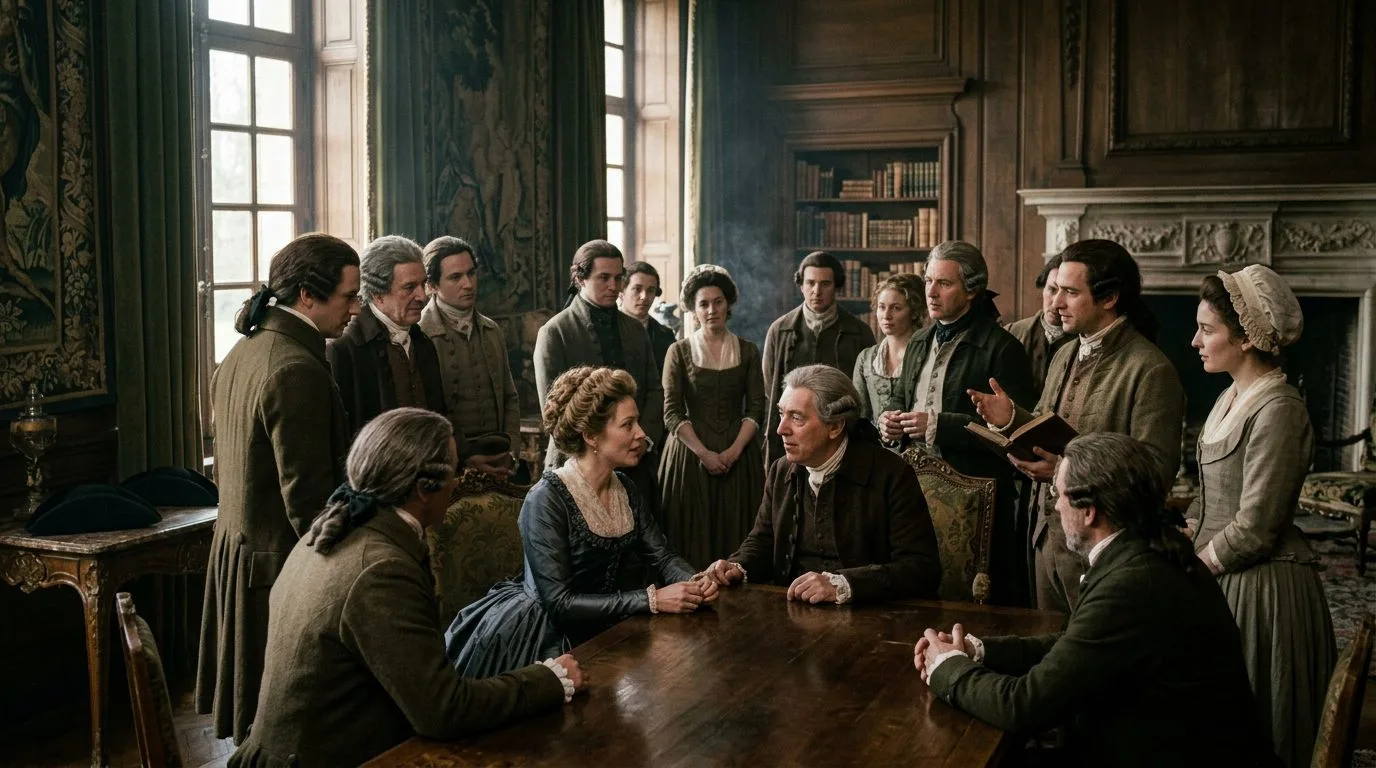
Suzanne Necker’s Geneva Salon
Suzanne Curchod Necker ran the only major Enlightenment salon outside Paris, operating from her Geneva mansion and later her Paris residence starting in 1764. As wife of Jacques Necker, Louis XVI’s finance minister, she uniquely blended economic theory with philosophical debate—hosting Edward Gibbon (who had once proposed marriage to her), the Abbé Raynal, and her daughter Germaine (future Madame de Staël). Her Friday salons tackled practical questions: How should governments manage debt? Can taxation be moral? Necker’s 1784 financial reforms, which attempted to publish royal accounts publicly for the first time, were debated and refined in Suzanne’s drawing room. The transparency movement she championed—radical for absolutist France—planted seeds for the fiscal crises that triggered revolution in 1789.
Source: britannica.com
4. Madame du Deffand’s Salon: Voltaire’s Sharpening Stone
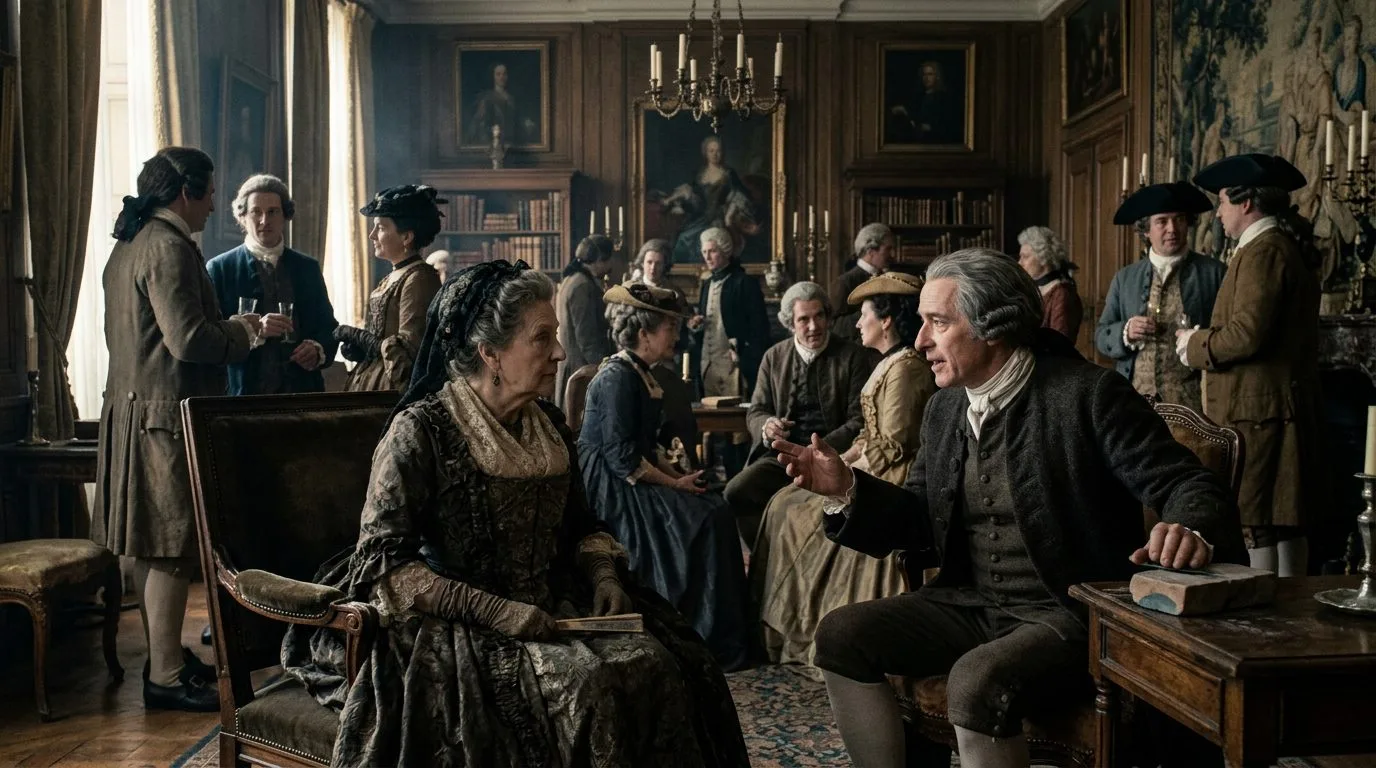
Madame du Deffand’s Salon
Marie de Vichy-Chamrond, Marquise du Deffand, hosted Paris’s most aristocratic salon from 1739 until her death in 1780, maintaining exacting standards that made invitation a mark of intellectual arrival. Despite losing her sight in 1754, she continued moderating debates through pure force of wit, engaging in legendary correspondence with Voltaire that sharpened both their prose styles. Her salon attracted Montesquieu, who read portions of The Spirit of the Laws aloud in 1748 for critique, and the young Turgot, testing economic theories. Du Deffand despised sentimentality and romantic philosophy, enforcing an atmosphere of rational skepticism that influenced Voltaire’s satirical style. When Julie de Lespinasse, her companion, defected to start a rival salon, du Deffand’s fury became Parisian legend—but both salons pushed Enlightenment thought further through competition.
Source: britannica.com
5. Madame de Tencin’s Salon: Where Cardinals Met Radicals
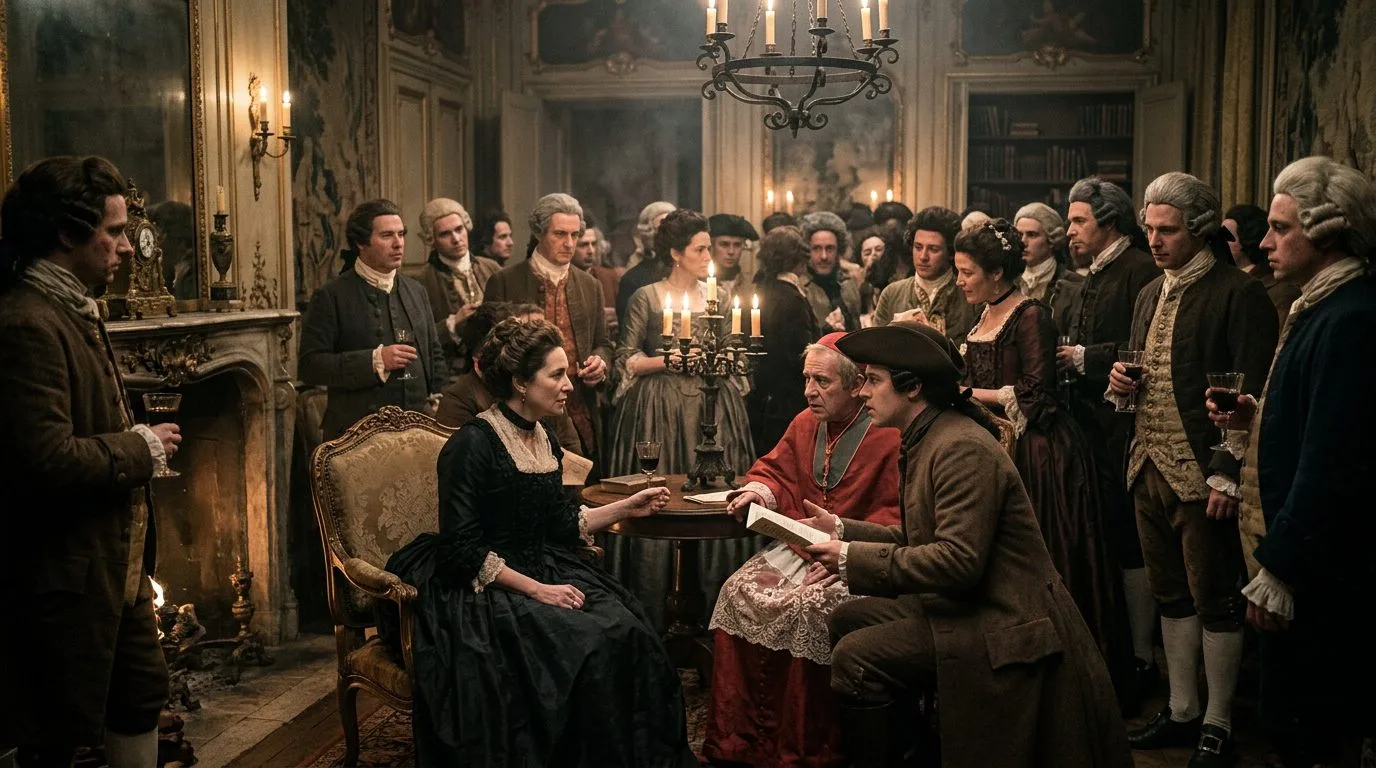
Madame de Tencin’s Salon
Claudine Guérin de Tencin, a former nun who escaped her convent and became Cardinal Dubois’s mistress, hosted the most politically connected salon of the 1720s and 1730s. Her Tuesday gatherings brought together her brother Cardinal Pierre de Tencin, prime minister Cardinal Fleury, and subversive thinkers like Montesquieu and [Fontenelle](https://en.wikipedia.org/wiki/Bernard_of_Clairvaux Le Bovier de Fontenelle). In 1734, Montesquieu read early chapters of Considerations on the Causes of the Greatness of the Romans and their Decline at her salon, testing ideas about governmental cycles that would influence American founding fathers 50 years later. Tencin’s genius lay in creating space where Church officials and anticlerical philosophers could debate freely—her salon became a neutral zone where ideas crossed factional lines. She died in 1749, but her model of intellectual diplomacy influenced every salon that followed.
Source: britannica.com
6. Baron d’Holbach’s Coterie: The Atheist Underground
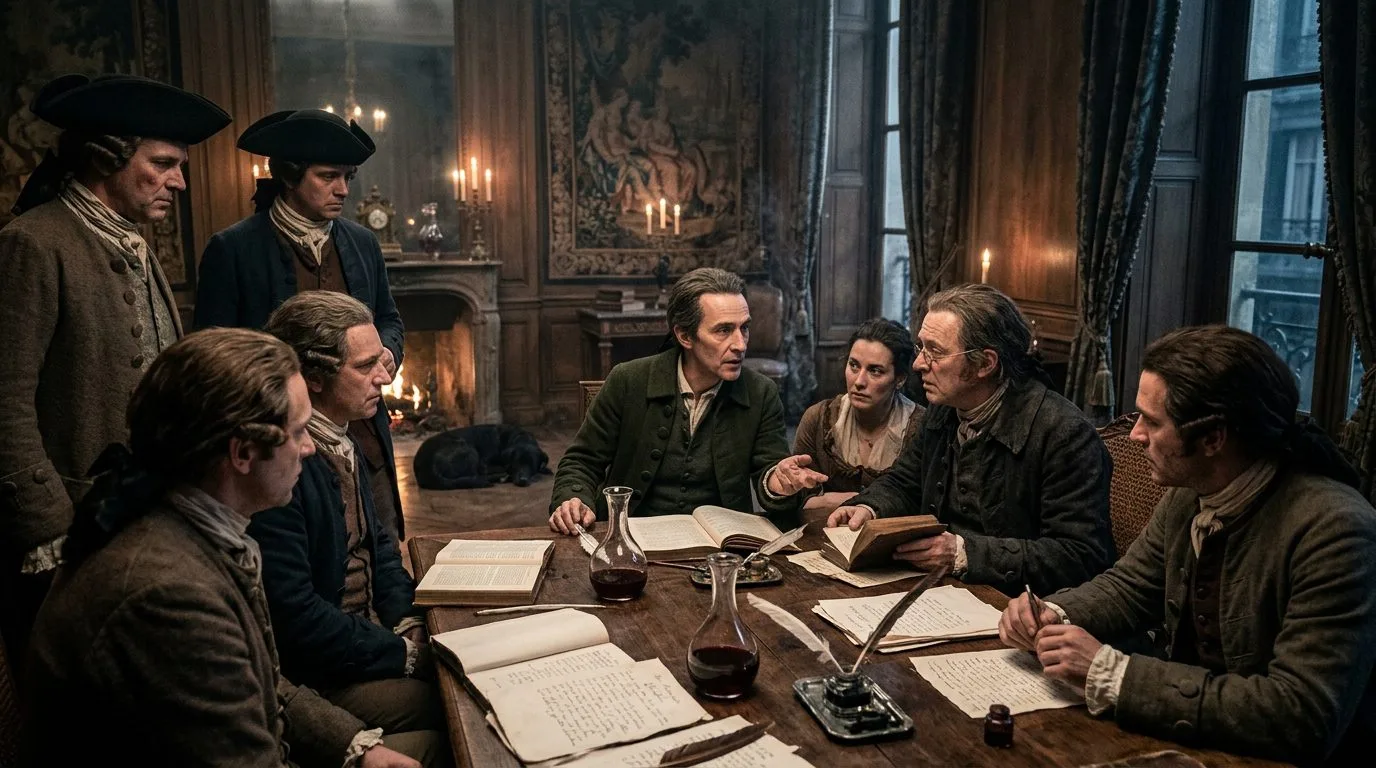
Baron d’Holbach’s Coterie: The Atheist Underground
Paul-Henri Thiry, Baron d’Holbach, hosted the most radical salon of the Enlightenment at his Rue Royale mansion from 1750 to 1780—a gathering so controversial attendees called it “the Café of Europe” and “the synagogue of atheism.” Every Thursday and Sunday, d’Holbach served elaborate dinners where Diderot, Helvétius, and the Italian Cesare Beccaria debated materialism, atheism, and the abolition of capital punishment. D’Holbach himself authored The System of Nature (1770), published anonymously, which denied God’s existence and argued for pure materialism—the most dangerous book in France. His salon operated in deliberate secrecy; members swore not to discuss religion outside these walls. When Benjamin Franklin attended in 1767, he was shocked by the open atheism but impressed by the rigorous logic that would later influence his deist writings.
Source: britannica.com
7. Madame Helvétius’s Salon: Democracy’s Drawing Room
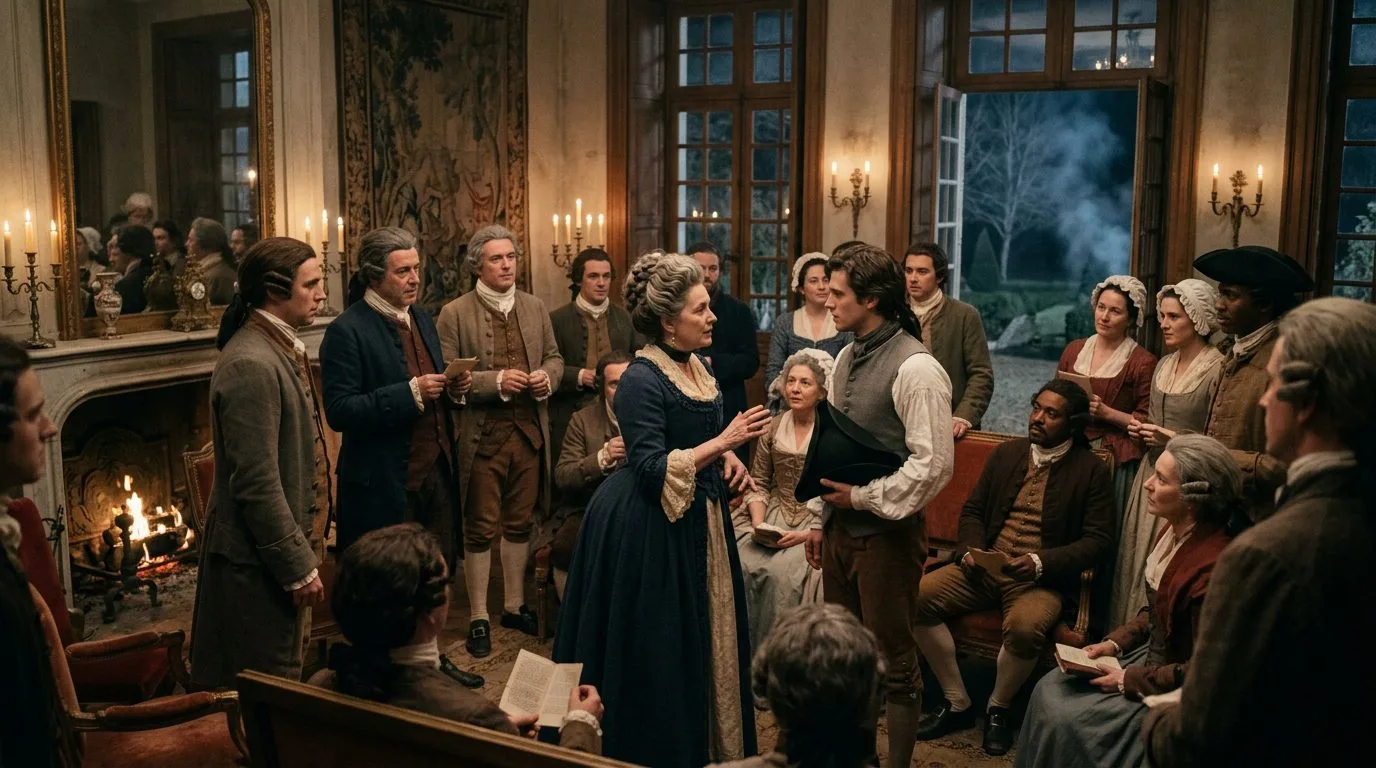
Madame Helvétius’s Salon: Democracy’s Drawing Room
Anne-Catherine de Ligniville Helvétius, widow of philosopher Claude Adrien Helvétius, ran the most democratic salon of the late Enlightenment from her villa in Auteuil starting in 1771. Unlike aristocratic salons, Helvétius welcomed Americans, scientists, and middle-class intellectuals—Benjamin Franklin became so enchanted he proposed marriage in 1779 (she declined). Her garden parties mixed the Ideologue philosophers Destutt de Tracy and Cabanis with American revolutionaries, creating the intellectual foundation for post-Revolution reforms. Thomas Jefferson attended regularly during his Paris years (1784-1789), absorbing ideas about secular education and religious freedom. Helvétius survived the Terror by maintaining political neutrality, and her salon continued into the 1790s, becoming a refuge where democratic ideals could be refined without Jacobin extremism.
Source: britannica.com
8. Germaine de Staël’s Salon: Napoleon’s Intellectual Nemesis
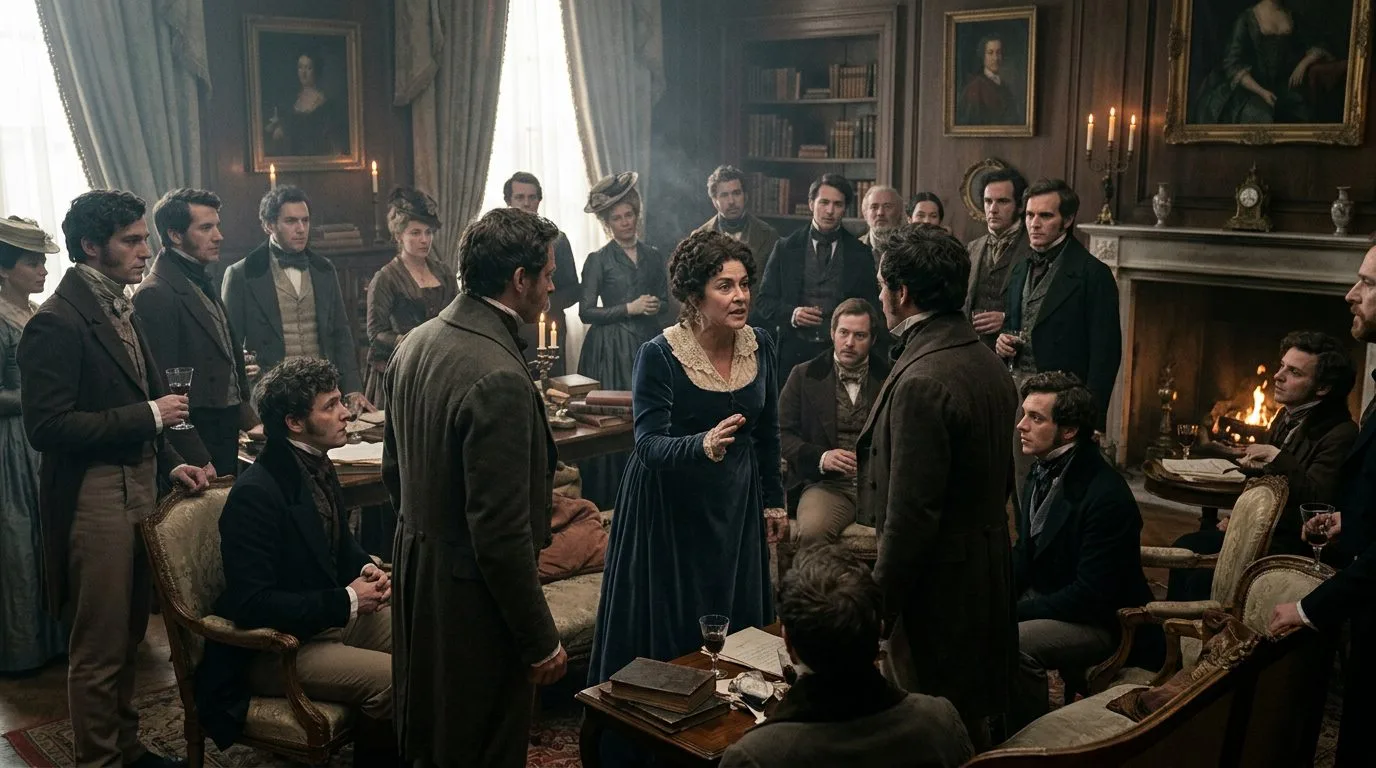
Germaine de Staël’s Salon
Anne Louise Germaine Necker, Madame de Staël, transformed her mother’s salon into the most influential political gathering of the Revolutionary and **Napoleon**ic eras. From 1795 onward, her Paris salon and Swiss château at Coppet became headquarters for liberal opposition—hosting Benjamin Constant (her lover and collaborator), August Wilhelm Schlegel, and Lord Byron. Napoleon exiled her from Paris in 1803 because her salon’s influence rivaled his own; she spent 40,000 francs annually maintaining her Swiss salon as an anti-Napoleon intellectual fortress. Her 1810 book On Germany, promoting individual liberty and federalism, so threatened Napoleon he had 10,000 copies destroyed. Staël’s salon network stretched across Europe, coordinating liberal thought from Moscow to London, proving that ideas could survive—even thrive—under tyranny.
Source: britannica.com
9. Benjamin Franklin’s Passy Salon: American Ideas Meet French Philosophy
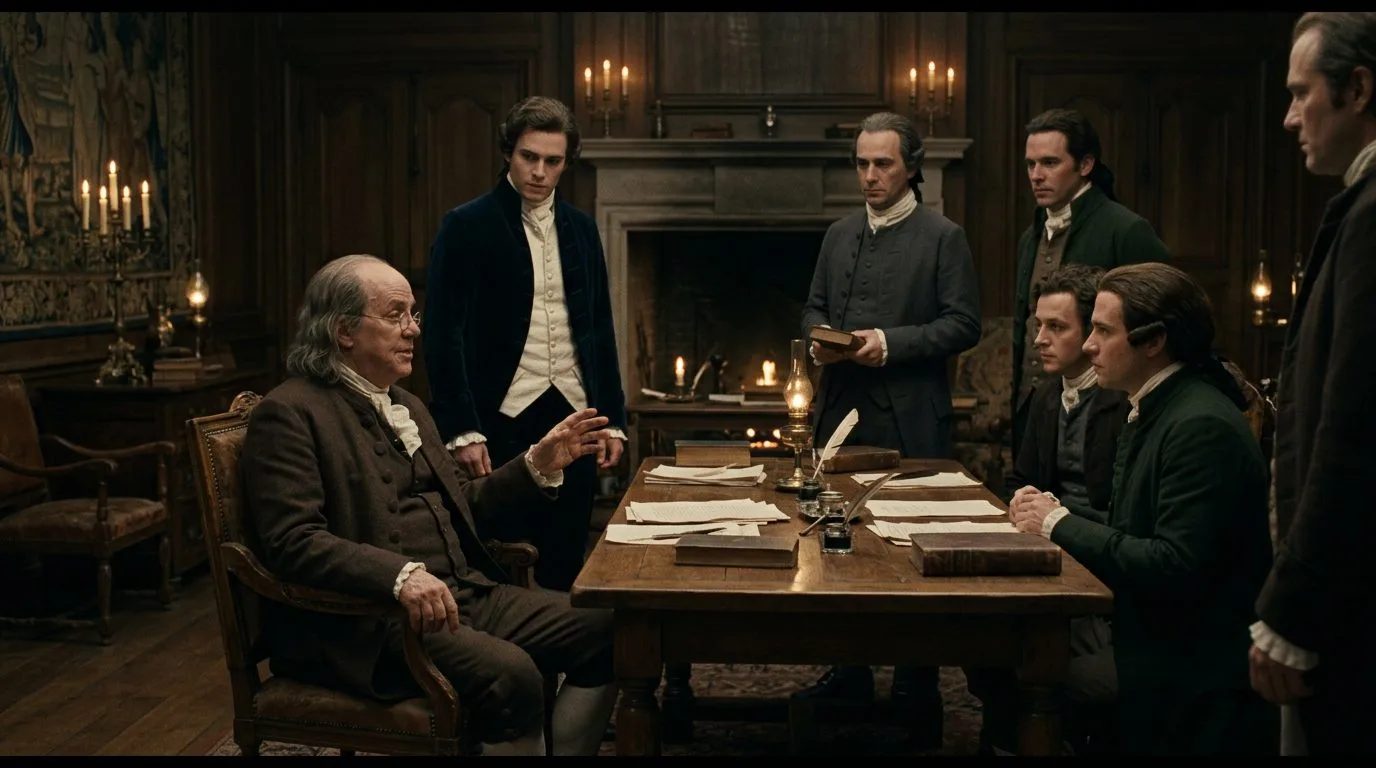
Benjamin Franklin’s Passy Salon
Benjamin Franklin established an unofficial salon at his Passy residence outside Paris from 1776 to 1785, creating the first sustained intellectual exchange between American revolutionary thought and French Enlightenment philosophy. Every Wednesday, Franklin hosted dinners where Voltaire, Turgot, Lavoisier, and Condorcet debated American constitutionalism, religious tolerance, and scientific method. In 1778, Voltaire and Franklin met publicly at the Académie des Sciences, embracing while the audience wept—a symbolic marriage of French and American liberty. Franklin’s salon operated as diplomatic strategy; he used intellectual conversation to build support for American independence, successfully securing the 1778 Treaty of Alliance. French officers who attended his gatherings—including Lafayette—carried American constitutional ideas back to France, directly influencing the Declaration of the Rights of Man in 1789.
Source: britannica.com
10. Madame Roland’s Salon: The Girondin War Room
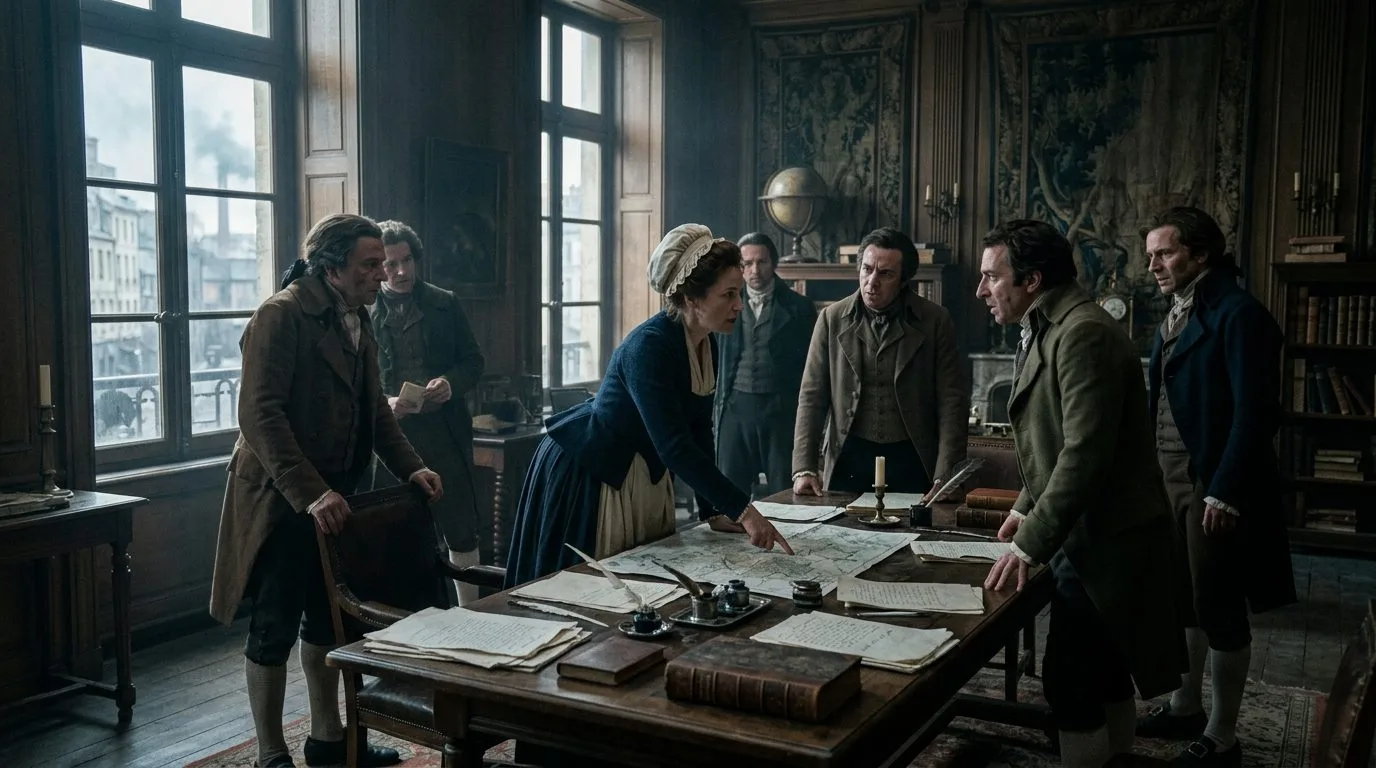
Madame Roland’s Salon: The Girondin War Room
Marie-Jeanne Roland transformed Enlightenment salon culture into direct political action, hosting the intellectual headquarters of the Girondin faction from 1791 to 1793. Her apartment on the Rue Guénégaud became the strategy center where Brissot, Pétion, and Buzot planned legislative campaigns, drafted speeches, and coordinated opposition to Robespierre. Unlike earlier salons that influenced politics indirectly, Roland’s gatherings were explicitly tactical—she took detailed notes (later published as her Mémoires) of every debate, creating the first insider account of revolutionary politics. Her salon’s influence peaked in 1792 when Girondins dominated the Legislative Assembly, but their moderate stance doomed them. Arrested in 1793, Roland wrote her memoirs in prison before her execution, preserving the record of how Enlightenment ideas translated—sometimes catastrophically—into revolutionary practice.
Source: britannica.com
Did You Know?
The Enlightenment salons were run almost exclusively by women, yet these intellectual architects rarely received credit in the published works debated in their drawing rooms. Madame Geoffrin financed the Encyclopédie but wasn’t mentioned in its pages; Julie de Lespinasse shaped Condorcet’s voting theory without co-author credit. Most surprising: these gatherings operated in legal gray zones—discussing ideas that could trigger royal censorship—yet thrived for decades because authorities underestimated the political power of polite conversation among the educated elite.