
Leonardo da Vinci’s armored tank never rolled an inch. The Renaissance wasn’t just masterpieces—it was littered with expensive failures that bankrupted princes and humiliated geniuses before royal courts.
1. Leonardo da Vinci’s Armored Tank Was Too Heavy to Move
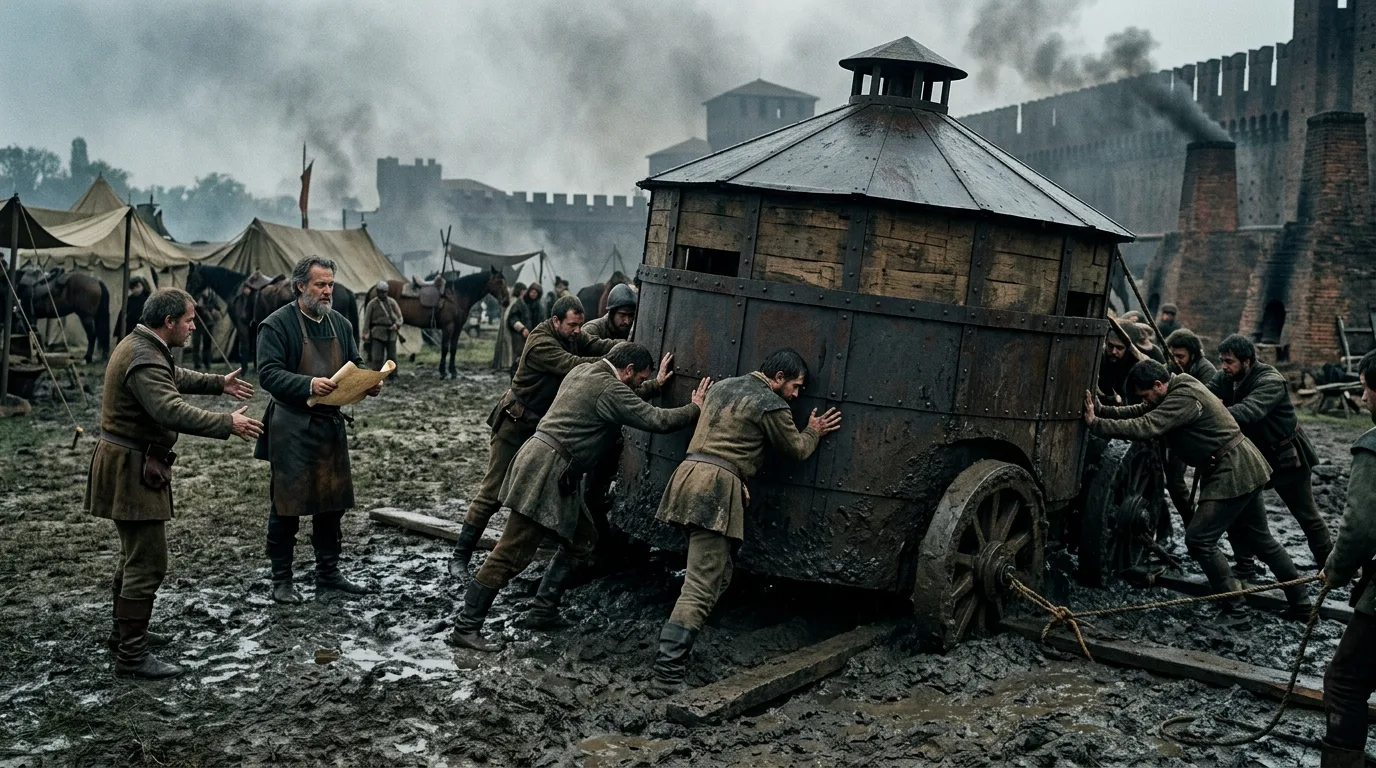
Leonardo da Vinci designed his famous armored tank around 1487 while working for Ludovico Sforza in Milan. The circular vehicle featured a cone-shaped shell covered in metal plates and mounted eight cannons pointing in all directions, with crew members inside operating hand cranks to power the wheels. The design looked revolutionary on paper, complete with detailed sketches showing the internal mechanism and strategic gun placements. When engineers attempted to construct the prototype, they discovered a fatal flaw—the reinforced oak frame and iron plating created a vehicle weighing over 3 tons that couldn’t be moved by human power alone. The hand-crank system Leonardo specified required at least eight men turning continuously, but the friction and weight made movement impossible. Some historians argue Leonardo deliberately included a reversed gear mechanism in his drawings, sabotaging his own design because he morally opposed creating instruments of mass destruction. Whether intentional failure or engineering miscalculation, the tank remained stationary in the workshop, never seeing combat. This expensive mistake taught Renaissance engineers that theoretical designs needed practical weight calculations before construction began.
Source: britannica.com
2. Brunelleschi’s Arno River Diversion Became a Muddy Disaster
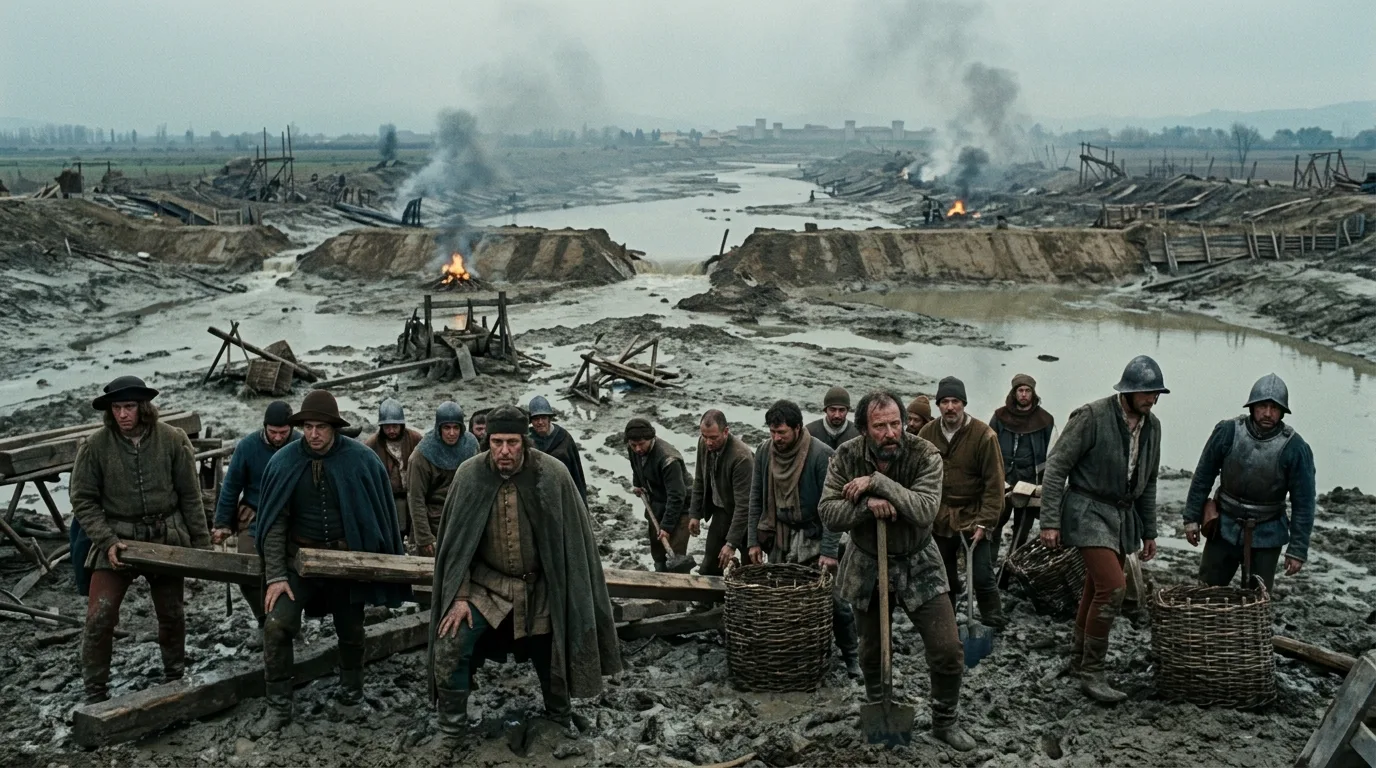
Filippo Brunelleschi convinced Florence’s leaders in 1430 to fund an audacious military project during their siege of Pisa—diverting the entire Arno River away from enemy territory. The architect famous for engineering the Florence Cathedral dome promised to starve Pisa of water and trade access, forcing surrender without bloodshed. Florence invested 7,000 gold florins and mobilized over 2,000 workers who spent four months digging massive trenches and constructing earthwork dams upstream from Pisa. Brunelleschi’s calculations proved catastrophically wrong when workers opened the diversion channels in August 1430. Instead of flowing away from Pisa, the river flooded uncontrollably across Florentine-controlled farmland, creating swamps that bred disease and destroyed crops worth thousands of florins. The water pressure broke through poorly constructed earthworks within days, and the Arno simply returned to its original course while Pisan forces watched and laughed from their walls. The failed diversion created political scandal in Florence, with city councils demanding investigations into wasted funds and Brunelleschi’s engineering competence. This disaster taught Renaissance engineers that rivers couldn’t be controlled with simple earthworks—they required understanding of water pressure, soil composition, and seasonal flow variations that wouldn’t be mathematically understood for another century.
Source: britannica.com
3. Leonardo’s Giant Crossbow Never Fired a Single Bolt
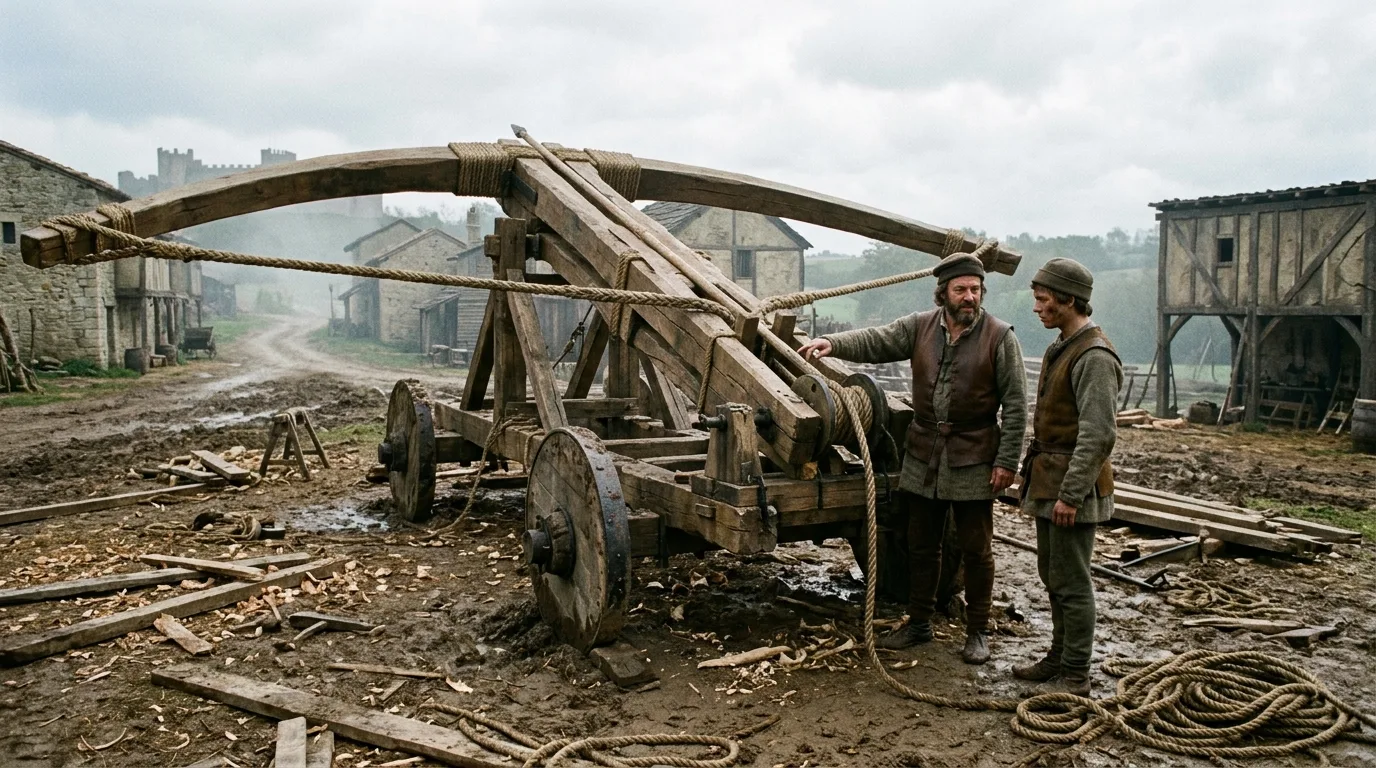
Leonardo da Vinci sketched an enormous crossbow design in 1485 measuring 27 meters wide, intended to terrify enemies and launch projectiles over unprecedented distances. The detailed drawing shows a wheeled platform supporting a bow made from thin wood laminations, with a complex gear system for drawing back the massive string and a special mechanism for releasing projectiles. Leonardo calculated the bow could launch stones weighing 50 kilograms over 300 meters, revolutionizing siege warfare for whichever prince funded construction. The Milanese court showed initial interest but never authorized funds after weapons masters identified fundamental problems. The bow’s size created structural weaknesses—wood laminations strong enough to store energy would splinter under the tension required, while making the bow thicker would increase weight beyond what wheels could transport. Engineers calculated the gear mechanism needed to draw the string would require 20 men turning cranks for over an hour per shot, making the weapon impractical for battlefield conditions. Leonardo never built a working model, and the giant crossbow remained an impressive drawing that demonstrated imagination outpacing materials science. Modern reconstructions confirm the design couldn’t function as drawn—15th-century wood and rope technology simply couldn’t handle the forces Leonardo envisioned, requiring modern materials like carbon fiber to make the concept viable.
Source: smithsonianmag.com
4. Taccola’s Wind-Powered Wagon Toppled Over Immediately
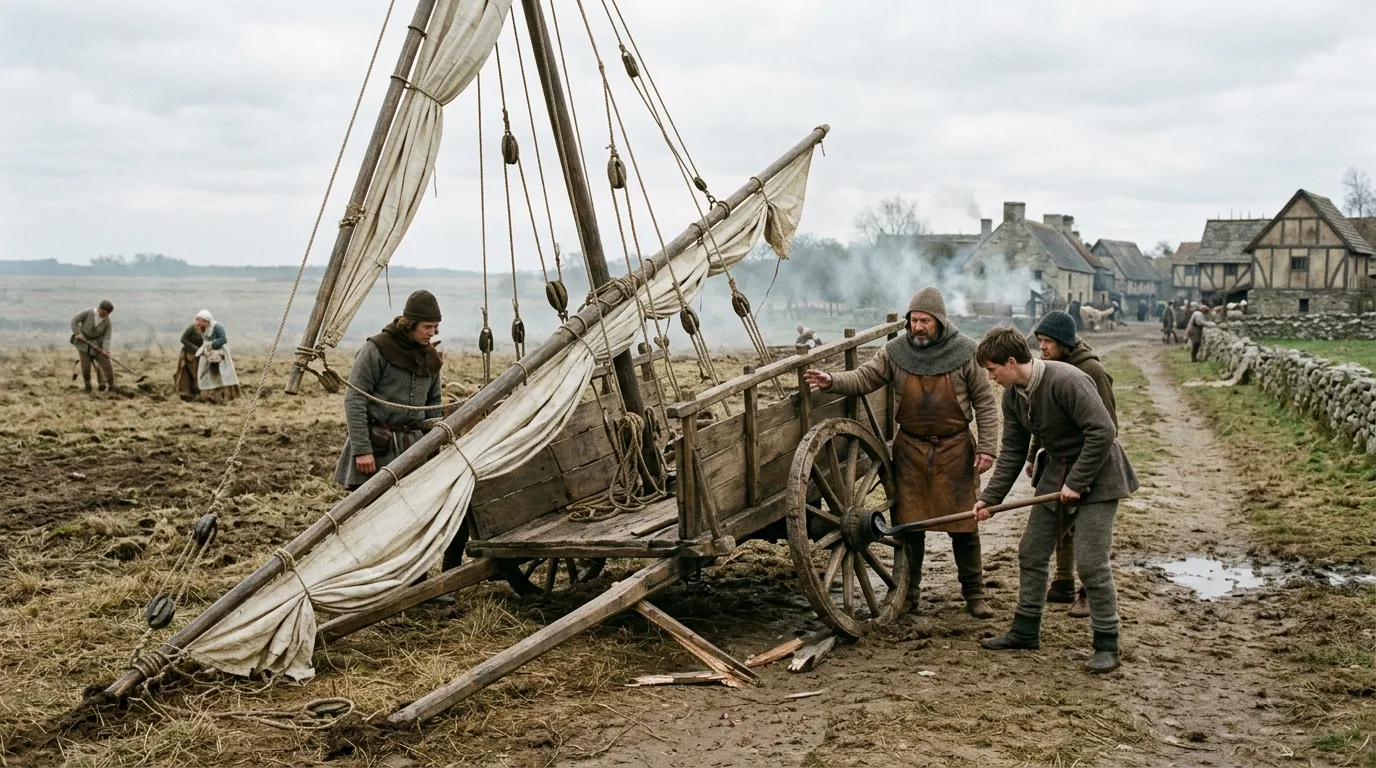
Mariano di Jacopo called Taccola designed a wind-powered land vehicle around 1433 featuring four wheels and vertical sails that would catch wind to propel the wagon forward without horses or human effort. His treatise De ingeneis shows detailed diagrams of the sail arrangement and steering mechanism, promising transportation that required no feeding, resting, or payment—just favorable wind conditions. Taccola claimed his design could transport goods across flat terrain at speeds matching horse-drawn carts while saving merchants the considerable expense of animal maintenance. When a wealthy Sienese merchant funded construction of a prototype in 1434, the wagon’s first test revealed catastrophic design flaws. The tall vertical sails created an impossibly high center of gravity that caused the wagon to tip over sideways the moment any meaningful wind caught the sails. Attempts to lower the sail height reduced wind capture to the point where the wagon barely moved, while widening the wheel base made the vehicle too large to navigate roads or city gates. Cross-winds proved particularly dangerous, pushing the wagon off course and threatening to crush the operator under overturned machinery. After three expensive rebuilds and multiple injuries to test drivers, the project was abandoned with the prototype rotting in a warehouse. The failure demonstrated that Renaissance engineers lacked understanding of physics concepts like center of mass and wind pressure calculations that would be formalized centuries later.
Source: britannica.com
5. Francesco di Giorgio’s Steam Engine Sketch Had No Practical Fuel System
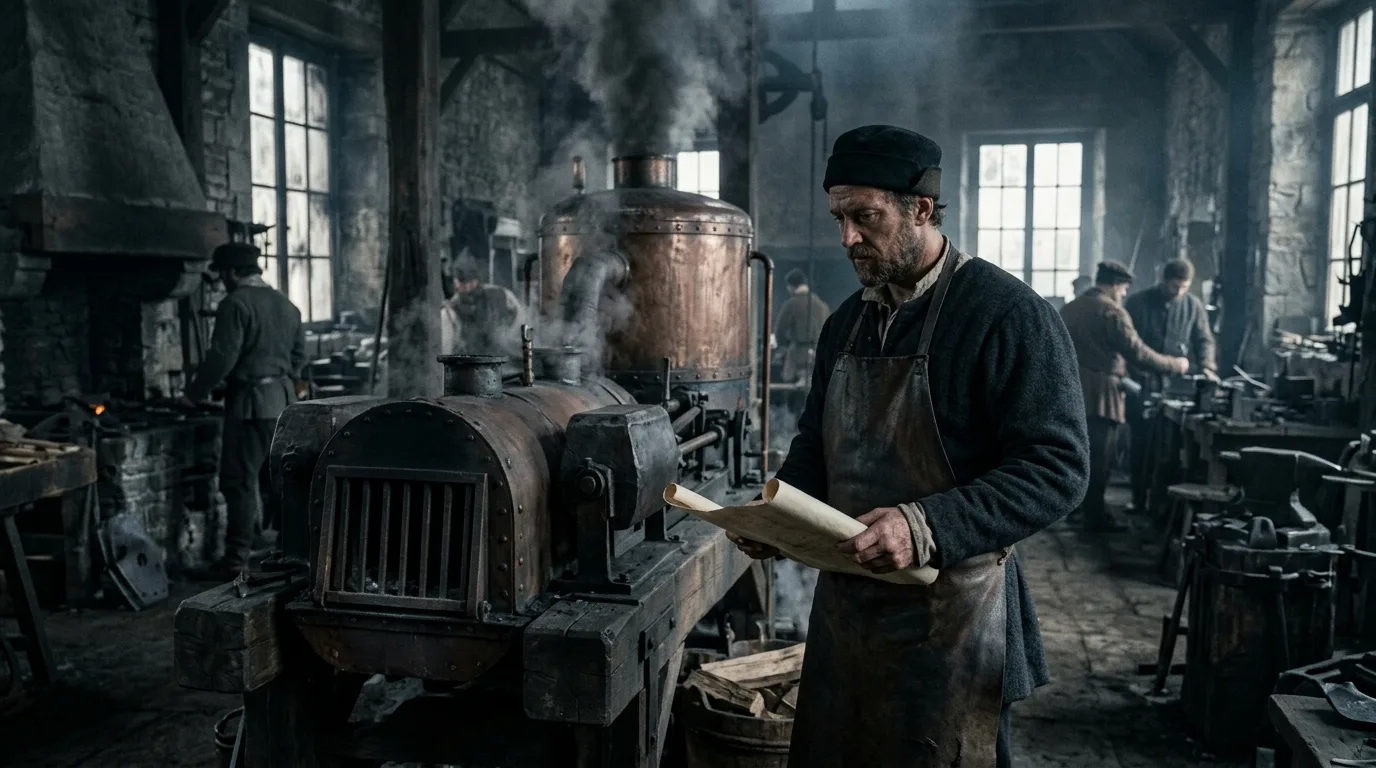
Francesco di Giorgio Martini drew plans for a steam-powered mechanism around 1480 that would use boiling water pressure to rotate mechanical wheels, anticipating industrial revolution technology by three centuries. His manuscript shows a sealed copper vessel positioned over a fire, with steam escaping through a pipe that would spin a paddle wheel connected to gears for various applications. Francesco calculated that continuous boiling could generate enough pressure to power mills, pumps, or mechanical hammers without human or animal labor. The brilliant theoretical design contained one insurmountable practical problem—maintaining sufficient fire to boil water continuously required fuel supplies that didn’t exist in economically viable quantities. Wood consumption needed to keep the boiler running exceeded any productivity gains, while charcoal costs made the machine impossibly expensive to operate for more than brief demonstrations. Francesco’s designs also showed no understanding of pressure safety—his thin copper vessels would explode violently once steam pressure exceeded material strength, creating deadly shrapnel. The metal casting technology of 1480 couldn’t produce thick-walled vessels strong enough to safely contain high-pressure steam. Additionally, his plans lacked any pressure relief valves or safety mechanisms that would prevent catastrophic boiler explosions. No Renaissance patron funded construction because simple calculations revealed that operating costs exceeded potential benefits by factors of ten or more. Francesco’s steam engine remained a theoretical curiosity that demonstrated Renaissance engineers could imagine future technologies but lacked the metallurgy, fuel sources, and safety understanding needed for implementation.
Source: britannica.com
6. Leonardo’s Mechanical Lion Broke During Its Only Royal Performance

Leonardo da Vinci constructed an elaborate mechanical lion in 1515 as a diplomatic gift for King Francis I of France, designed to walk forward several steps then open its chest to reveal lilies symbolizing French royalty. The automaton stood over 1 meter tall and featured an internal clockwork mechanism with springs, gears, and levers that controlled the legs, head, and chest-opening sequence. Leonardo spent months perfecting the mechanism in his Florence workshop, testing each movement hundreds of times to ensure the dramatic presentation would glorify both the king and himself as master engineer. The royal performance in Lyon turned into humiliating disaster when the mechanical lion managed only three jerky steps before its spring mechanism jammed permanently, leaving the beast frozen mid-stride with its chest sealed shut. Courtiers whispered mockingly while Leonardo’s assistants frantically tried opening the chest manually to at least reveal the symbolic lilies inside. The internal gears had stripped under the weight of the bronze-reinforced body, a problem that hadn’t appeared during lighter workshop models. King Francis I graciously pretended the partial performance was intentional, but Leonardo received no further mechanical commissions from the French court. The broken lion was melted down for scrap metal within months, with no detailed drawings surviving to show exactly how the mechanism was supposed to function. This expensive failure taught Leonardo that scaling up mechanisms required exponentially stronger materials and gearing, not simple proportional increases.
Source: britannica.com
7. Taccola’s Revolutionary Fortress Designs Were Never Built
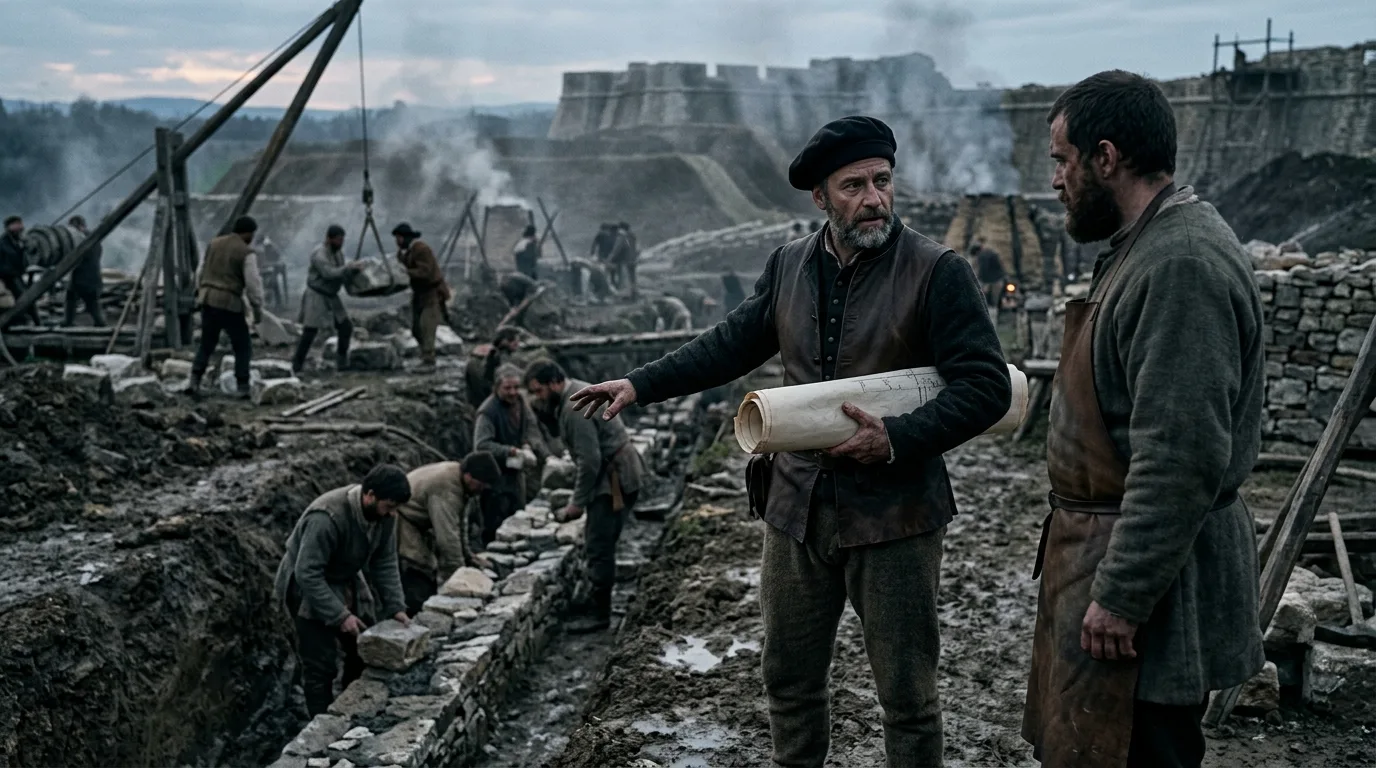
Mariano di Jacopo called Taccola devoted years between 1427 and 1433 to designing revolutionary fortress systems featuring multiple concentric walls, hidden artillery positions, and complex water-filled moats that would make castles impregnable to the new gunpowder weapons devastating traditional fortifications. His detailed drawings showed star-shaped bastions allowing overlapping fields of fire, underground tunnels for troop movement, and mechanized drawbridges operated from protected positions inside fortress walls. Taccola calculated that his fortress designs would require one-third fewer defenders than conventional castles while withstanding cannon bombardment that destroyed older straight-walled fortifications within days. He presented elaborate proposals to the Republic of Siena and multiple Italian princes, promising military superiority to whoever funded construction first. Not a single Taccola fortress was ever built despite decades of promotion because the construction costs proved astronomically beyond Renaissance military budgets. His designs required moving millions of cubic meters of earth, importing specialized stone masons who could execute complex geometric patterns, and maintaining construction crews for 15 to 20 years per fortress. Preliminary estimates for one fortress exceeded 300,000 gold florins—more than most city-states spent on military expenses over entire decades. The geometric precision Taccola demanded was impossible with 15th-century surveying tools, while his underground tunnel networks would flood immediately in most Italian locations due to high water tables. Later military architects incorporated some concepts from Taccola’s drawings, but his complete fortress systems remained theoretical fantasies that demonstrated imagination unconstrained by economic or geological reality.
Source: britannica.com
8. Giovanni Fontana’s Rocket Torpedo Exploded Spectacularly on Launch
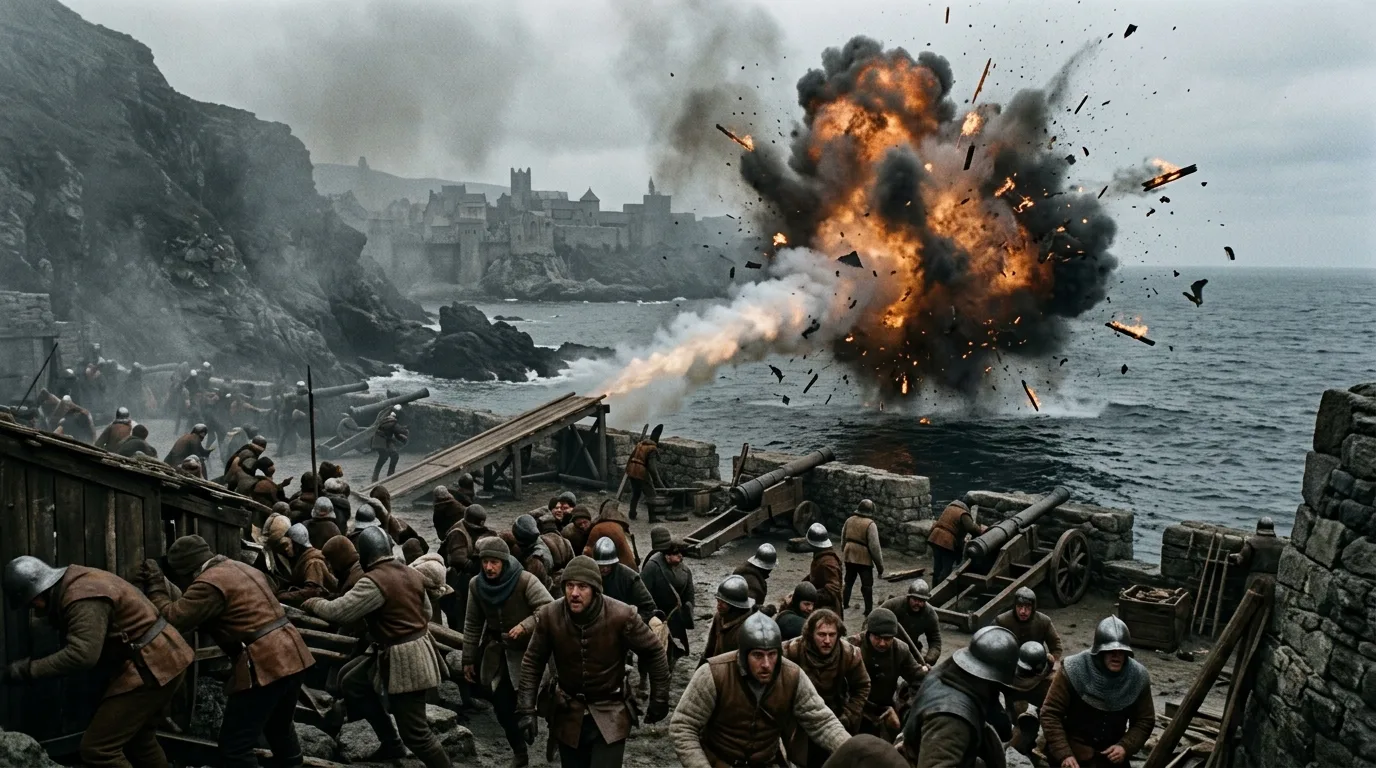
Giovanni Fontana designed a rocket-powered torpedo around 1420 intended to skim across water surfaces and explode against enemy ship hulls, using gunpowder rockets for propulsion decades before similar weapons appeared in naval warfare. His treatise Bellicorum instrumentorum liber shows detailed sketches of a wooden tube containing explosive powder, mounted with steering fins and a fuse that would ignite the warhead upon impact. Fontana claimed his invention would revolutionize naval combat by allowing smaller vessels to destroy larger warships without coming within range of enemy archers or cannon fire. The Venetian Arsenal funded construction of three prototype torpedoes in 1421, eager to gain advantages in their ongoing naval conflicts with Genoa and Ottoman forces. The first test launch in Venice’s lagoon created a spectacular fireball that consumed the torpedo, launch platform, and nearly killed the 12 technicians operating the device. The gunpowder rockets generated uncontrollable thrust that caused the torpedo to spiral wildly before exploding in mid-air roughly 15 meters from the launch point, sending burning debris across the water surface. Investigators discovered that Fontana’s propulsion calculations were hopelessly optimistic—the primitive gunpowder rockets available in 1421 produced thrust that varied randomly by factors of three or more, making stable flight impossible. His steering fin design also created drag that slowed the torpedo to speeds where wave action capsized the device immediately. After two more explosive failures that consumed 500 gold ducats and injured several Arsenal workers, Venice abandoned the project completely. Fontana’s rocket torpedo remained a dangerous fantasy for 400 years until stable propellants and gyroscopic guidance made the concept militarily viable.
Source: britannica.com
9. Agostino Ramelli’s Book Wheel Was Too Expensive and Too Slow
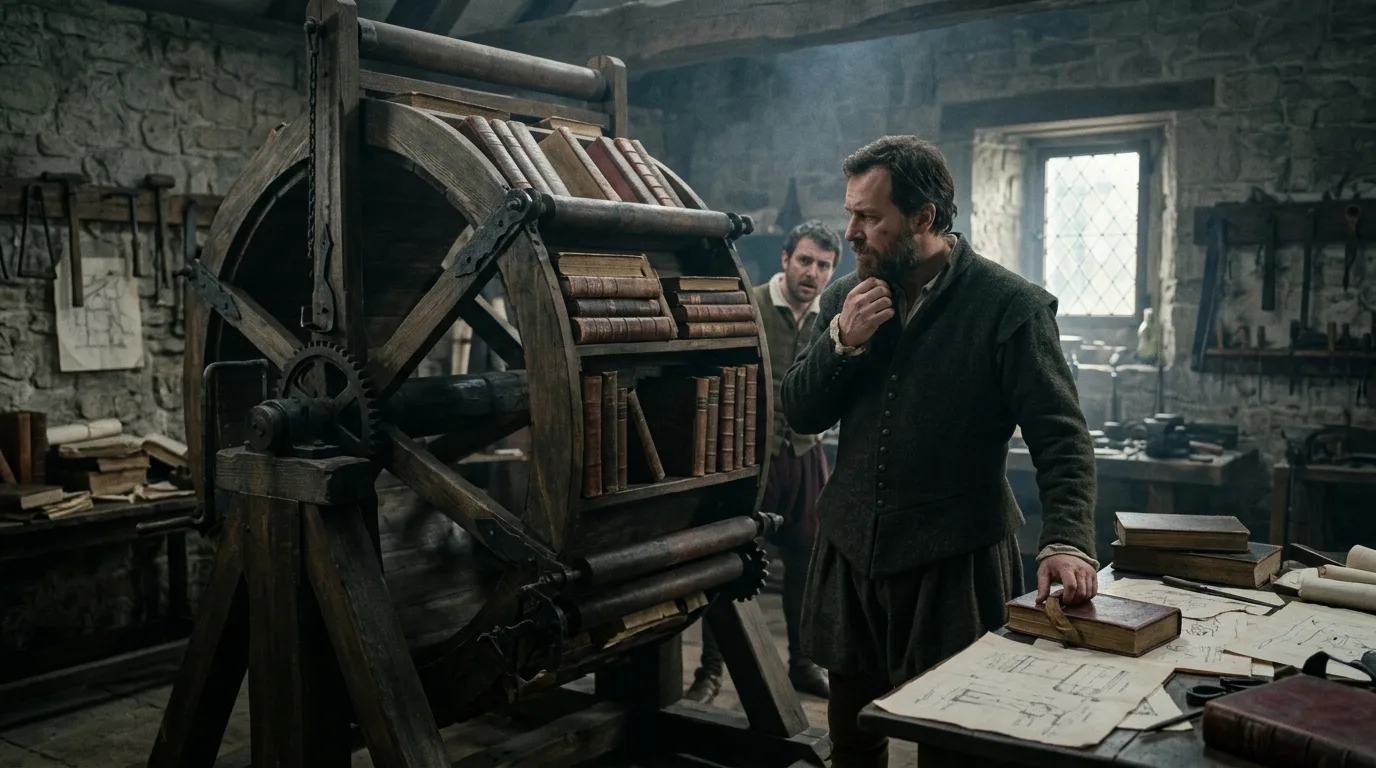
Agostino Ramelli designed his famous rotating book wheel in 1588 to allow scholars to read multiple volumes simultaneously without leaving their seats, featuring a large wooden wheel holding 8 to 12 books on angled lecterns that rotated to bring each text before the reader. The ingenious mechanism used a complex gear system ensuring books remained horizontal during rotation, preventing pages from flipping closed or bookmarks from falling out. Ramelli claimed his invention would revolutionize scholarly research by letting readers cross-reference multiple texts in seconds rather than walking between different reading desks. He published detailed construction plans showing every gear, bearing, and support structure needed to build a book wheel measuring 2 meters in diameter. Wealthy collectors commissioned perhaps 6 book wheels between 1588 and 1620, but the invention never achieved widespread adoption for devastating practical reasons. Each book wheel required master carpenters to spend 800 to 1,000 hours on precision construction, resulting in costs exceeding 150 gold scudi—enough to purchase a small house in most Italian cities. The mechanical complexity meant constant maintenance as wooden gears wore down and axles required adjustment to prevent jamming. Most fatally, scholars discovered that rotating the wheel, waiting for it to stop, reading a passage, then rotating again took longer than simply standing and walking between reading desks. The book wheel’s impressive engineering provided no actual time savings while occupying floor space that could hold 30 regular reading desks. Libraries never adopted the technology, and existing book wheels became expensive curiosities displayed as mechanical marvels rather than used for serious scholarship.
Source: smithsonianmag.com
10. Leonardo’s Walking-on-Water Shoes Sank Immediately With Their User
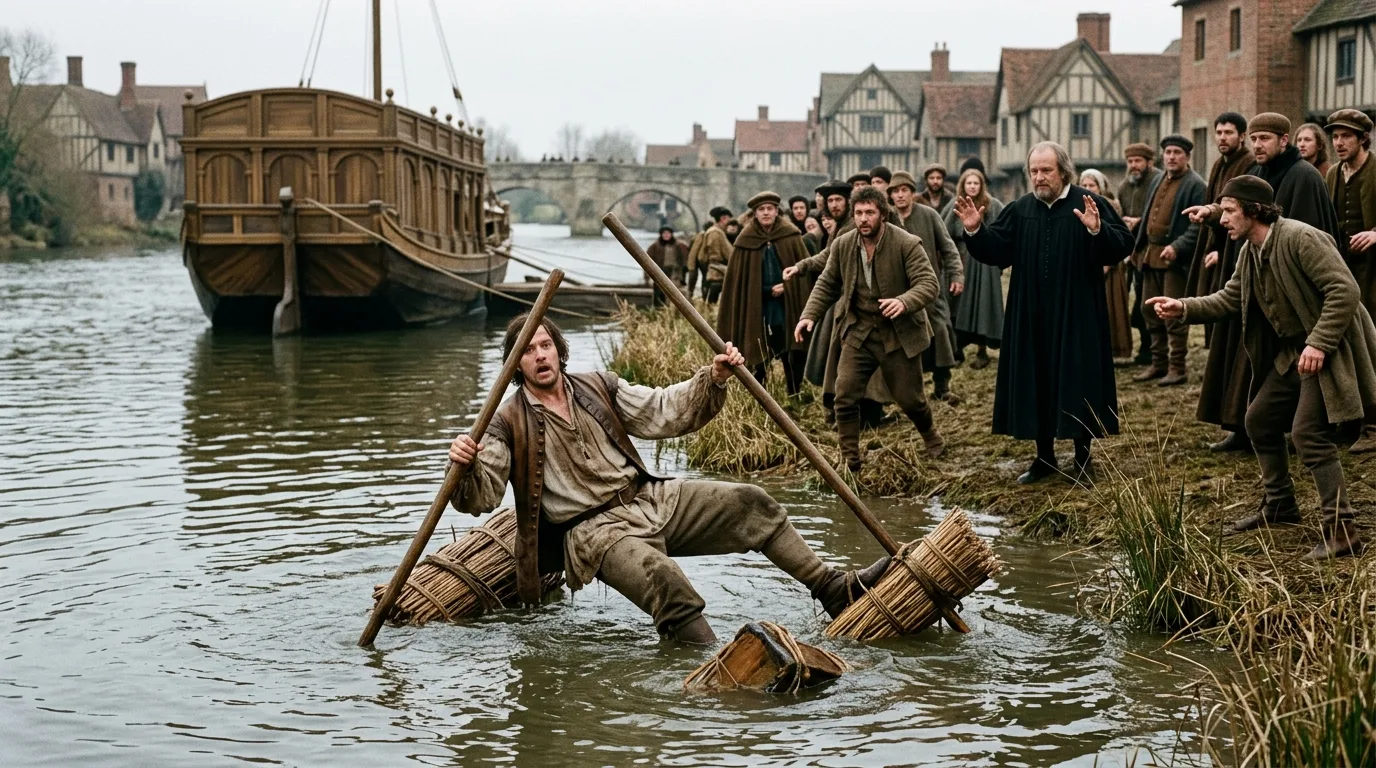
Leonardo da Vinci sketched designs around 1480 for shoes that would let people walk across water surfaces, featuring large wooden floats attached to each foot and a pair of poles for balance, similar to modern water-skiing but powered by human leg motion. His notes claimed the floats displaced enough water to support a person’s weight while the walking motion would propel the user forward across rivers, moats, or harbors without boats. Leonardo imagined military applications where soldiers could cross water obstacles silently at night, plus civilian uses for travelers avoiding bridge tolls or fishermen reaching better fishing locations. The Codex Atlanticus contains his sketches showing the float dimensions and pole placement, with calculations suggesting the design was physically sound. When an ambitious Milanese courtier funded construction and volunteered to test the water-walking shoes in 1481, the attempt failed catastrophically within seconds. The tester managed to stand on the floats while assistants held him steady in shallow water, but the moment he attempted a walking motion, the floats tilted sideways and he plunged into the water fully clothed. Multiple attempts revealed that coordinating the pole balance while simultaneously moving legs in the restrictive floats exceeded human coordination abilities, while any significant wave action capsized the user instantly. Leonardo’s calculations had ignored the instability created by having a tall human body balanced on two narrow floats—the high center of gravity made the system as precarious as walking on stilts across ice. The soaked courtier abandoned the experiment after six attempts and near-drowning twice, declaring Leonardo’s shoes were suicide devices rather than transportation. Modern recreation attempts confirm the design is theoretically possible but practically unusable without months of training and perfectly calm water conditions that rarely exist in nature.
Source: britannica.com
Did You Know?
Did You Know? Leonardo da Vinci deliberately sabotaged his own tank design by reversing the gears—he apparently opposed creating weapons that would increase human suffering, even while accepting payment from warlords to design them. The Renaissance’s greatest genius may have been history’s first conscientious objector to military invention, hiding his pacifism inside engineering “mistakes” that kept his dangerous creations safely on paper where they couldn’t kill anyone.