
In the 12th century, Korean potters achieved what seemed impossible: a translucent jade-green glaze so perfect that Chinese connoisseurs called it ’the first under heaven.’ These ten masterpieces reveal how Goryeo celadon revolutionized pottery across medieval Asia.
1. Sanggam Incense Burner That Invented Inlay Ceramics
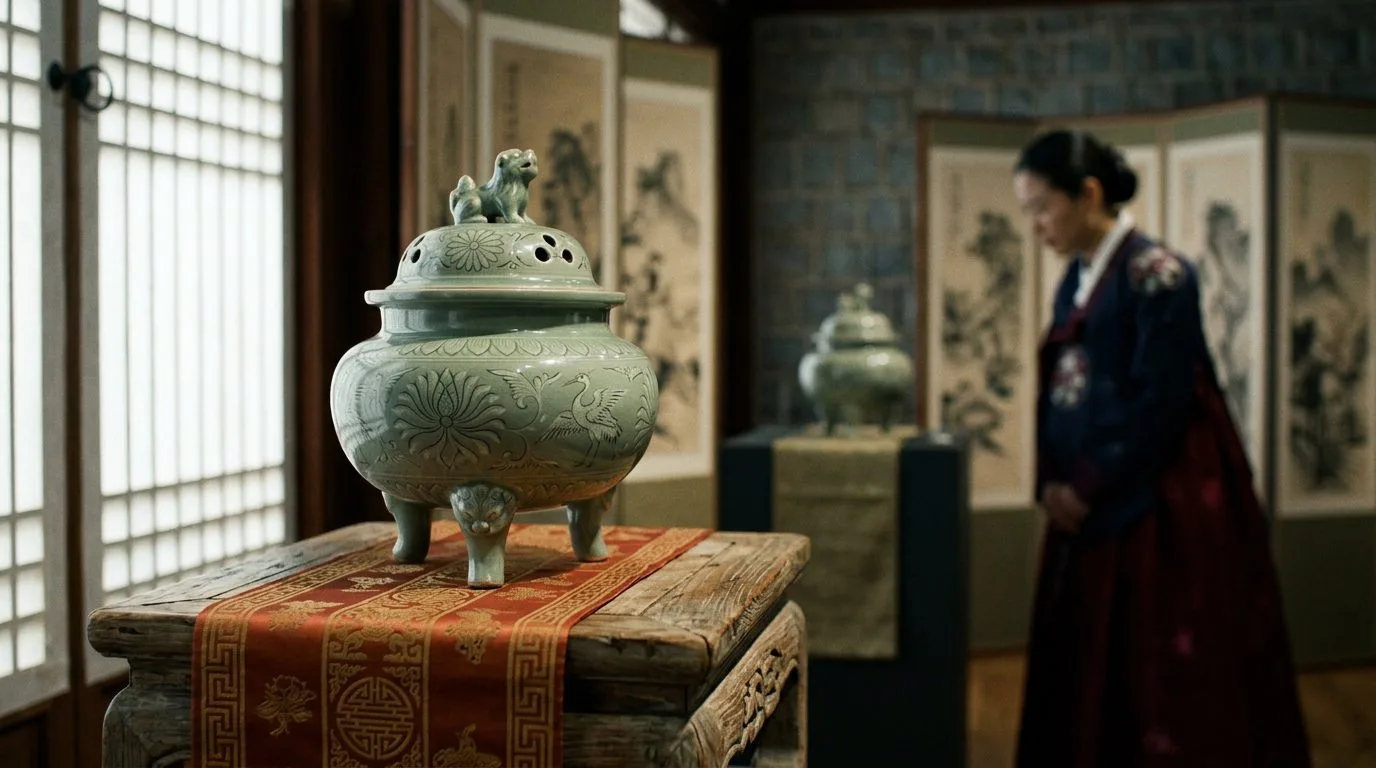
Ancient Korean ceramic vessel showcasing inlay
A sanggam incense burner from 1150 CE preserved at the National Museum of Korea pioneered the world’s first ceramic inlay technique. Craftsmen carved chrysanthemum patterns into leather-hard clay, filled the grooves with contrasting white and black slip, then applied the signature jade glaze. The Ganjin kiln complex in southwestern Korea produced these revolutionary pieces for Buddhist temples across the peninsula. Emperor Huizong of Song China reportedly sent envoys specifically to acquire Goryeo sanggam ware, recognizing the technique had surpassed Chinese pottery innovations. This single incense burner demonstrated a technical achievement that Chinese, Japanese, and Persian potters would spend centuries attempting to replicate.
Source: britannica.com
2. Maebyeong Vase That Defined Royal Ceremony
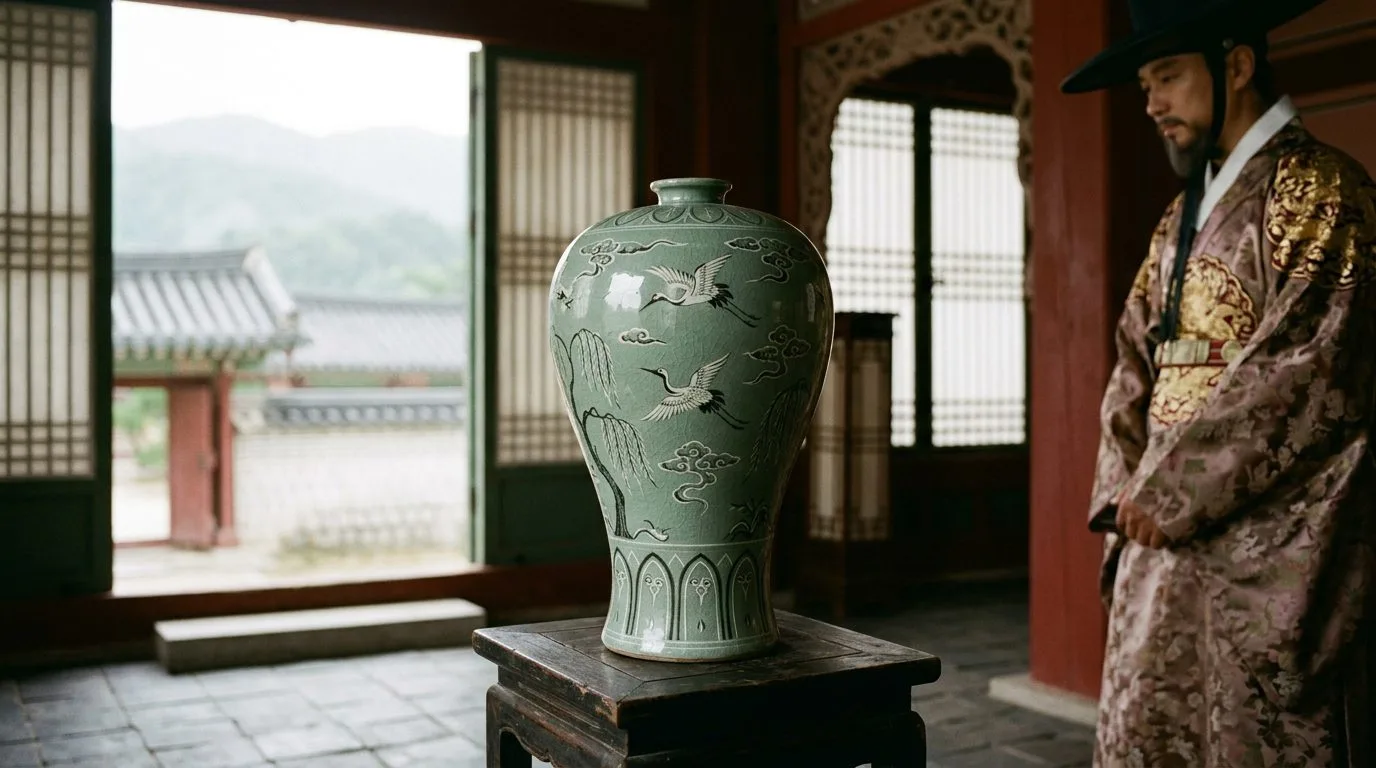
Maebyeong Vase That Defined Royal Ceremony
The National Treasure No. 68 maebyeong from 1123 CE stands 42 centimeters tall with crane and cloud motifs that became synonymous with Goryeo aristocratic culture. These pear-shaped vessels served exclusively as ritual wine containers during royal ancestral ceremonies at the Goryeo palace in Kaesong. Artisans achieved the translucent glaze by firing at precisely 1,250 degrees Celsius in reduction atmosphere kilns, a temperature control that remained unmatched until the 15th century. The Metropolitan Museum of Art houses a similar maebyeong that scholars trace to King Injong’s reign. Buddhist monks considered the crane symbol essential for spiritual transformation, making these vessels indispensable for temple dedication rituals.
Source: britannica.com
3. Lotus Water Dropper That Perfected Buddhist Symbolism
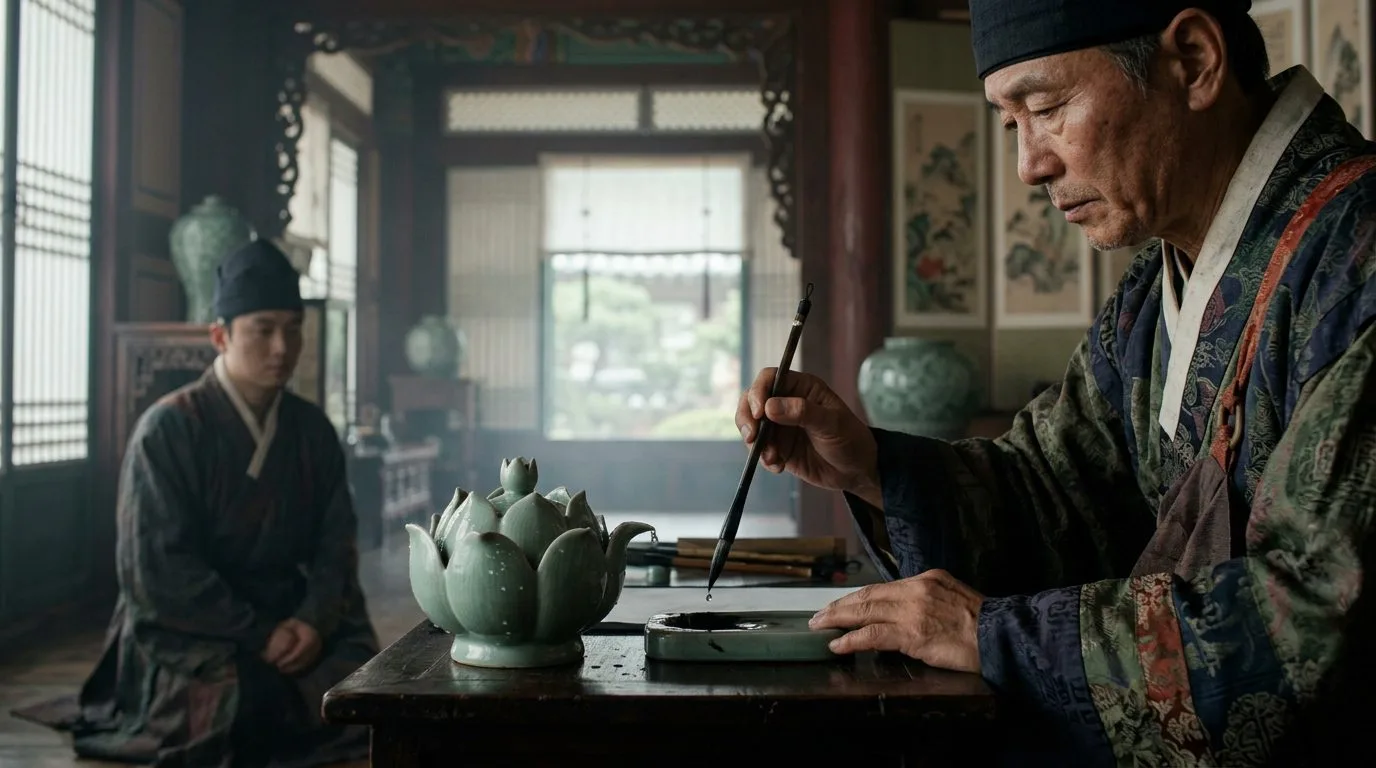
Ancient lotus water dropper embodies Buddhist
A lotus-shaped water dropper from the Buan kilns circa 1180 CE measures just 8 centimeters yet contains three separate chambers for controlled ink preparation. Master calligraphers at Heungwangsa Temple commissioned these droppers to regulate water flow with microscopic precision during sutra copying ceremonies. The hollow lotus petals demonstrated technical mastery that required carving unfired clay to paper-thin 2-millimeter walls without collapse. Forty-three examples survive in museum collections worldwide, though archaeological excavations at Buan suggest production exceeded 10,000 pieces annually during peak periods. The dropper’s function merged practical calligraphy needs with Buddhist iconography of spiritual purity.
Source: smithsonianmag.com
4. Copper-Red Tea Bowl That Challenged Chinese Supremacy
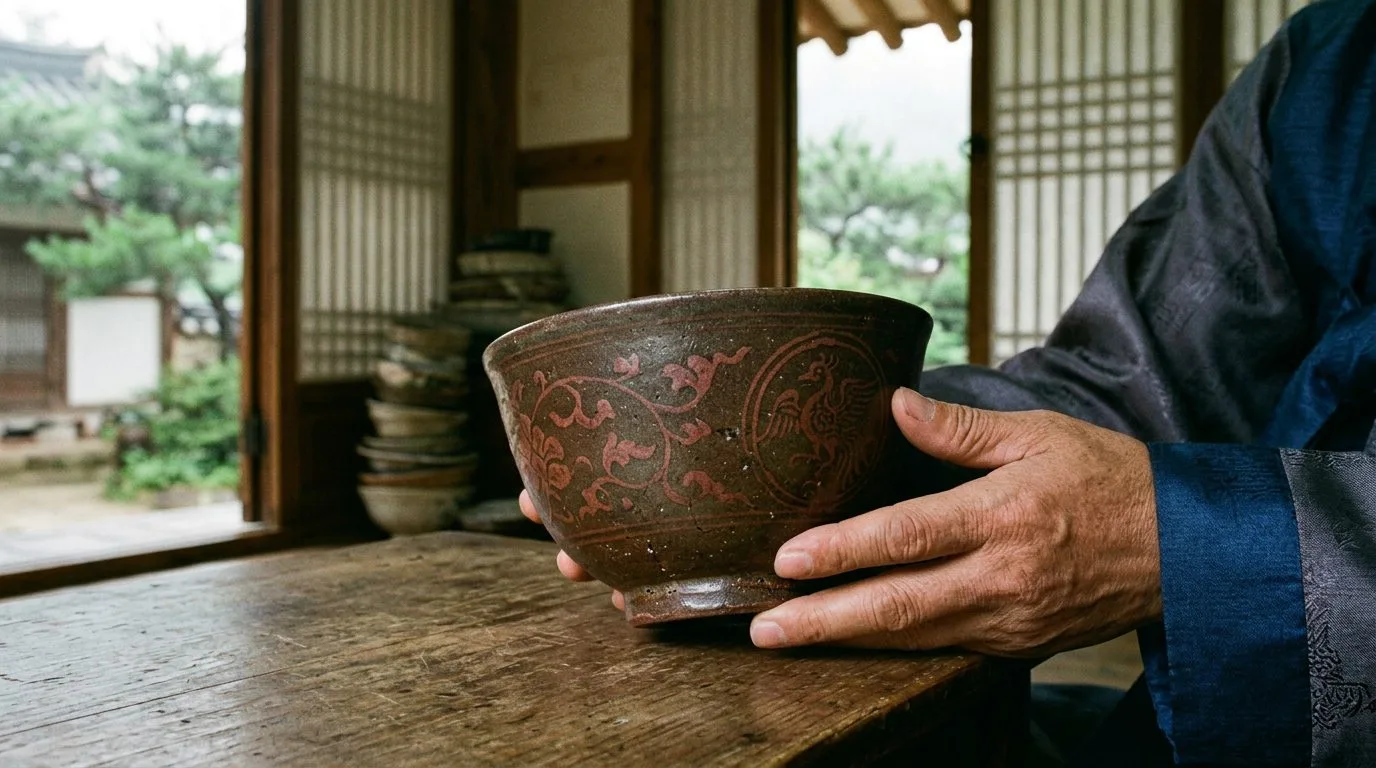
Japanese ceramic innovation rivals Tang dynasty
In 1159 CE, Goryeo potters at Gangjin achieved copper-red underglaze decoration decades before Chinese Jingdezhen kilns mastered the technique. The Leeum Museum preserves a tea bowl where copper oxide created crimson splashes against jade celadon, requiring three separate firings at varying oxygen levels. Buddhist Zen master Uicheon brought tea ceremony protocols from Song China but insisted on using exclusively Korean vessels for monastic tea gatherings. The copper-red technique proved so difficult that fewer than 200 authenticated examples exist today. Japanese tea masters during the Kamakura period paid prices equivalent to 50 bags of rice for a single Goryeo copper-red bowl.
Source: britannica.com
5. Imperial Tribute Vase With Reverse Inlay Innovation
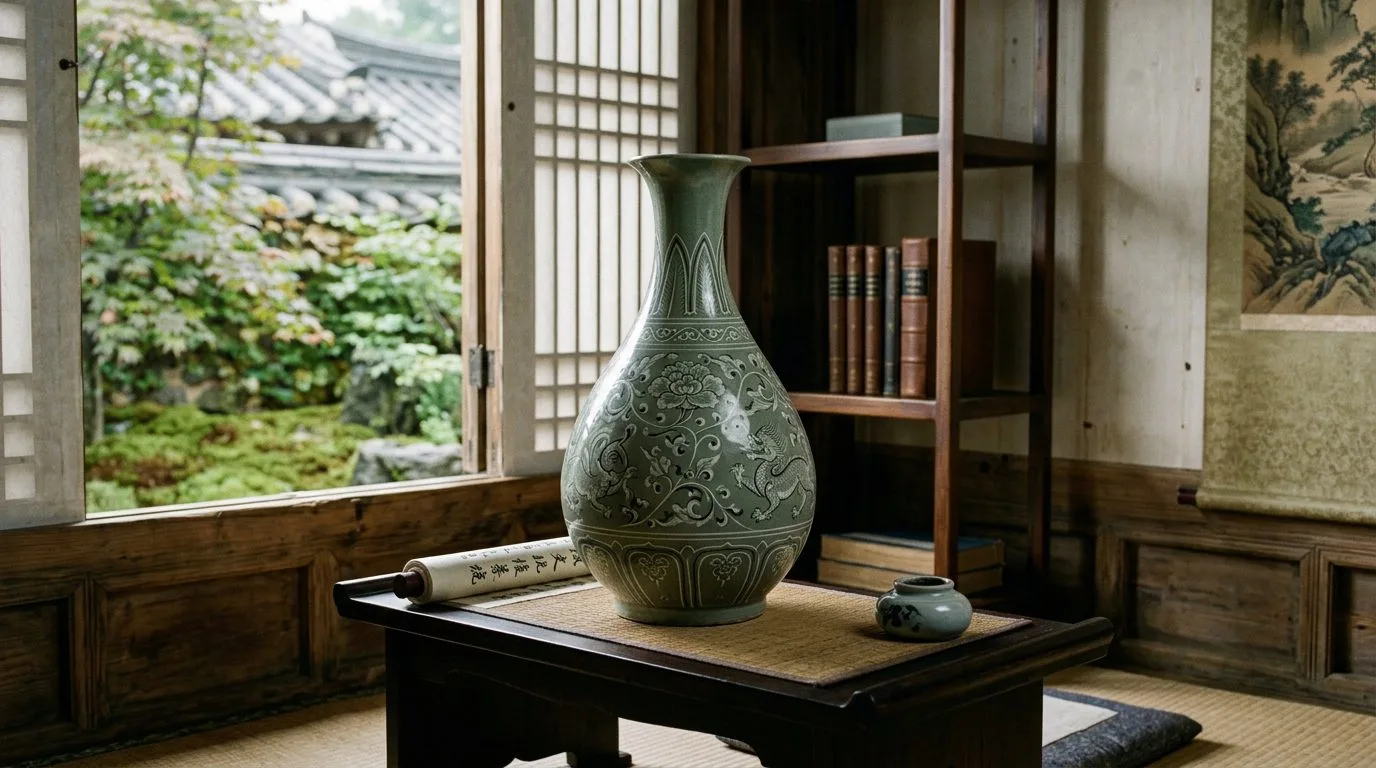
Ancient ceramic vessel showcasing innovative
A vase created in 1146 CE for tribute to the Goryeo court introduced reverse inlay by applying white slip backgrounds and carving designs in negative space. The Gansong Art Museum specimen stands 31 centimeters tall with willow branch patterns that appear to float in white clouds. King Uijong specifically commissioned 300 reverse inlay pieces annually from the Gangjin kilns for diplomatic gifts to Mongol khans and Japanese shoguns. This technique required mathematical precision in calculating slip shrinkage rates during drying, as miscalculations by even 3 percent caused catastrophic cracking. Archaeological evidence from kiln waste dumps suggests a 70 percent failure rate in reverse inlay production.
Source: britannica.com
6. Cosmetic Box That Revolutionized Openwork Ceramics
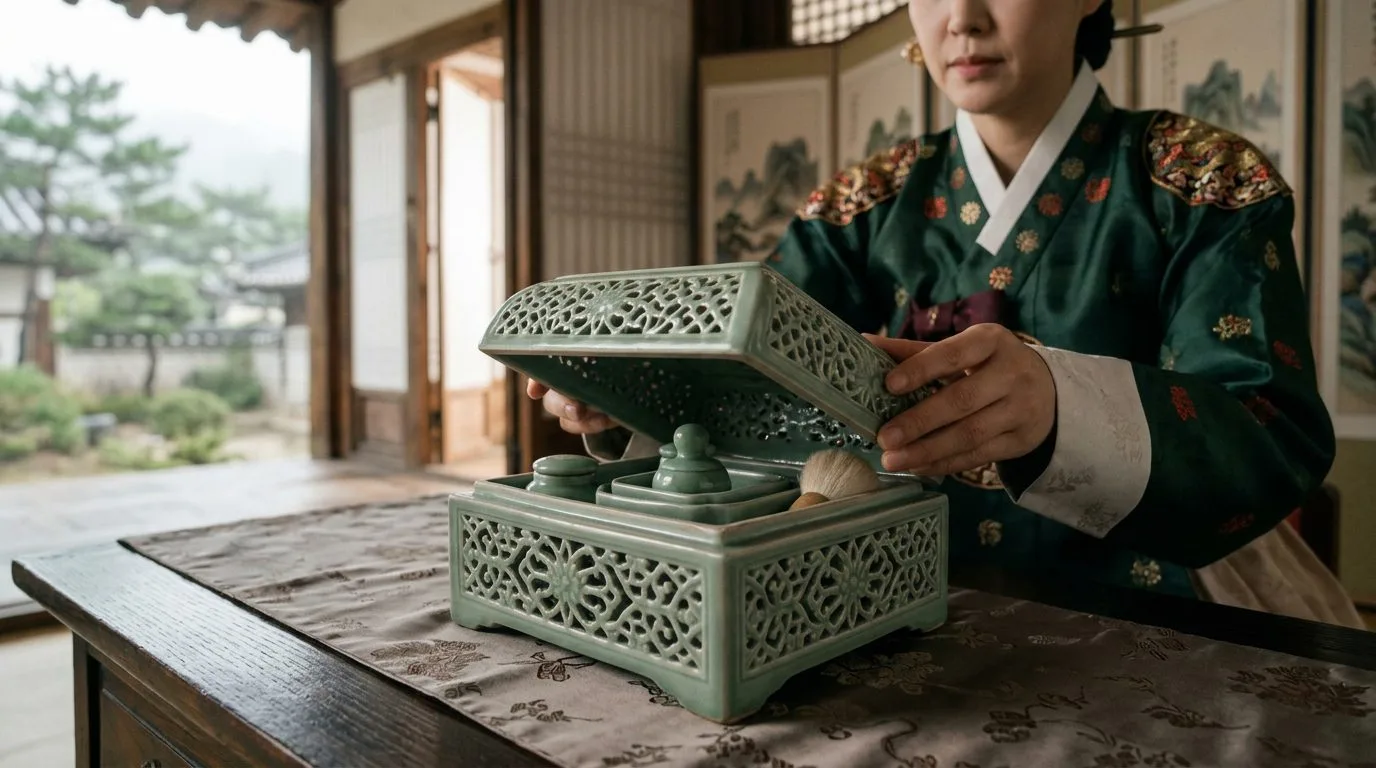
Cosmetic Box That Revolutionized Openwork Ceramics
Queen Munjeong’s cosmetic box from 1138 CE features lattice openwork so intricate that contemporary potters require magnification to replicate the patterns. The box contains five nested compartments separated by pierced walls forming geometric honeycomb designs, each hexagon measuring 4 millimeters across. Royal workshops at the Goryeo capital employed specialized carvers who spent three weeks creating a single box before firing. The British Museum acquired an identical specimen in the 19th century that revealed these boxes held powdered mica for court ladies’ makeup. Openwork technique demanded clay with precisely 18 percent moisture content, as variations caused warping during the 14-hour firing cycle.
Source: britannica.com
7. Kundika Ewer That Transformed Buddhist Ritual
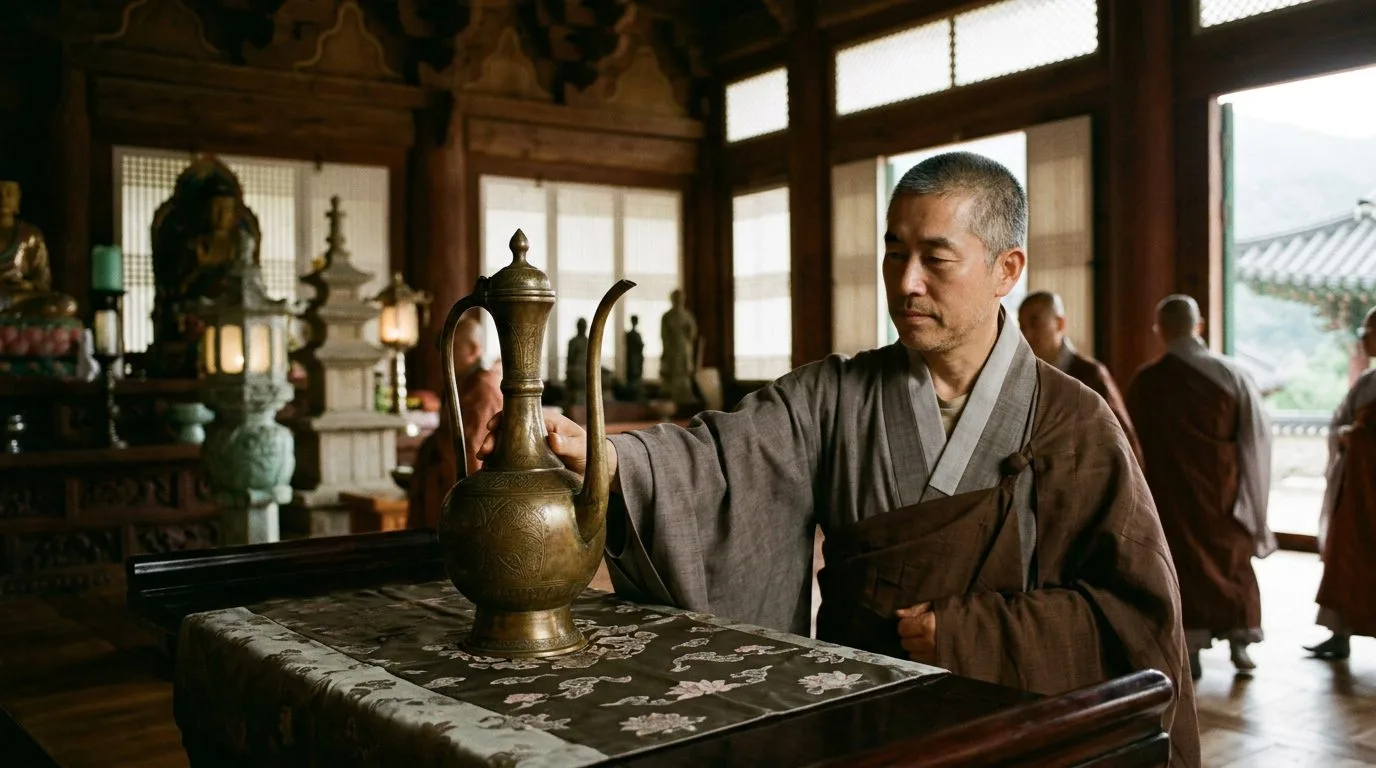
Kundika Ewer That Transformed Buddhist Ritual
The National Museum of Korea’s kundika from 1167 CE stands 37 centimeters tall with a distinctive elongated spout designed for precise water pouring during Buddhist purification rites. Monks at Bulguksa Temple used these ewers exclusively for abhiṣeka consecration ceremonies, where even a single water drop misplaced invalidated the entire ritual. Goryeo potters modified the Indian kundika design by adding a second spout that allowed priests to control flow rate through finger pressure. Archaeological excavations at Gangjin kilns uncovered molds indicating production of 500 kundika annually during the mid-12th century. The vessel’s perfect balance point enabled one-handed pouring while maintaining ritual mudra hand gestures.
Source: britannica.com
8. Oil Bottle That Captured Nature’s Movement
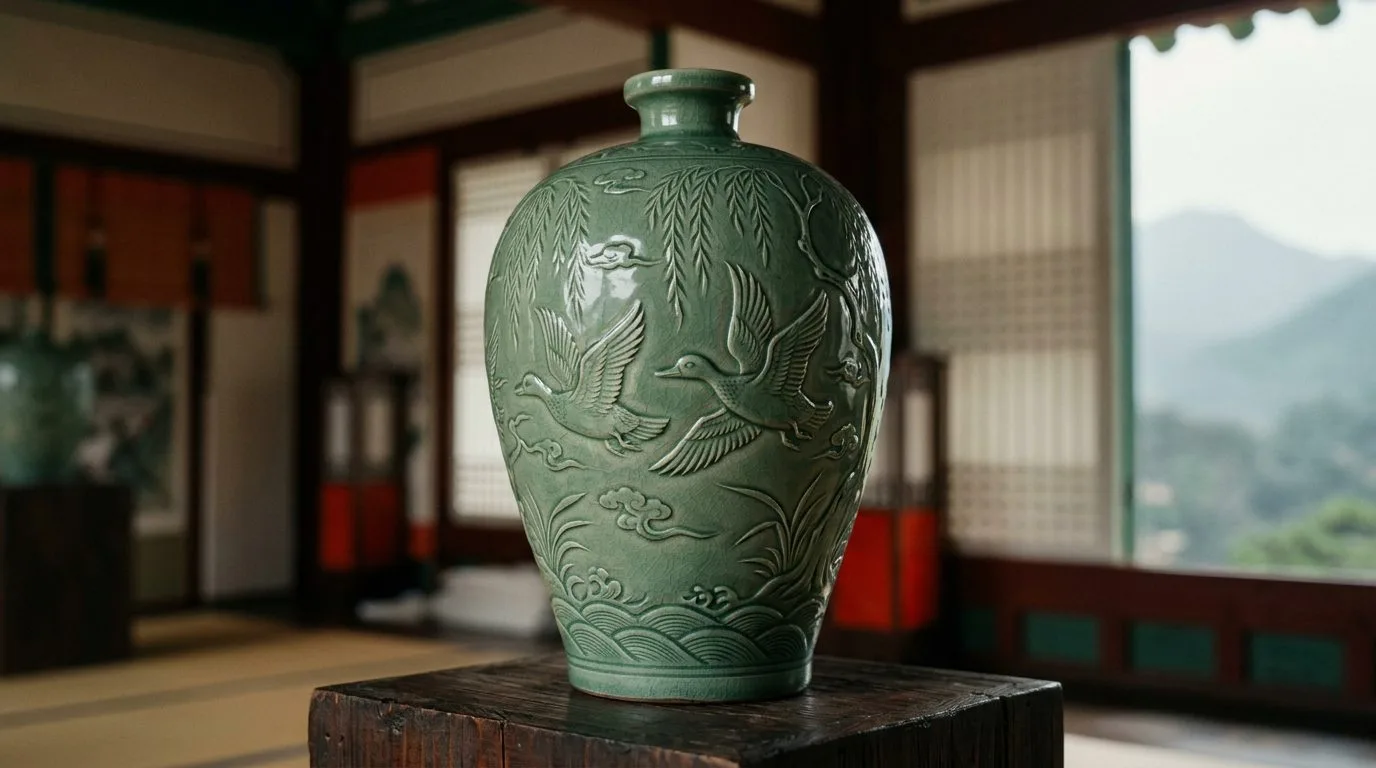
Oil Bottle That Captured Nature’s Movement
A 1172 CE oil bottle from the Horim Museum displays willow and waterfowl scenes carved in such dynamic composition that the ducks appear mid-flight across the 24-centimeter curved surface. Aristocratic households used these bottles for fragrant sesame oil during evening lantern lighting ceremonies. The master potter Yi Cheon-mun signed this piece—one of only seven authenticated signatures on Goryeo celadon—providing rare documentation of individual artisans. Scenes required carving wet clay in continuous motion without lifting the blade, a technique Japanese potters later called ittōbori. The bottle’s narrow 1-centimeter neck prevented oil oxidation while forcing users to pour with ceremonial slowness.
Source: smithsonianmag.com
9. Ceramic Pillow That Redefined Comfort And Status
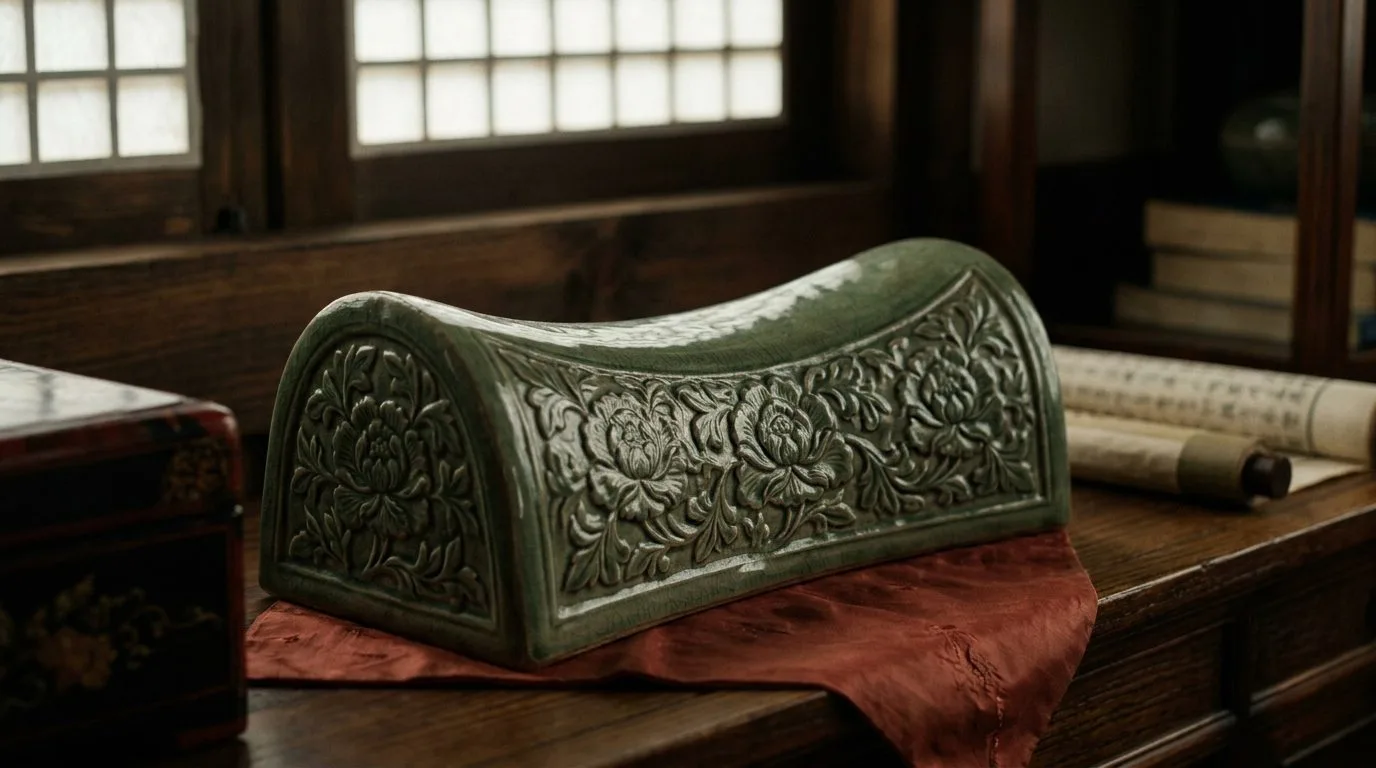
Ceramic Pillow That Redefined Comfort And Status
Peony-carved ceramic pillows from 1151 CE measured 28 centimeters long and provided ergonomic neck support based on Buddhist medical texts imported from Tang China. The National Palace Museum of Korea houses a pillow where raised peony relief patterns created 3-millimeter elevation changes that promoted proper spinal alignment during meditation. Aristocrats displayed these pillows in reception halls as wealth symbols, though accounts from the Goryeo-sa chronicle indicate actual sleeping use caused frequent breakage. Excavations at the Yongin kilns revealed ceramic pillow production peaked at 2,000 units annually, with quality grades determined by glaze uniformity. The cooling properties of celadon clay helped reduce summer heat by an estimated 4 degrees Celsius.
Source: britannica.com
10. Export Celadon That Proves Global Trade Networks
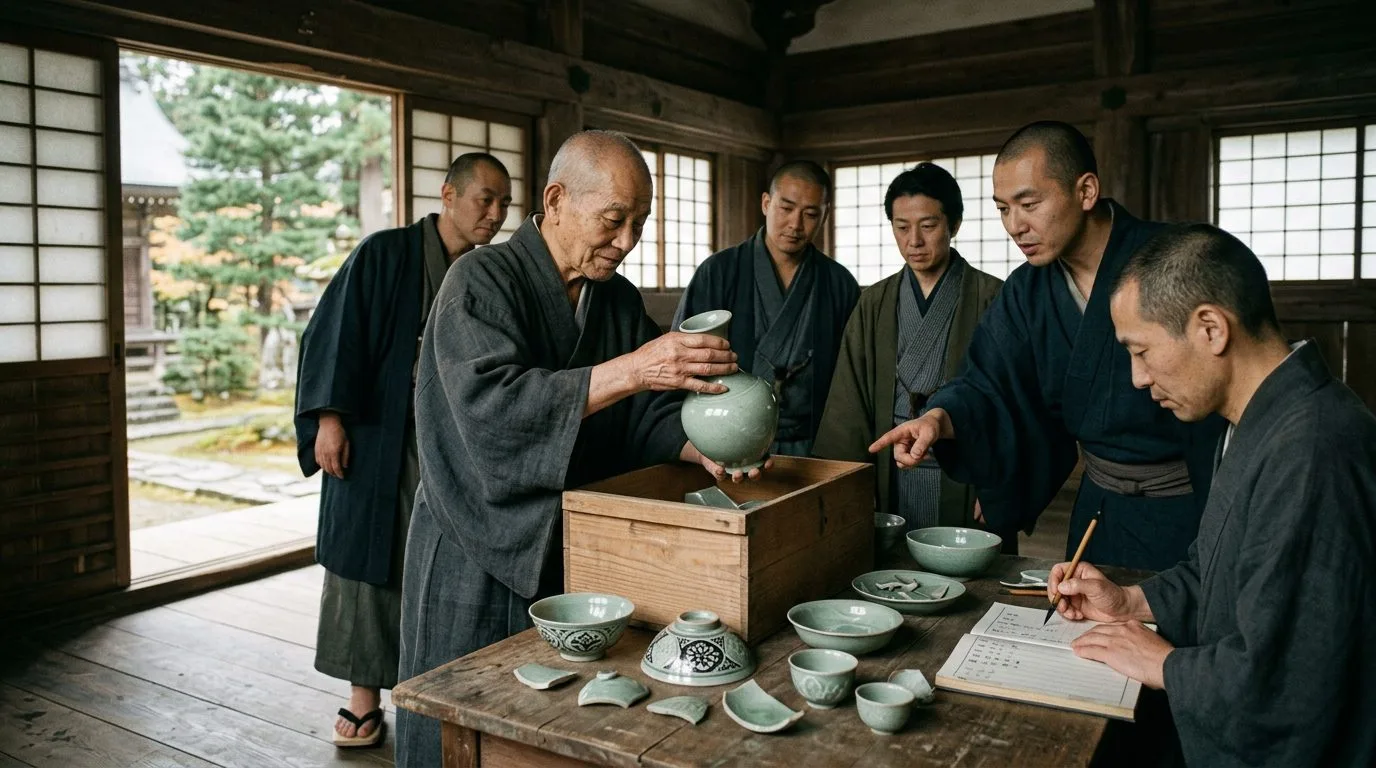
Export Celadon That Proves Global Trade Networks
In the late 19th century, archaeologists at Chūson-ji Temple in northern Japan discovered 47 Goryeo celadon pieces in sealed treasure repositories dating to 1189 CE. These export wares featured simplified designs compared to royal pieces, indicating specialized production for foreign markets. The Kamakura shogunate paid Korean merchants in gold bullion at rates of 15 grams per celadon bowl, as documented in the Azuma Kagami chronicle. Chemical analysis of clay composition matches exclusively with the Gangjin kiln complex, proving these weren’t local Japanese imitations. Similar discoveries at Hakata port ruins revealed Goryeo celadon reached not just Japan but Song China trading networks extending to Southeast Asia, making it the Korean Peninsula’s most valuable medieval export commodity.
Source: britannica.com
Did You Know?
Did You Know? The jade-green glaze that made Goryeo celadon famous wasn’t intentional—early 12th-century potters discovered it accidentally when iron-rich clay reacted with wood ash at specific temperatures. Even more surprising: when Mongol invasions devastated Korea’s kilns in 1232 CE, the exact chemical formula for that translucent glaze was lost forever, and despite centuries of scientific analysis, modern potters still can’t perfectly replicate what medieval Korean craftsmen achieved through intuition and experimentation alone.