
Athens and Sparta dominate histories of ancient Greece, but over 1,000 independent city-states competed for power, wealth, and glory. Some fielded elite warrior units that crushed Spartan armies, others built commercial empires rivaling Athens, and one defeated the Athenian navy so decisively it changed the course of Greek history.
1. Thebes and the Sacred Band That Shattered Spartan Invincibility
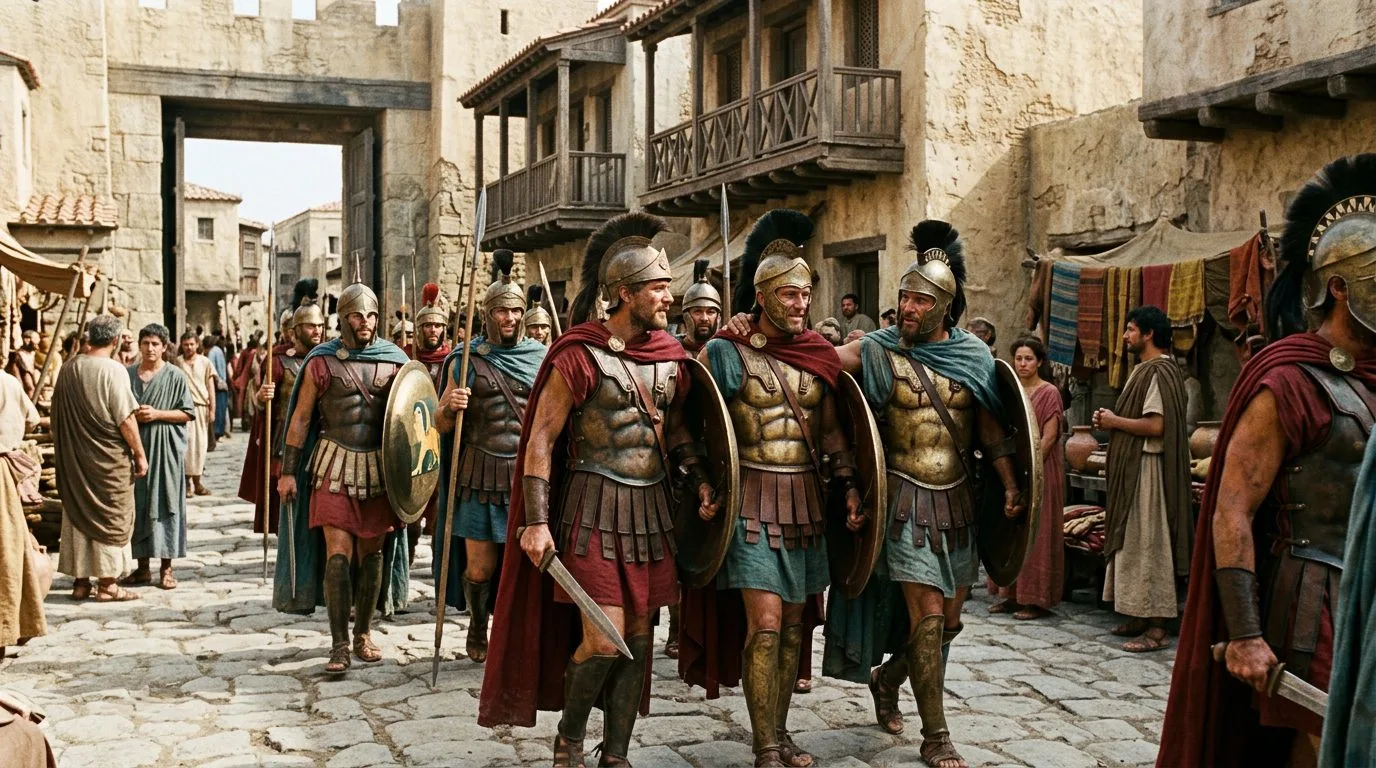
The Sacred Band of Thebes in battle formation.
The Sacred Band of Thebes consisted of 150 pairs of male lovers who believed fighting alongside their beloved would inspire unmatched courage. In 371 BCE at the Battle of Leuctra, this elite 300-man unit led Theban forces that killed 400 Spartans including King Cleombrotus I, ending Sparta’s reputation for invincibility. General Epaminondas revolutionized Greek warfare by massing troops 50 shields deep on his left flank, crushing the Spartan right wing in minutes. Thebes dominated Greece for nearly a decade until Epaminondas fell at Mantinea in 362 BCE, taking Theban hegemony to the grave with him.
Source: britannica.com
2. Corinth’s Commercial Empire Controlled Mediterranean Trade Routes
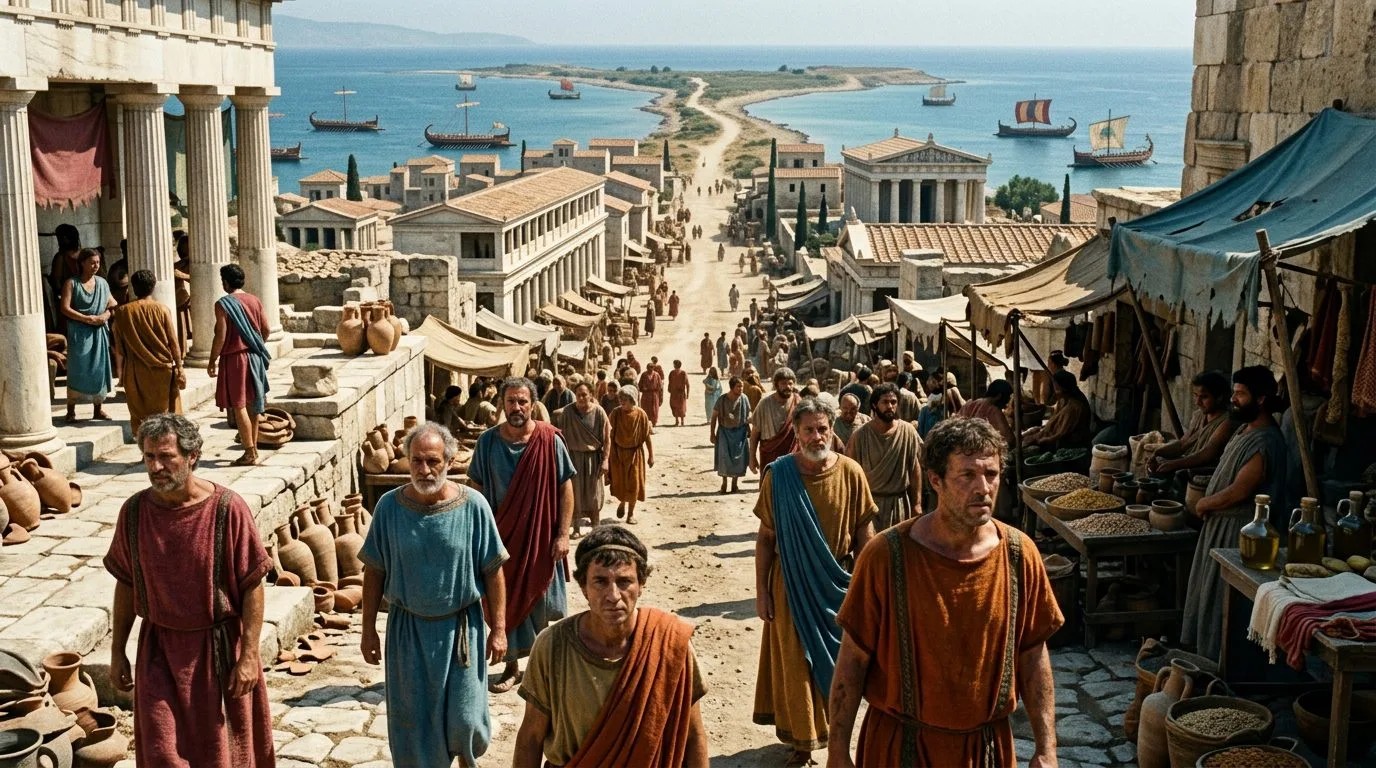
Ancient Greek merchant ships in Corinth harbor.
Positioned on the narrow Isthmus of Corinth between two seas, this city-state controlled east-west trade across Greece and built a commercial empire that made it wealthier than Athens in the 7th century BCE. Corinthians constructed the diolkos, a 6-kilometer stone roadway that hauled ships overland between the Corinthian and Saronic Gulfs, avoiding the dangerous 700-kilometer voyage around the Peloponnese. The city founded over 40 colonies including Syracuse and Corcyra, exporting distinctive black-figure pottery that dominated Mediterranean markets. When Corinth joined Sparta against Athens in 431 BCE, its navy of 90 warships proved crucial to Spartan victory in the Peloponnesian War.
Source: britannica.com
3. Syracuse Crushed Athens and Became the Mediterranean’s Richest City
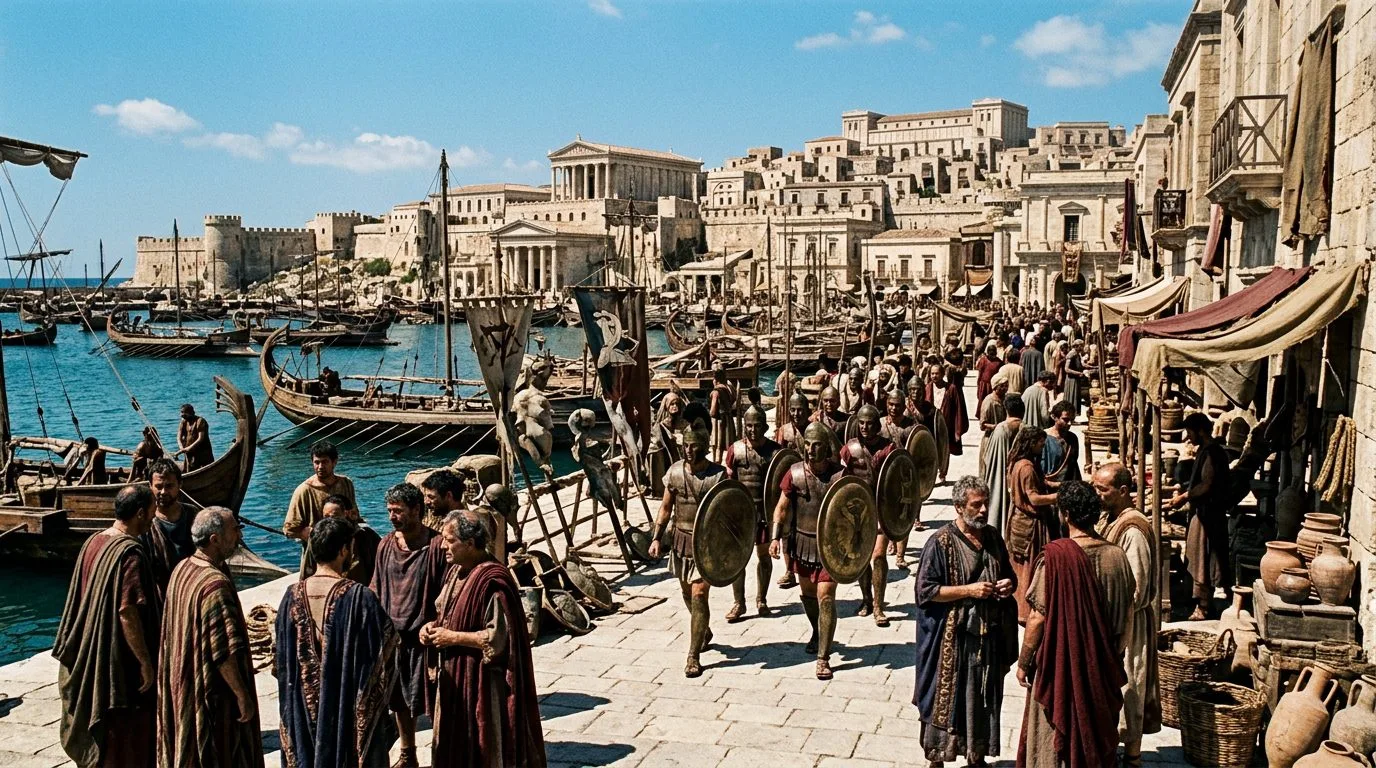
Syracuse’s naval victory over Athens transformed
Founded by Corinthian colonists in 734 BCE, Syracuse grew into the largest and most powerful Greek city in the Western Mediterranean, eventually controlling most of Sicily. When Athens sent 134 triremes and 27,000 soldiers to conquer Syracuse in 415 BCE, the Syracusans trapped and annihilated the entire Athenian fleet in their harbor, killing or enslaving 40,000 invaders. Tyrant Dionysius I fortified Syracuse with walls stretching 27 kilometers and assembled a navy of 300 warships by 367 BCE, making the city wealthier than Athens at its peak. Syracuse successfully resisted Carthaginian invasions for two centuries before finally falling to Rome in 211 BCE after a two-year siege.
Source: britannica.com
4. Argos Claimed the Oldest Throne in Greece and Never Stopped Fighting Sparta
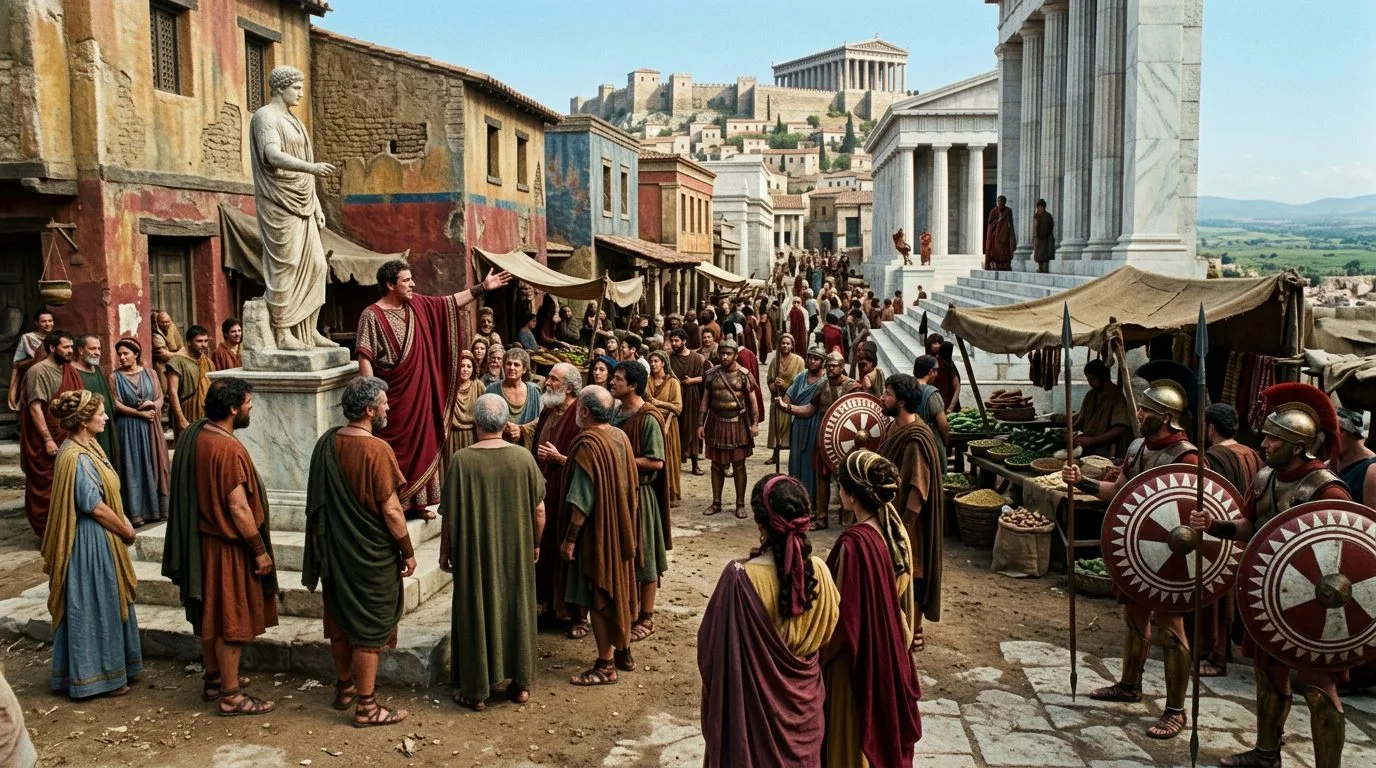
Ancient Argos: Greece’s oldest throne rival.
Argos traced its royal lineage to King Inachus in the 16th century BCE and controlled the fertile Argolid Plain, making it Sparta’s primary rival for Peloponnesian dominance. The two cities fought the Battle of the Champions circa 546 BCE, where 300 warriors from each side met in single combat—only one Argive survived to claim victory. Despite losing 6,000 hoplites to Sparta at Sepeia in 494 BCE, Argos maintained a democracy and fielded armies that contested Spartan power throughout the classical period. The city pioneered democratic reforms even before Athens, introducing its first popular assembly in the early 5th century BCE.
Source: britannica.com
5. Megara Founded More Colonies Per Capita Than Any Greek City
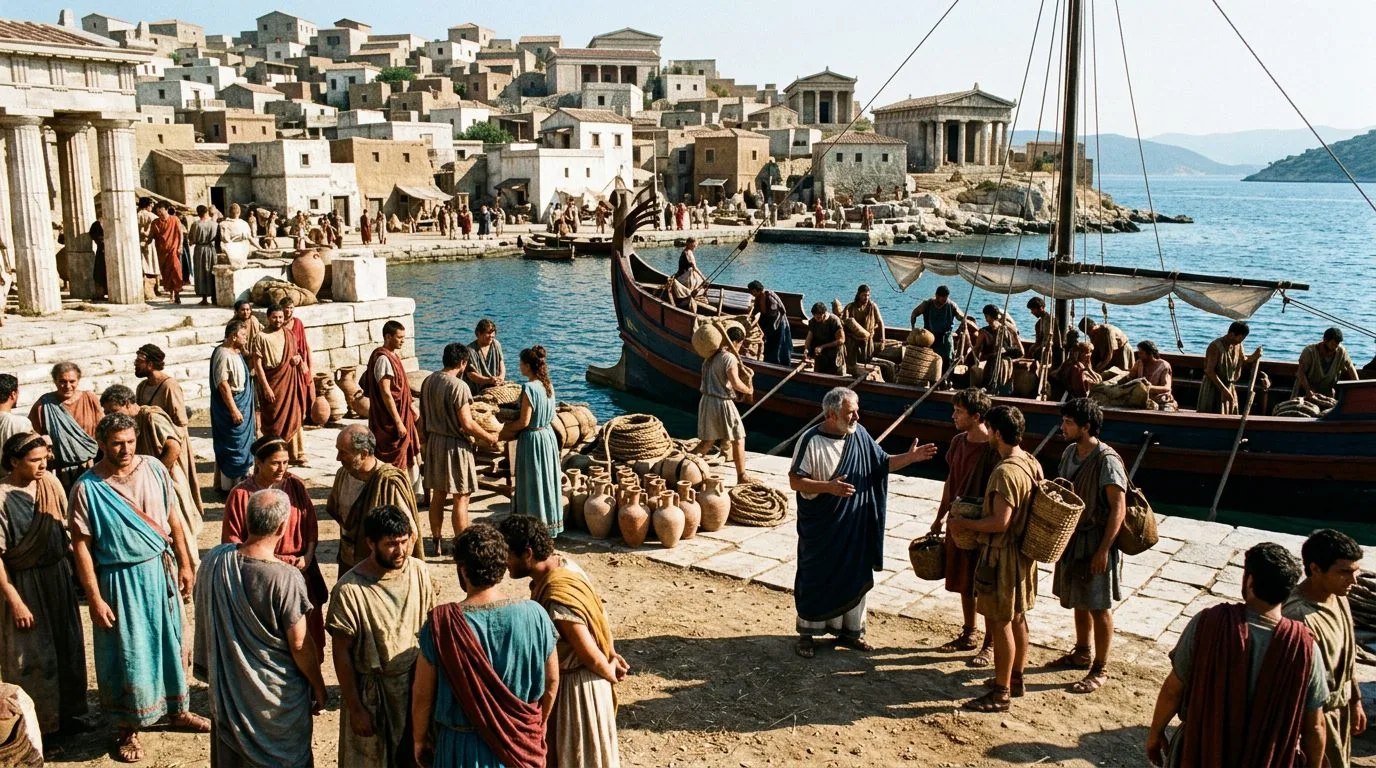
Megara’s Colonial Expansion Across Greece
Squeezed between Corinth and Athens on the Isthmus, tiny Megara compensated for limited territory by becoming ancient Greece’s most prolific colonizer relative to its population of perhaps 40,000. Megarians established Byzantium in 657 BCE, controlling the strategic Bosporus strait for centuries and creating what would become Constantinople. The city founded Chalcedon, Heraclea Pontica, and dozens of Black Sea colonies that dominated grain trade to Greece. When Athens banned Megarian merchants from its empire’s ports in 432 BCE through the Megarian Decree, the economic strangulation became a major catalyst for the Peloponnesian War.
Source: britannica.com
6. Miletus Exported Philosophy and Founded 90 Colonies Across Three Continents
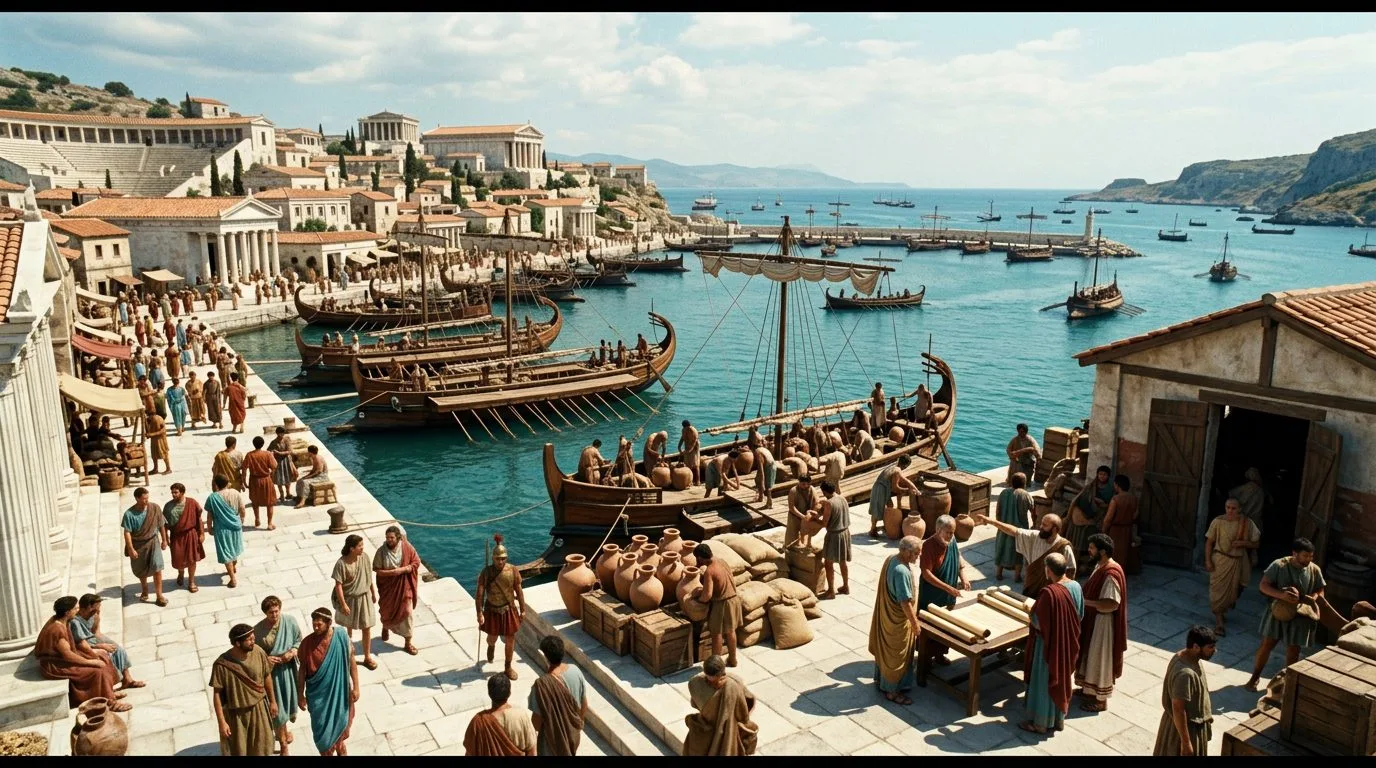
Ancient Miletus: birthplace of thought and empire
The wealthiest city in Ionia during the 6th century BCE, Miletus established over 90 colonies around the Black Sea, Mediterranean, and Egypt, more than any other Greek polis. This intellectual powerhouse produced the first Greek philosophers—Thales predicted a solar eclipse in 585 BCE, Anaximander created the first world map, and Hecataeus pioneered historical geography. The city’s fleet numbered 80 warships when it led the failed Ionian Revolt against Persia in 499 BCE, resulting in its complete destruction by King Darius I in 494 BCE. Though rebuilt, Miletus never regained its commercial dominance, but its colonization legacy shaped Greek civilization from Crimea to the Nile Delta.
Source: britannica.com
7. Rhodes Built a Naval Empire and the Ancient World’s Most Famous Statue
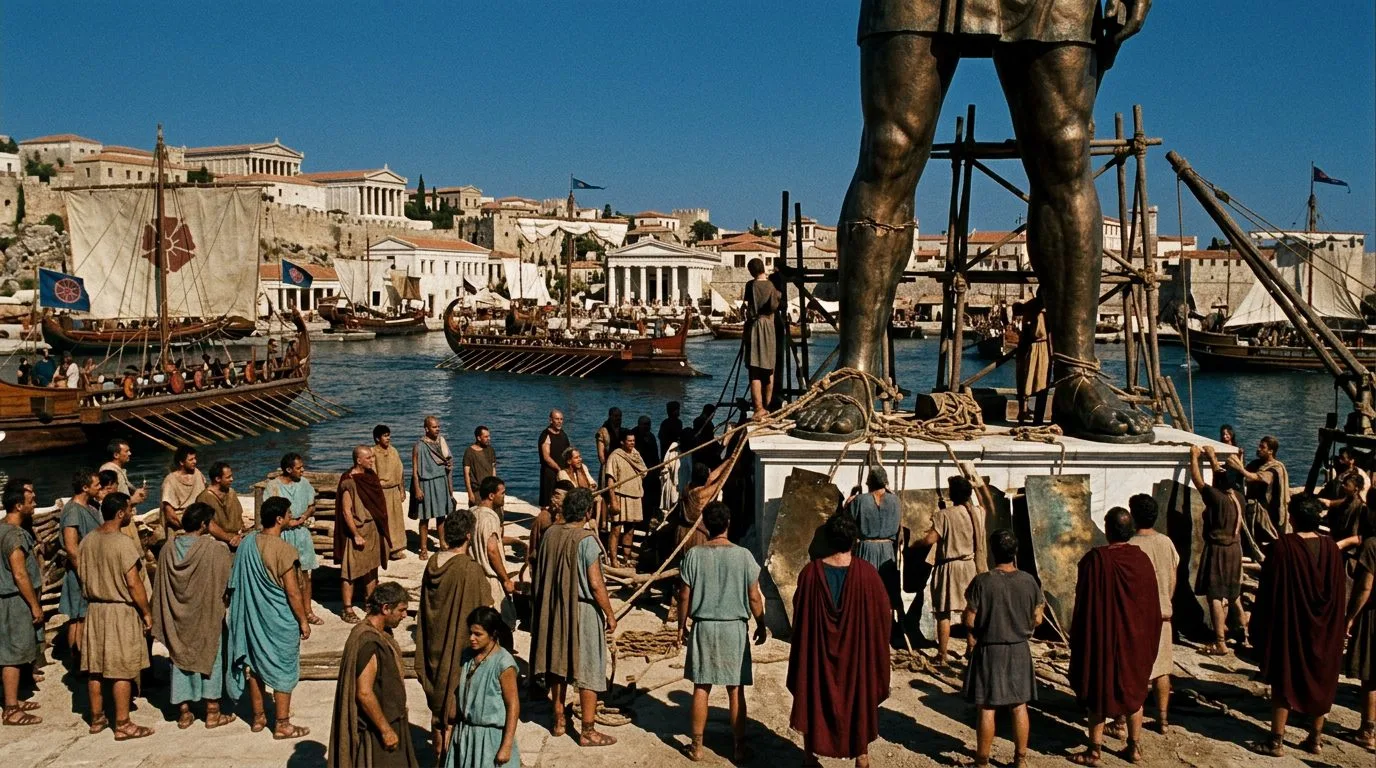
The Colossus of Rhodes towers over the ancient
After unifying three cities into one polis in 408 BCE, Rhodes developed the Mediterranean’s most formidable navy and merchant fleet, with maritime laws so respected they became the basis for Roman and later European admiralty codes. The island maintained independence by playing major powers against each other—when Demetrius Poliorcetes besieged Rhodes with 40,000 troops in 305 BCE, the city held out for a year until Ptolemaic Egypt relieved them. To celebrate, Rhodians built the Colossus, a 33-meter bronze statue of Helios that became one of the Seven Wonders before an earthquake toppled it in 226 BCE. The city’s navy of 100 warships dominated eastern Mediterranean trade until Rome annexed Rhodes in 164 BCE.
Source: britannica.com
8. Elis Controlled Olympia and Made Fortunes From the Olympic Games
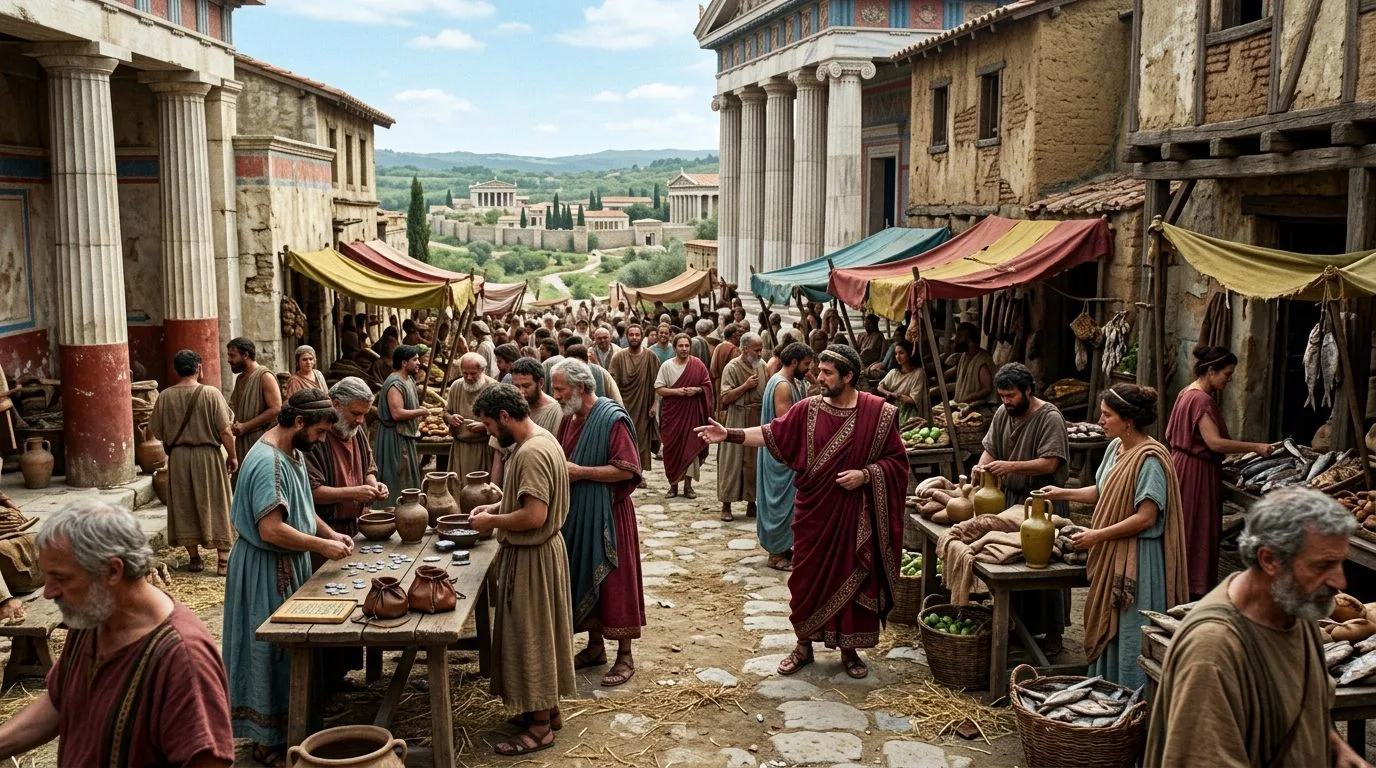
Elis prospered by managing the Olympic Games.
As guardians of Olympia and administrators of the Olympic Games from their reorganization in 776 BCE, the city of Elis wielded religious authority that protected it from invasion for centuries. Every four years, the Olympic Truce halted all Greek wars, allowing safe passage for athletes and spectators traveling to Elis, generating enormous revenue for the city through temple donations and commerce. Elean judges called Hellanodikai controlled all aspects of the games, disqualifying cheaters and awarding victory crowns of wild olive from Zeus’s sacred grove. The city maintained an army of 3,000 hoplites, but its true power lay in religious prestige—threatening to exclude a city-state from the Olympics carried immense political weight across the Greek world.
Source: britannica.com
9. Chalcis Sparked Greece’s First Great War Over a Fertile Plain
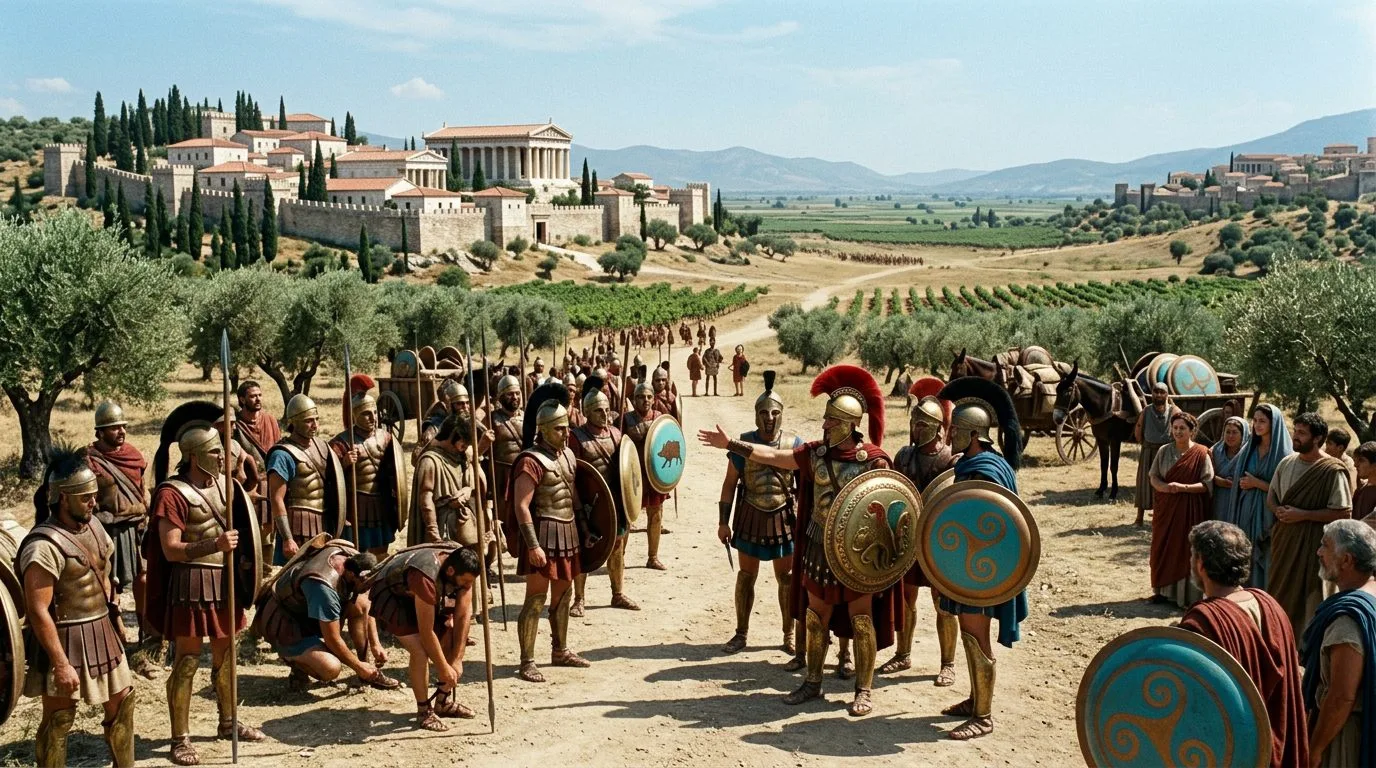
Ancient Greeks battle for Chalcis’s rich lands.
The Lelantine War between Chalcis and neighboring Eretria over the fertile Lelantine Plain circa 710-650 BCE became the first conflict to draw in city-states from across Greece, establishing alliance patterns that persisted for centuries. Chalcis allied with Corinth and Samos while Eretria partnered with Megara and Miletus, turning a local dispute into a pan-Hellenic struggle. Despite the war’s outcome remaining unclear, Chalcis emerged as Euboea’s dominant power and established major colonies including Rhegium in Italy and over 30 settlements in Chalcidice. The city gave its name to bronze (chalkos) and pioneered the Euboic-Attic weight standard that Athens later adopted for its coinage.
Source: britannica.com
10. Epidaurus Became Greece’s Medical Capital Through the Cult of Asclepius
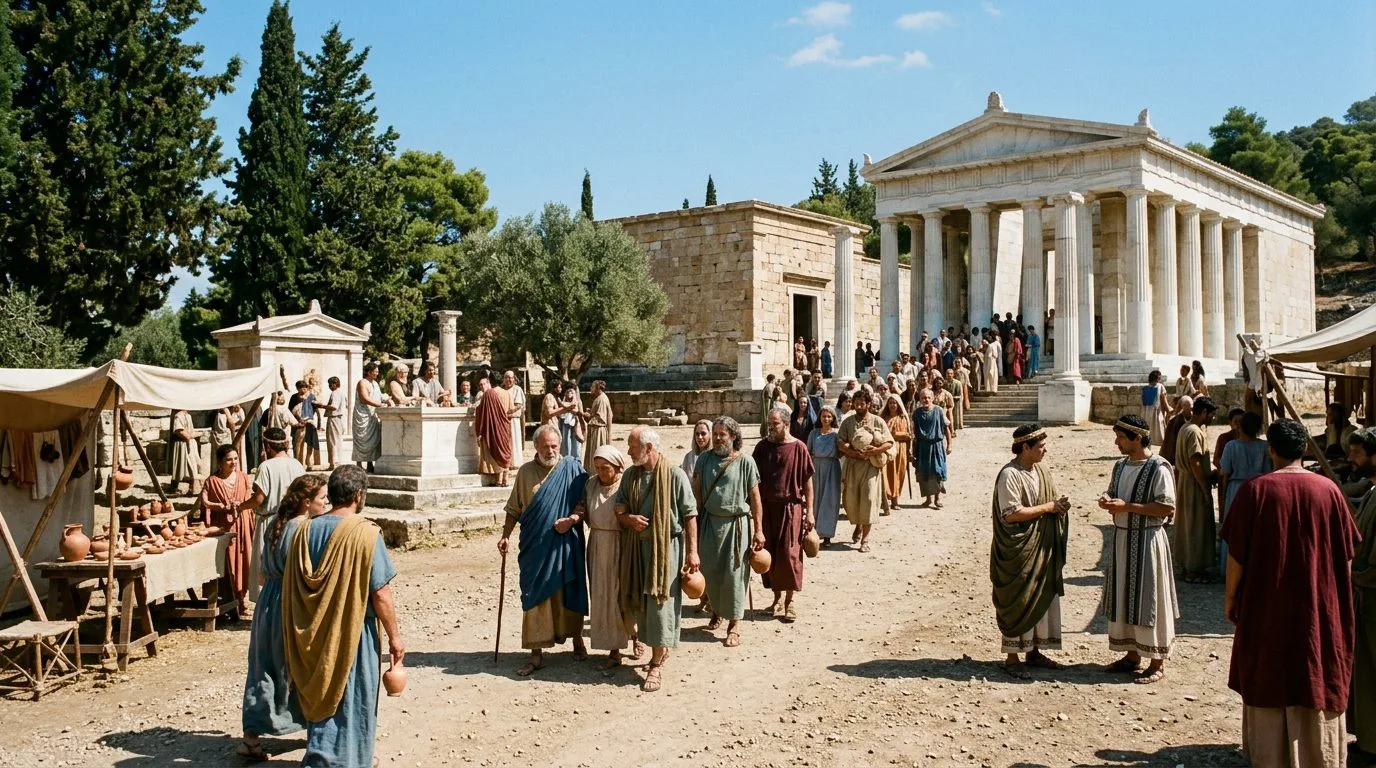
Ancient temple ruins dedicated to healing god.
The Sanctuary of Asclepius at Epidaurus grew into the most important healing center in the Greek world by the 4th century BCE, attracting thousands of pilgrims seeking miraculous cures through temple sleep and divine intervention. The city’s theater, built circa 340 BCE with seating for 14,000, achieved such perfect acoustics that a coin dropped in the orchestra can be heard in the back row 60 meters away. Medical practitioners at Epidaurus pioneered surgical techniques and pharmaceutical treatments while maintaining detailed records of cures on stone tablets, creating an early form of clinical documentation. The sanctuary’s influence spread to over 300 Asclepian healing temples across the Mediterranean, making Epidaurus the spiritual center of ancient Greek medicine until Christianity displaced pagan healing cults in the 4th century CE.
Source: britannica.com
Did You Know?
The Colossus of Rhodes stood for only 54 years before collapsing, yet its broken remains became a tourist attraction for nearly 900 years—travelers journeyed from across the Mediterranean just to see the fallen Wonder. Meanwhile, tiny Megara with a population smaller than a modern suburb somehow founded Byzantium, the city that would rule half the world for a millennium as Constantinople. These forgotten city-states remind us that ancient Greece was never a unified nation but a fractious collection of independent powers, each convinced of its own superiority and willing to wage war to prove it.