
Ancient Greek vase painters signed their works centuries before Renaissance masters, yet most remain anonymous. These ten artists revolutionized storytelling on clay, developing techniques that influenced Western art for millennia.
1. Exekias: The Black-Figure Master Who Painted Silence
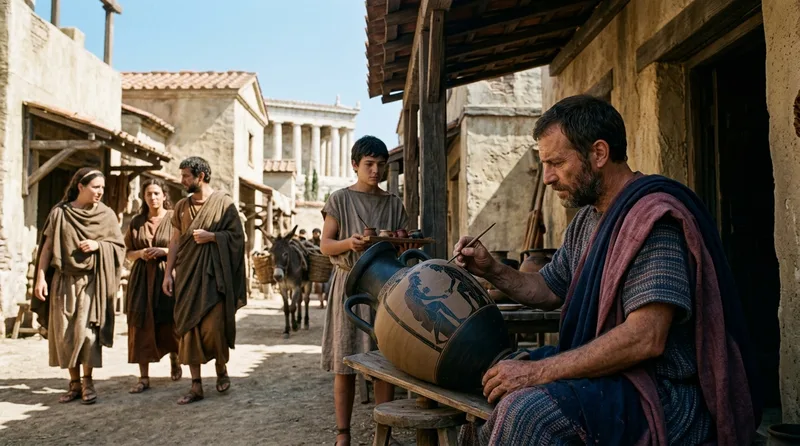
Exekias transformed vase painting between 545 and 530 BCE by depicting psychological drama rather than mere action. His amphora showing Ajax and Achilles playing dice during the Trojan War, housed in the Vatican Museums, captures a moment of quiet tension—the heroes lean forward, focused on their game while death awaits outside their tent. Working in Athens during the height of black-figure technique, Exekias applied glossy black slip to red clay, then incised details with a sharp tool to reveal the lighter surface beneath. His signature appears on approximately 12 surviving vessels, an exceptional number for the period. Unlike contemporaries who favored battle chaos, Exekias chose pregnant pauses: Dionysus reclining in a boat while grapevines sprout around him, Ajax preparing his suicide with methodical precision. Each incised line—the texture of fabric, individual beard hairs, anatomical musculature—demonstrated technical mastery that later red-figure painters would struggle to match. Exekias elevated pottery decoration from craft to fine art, proving ceramic surfaces could convey the same narrative complexity as monumental wall paintings. His influence persisted for over a century, with younger artists copying his compositions and borrowing his iconographic innovations for depicting gods and heroes in moments of human vulnerability.
Source: britannica.com
2. The Andokides Painter: Revolutionary Who Invented Red-Figure
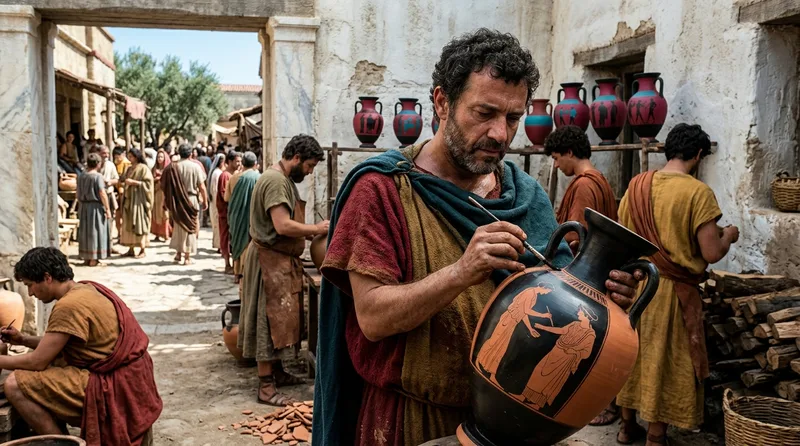
Around 530 BCE, an anonymous artist working in the workshop of potter Andokides revolutionized Greek ceramics by inverting the color scheme that had dominated for 120 years. Instead of painting figures in black slip, this innovator left them in the natural red-orange of Attic clay, painting the background black instead. The technique allowed unprecedented anatomical detail—artists could now paint musculature and facial features with a brush rather than scratching them with a stylus. Six bilingual vases survive showing both techniques on the same vessel, likely experimental pieces demonstrating the new method’s superiority. One amphora in the Staatliche Antikensammlungen in Munich depicts Herakles and the Nemean Lion in both styles on opposite sides, offering a direct technical comparison. The Andokides Painter, as modern scholars named him, produced approximately 30 attributed works between 530 and 515 BCE. His red-figure Herakles wrestling Triton shows the sea deity’s fish-tail coiling with fluid grace impossible in incised black-figure. This single innovation transformed Greek art, allowing painters to achieve the gestural freedom of brush painting while maintaining ceramic durability. Within two decades, red-figure technique dominated Athenian production, spreading to southern Italy and influencing vase painting for the next 250 years.
Source: britannica.com
3. Euphronios: Anatomist Who Made Muscles Move on Clay
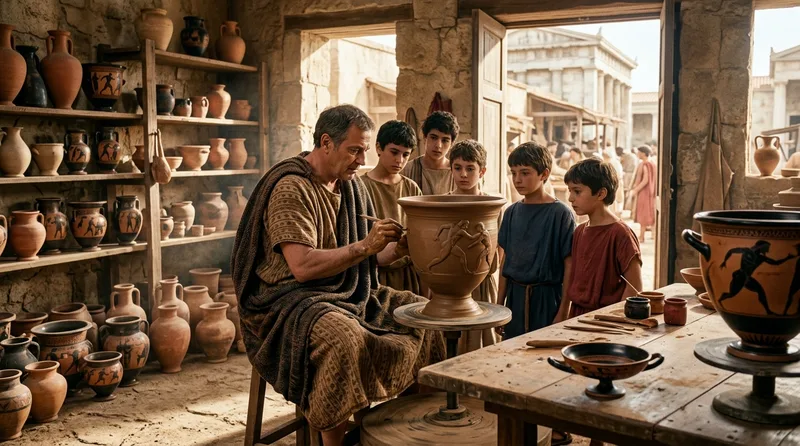
Euphronios signed 12 vessels as painter and 10 as potter between 520 and 470 BCE, establishing himself as antiquity’s most celebrated ceramicist. His calyx-krater depicting the death of Sarpedon, acquired by the Metropolitan Museum in the mid-twentieth century for one million dollars, demonstrates why ancient sources praised his draftsmanship. The Trojan hero’s muscular body sags between Sleep and Death, personified as winged figures straining under his weight—tendons flex, ribs expand, abdominal muscles stretch with anatomical precision that wouldn’t appear in Western art again until the Renaissance. Euphronios studied how bodies move through space, rendering foreshortening and overlapping figures that created convincing three-dimensional forms on curved surfaces. His psykter showing young men at a symposium includes 26 individual figures, each with distinct facial features and naturalistic poses. Working during Athens’ cultural zenith under Peisistratos, Euphronios commanded premium prices—ancient accounts mention collectors paying 120 drachmas for a single cup, equivalent to four months’ wages for a skilled craftsman. He trained numerous apprentices in his workshop near the Kerameikos cemetery, spreading his anatomical innovations throughout Attic pottery production. Euphronios transformed vase painting from decorative craft into serious artistic medium, proving ceramic painters could rival the technical sophistication of sculptors and wall painters.
Source: britannica.com
4. The Berlin Painter: Minimalist Who Mastered Negative Space
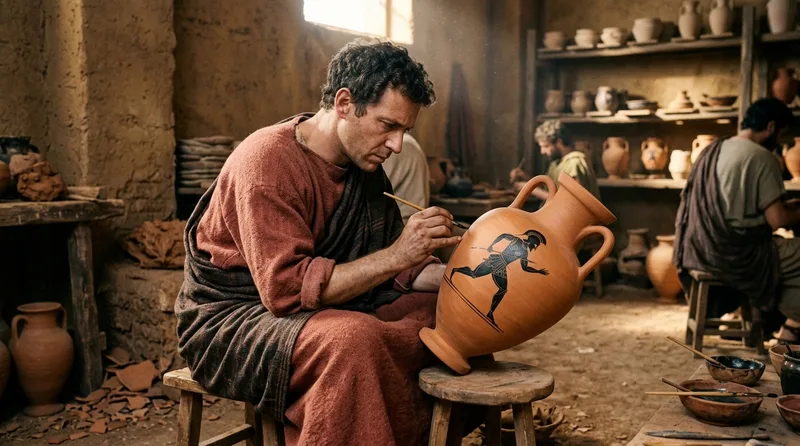
The Berlin Painter, named for an amphora in Berlin’s Antikensammlung, worked between 490 and 460 BCE and rejected the crowded compositions favored by contemporaries. His vessels feature solitary figures—a satyr playing kottabos, Achilles arming for battle, Herakles wrestling—isolated against black backgrounds without framing borders or ground lines. This radical minimalism focused viewer attention on anatomical precision and gestural eloquence. Over 300 attributed vessels survive, making him among the most prolific identifiable hands in Greek pottery. An amphora in the Louvre shows a citharode (singer with lyre) in profile, every finger positioned correctly on the instrument’s strings, fabric folds falling with natural weight. The painter achieved unprecedented linear grace through dilute glaze washes that created tonal gradations, modeling musculature with subtle shading rather than stark outline. Working during the Persian Wars, when Athens transformed naval victory at Salamis into imperial power, the Berlin Painter developed an aesthetic of austere elegance that matched contemporary severe-style sculpture. His influence extended beyond pottery—later vase painters adopted his compositional restraint, and modern scholars credit him with establishing principles of figure-ground relationships that influenced Western art theory. The Berlin Painter proved that emptiness could amplify meaning, that a single perfectly rendered figure conveyed more narrative power than cluttered mythological crowds.
Source: britannica.com
5. The Niobid Painter: Revolutionary Who Defied Flat Surfaces
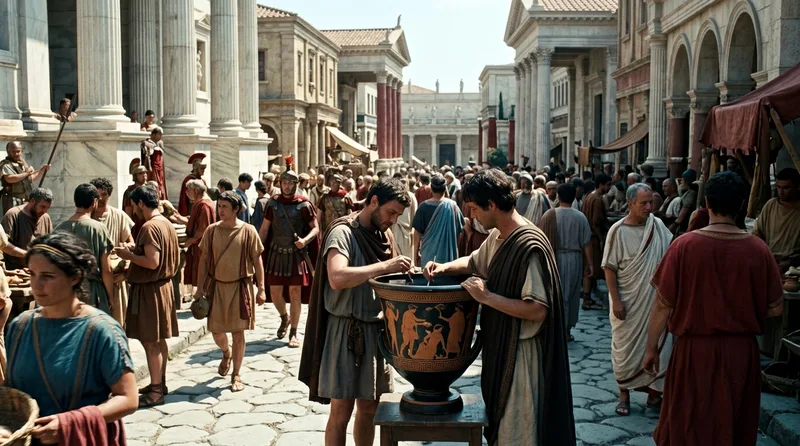
Around 460 BCE, the Niobid Painter shattered conventions by depicting figures at multiple ground levels on a single vase, attempting true spatial depth impossible on curved pottery. His name-piece calyx-krater in the Louvre shows the slaughter of Niobe’s children scattered across rocky terrain at different elevations—some figures stand on higher ground, others crouch below, creating a vertical landscape that mimics contemporary wall painting techniques. This innovation required extraordinary compositional skill since viewers circling the vessel saw figures appearing and disappearing as the surface curved away. The painter stacked up to four ground lines on a single scene, with approximately 15 attributed works demonstrating this experimental approach. His other side depicts an assembly of heroes, possibly Jason and the Argonauts, with Herakles, Hermes, and Athena arranged at varying heights suggesting mountainous terrain. Working during Athens’ Golden Age under Pericles, when monumental wall paintings by Polygnotos decorated public buildings, the Niobid Painter attempted translating those spatial achievements onto pottery. Ancient sources praised Polygnotos for placing figures at different levels to suggest depth, and this vase painter clearly studied those techniques. The experiment proved too technically demanding for widespread adoption—most successors returned to single ground lines—but the Niobid Painter demonstrated pottery’s potential for architectural-scale narrative ambition, influencing how subsequent generations conceived pictorial space on three-dimensional surfaces.
Source: britannica.com
6. Polygnotos: Monumental Storyteller of Multi-Figure Narratives
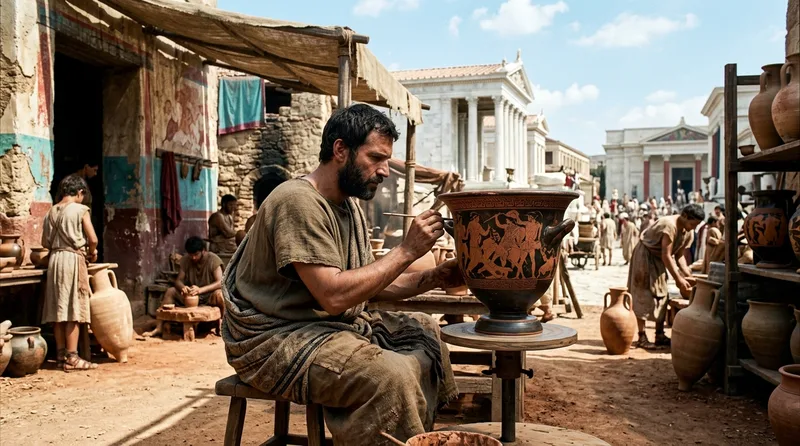
The vase painter Polygnotos, active between 450 and 430 BCE, shared a name with the famous wall painter but developed his own distinctive style of complex, multi-figure compositions. Unlike the Niobid Painter’s experiments with ground levels, Polygnotos arranged numerous figures across single planes with sophisticated overlapping and varied poses that suggested crowd depth. A krater attributed to him depicts the sack of Troy with over 20 figures, each engaged in distinct actions—warriors battling, women fleeing, children hiding—creating cinematic narrative scope on a vessel 18 inches tall. His workshop produced approximately 70 attributed works, many showing ambitious mythological episodes requiring 15 or more characters. Polygnotos specialized in calyx-kraters and large bell-kraters, choosing vessel forms with maximum surface area for storytelling. His painting of the Argonauts includes Jason, Medea, Pelias, and assorted heroes, each identifiable through attributes and inscriptions, demonstrating encyclopedic mythological knowledge. Working when Athens dominated the Delian League and controlled Mediterranean trade, Polygnotos received commissions for elaborate symposium vessels that displayed owners’ cultural sophistication. His compositional density influenced later South Italian vase painters, who adopted his crowded scenes for their monumental funerary kraters. Polygnotos proved pottery could accommodate the narrative complexity of theater and epic poetry, transforming wine-mixing bowls into pictorial stages where entire mythological sagas unfolded around the viewer.
Source: britannica.com
7. The Achilles Painter: Master of White-Ground Funerary Art
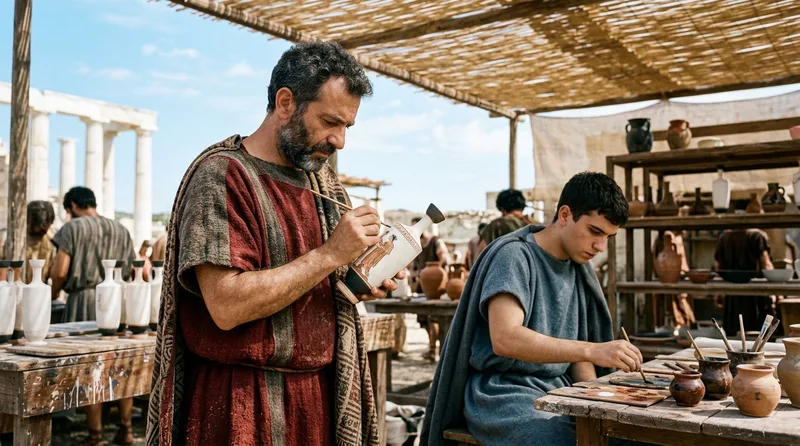
The Achilles Painter, named for an amphora showing Achilles and Briseis, revolutionized funerary pottery between 470 and 425 BCE by perfecting white-ground technique on slender oil flasks called lekythoi. Unlike standard red or black-figure work, white-ground involved coating vessels with white slip, then painting figures in dilute glazes and matte pigments including blue, green, yellow, and purple—colors that rarely survive on excavated examples. Over 200 lekythoi attribute to his hand, most depicting quiet scenes of mourning: women visiting tombs, warriors bidding farewell, Charon ferrying souls across the Styx. These funerary vessels, placed in graves as offerings, required different emotional registers than symposium pottery—the Achilles Painter developed an aesthetic of restrained grief and dignified sorrow. His figures move with balletic grace, drapery falls in parallel folds suggesting contemporary sculptural techniques, and compositions emphasize vertical elegance suited to lekythoi measuring 12 to 16 inches tall. One example shows a mistress and maid at a tomb, the living woman offering a basket while the deceased appears as a faint outline, creating poignant visual metaphor for memory’s fragility. Working during the Peloponnesian War, when Athenian casualties mounted and funerary customs intensified, the Achilles Painter met increased demand for sophisticated grave goods. His influence established white-ground lekythoi as the premium funerary vessel type, and his compositional restraint shaped how Greeks visualized death and mourning for the next century.
Source: britannica.com
8. Meidias Painter: Ornamentalist of Late Classical Luxury
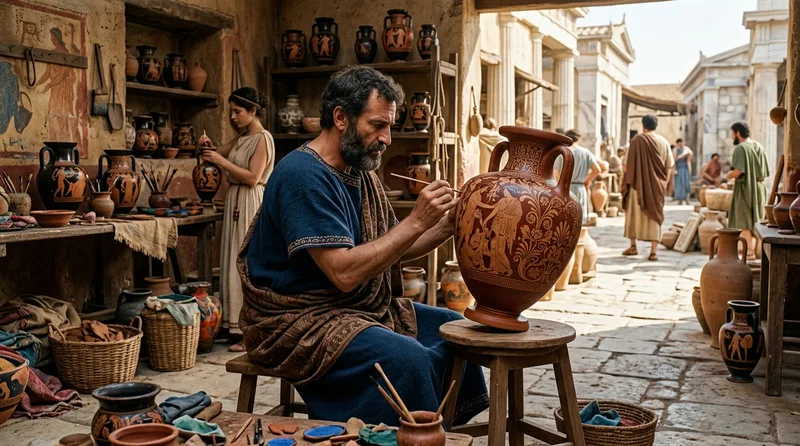
The Meidias Painter, working between 420 and 400 BCE, developed a florid, decorative style that marked late classical pottery’s shift toward ornamental complexity. His name-piece hydria in the British Museum, signed by potter Meidias, shows Herakles in the Garden of the Hesperides surrounded by over 40 figures arranged in multiple registers, each labeled with inscriptions—an encyclopedic approach to mythological illustration. Unlike earlier painters’ anatomical realism, the Meidias Painter emphasized surface pattern: drapery folds ripple in decorative waves, landscapes include detailed floral motifs, figures adopt mannered poses suggesting sculpture’s rich style rather than naturalistic movement. Approximately 40 vessels attribute to him, many featuring women in elaborate domestic or mythological settings. His hydria depicting Phaon among women shows seven figures in a garden setting with rocks, plants, and architectural elements creating busy, jewel-like surfaces. The painter favored large water jars and wine-mixing bowls that provided maximum area for ornamental display, appealing to wealthy Athenians who valued decorative sophistication during the later Peloponnesian War. His use of added white and gilding for jewelry, flowers, and architectural details created polychrome effects rivaling metalwork. This ornamental tendency influenced fourth-century BCE pottery, particularly South Italian workshops that exaggerated decorative elements into baroque profusion. The Meidias Painter represented a stylistic endpoint, transforming narrative clarity into decorative abundance that prioritized visual richness over storytelling precision.
Source: britannica.com
9. The Kleophrades Painter: Dynamic Master of Violent Action
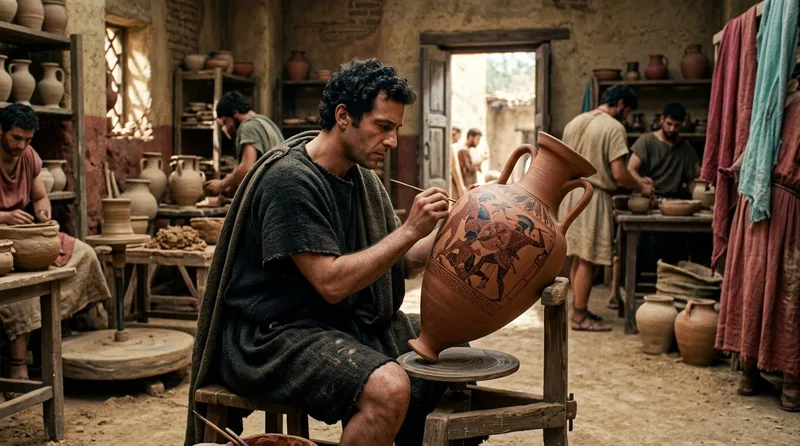
The Kleophrades Painter, named for a potter whose signature appears on several vessels, specialized in explosive action scenes between 505 and 475 BCE. His point-amphora showing the sack of Troy depicts violence with unprecedented intensity: warriors hurl spears, women flee with children, Ajax drags Cassandra from Athena’s statue while the goddess recoils in fury. Over 100 attributed works survive, many showing combat, athletic competition, or Dionysian revelry rendered with kinetic energy that seems to burst from the vessel surface. A calyx-krater in Tarquinia depicts Dionysus and his retinue in wild celebration, maenads dancing with abandoned movement, satyrs leaping with animal vigor—each figure captured mid-motion with torsional poses suggesting three-dimensional space. The painter excelled at anatomical detail during violent exertion: muscles strain, veins bulge, facial expressions grimace with effort or agony. Working during the Persian Wars, when Athens faced existential military threat, the Kleophrades Painter created imagery matching contemporary martial anxiety and ultimate triumph. His cup in Munich showing a warrior collapsing in death, blood streaming from wounds, demonstrates unflinching engagement with warfare’s brutal reality. Unlike the Berlin Painter’s austere elegance, the Kleophrades Painter filled every surface with dynamic tension, influencing how subsequent artists depicted heroic violence and ecstatic celebration. His legacy shaped red-figure pottery’s capacity for dramatic storytelling, proving ceramic painting could achieve the emotional intensity of contemporary tragedy.
Source: britannica.com
10. Douris: Prolific Cup Painter Who Captured Daily Life
Douris signed approximately 40 surviving vessels as painter between 500 and 460 BCE, making him antiquity’s most documented ceramic artist. Unlike contemporaries who favored large vessels, Douris specialized in kylikes—shallow drinking cups with two handles and a central tondo (circular interior scene). His cups show extraordinary versatility: gods battling giants, athletes training in gymnasia, symposiasts drinking and playing kottabos, women at their toilette, schoolboys with teachers. One kylix in Berlin depicts Eos mourning her son Memnon with psychological subtlety rivaling Exekias—the goddess cradles the fallen warrior, her wings drooping in grief, creating intimate emotion within a 12-inch diameter circle. Douris mastered the technical challenge of painting tondo interiors, where figures appear foreshortened when viewed from above while the cup rests on a table. His exterior scenes often continued narratives begun inside: one cup shows Theseus and the Minotaur in the tondo, while the exterior depicts the hero’s other labors arranged around the circumference. Working during Athens’ transformation into a democratic imperial power, Douris documented contemporary life with ethnographic precision—his school scene shows a boy reading from a scroll, another playing lyre, a third receiving instruction, providing invaluable evidence for ancient educational practices. Over 300 vessels attribute to his workshop, demonstrating sustained productivity across five decades. Douris proved drinking cups could serve as portable galleries, transforming everyday symposium equipment into miniature narrative worlds that educated and entertained Athens’ cultural elite.
Source: britannica.com
Did You Know?
Did You Know? These ancient vase painters earned such celebrity that wealthy Romans paid 50 times more for signed Greek pottery than contemporary works—the equivalent of preferring five-hundred-year-old plates to new porcelain. Ironically, most painters we know today worked anonymously, their names lost while their artistic voices remain instantly recognizable to scholars who can identify individual hands across centuries and continents, proving visual style transcends signatures.