
Long before armies conquered land, engineers conquered water. The civilizations that mastered irrigation didn’t just survive—they built empires that lasted millennia. Here are ten hydraulic systems that transformed deserts into breadbaskets and turned agricultural surplus into political dominance.
1. Mesopotamian Basin Irrigation: The World’s First Hydraulic Empire

Mesopotamian Basin Irrigation
The Sumerians built the world’s first large-scale irrigation network around 6000 BCE, channeling the unpredictable Tigris and Euphrates rivers into controlled basin systems. Their engineers constructed earthen levees up to 3 meters high and dug distribution canals spanning over 100 kilometers. Each basin field, called an iku, measured roughly 3,600 square meters and could be flooded or drained independently through wooden sluice gates. This technology allowed Uruk to grow to 50,000 inhabitants by 2900 BCE, making it the largest city on Earth. The surplus grain fed specialized workers—scribes, priests, and soldiers—who built civilization’s first bureaucratic state.
Source: britannica.com
2. Egyptian Shaduf: Lifting the Nile’s Blessing
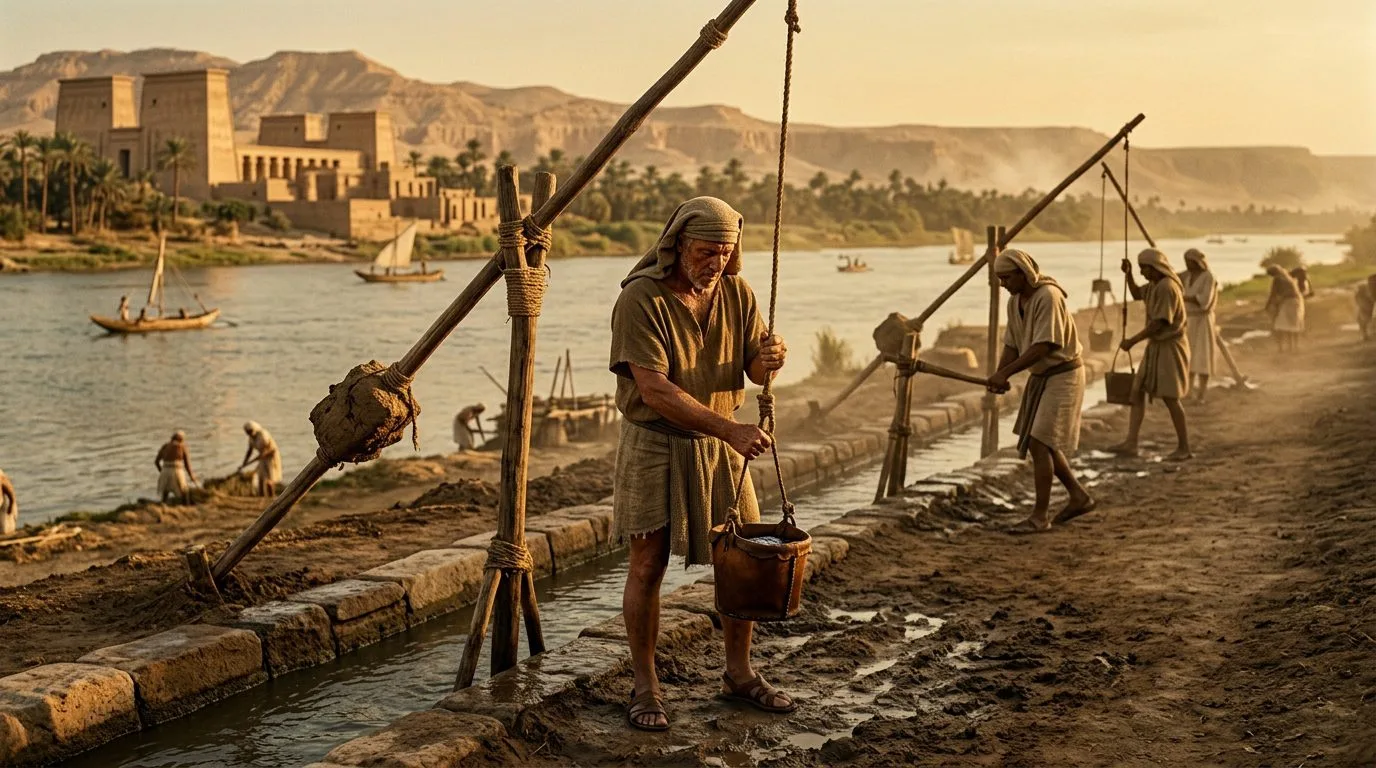
Egyptian Shaduf: Lifting the Nile’s Blessing
Egyptian farmers invented the shaduf around 2000 BCE, a counterweighted lever that could lift 20 liters of water per swing from the Nile to elevated fields. Before this innovation, farmers relied entirely on the annual flood’s timing, which varied unpredictably between July and October. The shaduf allowed year-round cultivation on raised plots, tripling agricultural output in Middle Kingdom Egypt. A single operator could irrigate 400 square meters daily, working in coordinated teams along canal banks. By 1500 BCE, tomb paintings show shaduf lines stretching across estates, each manned by workers lifting water in rhythmic succession to terraced gardens growing figs, dates, and vegetables.
Source: britannica.com
3. Persian Qanats: Underground Rivers Through the Desert
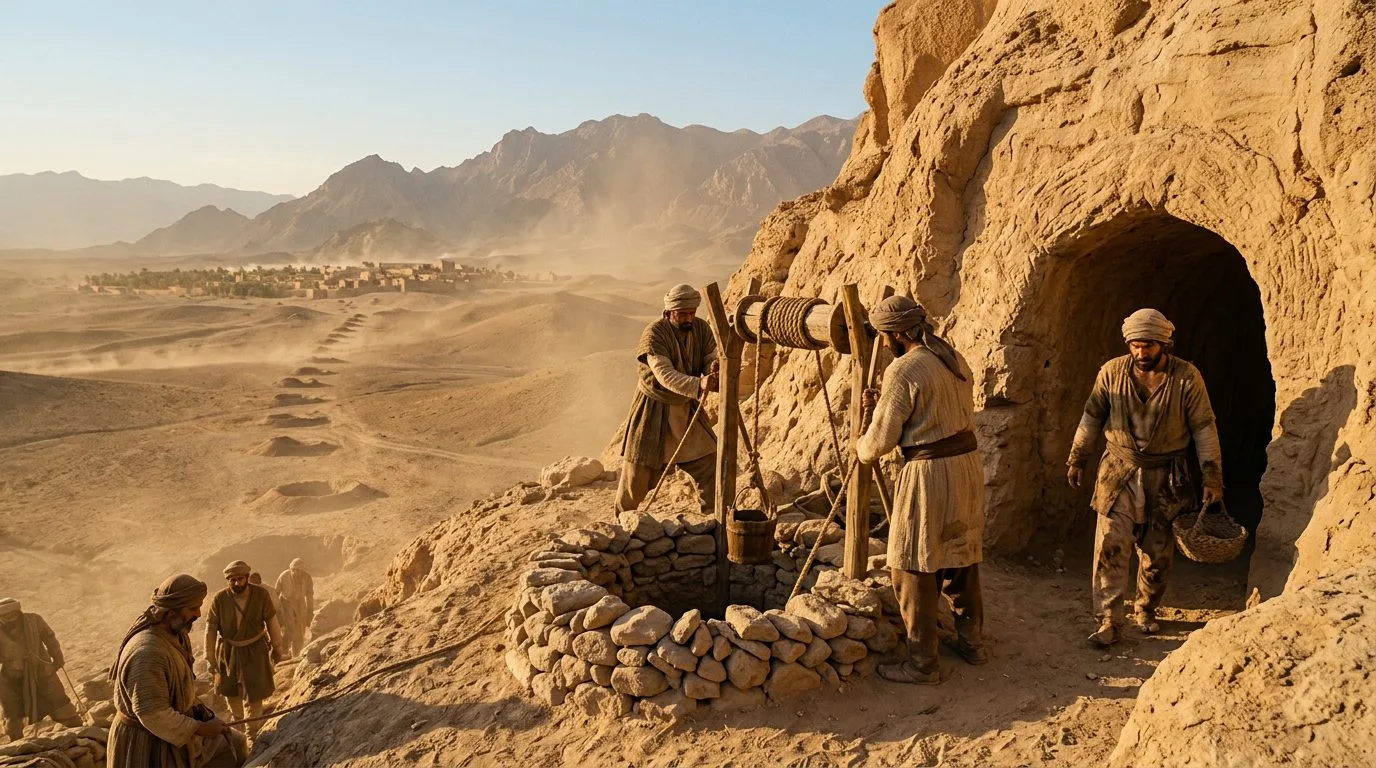
Persian Qanats
Persian engineers perfected the qanat system around 800 BCE, tunneling horizontal wells up to 70 kilometers through solid rock to tap underground aquifers. These gently sloping tunnels, descending just 1 meter per 1,000 meters, brought water from mountain snowmelt to desert cities without evaporation loss. The city of Gonabad’s qanat reaches 33 meters deep and still flows after 2,800 years. Vertical shafts spaced every 20 to 50 meters allowed excavation and maintenance, with workers removing over 50,000 cubic meters of rock per major project. By 500 BCE, qanats irrigated 75 percent of Persian farmland, enabling the Achaemenid Empire to field armies numbering 100,000 soldiers.
Source: britannica.com
4. Roman Aqueducts: Gravity-Powered Urban Water Networks
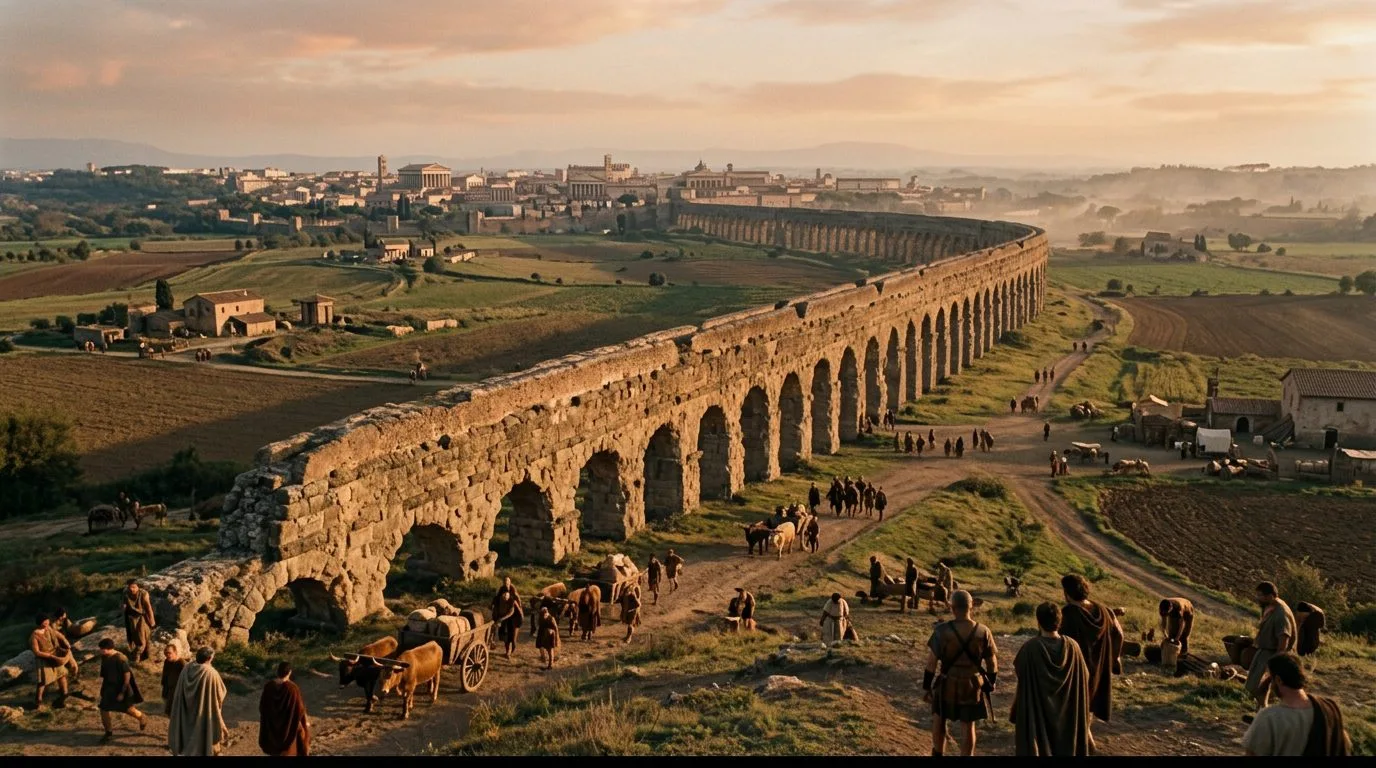
Roman Aqueducts
Rome’s Aqua Claudia, completed in the first century CE, transported 190,000 cubic meters of water daily across 69 kilometers, descending just 10 meters total through precise gradient engineering. Roman surveyors used the chorobates leveling instrument to maintain slopes of 1:4800, ensuring steady flow without erosion. The eleven major aqueducts supplying Rome by the third century CE delivered over 1 million cubic meters daily—more water per capita than modern Rome receives. This abundance powered 1,352 public fountains, 11 imperial baths, and 856 private bathhouses. The Aqua Marcia’s arches, standing 30 meters high near Tivoli, used 2 million cubic meters of concrete and remained functional for 800 years.
Source: britannica.com
5. Inca Terraces: Engineering Water Uphill in the Andes
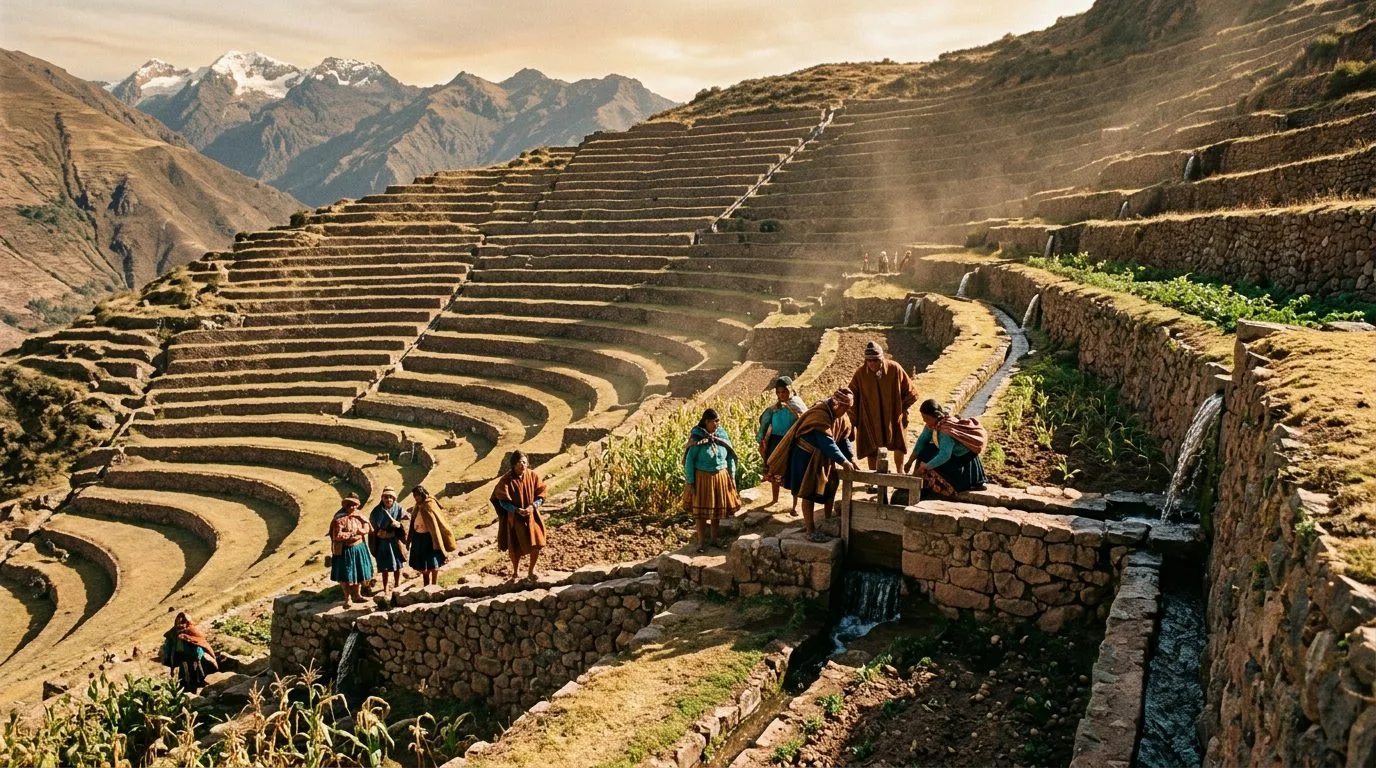
Inca Terraces
The Inca carved over 1 million hectares of mountain terraces between the mid-fifteenth century and early sixteenth century CE, some reaching 4,000 meters elevation where rainfall alone couldn’t sustain crops. Stone-lined irrigation channels, called acequias, carried glacial meltwater across slopes at precisely calculated angles, dropping 2 centimeters per 10 meters to prevent erosion. At Moray, concentric circular terraces created 15 distinct microclimates separated by 5-degree temperature differences, functioning as an agricultural laboratory. Each terrace’s foundation contained 1.5 meters of gravel for drainage beneath fertile topsoil transported from valleys. This system fed 12 million people across the empire and still irrigates Andean farms today.
Source: smithsonianmag.com
6. Grand Canal: China’s 1,800-Kilometer Irrigation Superhighway
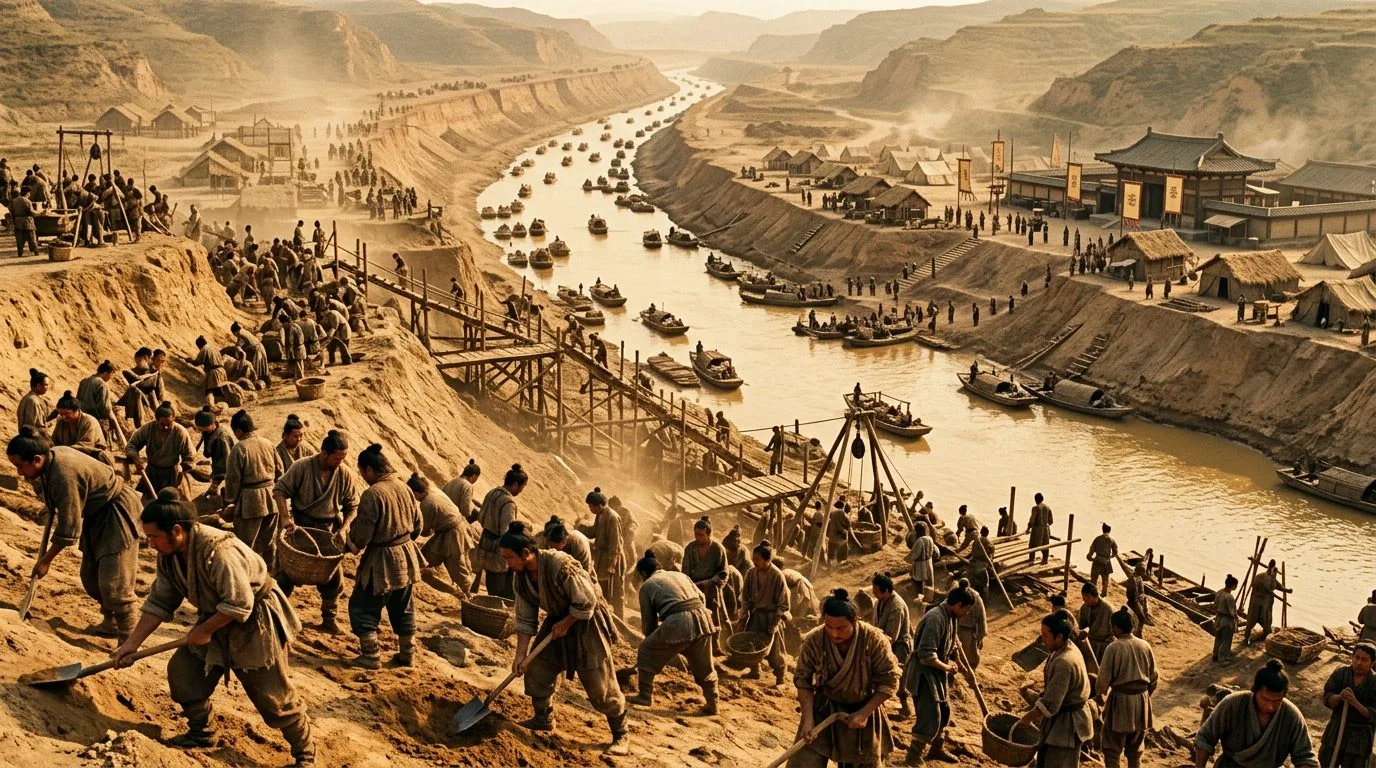
Grand Canal
The Sui Dynasty completed the Grand Canal in the early seventh century CE, connecting the Yellow River to the Yangtze River across 1,776 kilometers and unifying China’s water systems. Engineers built 24 flash locks to manage elevation changes totaling 42 meters, each capable of raising 100-ton grain barges. The canal moved 4 million tons of rice annually from southern farms to northern cities by the early eighth century CE, feeding both armies and urban populations. Construction required 5.5 million forced laborers, with 2.5 million deaths reported during the 6-year project. This hydraulic network allowed successive dynasties to maintain centralized control for over 1,300 years by ensuring food security regardless of regional droughts.
Source: britannica.com
7. Angkor Wat Barays: Monsoon Reservoirs of the Khmer Empire
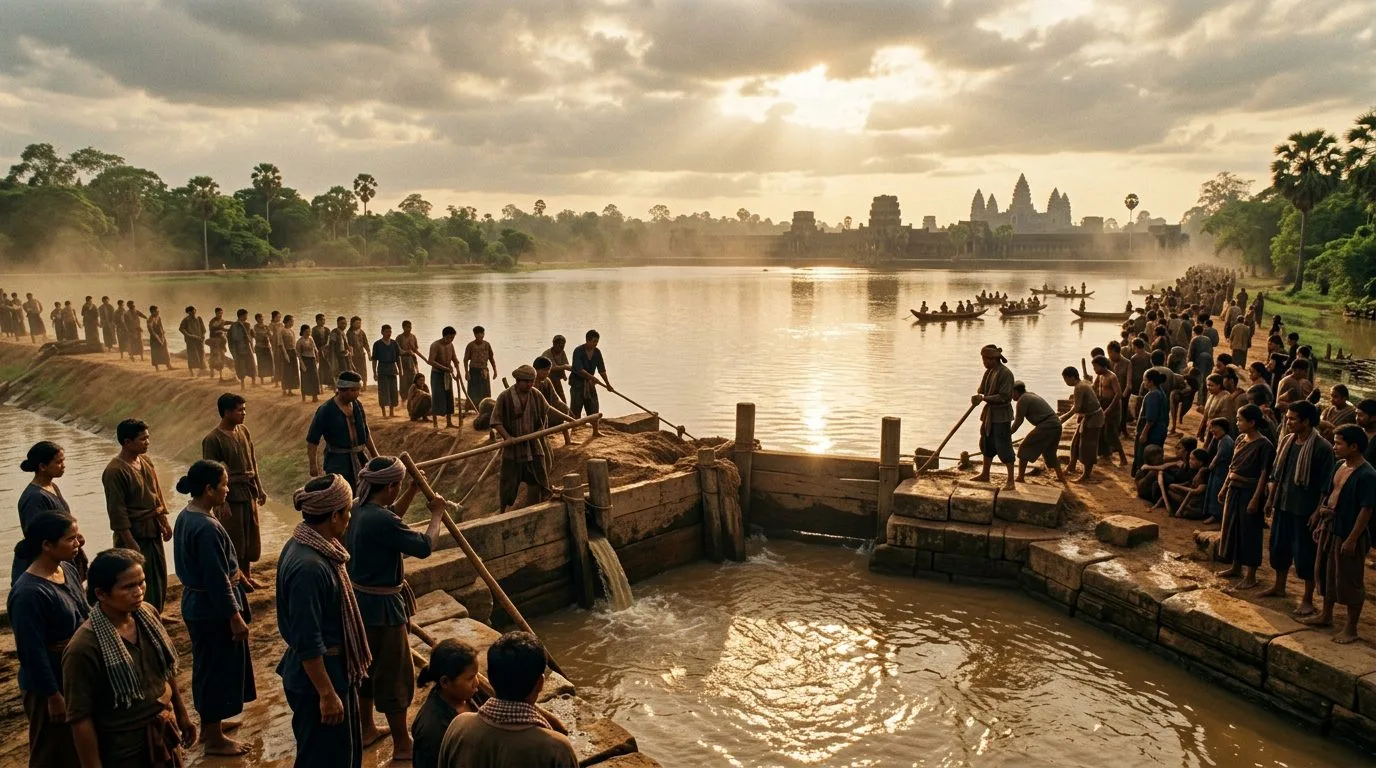
Angkor Wat Barays
The West Baray at Angkor, constructed around the mid-eleventh century CE, held 50 million cubic meters of monsoon water in a reservoir measuring 8 kilometers by 2.2 kilometers. Khmer engineers built earthen dikes 12 meters high to contain seasonal floods, then released water through controlled sluices during the 6-month dry season. This system irrigated 200 square kilometers of rice paddies, producing three harvests annually instead of one. The network included 74 secondary reservoirs connected by 1,000 kilometers of canals, supporting a metropolitan population exceeding 750,000 people. When the system collapsed around the fifteenth century CE after maintenance failures, the empire fragmented within 15 years.
Source: smithsonianmag.com
8. Nabataean Cisterns: Harvesting Every Drop in Petra’s Desert
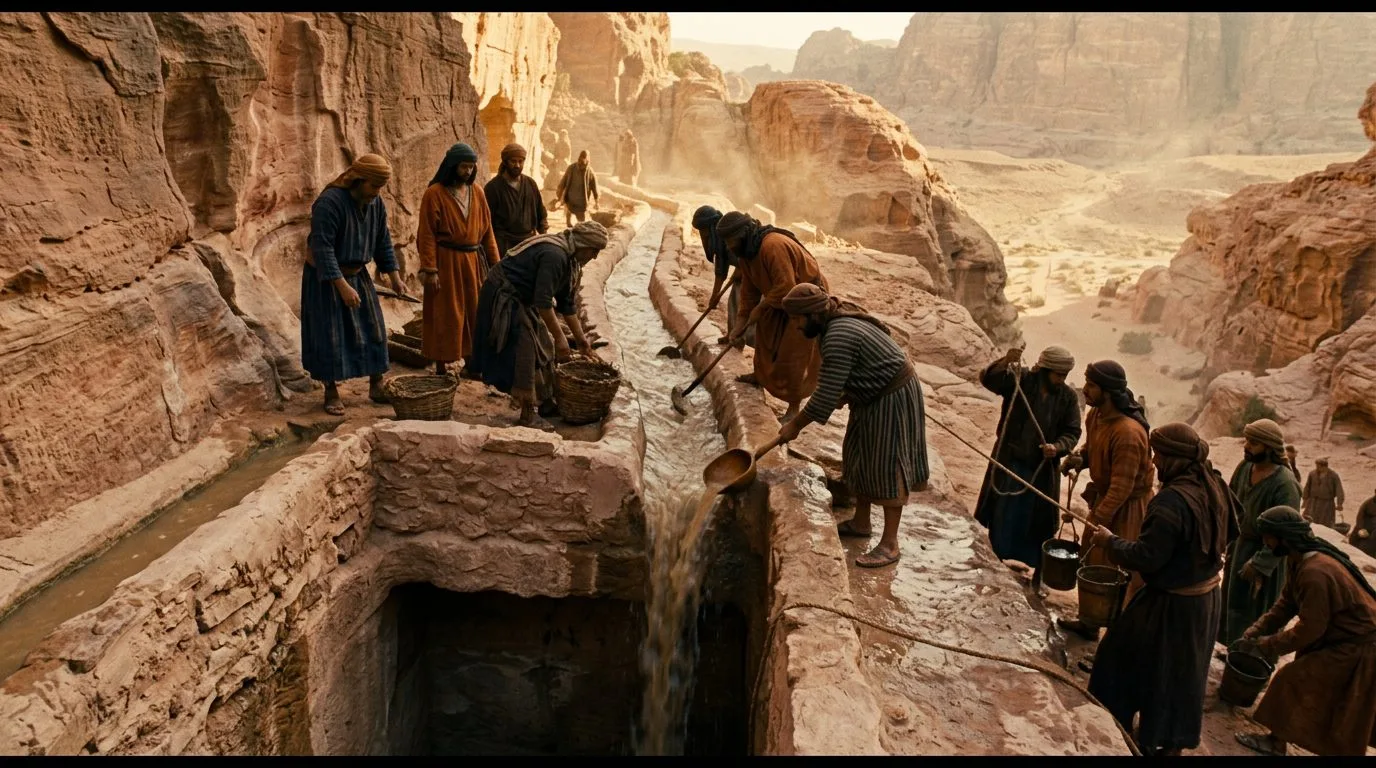
Nabataean Cisterns
The Nabataeans transformed Petra into a desert metropolis around 312 BCE by capturing flash flood runoff in 200 underground cisterns, each holding up to 30 cubic meters. Their engineers carved channels into cliff faces at precise 3-degree angles, directing rare rainstorms—averaging just 150 millimeters annually—into covered reservoirs lined with waterproof plaster. Ceramic pipe networks, fitted with pressure-breaking joints every 10 meters, distributed water to 30,000 residents through gravity-fed conduits. The system included settling tanks where sediment dropped out before storage, keeping water drinkable for 6 months. This technology allowed camel caravans to reliably water 2,000 animals daily while crossing the Arabian Desert.
Source: smithsonianmag.com
9. Sri Lankan Tank Cascades: 2,000 Years of Linked Reservoirs
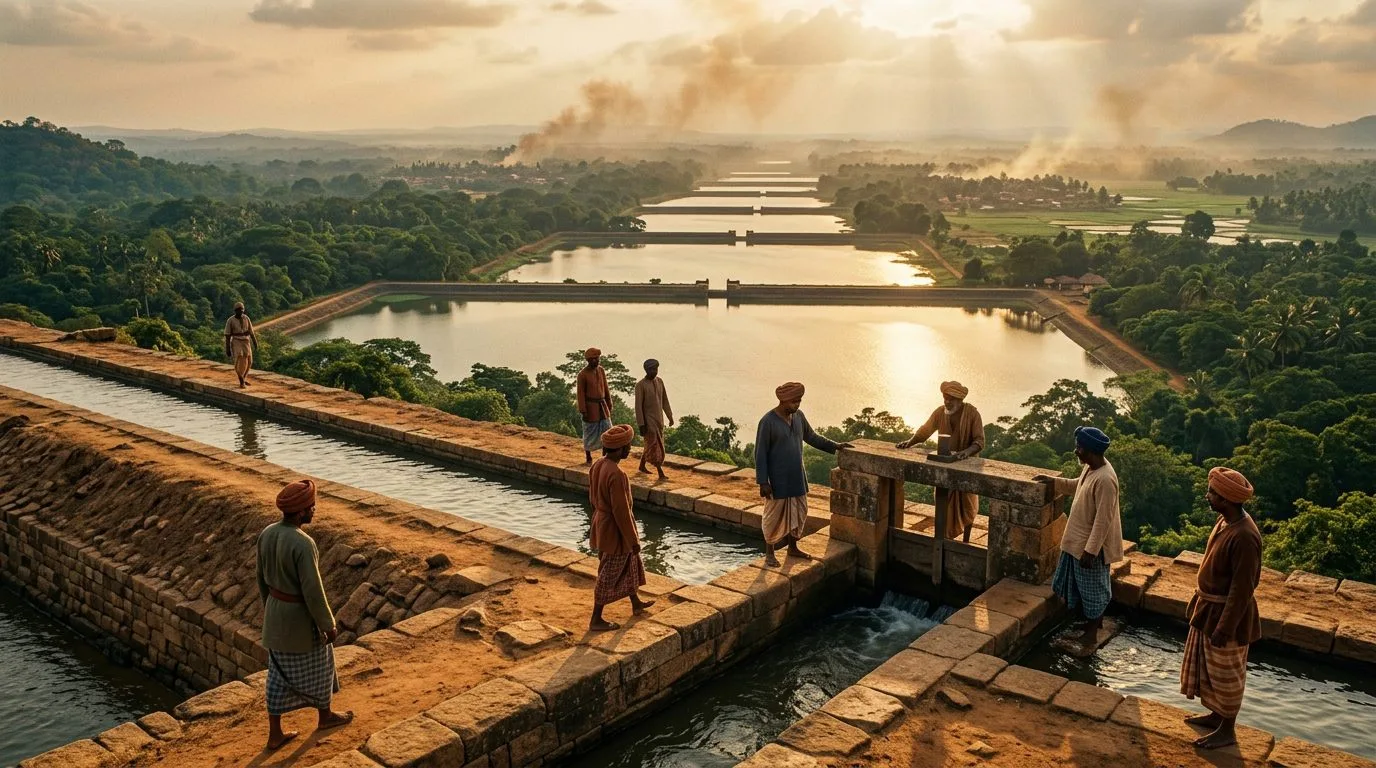
Sri Lankan Tank Cascades
King Vasabha constructed the Abhayavapi tank in the first century CE, initiating a cascade system that eventually linked 30,000 reservoirs across Sri Lanka’s dry zone. Engineers designed each tank to overflow into the next downstream, creating self-regulating chains up to 100 kilometers long that distributed monsoon water across entire watersheds. The Kalawewa reservoir, built in the fifth century CE, covered 25 square kilometers behind an earthen dam 3 kilometers long and 18 meters high. This network irrigated 180,000 hectares of rice paddies, supporting population densities exceeding 400 people per square kilometer in otherwise arid regions. The system required 40,000 workers annually for maintenance but sustained Sri Lankan kingdoms for 1,500 years.
Source: britannica.com
10. Hohokam Canals: North America’s Desert Hydraulic Engineers
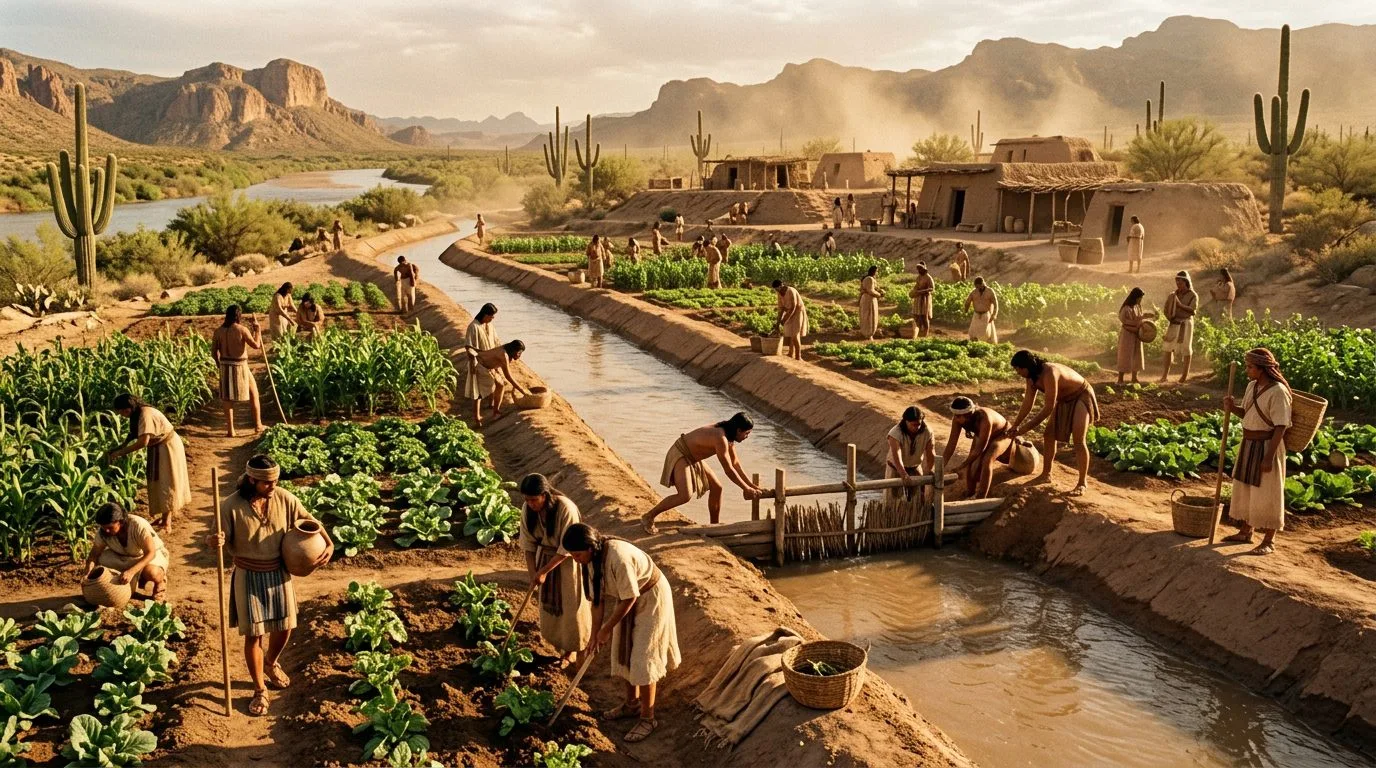
Hohokam Canals
The Hohokam people engineered over 800 kilometers of irrigation canals in Arizona’s Sonoran Desert between the seventh and fifteenth centuries CE, with individual channels reaching 25 kilometers in length and 3 meters in depth. Their largest canal, near present-day Phoenix, moved 100 cubic meters of water per minute from the Salt River to fields 16 kilometers away, maintaining a gradient of 60 centimeters per kilometer. Networks served 100,000 acres of cultivated land growing corn, beans, squash, and cotton in a region receiving just 200 millimeters of annual rainfall. Archaeological surveys reveal woven brush check dams every 500 meters to control flow velocity and sediment settling basins every 2 kilometers, demonstrating sophisticated hydraulic knowledge without written records or metal tools.
Source: smithsonianmag.com
Did You Know?
Did you know the Persian qanat system was so effective that it still supplies 40 percent of Iran’s rural water needs today, 2,800 years after its invention? Even more remarkably, when Spanish conquistadors destroyed Inca terraces in the sixteenth century CE, crop yields in the Andes dropped by 60 percent and didn’t recover until modern engineers rebuilt the ancient channels using the original specifications. These hydraulic masterpieces didn’t just build empires—they encoded engineering knowledge so sophisticated that modern civilization still struggles to match their efficiency and longevity.