
Medieval knights swore sacred oaths to their lords, yet some broke these bonds spectacularly. From the baron who held a king prisoner to the mercenary who conquered kingdoms, these armored rebels reshaped Europe’s destiny through defiance, ambition, and raw audacity.
1. William Marshal - The Knight Who Crowned Kings and Outlasted Them All
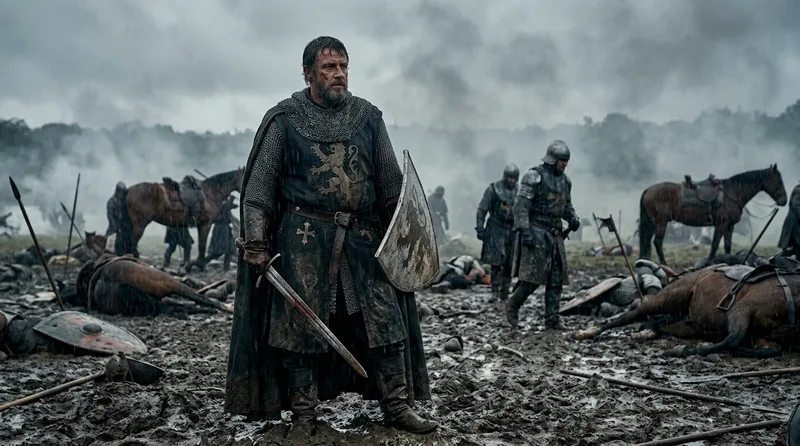
William Marshal began as a landless younger son in the mid-twelfth century, yet died as regent of England in the early thirteenth century, having served five monarchs and buried four. At tournaments across France during the 1160s, he captured over 500 knights for ransom, amassing wealth that made him indispensable to the Plantagenet dynasty. In 1189, he defeated King Richard I in single combat during a skirmish, deliberately sparing the prince’s life—a calculated act of defiance that demonstrated his superiority while maintaining plausible loyalty. When King John died in 1216 leaving a nine-year-old heir, the 70-year-old Marshal defied the barons’ council by crowning young Henry III and personally leading the English army at Lincoln in 1217. He defeated a superior French invasion force, saving the Plantagenet throne despite having sworn fealty to France’s King Philip II just months earlier. His deathbed confession in 1219 revealed he’d kept the Holy Roman Emperor’s jewels that Richard I had pawned to him—a final act of self-interest disguised as duty. Marshal proved that strategic disobedience, when timed perfectly, could elevate a knight above kings themselves. His biography, commissioned by his son, became the first secular biography in European history, cementing his legend as the perfect knight who bent every rule to survive.
Source: britannica.com
2. Robert Guiscard - The Norman Brigand Who Built a Kingdom Against the Pope
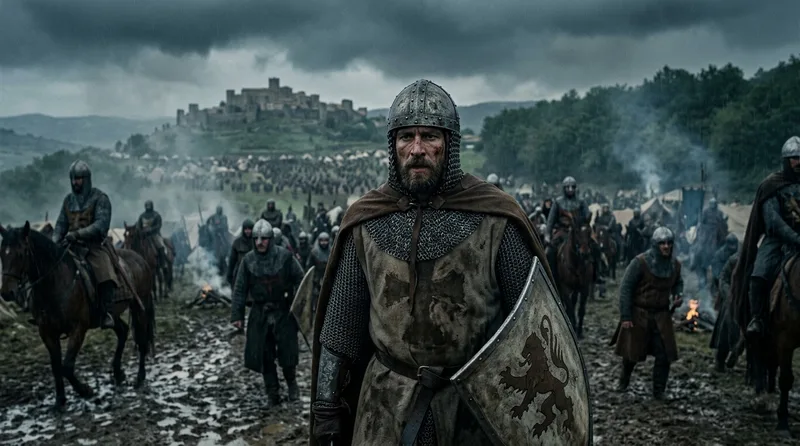
Robert Guiscard arrived in southern Italy around 1047 as a penniless mercenary, yet by his death in 1085 he’d conquered territories from three emperors and held a pope prisoner. Born the sixth son of minor Norman noble Tancred of Hauteville, Robert earned the nickname ‘Guiscard’ (the cunning) by leading bandit raids against Byzantine villages in Calabria during the 1050s. Pope Leo IX excommunicated him in 1053 and led an army to crush this Norman upstart, but Guiscard captured the pontiff at the Battle of Civitate, holding the Holy Father captive for nine months until Leo granted him legitimacy. In 1059, Pope Nicholas II reversed course entirely, investing Robert as Duke of Apulia, Calabria, and Sicily—lands he’d stolen through direct defiance of church authority. By 1071, he’d completed the conquest of Byzantine Italy, capturing Bari and ending five centuries of Greek rule. When Pope Gregory VII called for help against Holy Roman Emperor Henry IV in 1084, Guiscard sacked Rome itself, his 36,000-man army killing thousands and burning one-third of the city. He launched an invasion of the Byzantine Empire in 1081, defeating Emperor Alexios I Komnenos at Dyrrhachium despite being outnumbered three to one. His final campaign aimed at conquering Constantinople itself ended only with his death from typhoid on the island of Kefalonia in 1085. Guiscard proved that a landless knight with sufficient ruthlessness could build a kingdom from nothing, regardless of who condemned him.
Source: britannica.com
3. Simon de Montfort - The Earl Who Invented Parliament by Defeating His King
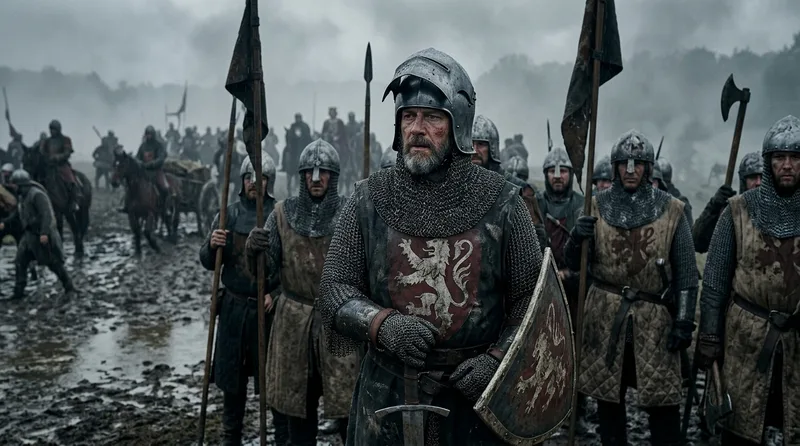
Simon de Montfort began as King Henry III’s favorite courtier in the mid-thirteenth century, married the king’s sister Eleanor, then led the rebellion that captured Henry and created England’s first elected parliament in 1265. The French-born earl of Leicester initially served Henry loyally, but by 1258 he’d joined the baronial opposition demanding reforms through the Provisions of Oxford, which stripped the king of absolute power. When Henry renounced these reforms in 1261, de Montfort raised an army, defeating the royal forces at Lewes on May 14, 1264, and taking the king prisoner along with Prince Edward. For fifteen months, de Montfort ruled England in Henry’s name, convening a parliament in January 1265 that included not just barons and bishops but two elected knights from each shire and two burgesses from each borough—the first representative assembly in European history. His motivation wasn’t democracy but desperation: he needed broader support against the nobility who increasingly viewed him as a French upstart and tyrant. Prince Edward escaped captivity in May 1265 and rallied loyalist forces. At Evesham on August 4, 1265, Edward’s army surrounded and butchered de Montfort’s outnumbered troops, killing the earl and mutilating his corpse. Yet de Montfort’s parliamentary precedent survived him: Edward I would summon the ‘Model Parliament’ in 1295, institutionalizing the representative system that de Montfort had created through rebellion. His defiance transformed English governance from royal autocracy to constitutional monarchy, though he never lived to see democracy triumph.
Source: britannica.com
4. Bertrand du Guesclin - The Ugly Knight Who Tamed Brigand Armies
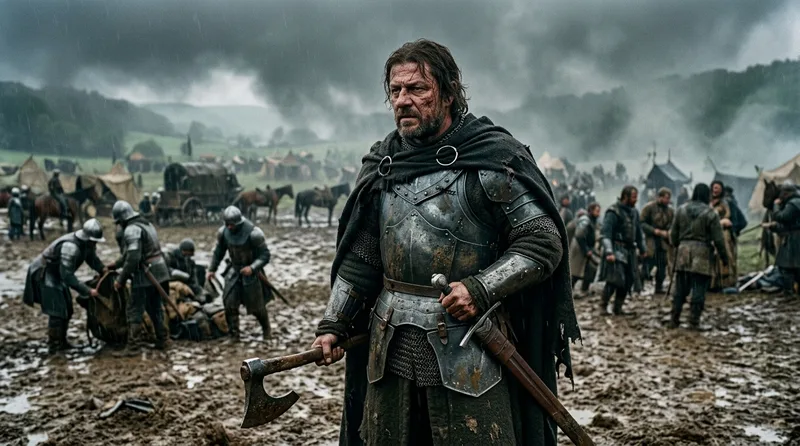
Bertrand du Guesclin was born around 1320 to Breton nobility but was so ugly his mother allegedly tried to drown him, yet he became Constable of France and saved the kingdom by weaponizing its criminals. During the Hundred Years’ War’s darkest period in the 1360s, demobilized soldiers formed ‘Free Companies’—mercenary bands numbering over 40,000 men who pillaged France mercilessly. King Charles V promoted du Guesclin to Constable in 1370 and gave him an impossible task: rid France of these brigands without the treasury to pay them off. Du Guesclin’s solution was audacious defiance of military convention: he led the Free Companies to Spain in 1366, using them to depose King Pedro the Cruel of Castile and install Pedro’s bastard brother Enrique. The campaign killed thousands of routiers and exhausted the survivors, solving France’s bandit problem while interfering in a foreign kingdom without royal authorization. When Castile’s war ended, du Guesclin returned to France and revolutionized warfare by refusing pitched battles, instead adopting guerrilla tactics that recovered 87 towns from English occupation between 1370 and 1380. He deliberately ignored chivalric codes, ambushing enemies, razing castles, and avoiding tournaments—earning condemnation from traditional knights but winning the war. He once rejected King Charles’s order to lift the siege of Cherbourg in 1378, continuing until the fortress fell. By his death in 1380, du Guesclin had reclaimed most of France through systematic disobedience of battlefield conventions, proving that winning mattered more than honor.
Source: britannica.com
5. Götz von Berlichingen - The Iron Hand Knight Who Declared Private War on an Emperor
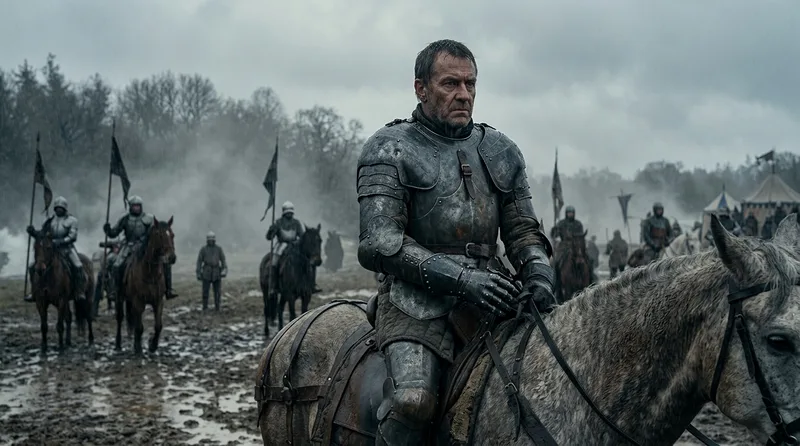
Götz von Berlichingen lost his right hand to a cannonball at the siege of Landshut in 1504, but the mechanical iron replacement he commissioned became his signature as he waged private wars against the Holy Roman Empire for five decades. Born in 1480 to Swabian nobility, Götz embraced the knight’s ancient right of ‘Fehde’—declaring formal feuds against anyone who wronged him, then raiding their lands until they paid compensation. Between 1497 and 1544, he declared feud against the cities of Nuremberg, Mainz, and Bamberg, plus dozens of merchants and nobles, capturing travelers and holding them for ransom despite Emperor Maximilian I outlawing the practice. His iron hand, crafted around 1508 with articulated fingers controlled by springs and releases, let him wield sword and lance effectively enough to lead 18,000 peasants during the German Peasants’ War in 1525. Though he claimed the rebels forced him to command them, Götz clearly sympathized with their cause, defying both his class and Emperor Charles V. Imperial forces captured him in 1528 and imprisoned him until 1530, but released him under oath to cease feuding. Götz immediately resumed his private wars, capturing merchant caravans until 1540 when authorities imprisoned him again. Even at age 62 in 1542, he convinced Emperor Charles to release him to fight the Ottoman Empire in Hungary, proving his value as a warrior outweighed his criminality. He dictated his autobiography in his final years, dying peacefully in 1562 at age 82—never having truly submitted to imperial authority. Götz represented the last generation of knights who believed feudal autonomy trumped centralized state power.
Source: britannica.com
6. William Wallace - Minor Noble Turned Outlaw Who Humiliated England’s Finest
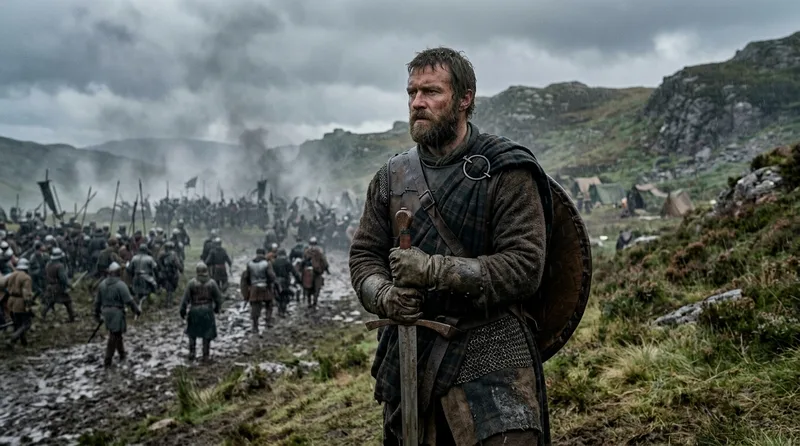
William Wallace held no significant lands or titles when he killed English Sheriff William Heselrig at Lanark in May 1297, yet within four months this minor Scottish noble commanded an army that destroyed England’s military reputation at Stirling Bridge. Born around 1270 to a family of minor gentry, Wallace became an outlaw after King Edward I of England deposed Scotland’s King John Balliol in 1296 and imposed direct English rule. Wallace’s guerrilla campaign began with ambushes and raids, but his genius emerged at the Battle of Stirling Bridge on September 11, 1297, where he faced an English army of 10,000 soldiers including 3,000 armored cavalry. Wallace positioned his 8,000 spearmen at a narrow bridge crossing, allowing only two horsemen to pass abreast, then attacked when half the English army had crossed, slaughtering over 5,000 men including the treasurer of England, Hugh Cressingham, whose skin Wallace allegedly had tanned to make a sword belt. The victory was so complete that Wallace was knighted and appointed Guardian of Scotland in March 1298, ruling in King John’s name despite having no hereditary claim to authority. Edward I personally led an army north in 1298, crushing Wallace’s forces at Falkirk on July 22, but Wallace escaped and continued guerrilla resistance until his betrayal and capture near Glasgow in August 1305. Edward had him hanged, drawn, and quartered in London on August 23, 1305, displaying his body parts across Scotland as warning. Yet Wallace’s defiance had demonstrated that English military supremacy could be broken, inspiring Robert the Bruce’s successful independence war that began in 1306.
Source: britannica.com
7. Eustace the Monk - Pirate Knight Who Sold His Sword to England and France Simultaneously
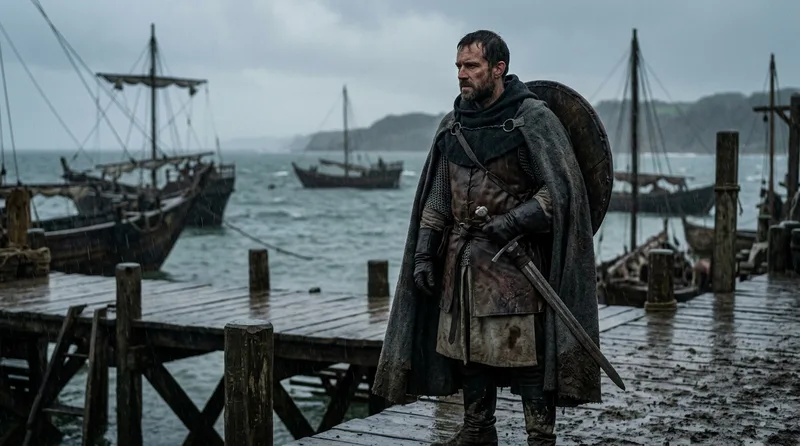
Eustace Busket trained as a Benedictine monk before the last decade of the twelfth century, then became a mercenary admiral whose fleet terrorized the English Channel for two decades, switching allegiance between England and France based purely on who paid more. Born around 1170 to a noble family in Boulogne, Eustace left monastic life after his father’s murder and served the Count of Boulogne until a financial dispute in 1205 turned him outlaw. He assembled a private fleet and began raiding Channel shipping, earning his nickname ’the Monk’ despite abandoning holy orders. King John of England hired him in 1205, paying Eustace to transport troops and raid French coastal towns, which he did enthusiastically while simultaneously accepting French contracts to attack English vessels. His fleet of 30 ships controlled the Channel crossing, and both kingdoms paid him protection money to ensure their merchants’ safety. When John died in 1216 and young Henry III took the throne, French Prince Louis invaded England, and Eustace switched sides completely, commanding the French invasion fleet. On August 24, 1217, Eustace’s fleet of 80 ships carrying French reinforcements and siege equipment met English forces under Hubert de Burgh off Sandwich in the Battle of Dover. The English captured Eustace’s flagship, and when he refused to surrender, they beheaded him immediately on deck, parading his corpse through Canterbury. His death ended the French invasion’s supply line, forcing Prince Louis to abandon his English throne claim. Eustace’s 12-year career proved that medieval loyalty was transactional, and a skilled mercenary could hold kingdoms hostage by controlling strategic waterways.
Source: britannica.com
8. Roger Mortimer - The Knight Who Seduced a Queen and Murdered a King
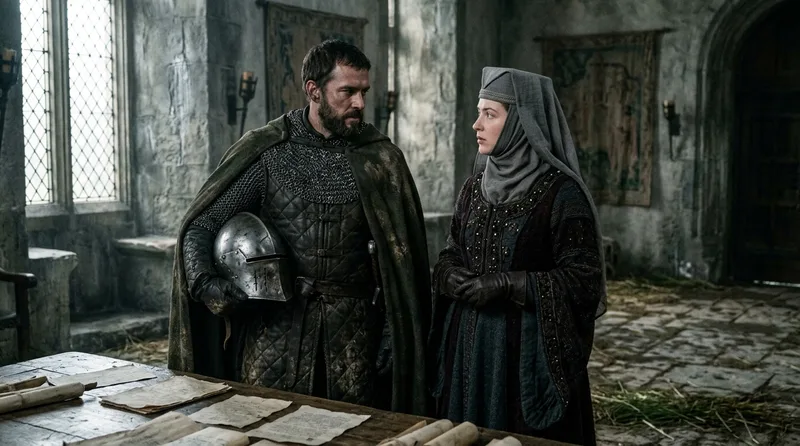
Roger Mortimer began as a loyal baron but by 1327 had imprisoned his king, murdered the monarch in Berkeley Castle, and ruled England as the queen’s lover—the most audacious defiance in medieval English history. Born in 1287 to the powerful Marcher Lords who controlled the Welsh border, Mortimer initially served King Edward II faithfully, suppressing rebellions in Ireland from 1316 to 1321. When baronial opposition to Edward erupted in 1321, Mortimer joined the rebels, was captured at Shrewsbury in January 1322, and imprisoned in the Tower of London under sentence of death. On August 1, 1323, Mortimer escaped by drugging his guards and climbing down a rope, fleeing to France—the first and only person to escape the Tower in that era. In Paris, he began an affair with Edward II’s estranged queen, Isabella, in 1325, and together they invaded England in September 1326 with a mercenary army of 1,500 men. The invasion succeeded beyond expectation; Edward II’s support collapsed, and by January 1327, Mortimer and Isabella forced Parliament to depose Edward in favor of his 14-year-old son, Edward III. Mortimer had the deposed king imprisoned at Berkeley Castle, where Edward II died on September 21, 1327, under mysterious circumstances—most likely murdered by red-hot poker to leave no external marks, though historians debate this. Mortimer ruled England for three years as the young king’s ‘advisor,’ executing political opponents and granting himself the unprecedented title Earl of March. In October 1330, the 17-year-old Edward III had Mortimer arrested at Nottingham Castle and executed for treason on November 29, 1330, at Tyburn. Mortimer’s three-year regency proved that even sacred kingship could be overthrown by a determined knight with aristocratic backing and royal connections.
Source: britannica.com
9. John Hawkwood - English Mercenary Captain Who Held Italian City-States Hostage
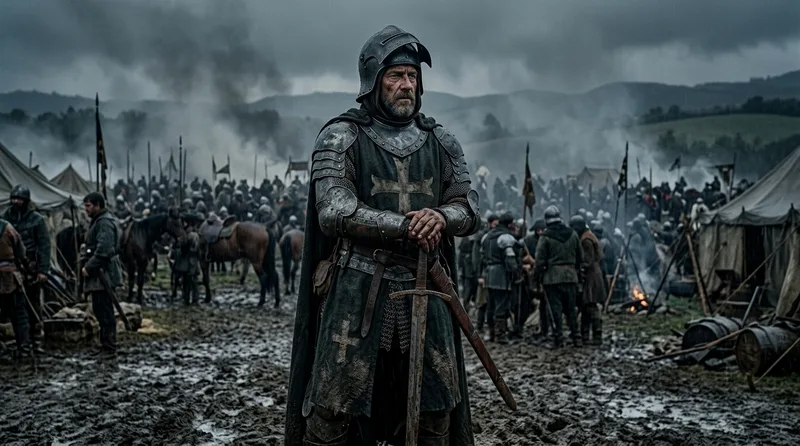
John Hawkwood arrived in Italy around 1360 as a penniless English soldier, but died in 1394 as the wealthiest condottiero in Europe, having betrayed every employer and pioneered the military extortion that defined Renaissance Italian warfare. Born around 1320 in Essex to a tanner’s family, Hawkwood fought in France during the Hundred Years’ War before leading his ‘White Company’ of 3,500 English veterans to Italy when the Treaty of Brétigny in 1360 left them unemployed. Italian city-states hired mercenary companies but feared them, creating a system where condottieri fought ritualistic, low-casualty battles designed to preserve expensive troops—which Hawkwood shattered by actually trying to win. In 1364, he besieged Pisa so brutally that the city paid him 600,000 florins to leave without fighting, pioneering ‘protection racket’ warfare. Between 1364 and 1390, Hawkwood served Milan, Pisa, Florence, and the Papal States, switching employers mid-contract if offered better terms and frequently extorting his own employers by threatening to defect. In 1372, he served Pope Gregory XI, sacking Cesena and massacring over 2,000 civilians—then switched to Florence’s service two years later. His greatest defiance came in 1382 when Florence hired him to fight Naples, but Hawkwood signed a secret treaty with King Charles III of Naples, allowing the Neapolitan army to invade Florence’s territory while he claimed his troops were ‘searching’ for them. When Florence discovered his betrayal, they couldn’t punish him because they needed his 7,000-man company. Hawkwood died peacefully in Florence in 1394, honored with a state funeral and a memorial fresco by Paolo Uccello in the Duomo—testament to how thoroughly he’d normalized mercenary treachery as legitimate business practice in Italian warfare.
Source: britannica.com
10. Jean de Carrouges - Knight Who Challenged His Lord to Judicial Combat Over Rape
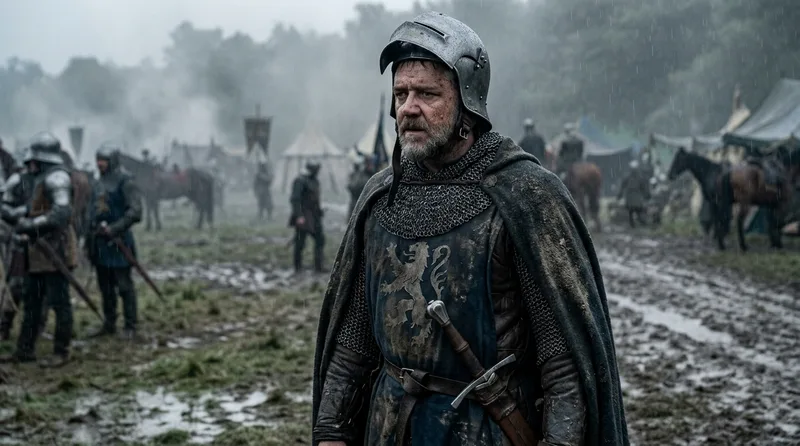
Jean de Carrouges was a respected Norman knight until 1386, when he accused his squire Jacques Le Gris of raping his wife and demanded trial by combat—directly challenging his lord Count Pierre d’Alençon, who dismissed the accusation and protected the accused. Born around 1330, Carrouges had served loyally in the Hundred Years’ War, fighting at Poitiers in 1356 and earning his knighthood. By 1380, he’d become embroiled in a bitter land dispute with Le Gris, his former friend and fellow vassal, over property at Aunou-le-Faucon that Count Pierre awarded to Le Gris despite Carrouges’s prior claim. In January 1386, Le Gris allegedly raped Carrouges’s wife Marguerite at their château while Carrouges was in Paris, but when Marguerite reported the crime, Count Pierre—Le Gris’s close friend and patron—refused to prosecute, instead accusing Marguerite of lying. Carrouges defied his feudal lord by appealing directly to the Paris Parlement, then to King Charles VI himself, demanding trial by combat—the last legal avenue when a lord’s justice failed. On December 29, 1386, before a crowd of thousands at the monastery of Saint-Martin-des-Champs in Paris, Carrouges fought Le Gris in full armor with lance, sword, and dagger—understanding that if he lost, he’d be executed for false accusation and Marguerite would be burned alive for perjury. Carrouges killed Le Gris in brutal combat, running him through with a sword after both men’s lances shattered. The victory legally proved Marguerite’s truthfulness and vindicated Carrouges, who received royal favor and left on crusade to escape the scandal. He died at the Battle of Nicopolis in 1396, fighting the Ottoman Empire. The duel represented the ultimate defiance of feudal hierarchy: publicly challenging one’s lord’s judgment in front of the king and forcing divine justice to override human authority.
Source: smithsonianmag.com
Did You Know?
The knight who escaped the Tower of London to murder his king received a state funeral from his victim’s son. The mercenary who betrayed Florence was honored with a cathedral fresco. Medieval defiance paid surprisingly well: these rebels weren’t punished for breaking oaths—they were rewarded, proving that feudal loyalty mattered far less than results, and history remembers the audacious, not the obedient.