
Before printing, knowledge existed in single copies. When the Library of Alexandria burned, we lost Aristarchus’s proof that Earth orbits the sun—a discovery that wouldn’t resurface for 1,800 years. Ten libraries. Millennia of wisdom. Gone forever.
1. Library of Alexandria: 700,000 Scrolls Lost to Politics and Fire
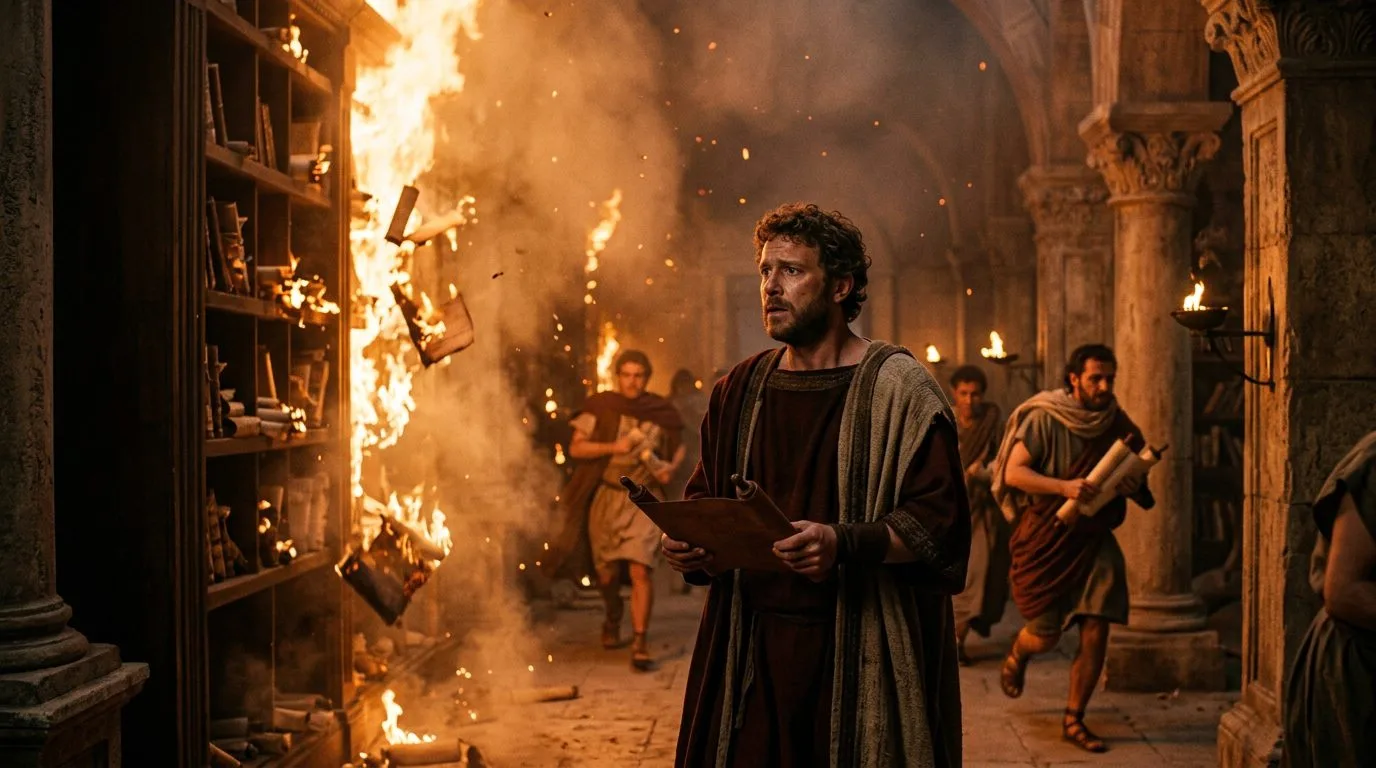
Library of Alexandria
Julius Caesar accidentally torched the world’s greatest library in 48 BCE during Alexandria’s civil war. The Royal Library housed approximately 700,000 papyrus scrolls, including Aristarchus of Samos’s heliocentric theory and Eratosthenes’s accurate calculation of Earth’s circumference. Scholars from across the Mediterranean world traveled to Egypt specifically to access works by Euclid, Archimedes, and Sophocles—many existing nowhere else. When flames consumed the harbor district, we lost Berossus’s complete history of Babylon, all plays by Aeschylus except seven, and potentially the solution to navigational problems that plagued sailors for another millennium. The destruction set mathematics, astronomy, and geography back centuries, forcing later scholars to rediscover principles that Alexandrian researchers had already documented.
Source: britannica.com
2. Imperial Library of Constantinople: 120,000 Manuscripts Burned in 1204
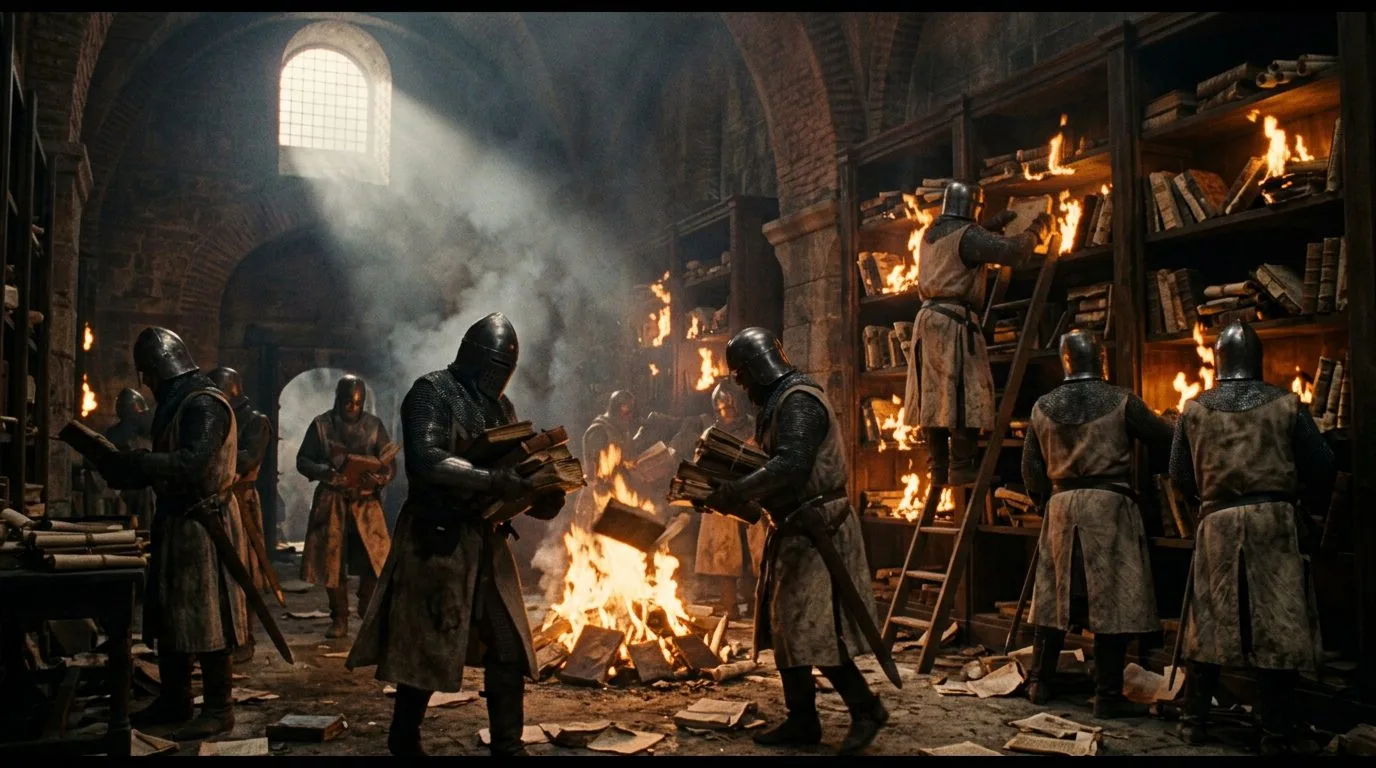
Imperial Library of Constantinople
Crusaders sacked Constantinople in April 1204, destroying the Imperial Library that preserved Greek and Roman texts lost everywhere else. Emperor Constantine VII had assembled roughly 120,000 manuscripts, including the only complete copies of Livy’s history of Rome and Polybius’s military treatises. The library contained original Homer manuscripts dating to the 3rd century BCE, medical texts by Galen that wouldn’t survive elsewhere, and engineering diagrams from ancient inventors. When drunken Crusader knights used precious codices as firewood during their three-day rampage, Western Europe ironically destroyed the very classical knowledge it claimed to revere. Scholars estimate we lost 90 percent of all classical Greek literature in this single catastrophe, leaving us with fragments of what Romans and Byzantines read daily.
Source: smithsonianmag.com
3. House of Wisdom: Baghdad’s Library Turned the Tigris Black with Ink
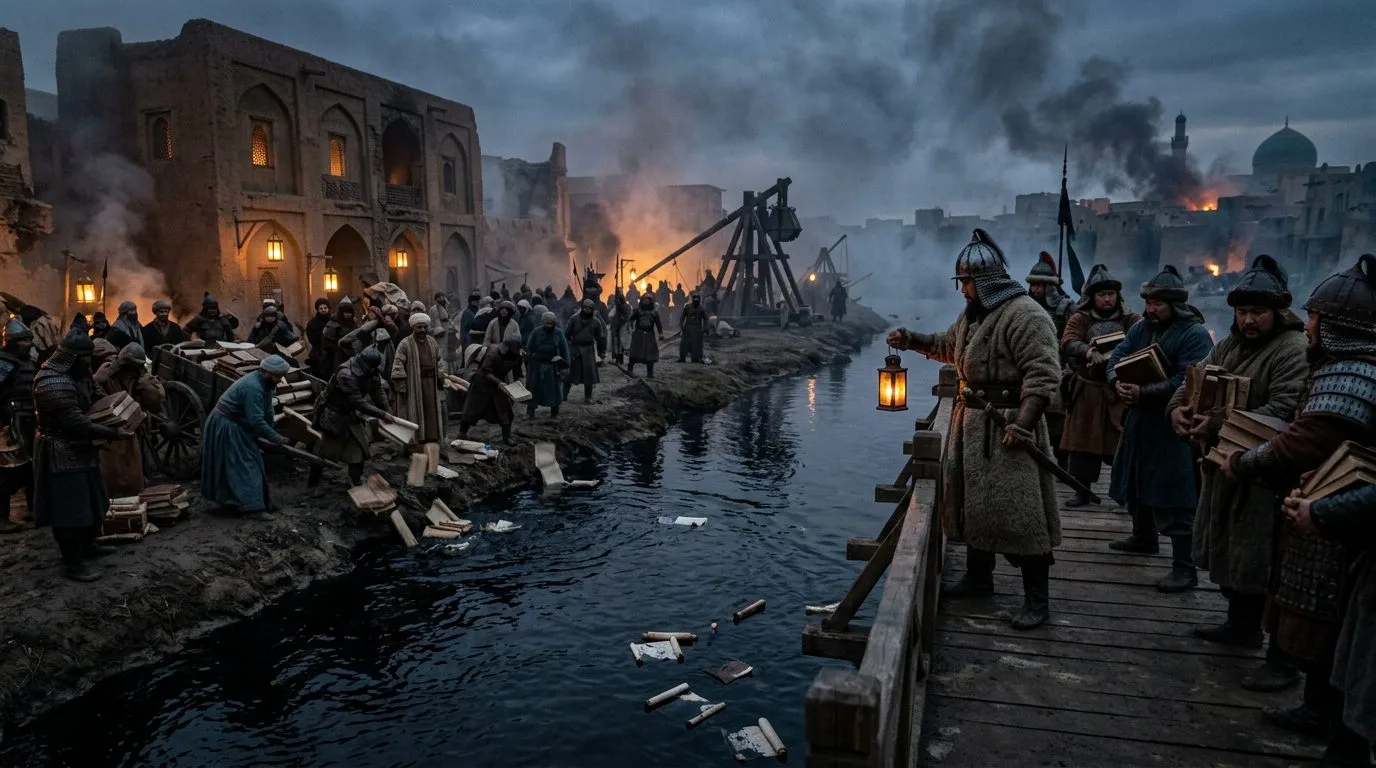
House of Wisdom
Mongol warriors threw so many books into the Tigris River in February 1258 that witnesses reported the water ran black with ink for six months. The House of Wisdom, founded by Caliph Harun al-Rashid in 762 CE, contained Arabic translations of Persian, Indian, and Greek scientific texts unavailable anywhere else. Al-Khwarizmi developed algebra here, Ibn al-Haytham pioneered optics, and scholars preserved Aristotle’s works while Europe forgot them. The library held an estimated 400,000 manuscripts covering astronomy, medicine, mathematics, and philosophy. Hulagu Khan’s siege destroyed Persian astronomical tables predating modern observations, surgical techniques not rediscovered until centuries later, and translations of Greek texts now lost in their original language. The destruction ended Baghdad’s Golden Age and shifted intellectual leadership away from the Islamic world.
Source: history.com
4. Nalanda University Library: Buddhist Texts Burned for Three Months Straight
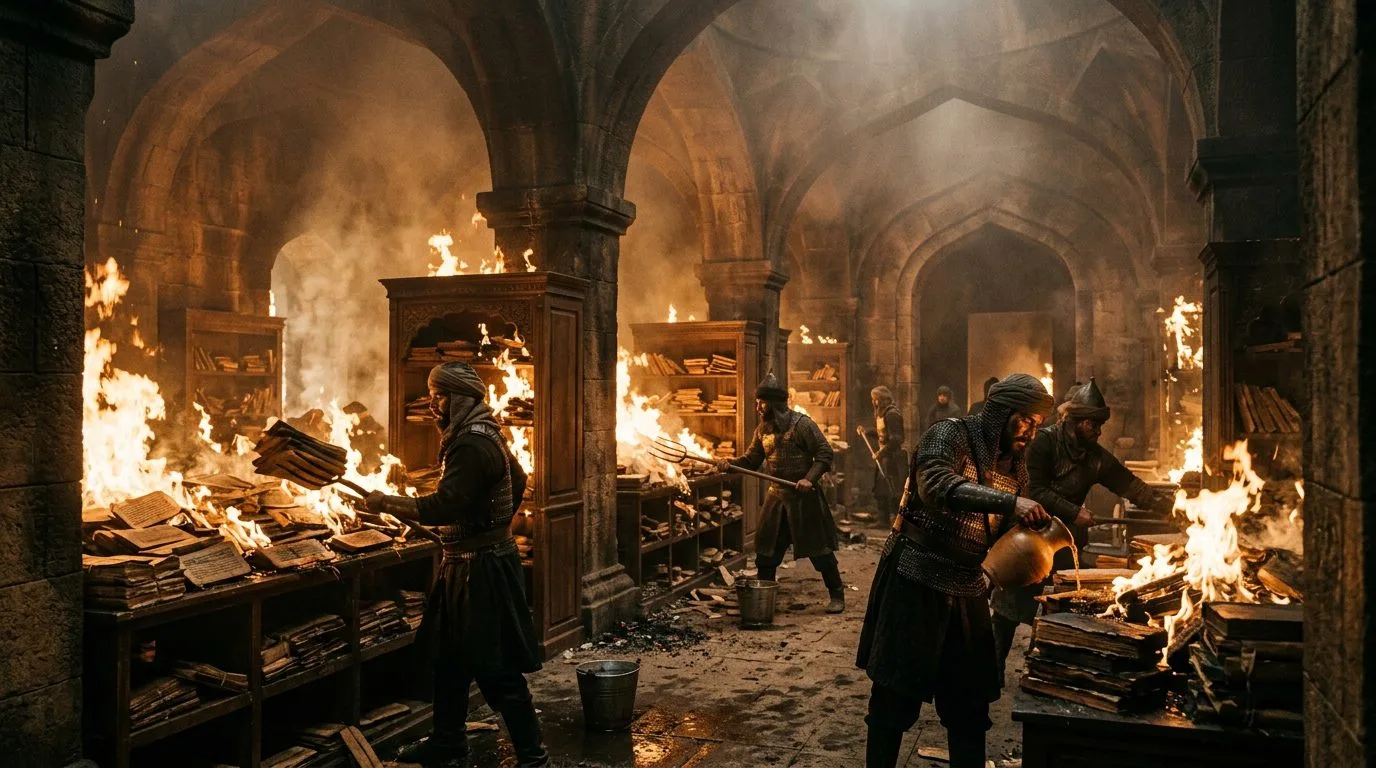
Nalanda University Library
Bakhtiyar Khilji’s soldiers set Nalanda’s library ablaze in 1193 CE, and the nine-story building burned continuously for three months. Founded in the 5th century CE, Nalanda housed over 9 million manuscripts in its three main buildings named Ratnasagara, Ratnodadhi, and Ratnaranjaka. Buddhist monks had copied Sanskrit texts, Tibetan scriptures, Chinese translations, and scientific treatises collected across Asia for 700 years. The university taught 10,000 students annually, with scholars traveling from Korea, Japan, Tibet, and Turkey to access texts on medicine, astronomy, logic, and metaphysics. When Khilji’s forces massacred the monks and torched the campus, they destroyed the accumulated philosophical and scientific knowledge of South and Central Asia. Modern scholars have recovered less than one percent of Nalanda’s original collection from Tibetan monasteries.
Source: britannica.com
5. Library of Ctesiphon: Persian Knowledge Erased by Arab Conquest
Library of Ctesiphon
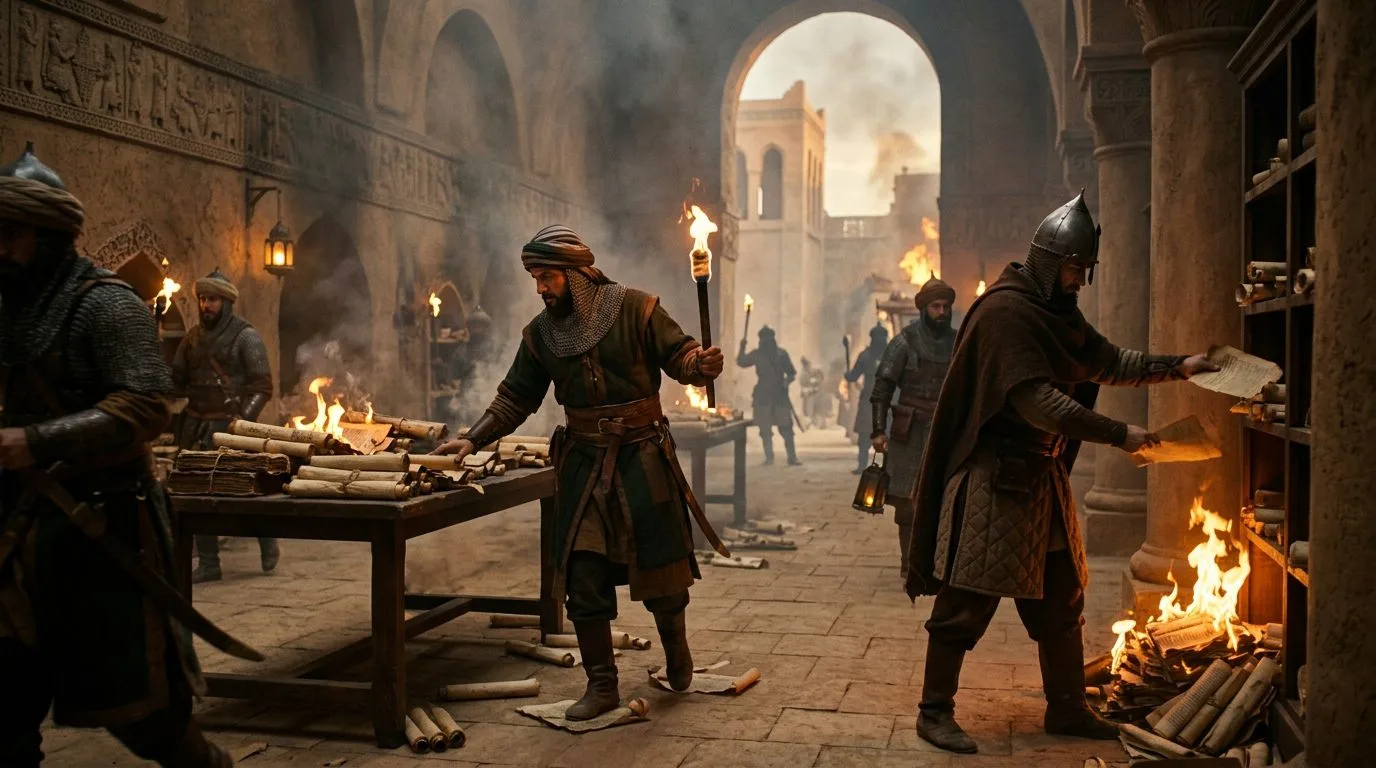
Arab forces conquered Ctesiphon in 637 CE, burning the Sassanid Persian royal library that contained pre-Islamic Iranian history and science. Emperor Khosrow I had commissioned translations of Indian mathematical texts, Greek philosophical works, and Chinese medical treatises, creating the most diverse collection in the ancient world. The library held the complete Avesta—Zoroastrian scriptures compiled over centuries—with commentaries now completely lost. Persian astronomical observations spanning 1,000 years vanished, including planetary tables that wouldn’t be reconstructed until the Islamic Golden Age. When Caliph Umar ibn al-Khattab allegedly ordered the books burned with the logic that anything contradicting the Quran was heretical and anything agreeing was redundant, he eliminated primary sources on Parthian history, Sassanid administration, and pre-Islamic Persian literature. We know ancient Persia primarily through Greek and Roman accounts rather than Persian voices.
Source: britannica.com
6. Maya Codices: Bishop Burned 27 Books and Erased a Civilization
Maya Codices
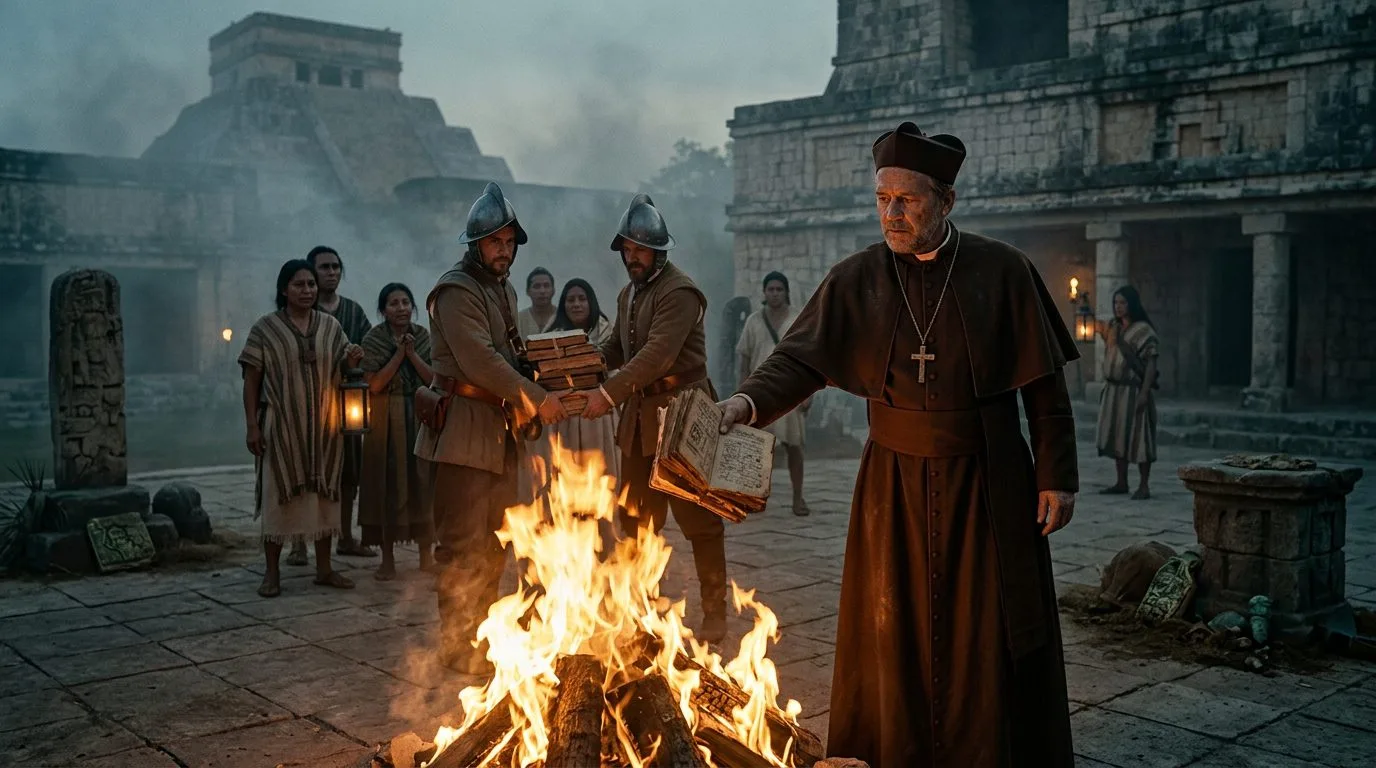
Diego de Landa ordered every Maya book burned in Mani, Yucatan, on July 12, 1562, destroying 5,000 years of Mesoamerican knowledge in a single afternoon bonfire. The Spanish bishop recorded burning exactly 27 codices—accordion-folded bark paper books containing astronomical tables, mathematical calculations, historical records, and agricultural cycles. Maya scribes had developed the most sophisticated writing system in the Americas, with approximately 800 unique glyphs representing syllables and concepts. Their books contained astronomical predictions accurate to within minutes, a mathematical concept of zero developed independently from Old World civilizations, and detailed chronologies of Maya dynasties. Only four codices survived Landa’s purge, hidden by Maya families, leaving modern scholars unable to fully reconstruct Maya history, religion, and science. Ironically, Landa later wrote the only Spanish account of Maya culture, becoming our primary source on the civilization he tried to erase.
Source: smithsonianmag.com
7. Library of Ashurbanipal: Rediscovered After 2,500 Years Underground
Library of Ashurbanipal
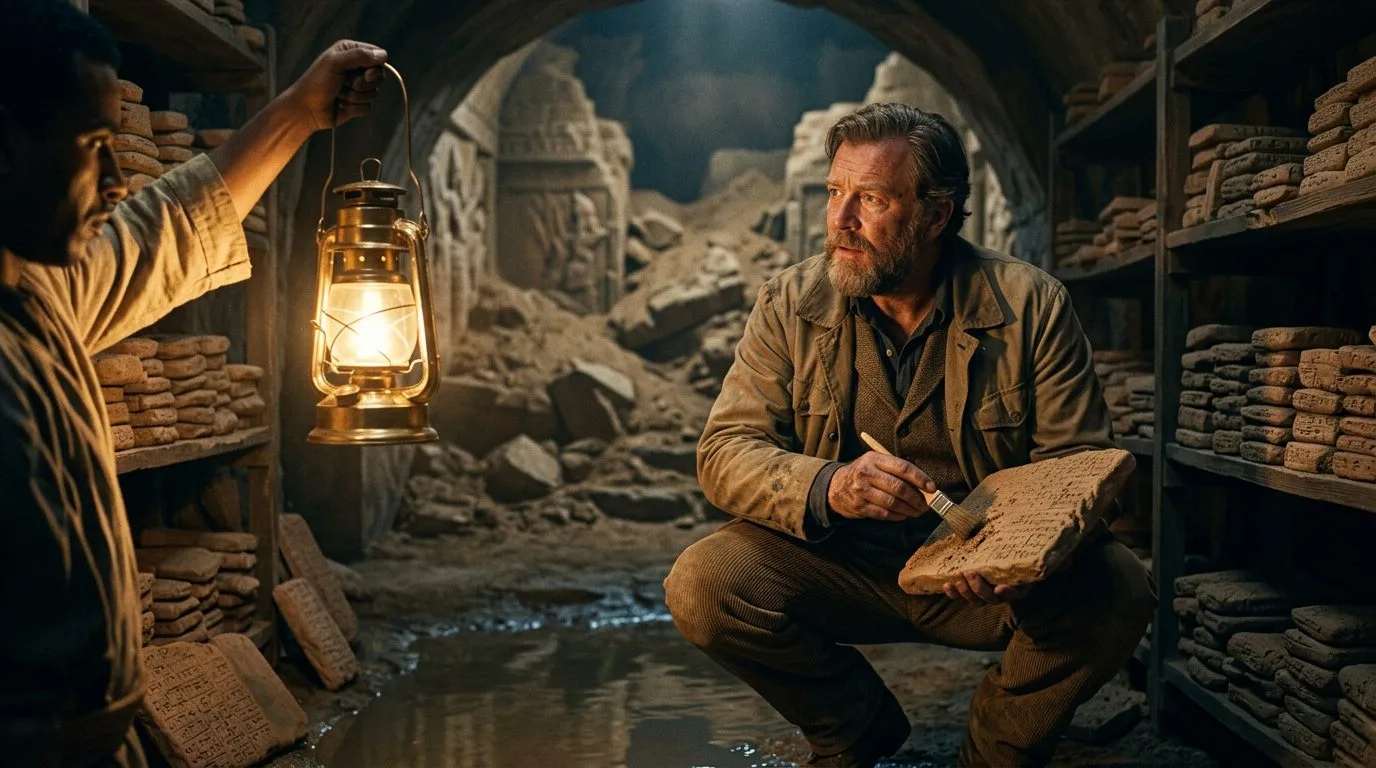
Babylonian forces destroyed Nineveh in 612 BCE, burying King Ashurbanipal’s 30,000 clay tablets under palace ruins until British archaeologist Austen Henry Layard excavated them in the mid-19th century. Ashurbanipal, ruling from 668 to 627 BCE, had created the first systematically organized library, collecting tablets from across the Neo-Assyrian Empire and cataloging them by subject. The library contained the Epic of Gilgamesh—humanity’s oldest known epic poem—Mesopotamian creation myths, astronomical observations dating back 1,000 years, and medical texts describing surgical procedures. When invaders torched the palace, the fire accidentally preserved the clay tablets by baking them harder, creating an unintended time capsule. Unlike papyrus or parchment libraries, Ashurbanipal’s collection survived because the destruction medium inadvertently became a preservation technique, giving us our most complete window into Mesopotamian civilization.
Source: britannica.com
8. Aztec Pictorial Libraries: Spanish Priests Destroyed 2,000 Years of Mexican History
Aztec Pictorial Libraries
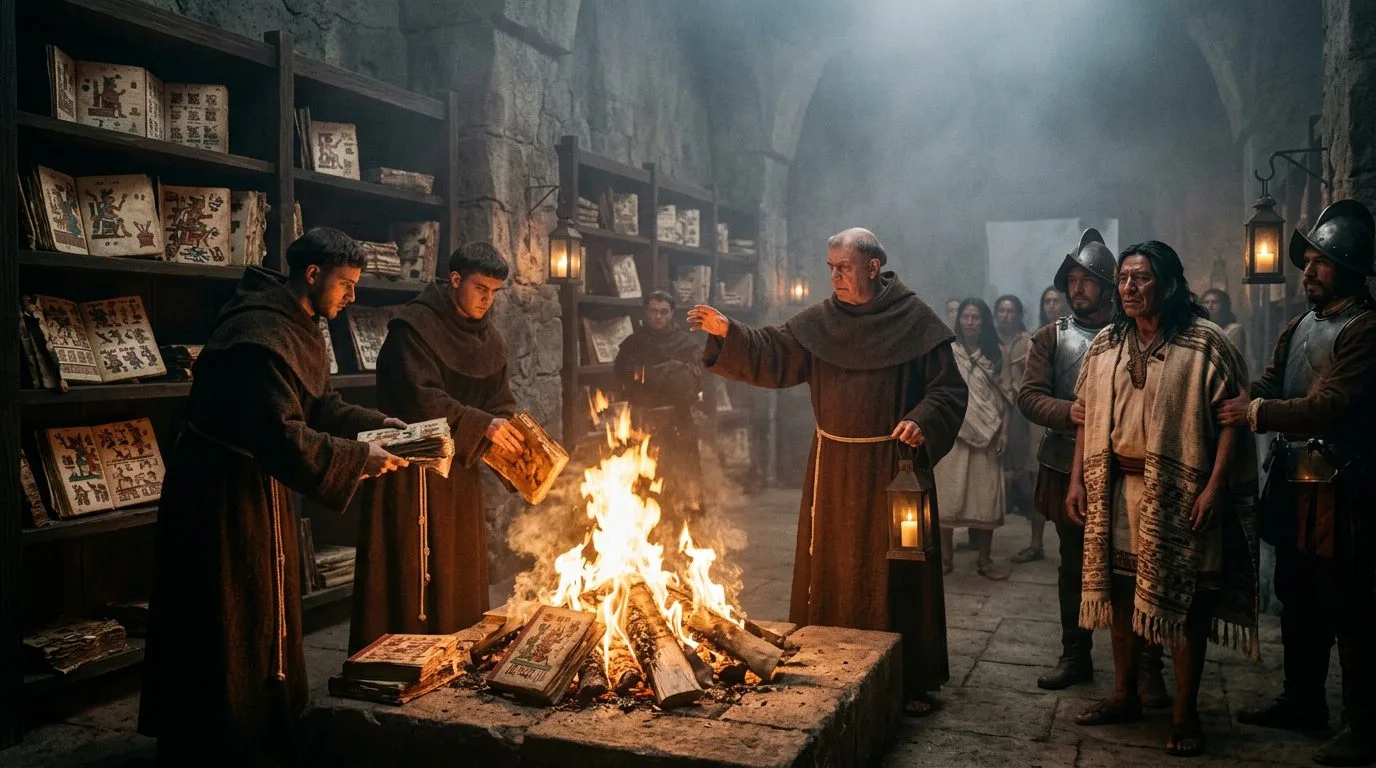
Franciscan missionaries systematically destroyed Aztec pictorial manuscripts throughout the 16th century, eliminating indigenous Mexican historical records spanning two millennia. Juan de Zumarraga, first Archbishop of Mexico, personally oversaw the burning of thousands of codices in Tlatelolco’s main plaza in 1530. These bark-paper and deerskin books contained detailed tribute records, astronomical calendars, genealogies of ruling families, and religious rituals using a sophisticated pictographic system. The Aztecs maintained libraries in every major city, with Texcoco’s royal collection alone holding an estimated 500,000 documents covering Toltec, Mixtec, and earlier civilizations. Priests justified the destruction by calling the books works of the devil, though they simultaneously forced indigenous scribes to create new codices explaining the old religion for Spanish understanding. Fewer than 20 pre-Columbian Mexican codices survived, leaving massive gaps in Mesoamerican chronology.
Source: history.com
9. Serapeum of Alexandria: Christians Destroyed Pagan Science in 391 CE
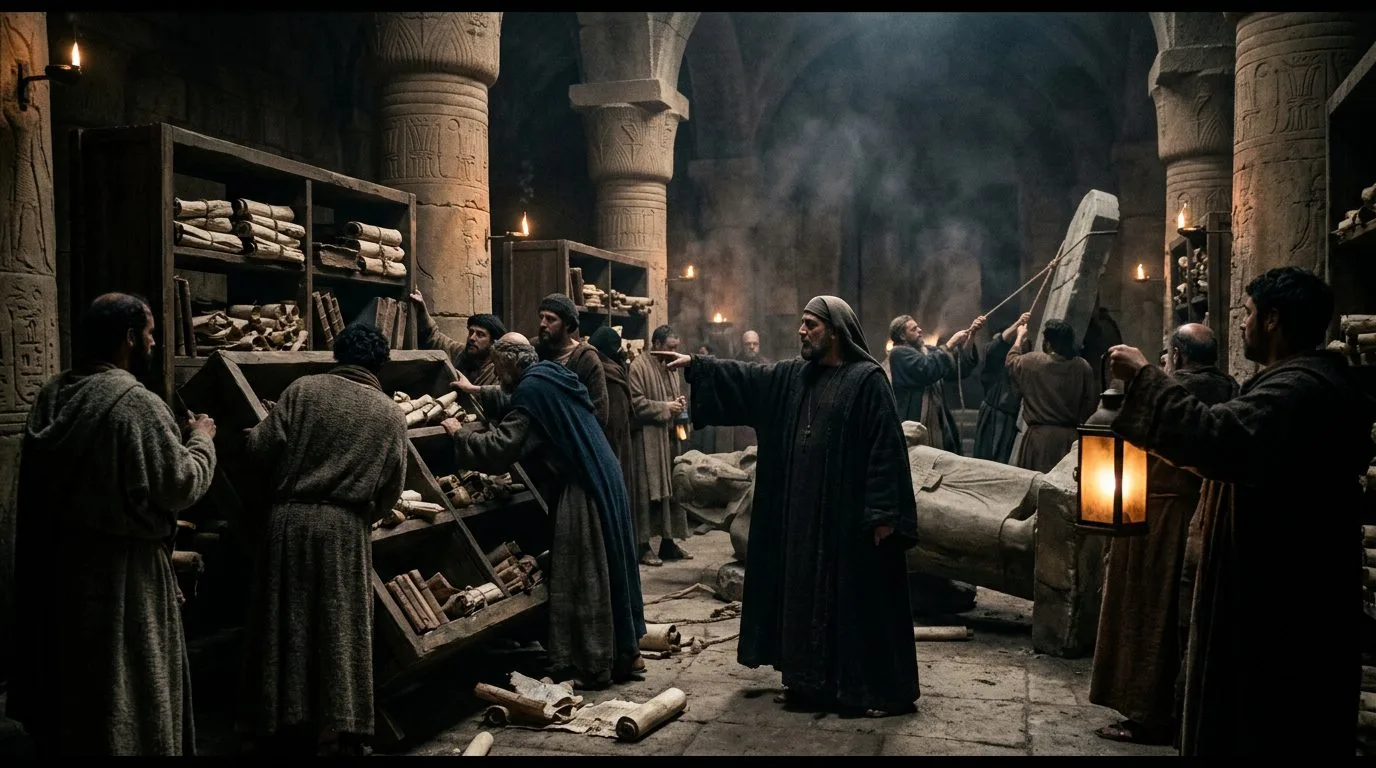
Serapeum of Alexandria
Christian mobs led by Patriarch Theophilus demolished the Serapeum in March 391 CE, destroying Alexandria’s second-greatest library on orders from Emperor Theodosius I. The temple complex housed approximately 43,000 scrolls salvaged from the earlier Royal Library disaster, making it the Mediterranean’s most important repository of Greek and Egyptian learning. Mathematician Theon and his daughter Hypatia taught astronomy and philosophy here, preserving works by Ptolemy, Euclid, and Apollonius. The library contained the only complete collection of Egyptian temple records, hieroglyphic translations, and Coptic Christian texts existing alongside pagan philosophical works. When Theophilus’s followers smashed statues, burned books, and murdered pagan scholars, they eliminated the last major institutional source of pre-Christian Egyptian knowledge. Hypatia herself was murdered by a Christian mob in 415 CE, ending Alexandria’s thousand-year run as the intellectual capital of the ancient world.
Source: britannica.com
10. Baghdad Observatory Library: Astronomical Records Dumped in the Tigris
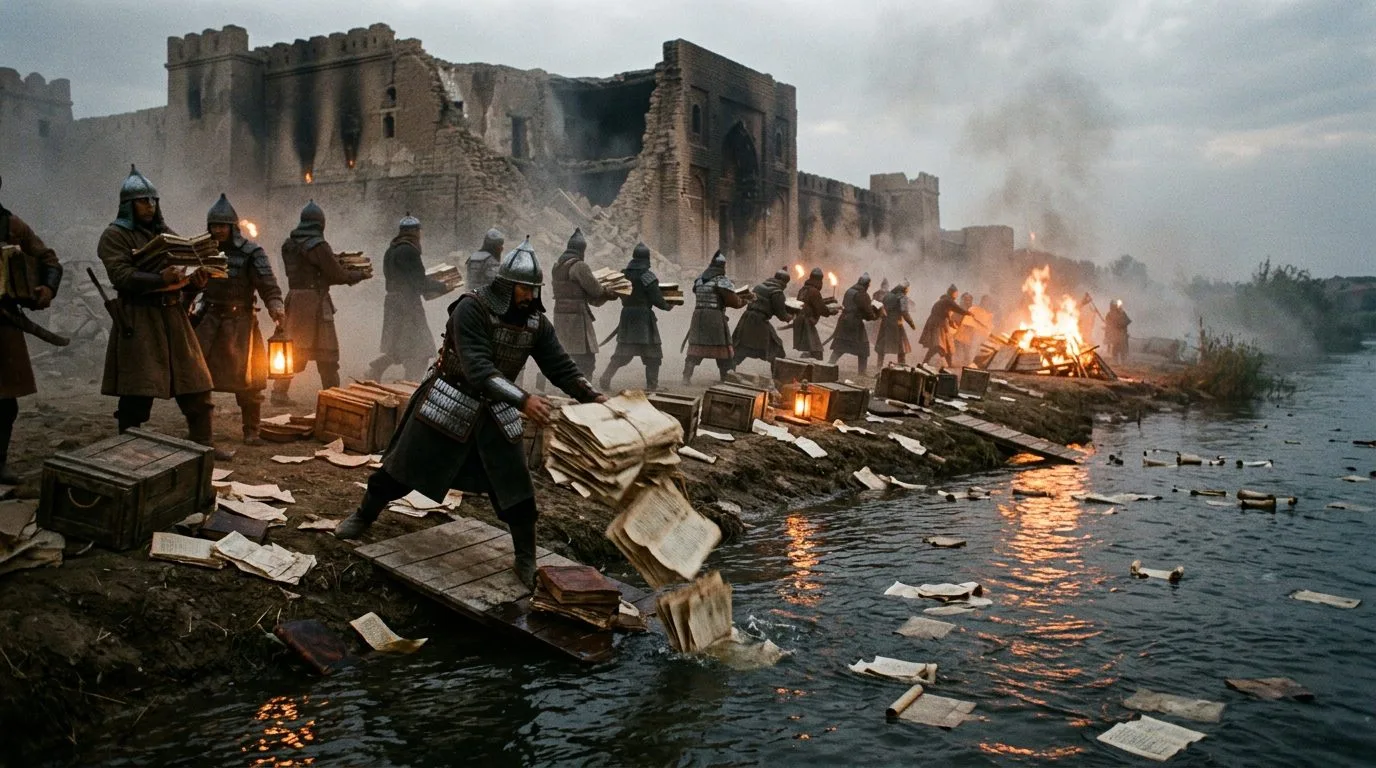
Baghdad Observatory Library
Mongol forces demolished Baghdad’s Maragheh Observatory in 1258, destroying 400 years of continuous astronomical observations that were the most accurate pre-telescope records in existence. Founded during the Abbasid Caliphate in 829 CE, the observatory housed instruments built by the Banu Musa brothers and tables compiled by Al-Battani that corrected Ptolemy’s calculations. Astronomers had measured the precession of equinoxes, calculated the length of the solar year to within 2 minutes and 22 seconds of modern values, and tracked planetary motions with unprecedented precision. The library contained 400,000 astronomical manuscripts, including star catalogs, eclipse predictions through 1600 CE, and trigonometric tables refined over generations. When Hulagu Khan’s soldiers threw these irreplaceable records into the Tigris alongside the House of Wisdom’s books, they eliminated empirical data that wouldn’t be matched until the observations of later centuries—three hundred years later.
Source: smithsonianmag.com
Did You Know?
The Library of Alexandria’s destruction delayed the acceptance of heliocentrism by nearly two millennia, yet we owe our knowledge of ancient Mesopotamia entirely to one library’s accidental preservation through fire. Clay tablets survived what papyrus couldn’t—meaning we understand Assyrian medicine better than Roman surgery, and can read Gilgamesh but have lost 90 percent of classical Greek plays. History’s greatest irony: the books we have exist not because civilizations protected them, but because their destroyers accidentally baked, buried, or hid them well enough to outlast empires.