
Between 1206 and 1368, Mongol armies conquered territories spanning from the Pacific to Eastern Europe—an empire larger than Rome at its peak. Their success wasn’t just superior horsemanship: it was their mastery of siege warfare that broke fortified cities from Baghdad to Kiev.
1. Mobile Siege Towers Rolled Across Endless Steppes
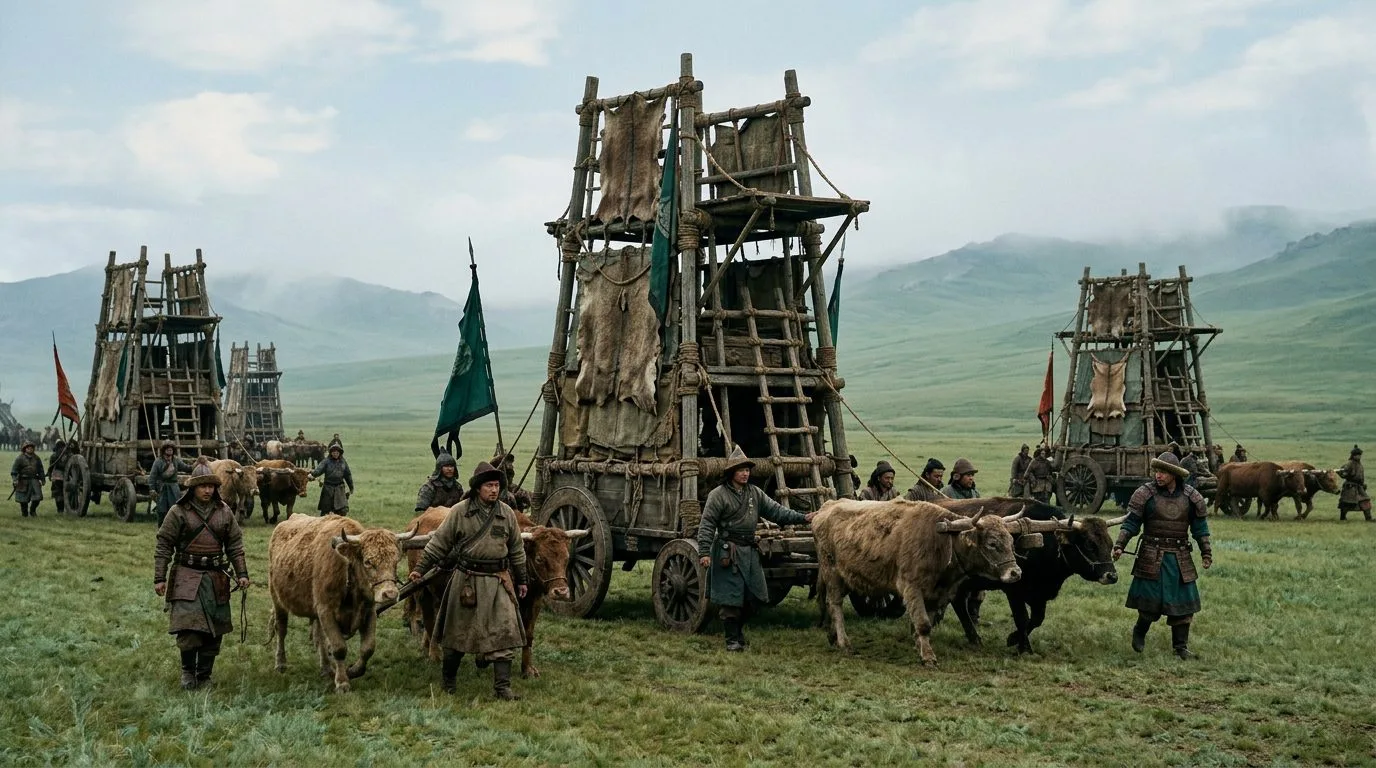
Mobile Siege Towers Rolled Across Endless Steppes
Mongol engineers designed collapsible siege towers that could be dismantled, loaded onto ox-drawn wagons, and transported across thousands of miles of open steppe. During the siege of Samarkand in 1220, Genghis Khan’s forces assembled towers reaching 40 feet high within days of arrival, catching defenders completely unprepared. Unlike European siege engines that required construction on-site with local materials, these prefabricated components included leather shields soaked in vinegar to resist fire arrows. The towers rolled on massive wooden wheels reinforced with iron bands, allowing rapid repositioning during battle. This mobility transformed siege warfare from a static waiting game into a dynamic assault that could overwhelm multiple cities in a single campaign season.
Source: britannica.com
2. Chinese Gunpowder Weapons Created Explosive Chaos
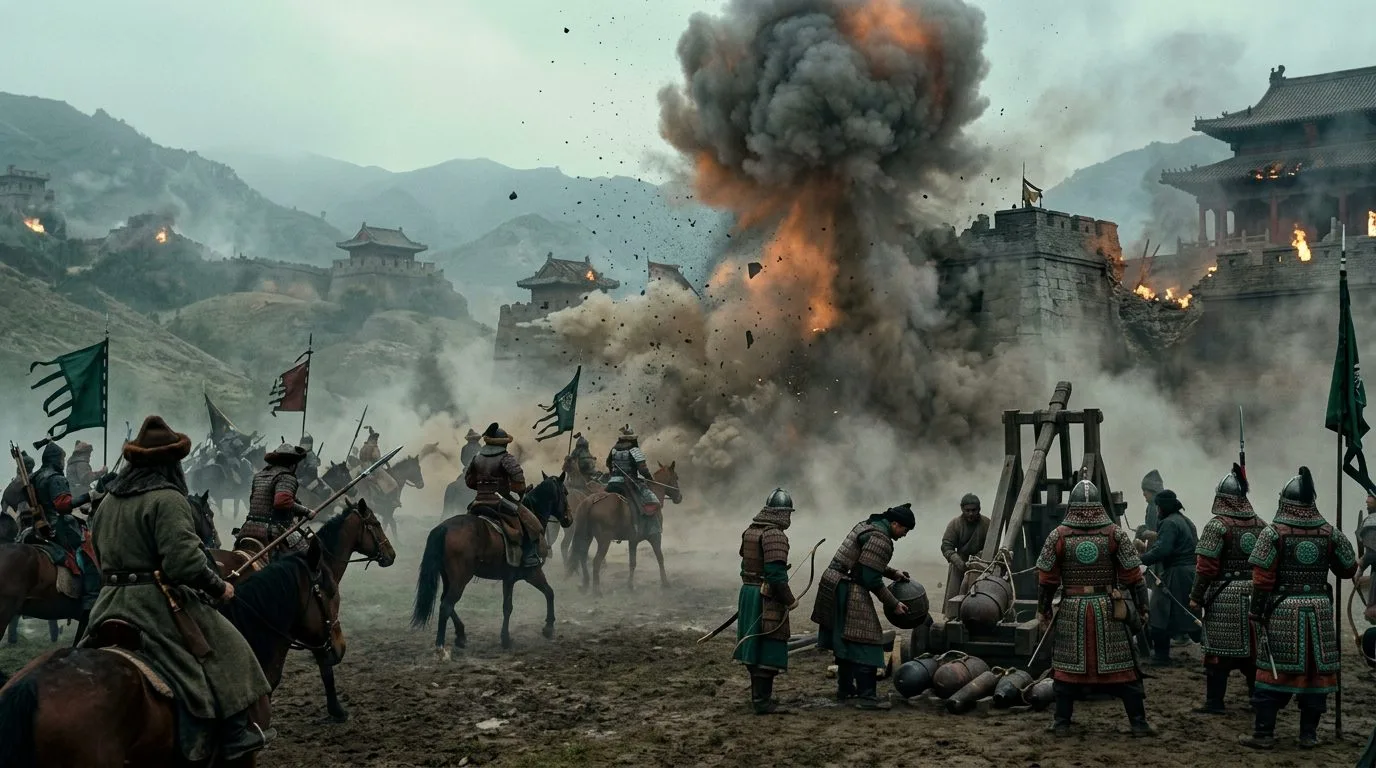
Chinese Gunpowder Weapons Created Explosive Chaos
After conquering the Jin Dynasty in 1234, Mongol commanders integrated Chinese gunpowder technology into their arsenal with devastating effect. Song Dynasty engineers taught them to manufacture iron-cased bombs filled with gunpowder and shrapnel that exploded on impact, creating psychological terror among defenders who had never witnessed such weapons. Fire lances—bamboo tubes packed with gunpowder that shot flames 10 feet forward—turned cavalry charges into infernos at the gates of fortified cities. During the siege of Xiangyang from 1268 to 1273, Mongol forces deployed massive trebuchets launching 220-pound gunpowder bombs that shattered stone walls and ignited wooden structures inside. The deafening explosions and billowing smoke convinced many garrisons that supernatural forces fought alongside the Mongols.
Source: britannica.com
3. Plague Corpses Became Biological Weapons
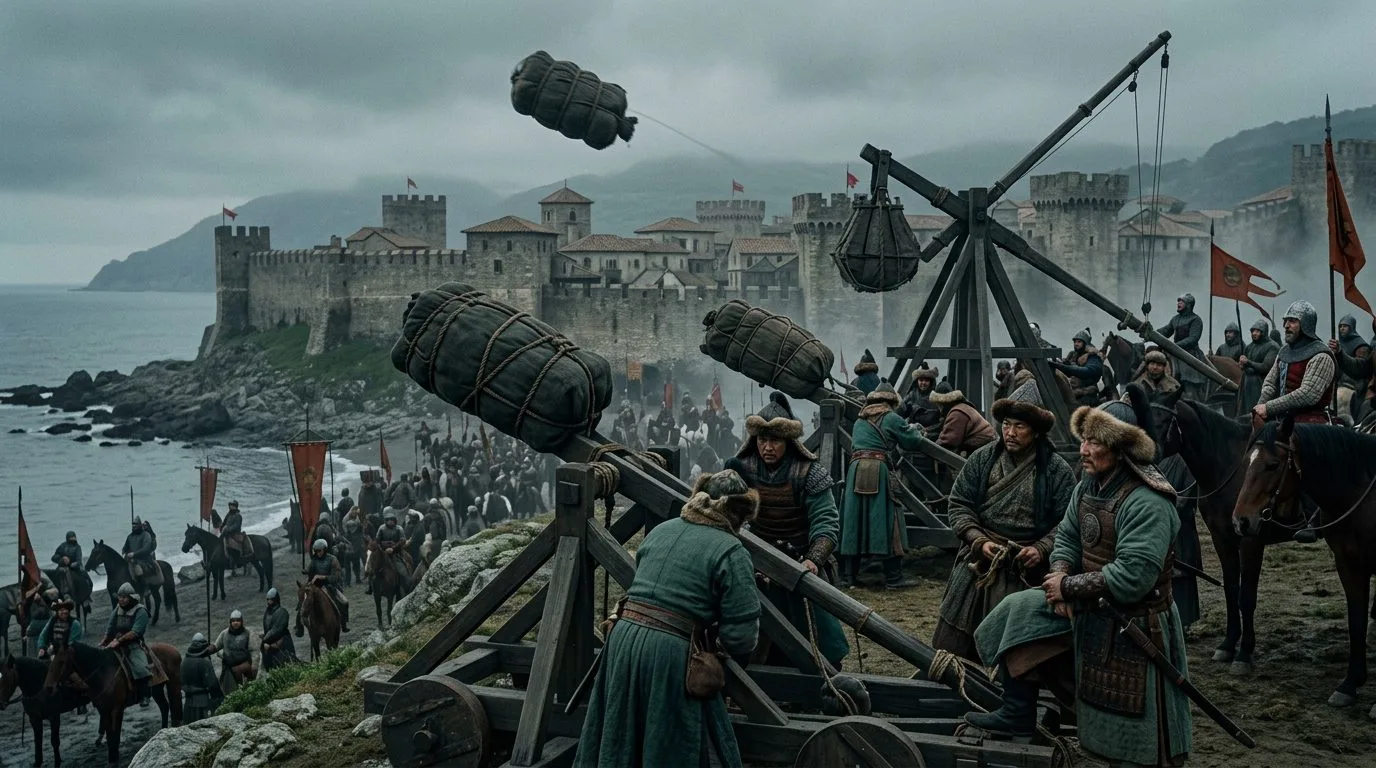
Plague Corpses Became Biological Weapons
At the siege of Caffa in 1346, Mongol forces under Jani Beg catapulted plague-infected corpses over the city walls when their own troops began dying from the Black Death. Genoese merchants trapped inside watched in horror as diseased bodies landed in their streets and wells, spreading infection through the crowded population. Within months, survivors fleeing by ship carried the plague to Constantinople, then Venice, ultimately triggering the pandemic that killed one-third of Europe’s population. This biological warfare tactic wasn’t unique to Caffa—chronicles describe similar practices at the siege of Tana in 1343 and other Black Sea ports. The psychological impact was immediate: defenders knew that even if they survived the assault, invisible death might already be spreading through their water supply.
Source: britannica.com
4. Feigned Retreats Lured Defenders Into Death Traps
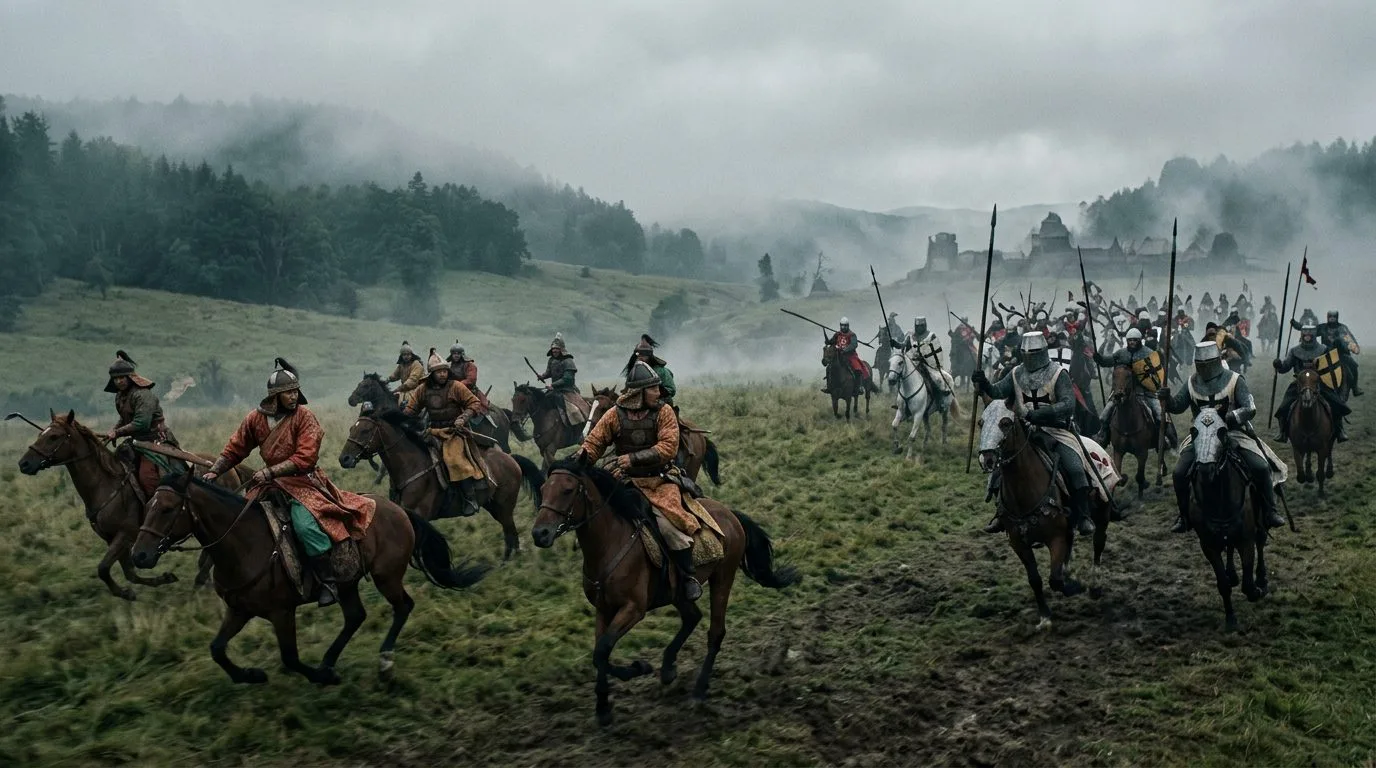
Feigned Retreats Lured Defenders Into Death Traps
Mongol cavalry perfected the mangudai—a feigned retreat that appeared as panicked flight but was actually a precisely coordinated ambush. At the Battle of Liegnitz in 1241, Polish knights charged what seemed like a retreating Mongol force, only to find themselves surrounded by fresh cavalry units hidden in nearby forests. The same tactic devastated Hungarian defenders at Mohi in 1241, where 60,000 troops pursued fleeing Mongols straight into prepared kill zones where archers decimated their ranks. During sieges, commanders would stage apparent withdrawals from city walls, encouraging defenders to sally forth—then spring the trap with concealed horse archers who could fire 6 arrows per minute while riding at full gallop. European chronicles described these retreats as cowardice until commanders realized they were watching sophisticated military theater.
Source: britannica.com
5. Civilian Labor Battalions Became Expendable Assault Forces
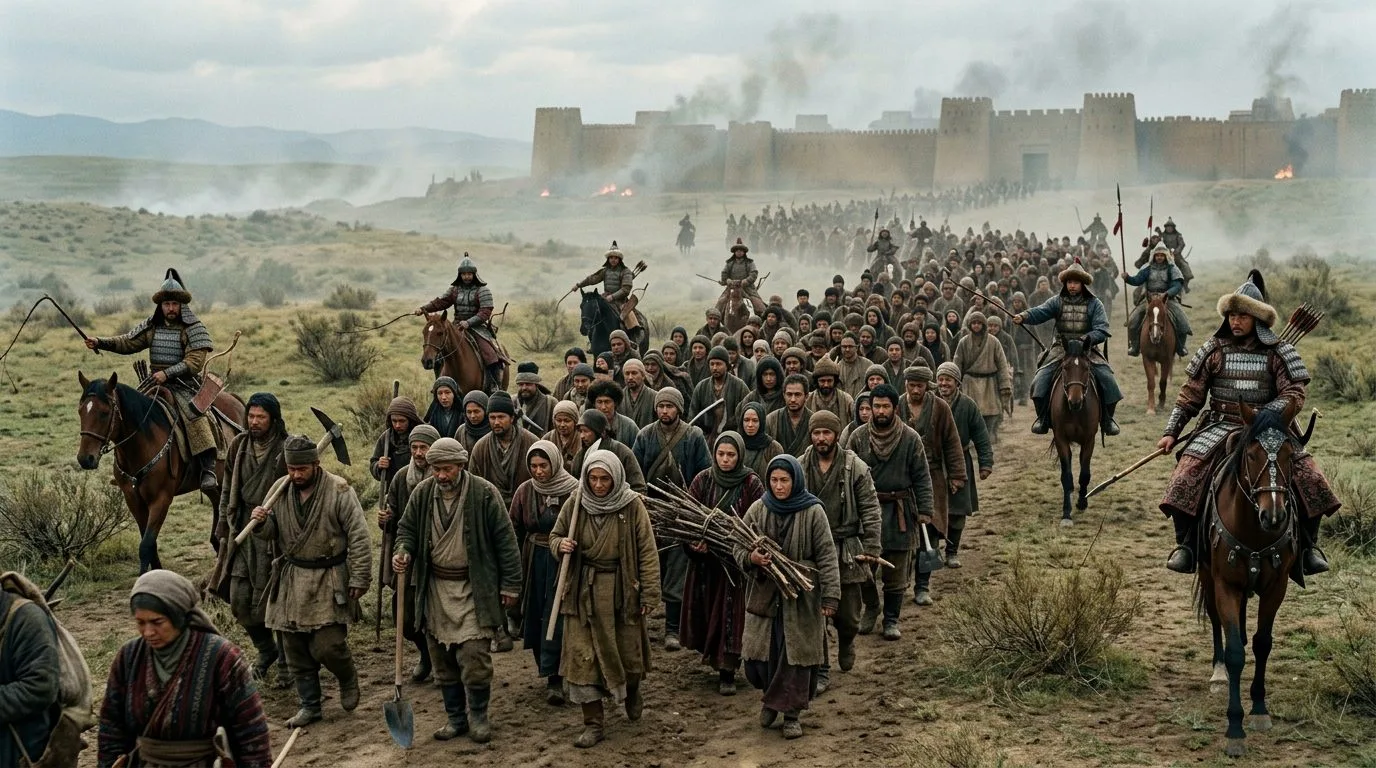
Untrained workers forced into deadly combat roles.
Mongol commanders forcibly conscripted thousands of civilians from conquered territories to serve as hashar—expendable labor units driven ahead of regular troops during assaults. At the siege of Nishapur in 1221, Mongol forces assembled 50,000 civilian laborers from surrounding villages to fill moats, push siege towers, and absorb the first volleys of defender arrows. These captives received minimal protection and suffered catastrophic casualties, but their sacrifice preserved elite Mongol cavalry for decisive moments. The practice served dual purposes: reducing mouths to feed in conquered regions while creating human shields that exhausted defender ammunition and morale. Survivors who demonstrated skill in engineering or construction were spared and integrated into permanent siege units, creating a self-perpetuating system of forced expertise.
Source: britannica.com
6. River Engineering Turned Water Into Weapons
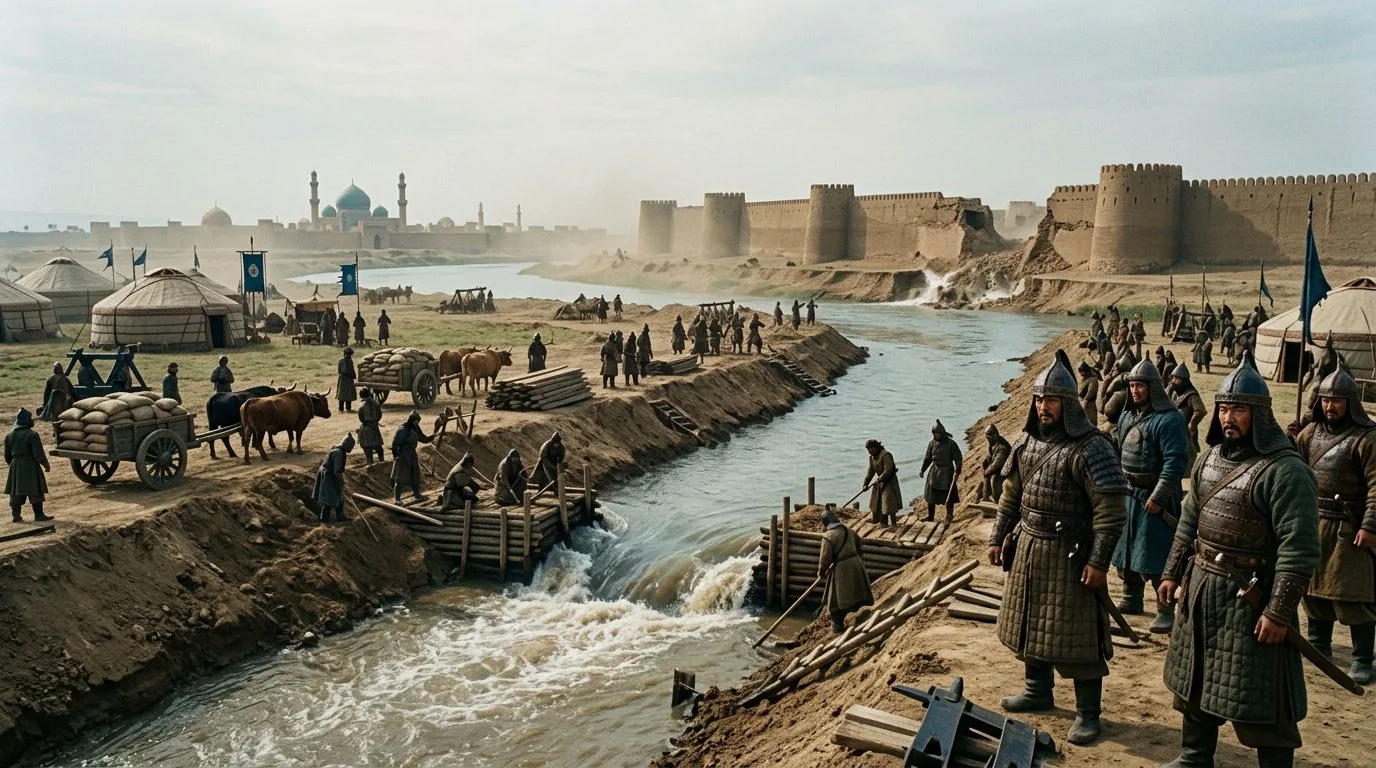
River Engineering Turned Water Into Weapons
During the siege of Baghdad in 1258, Mongol engineers under Hulagu Khan diverted the Tigris River to flood sections of the city’s defensive walls, weakening foundations that had stood for 500 years. Chinese hydraulic specialists calculated precise excavation points to redirect water flow, creating artificial channels that undermined stone fortifications from below. At other cities, they reversed the tactic—draining moats and water supplies by damming upstream sources, forcing defenders to choose between thirst and surrender. The siege of Merv in 1221 ended when Mongol forces breached irrigation dams, flooding the city and drowning thousands while simultaneously destroying the agricultural infrastructure that had sustained the population. This engineering expertise came from captured specialists from the Song Dynasty, where river control had been perfected over centuries.
Source: britannica.com
7. Captured Engineers Designed Unstoppable Siege Weapons
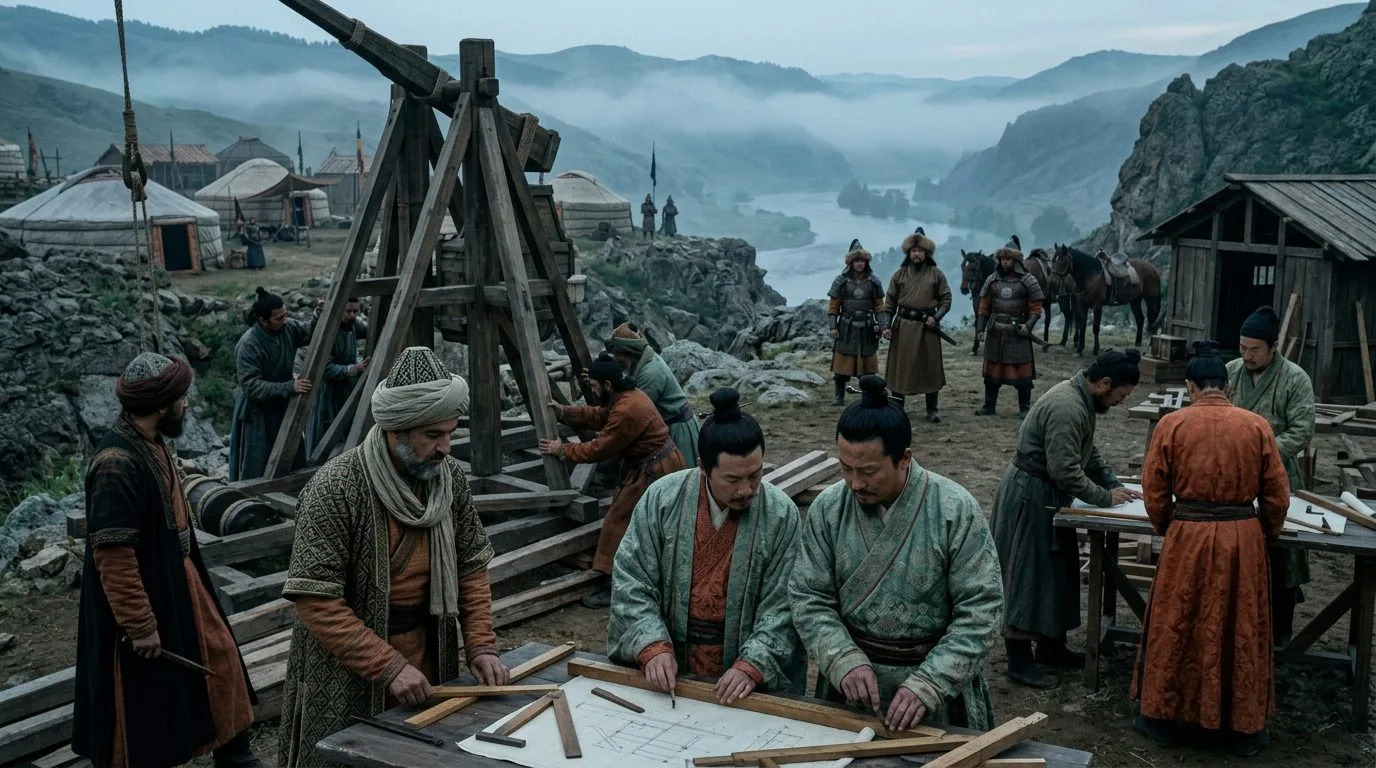
Skilled engineers forced to build devastating war
After conquering the Khwarazmian Empire in 1221, Genghis Khan spared hundreds of Persian and Chinese engineers specifically for their technical knowledge of siege warfare. These specialists introduced counterweight trebuchets capable of hurling 300-pound projectiles over 900 feet with devastating accuracy against fortified walls. At the siege of Kaifeng in 1232, captured Song Dynasty engineers supervised construction of gunpowder rockets and explosive mines that tunneled beneath defensive positions. The Mongols established a permanent corps of these technical advisors who traveled with armies, adapting siege tactics to local conditions and defender weaknesses. One Chinese engineer named Guo Kan became so valuable that he commanded engineering operations across 32 sieges between 1252 and 1273, earning noble status despite his conquered origins.
Source: britannica.com
8. Massacre Policies Made Resistance Seem Suicidal
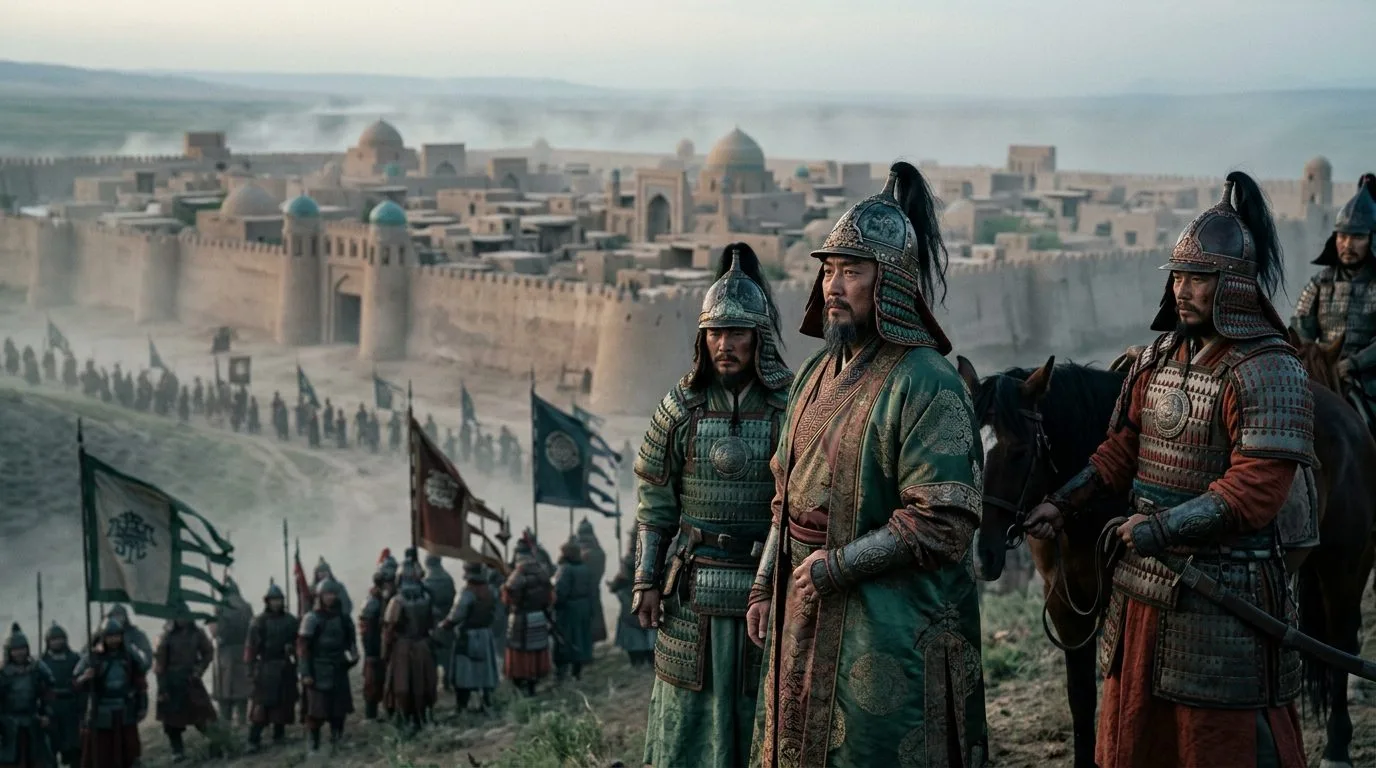
Massacre Policies Made Resistance Seem Suicidal
Mongol commanders implemented systematic massacre policies to create a reputation so terrifying that cities would surrender rather than face annihilation. When Urgench resisted in 1221, Mongol forces killed every inhabitant—estimates suggest 1.2 million people—then diverted the Amu Darya River to erase the city from existence. Survivors who escaped spread tales of total destruction that preceded Mongol armies like psychological warfare. Cities that surrendered immediately received relatively lenient treatment: tribute payments and integration into the empire. Those that resisted faced complete obliteration, with artisans and craftsmen selectively spared for their skills. This calculated brutality created a binary choice that often resulted in bloodless conquests—chronicles record that 37 cities in Persia surrendered without battle after witnessing what happened to neighboring populations who fought.
Source: britannica.com
9. Rapid Timber Siege Towers Rose Overnight
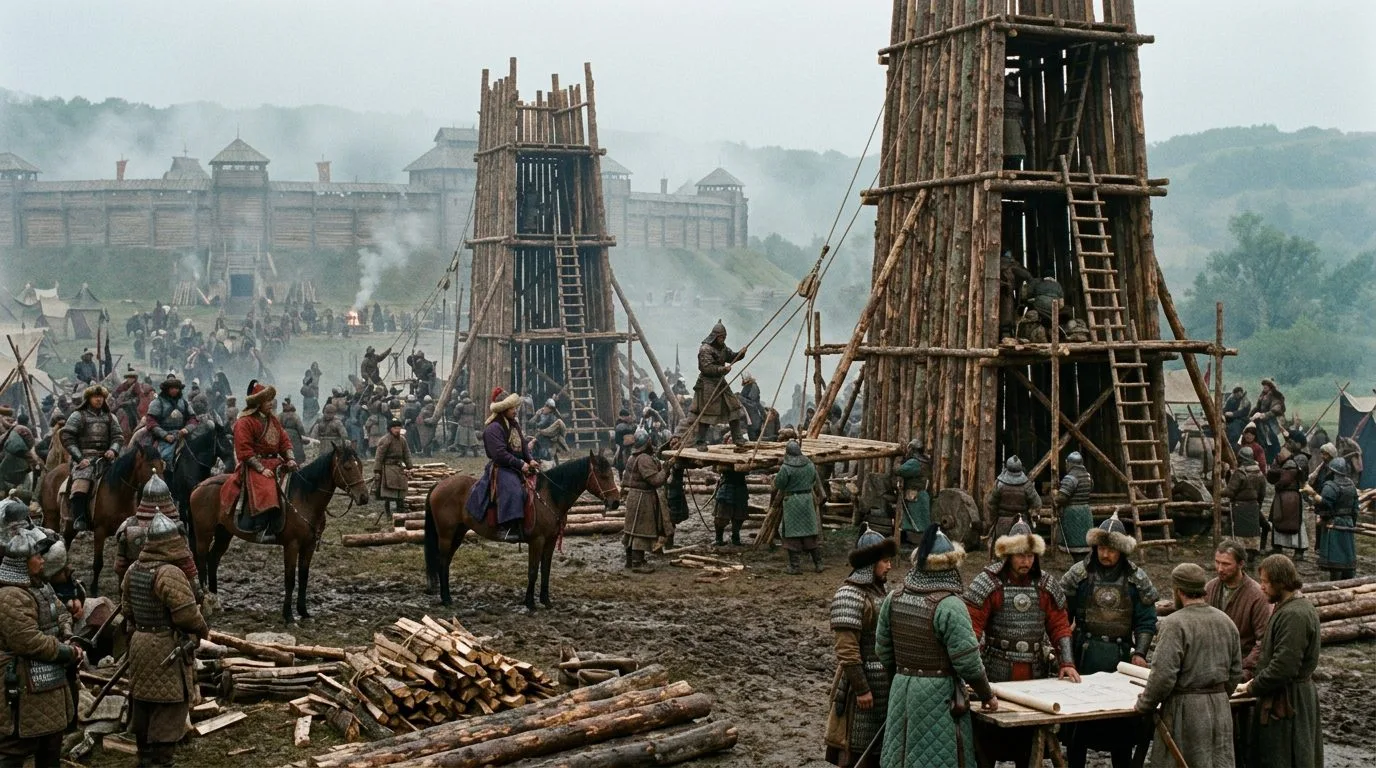
Rapid Timber Siege Towers Rose Overnight
Mongol forces could construct functional siege towers in 72 hours using local timber and captured craftsmen organized into specialized work crews. At the siege of Kiev in 1240, Batu Khan’s engineers assembled 15 siege towers simultaneously while cavalry units secured surrounding forests for lumber. Teams of 200 workers per tower operated in shifts, with carpenters from conquered regions forced to standardize designs that required minimal skilled labor. Pre-cut joints and modular construction techniques allowed rapid assembly, while wet hides stretched over wooden frames provided fire protection that could withstand burning pitch and flaming arrows. The speed shocked defenders who expected weeks of preparation—instead facing coordinated assaults within days of Mongol arrival, before reinforcements could arrive or adequate defensive preparations could be completed.
Source: britannica.com
10. Merchant Spies Mapped Every City Weakness

Merchant Spies Mapped Every City Weakness
Years before armies arrived, Mongol intelligence networks of merchants and traders systematically mapped cities across Eurasia, documenting water sources, wall weaknesses, and garrison strengths. Muslim merchants operating under Mongol protection traveled the Silk Road gathering military intelligence disguised as commercial information about markets and trade routes. At the siege of Aleppo in 1260, Mongol commanders possessed detailed maps showing the exact location of grain stores, weapons arsenals, and underground water systems—information that enabled targeted assaults on critical infrastructure. These spy networks operated across 30 years before major campaigns, creating intelligence archives that gave Mongol generals unprecedented tactical advantages. Some merchants worked both sides, selling information to defenders while reporting defensive preparations back to Mongol khans—a double-agent system that turned city preparation efforts into vulnerabilities.
Source: britannica.com
Did You Know?
Did You Know? The Mongol siege of Caffa in 1346 didn’t just demonstrate biological warfare—it accidentally triggered the Black Death pandemic that killed more Europeans than all Mongol military campaigns combined. The very tactic meant to conquer one city ultimately reshaped the entire continent’s history, proving that siege warfare’s consequences often extended far beyond the battlefield in ways commanders never anticipated.