
The Mongol Empire conquered more territory in 25 years than Rome did in 400—but their success wasn’t just about ferocity. Behind Genghis Khan’s armies lay sophisticated technological innovations and logistical systems perfected over centuries of steppe life.
1. The Composite Recurve Bow: 160-Pound Death at 300 Yards
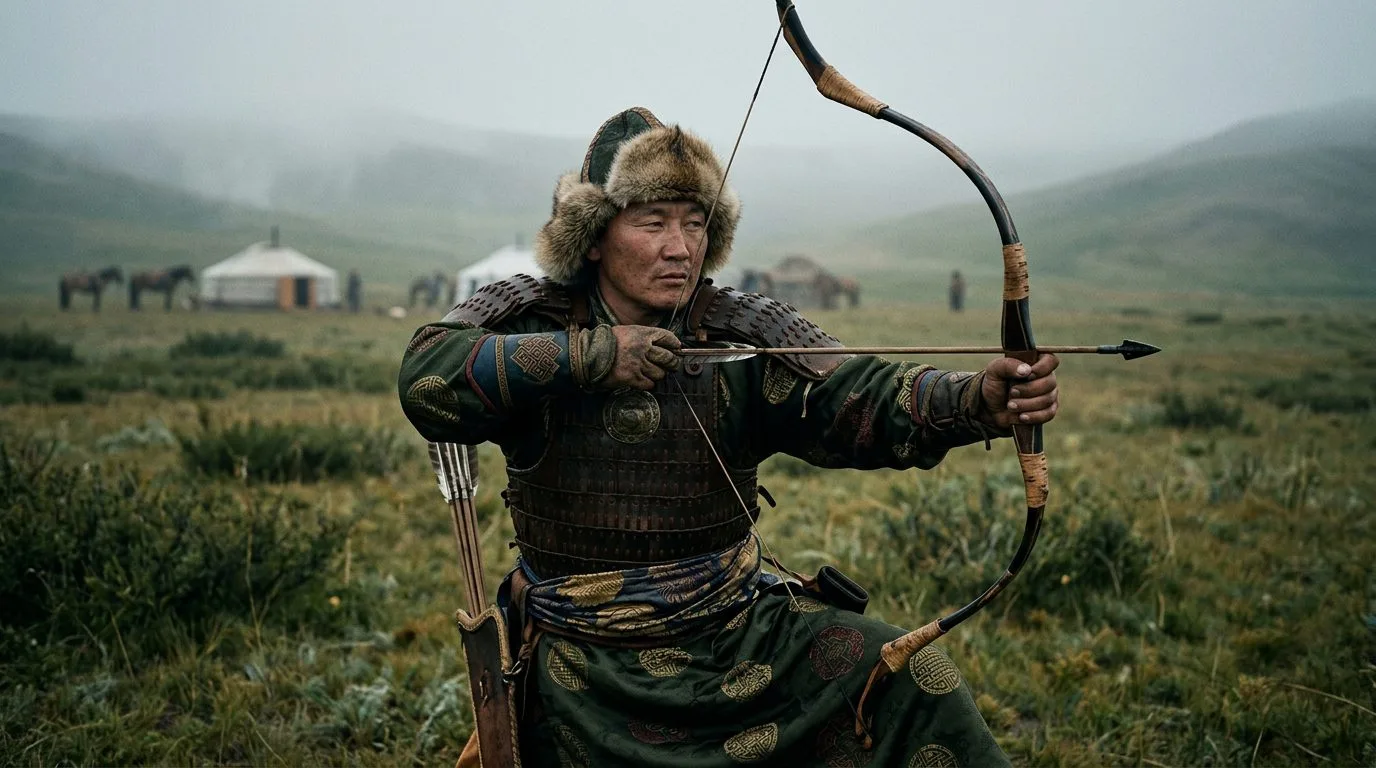
The Composite Recurve Bow
Mongol warriors could pierce armor at 200 yards using composite recurve bows that required five years to manufacture. Craftsmen laminated horn, wood, sinew, and birch bark in precise layers, then aged the weapon for one year in controlled humidity. These bows generated 160 pounds of draw weight while remaining compact enough for mounted use—40% shorter than English longbows yet equally powerful. A single Mongol archer carried 60 arrows in two quivers, alternating between armor-piercing bodkin points and broad hunting heads. Genghis Khan’s armies could shoot accurately from galloping horses, making them mobile artillery platforms that European knights couldn’t match.
Source: britannica.com
2. The Yam System: Express Mail Across 5,000 Miles
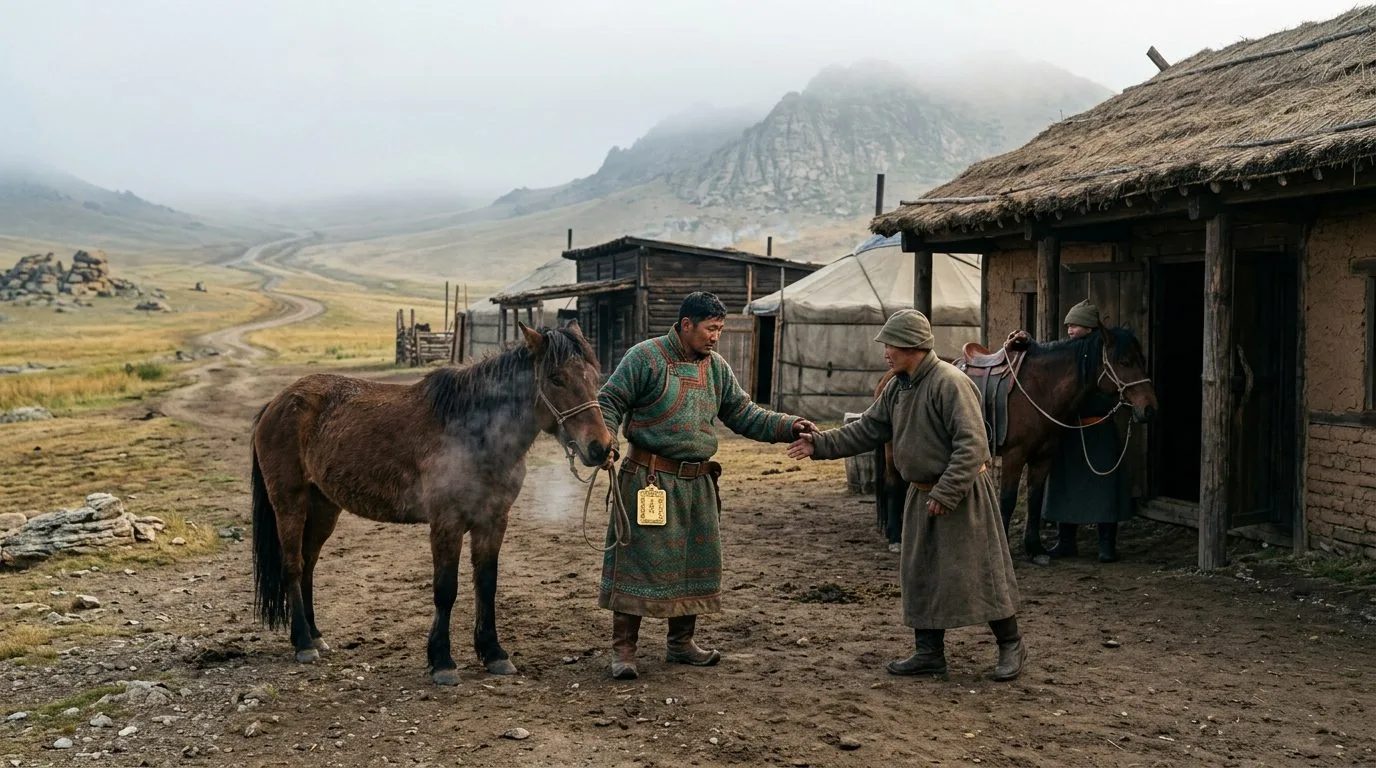
The Yam System: Express Mail Across 5,000 Miles
By 1234, the Mongols operated a relay network of stations spaced exactly 25 miles apart across the empire’s roads. Messengers carrying a golden paiza tablet could demand fresh horses, food, and shelter at any yam station, enabling dispatch riders to cover 200 miles daily. The system employed 50,000 horses and 1,400 stations at its peak, moving military intelligence from China to Hungary in just six weeks. Ögedei Khan expanded his father’s basic courier routes into an empire-wide information grid that rivaled Roman roads for efficiency. A message sent from Karakorum could reach the Persian front faster than a medieval European king could communicate across his own kingdom.
Source: britannica.com
3. The Ger: A Fortress That Packs on Two Camels
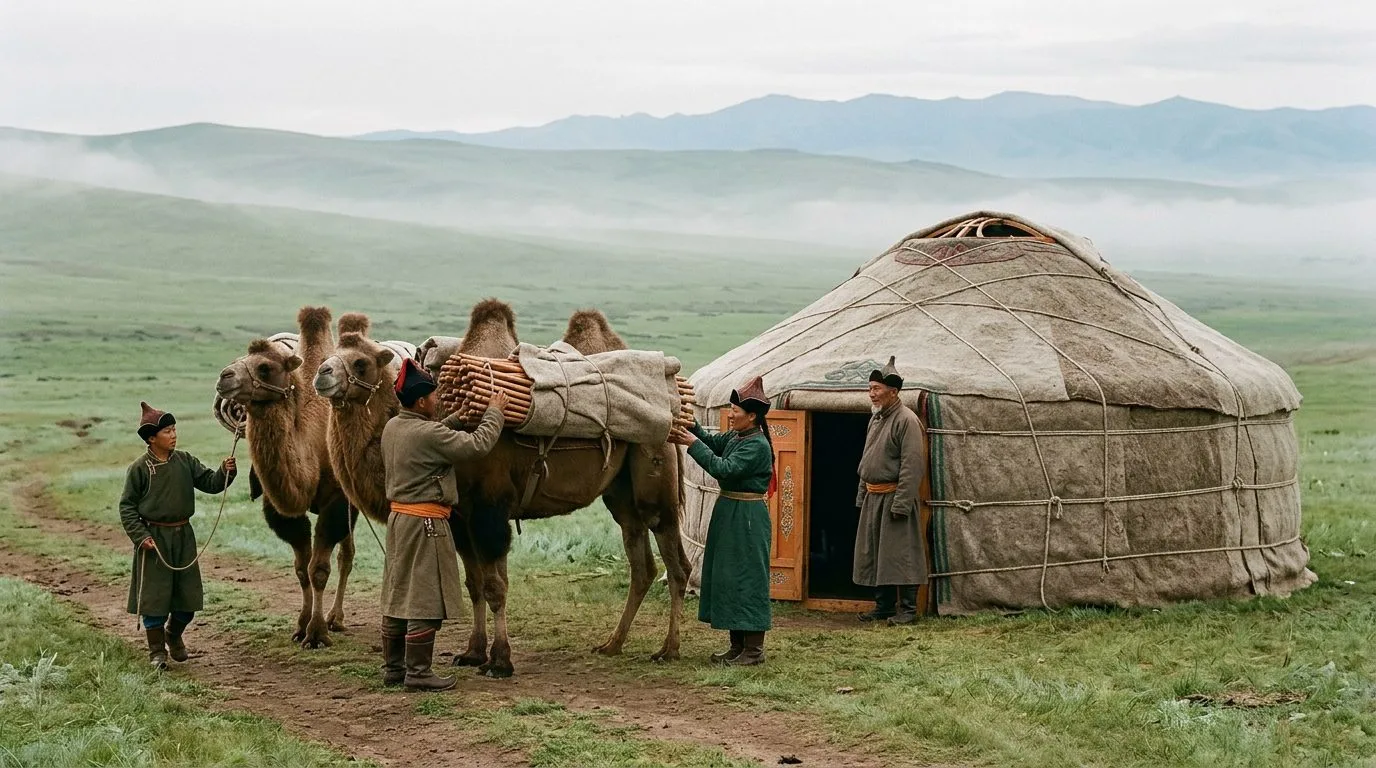
The Ger: A Fortress That Packs on Two Camels
Mongol warriors lived in collapsible felt dwellings that 30 people could erect in under one hour. The ger’s lattice framework of willow poles supported five layers of compressed wool felt, creating insulation effective from -40°F winters to 100°F summers on the Asian steppe. Each structure weighed 600 pounds yet packed onto two camels or four oxen, enabling entire armies to relocate daily without abandoning shelter. The circular design withstood 70-mile-per-hour winds that would collapse rectangular tents, while the central smoke hole and wall ventilation prevented carbon monoxide deaths from interior fires. Genghis Khan himself commanded campaigns from a ger mounted on a wheeled platform pulled by 22 oxen.
Source: britannica.com
4. Iron Stirrups: The Technology Behind Mounted Archery
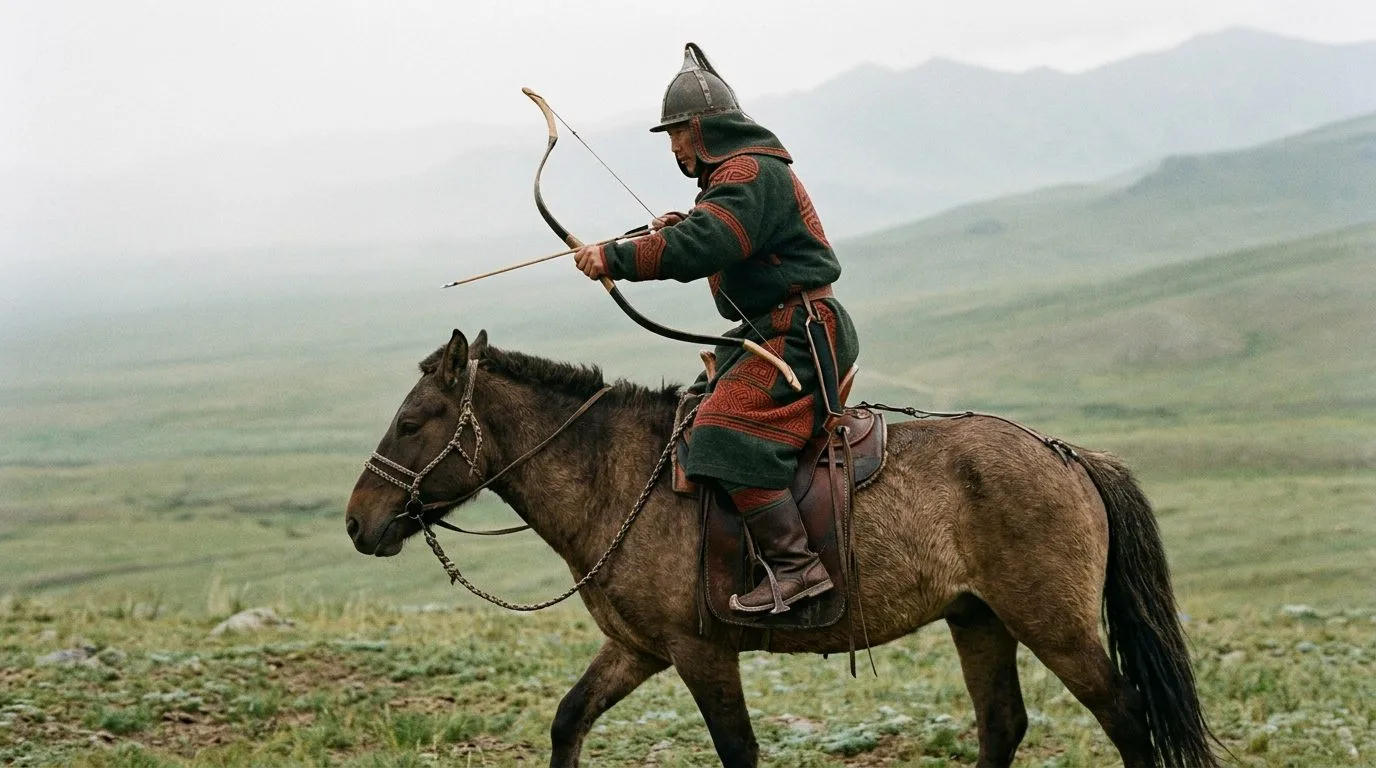
Iron Stirrups
Mongol stirrups hung 4 inches shorter than European models, creating a crouched riding position that transformed horses into stable shooting platforms. Iron stirrups with wide footplates allowed riders to stand during full gallop, absorbing the horse’s motion through their legs while keeping their upper body steady for accurate archery. This innovation emerged on the Mongolian steppe by 400 CE but reached tactical perfection under Genghis Khan’s cavalry reforms in 1206. Warriors trained to shoot backward over their horse’s rump during feigned retreats—the infamous Parthian shot that devastated pursuing enemies. The stirrup gave Mongol armies three-dimensional battlefield mobility that sedentary civilizations couldn’t counter.
Source: britannica.com
5. Decimal Organization: Command Structure of 10,000-Man Tumens
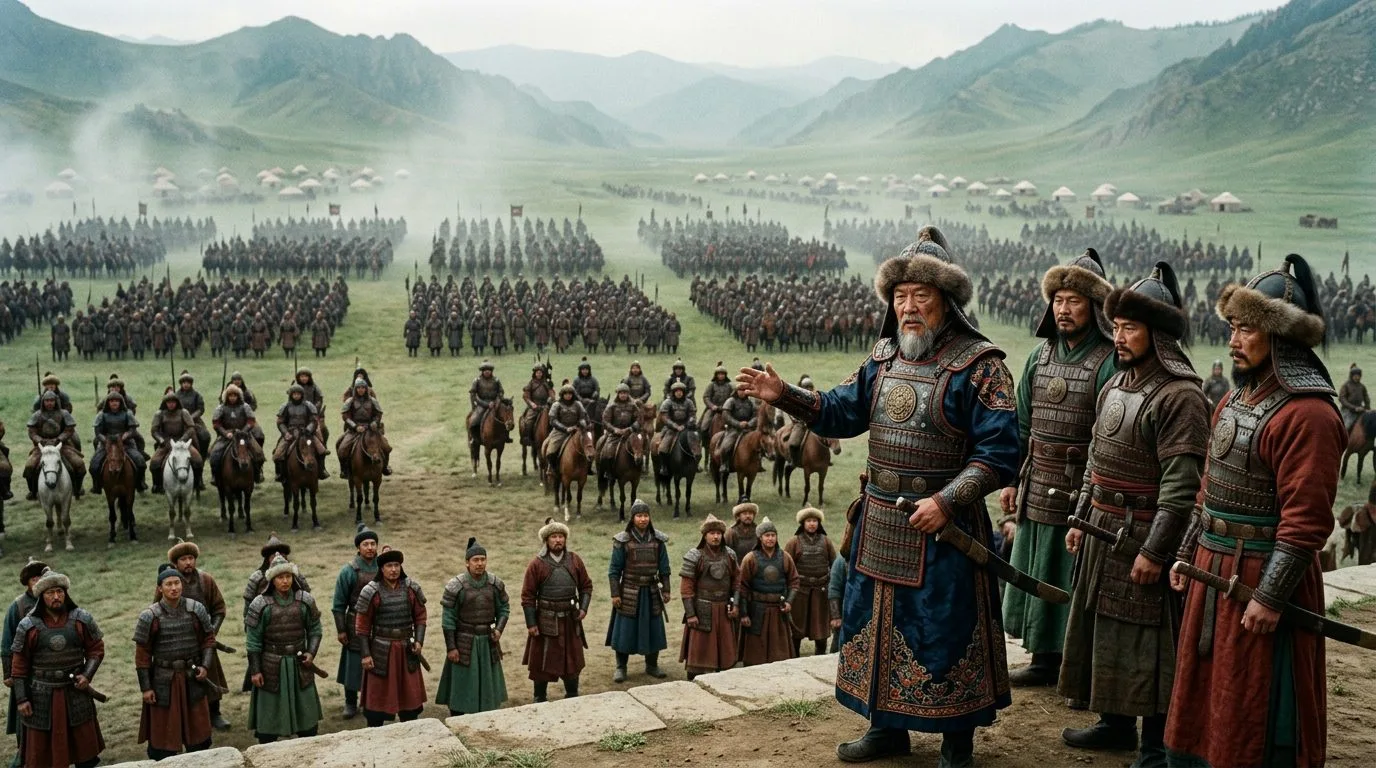
Decimal Organization
Genghis Khan restructured tribal loyalties into a decimal hierarchy where every soldier answered to units of 10, 100, 1,000, and 10,000 warriors. The tumen—a 10,000-man division—became the Mongol Empire’s basic tactical unit, capable of independent operation across 1,000 miles from headquarters. This system eliminated tribal rivalry by mixing clan members across different units, while promoting officers based on merit rather than bloodline. A messenger reaching a tumen commander knew exactly 10,000 men would mobilize, with standardized equipment and training across the entire force. By 1227, Genghis commanded 129,000 warriors organized into 13 tumens, each functioning as a self-sufficient army.
Source: britannica.com
6. Airag: Fermented Mare’s Milk as Portable Calories
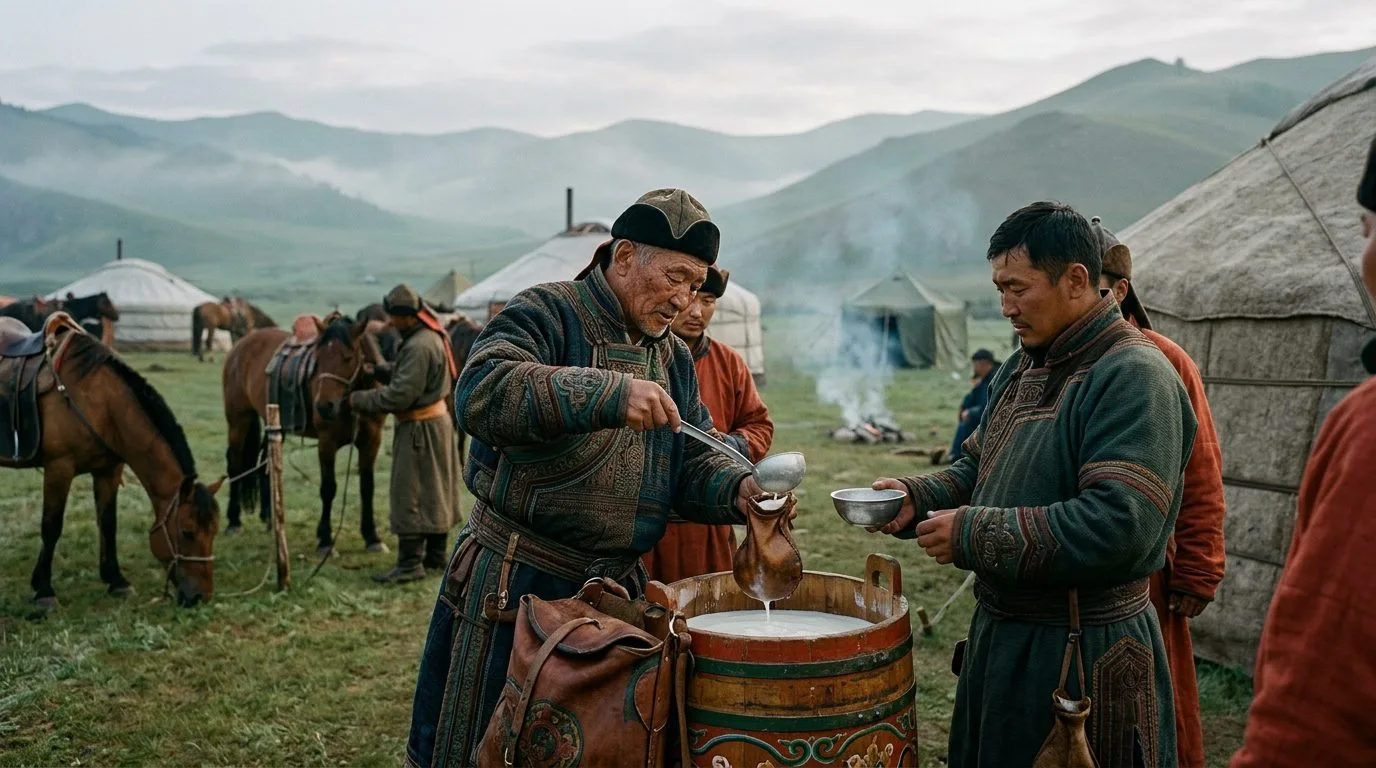
Airag: Fermented Mare’s Milk as Portable Calories
Mongol armies carried dried curds and fermented mare’s milk that provided complete nutrition without supply trains. Each warrior traveled with 18 horses, milking mares three times daily to produce airag—an alcoholic beverage containing 2% alcohol, vitamin C, and essential proteins. The fermentation process preserved milk for months in leather bags, while dried yogurt curds could be rehydrated into soup or eaten raw for 420 calories per pound. During Subutai’s 1223 raid into Russia, his 20,000 riders crossed 4,000 miles in two years living entirely off their horse herds. A single Mongol warrior consumed 3 pounds of meat weekly, bleeding horses for emergency sustenance without killing valuable mounts.
Source: britannica.com
7. Psychological Warfare: Terror as a Tactical Weapon
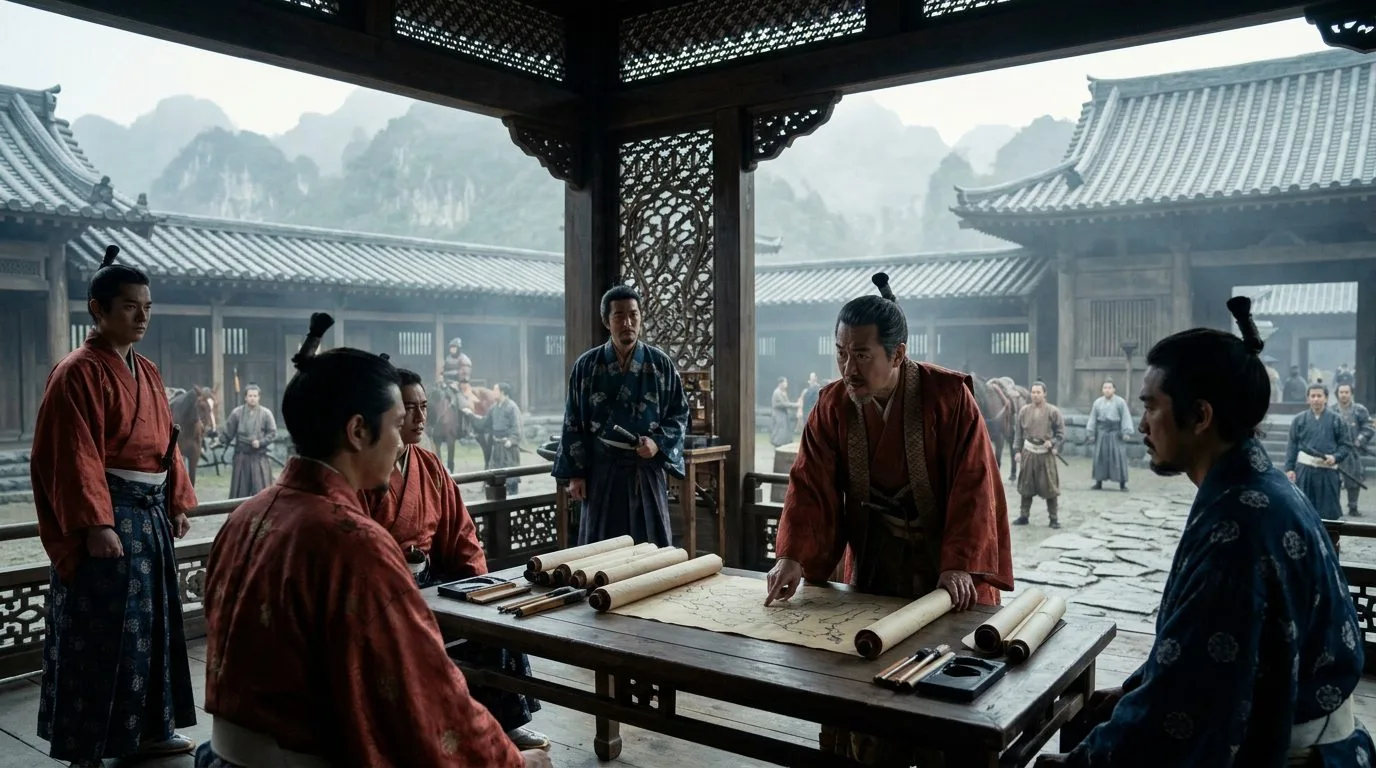
Psychological Warfare: Terror as a Tactical Weapon
The Mongols deployed intelligence networks that catalogued enemy fortifications, leadership, and morale six months before invasions began. Merchants, travelers, and captured scholars fed information to Mongol commanders, who then offered cities a choice: surrender immediately and pay tribute, or face total annihilation. After massacring Nishapur’s 1.7 million inhabitants in 1221 to avenge a slain Mongol prince, Genghis Khan’s armies found subsequent Persian cities surrendering without siege. The Mongols deliberately spread atrocity stories, calculating that terror saved resources—10 cities might surrender after witnessing one neighbor’s destruction. This psychological strategy reduced actual combat by 70%, allowing smaller forces to control vast territories through reputation alone.
Source: britannica.com
8. Chinese Siege Engineers: Adapting Technology from Conquered Peoples

Chinese Siege Engineers
After conquering the Jin Dynasty in 1234, Mongol armies incorporated Chinese engineers who operated trebuchets capable of hurling 300-pound projectiles over city walls. These Muslim and Chinese specialists taught nomadic warriors to construct siege towers, dig tunnels beneath fortifications, and deploy gunpowder bombs—technologies absent from steppe warfare. The Mongols transported disassembled trebuchets across Asia, reassembling 20-foot-tall counterweight machines at each siege from standardized components. At Baghdad in 1258, Hulagu Khan’s engineering corps diverted the Tigris River to flood defensive positions before deploying catapults that breached walls within 12 days. By adopting enemy technology while maintaining cavalry mobility, the Mongols merged nomadic speed with sedentary firepower.
Source: britannica.com
9. Lamellar Armor: 30-Pound Protection That Didn’t Slow Horses
Mongol heavy cavalry wore lamellar armor constructed from 600 individual iron or hardened leather plates laced with silk cord. This flexible armor weighed 30 pounds—half the 60-pound mass of European chainmail—while providing superior protection against arrows and sword cuts. The overlapping rectangular plates allowed full arm mobility for archery, and the modular design meant damaged sections could be replaced in minutes rather than scrapping entire suits. Wealthy warriors armored their horses’ chests and flanks with matching lamellar, creating shock cavalry that could charge through infantry formations. The silk underlayer actually stopped arrows by wrapping around incoming shafts, allowing medics to extract projectiles by pulling the fabric.
Source: britannica.com
10. Seasonal Campaigning: Invading When Horses Were Fattest
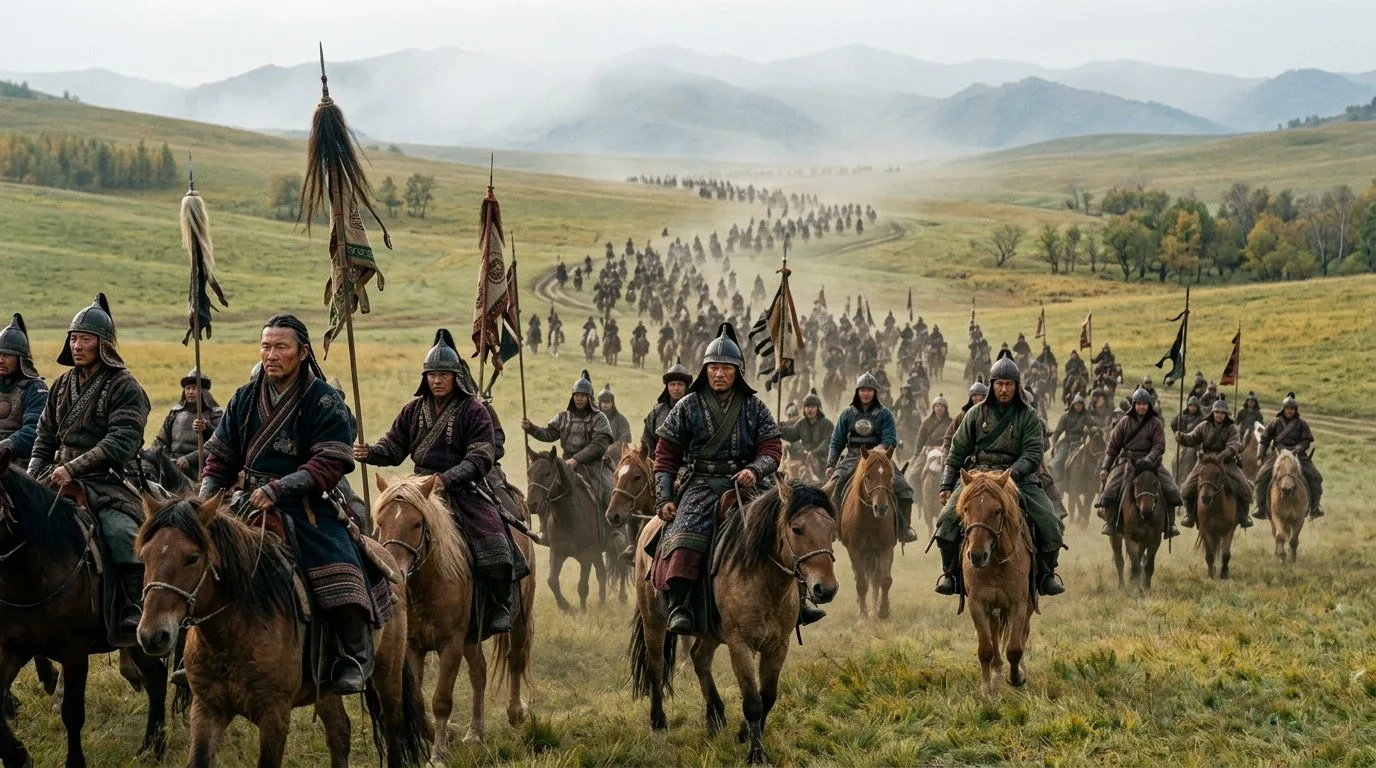
Seasonal Campaigning
Mongol invasions synchronized with seasonal grass growth, launching major campaigns in September when horses had fattened on summer pastures. This agricultural timing gave cavalry mounts maximum endurance for the autumn campaign season, while winter’s frozen rivers provided highways into otherwise inaccessible territories. Subutai invaded Hungary in January 1241 specifically because the frozen Danube allowed his cavalry to cross ice rather than siege river fortifications. The Mongols tracked weather patterns across continents, postponing attacks during drought years when inadequate grass would starve their herds. European defenders fought during traditional spring-summer campaign seasons, making them vulnerable to unexpected winter offensives when their own horses were weakest.
Source: britannica.com
Did You Know?
Did You Know? The Mongol Empire’s military dominance ended not through battlefield defeat but environmental collapse—the 1258 eruption of Mount Samalas in Indonesia triggered global cooling that decimated the grass pastures sustaining their cavalry herds. Ironically, the same ecological dependency that made their mobile warfare unstoppable also created the empire’s greatest vulnerability: you can’t conquer climate change with composite bows and superior tactics.