
A single painting once caused riots in Paris. Another was literally destroyed with axes by millionaires terrified of its message. Long before Twitter mobs and viral protests, revolutionary movements found their most powerful voice not in speeches or pamphlets, but on canvas.
1. Jacques-Louis David’s ‘The Death of Marat’ Turned a Murder Into Revolutionary Gospel
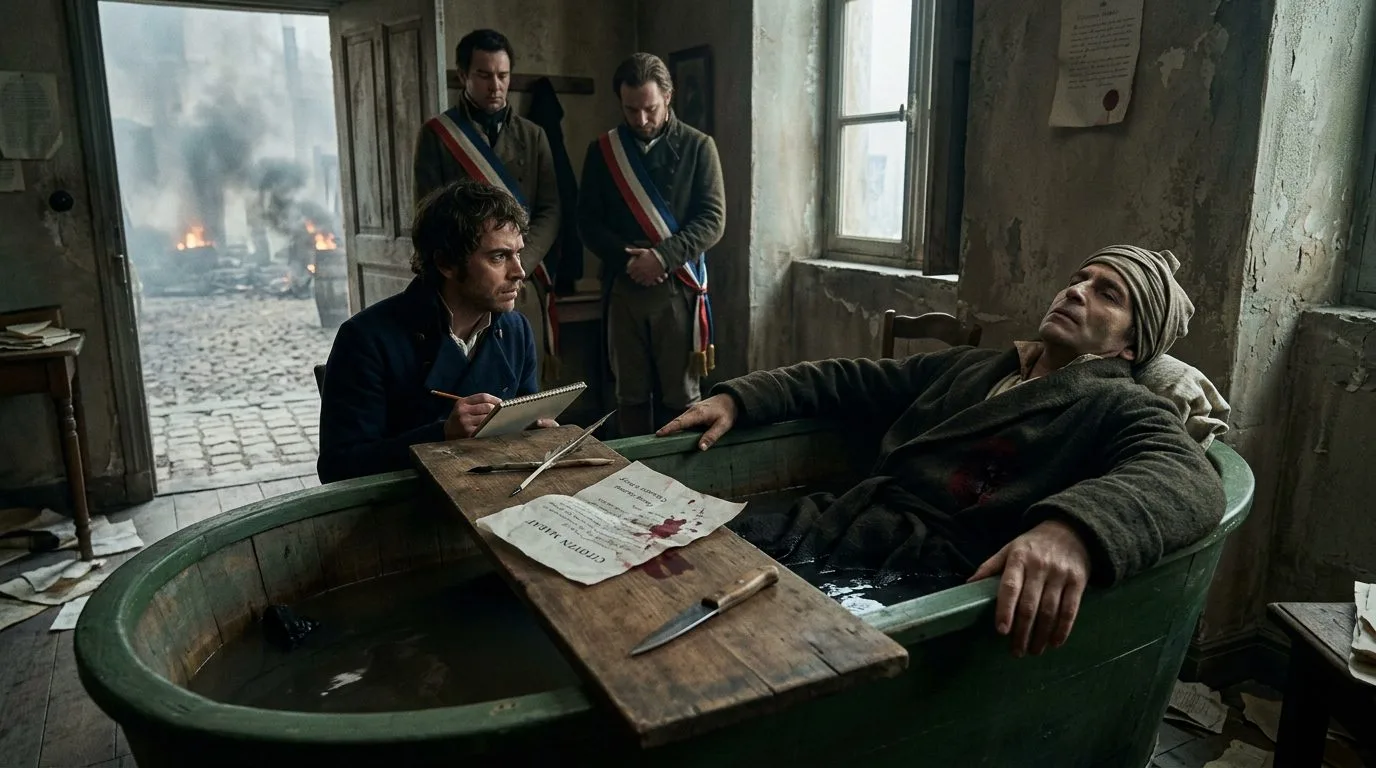
Marat’s assassination immortalized as sacred
When Jean-Paul Marat was stabbed in his bathtub by Charlotte Corday on July 13, 1793, Jacques-Louis David transformed the assassination into France’s secular Pietà. Completed just four months after the murder, this painting depicts Marat as a martyr saint, his lifeless hand still clutching Corday’s treacherous letter. David, who served on the Committee of General Security during the Terror, understood propaganda’s power—he gave Marat Christ-like serenity and omitted the skin disease that actually covered his body in weeping sores. Revolutionary clubs displayed copies like religious icons, and the painting became mandatory viewing for French patriots. The work so effectively sanctified political violence that it remained controversial for over a century, with French museums refusing to exhibit it until 1893.
Source: britannica.com
2. Delacroix’s ‘Liberty Leading the People’ Became Every Revolution’s Visual Anthem
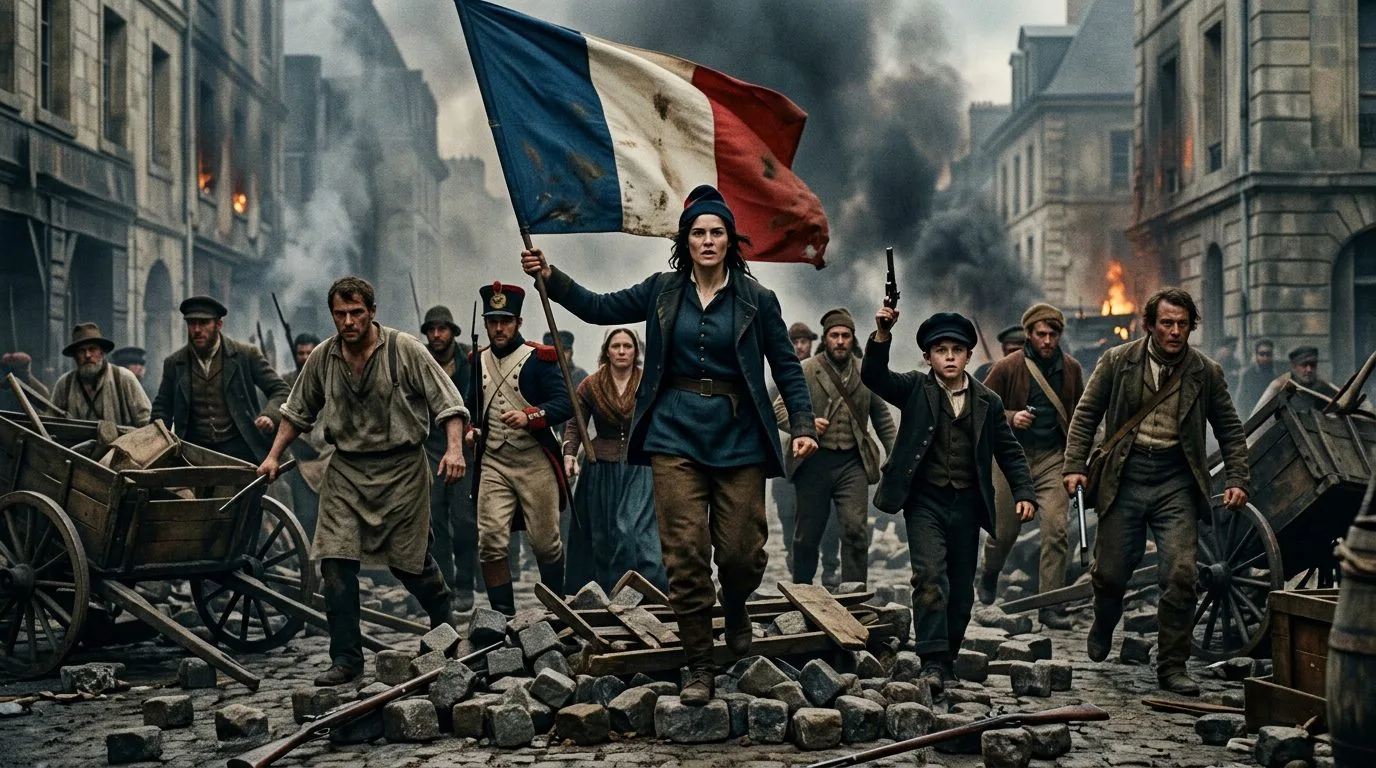
Iconic symbol of freedom inspiring generations
Eugène Delacroix painted this masterpiece in 1830, just months after the July Revolution toppled Charles X from the French throne. Liberty herself—bare-breasted, Phrygian cap on her head, tricolor flag raised—strides over corpses alongside workers and bourgeoisie united in rebellion. Delacroix included himself in the painting as the man in the top hat, though he never actually fought in the streets. The French government purchased it immediately, then promptly hid it away, deeming it too inflammatory for public display. They were right to worry: the image became the template for revolutionary iconography worldwide, from Les Misérables to modern protests. Even the Euro banknote features Liberty’s silhouette, proving that some images transcend their original moment to become eternal symbols of resistance.
Source: britannica.com
3. Goya’s ‘The Third of May 1808’ Made War Ugly When Everyone Painted It Glorious
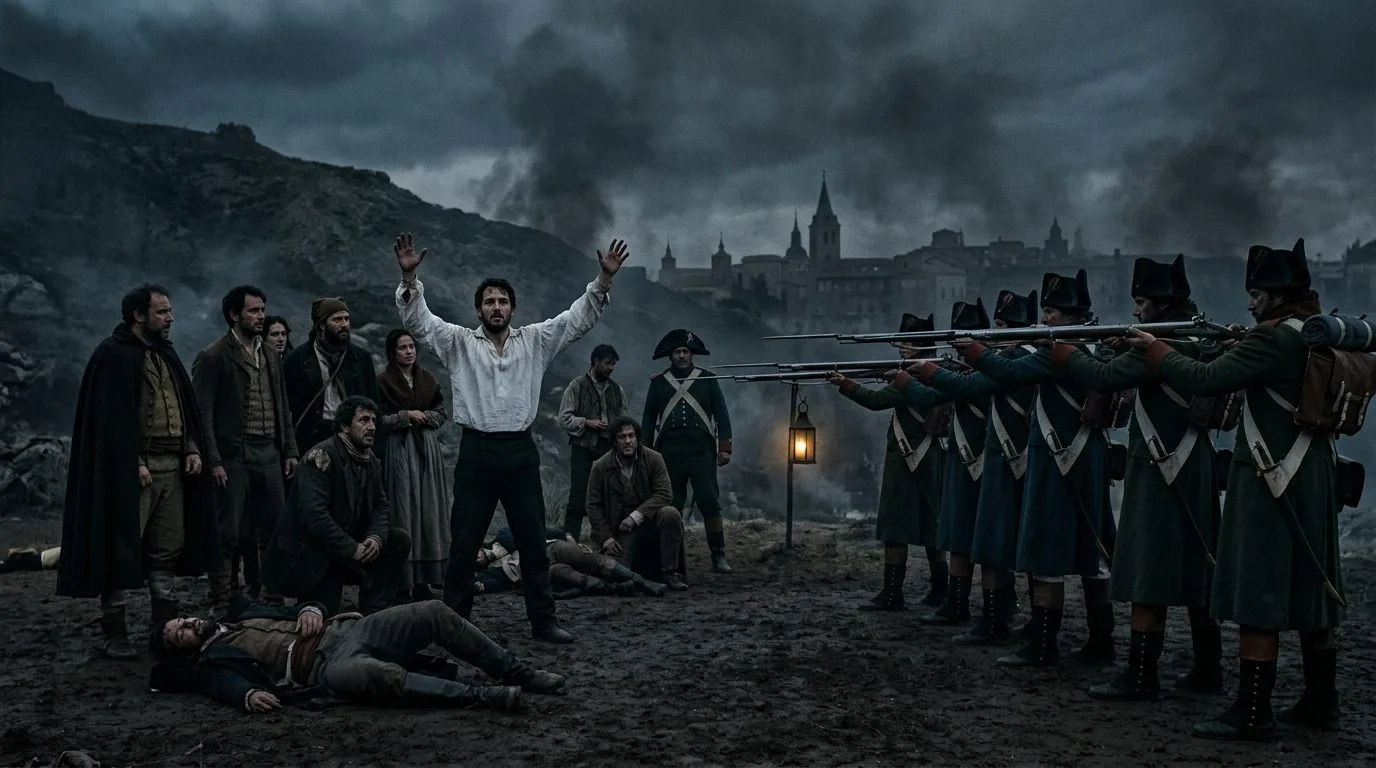
Execution squad fires on Spanish civilians at
Francisco Goya waited six years after Napoleon’s troops executed Spanish resisters before painting this brutal scene in 1814. Unlike heroic battle paintings, Goya showed the firing squad as a faceless death machine gunning down terrified civilians, including a man in white whose outstretched arms echo Christ’s crucifixion. The painting depicted the massacre that occurred on May 3, 1808, in Madrid, when French soldiers killed hundreds of Spanish rebels. Goya’s innovation was visceral: the lantern illuminating the victims, the pools of blood, the next group of condemned men forced to witness their own approaching deaths. This wasn’t glory—it was slaughter. The painting influenced Manet and Picasso, who both created their own execution scenes, and established a new visual language for depicting state violence that artists still use to condemn war crimes today.
Source: britannica.com
4. David’s ‘Napoleon Crossing the Alps’ Sold an Emperor to a Skeptical Europe
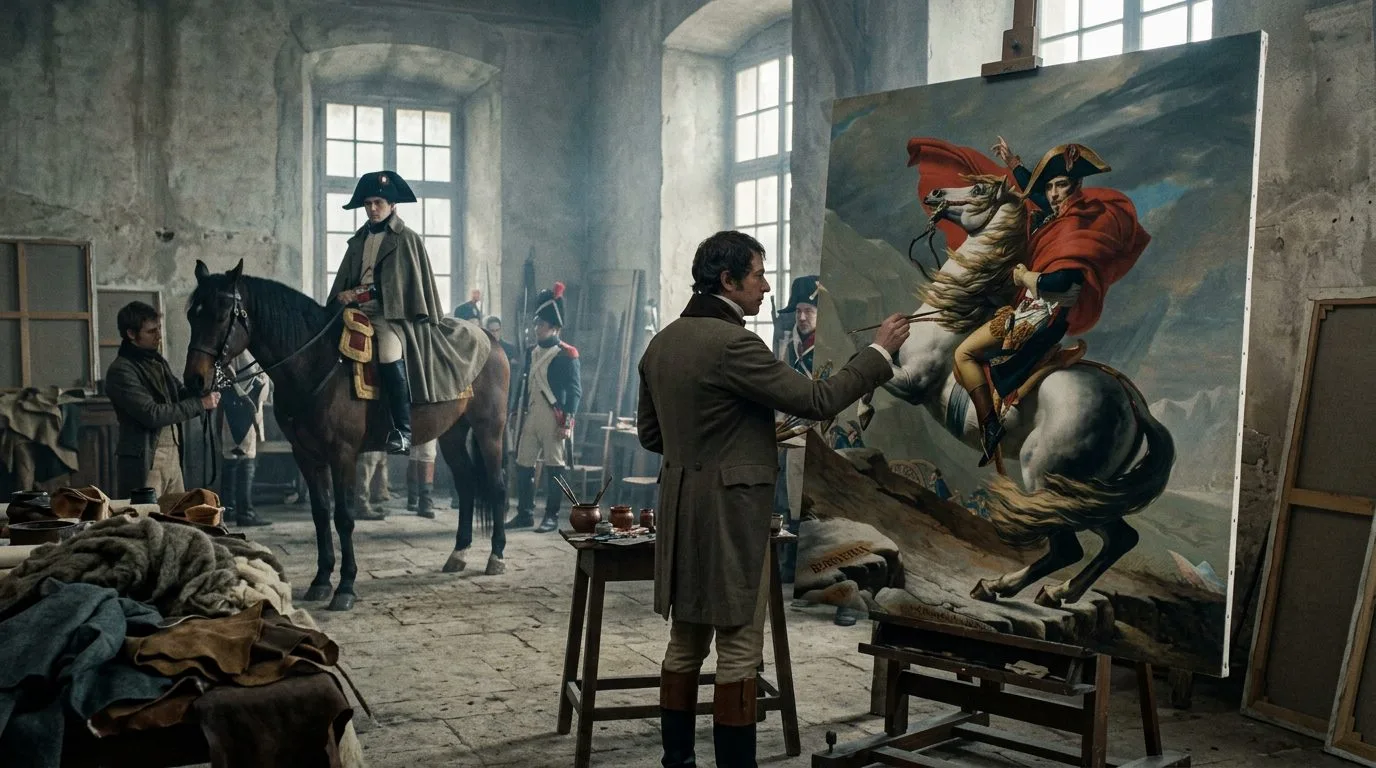
David’s masterpiece propaganda for Napoleon’s
Napoleon never posed for this iconic 1801 painting—he was too busy consolidating power. Jacques-Louis David instead created pure propaganda, showing Bonaparte on a rearing stallion crossing the Alps to conquer Italy, when the general actually rode a mule and crossed in fair weather. Napoleon commissioned five versions of this painting to distribute across Europe, understanding that image control meant political control. The rocks in the foreground are inscribed with names: Hannibal, Charlemagne, and Bonaparte, positioning Napoleon as heir to history’s greatest conquerors. Charles IV of Spain received one copy as a gift-slash-threat, understanding perfectly that this painting announced French dominance. The work so effectively branded Napoleon as superhuman that even his enemies couldn’t escape its influence—British propaganda had to counter this single image for decades.
Source: britannica.com
5. Ingres Painted Napoleon as God, and France Never Quite Recovered
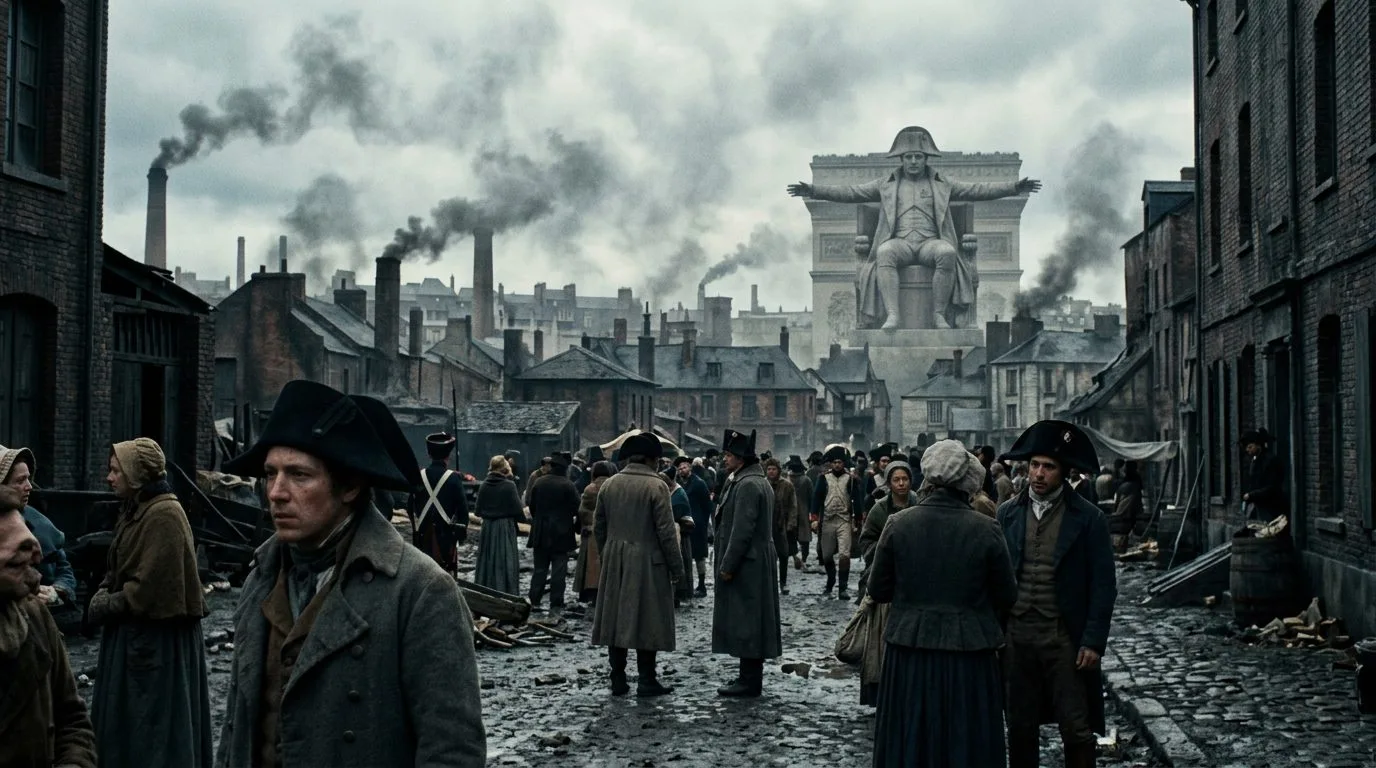
Ingres Painted Napoleon as God
Jean-Auguste-Dominique Ingres completed ‘Napoleon on His Imperial Throne’ in 1806, creating an image so Byzantine that viewers didn’t know whether to bow or laugh. Napoleon sits rigid and frontal like a medieval Christ Pantocrator, wearing Charlemagne’s crown and holding a scepter topped with a figurine of the emperor himself. The 44-year-old artist crammed every imperial symbol he could find into the composition: ivory throne, velvet robes embroidered with bees, hand of justice, imperial eagle. Critics savaged it—the painting was too hieratic, too Medieval, too absurdly pompous. But Ingres understood something crucial: legitimate monarchs inherit power, but usurpers must manufacture it through overwhelming visual spectacle. The painting flopped at the 1806 Salon and disappeared from view until 1832, but it perfectly captured Napoleon’s gamble to transform revolution into empire through sheer aesthetic audacity.
Source: britannica.com
6. Géricault’s ‘The Raft of the Medusa’ Exposed How Governments Sacrifice the Poor
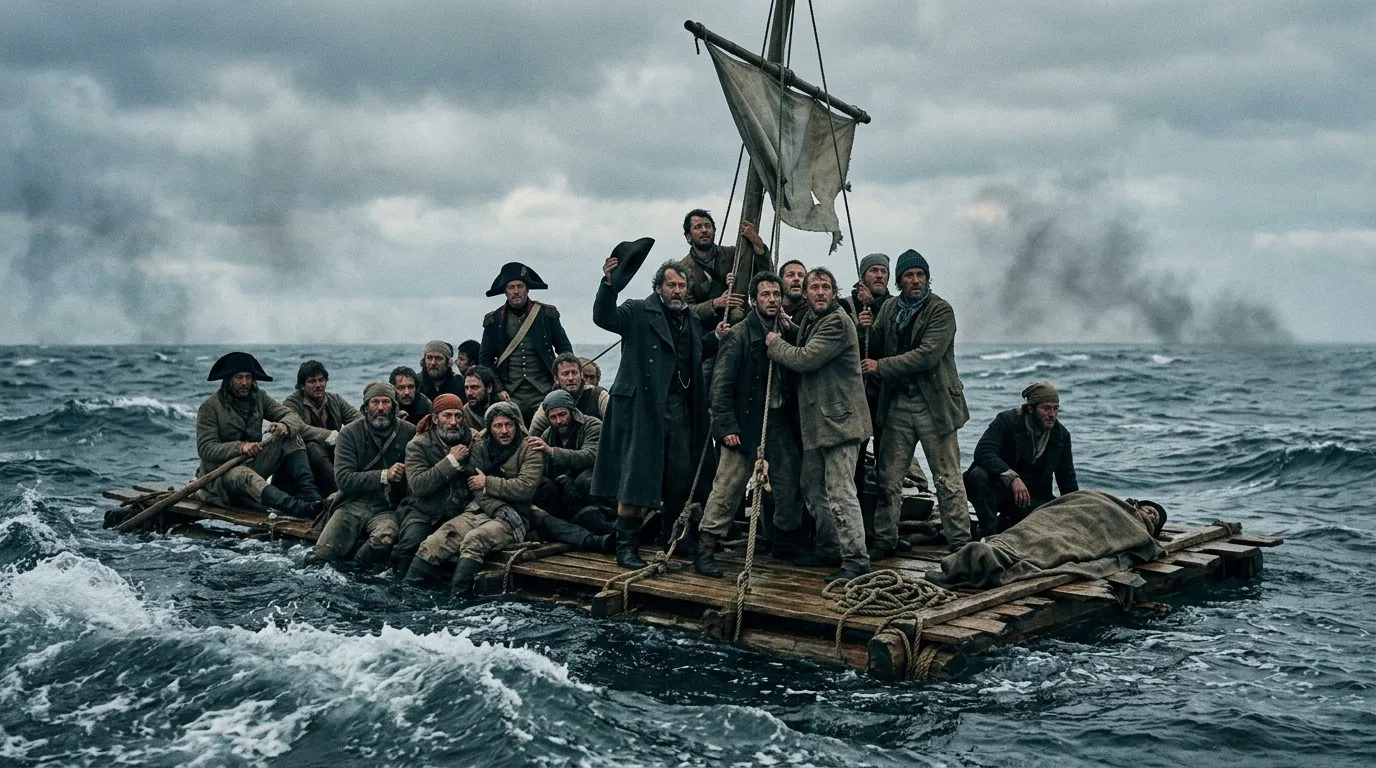
Shipwreck reveals class tragedy and state neglect.
When the French frigate Méduse ran aground off Africa in 1816, officers took the lifeboats and abandoned 147 people on a hastily-built raft. Théodore Géricault interviewed the 15 survivors and learned they’d endured 13 days of starvation, madness, and cannibalism before rescue. His monumental 1819 painting shows the moment they spotted their salvation ship—bodies piled like a pyramid of suffering, a black man waving futilely at the distant vessel. The French government tried to suppress the scandal because the captain had gotten his position through royal connections despite incompetence. Géricault’s painting turned private tragedy into public indictment, showing that under monarchy, aristocratic privilege literally left common people to die at sea. The work caused riots at the Salon, with royalists calling it treasonous and liberals hailing it as truth-telling that aristocratic France desperately needed.
Source: britannica.com
7. Manet’s ‘Execution of Maximilian’ Got Censored for Showing France’s Mexican Disaster
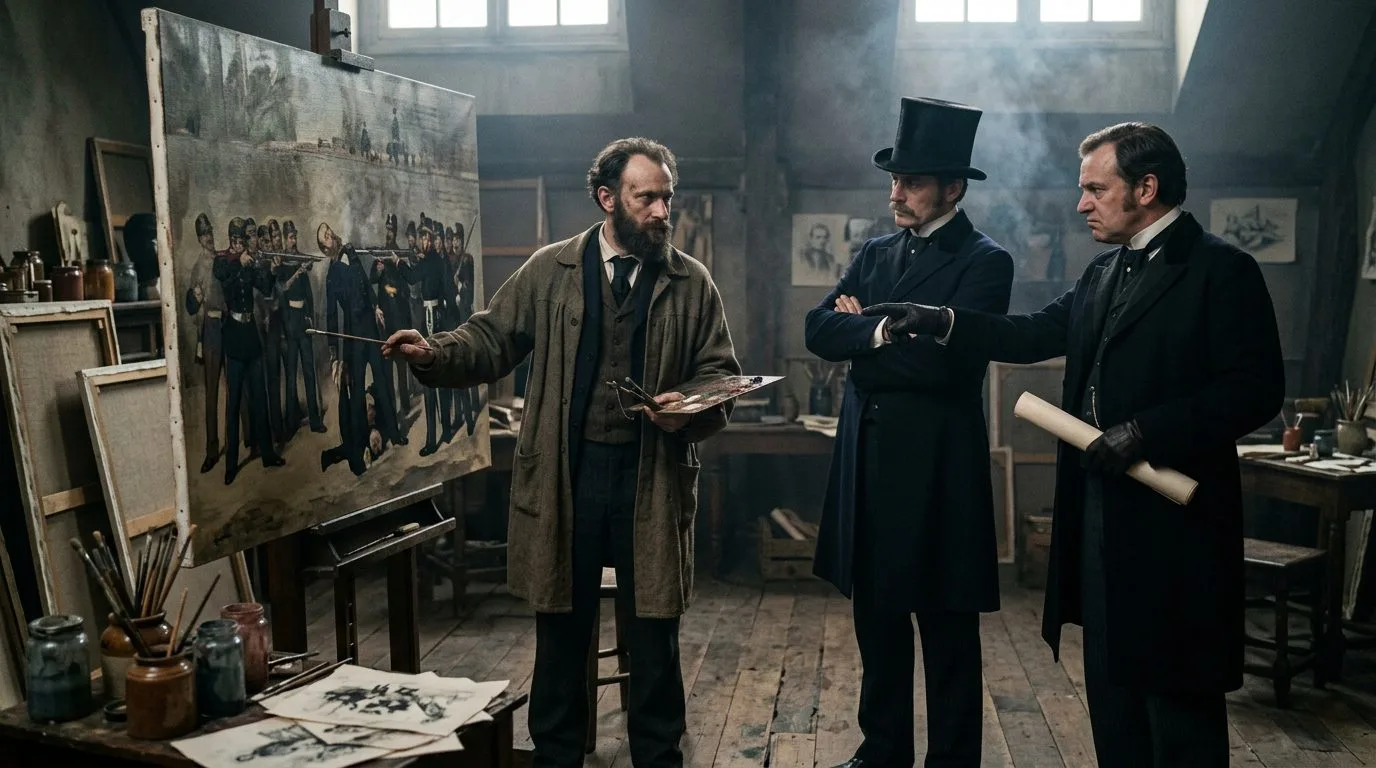
Manet’s controversial painting of Mexico’s tragedy
Édouard Manet created four versions of this painting between 1867 and 1869, each one a deliberate accusation against Napoleon III’s disastrous Mexican adventure. Emperor Maximilian I of Mexico, installed by French troops, was executed by firing squad on June 19, 1867, after France abandoned him to save money. Manet dressed the executioners in uniforms resembling French soldiers, making the message unmistakable: France bore responsibility for this death. The French government banned public exhibition of the painting and prevented its reproduction as prints, understanding that Manet had created visual evidence of imperial failure. Critics who saw private viewings called it treasonous. Manet based his composition on Goya’s ‘Third of May,’ linking French imperialism to Napoleonic brutality. The censorship proved Manet’s point—when paintings threaten power, authorities don’t debate them, they hide them.
Source: britannica.com
8. Courbet’s ‘Stone Breakers’ Made Poverty Revolutionary Simply by Showing It Honestly
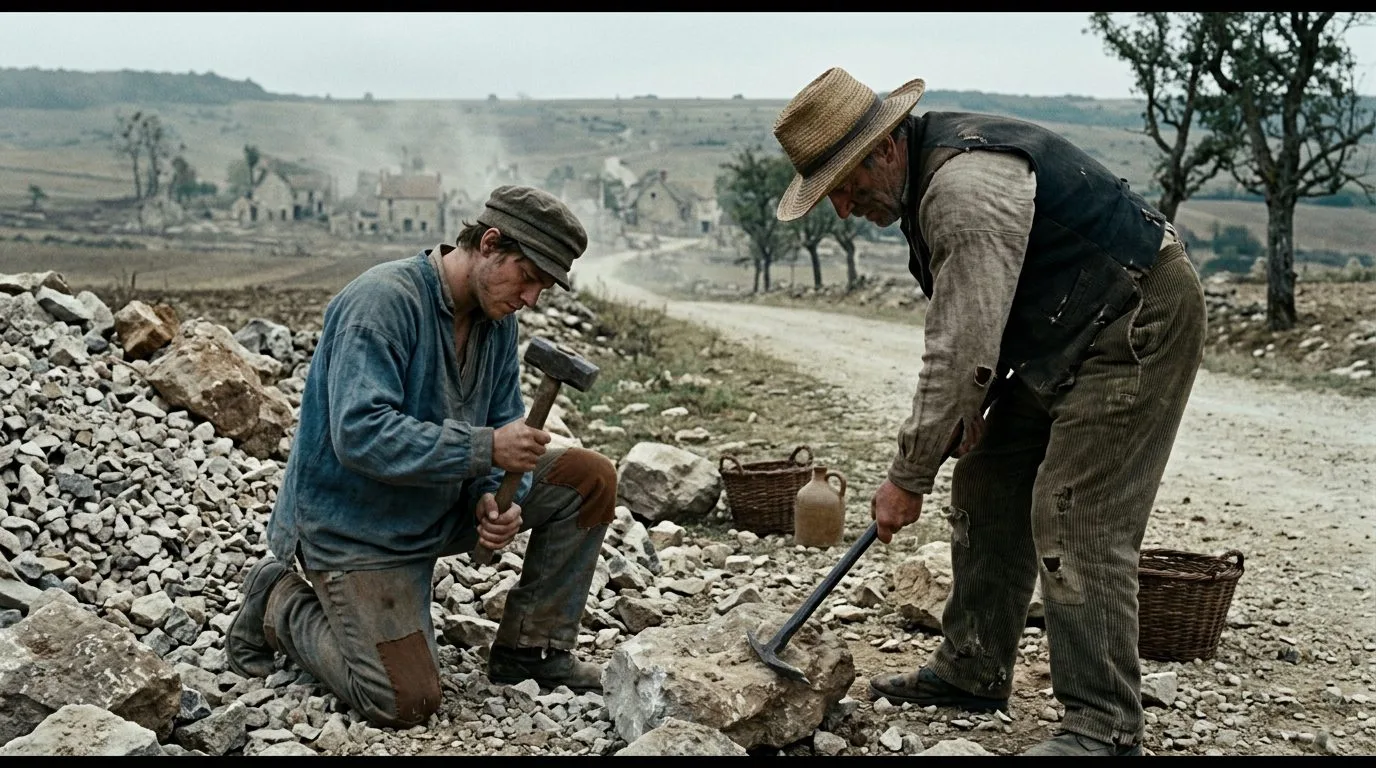
Courbet’s radical realism exposed labor’s dignity.
Gustave Courbet painted two laborers smashing rocks for road construction in 1849, and French critics reacted as if he’d committed assault. The canvas showed backbreaking work without dignity or nobility—just an old man and a boy in ragged clothes performing soul-crushing labor for pennies. Courbet, a committed socialist, rejected centuries of artistic tradition that made peasants picturesque or ennobled their poverty. He painted actual working people at actual scale, giving them the monumental treatment previously reserved for kings and gods. The painting premiered at the 1850 Salon just as France was crushing the 1848 revolutionary movements. Conservative critics called it ugly propaganda; radical critics recognized it as revolutionary precisely because it refused to make poverty beautiful. The painting was destroyed during Allied bombing of Dresden in 1945, but it had already transformed art by proving that showing working-class reality without romantic gloss could itself be a political act.
Source: britannica.com
9. Repin’s ‘Barge Haulers’ Showed the Human Cost of Russian ‘Progress’
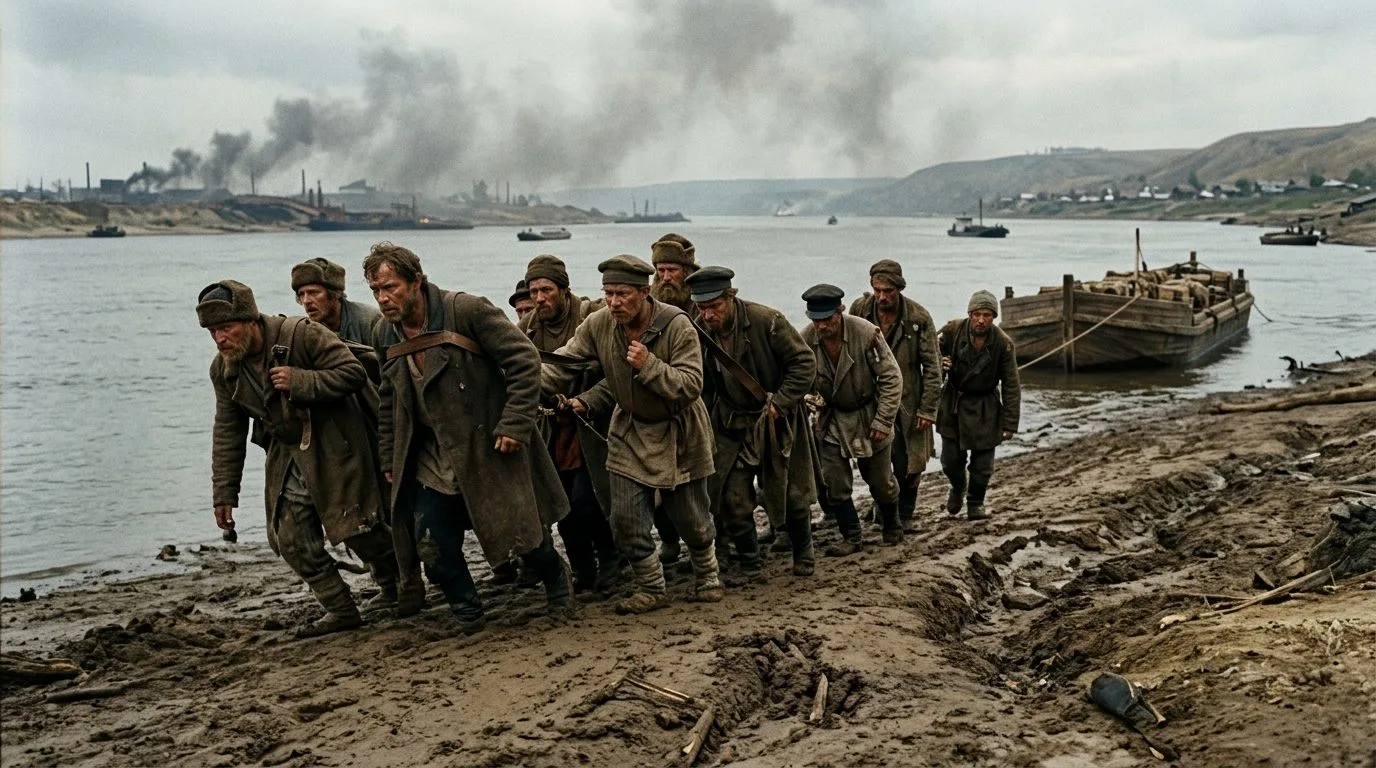
Workers struggle with heavy ropes pulling a barge
Ilya Repin sketched actual barge haulers on the Volga River in 1870, then spent three years creating this devastating portrait of eleven men harnessed like animals, dragging commercial barges upstream. Completed in 1873, the painting shows sunburned laborers in rags—some resigned, some defiant, one collapsed in exhaustion—performing work that epitomized how industrializing Russia still ran on human suffering. The man in the center stares directly at viewers, making them complicit. Repin, who witnessed this labor firsthand, understood that Russia’s economic growth depended on treating peasants as expendable machinery. The painting became a rallying image for Russian social reformers and later for revolutionary movements demanding the end of such exploitation. Tsar Alexander II’s government tried to suppress reproductions, but the image spread anyway, becoming visual proof that beneath imperial grandeur lay systematic brutality that would eventually ignite the 1917 Revolution.
Source: britannica.com
10. Diego Rivera’s Rockefeller Mural Got Destroyed Because Lenin’s Face Terrified Capitalists
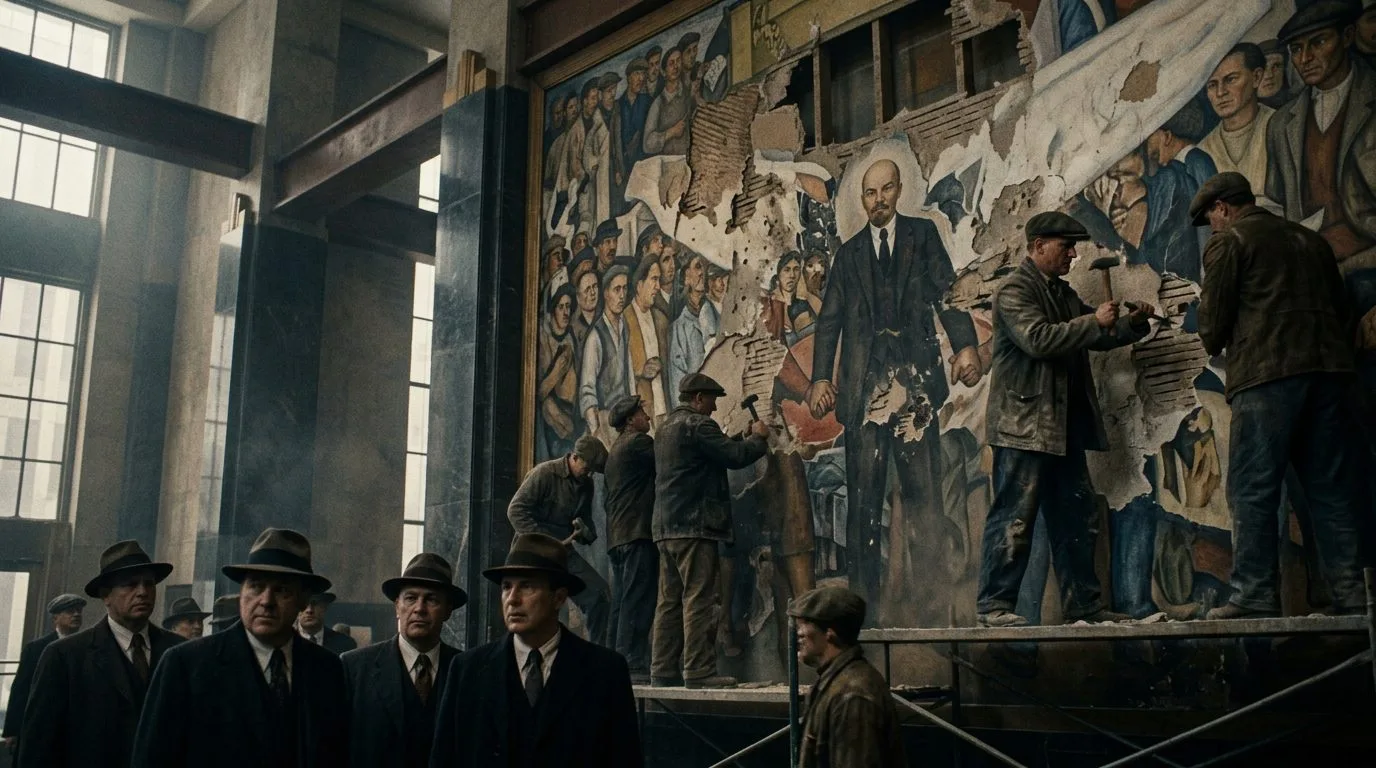
Political art destroyed by corporate fear.
Diego Rivera was painting ‘Man at the Crossroads’ in Rockefeller Center’s main lobby in 1933 when he added Vladimir Lenin’s portrait to a scene celebrating workers. Nelson Rockefeller, who’d commissioned this 63-foot mural for $21,000, demanded Rivera remove the Communist leader. Rivera refused, offering to add Abraham Lincoln to balance it out. On May 22, 1933, Rockefeller’s security guards literally covered the mural with canvas, evicted Rivera, and paid him in full. Nine months later, they demolished it with axes and chisels. Rivera had created a visual manifesto showing technology serving humanity under socialism versus capitalists drinking champagne while workers starved. The destruction proved Rivera’s point about who controlled public art—if your painting threatens power, power can simply erase it. Rivera recreated the mural in Mexico City’s Palacio de Bellas Artes, where Lenin still gazes out, making ‘Man at the Crossroads’ more famous destroyed than it ever was intact.
Source: britannica.com
Did You Know?
Did You Know? The French government kept Delacroix’s ‘Liberty Leading the People’ hidden in storage for most of the 19th century because they feared it would inspire actual revolutions—which meant admitting a painting scared them more than armies. Meanwhile, every time authorities tried to censor these works, they accidentally made them more powerful: Rivera’s destroyed mural became more influential as a martyr than it ever would have been hanging in Rockefeller’s lobby. The ultimate irony? Most of these revolutionary paintings now hang in the very establishment museums they once threatened, rendered safe through the neutralizing power of gold frames and velvet ropes.