
Wars grab headlines, but peace treaties actually change history. A single diplomatic agreement can topple empires, redraw borders for centuries, or plant seeds for the next conflict. These 10 treaties didn’t just end wars—they transformed the ancient and medieval world in ways that still echo today.
1. Treaty of Kadesh: The World’s First Written Peace Agreement
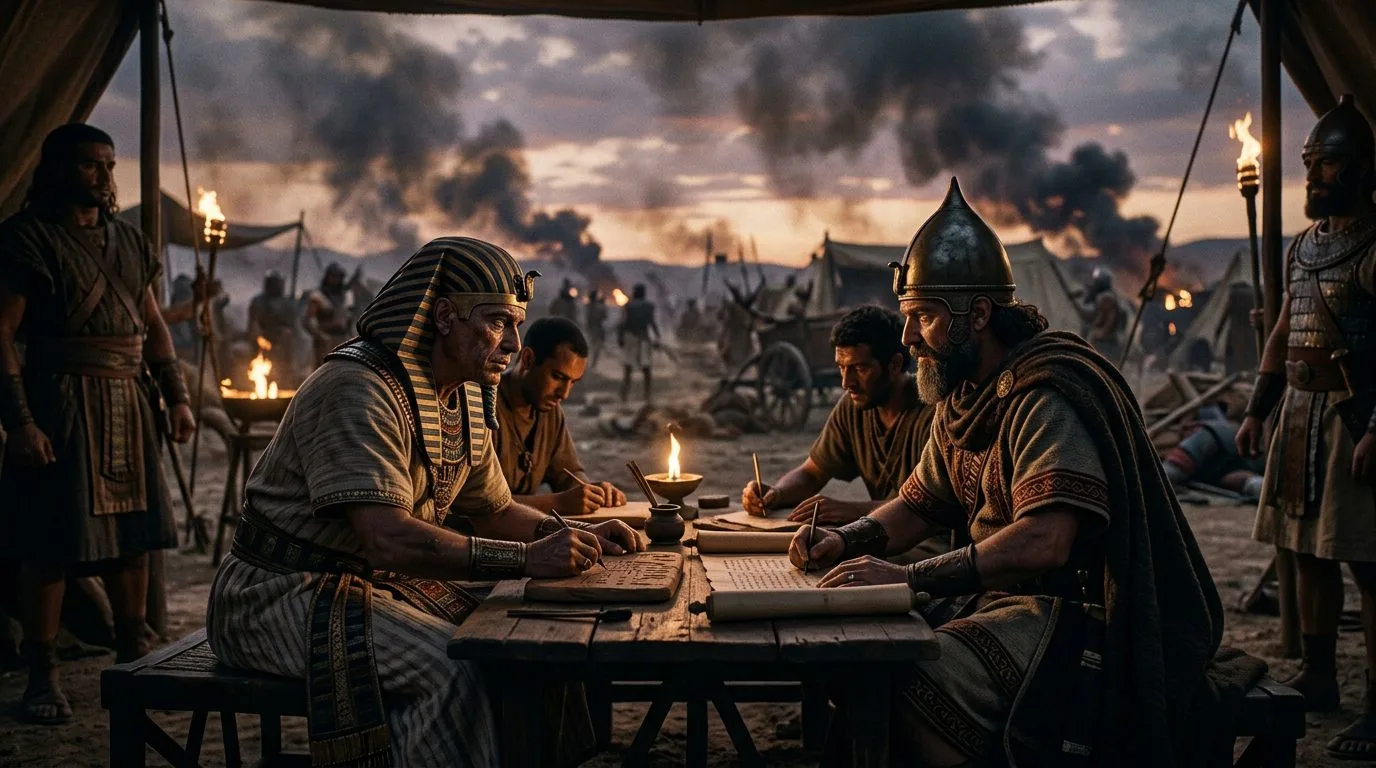
Treaty of Kadesh
Egyptian Pharaoh Ramesses II and Hittite King Hattusili III signed humanity’s first recorded peace treaty in 1259 BCE after the bloody Battle of Kadesh. Both empires claimed victory in the battle, yet both desperately needed peace—Egypt faced Libyan threats while the Hittites battled Assyrian expansion. The treaty established a mutual defense pact, extradition laws, and even arranged a royal marriage between Ramesses and a Hittite princess. Clay tablet copies survived in both Egyptian hieroglyphics and Akkadian cuneiform, with the Hittite version discovered in 1906 at Boğazköy, Turkey. A replica now hangs in the United Nations headquarters, symbolizing 3,200 years of diplomatic tradition.
Source: britannica.com
2. Peace of Callias: When Athens Humbled the Persian Empire
Peace of Callias
The Peace of Callias in 449 BCE forced the mighty Persian Empire to recognize Greek independence after decades of conflict. Named after Athenian diplomat Callias, son of Hipponicus, the treaty prohibited Persian warships from entering the Aegean Sea and banned Persian troops from coming within three days’ march of the Ionian coast. Athens gained control over Greek cities in Asia Minor, transforming the Delian League from a defensive alliance into an Athenian empire. The treaty established a demilitarized zone spanning roughly 400 stadia (46 miles) from the coast. Though some ancient historians questioned its existence, the 50-year peace that followed proved its impact on reshaping Mediterranean power dynamics.
Source: britannica.com
3. Treaty of Apamea: Rome’s Diplomatic Knockout of the Seleucids
Treaty of Apamea
The Treaty of Apamea in 188 BCE shattered Seleucid King Antiochus III’s dreams of Mediterranean dominance after his crushing defeat at Magnesia. Rome forced Antiochus to abandon all territory west of the Taurus Mountains, surrender his entire war elephant corps of 54 animals, and hand over his navy except for 10 ceremonial ships. The treaty demanded 15,000 talents of silver—equivalent to roughly 540,000 pounds—paid over 12 years, bankrupting the empire. Rome even required Antiochus to send his son (the future Antiochus IV) to Rome as a hostage. This single agreement eliminated the Seleucid Empire as a Mediterranean power and established Rome’s dominance over the eastern Mediterranean for centuries.
Source: britannica.com
4. Treaty of Brundisium: The Peace That Made the Roman Empire Possible
Treaty of Brundisium
In 40 BCE, Octavian and Mark Antony divided the Roman world at Brundisium, creating the power-sharing arrangement that temporarily prevented civil war. The treaty split the empire along a line through Scodra in Illyricum—Antony controlled the wealthy East with its 28 legions, while Octavian ruled the West with its 32 legions. To seal the deal, Antony married Octavian’s sister Octavia, creating a family bond between rivals. Lepidus retained control of Africa as the third triumvir. This fragile peace lasted 9 years, giving Octavian time to consolidate power and gather resources. When war finally erupted at Actium in 31 BCE, Octavian’s Western resources proved decisive in creating the Roman Empire.
Source: britannica.com
5. Treaty of Verdun: The Birth Certificate of France and Germany
Treaty of Verdun
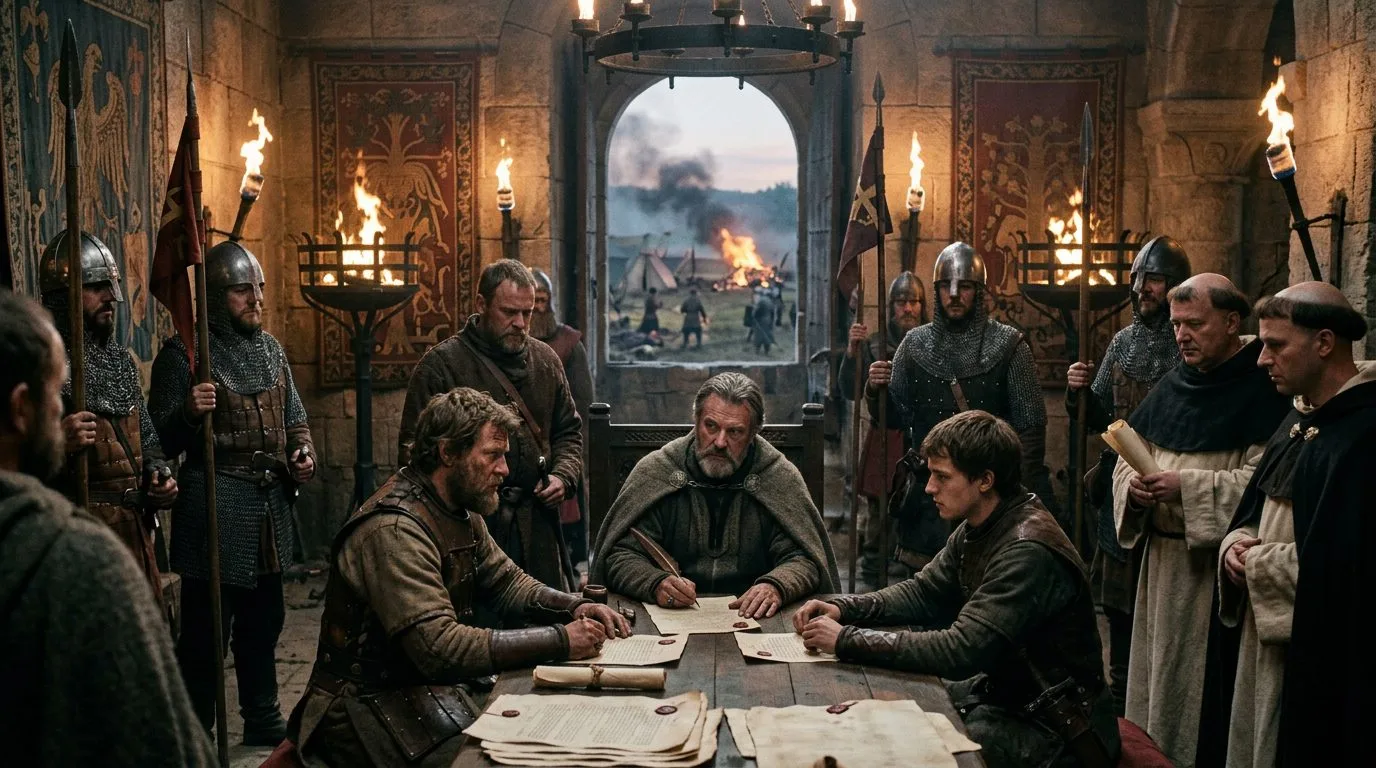
The Treaty of Verdun in 843 CE carved Charlemagne’s empire into three kingdoms, creating the borders that would shape European politics for 1,200 years. After three years of civil war between Charlemagne’s grandsons, Louis the German received East Francia (modern Germany), Charles the Bald took West Francia (modern France), and Lothair I got the middle kingdom stretching from the North Sea to Rome plus the imperial title. The treaty established the first official language boundary—the Oath of Strasbourg in 842 was sworn in Old French and Old High German, recognizing linguistic reality. That middle kingdom of Lotharingia became Europe’s eternal battleground, fought over in both World Wars as Alsace-Lorraine.
Source: britannica.com
6. Treaty of Saint-Clair-sur-Epte: How Vikings Became French Nobility
Treaty of Saint-Clair-sur-Epte
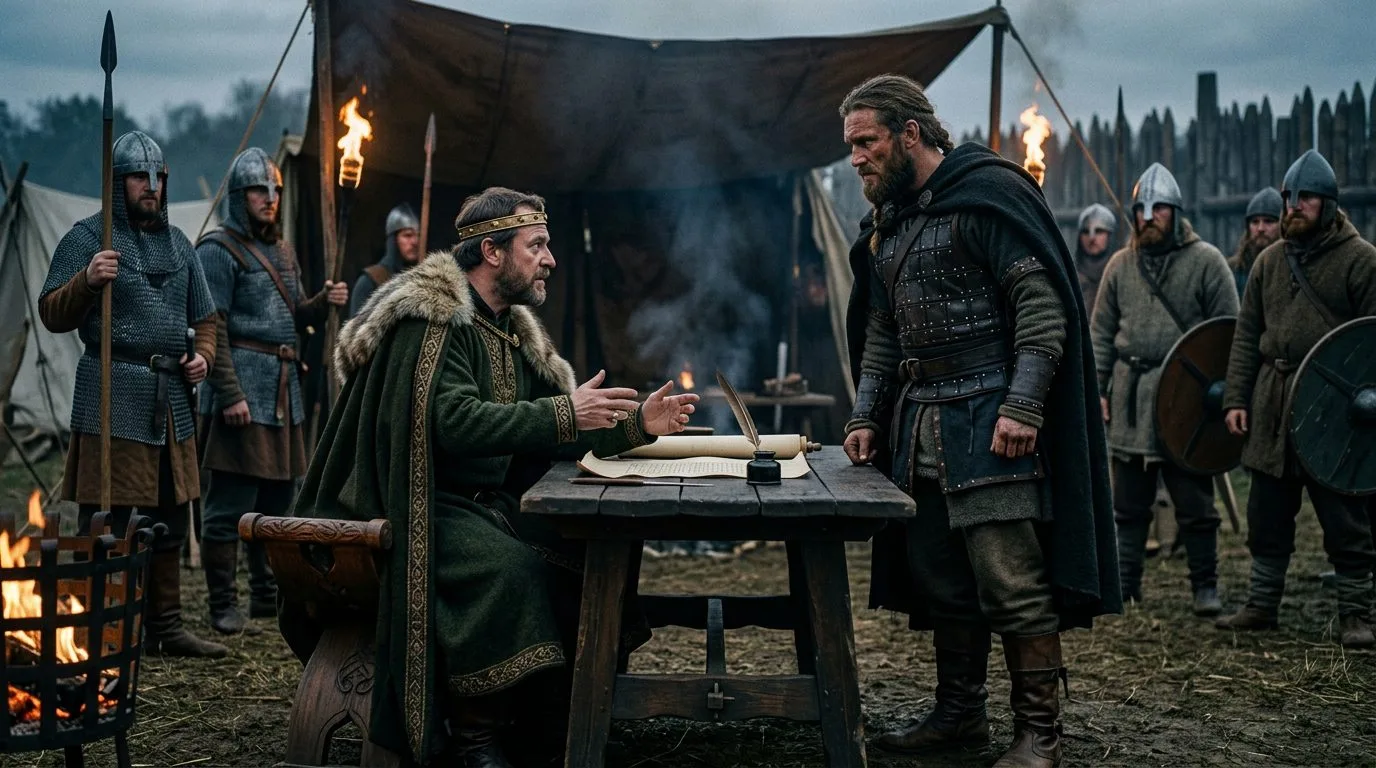
In 911 CE, French King Charles the Simple made a desperate bargain with Viking chief Rollo—legitimize your conquests in exchange for defending Paris against other raiders. The Treaty of Saint-Clair-sur-Epte granted Rollo the territory around Rouen, creating the Duchy of Normandy spanning roughly 6,000 square miles. Rollo converted to Christianity, married Charles’s daughter Gisela, and swore feudal allegiance while retaining virtual independence. The treaty transformed destructive raiders into French nobles within one generation. Just 155 years later, Rollo’s descendant William the Conqueror invaded England in 1066, proving that this peace treaty didn’t just create Normandy—it changed the entire course of English history and language.
Source: britannica.com
7. Peace of Constance: When Italian Cities Humiliated an Emperor
Peace of Constance
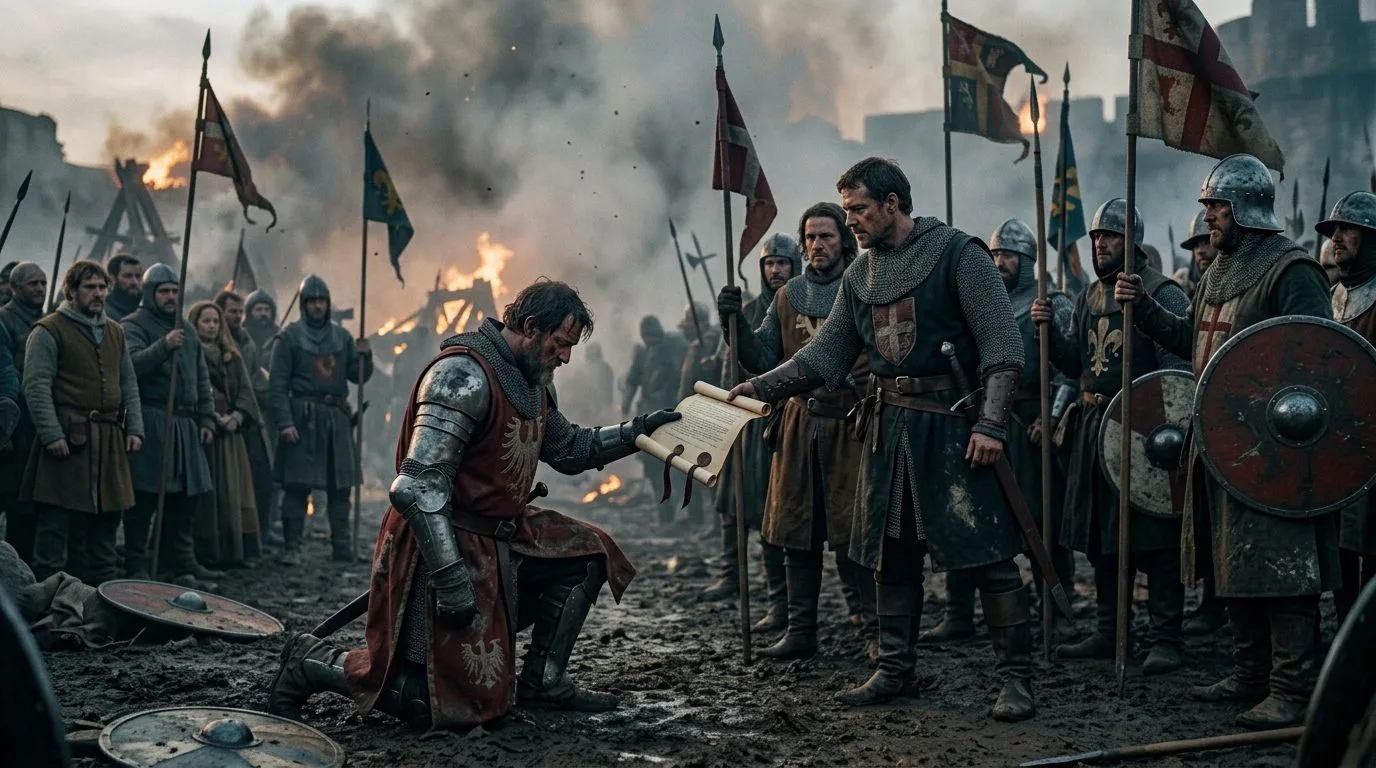
The Peace of Constance in 1183 forced Holy Roman Emperor Frederick Barbarossa to recognize the independence of the Lombard League’s 30 Italian cities after his defeat at Legnano. The treaty granted cities rights to elect their own consuls, maintain their walls and armies, and exercise civil and criminal jurisdiction—essentially creating Europe’s first urban republics. Frederick retained symbolic authority and received modest taxes, but real power belonged to Milan, Venice, Genoa, and their allies. The agreement covered territories producing roughly 40% of Europe’s manufactured goods. This diplomatic revolution established the independence that allowed Italian city-states to dominate Mediterranean trade and finance the Renaissance 200 years later.
Source: britannica.com
8. Treaty of Paris 1259: The Peace That Couldn’t Last
Treaty of Paris 1259: The Peace That Couldn’t Last
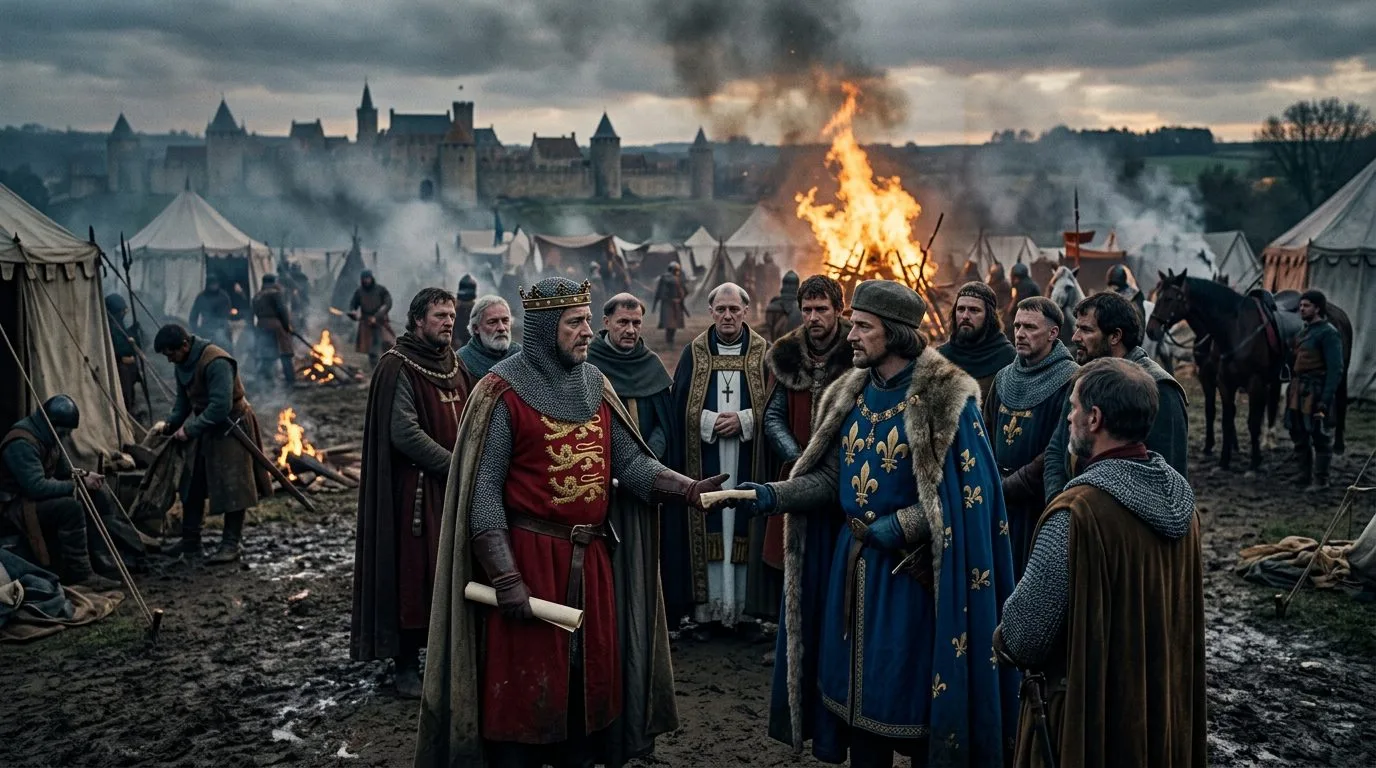
The Treaty of Paris in 1259 between Henry III of England and Louis IX of France was supposed to end 60 years of conflict over English territories in France. Henry renounced claims to Normandy, Anjou, and Poitou—losing roughly 95% of his French holdings—while keeping Gascony as a French vassal. Louis paid Henry 134,000 livres tournois and promised yearly revenues from French lands. The catch: Henry’s homage to Louis for Gascony made England’s king technically subordinate to France’s king, an arrangement satisfying neither party. The treaty’s fundamental contradiction—an English king owing feudal allegiance for territories he claimed to rule independently—guaranteed future conflict and helped trigger the Hundred Years’ War in 1337.
Source: britannica.com
9. Peace of Lodi: The 40-Year Italian Miracle
Peace of Lodi: The 40-Year Italian Miracle
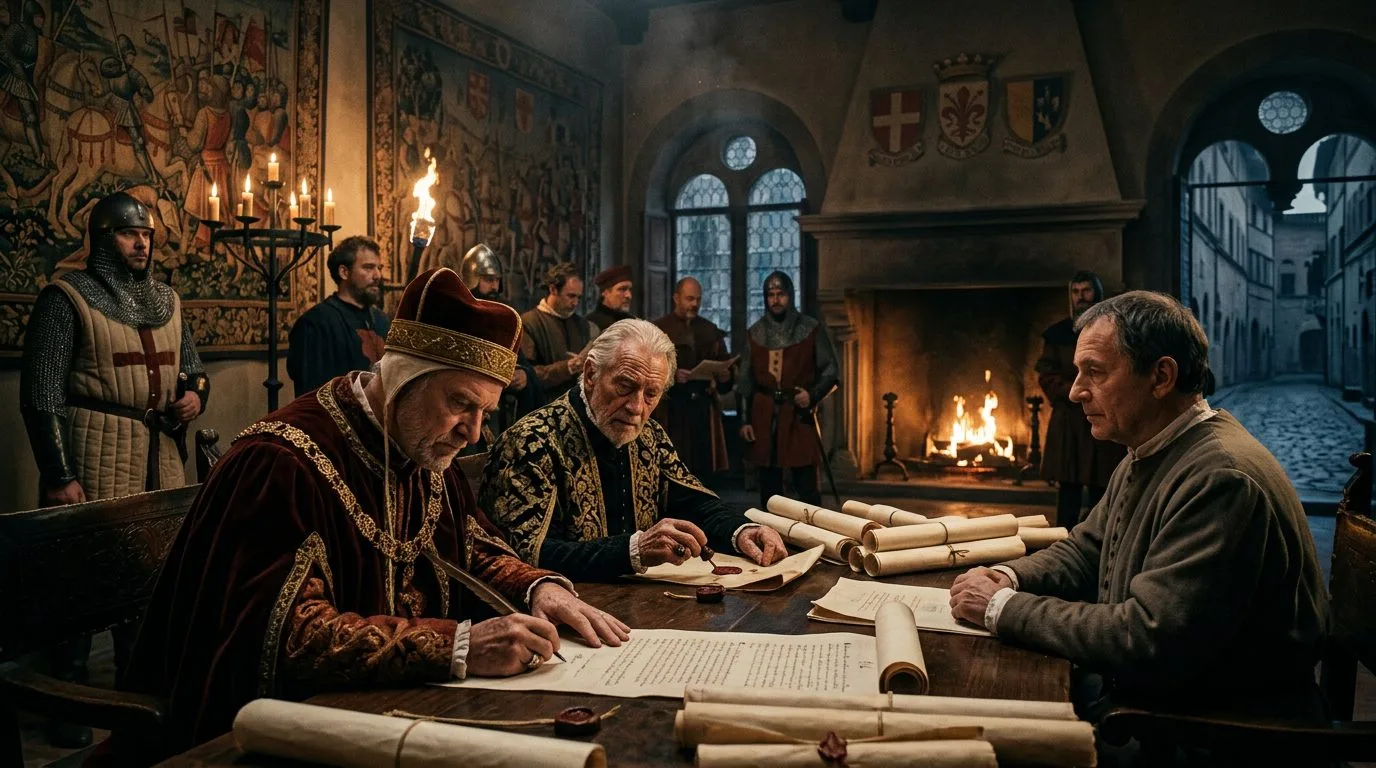
The Peace of Lodi in 1454 created an unprecedented balance of power among Italy’s five major states—Milan, Venice, Florence, Naples, and the Papal States—establishing 40 years of relative peace. Signed by Francesco Sforza of Milan and the Venetian Republic after the Wars of Lombardy, the treaty recognized existing borders and created the Italic League for mutual defense. The agreement covered territories containing roughly 10 million people across the Italian peninsula. This diplomatic equilibrium allowed resources to flow from warfare into art, architecture, and scholarship, directly enabling the High Renaissance. Leonardo da Vinci, Michelangelo, and Raphael created their masterworks during this peace, proving that diplomacy could be more transformative than conquest.
Source: britannica.com
10. Treaty of Tordesillas: Two Nations Divide the Entire World
Treaty of Tordesillas
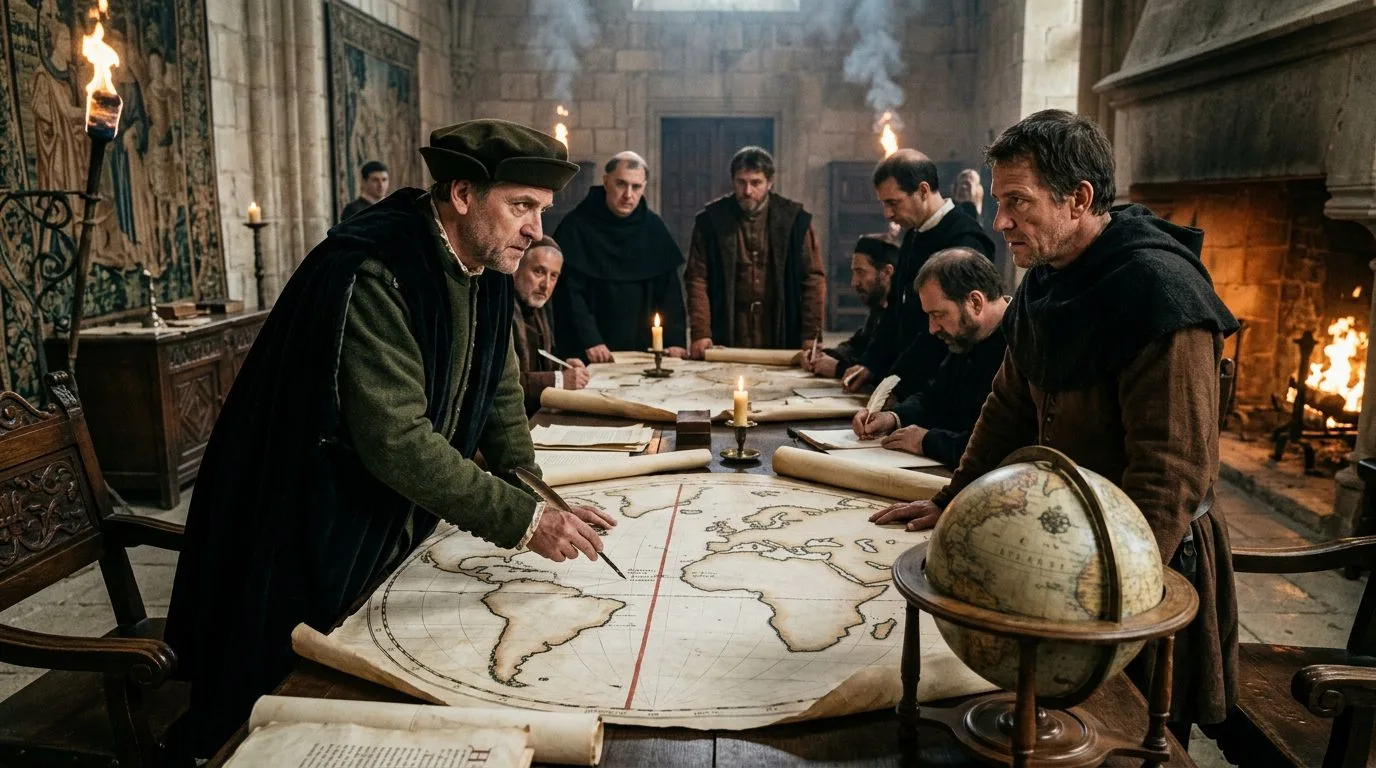
In 1494, Spain and Portugal literally drew a line down the middle of the unexplored world, splitting all future discoveries between two nations. The Treaty of Tordesillas established a boundary 370 leagues (1,185 miles) west of the Cape Verde Islands—everything east belonged to Portugal, everything west to Spain. Pope Alexander VI mediated this audacious division of lands neither nation had seen, affecting territories containing billions of future inhabitants. The line’s placement gave Portugal access to Brazil (discovered in 1500), Africa, and the route to India, while Spain claimed the Americas. This single diplomatic agreement determined which languages 600 million people in Latin America speak today and established colonial patterns lasting 400 years.
Source: britannica.com
Did You Know?
Did You Know? The Treaty of Tordesillas drew its famous line without either Spain or Portugal knowing that the Pacific Ocean existed—meaning they divided a world whose true size they couldn’t even imagine. Even stranger, the treaty technically gave Portugal claim to half of Asia, including parts of China and Japan, though they never seriously attempted to enforce it. The most ironic twist: the treaty excluded other European nations entirely, leading England, France, and the Netherlands to ignore it completely, eventually shattering the Spanish-Portuguese monopoly and rendering the world’s most ambitious peace treaty obsolete.