
Before Gutenberg’s press produced its first Bible in 1455, books required months of monastic labor. Within decades, innovations in metallurgy, chemistry, and design transformed printing from a novelty into the Renaissance’s most powerful weapon against ignorance.
1. The Lead-Tin-Antimony Alloy That Made Mass Production Possible

Revolutionary solder enabled modern manufacturing.
Gutenberg‘s genius wasn’t just the press—it was his secret metal recipe. Around 1440, he perfected an alloy of 80% lead, 5% tin, and 15% antimony that could withstand thousands of impressions without deforming. Pure lead was too soft, melting under pressure and blurring letters. The antimony hardened the mixture while lowering its melting point to 240°C, allowing precise casting in hand molds. This metallurgical breakthrough enabled printers to produce 3,600 pages daily—versus the 40 pages a scribe could copy by hand. Within 50 years, European presses had printed more books than all scribes had produced in the previous millennium.
Source: britannica.com
2. Oil-Based Ink Revolutionized Print Clarity
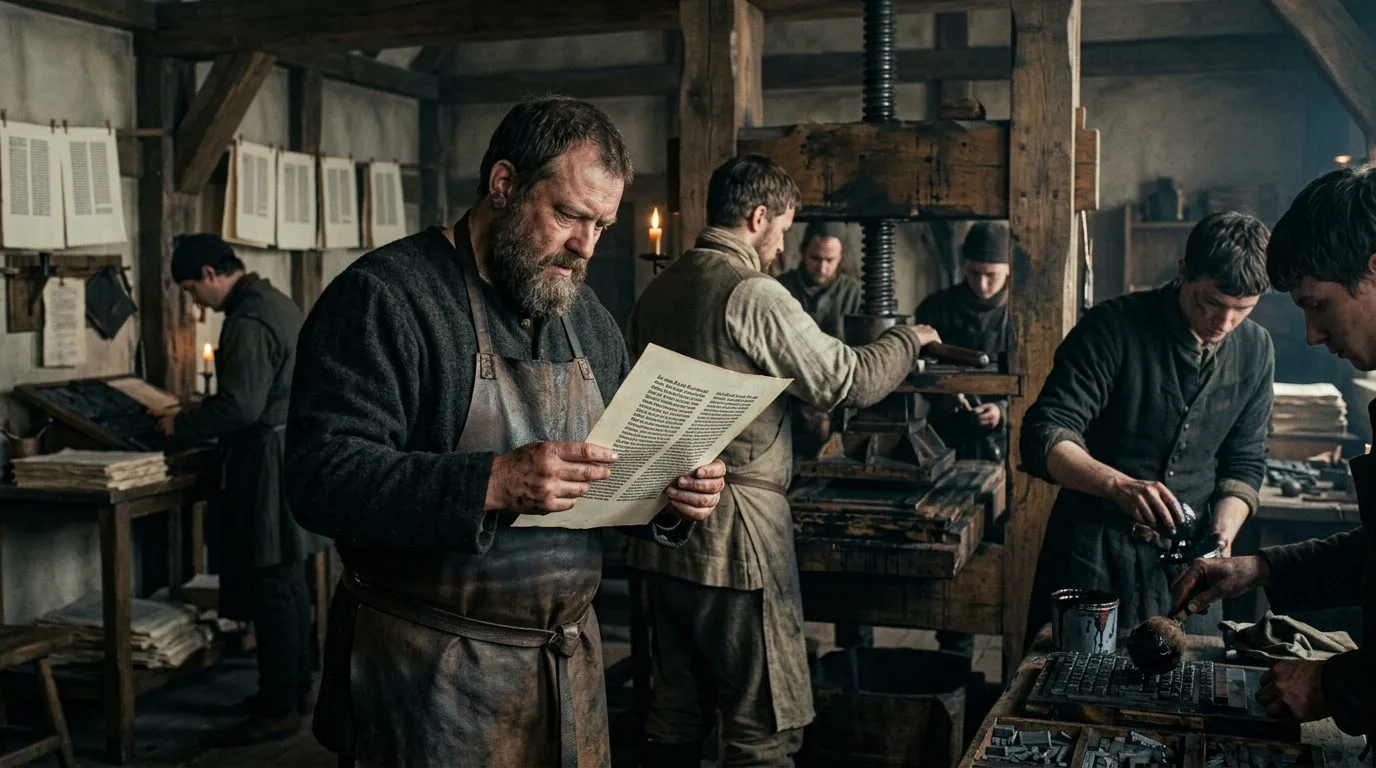
Oil-Based Ink Revolutionized Print Clarity
Medieval scribes used water-based inks that simply ran off metal type surfaces, creating smeared, illegible prints. Gutenberg solved this around 1450 by adapting Flemish oil painting techniques, creating an ink from linseed oil mixed with soot, amber, and copper. The viscous mixture adhered to metal type and transferred cleanly to paper under pressure. This oil-based formula dried slowly enough for handling but fast enough for production—crucial when printing 200-sheet runs. Printers jealously guarded their ink recipes; Venetian ink-makers in 1480 faced exile for revealing trade secrets. The innovation made printed text sharper than most handwritten manuscripts, convincing skeptics that mechanical reproduction could rival human craftsmanship.
Source: smithsonianmag.com
3. Wine Press Technology Provided the Critical Pressure
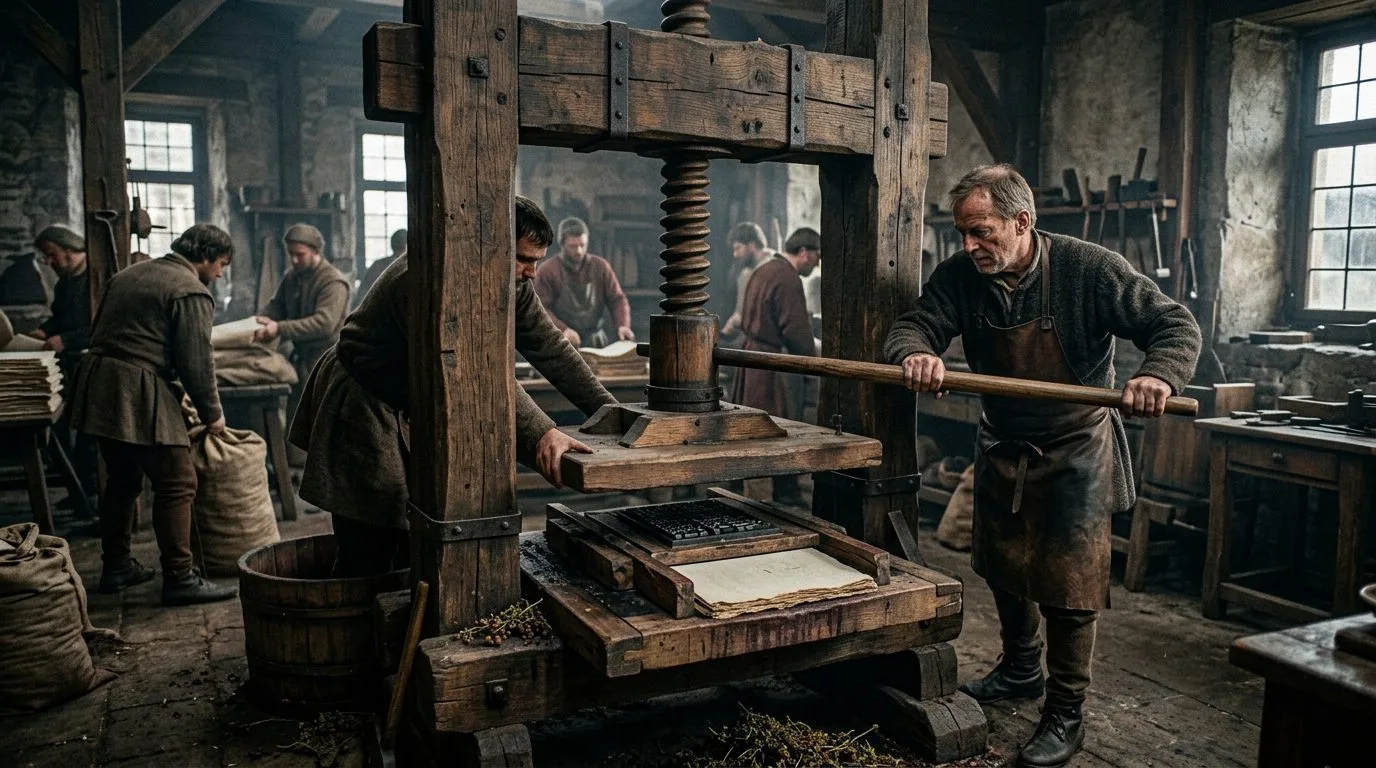
Medieval wine presses revolutionized production.
Gutenberg’s mechanical insight came from Rhineland vineyards. The wooden screw presses used for wine production since Roman times could generate 300 pounds of even pressure—exactly what was needed to transfer ink from metal type to paper. Around 1439, Gutenberg adapted the wine press design, replacing the circular pressing plate with a flat platen that could accommodate a full page of text. The screw mechanism allowed printers to control pressure precisely; too little left gaps, too much crushed the paper. A skilled printer could complete 16 impressions per hour, positioning the press as the Renaissance’s first true manufacturing machine. The repurposed technology cost a fraction of custom engineering, making printing financially viable.
Source: history.com
4. Aldus Manutius Created Italic Type to Compress Information
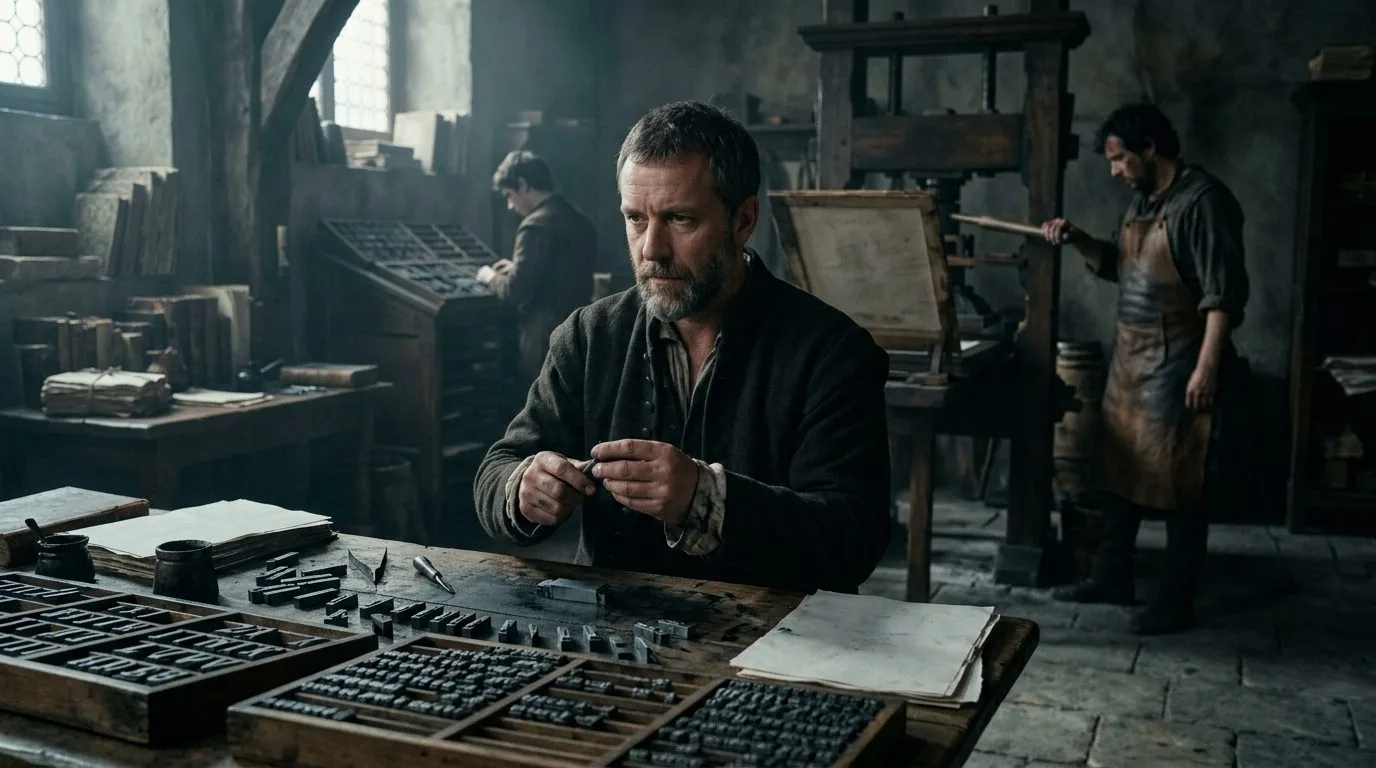
Aldus Manutius Created Italic Type to Compress
Venetian printer Aldus Manutius faced a dilemma in 1501: classical texts were expensive to print in traditional upright type. His solution reshaped reading habits for centuries. Collaborating with punchcutter Francesco Griffo, Aldus designed italic typeface—slanted letters modeled on humanist handwriting that fit 25% more text per page. The first italic book, Virgil‘s Opera, measured just 6 by 4 inches yet contained the complete works. This compression slashed production costs, making literature affordable for middle-class buyers. Aldus printed 130,000 volumes in italic between 1501 and 1515, spawning imitators across Europe. Italic type became synonymous with scholarship, used for emphasis and foreign words into the modern era.
Source: britannica.com
5. The Octavo Format Made Books Pocket-Portable
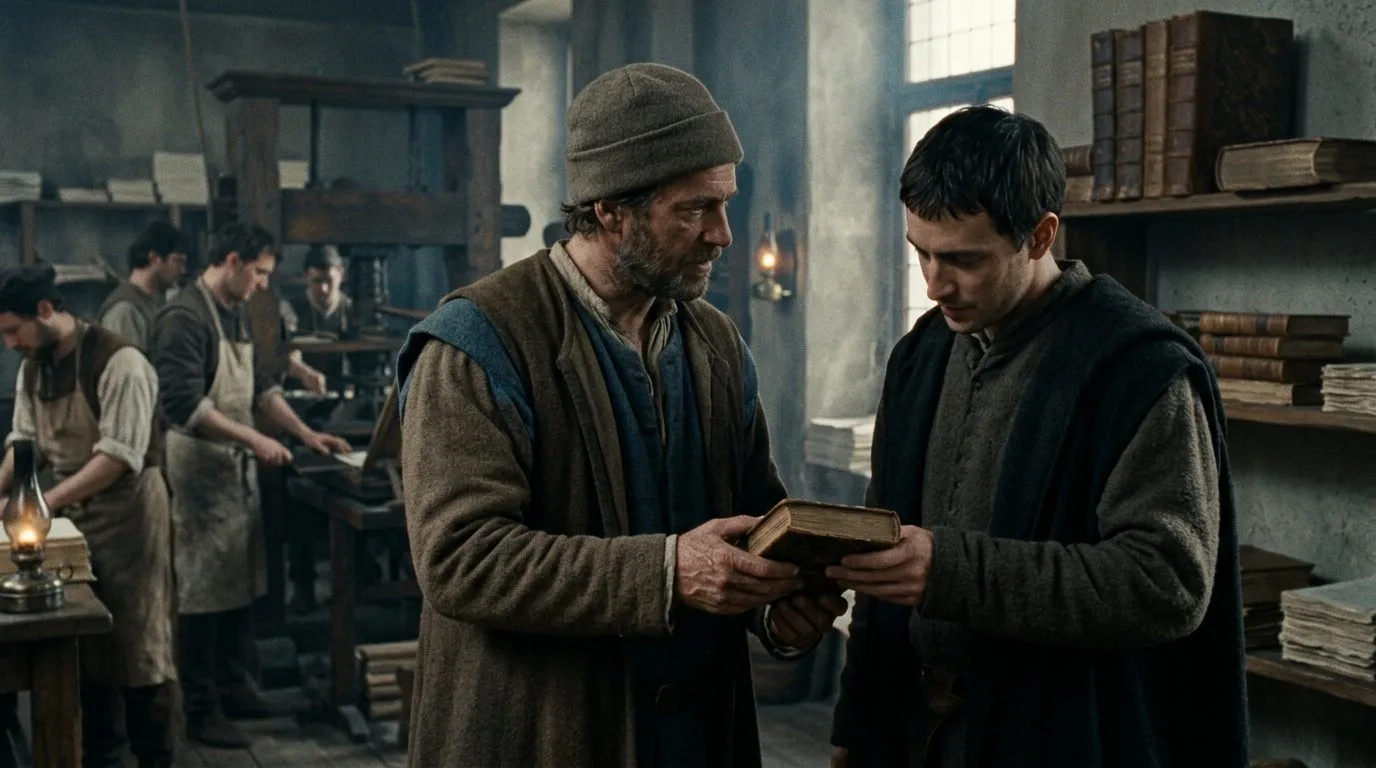
The Octavo Format Made Books Pocket-Portable
Before 1500, books meant chained folio volumes in monastery libraries. Aldus Manutius revolutionized publishing in 1501 by popularizing the octavo format—sheets folded three times to create eight leaves, producing books roughly 8 by 5 inches. These pocket-sized volumes weighed under a pound, compared to 15-pound folios. Travelers could carry five octavos versus one folio, democratizing reading beyond stationary scholars. Aldus’s octavo Classics series sold for 1 ducat each, one-tenth the price of traditional volumes. By 1515, Parisian printers alone produced 200,000 octavos annually. The format sparked mobile literacy; suddenly, merchants, soldiers, and clergy could own personal libraries, fueling the spread of Reformation ideas and humanist philosophy.
Source: smithsonianmag.com
6. Woodcut Illustrations Merged Art With Information
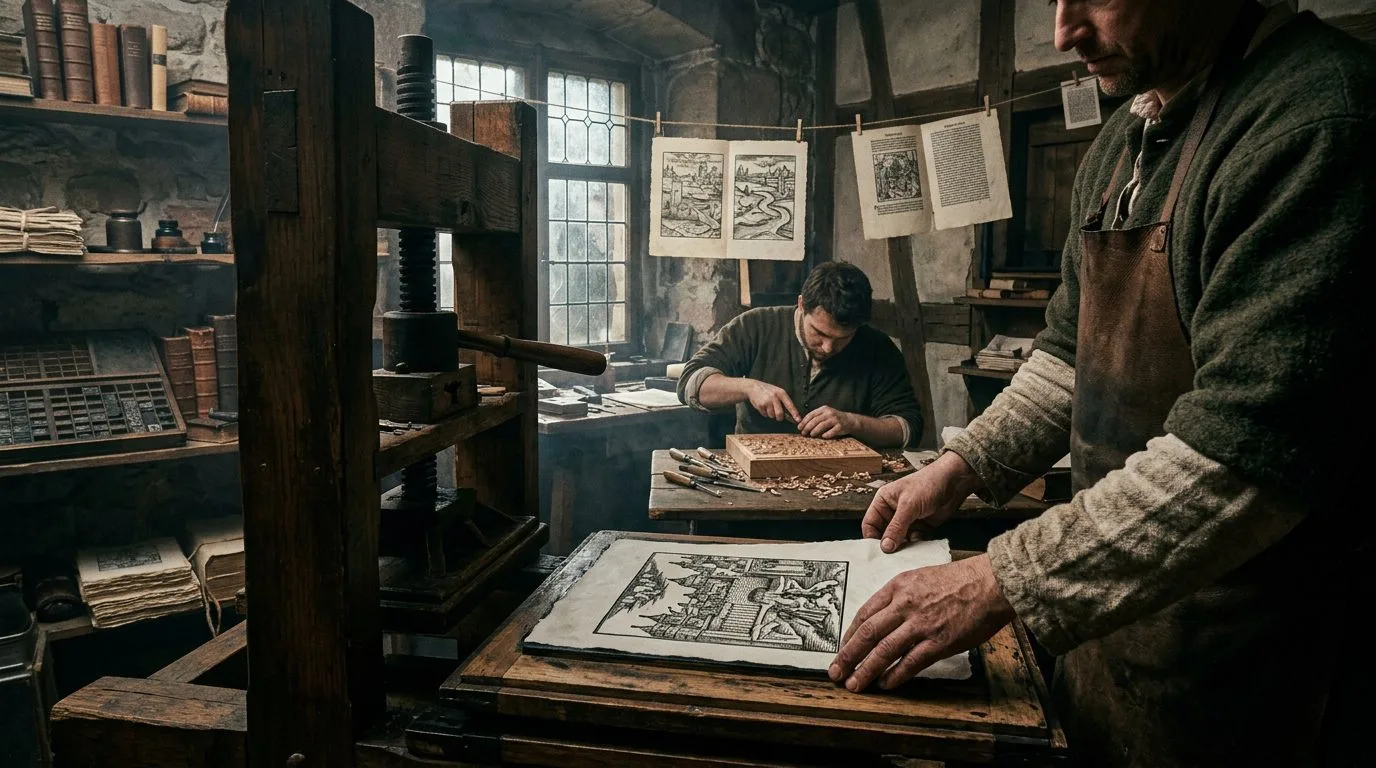
Woodcut Illustrations Merged Art With Information
Early printed books were text-only until Nuremberg printers perfected woodcut integration around 1470. Carving reverse images into hardwood blocks, artisans like Albrecht Dürer elevated illustration from decoration to communication. Medical texts gained anatomical precision; herbals showed plant details impossible in manuscript illumination. The 1493 Nuremberg Chronicle contained 1,809 woodcut illustrations across 600 pages, depicting cities, rulers, and biblical scenes. Woodblocks could print 10,000 impressions, far outlasting copper engravings at 500 impressions. This durability made illustrated books affordable for the first time. By 1500, woodcuts appeared in 30% of printed works, training a visually literate public that would later embrace maps, scientific diagrams, and Protestant propaganda imagery.
Source: britannica.com
7. Printer’s Marks Established Europe’s First Commercial Brands
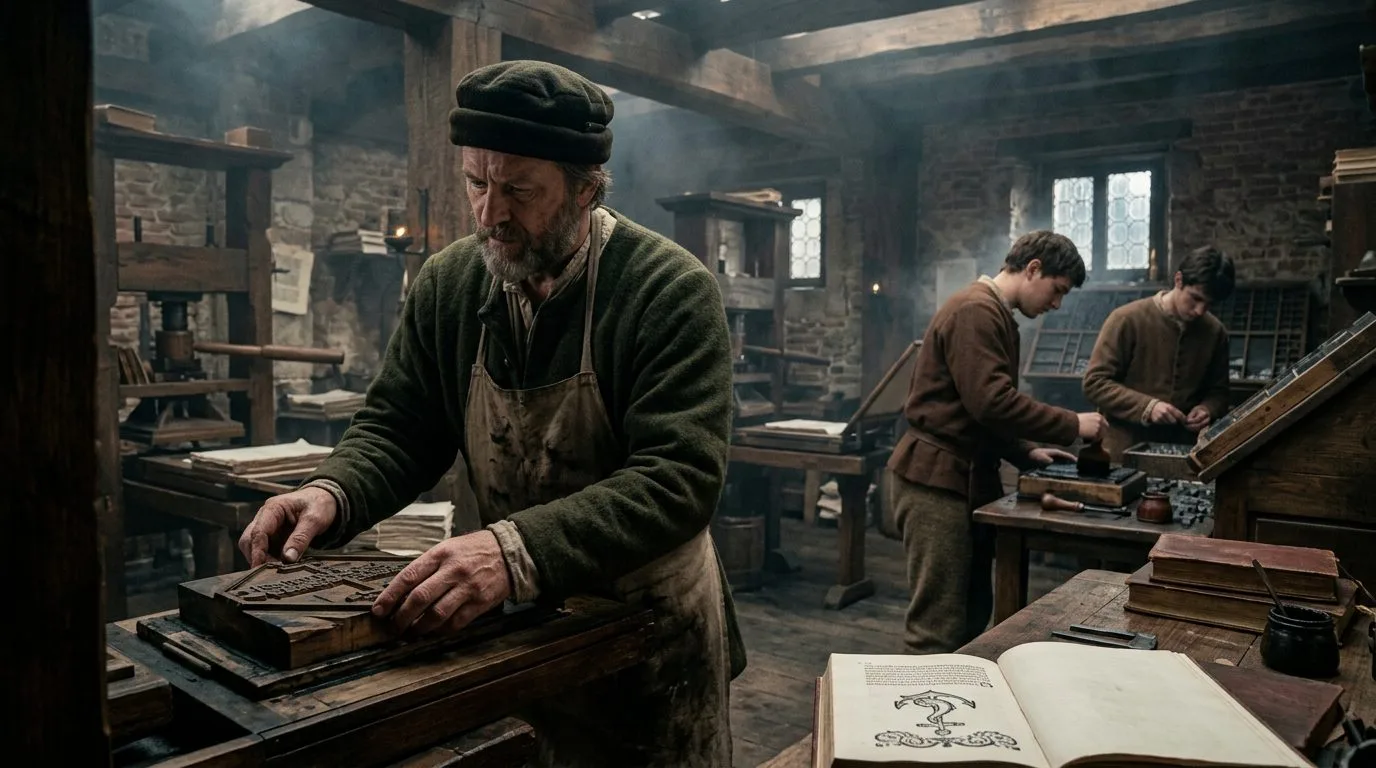
Early colophons marked books with makers’ marks.
As book production exploded after 1460, printers needed to distinguish their work from competitors and counterfeiters. Venetian printer Erhard Ratdolt created one of the earliest printer’s marks in 1476—a shield with geometric designs that appeared on title pages and colophons. Aldus Manutius’s famous dolphin-and-anchor symbol, introduced in 1502, became so recognizable that forgers copied it to sell inferior books. These marks functioned as quality guarantees; buyers knew a Froben mark from Basel meant scholarly accuracy, while a Plantin mark from Antwerp signaled lavish illustrations. By 1500, over 1,100 distinct printer’s marks existed across Europe, creating the Renaissance’s first system of intellectual property and brand loyalty that predated trademark law by three centuries.
Source: smithsonianmag.com
8. Registration Pins Enabled Precise Double-Sided Printing
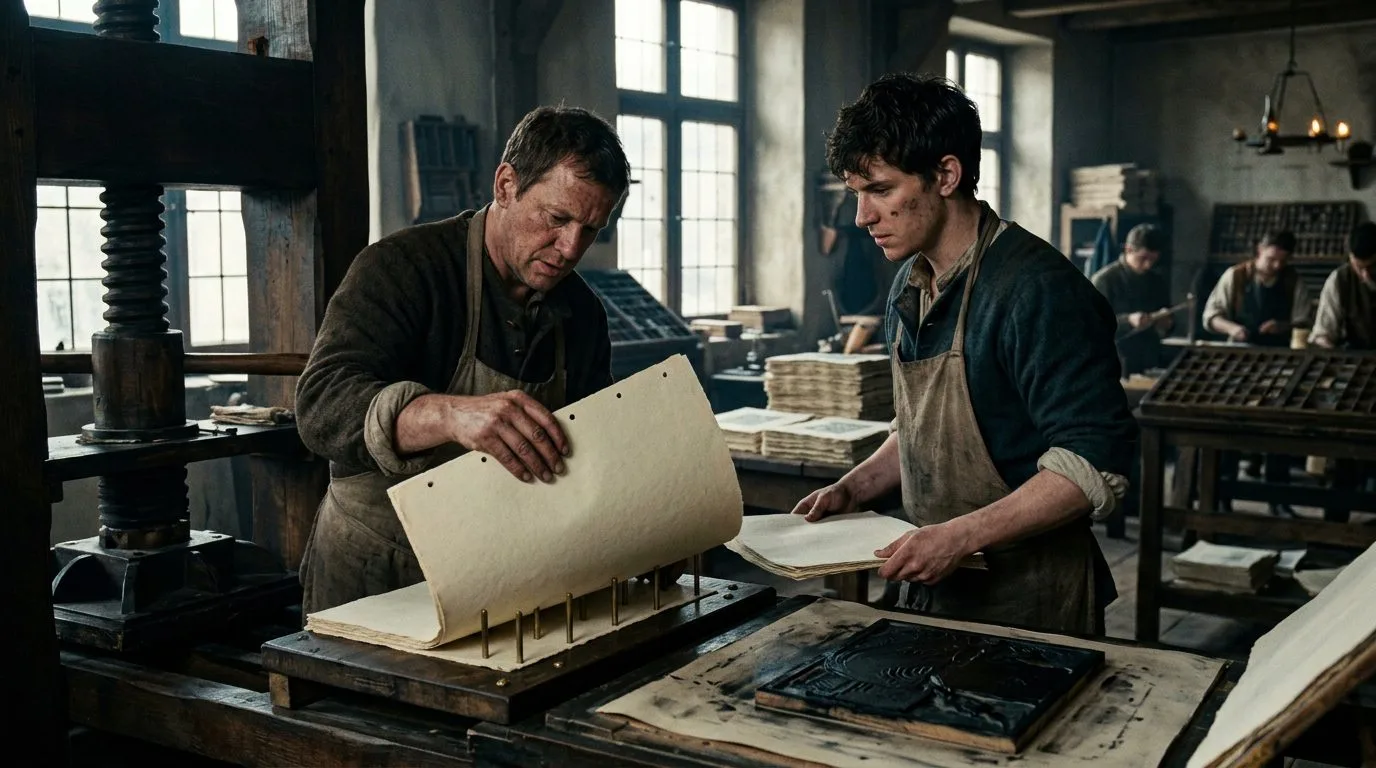
Pins aligned pages for accurate two-sided
Early printers faced a maddening problem: text printed on one side of a page rarely aligned with the reverse side, creating see-through shadows and unreadable margins. Around 1465, German printers developed registration systems using metal pins that pierced paper corners, holding sheets in identical positions for both impressions. Venetian refinements added adjustable frames that compensated for paper expansion from ink moisture. This precision transformed book economics—perfect registration allowed printers to use thinner, cheaper paper while maintaining readability. A 300-page book that once required 300 sheets now needed just 150, halving material costs. The innovation enabled mass production of affordable texts, contributing to the 20 million books printed before 1500, compared to perhaps 100,000 **manuscript**s produced in the previous century.
Source: history.com
9. Water-Powered Paper Mills Solved the Supply Crisis
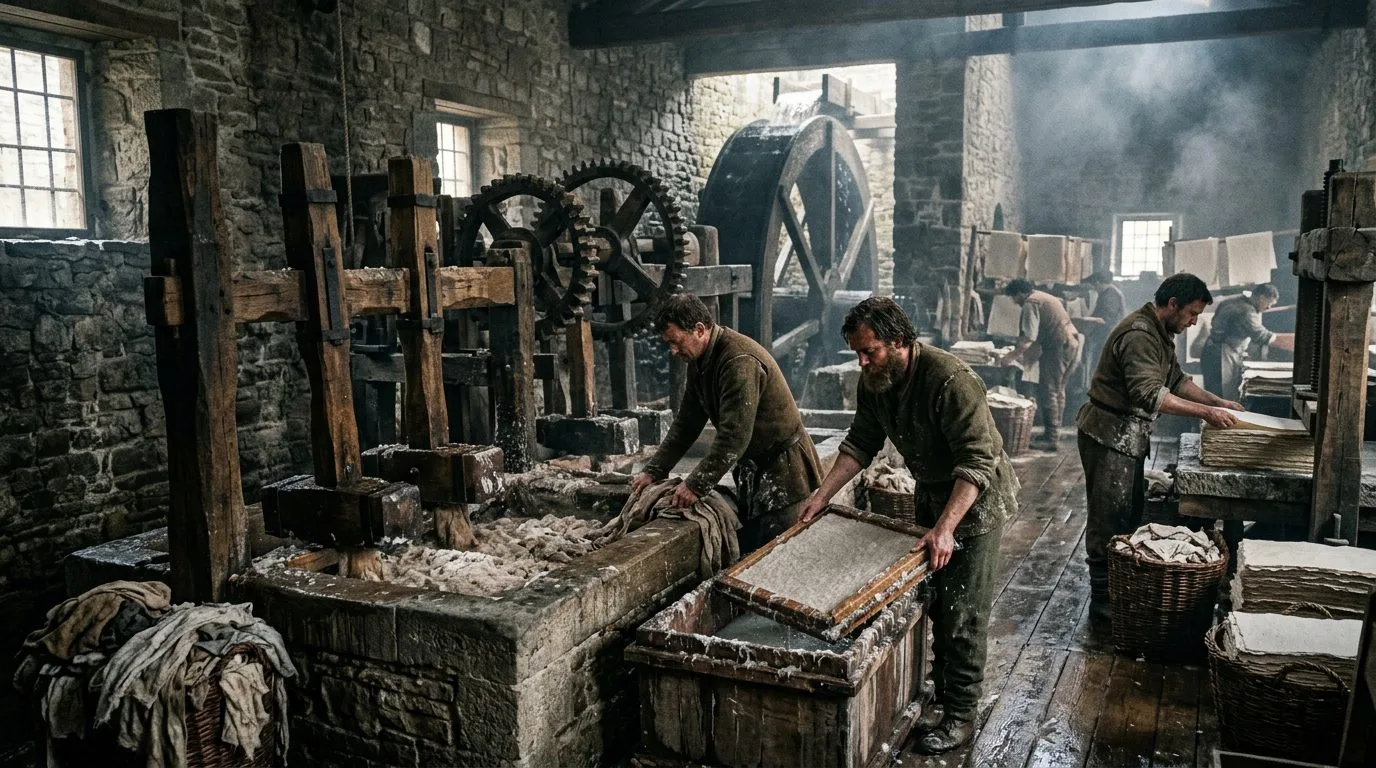
Water-Powered Paper Mills Solved the Supply Crisis
Gutenberg’s press threatened to stall for lack of paper—parchment required 170 calfskins per Bible, making mass production impossible. Italian paper mills in Fabriano had used water-powered hammers to pulp linen rags since 1276, but demand exploded after 1450. Mills installed multiple water wheels driving 30-hammer batteries that could process 200 pounds of rags daily into smooth writing surfaces. By 1470, Nuremberg operated 12 paper mills producing 400 reams weekly. Quality improved too; wire molds created watermarks that discouraged counterfeiting while ensuring consistent thickness. Paper costs dropped 75% between 1450 and 1500, making books affordable for urban artisans. Without this industrial-scale paper production, printing would have remained a luxury craft rather than an information revolution.
Source: britannica.com
10. Guild Systems Standardized Printing as an Industrial Trade
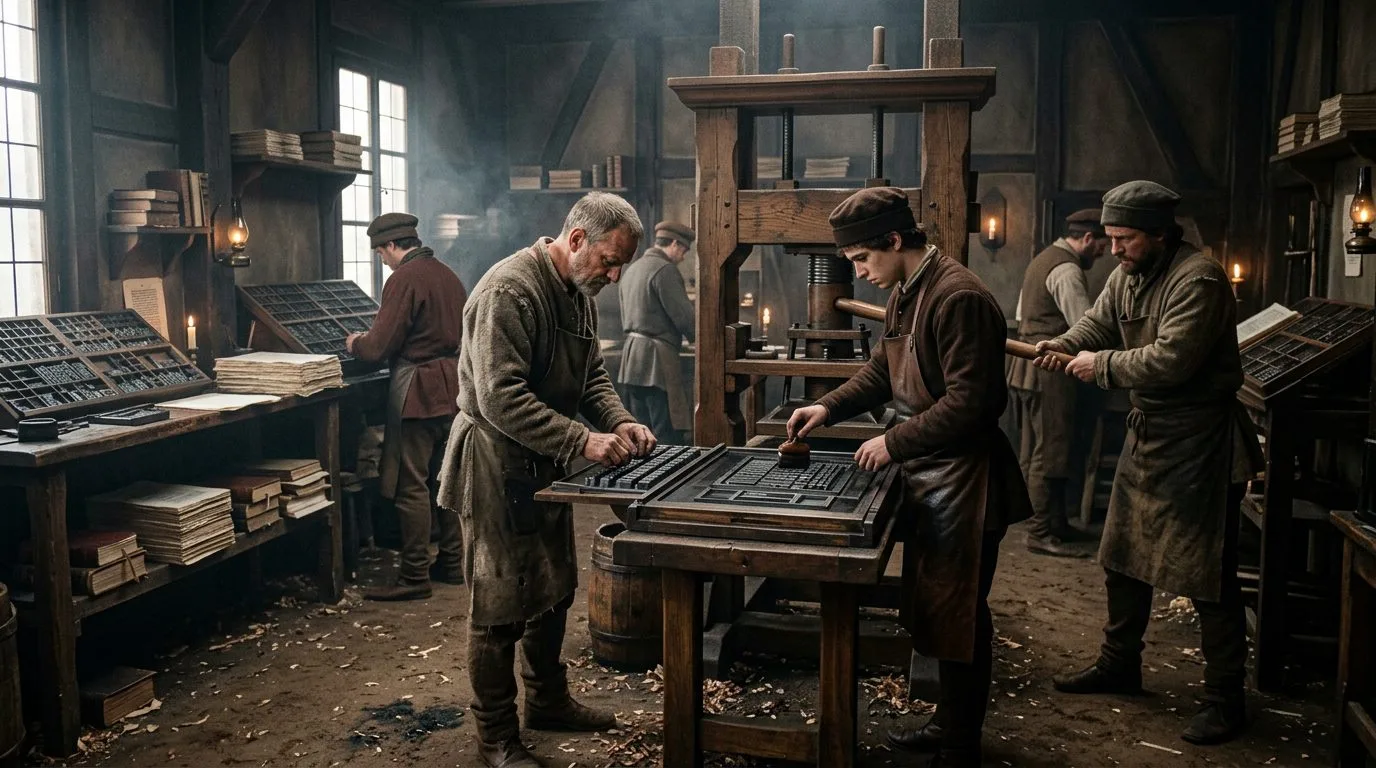
Craftsmen unite to perfect the printer’s trade.
Printing transformed from experimental craft to regulated industry when Venice established the first printer’s guild in 1469. These organizations set type standards—ensuring an inch of “pica” type measured identically across shops—and training protocols that turned apprentices into masters over seven-year terms. Paris guilds in 1475 required journeymen to produce 1,000 error-free pages before certification. Guild monopolies controlled who could own presses; Lyon limited licenses to 75 printers in 1496, preventing market saturation while maintaining quality. The system created Europe’s first technical middle class—skilled typesetters earned triple a laborer’s wage. Guild networks also facilitated knowledge transfer; a journeyman working in Basel, Venice, and Paris spread best practices across borders, accelerating innovation that made printing the Renaissance’s defining technology.
Source: smithsonianmag.com
Did You Know?
Did You Know? The first bestseller wasn’t a Bible but a satirical Latin grammar book. Aldus Manutius’s 1501 octavo editions of classical texts outsold religious works three-to-one, proving Renaissance readers craved pagan philosophy over scripture—a cultural shift that horrified the Church but couldn’t be stopped once portable, affordable books escaped monastery control and landed in merchants’ pockets across Europe.