
Before data analytics and strategic planning, ancient rulers relied on prophecies to make civilization-altering decisions. From the Oracle of Delphi dictating Greek military strategy to Babylonian star-readers predicting royal fates, these predictions shaped empires.
1. The Delphic Oracle Destroys Croesus of Lydia’s Empire
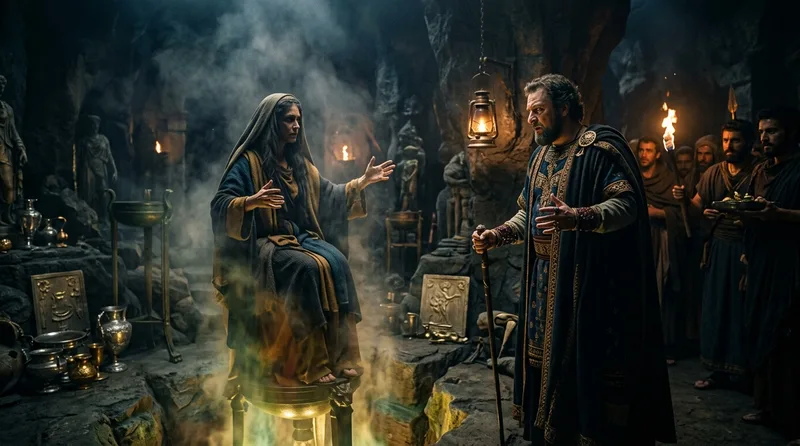
When Croesus, the fabulously wealthy king of Lydia, consulted the Oracle of Delphi around 547 BCE about attacking Persia, he received a devastating prophecy: “If you cross the Halys River, you will destroy a great empire.” Croesus interpreted this as divine endorsement for war against Cyrus the Great. The Lydian king had already tested Delphi’s accuracy by sending messengers to ask what he was doing on a specific day—the Pythia priestess correctly identified he was boiling a lamb and tortoise in a bronze cauldron. Emboldened by this proof, Croesus amassed an army of 420,000 soldiers and crossed into Persian territory. The prophecy proved catastrophically accurate, but not as Croesus expected. Cyrus defeated the Lydian forces decisively at Pteria, then pursued Croesus to his capital of Sardis, conquering it in 546 BCE. The great empire destroyed was Croesus’s own. According to Herodotus, when Croesus complained to Delphi about the misleading prophecy, the Oracle responded that he should have asked which empire would fall. This calculated ambiguity became the Oracle’s trademark method, allowing priestesses to maintain credibility regardless of outcomes while collecting substantial fees from desperate rulers across the Mediterranean world.
Source: britannica.com
2. Sibylline Prophecy Imports Eastern Goddess to Save Rome
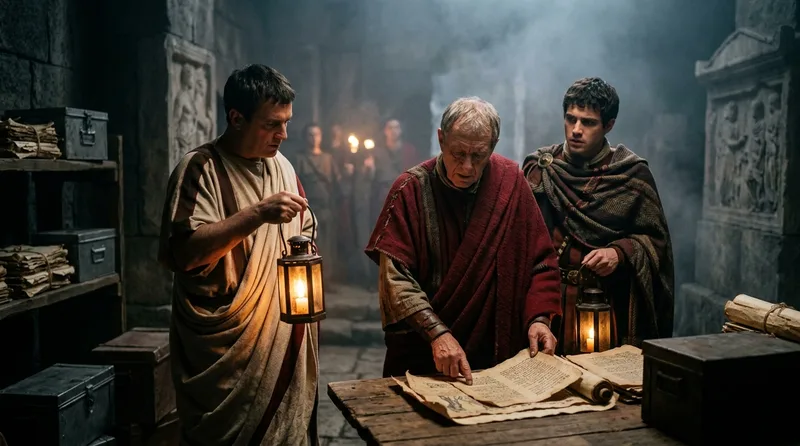
During Rome’s darkest hour in the Second Punic War, when Hannibal had slaughtered 50,000 Romans at Cannae in 216 BCE, desperate senators consulted the Sibylline Books—a collection of Greek prophecies supposedly purchased from the Cumaean Sibyl by Rome’s last king. The cryptic verses declared Rome could only defeat Hannibal by bringing the Magna Mater, the Great Mother goddess Cybele, from her sacred home in Pessinus, Phrygia. In 204 BCE, Rome dispatched a diplomatic mission 1,200 miles to Asia Minor to request the black meteorite stone that represented the goddess. King Attalus I of Pergamon agreed, and Romans transported the sacred object by ship to Ostia. The prophecy specified that Rome’s most virtuous man must receive the goddess. The Senate selected Publius Cornelius Scipio Nasica, whose family would soon produce Scipio Africanus, the general who finally defeated Hannibal at Zama in 202 BCE. The Magna Mater’s arrival fundamentally transformed Roman religion, introducing ecstatic worship practices including self-castrating priests called Galli and frenzied musical ceremonies that scandalized traditional Romans. Yet the prophecy’s fulfillment coincided exactly with Rome’s military turnaround. Within two years of Cybele’s installation, Hannibal evacuated Italy, never to return. This convinced Romans that foreign prophecies and gods could be strategically imported to serve state interests, establishing a precedent for religious syncretism that would characterize the Empire.
Source: britannica.com
3. Babylonian Star-Gazers Predict Assyria’s Violent End
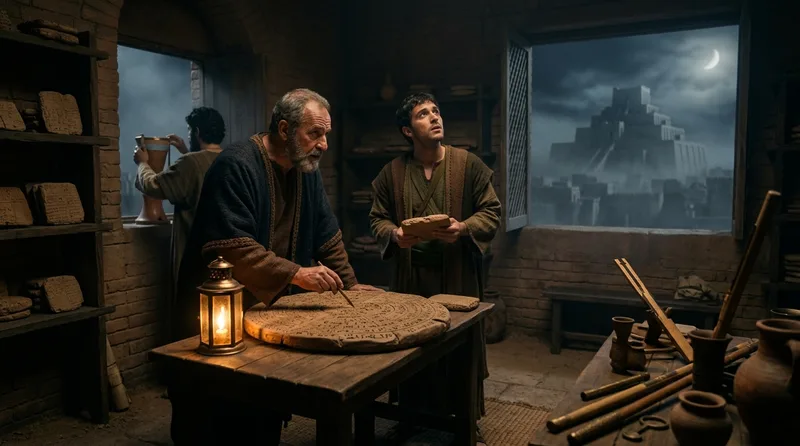
Babylonian astronomers in the seventh century BCE maintained meticulous celestial omen texts called Enuma Anu Enlil, comprising 70 tablets with over 7,000 astronomical predictions linking heavenly phenomena to earthly fates. These scholar-priests recorded that lunar eclipses specifically threatened Assyrian kings, while planetary conjunctions foretold dynastic collapse. Around 650 BCE, court astrologers observed Venus disappearing behind the moon and Jupiter approaching Mars—omens their tablets interpreted as signaling the fall of a great northern power. King Ashurbanipal, ruling from Nineveh with an army of 150,000 soldiers, initially dismissed these warnings. However, Babylonian nobles and Median chieftains interpreted these same prophecies as divine permission to rebel. In 626 BCE, the Chaldean leader Nabopolassar seized Babylon’s throne, explicitly citing celestial signs as legitimizing his rule. Babylonian astronomers intensified their predictions, claiming that every lunar eclipse endangered Assyrian sovereignty. By 612 BCE, a coalition of Babylonians and Medes besieged Nineveh for three months before destroying it so thoroughly that its location was lost for two millennia. The self-fulfilling nature of these prophecies proved crucial—not because the stars actually predetermined Assyria’s fate, but because shared belief in astronomical omens coordinated rebel factions across 500 miles of territory, creating the unified opposition necessary to overthrow the world’s most powerful military empire.
Source: britannica.com
4. Oracle Bones Legitimize China’s Shang Dynasty Through Divine Dialogue

Beginning around 1200 BCE, Shang Dynasty kings at their capital of Anyang employed a revolutionary prophetic technology: oracle bones that transformed ancestor worship into political legitimacy. Royal diviners inscribed questions onto cattle scapulae and turtle plastrons—over 150,000 fragments have been excavated—then applied heated bronze rods to create crack patterns interpreted as answers from deceased kings. King Wu Ding consulted oracle bones on 200 separate occasions regarding whether his toothache indicated ancestral displeasure or demonic attack. These weren’t private spiritual inquiries but public governmental records. Each question and answer was carved into the bone, creating an archived prophetic bureaucracy. Diviners asked ancestors whether military campaigns against the Gui people would succeed, whether rainfall would be sufficient for millet crops, and whether the king’s 64 documented consorts would produce male heirs. The inscriptions reveal that approximately 30% of divinations concerned warfare, 25% agriculture, and 15% royal health. This system granted enormous power to the diviners who interpreted the cracks. By controlling what the ancestors supposedly commanded, they effectively controlled state policy. When the Zhou Dynasty conquered the Shang around 1046 BCE, they didn’t abandon oracle bone divination—they co-opted it. The Zhou claimed their victory had been prophesied by Shang ancestors themselves, using captured oracle bones as proof that heaven had transferred its mandate to new rulers, establishing the Mandate of Heaven doctrine that would govern Chinese political philosophy for three millennia.
Source: britannica.com
5. Egyptian Dream Books Reveal the Future Through Sleep
The Chester Beatty Papyrus III, dating to approximately 1220 BCE during the reign of Ramesses II, contains the oldest surviving dream interpretation manual, listing 108 good dreams and 78 nightmares with specific prophetic meanings. This wasn’t entertainment—it was official governmental policy. Egyptian priests maintained dream temples where supplicants underwent ritual purification for 3 days before sleeping in sacred precincts, hoping for prophetic visions. The papyrus systematically categorizes dreams: seeing oneself dead meant long life; drinking warm beer predicted suffering; eating crocodile meat foretold becoming an official. These interpretations directly influenced major decisions. Prince Thutmose, future Pharaoh Thutmose IV around 1400 BCE, fell asleep beside the Great Sphinx and dreamed it promised him the throne if he cleared away the desert sand engulfing it. This dream prophecy wasn’t private revelation but political propaganda carved onto the Dream Stele still standing between the Sphinx’s paws. Similarly, royal architects positioned the pharaoh’s sleeping chambers in temple complexes specifically to facilitate prophetic dreams during new moon periods. The sophistication is striking: Egyptian dream interpreters distinguished between dreams influenced by recent events versus those sent by gods, understood symbolic reversal where dreams meant their opposite, and recognized that identical dreams had different meanings for different social classes. When Alexander the Great conquered Egypt in 332 BCE, he specifically consulted Egyptian dream priests before founding Alexandria, demonstrating how these prophetic systems maintained authority for over a thousand years.
Source: britannica.com
6. Akhenaten’s Solar Prophecy Triggers History’s First Religious Revolution
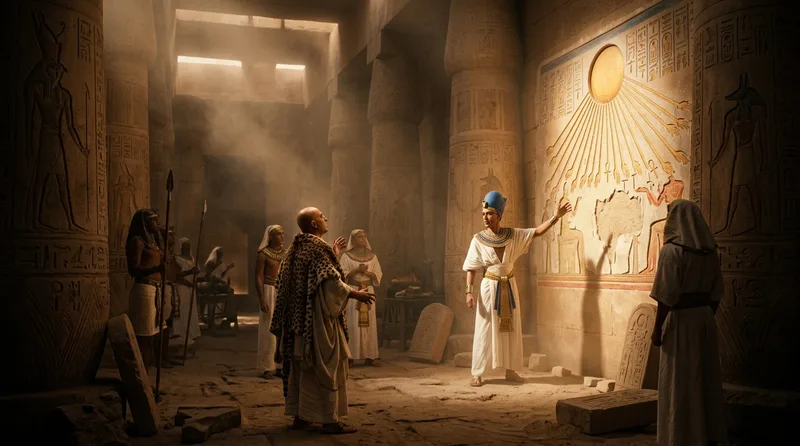
Around 1353 BCE, Pharaoh Amenhotep IV experienced visions he claimed came directly from the sun disk Aten, prophesying that Egypt’s traditional gods were false and only the solar deity deserved worship. This wasn’t gradual reform but revolutionary upheaval. Within 5 years, the pharaoh changed his name to Akhenaten, abandoned Thebes where priests of Amun controlled temples worth 750 tons of gold annually, and built an entirely new capital city called Akhetaten, 280 miles north. He deployed workers to physically chisel out the names of other gods from monuments throughout Egypt’s 400-mile length. The prophecy Akhenaten proclaimed was radical: humans could communicate directly with the divine without priestly intermediaries, and the Aten would bring a utopian age of peace and truth. He composed the Great Hymn to the Aten around 1340 BCE, describing his prophetic vision in 100 lines of poetry that scholars note bear striking similarity to Psalm 104, suggesting later biblical influence. For 17 years, Akhenaten enforced this prophetic monotheism through state power, closing temples that had operated for 1,500 years and redistributing their wealth. His wife Nefertiti served as co-prophet, depicted in temple art receiving divine rays directly from Aten. Yet the prophecy died with the prophet. Within 3 years of Akhenaten’s death around 1336 BCE, his son Tutankhamun restored the old gods, abandoned the new capital, and priests systematically erased Akhenaten’s name from king lists, declaring him a heretic whose prophecy had nearly destroyed Egypt.
Source: britannica.com
7. Liver Divination Determines the Battle of Qadesh’s Strategy
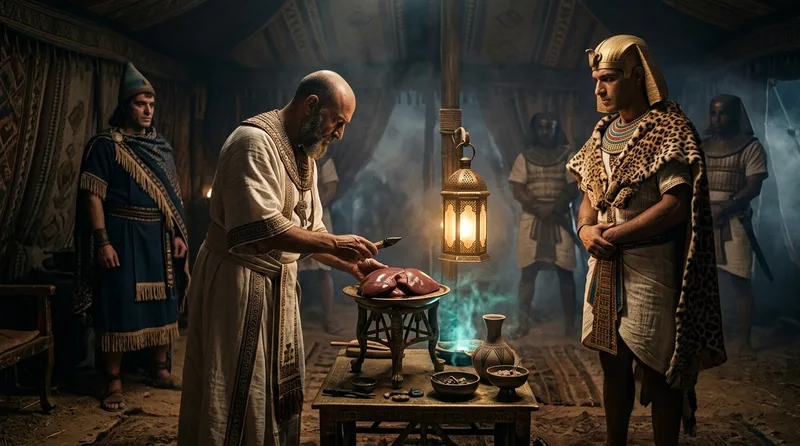
Before the largest chariot battle in ancient history at Qadesh in 1274 BCE, both Pharaoh Ramesses II and Hittite King Muwatalli II consulted baru priests who practiced hepatoscopy—divination through examining sheep livers. This wasn’t superstition but systematic science. Mesopotamian diviners trained for 12 years studying clay liver models like the one found at Mari from 1750 BCE, dividing the organ into 55 distinct zones, each corresponding to gods, enemies, and strategic outcomes. The liver was considered the body’s blood reservoir and thus the seat of life and divine communication. At Qadesh, Hittite hepatoscopy apparently predicted that concealing 2,500 chariots behind the city would lead to victory through ambush—and it nearly did. Egyptian liver readers examining sacrificial sheep on the morning of battle determined that crossing the Orontes River with only the Amun division of Ramesses’s 4-division, 20,000-soldier army was auspicious. This prophetic guidance almost proved disastrous when Hittite chariots emerged from concealment, surrounding the pharaoh with only his personal guard of 50 men. Ramesses barely escaped, though he later claimed divine intervention. What makes hepatoscopy remarkable is its international consistency: identical liver features meant the same things to Hittite, Babylonian, and Assyrian diviners across 1,000 miles, suggesting a shared training tradition. When Alexander the Great’s army mutinied in India in 326 BCE, he consulted hepatoscopy, and unfavorable omens convinced him to turn back, demonstrating this prophetic system’s influence spanning a millennium and reshaping the course of empires.
Source: britannica.com
8. Kalki Avatar Prophecy Shapes Gupta Religious Policy

Hindu texts including the Vishnu Purana, compiled around 400 CE during the Gupta period, contain prophecies of Kalki, the tenth avatar of Vishnu who would arrive on a white horse to end the Kali Yuga age of darkness and restore dharma. This wasn’t distant eschatology but immediate political theology. Gupta emperors like Chandragupta II, ruling from 380 to 415 CE over an empire of 3.5 million square miles, strategically invoked Kalki prophecies to legitimize religious reforms and military campaigns. Court Brahmins calculated that the Kali Yuga began in 3102 BCE, meaning by the Gupta period, 3,500 years of prophesied degradation had elapsed, making the restoration prophecy urgent. The Kalki Purana, elaborated during this era, specified that the avatar would be born in Shambhala to a Brahmin named Vishnuyasha when righteousness had declined to 25% of its original strength. Gupta rulers positioned themselves as preparing the way for Kalki’s arrival through patronizing 50 new Hindu temples, codifying Sanskrit texts, and suppressing Buddhist influence that had dominated for 500 years. The prophecy’s political utility was profound: any military campaign could be framed as restoring dharma in advance of the avatar’s coming. When Skandagupta defeated Hun invasions around 455 CE, court poets explicitly connected his victories to Kalki prophecies. This prophetic framework established a template for Hindu political theology that persists today, with over 20 different individuals since the nineteenth century claiming to be the Kalki avatar, demonstrating the prophecy’s enduring power to mobilize religious movements.
Source: britannica.com
9. Hidden Terma Prophecies Guide Tibetan Political Destiny

Tibetan Buddhist tradition holds that Padmasambhava, who introduced Buddhism to Tibet in the eighth century CE, foresaw political upheavals and hid terma—prophetic texts and sacred objects—throughout the Himalayan region to be discovered at precisely ordained future moments. These weren’t vague predictions but detailed instructions. The Bardo Thodol, discovered as terma around 1350 CE, contained specific guidance for navigating death and rebirth that transformed Tibetan funeral practices for 15 million people. Terton, or treasure revealers, claimed supernatural guidance to find terma hidden in caves, lakes, and even within their own minds as “mind treasures.” Around 1450 CE, a terma discovered near Samye Monastery prophesied the rise of the Dalai Lama lineage, providing religious justification for concentrating political power in a single reincarnating figure—a system that governed Tibet for 500 years. The Fifth Dalai Lama, ruling from 1642 to 1682, strategically commissioned searches for terma that would validate his unification of Tibet under the Gelug school, and conveniently, over 30 terma were “discovered” during his reign. The sophistication of this prophetic system is remarkable: terma could only be revealed when conditions were ripe, meaning failed political movements simply meant the prophecy’s time hadn’t arrived. When Chinese forces occupied Tibet in the mid-twentieth century, lamas immediately interpreted this through terma prophecies predicting a period of darkness before eventual restoration, allowing the tradition to absorb catastrophic defeat into its prophetic framework, demonstrating how these hidden texts shaped Tibetan responses to political trauma for twelve centuries.
Source: britannica.com
10. Roman Augury Saves Legions by Postponing Battles
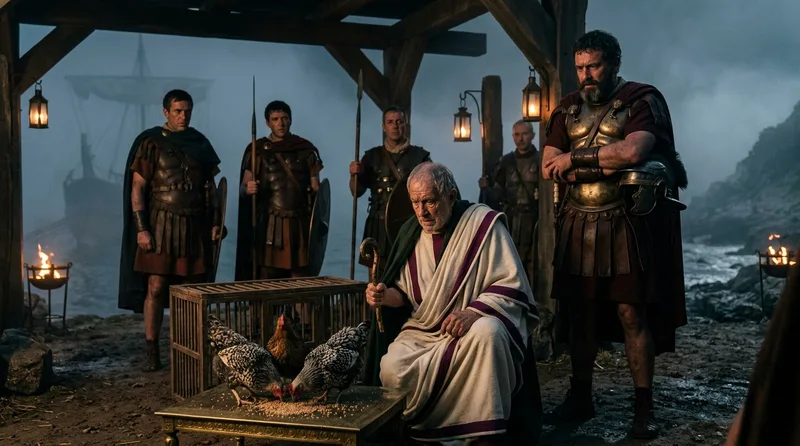
During the First Punic War in 249 BCE, Roman Admiral Publius Claudius Pulcher faced a critical decision: attack Carthaginian forces at Drepana or wait. He consulted the sacred chickens carried with every Roman military expedition—if they ate grain eagerly, the augury was favorable; if they refused, disaster loomed. The chickens wouldn’t eat. Frustrated, Pulcher allegedly shouted, “If they won’t eat, let them drink!” and threw them overboard. He attacked anyway and lost 93 of his 123 ships, Rome’s worst naval defeat in the war. This catastrophe didn’t discredit augury—it proved its validity. The Senate fined Pulcher 120,000 asses and Roman commanders never again ignored bird omens. The augury system, overseen by a college of 16 augurs, divided the sky into templum quadrants and interpreted how birds flew through each section, whether they called from the left (favorable) or right (unfavorable), and whether they appeared in groups of 2, 4, or 6. Before the Battle of Sentinum in 295 BCE, where four Roman legions faced 60,000 Samnites and Gauls, Consul Publius Decius Mus waited three days for favorable auguries before attacking, winning decisively. The system’s strategic value wasn’t supernatural but psychological: it prevented impulsive attacks, forced commanders to consider conditions carefully, and provided scapegoats for defeats. When Julius Caesar crossed the Rubicon in 49 BCE, he first ensured favorable auguries, understanding that prophetic legitimacy mattered as much as military strength in controlling Rome’s destiny.
Source: britannica.com
Did You Know?
Did You Know? The Oracle of Delphi’s prophecies remained so influential that when Alexander the Great tried to consult her on an inauspicious day in 336 BCE and she refused, he physically dragged the priestess to the temple—whereupon she exclaimed he was invincible, which he immediately accepted as his prophecy. Ancient rulers didn’t just believe these predictions; they understood that prophecy was the ultimate political weapon, capable of legitimizing wars, toppling dynasties, and reshaping religious landscapes across three continents for over three millennia—not through divine foresight, but through the very human power of shared belief transforming prediction into reality.