
When offered their lives in exchange for denying their faith, these ten Protestant reformers chose the flames instead. Their deaths weren’t just executions—they were turning points that transformed theological debates into movements that reshaped Christianity forever.
1. William Tyndale: Strangled Then Burned for Translating Scripture

William Tyndale
William Tyndale‘s final words before execution on October 6, 1536, were “Lord, open the King of England’s eyes.” The scholar had spent years in exile translating the New Testament into English, producing a work so influential that 83% of the King James Bible would later use his exact phrases. Henry VIII’s agents hunted him across Europe for six years before arresting him in Antwerp in 1535. Charged with heresy for claiming scripture should be accessible to common people, Tyndale spent 500 days imprisoned in Vilvoorde Castle near Brussels. Authorities strangled him with a garrote before burning his body at the stake. Three years later, Henry VIII authorized the Great Bible—largely Tyndale’s translation—for every English church.
Source: britannica.com
2. Anne Askew: Tortured on the Rack Until Her Bones Dislocated
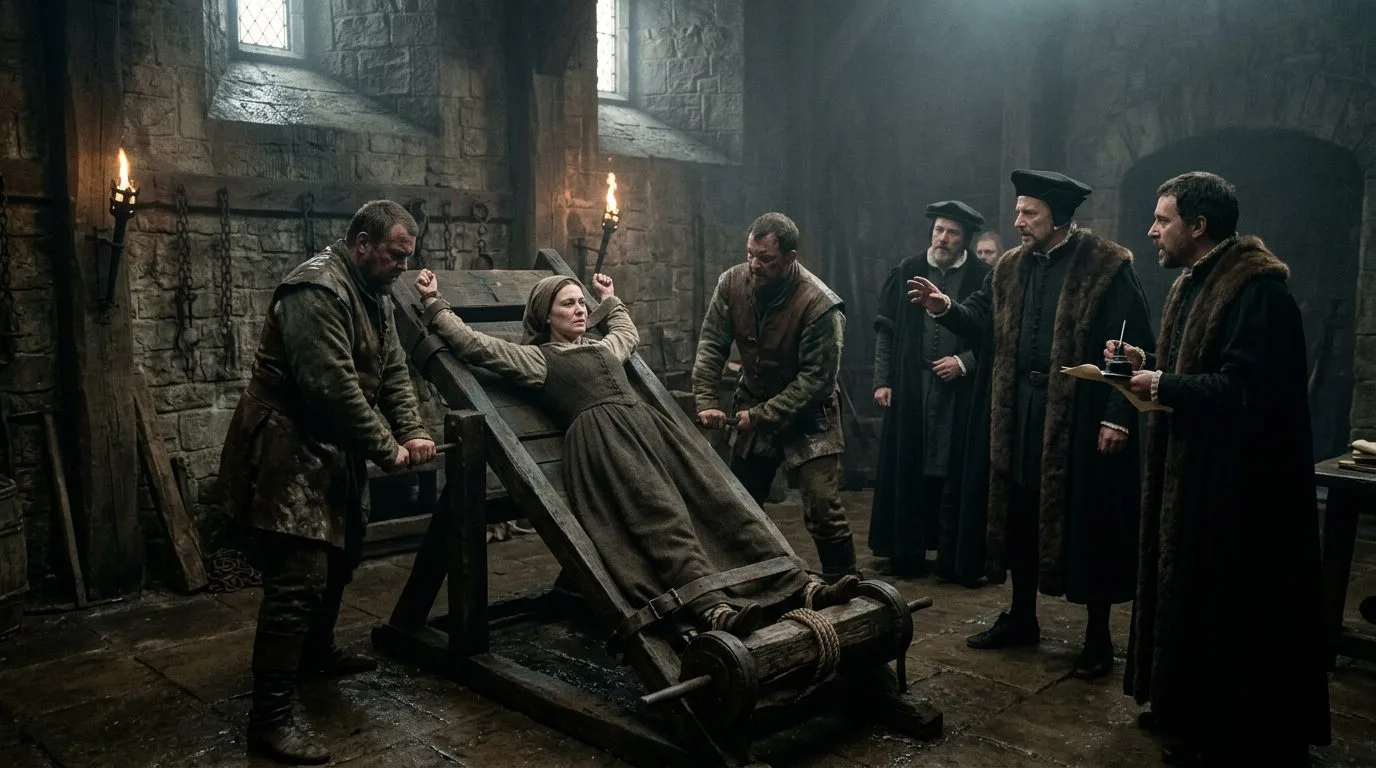
Anne Askew
Anne Askew became the only woman on record racked in the Tower of London, tortured on June 29, 1546, while interrogators demanded she name other Protestant sympathizers at Henry VIII’s court. The 25-year-old gentlewoman from Lincolnshire had already survived two heresy examinations by denying transubstantiation—the Catholic belief that communion bread literally becomes Christ’s flesh. Lord Chancellor Thomas Wriothesley personally turned the rack’s wheels until her joints popped from their sockets, hoping she would implicate Queen Katherine Parr. She revealed nothing. On July 16, 1546, guards carried her to Smithfield in a chair because her broken body couldn’t stand, then chained her upright to the stake where she burned for three hours before dying.
Source: britannica.com
3. Thomas Cranmer: The Archbishop Who Recanted Six Times Then Took It All Back
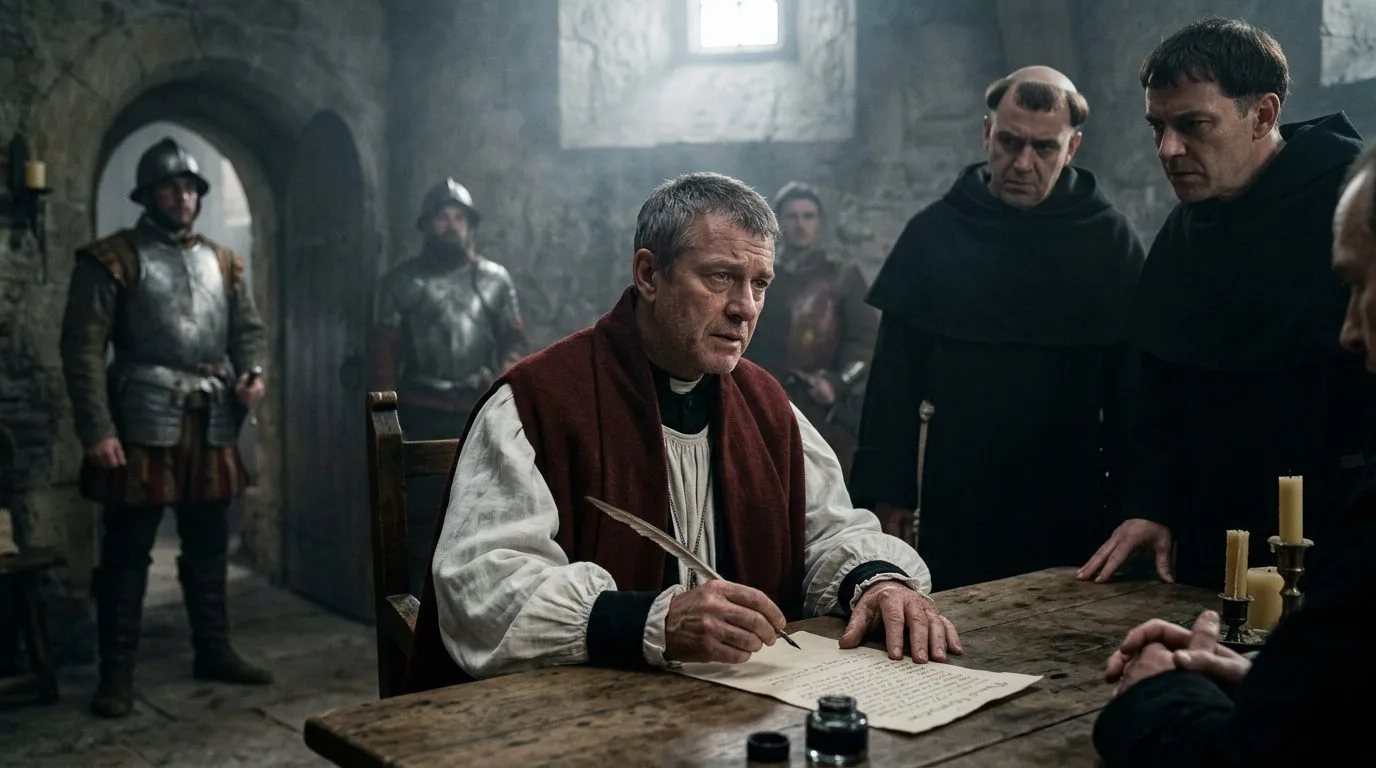
Thomas Cranmer
Thomas Cranmer signed six separate recantations between January and March 1556, each denying his Protestant beliefs and acknowledging papal supremacy. Queen Mary I‘s advisors expected the former Archbishop of Canterbury to read his seventh recantation publicly before receiving mercy. Instead, on March 21, 1556, at Oxford’s St. Mary’s Church, the 66-year-old shocked everyone by renouncing all his recantations and declaring the Pope “Christ’s enemy and Antichrist.” Guards dragged him to the same spot where his friends Hugh Latimer and Nicholas Ridley had burned five months earlier. Cranmer thrust his right hand—the one that signed the recantations—into the flames first, holding it steady until the flesh burned away. His Book of Common Prayer would become the foundation of Anglican worship worldwide.
Source: britannica.com
4. Jan Hus: Burned a Century Before Luther Was Born
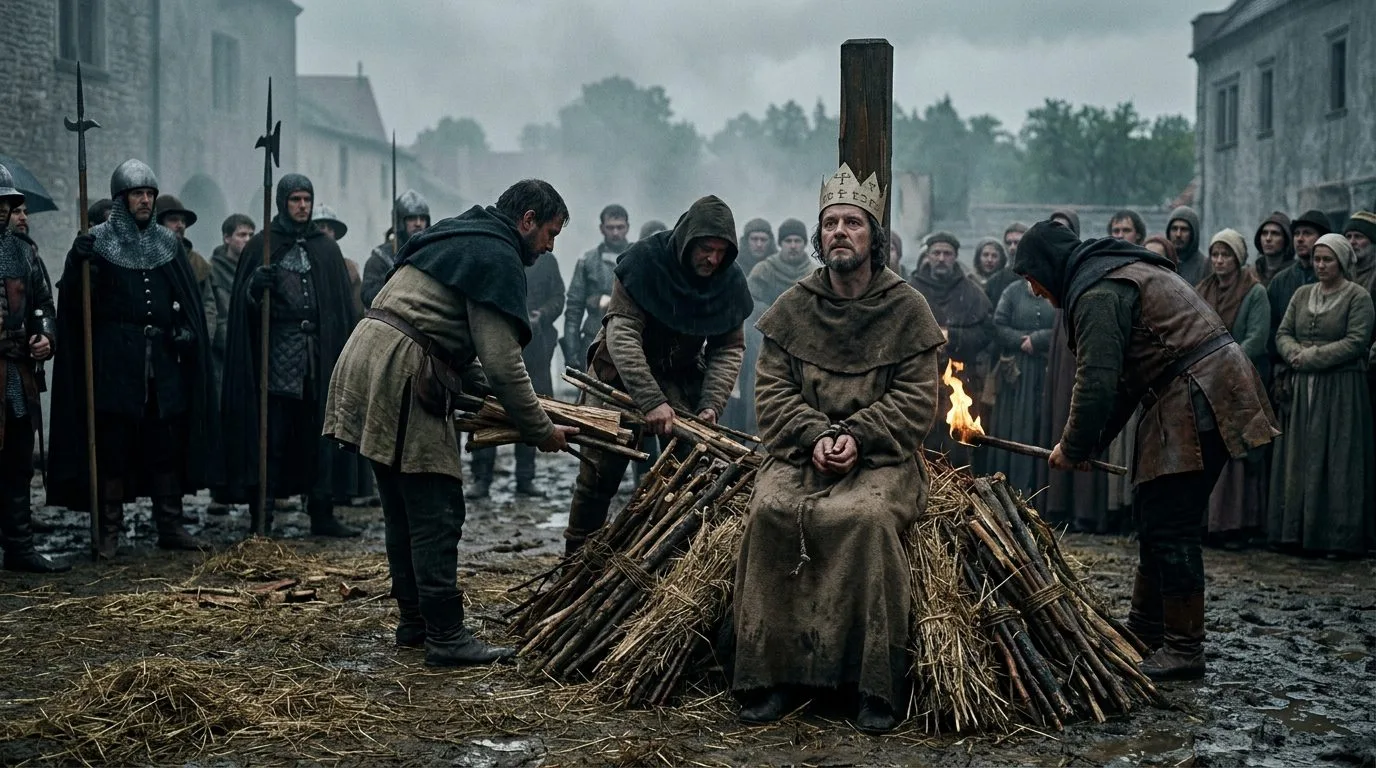
Jan Hus: Burned a Century Before Luther Was Born
Jan Hus died on July 6, 1415, exactly 102 years before Martin Luther would post his 95 Theses, yet he preached nearly identical reforms: scripture over papal authority, communion for laypeople, and church services in the vernacular Czech language. The Prague priest had been promised safe conduct to the Council of Constance by Emperor Sigismund, but once there, church authorities arrested him for heresy. After seven months imprisoned in a Dominican monastery, he faced trial where prosecutors read excerpts from his writings demanding that the church abandon wealth and corruption. Hus refused to recant unless shown his errors from scripture. Executioners burned him wearing a paper crown painted with three demons and the word “Heresiarch.” His death sparked the Hussite Wars that killed 5% of Bohemia’s population.
Source: britannica.com
5. Patrick Hamilton: Scotland’s First Reformation Martyr at Age 24
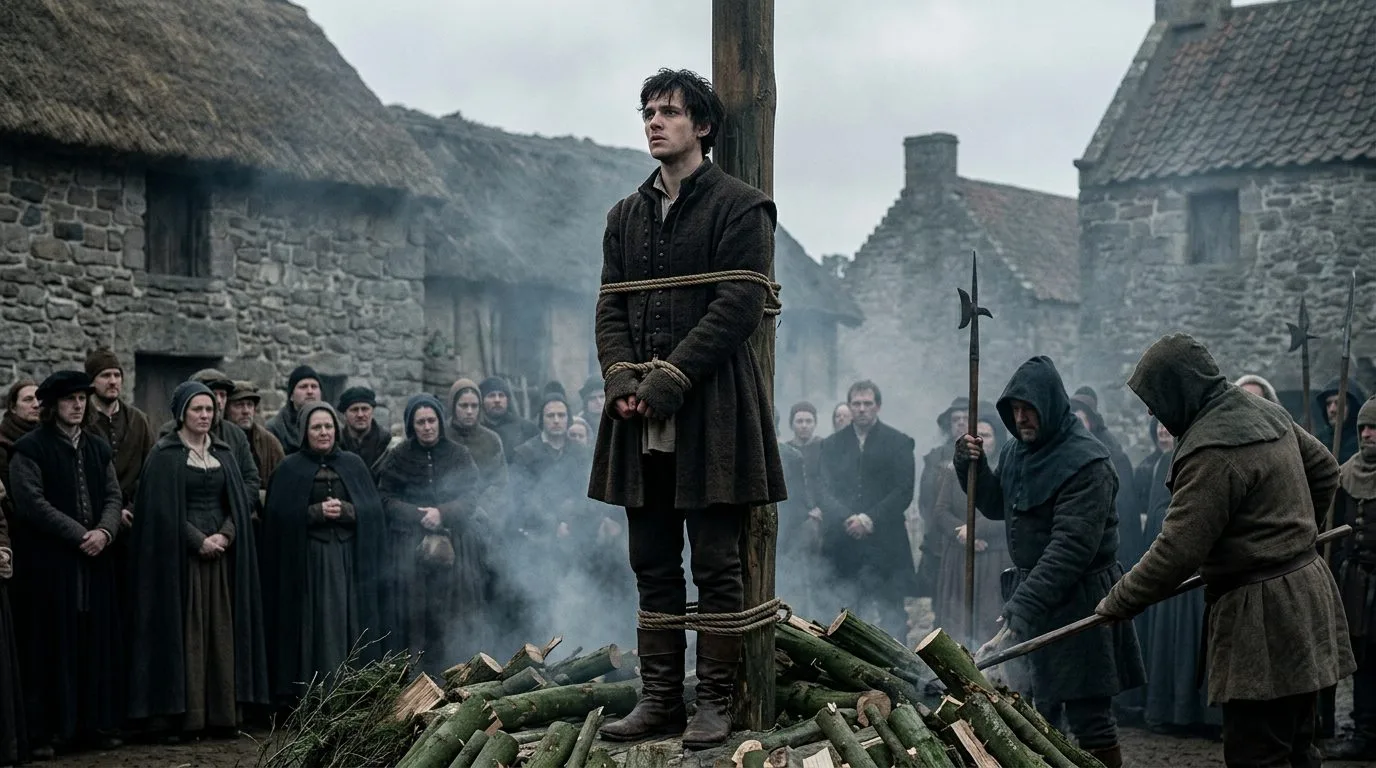
Patrick Hamilton
Patrick Hamilton burned for six hours on February 29, 1528, at St. Andrews because executioners used green wood that smoldered instead of blazing. The 24-year-old nobleman had studied under Martin Luther in Wittenberg and returned to Scotland preaching justification by faith alone. Archbishop James Beaton invited Hamilton to St. Andrews under pretense of theological discussion, then immediately arrested him for heresy. Hamilton’s trial lasted one afternoon—he was convicted at noon and burning by 3 PM. Witnesses said he remained conscious for the entire six hours, repeatedly calling out “How long, O Lord?” and “Lord Jesus, receive my spirit.” One observer later wrote that “the reek of Master Patrick Hamilton infected all it blew upon,” meaning his martyrdom converted more Scots to Protestantism than his preaching ever had.
Source: britannica.com
6. John Hooper: The Bishop Who Burned for 45 Minutes Because of Wind and Green Wood

John Hooper
John Hooper suffered one of the most prolonged executions of Mary I‘s reign when he burned at Gloucester on February 9, 1555. The Bishop of Gloucester and Worcester had been imprisoned for 18 months after refusing to wear Catholic vestments or acknowledge papal authority. Executioners placed three-quarters of a ton of wood around him, but strong winds kept blowing out the flames while green wood produced choking smoke instead of fire. For 45 minutes, flames consumed only Hooper’s lower body while he remained conscious, beating his chest and crying “Lord Jesus, have mercy upon me!” until one arm fell off. His legs burned to stumps before fire reached his torso. Witnesses counted him striking his chest 40 times before finally dying. His execution radicalized thousands of moderate Protestants who found the spectacle barbaric.
Source: britannica.com
7. Hugh Latimer and Nicholas Ridley: “We Shall Light Such a Candle”
Hugh Latimer and Nicholas Ridley
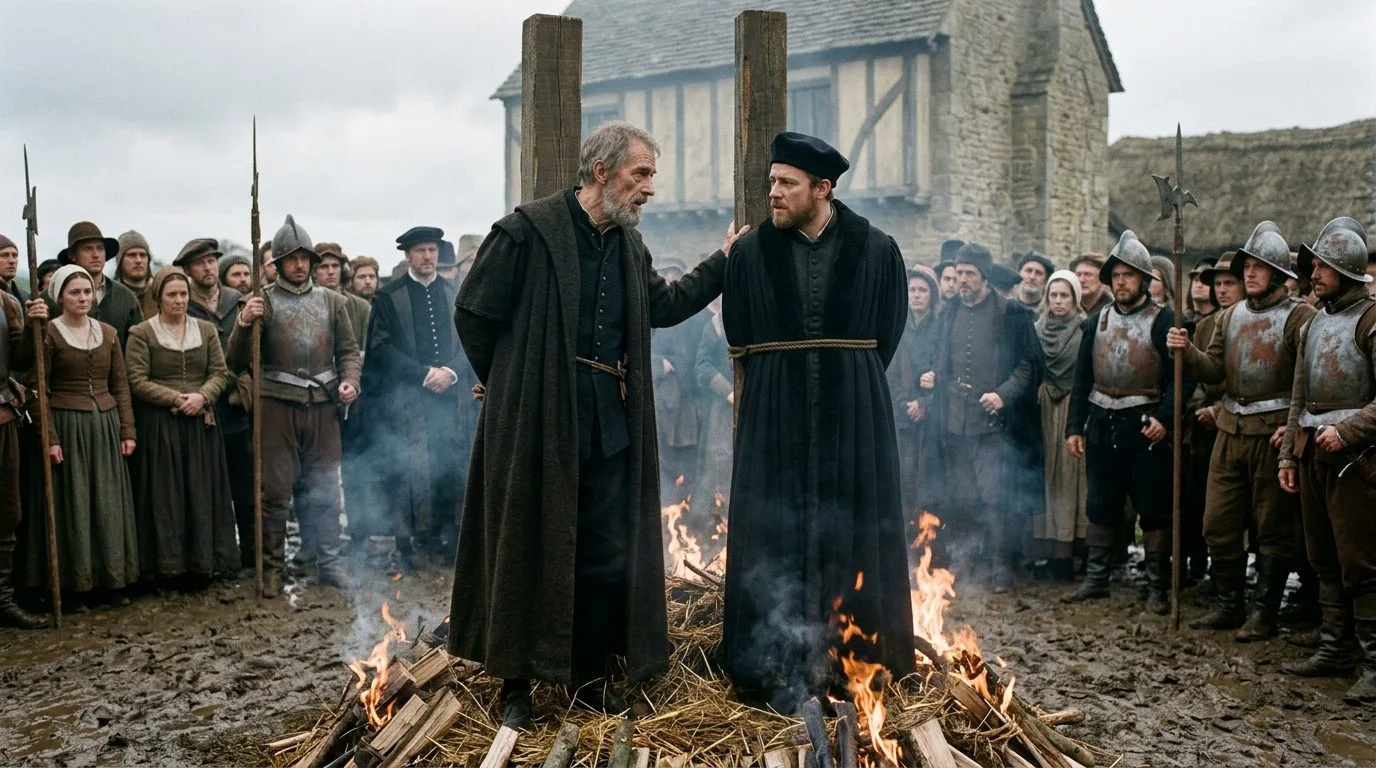
Hugh Latimer spoke his famous last words to Nicholas Ridley as flames rose around them on October 16, 1555: “Be of good comfort, Master Ridley, and play the man. We shall this day light such a candle by God’s grace in England as I trust shall never be put out.” The two bishops were chained to the same stake at Oxford for denying transubstantiation and papal supremacy. Ridley, age 55, died within minutes when a friend added gunpowder bags to hasten his death. Latimer, age 70, burned more slowly but remained calm throughout. Both had been key architects of England’s Protestant reformation under Edward VI, with Latimer serving as the young king’s personal chaplain. Mary I personally selected them for execution to send a message to other reformers. Thomas Cranmer watched from his prison cell window, burning at the same spot five months later.
Source: britannica.com
8. Dirk Willems: The Anabaptist Who Saved His Pursuer Then Died for It
Dirk Willems
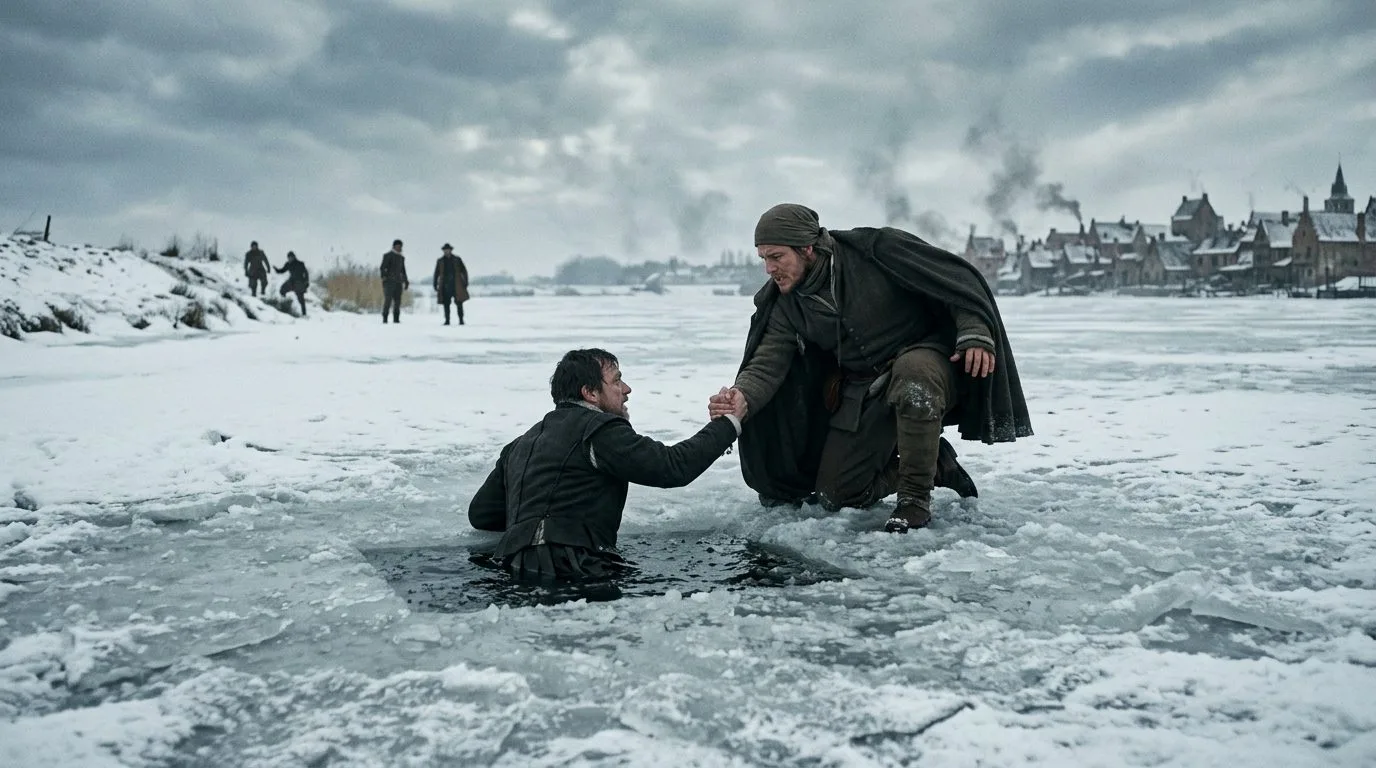
Dirk Willems was crossing a frozen lake near Asperen, Netherlands, in the mid-16th century when he heard his pursuer crash through the ice behind him. The Anabaptist fugitive turned back, pulled the drowning guard from the freezing water, and saved his life. The guard wanted to release Willems out of gratitude, but a local magistrate watching from shore ordered the arrest completed. Willems had been imprisoned for adult baptism—which denied the validity of infant baptism and was punishable by death. After escaping once using a rope made from rags, he was now recaptured through his own mercy. On May 16, 1569, authorities burned him at the stake above a slow fire because executioners feared the ice below was still too thin to support a crowd. He took over an hour to die, screaming in agony while the guard he saved reportedly wept.
Source: britannica.com
9. Guido de Bres: Author of the Belgic Confession Hanged for His Own Words
Guido de Bres
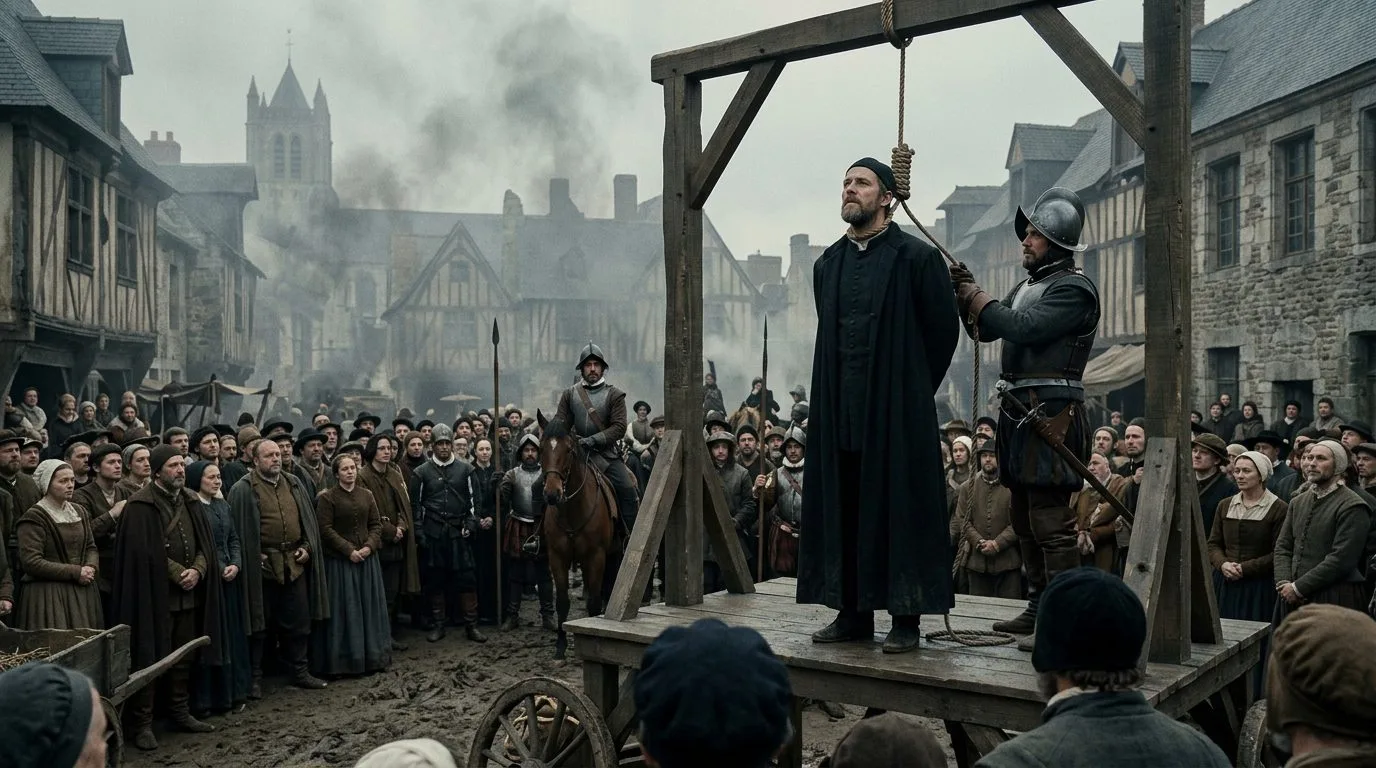
Guido de Bres authored the Belgic Confession in 1561, a systematic outline of Reformed Protestant beliefs that remains an official doctrinal standard for Dutch Reformed churches worldwide. The Belgian pastor originally wrote it to prove that Calvinists weren’t dangerous revolutionaries, but Spanish authorities used his own theological statements as evidence in his heresy trial. On May 31, 1567, at Valenciennes, France, the 47-year-old mounted the gallows after being offered a final chance to renounce his beliefs and return to Catholicism. De Bres refused, stating he would not purchase life with the price of his conscience. Executioners hanged him alongside another minister, Peregrine de la Grange, before a crowd of 2,000 spectators. His confession’s 37 articles would later influence the Westminster Confession and shape Presbyterian theology.
Source: britannica.com
10. The Guernsey Martyrs: A Pregnant Woman and Her Mother Burned Together
The Guernsey Martyrs
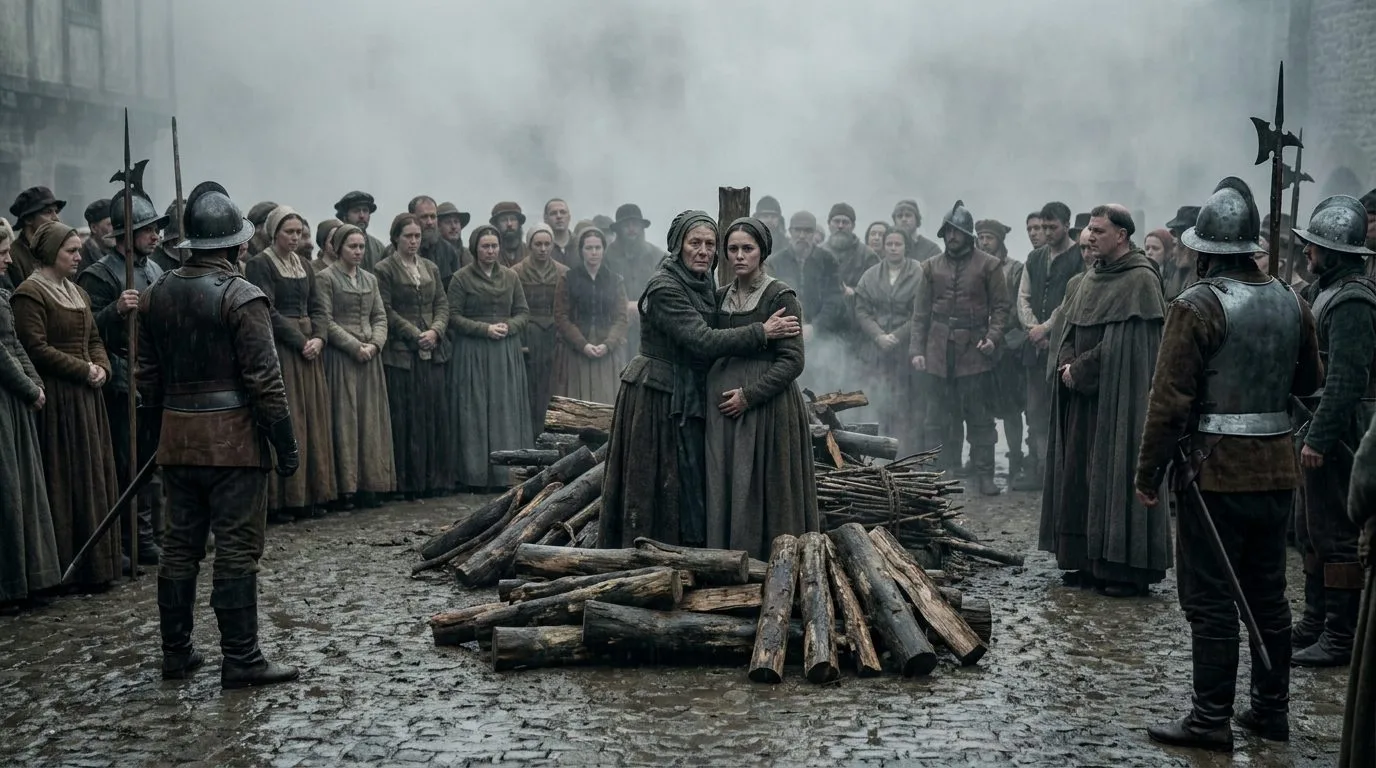
Perotine Massey, nine months pregnant, burned at the stake in Guernsey on July 18, 1556, alongside her mother and sister-in-law. The Channel Islands were under English control, making them subject to Mary I’s heresy laws. Perotine had been arrested for refusing to attend Catholic mass and denying transubstantiation. As flames consumed her, she gave birth—the infant rolled from the fire until a guard kicked it back into the flames, killing it. The bailiff later claimed he was just following orders to execute all heretics. Witnesses reported that Perotine’s mother, Guillemine Gilbert, and sister-in-law, Katherine Cawches, sang psalms until smoke choked them. The three women were among approximately 300 Protestants Mary I executed during her five-year reign, earning her the nickname “Bloody Mary” that persists nearly five centuries later.
Source: britannica.com
Did You Know?
Did You Know? The Catholic Church officially declared in the late 20th century that executing heretics was wrong, but stopped short of apologizing for specific burnings. Meanwhile, Oxford University placed a memorial cross in the mid-19th century marking the exact spot where Cranmer, Latimer, and Ridley died—directly in the middle of Broad Street, where thousands of cars now drive over it daily without noticing. The most ironic twist: within 50 years of their deaths, Protestant England would execute Catholics with equal enthusiasm, proving both sides valued theological purity over human life.