
A limestone Egyptian statue discovered in 1923 contains hieroglyphs that spell words not found in any known ancient dictionary. Despite modern technology and decades of scholarly research, certain artifacts guard their mysteries jealously, defying our understanding of ancient civilizations.
1. The Sekhemka Statue: Hieroglyphs That Don’t Exist
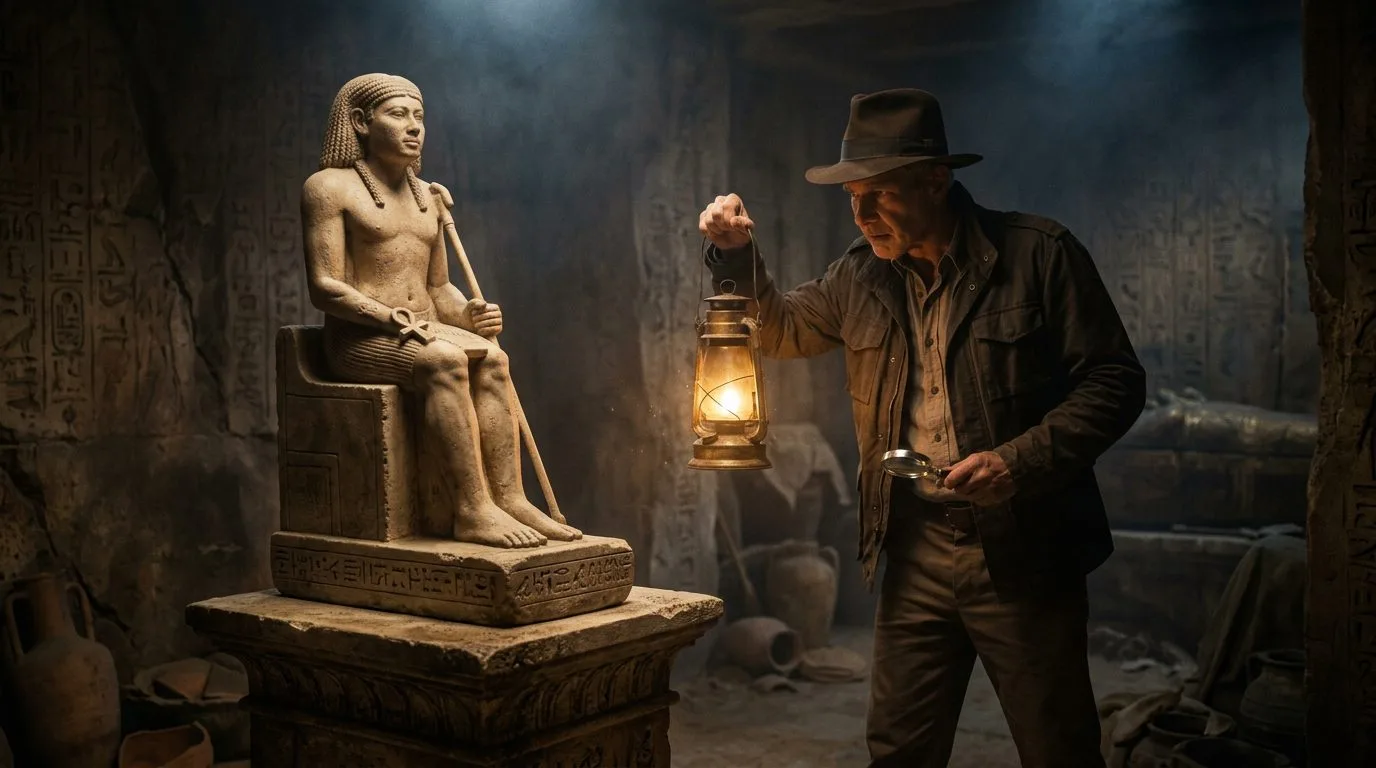
The Sekhemka Statue: Hieroglyphs That Don’t Exist
The limestone statue of Sekhemka, dated to 2400 BCE, features hieroglyphic combinations that appear nowhere else in Egyptian writing. Discovered at Saqqara and housed in British collections until nearly a century later, the statue’s inscriptions include symbols arranged in sequences that violate known grammatical rules of Middle Kingdom Egyptian. Three specific character clusters remain untranslatable after ninety years of analysis. Egyptologists initially dismissed them as carving errors, but their precise execution and repetition suggest intentional meaning. The statue depicts a royal scribe in traditional crossed-leg pose, yet the text refuses to reveal his true title or function.
Source: britannica.com
2. The Antikythera Mechanism’s Missing Dials
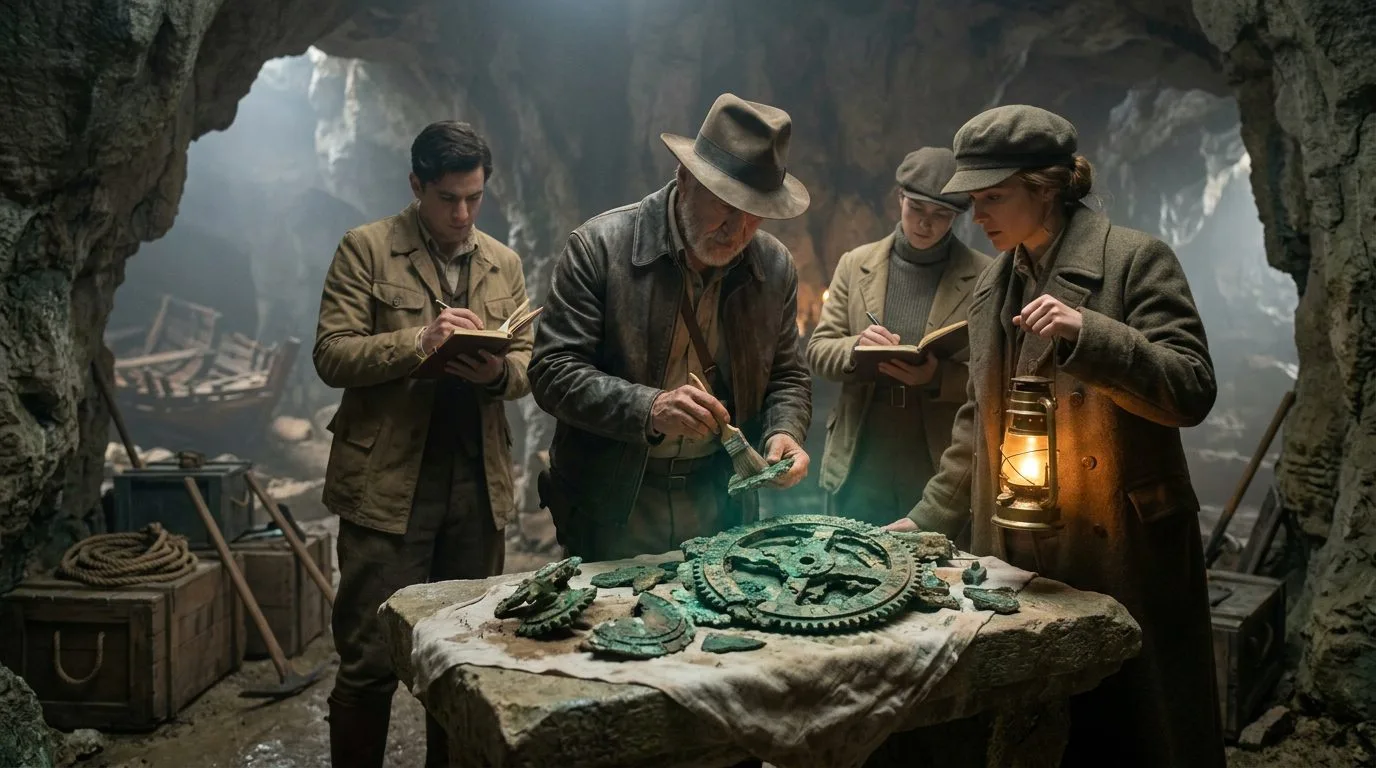
The Antikythera Mechanism’s Missing Dials
Recovered from a shipwreck off Antikythera island in 1901, this bronze device from approximately 100 BCE contains at least thirty interlocking gears that calculated astronomical positions. While researchers decoded its calendar and eclipse prediction functions over a century later, four dial positions on the corroded fragments serve no discernible purpose. The gears connected to these mystery dials operate on mathematical ratios that match no known celestial cycle. X-ray imaging revealed inscriptions near these mechanisms reading “spiral divisions” in ancient Greek, but what those divisions measured remains unknown. The device’s sophistication wouldn’t reappear in human technology for another fourteen centuries.
Source: smithsonianmag.com
3. The Specillum With Seven Angles
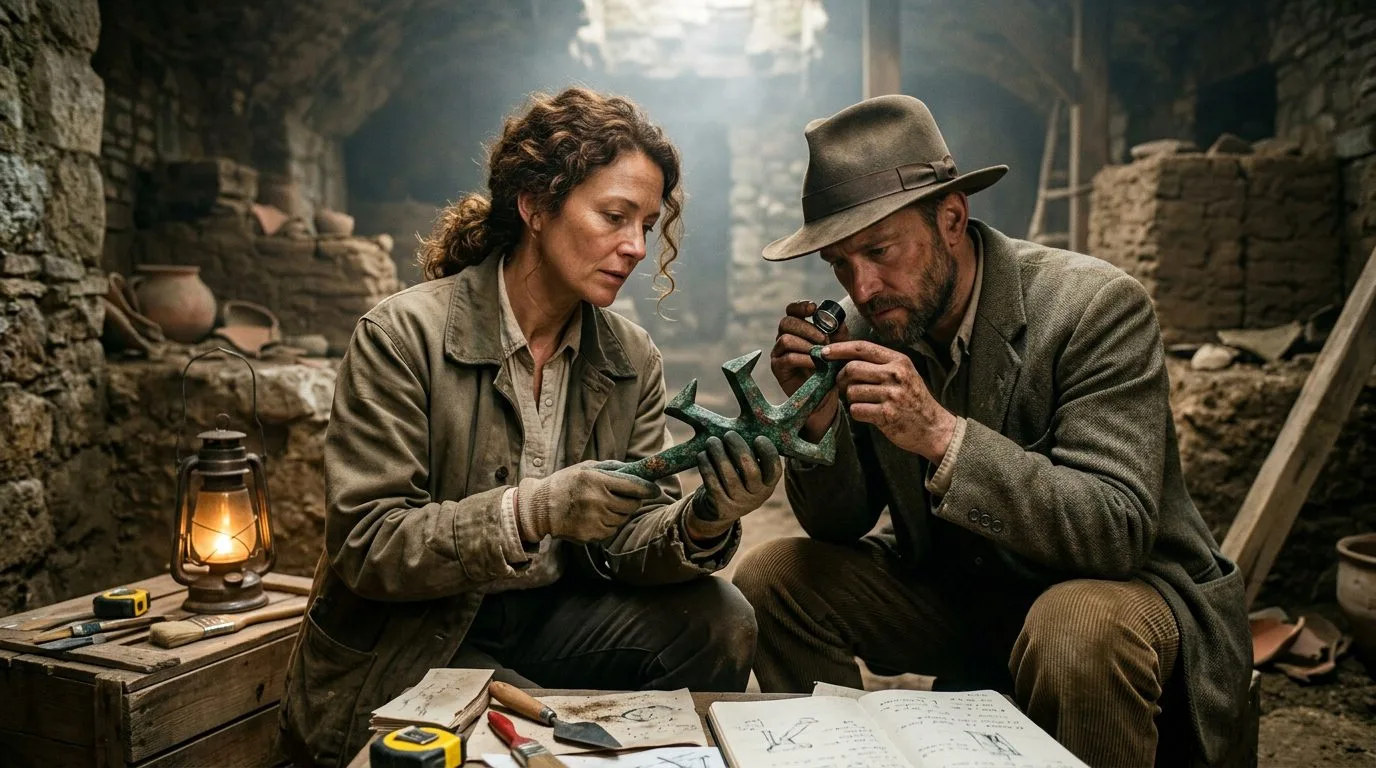
The Specillum With Seven Angles
A bronze surgical instrument excavated from Pompeii in 1887 resembles a Roman specillum but features seven angled protrusions that make medical application impossible. Dating to before 79 CE, the tool’s design would tear tissue rather than examine it, contradicting every principle in Galen’s medical writings from that era. The bronze alloy contains eleven percent tin, an unusually high ratio that made the instrument brittle and impractical for surgery. Three identical copies exist in Naples Archaeological Museum, suggesting intentional manufacture rather than error. No Roman medical text describes its use, and modern surgeons cannot identify a single anatomical application for its bizarre geometry.
Source: history.com
4. The Djed-Pillar Amulet of Inverted Colors
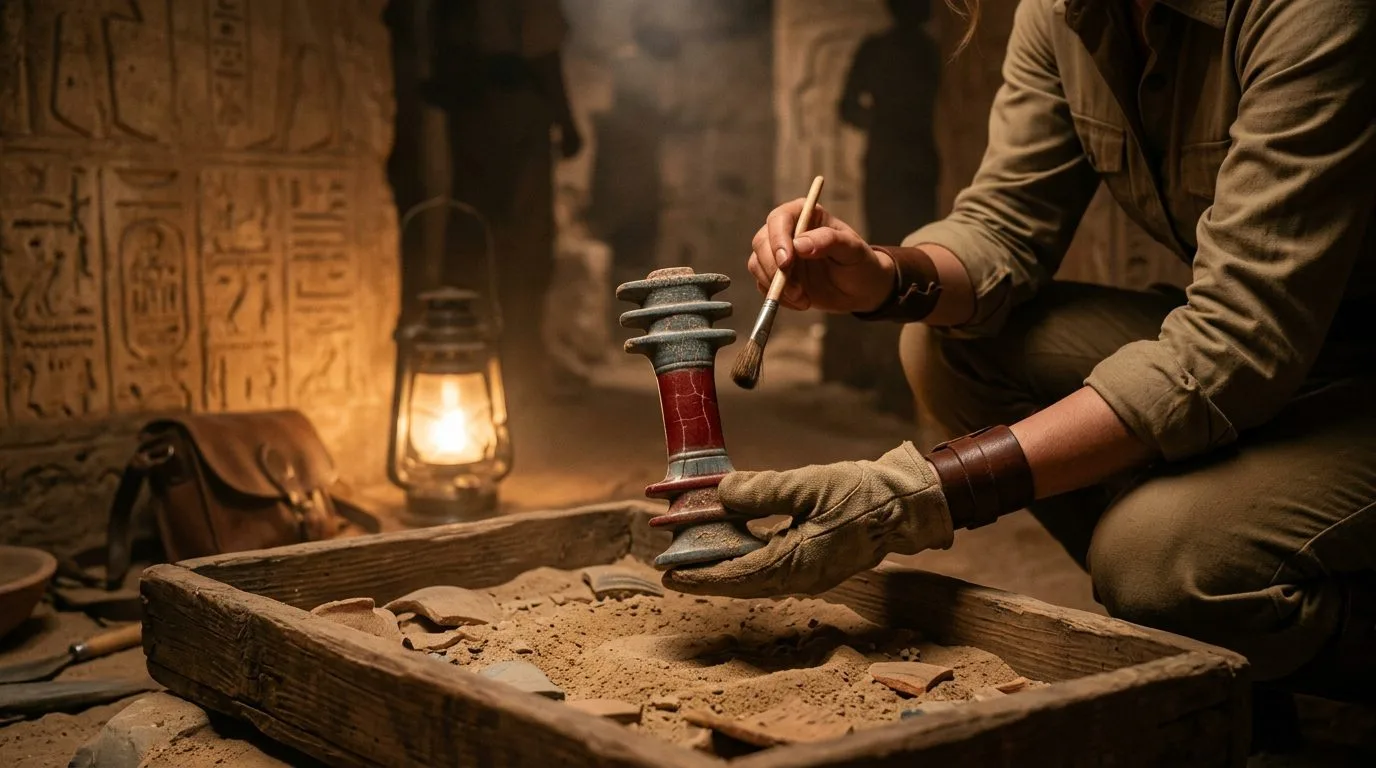
The Djed-Pillar Amulet of Inverted Colors
An Egyptian djed-pillar amulet from circa 1350 BCE reverses the traditional color symbolism that governed all New Kingdom religious art. The faience piece displays red where blue should appear and green where gold was mandated by temple protocols. Discovered in a Theban tomb in 1906, the amulet belonged to a priest of Ptah whose other burial goods follow conventional symbolism precisely. Chemical analysis confirmed the colors were original, not degraded pigments. The inverted palette violated rules established in the Pyramid Texts and would have been considered magically dangerous. Why a priest would commission such a transgressive object, and what protective power he believed it held, remains unexplained.
Source: britannica.com
5. The Apulian Krater’s Impossible Ritual
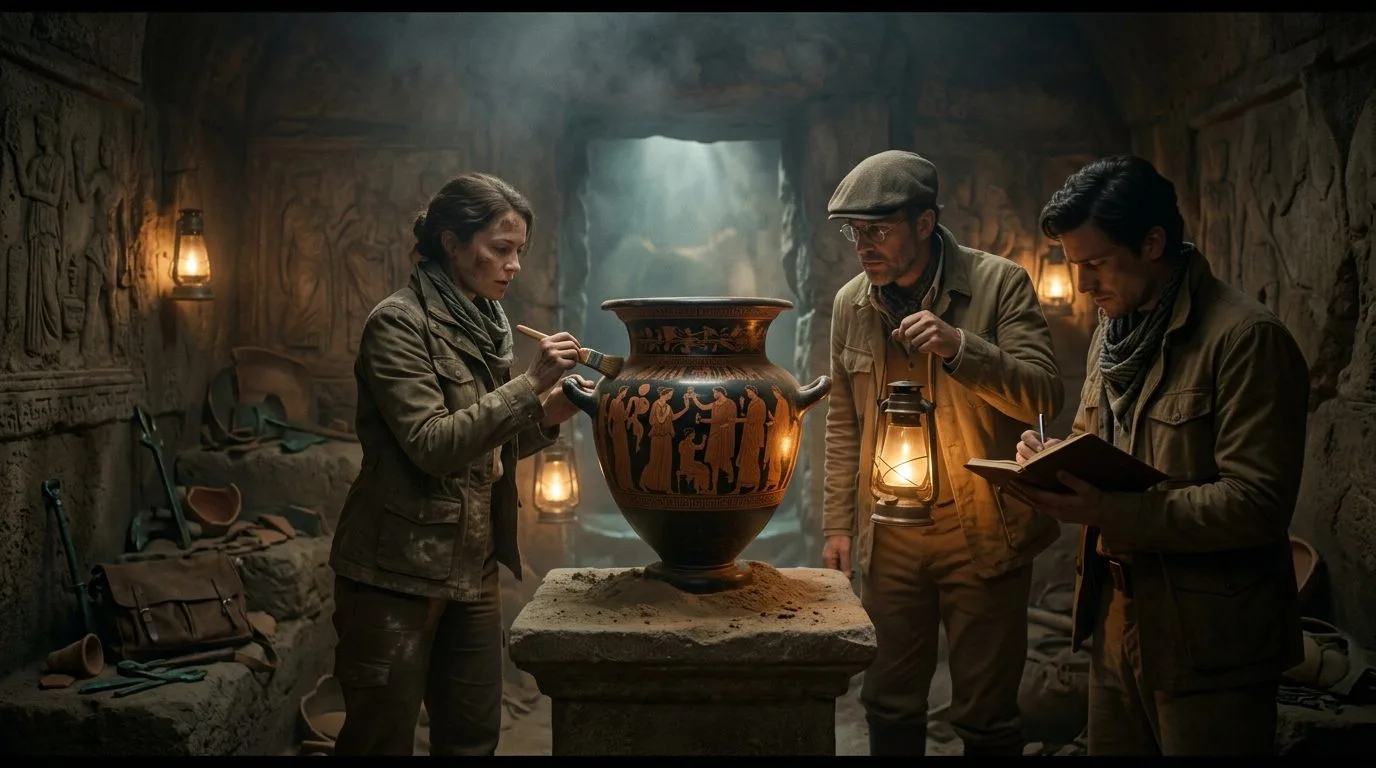
The Apulian Krater’s Impossible Ritual
A red-figure krater from Apulia dated to 340 BCE depicts a ritual involving eleven participants in a configuration that violates every known Greek ceremonial structure. The vase shows figures arranged in asymmetric patterns around an altar bearing symbols that match no Greek deity’s attributes. Two participants hold objects resembling lyres but with thirteen strings instead of the standard seven or nine. The painting style matches the Darius Painter’s technique exactly, yet the subject matter appears nowhere else in his substantial body of work. Classical scholars have proposed many different interpretations since the vase entered the British Museum in 1843, with no consensus emerging.
Source: britannica.com
6. The Sarcophagus of Backwards Time
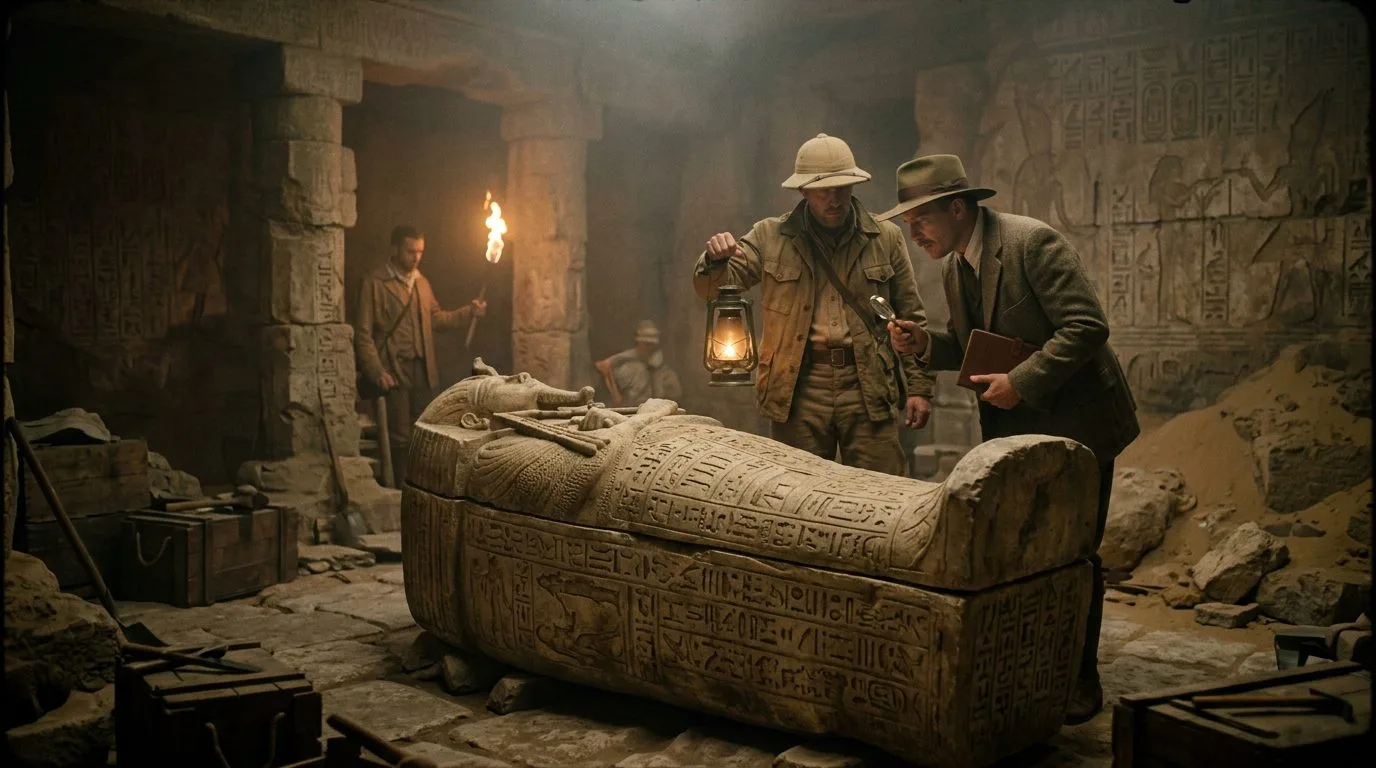
The Sarcophagus of Backwards Time
A limestone sarcophagus from Abydos dating to 1650 BCE contains Book of the Dead spells written in reverse chronological order, with the final judgment appearing first and birth preparations last. The inscriptions are otherwise perfectly executed in Middle Egyptian hieratic script, showing expert craftsmanship. Discovered in 1896, the coffin belonged to a woman named Nefertari whose mummified remains showed standard burial preparation. This reversed sequence contradicts the fundamental Egyptian concept of linear progression through the afterlife. The inversion required deliberate planning, as the scribe maintained grammatical consistency throughout. Whether this represented a heretical belief system or specialized funerary practice remains a complete mystery.
Source: smithsonianmag.com
7. The Gemstone With Shifting Engravings
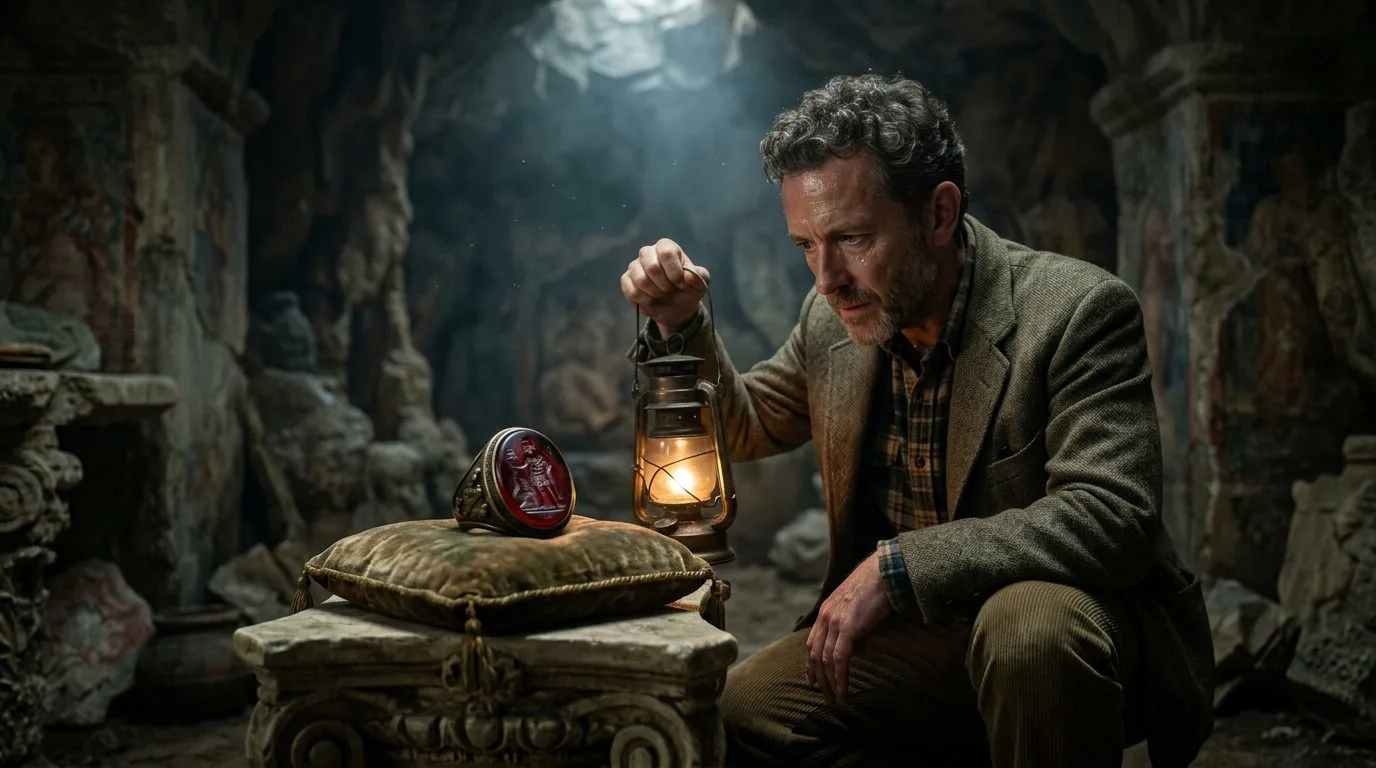
The Gemstone With Shifting Engravings
A carnelian intaglio from the second century CE displays engravings that appear different depending on viewing angle, an optical effect modern gemologists cannot replicate. The Roman gemstone measures eighteen millimeters across and shows either a dolphin or an eagle depending on light direction. Acquired by the Louvre nearly eight centuries after its creation, the gem’s surface contains microscopic facets arranged in patterns requiring mathematical knowledge not evidenced in any Roman lapidary text. The engraving technique would require tools capable of precision to within 0.05 millimeters, finer than Roman metalworking typically achieved. No other ancient gem demonstrates this optical property, and the method died with its unknown creator.
Source: history.com
8. The Bronze Deity With No Mythology
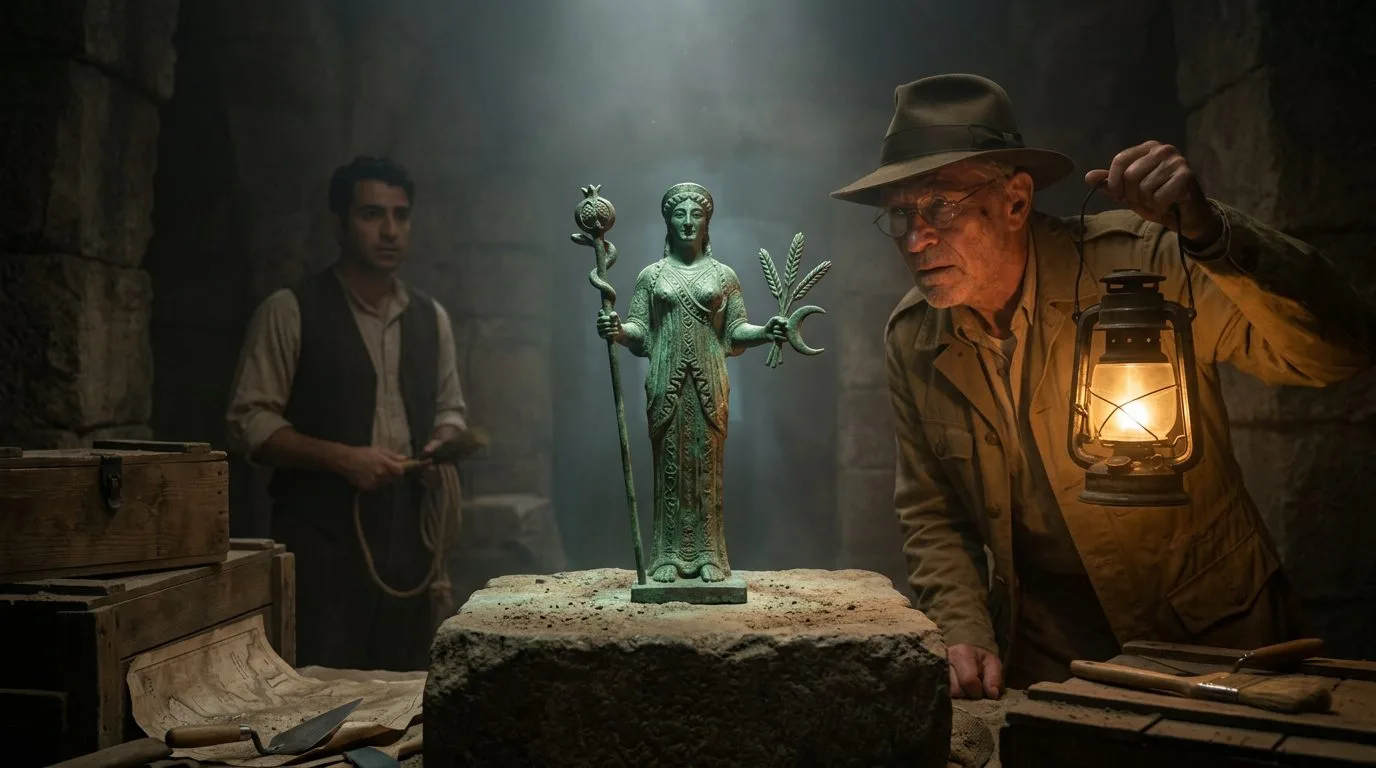
The Bronze Deity With No Mythology
A bronze figurine recovered from Delphi in 1939 depicts a deity whose attributes match no figure in Greek, Roman, or Near Eastern mythology. The statue, dated to 520 BCE, shows a female figure holding a wheel in one hand and something resembling a magnetic lodestone in the other. She wears a crown featuring seven points, a number sacred to no major Greek deity. The bronze composition includes trace elements of meteoritic iron, suggesting the sculptor incorporated celestial material intentionally. The figurine’s pose mirrors the Archaic style perfectly, yet her symbols connect to no known cult. Three similar statuettes exist in private collections, indicating organized worship of an utterly forgotten deity.
Source: britannica.com
9. The Papyrus of Incompatible Scripts
The Papyrus of Incompatible Scripts
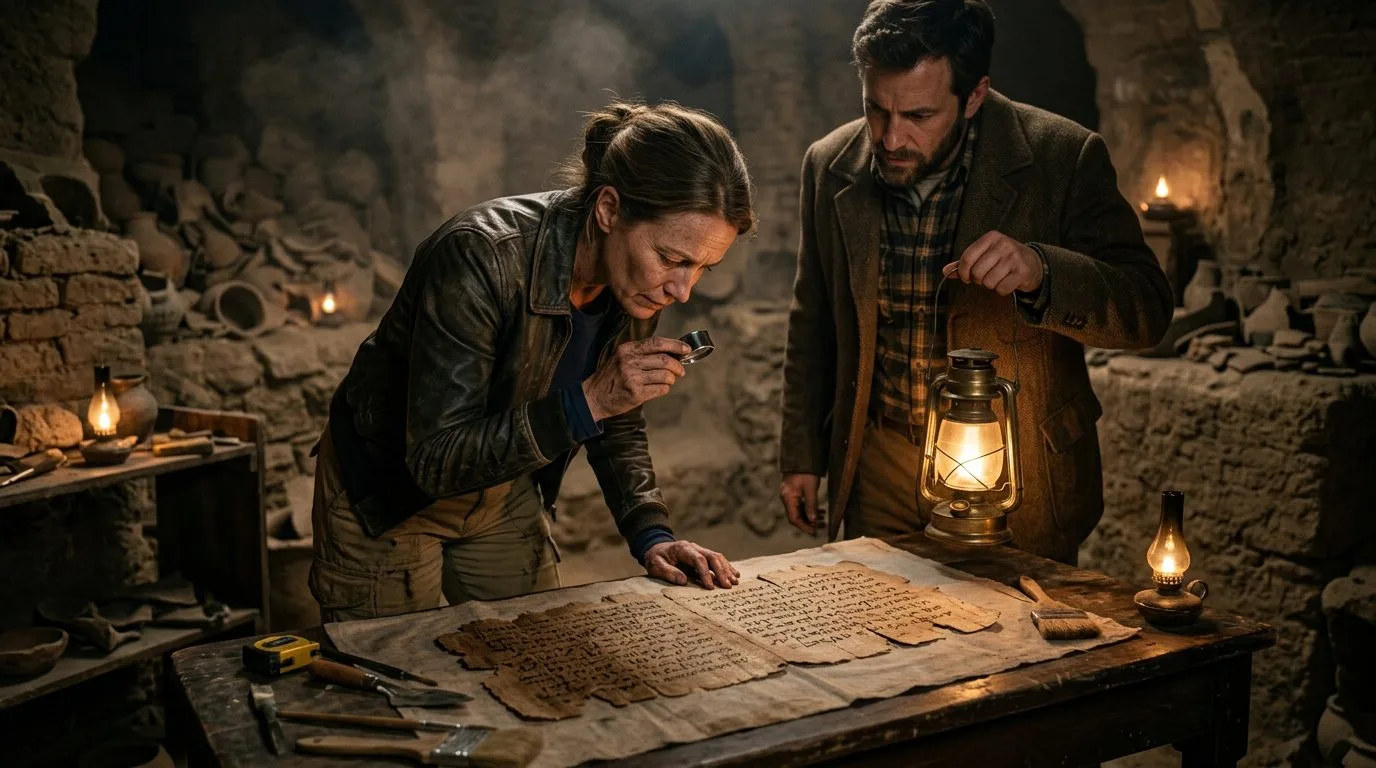
A papyrus fragment from Oxyrhynchus dated to 250 BCE contains two writing systems that should not coexist: hieratic Egyptian and an unknown script resembling neither Greek nor Demotic. The fragment measures twelve centimeters wide and contains seventeen lines alternating between recognizable Egyptian and undeciphered symbols. Carbon dating and paleographic analysis confirm the inks were applied simultaneously, not added later. The hieratic portions discuss agricultural taxation, mundane content that makes the presence of unknown writing even more baffling. Linguistic analysis has identified forty-three unique characters in the mystery script, too many for an alphabet but too few for a logographic system. The papyrus entered Oxford’s collection at the turn of the twentieth century and remains untranslated.
Source: smithsonianmag.com
10. The Amphora That Maps Unknown Constellations
The Amphora That Maps Unknown Constellations
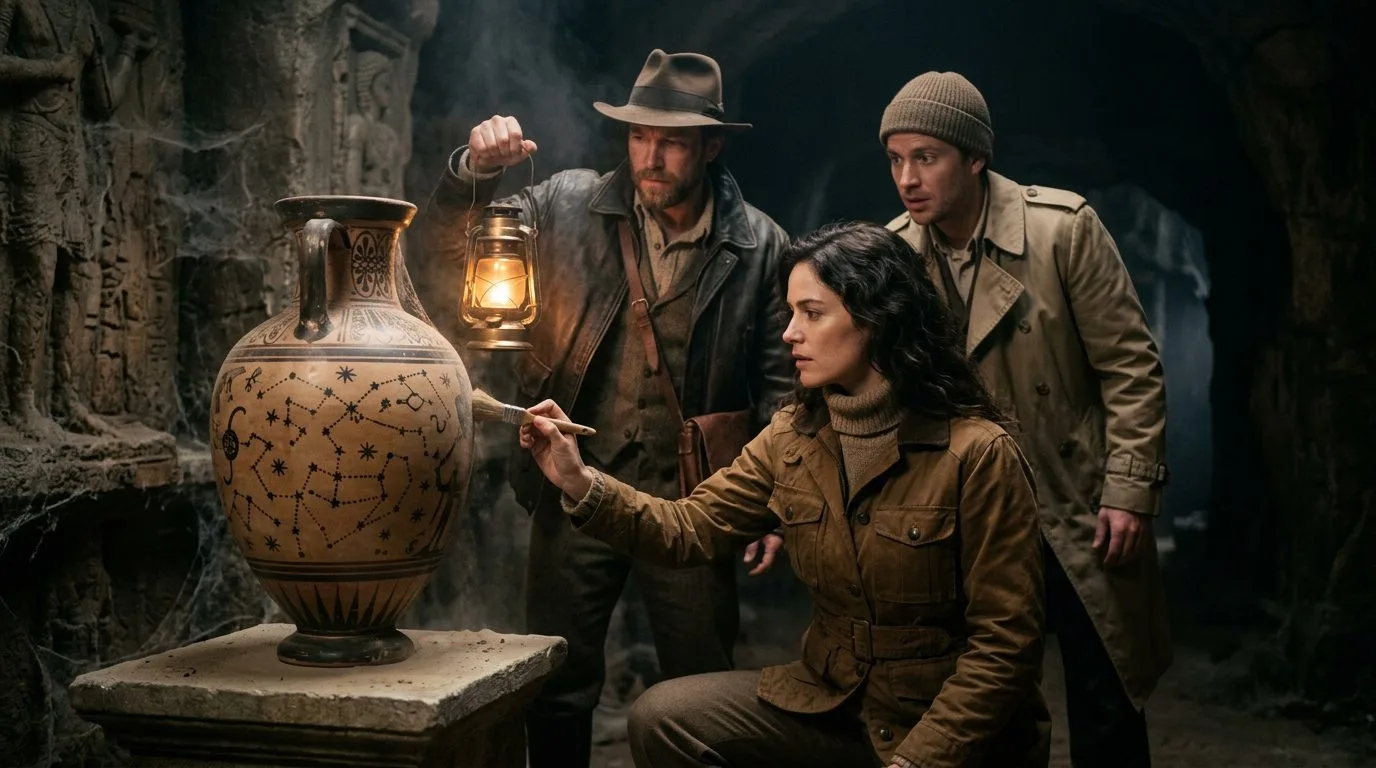
A ceramic amphora from Rhodes dated to 600 BCE bears decorations depicting star patterns that match no constellations visible from the Mediterranean. The vessel shows fifty-three stars connected by painted lines forming geometric shapes unlike Greek, Babylonian, or Egyptian astronomical traditions. Modern astronomers using planetarium software cannot identify these stellar configurations from any historical epoch or geographic location on Earth. The amphora was discovered in 1911 during excavations of a merchant’s house, filled with olive oil residue. Its painted cosmos includes three celestial objects shown larger than others, possibly representing planets, but their positions relative to the stars correspond to no planetary conjunction recorded in ancient astronomy. The map depicts either a fabricated sky or observations from an impossible vantage point.
Source: history.com
Did You Know?
Did you know the Roman gemstone with shifting engravings uses an optical technique that modern lapidaries still cannot replicate, despite contemporary laser precision tools? The ancient craftsman somehow calculated microscopic facet angles that require mathematical principles not formally discovered until centuries after the artifact’s creation. Perhaps most unsettling: we possess the physical object, can measure every microscopic detail, yet cannot recreate what an anonymous Roman artisan achieved with hand tools nearly two millennia ago.