
Rome didn’t conquer the known world through diplomacy alone. Behind every legion’s success stood an arsenal of revolutionary weapons that gave Roman soldiers decisive advantages over their enemies. From the short sword that redefined close combat to artillery that could breach any wall, these innovations turned Rome from a city-state into an unstoppable empire.
1. Gladius: The Blade That Built an Empire
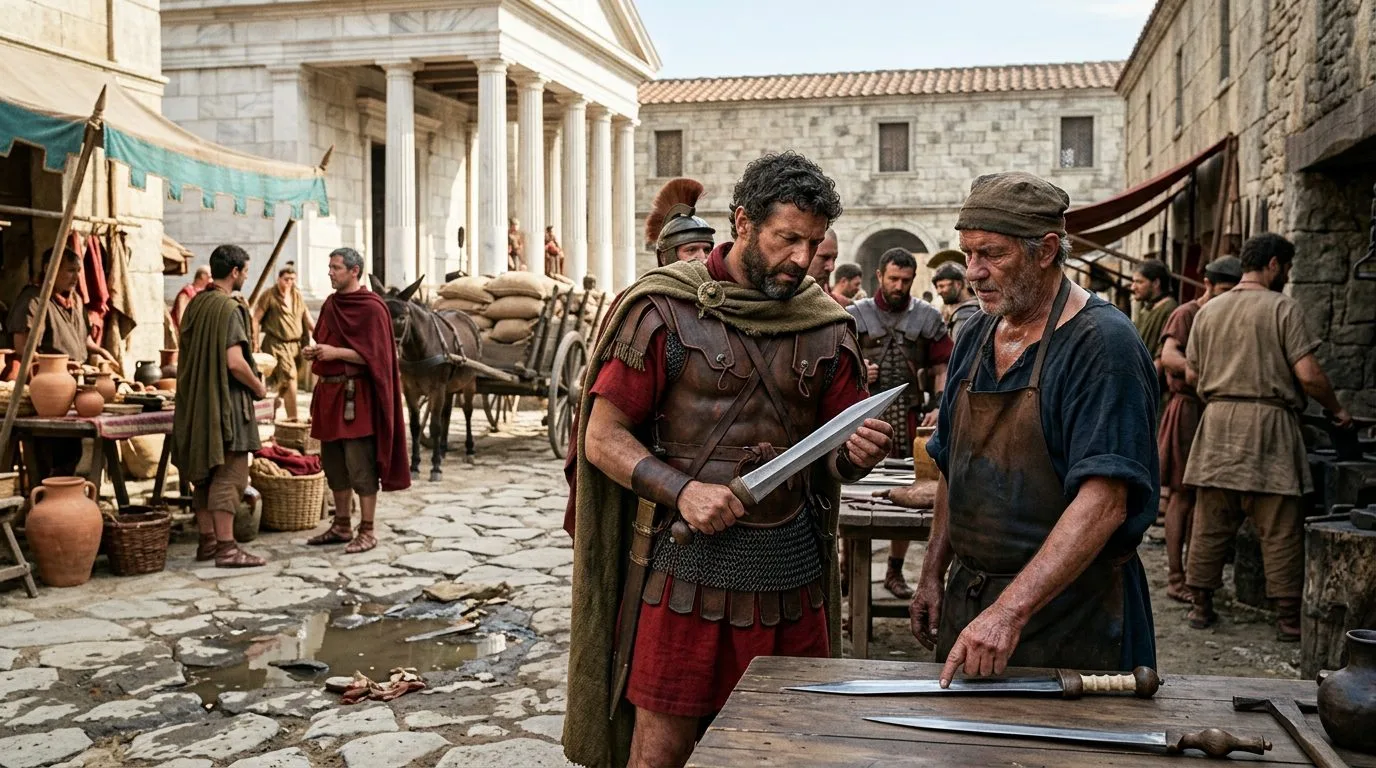
Gladius: The Blade That Built an Empire
The gladius became Rome’s signature weapon after the Second Punic War in 200 BCE, when Roman commanders witnessed Spanish mercenaries wielding devastating short swords. Roman armorsmiths adapted the design, creating a 24-inch double-edged blade perfect for the tight formations of legion warfare. Unlike longer swords that required swinging room, legionaries could thrust the gladius between enemy shields while maintaining their defensive line. At the Battle of Pydna in 168 BCE, the gladius proved so effective against Macedonian phalanxes that King Perseus abandoned 20,000 troops on the battlefield. This weapon transformed Rome’s military doctrine from slashing to stabbing, making each soldier deadlier in formation.
Source: britannica.com
2. Pilum: The Javelin That Shattered Shield Walls
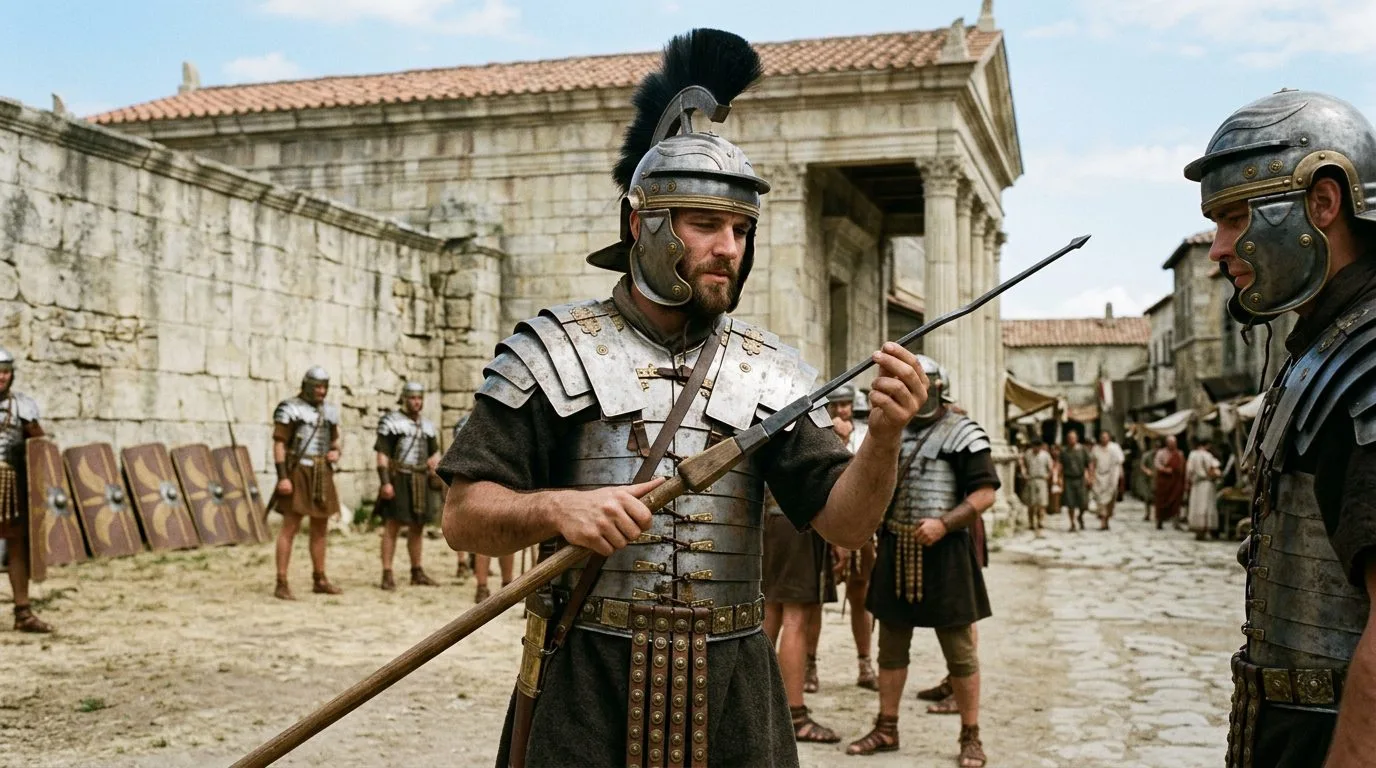
Pilum: The Javelin That Shattered Shield Walls
The pilum revolutionized ancient warfare with a brilliant design flaw: it was engineered to break. This 7-foot heavy javelin featured a soft iron shank that bent on impact, rendering enemy shields useless and preventing opponents from throwing it back. Each legionary carried two pila, hurling them from 30 yards before charging with drawn swords. At the Battle of Bibracte in 58 BCE, Julius Caesar‘s legions threw 40,000 pila in minutes, crippling the Helvetii shield wall before close combat began. The weapon’s weight and narrow point could penetrate armor, and its bending shank created a tactical nightmare for enemies forced to discard their now-useless shields mid-battle.
Source: britannica.com
3. Scutum: The Shield That Became a Weapon
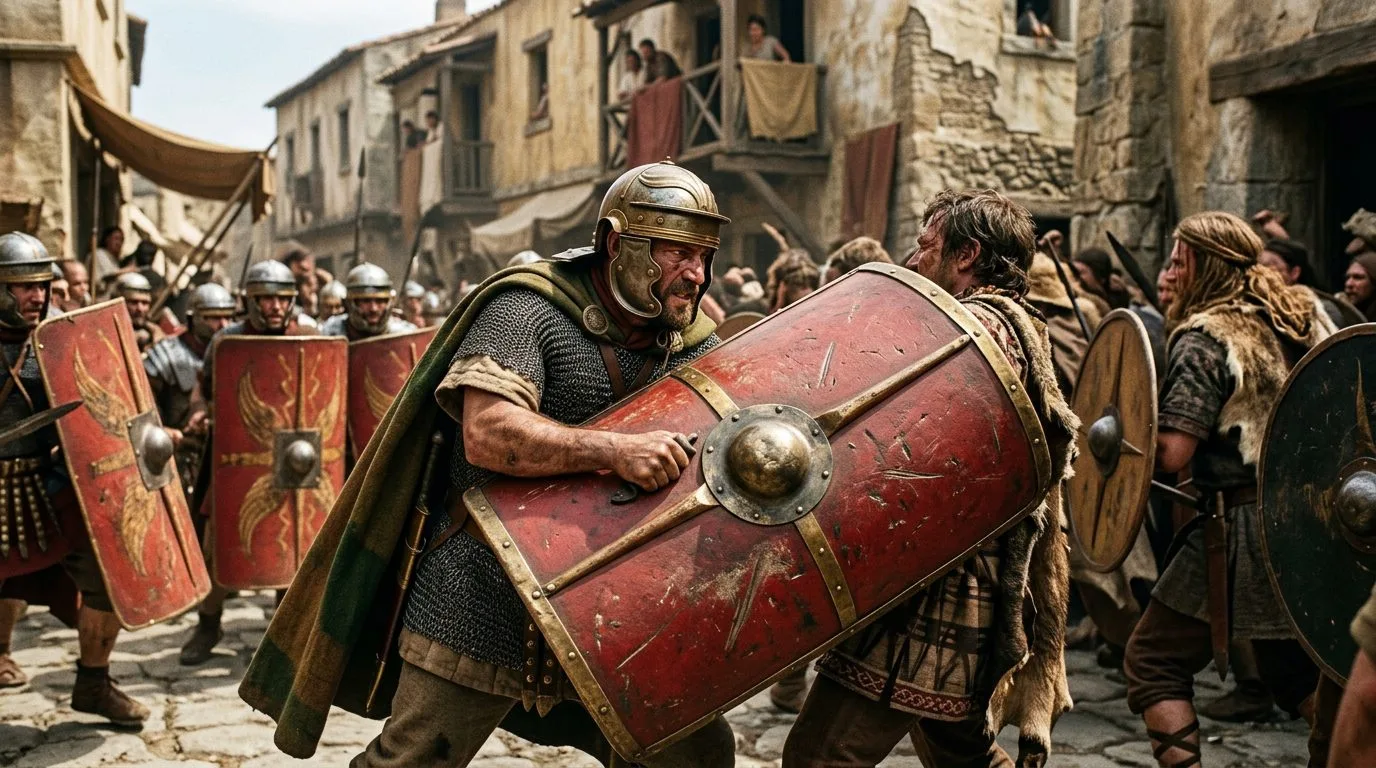
Scutum: The Shield That Became a Weapon
The scutum wasn’t just defensive equipment; it was 22 pounds of curved laminated wood that legionaries used as a battering ram. Measuring 4 feet tall and 2.5 feet wide, this rectangular shield provided total body coverage while its curved design deflected blows away from the soldier. The iron boss in the center doubled as a punching weapon, capable of breaking bones and creating openings for gladius thrusts. During the Jewish Revolt in 70 CE, Roman legions used interlocking scuta to form the testudo formation, advancing through arrow storms to breach Jerusalem’s walls. Its semicylindrical shape was revolutionary, offering better protection than flat shields while maintaining mobility in tight formations.
Source: britannica.com
4. Lorica Segmentata: Iron Plates That Redefined Protection
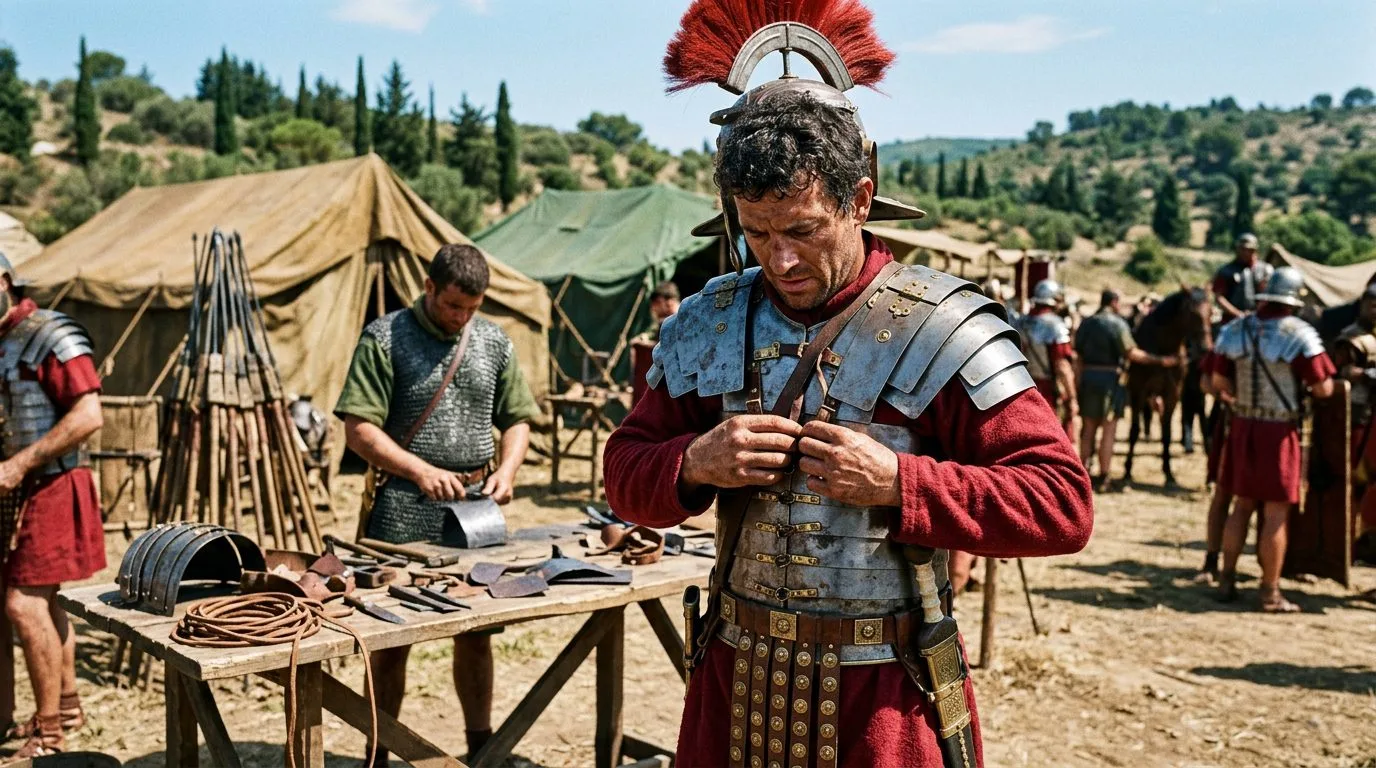
Lorica Segmentata
Around 9 BCE, Roman armorsmiths created the lorica segmentata, a revolutionary armor system using horizontal iron bands connected by leather straps. This segmented design offered superior protection compared to mail while weighing only 20 pounds, allowing legionaries to maintain combat effectiveness for hours. The overlapping plates could deflect sword strikes and arrows while providing flexibility for the wearer to thrust, march, and maneuver. Archaeological evidence from the Teutoburg Forest disaster in 9 CE shows that even in catastrophic defeat, legionaries wearing this armor sustained fewer fatal wounds than their mail-clad counterparts. The armor became standard issue for frontline troops, turning each soldier into a mobile fortress.
Source: britannica.com
5. Ballista: Artillery That Struck Terror From Distance
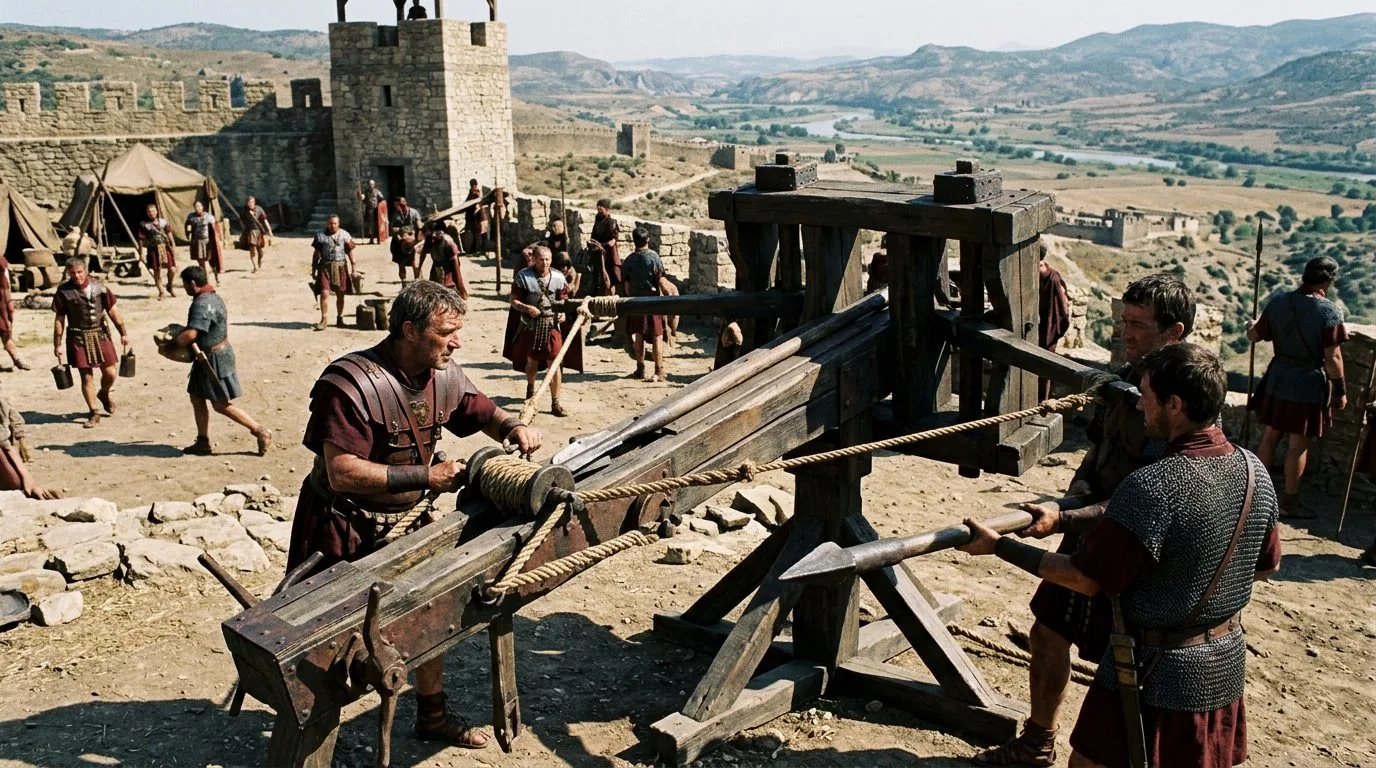
Ballista
The ballista operated like a massive crossbow, using twisted sinew to launch 3-foot iron bolts with enough force to pierce multiple soldiers at 400 yards. Roman engineers refined Greek designs around 100 BCE, creating portable versions that required only a crew of 4 to operate. Each legion carried 55 ballistae, providing devastating ranged firepower that could pin down enemy formations before infantry engagement. During the Siege of Masada in 73 CE, Roman ballistae launched thousands of bolts daily, killing defenders behind stone walls and forcing them deeper into the fortress. The psychological impact proved as valuable as the physical damage, as enemies knew Roman artillery could strike them long before they reached Roman lines.
Source: britannica.com
6. Onager: The Stone Thrower That Smashed Fortifications
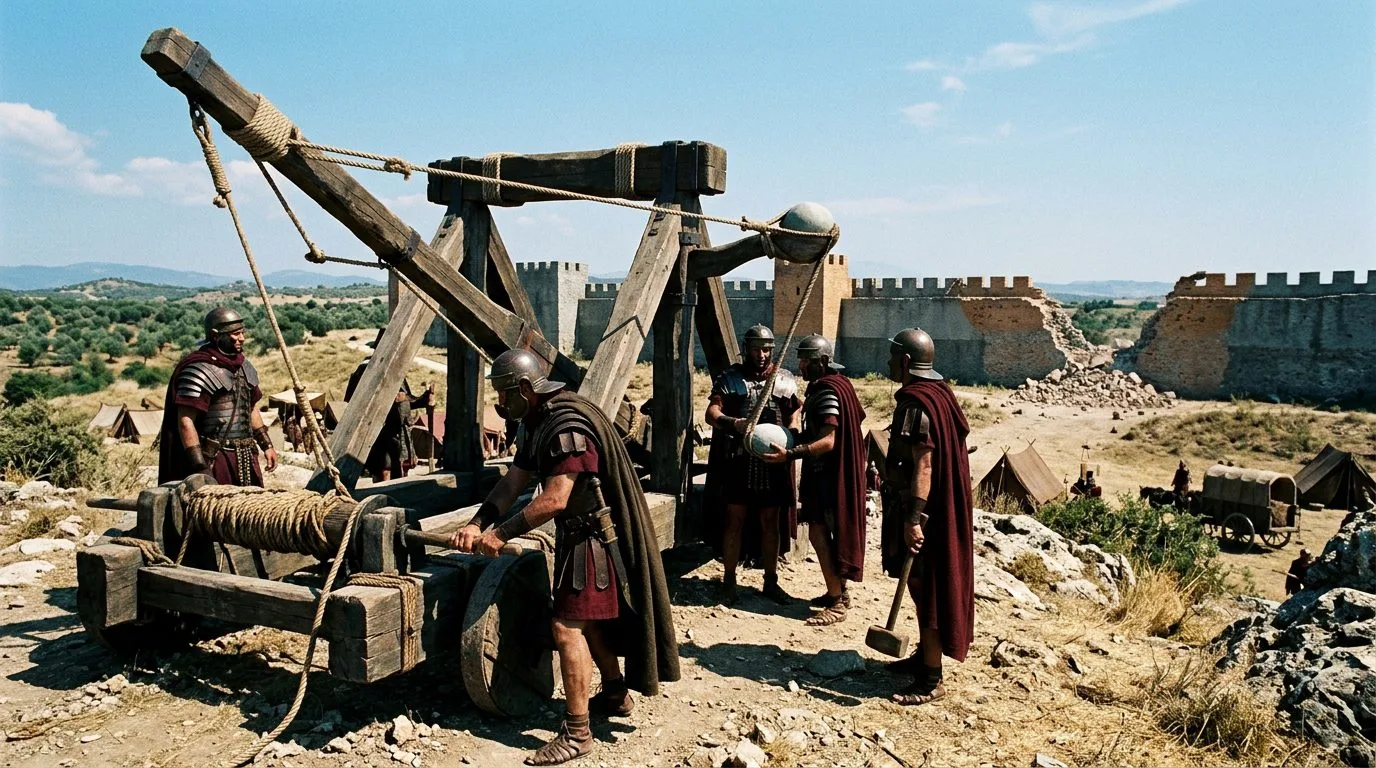
Onager
Named for the wild ass because its violent recoil resembled a kicking donkey, the onager hurled 50-pound stones over 400 yards using torsion power. This single-armed catapult became Rome’s primary siege weapon by the 4th century CE, capable of reducing stone walls to rubble through sustained bombardment. The machine stood 15 feet tall and required 8 men to operate, but one well-aimed shot could collapse defensive towers or create breaches for infantry assault. At the Siege of Amida in 359 CE, Persian forces learned the onager’s power when Roman defenders launched continuous barrages that destroyed siege towers and killed hundreds of attackers. The weapon’s simplicity and devastating impact made it indispensable for both attacking and defending fortified positions.
Source: britannica.com
7. Pugio: The Dagger of Last Resort and Assassination
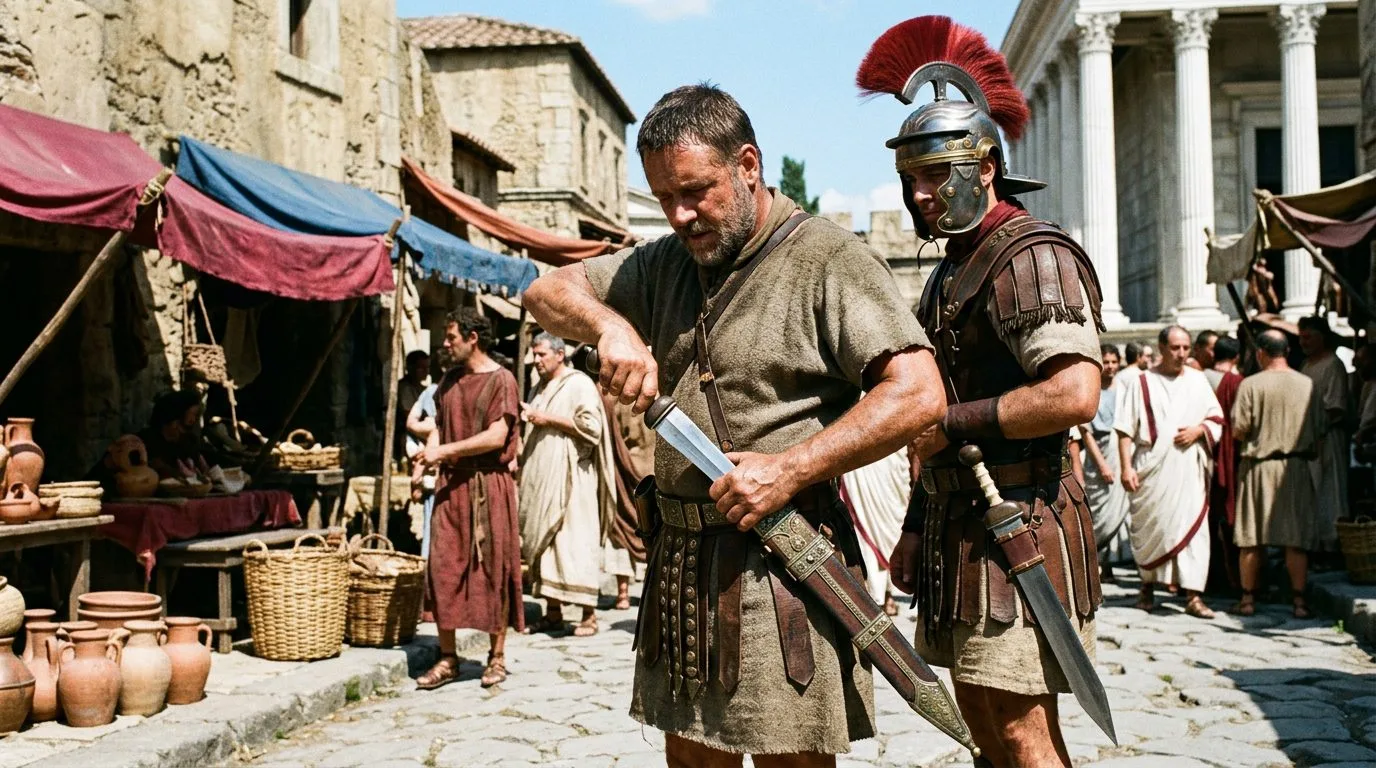
Pugio: The Dagger of Last Resort and Assassination
Every legionary carried a pugio, a 10-inch double-edged dagger that served as both utility tool and lethal backup weapon. This leaf-shaped blade proved devastatingly effective in close quarters when gladius length became a liability, particularly during sieges or surprise attacks. The pugio’s design featured a thick central ridge for structural strength, allowing it to pierce armor gaps that swords couldn’t reach. Julius Caesar met his end from pugio strikes on March 15, 44 BCE, when conspirators used these military daggers to deliver 23 wounds in the Theatre of Pompey. Beyond combat, soldiers used the pugio for camp tasks, making it the ancient equivalent of a multi-tool that doubled as a deadly weapon.
Source: britannica.com
8. Plumbata: The Weighted Dart That Rained Death
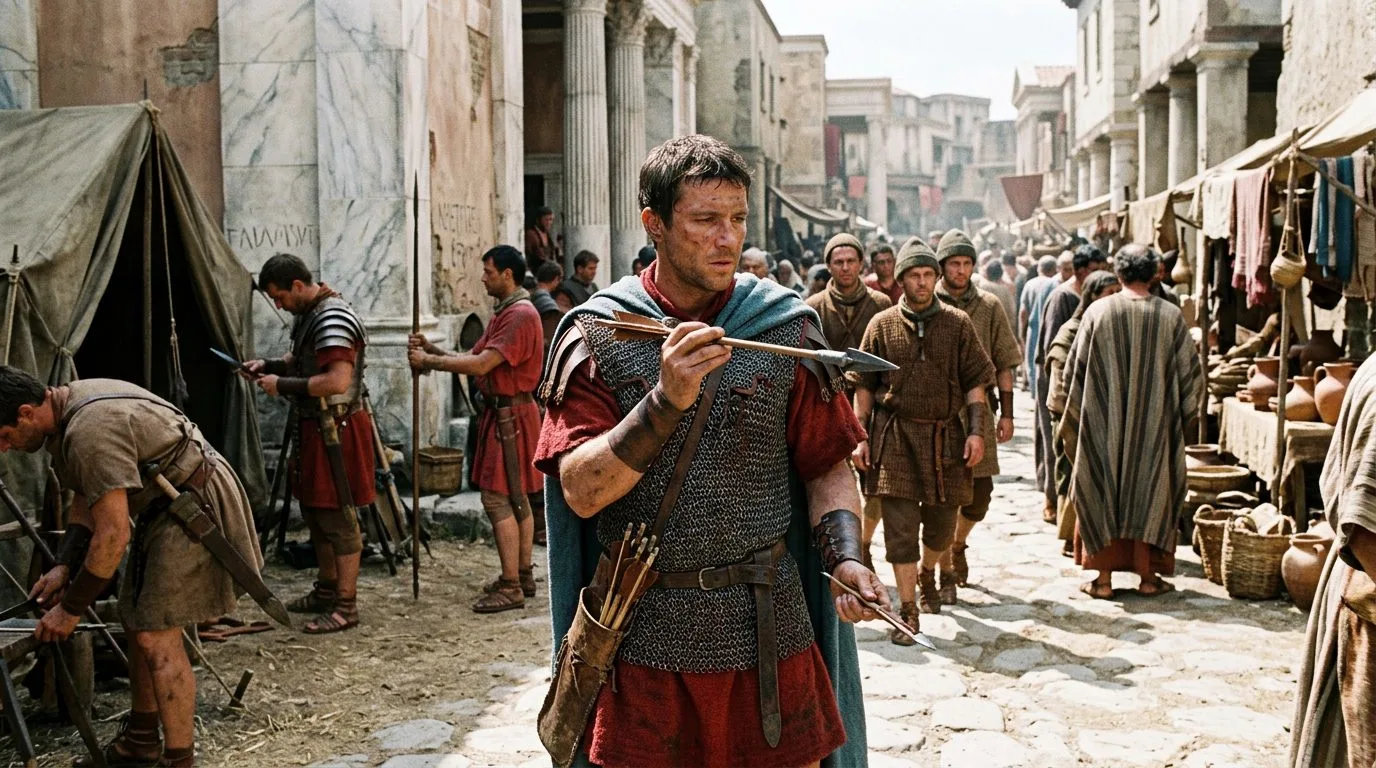
Plumbata: The Weighted Dart That Rained Death
The plumbata combined lead weight with aerodynamic design to create a thrown weapon that could strike enemies at 100 yards before javelin range. Each dart measured 12 inches with a weighted tip that gave it armor-piercing capability despite its small size. Legionaries carried 5 plumbatae clipped inside their shields, allowing rapid successive throws that created devastating volleys. Emperor Diocletian equipped specialized units called plumbatarii around 290 CE, recognizing how these darts could disrupt enemy formations without exhausting soldiers before close combat. At the Battle of Strasbourg in 357 CE, Roman forces used plumbatae to break Alamanni charges, the weighted darts penetrating Germanic shields and causing chaos in their ranks before the main engagement.
Source: britannica.com
9. Scorpio: The Precision Artillery That Hunted Officers
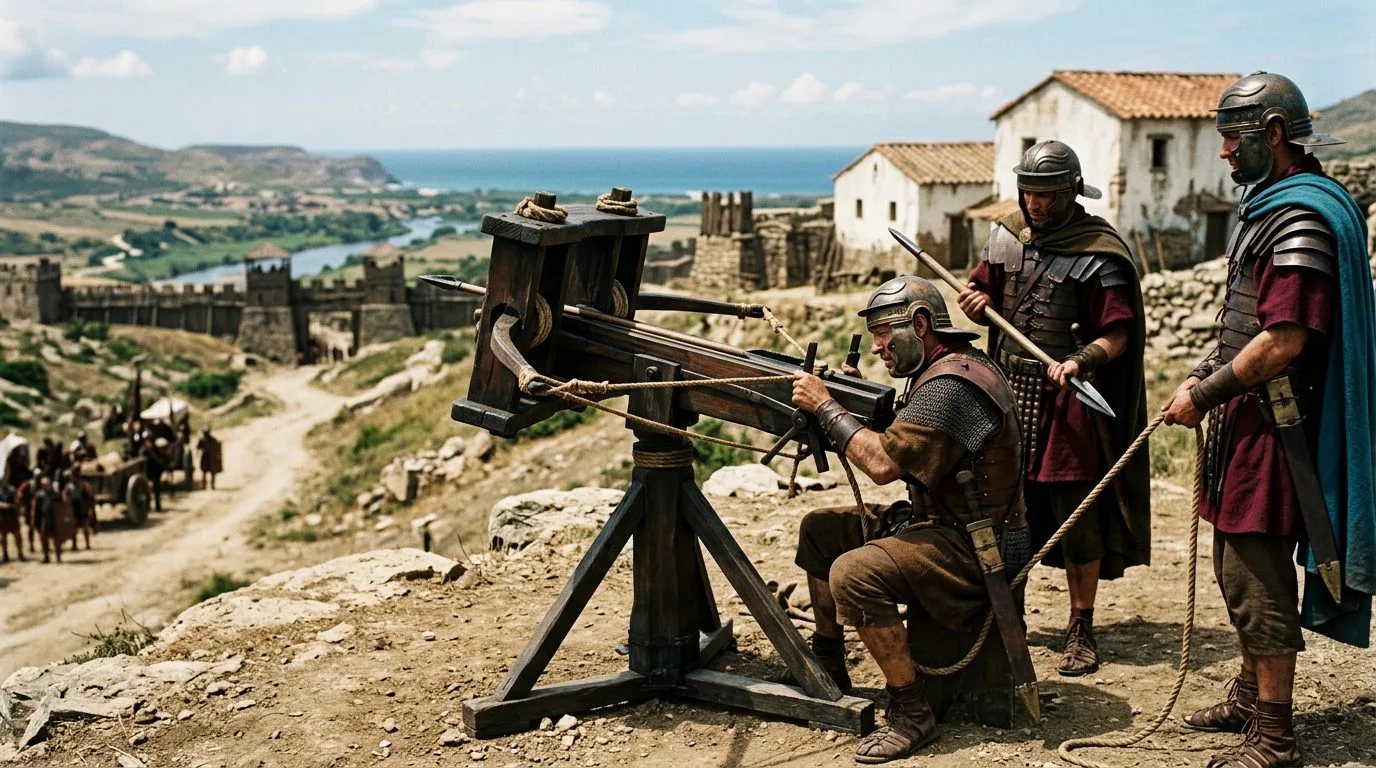
Scorpio
The scorpio functioned as a sniper weapon of the ancient world, a small torsion-powered ballista that could strike individual targets at 300 yards with frightening accuracy. Measuring just 6 feet long, this lightweight artillery piece could be operated by 2 men and repositioned rapidly during battle. Roman artillery crews used scorpios to target enemy commanders, standard bearers, and anyone rallying troops, creating leadership vacuums that shattered unit cohesion. During Trajan‘s Dacian Wars from 101 to 106 CE, scorpios proved invaluable in mountainous terrain where larger ballistae couldn’t operate effectively. The weapon’s portability and precision made it the preferred choice for defensive positions, where trained crews could pick off approaching enemies with surgical strikes.
Source: britannica.com
10. Corvus: The Boarding Bridge That Conquered the Seas
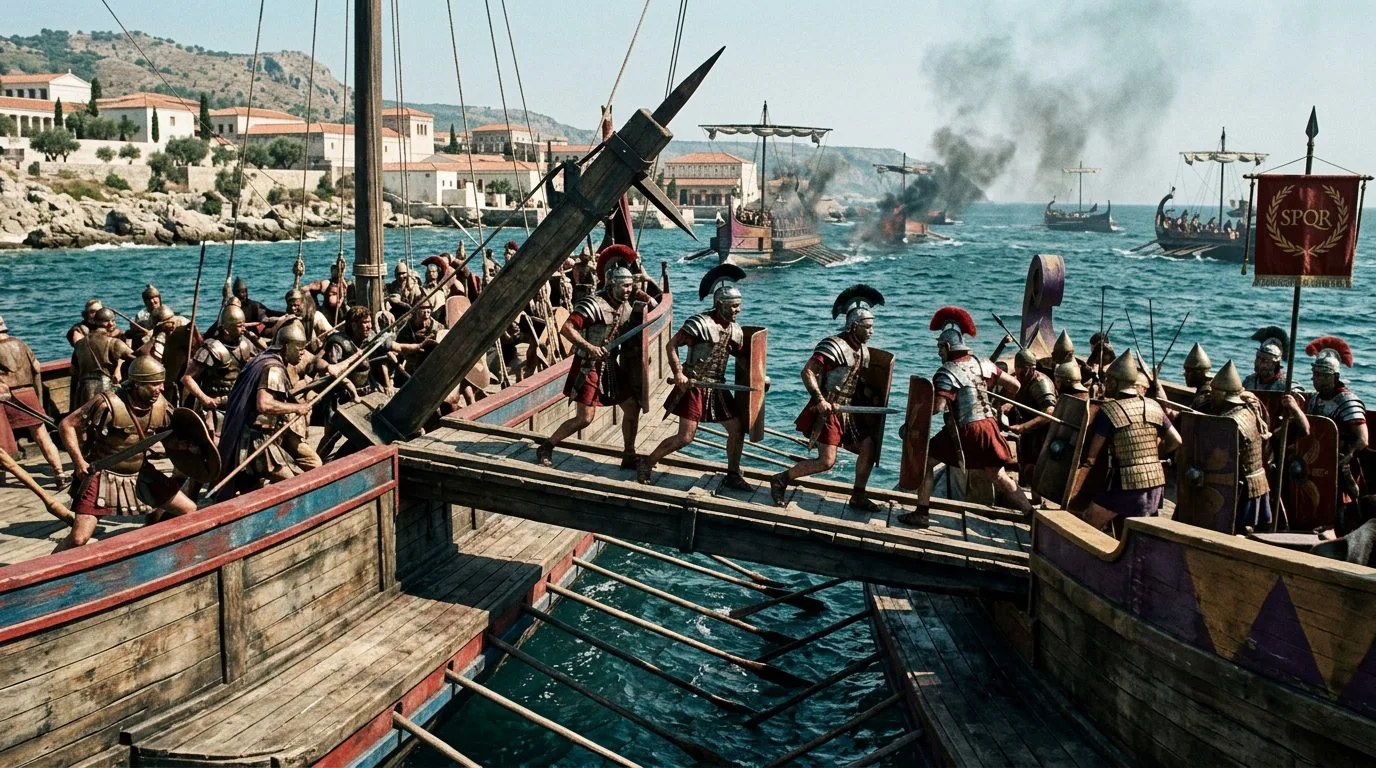
Corvus
Rome had no naval tradition, yet the corvus transformed their ships into floating fortresses during the First Punic War starting in 264 BCE. This 36-foot rotating bridge featured a heavy spike underneath that crashed through enemy deck planking, locking ships together for boarding. The innovation negated Carthaginian naval superiority by turning sea battles into land-style combat where Roman legionaries excelled. At the Battle of Mylae in 260 BCE, Consul Gaius Duilius deployed 120 corvus-equipped ships that captured or sank 50 Carthaginian vessels in Rome’s first major naval victory. The device made ramming tactics obsolete and allowed Rome to build a fleet that dominated the Mediterranean within 5 years, despite starting with zero naval experience.
Source: britannica.com
Did You Know?
The corvus boarding bridge reveals Rome’s true genius: they didn’t just adopt weapons, they reinvented warfare itself. When Romans had no navy, they built one in 60 days and immediately defeated the Mediterranean’s greatest naval power by refusing to fight on water—they simply turned ships into battlefields. This same adaptability appears in every weapon on this list, each representing Rome’s willingness to steal, improve, and deploy technology that enemies thought they understood, only to face versions refined to lethal perfection.