
The Ark of the Covenant vanished after 587 BCE, taking with it the power to topple kingdoms. Throughout history, sacred relics believed to hold divine authority—objects that could legitimize emperors or protect entire civilizations—simply disappeared, leaving only legends and conflicting accounts.
1. The Ark of the Covenant Disappeared After Jerusalem’s Fall

The Ark vanished when Babylon conquered Jerusalem
The most famous lost relic in history vanished when Babylonian forces under Nebuchadnezzar II destroyed Solomon’s Temple in 587 BCE. This gold-covered acacia wood chest, measuring 131 centimeters long, contained the stone tablets inscribed with the Ten Commandments. The Hebrew Bible describes its power to level city walls and strike down those who touched it improperly. After the Babylonian conquest, the Ark disappeared completely from historical records—it was notably absent when the Second Temple was constructed in 516 BCE. Ethiopian Christians claim it resides in Axum, while rabbinical texts suggest it was hidden in tunnels beneath Temple Mount before the invasion. No credible archaeological evidence has ever surfaced.
Source: britannica.com
2. Rome’s Golden Menorah Vanished After the Vandals Struck
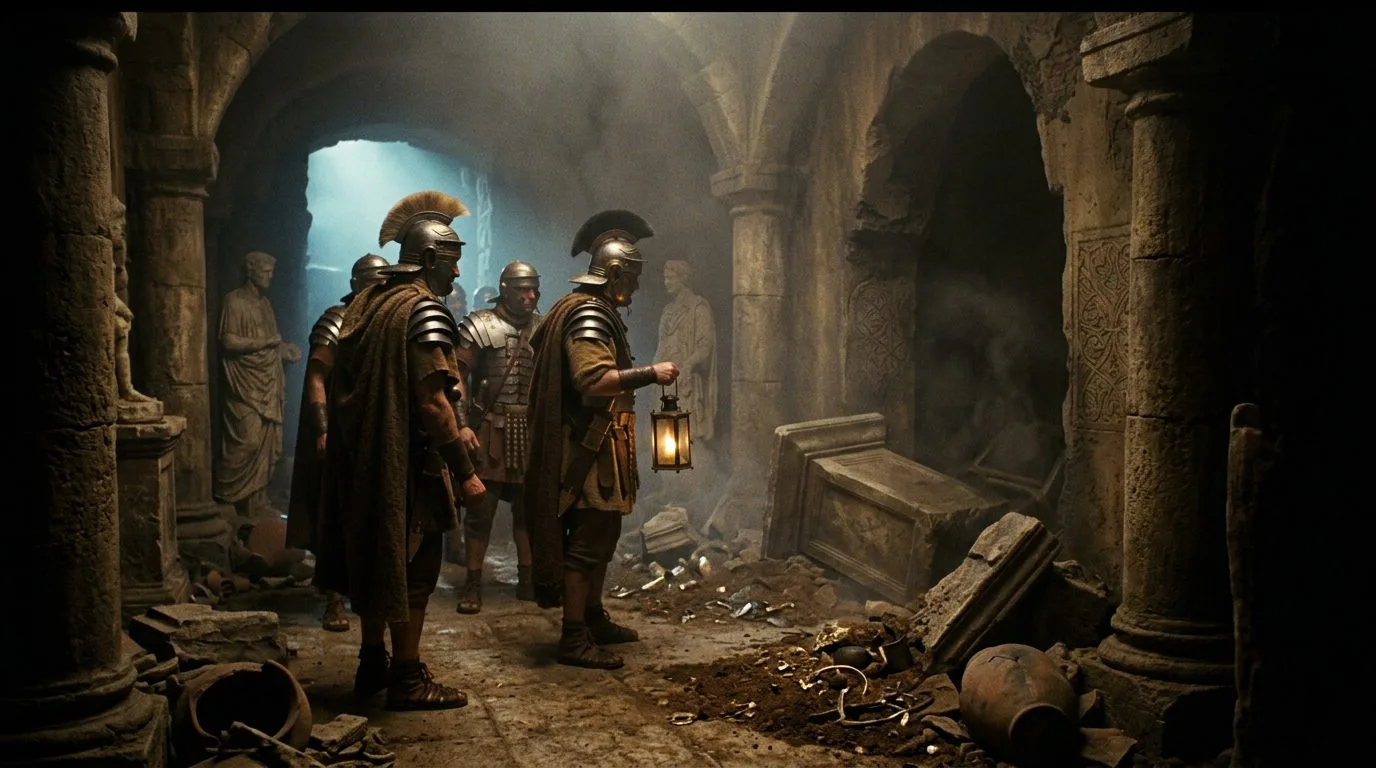
The golden menorah disappeared during the Vandal
When Roman legions sacked Jerusalem in 70 CE, they seized the seven-branched menorah from the Second Temple—a golden lampstand weighing approximately 30 kilograms. The Arch of Titus in Rome depicts soldiers carrying this trophy in triumph. For nearly four centuries, it remained in Rome’s Temple of Peace as proof of Roman supremacy over Judea. In 455 CE, Vandal King Genseric looted Rome and transported the menorah to Carthage. Byzantine forces under General Belisarius recovered it in 534 CE and brought it to Constantinople. Historical accounts then diverge: some claim Emperor Justinian I returned it to Jerusalem’s churches, where it disappeared during the Persian invasion of 614 CE. Others suggest it remains hidden in Vatican vaults, though the Church denies possessing it.
Source: smithsonianmag.com
3. Fragments of the True Cross Scattered Across Medieval Europe

Medieval relics claimed to be from Christ’s cross.
Helena, mother of Emperor Constantine I, reportedly discovered Christ’s crucifixion cross in Jerusalem around 326 CE during excavations at Golgotha. Churches across Christendom soon claimed to possess fragments, with so many pieces circulating that Protestant reformer John Calvin quipped in the mid-16th century that the collected wood “would make a full load for a good ship.” The largest authenticated fragment resided in Constantinople’s imperial chapel until crusaders sacked the city in 1204 CE. French King Louis IX purchased numerous fragments and housed them in Sainte-Chapelle, but these vanished during the French Revolution in the late 18th century. Scientific testing of surviving pieces shows wood from different tree species and time periods. The original cross—if Helena’s discovery was genuine—likely fragmented beyond recognition centuries ago.
Source: history.com
4. Japan’s Sacred Sword Sank in the Battle of Dan-no-ura

The legendary sword lost at sea.
Kusanagi no Tsurugi, the legendary grass-cutting sword, formed one-third of Japan’s imperial regalia for over 1,000 years. According to the Kojiki chronicles written in 712 CE, the storm god Susanoo discovered the blade inside an eight-headed serpent. The Taira clan carried it during the Genpei War, and during the naval Battle of Dan-no-ura on April 25, 1185, six-year-old Emperor Antoku drowned clutching the sword as his grandmother leaped into the Kanmon Straits. Dive expeditions in recent centuries recovered 12th-century artifacts but never found the blade. Atsuta Shrine in Nagoya claims to house the original, but priests permit no inspections—not even the Emperor may view it. Some historians believe the shrine contains a replica, while the original rests 200 meters underwater.
Source: britannica.com
5. The Buddha’s Tooth Exists in Four Different Temples Simultaneously
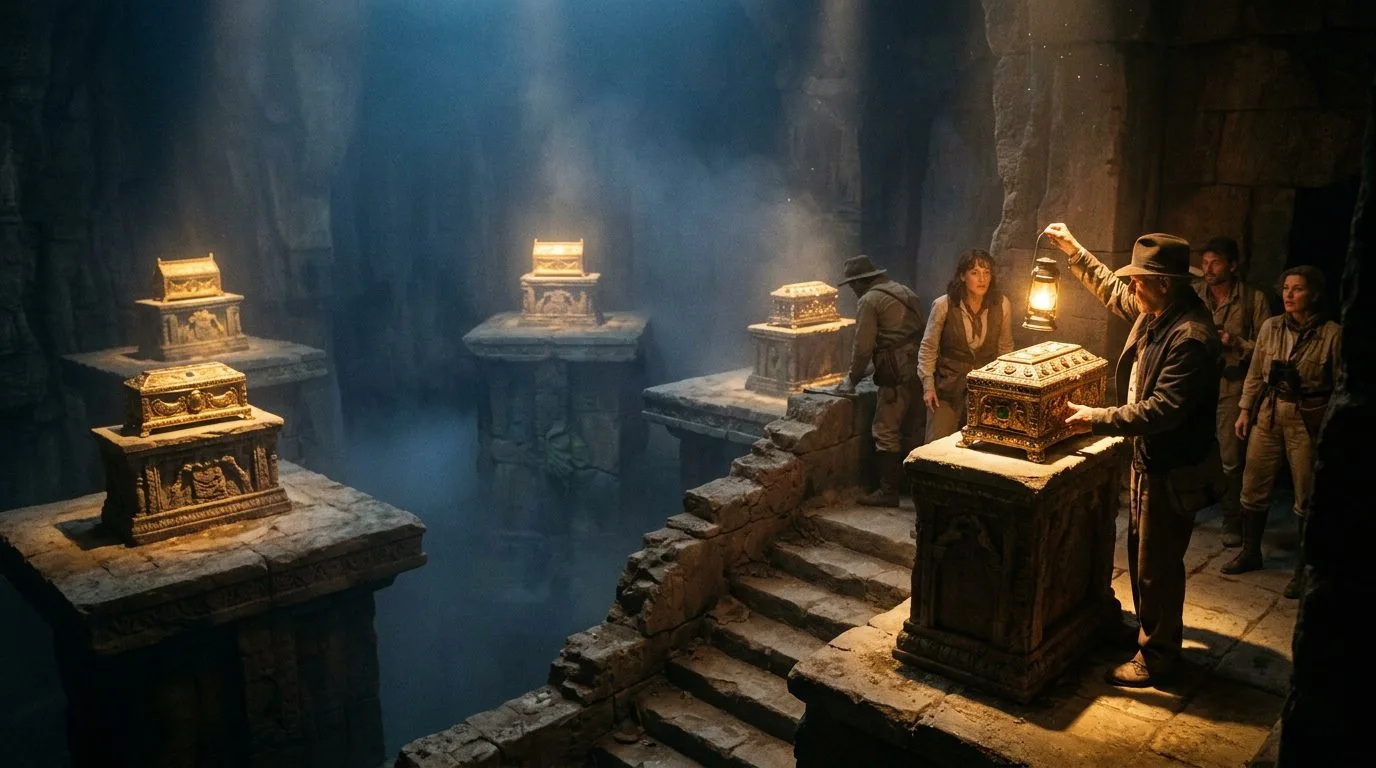
Sacred relics venerated across Asia’s temples.
After Gautama Buddha’s cremation around 483 BCE, disciples reportedly recovered four canine teeth from the funeral pyre. The most famous resides in Sri Lanka’s Temple of the Tooth since 371 CE, where it survived 16 assassination attempts and multiple wars. China’s Lingguang Temple claims another since the early modern period, discovered in a pagoda foundation. Singapore’s Buddha Tooth Relic Temple, opened in the modern era, displays a third in a 420-kilogram gold stupa. Taiwan’s Fo Guang Shan monastery also exhibits a tooth. Historical records describe the original being crushed by Portuguese soldiers in Goa in 1561, yet all current claimants insist theirs is authentic. Biological analysis would resolve disputes, but religious authorities refuse scientific testing. Given that humans possess only 4 canines total, authentication remains impossible without examination.
Source: smithsonianmag.com
6. King Hezekiah Destroyed the Bronze Serpent of Moses
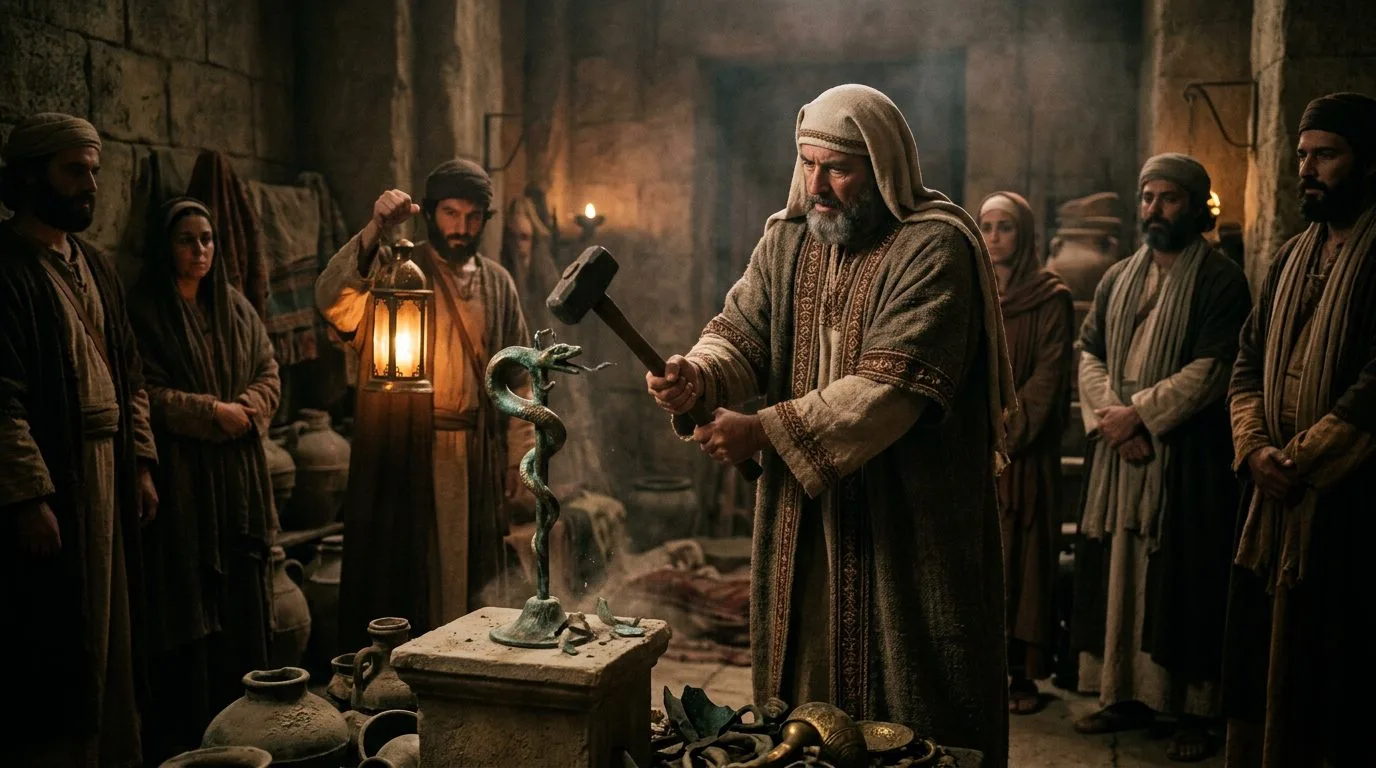
Hezekiah destroys the sacred bronze serpent idol.
The Book of Numbers describes Moses crafting a bronze serpent on a pole around 1440 BCE to cure Israelites from venomous snake bites in the Sinai wilderness. This copper idol, called Nehushtan, was preserved for approximately 700 years and venerated in Solomon’s Temple as proof of divine intervention. King Hezekiah of Judah deliberately destroyed it around 715 BCE during religious reforms, as recorded in 2 Kings 18:4, because Israelites had begun burning incense to the artifact itself—treating the symbol as a god rather than a reminder of God’s mercy. Archaeological evidence from Tel Dan and other sites confirms that bronze snake figurines were common religious objects in ancient Canaan. Unlike lost relics, this one has a definitive end: smashed by royal decree to prevent idolatry.
Source: britannica.com
7. The Holy Lance of Antioch Disappeared After Crusader Defeat
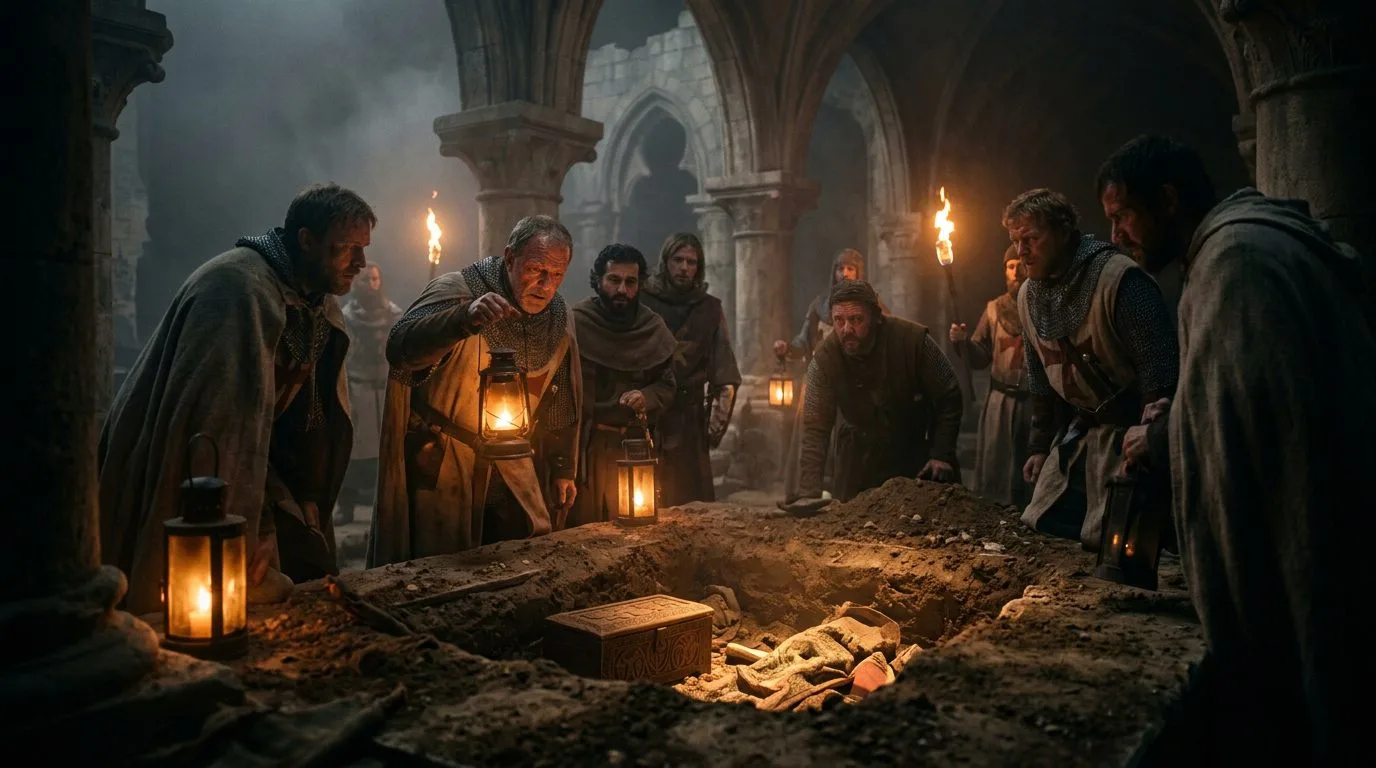
The Holy Lance vanished after the Crusaders lost
During the siege of Antioch in June 1098, a peasant named Peter Bartholomew claimed visions led him to a lance buried beneath the Church of St. Peter—allegedly the spear that pierced Christ’s side. Crusader morale skyrocketed, and they broke the Muslim siege days later, attributing victory to the relic’s power. Raymond IV of Toulouse became the lance’s guardian, carrying it into battle for two years. When Peter Bartholomew died after undergoing trial by fire in April 1099 to prove the lance’s authenticity, skepticism grew. The lance vanished from historical records after the Crusader defeat at the Battle of Harran in 1104. Multiple European churches later claimed to possess the “true” Holy Lance, but the Antioch original—if it existed—never resurfaced. Its sudden disappearance suggests it was either lost in battle or quietly discarded after its champion’s death.
Source: history.com
8. Constantinople’s Imperial Shroud Vanished During the Fourth Crusade
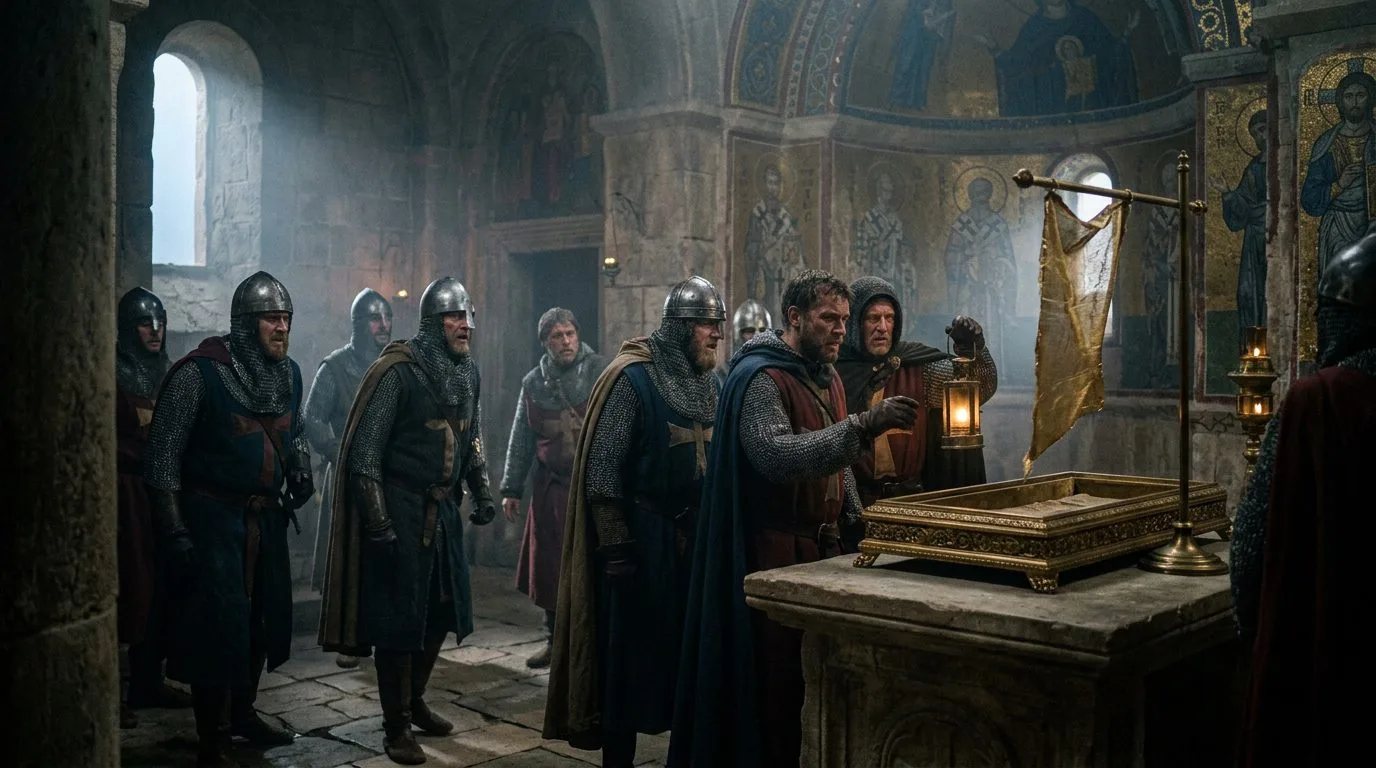
The sacred relic lost in 1204 crusader raids.
The Shroud of Constantine, distinct from the Turin Shroud, was a silk burial cloth housed in Constantinople’s Pharos Chapel since the 4th century CE. Byzantine emperors wore fragments during coronation ceremonies to legitimize their divine right to rule. Historical records from 1201 describe it as a purple silk cloth measuring 4 meters long, embroidered with gold thread. When the Fourth Crusade sacked Constantinople in April 1204, crusaders systematically looted the city’s churches, melting down golden reliquaries and distributing sacred objects across Europe. The shroud disappeared during this three-day rampage. Unlike other looted Byzantine relics that surfaced in Venetian or French collections, no credible sighting occurred afterward. Some scholars theorize it was destroyed for its precious metal threading, while others suggest it lies unrecognized in a European cathedral’s forgotten storage.
Source: britannica.com
9. China’s Jade Seal Disappeared Between Collapsing Dynasties

Ancient jade seal lost during dynastic collapse.
Carved from He Shi Bi jade in 221 BCE on orders of Emperor Qin Shi Huang, the Imperial Seal bore the inscription “Having received the Mandate from Heaven, may the emperor lead a long and prosperous life.” This 10-centimeter square seal legitimized every Chinese ruler for over 1,100 years. Possessing it meant possessing the divine right to rule—rebels specifically targeted it during uprisings. The seal passed through 16 dynasties until 907 CE, when the last Tang emperor, Ai, was deposed. Multiple competing warlords during the Five Dynasties period claimed possession, but historians believe the original vanished during this chaos. Later dynasties created replacement seals, with the Qing Dynasty using a substitute after 1644. When the last emperor Puyi was expelled from the Forbidden City in the early 20th century, the seal was not among the imperial treasures cataloged. Its jade composition means it could have been carved into other objects, erasing its identity forever.
Source: britannica.com
10. Thousands of Oracle Bones Were Ground Into Medicine Before Discovery
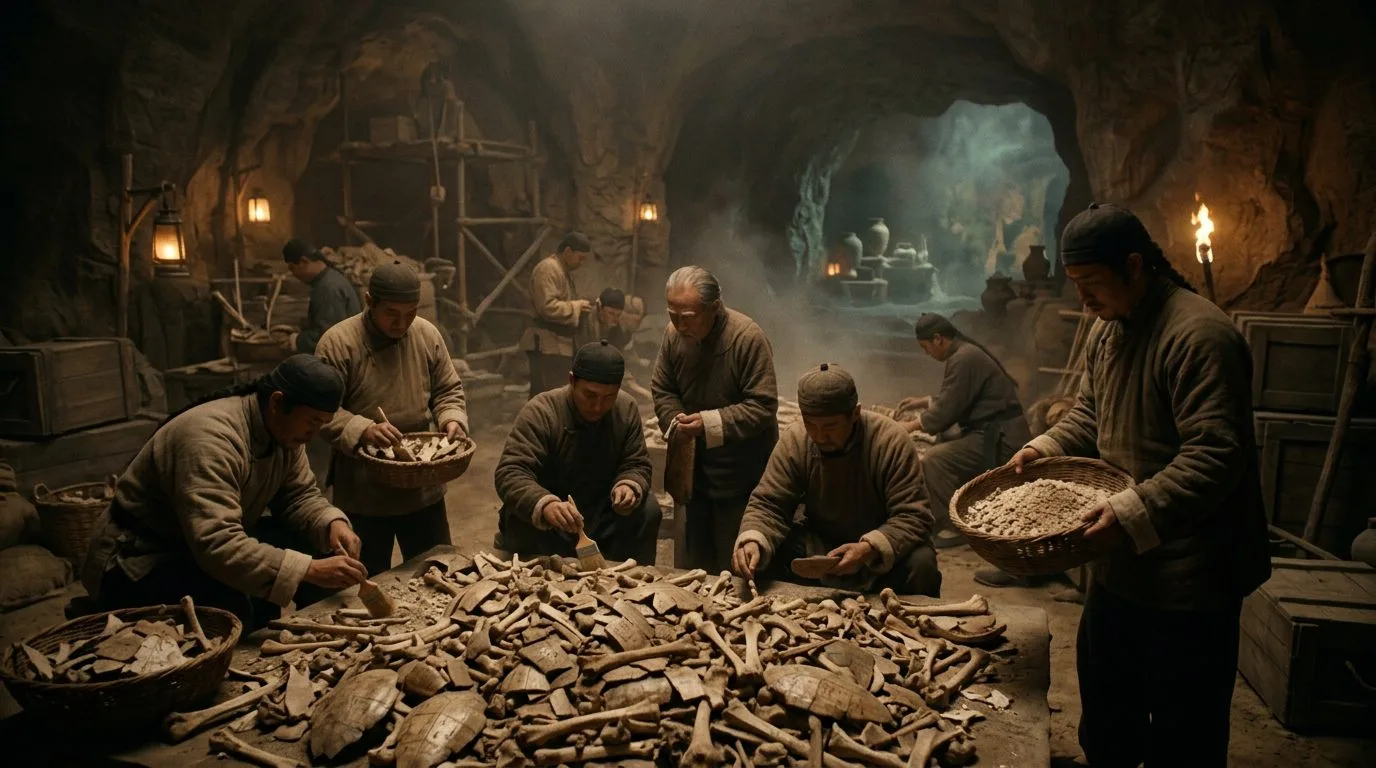
Ancient oracle bones were ground into powder and
Shang Dynasty priests inscribed over 150,000 oracle bones between 1600 and 1046 BCE, heating ox scapulae and turtle shells until they cracked, then interpreting the patterns for divination. These bones recorded royal genealogies, astronomical events, and military campaigns—essentially China’s earliest written records. For 3,000 years they lay buried until farmers near Anyang began unearthing them in the late 19th century. Believing them to be “dragon bones” with medicinal properties, locals sold them to apothecaries who ground them into powder for traditional remedies. Scholar Wang Yirong recognized the inscriptions as ancient Chinese script in 1899, but by then, an estimated 100,000 bones had been destroyed. His discovery sparked archaeological excavations, yet countless irreplaceable historical records had already been consumed as medicine. The tragedy wasn’t that these relics vanished mysteriously—they were systematically obliterated through ignorance before anyone realized their significance.
Source: smithsonianmag.com
Did You Know?
The Jade Seal of Imperial China may have been deliberately destroyed by its last holder to prevent enemies from claiming legitimacy—meaning the search for it is futile because someone ensured it would never be found. Ironically, humanity’s most sacred objects often vanished not through mysterious circumstances but through the prosaic forces of war, greed, and bureaucratic incompetence. The oracle bones that recorded 3,000 years of history were consumed as headache remedies, while Constantine’s shroud probably ended up melted down for the gold thread running through it—proving that the greatest threat to sacred relics wasn’t time or mystery, but humans who simply didn’t recognize what they were destroying.