
While Athens debated philosophy, Sparta enforced laws so brutal they’d horrify modern societies. The Lycurgan reforms created a militaristic state where infants faced death inspections, seven-year-olds entered barracks, and warriors lived under constant surveillance—all mandated by unforgiving legislation.
1. The Infant Inspection Law: State Eugenics at Birth
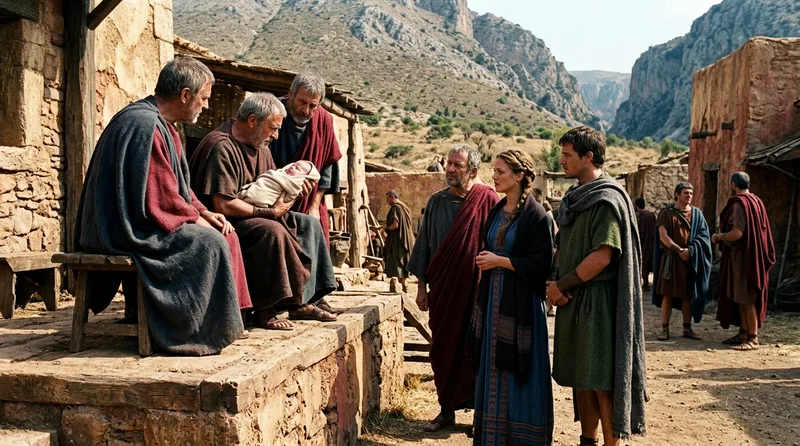
Every Spartan newborn faced a council of elders who examined the child’s physical form within hours of birth. The gerousia inspected each infant at the Apothetae, a chasm near Mount Taygetus, where those deemed weak or deformed were reportedly thrown to their deaths. This practice, established around 800 BCE under the legendary lawgiver Lycurgus, represented one of history’s earliest state-mandated eugenics programs. Plutarch recorded that fathers had no authority over their own children’s survival—the state alone decided who deserved to live. The law aimed to maintain Sparta’s military superiority by ensuring only the strongest citizens survived to become warriors. Archaeological evidence from the Apothetae site remains disputed, with some scholars suggesting exposure rather than immediate execution, but the law’s psychological impact proved undeniable. This brutal selection process became so synonymous with Spartan culture that it influenced eugenic thinking well into the 20th century, though modern historians debate whether infant exposure occurred as frequently as ancient sources claimed.
Source: britannica.com
2. The Agoge: Seven-Year-Olds Entering Military Barracks
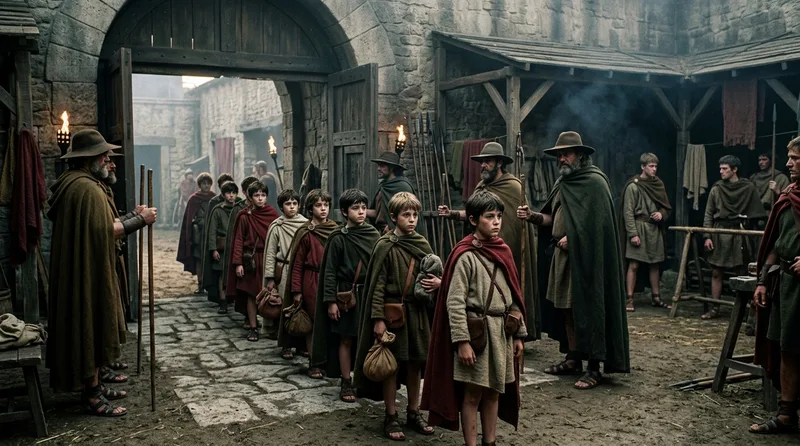
At precisely age seven, every Spartan male citizen entered the agoge, a state-mandated military education system that lasted until age 30. Boys were removed from their families and organized into agelai (herds) under the supervision of a paidonomos, a state-appointed official who wielded absolute authority over their training. The curriculum combined brutal physical conditioning with minimal food rations—deliberately keeping boys hungry to encourage theft, thereby teaching stealth and resourcefulness. Xenophon documented that students received only one cloak per year, slept on reed beds they gathered themselves, and endured regular beatings to build pain tolerance. The most infamous ritual occurred at the altar of Artemis Orthia, where boys were whipped until blood flowed, sometimes to death, while their peers watched. Historical records from the 4th century BCE indicate this practice attracted spectators from across Greece who came to witness Spartan endurance. By age 20, survivors became eirenes (young warriors) who supervised younger trainees while completing their own military service. This totalitarian education system produced the ancient world’s most feared infantry, with Spartan hoplites dominating Greek warfare for over 200 years.
Source: britannica.com
3. The Crypteia: State-Sanctioned Murder of Helots
The crypteia represented Sparta’s most sinister institution—an annual secret police operation where young warriors hunted and killed helots to prevent rebellion. Each year, Spartan magistrates formally declared war on the helot population, making their murder legally exempt from blood guilt under religious law. Elite agoge graduates aged 18 to 20 were selected for this practice, receiving only a dagger and orders to roam the Laconian countryside at night. Plutarch described how these young men killed the strongest and most intelligent helots, particularly targeting potential leaders who might organize resistance. The helots, conquered **Messenia**ns who outnumbered Spartans approximately seven to one, farmed the land while living under constant terror. Archaeological evidence from Messenia confirms violent suppression occurred throughout the classical period, particularly after the devastating 464 BCE earthquake triggered a major helot revolt. The crypteia served dual purposes: culling the enslaved population while hardening Spartan warriors through psychological desensitization to killing. This institutionalized terrorism maintained social control for over three centuries until Sparta’s military decline in the 4th century BCE finally weakened the system’s grip.
Source: britannica.com
4. Equal Land Allotment: Enforced Economic Uniformity
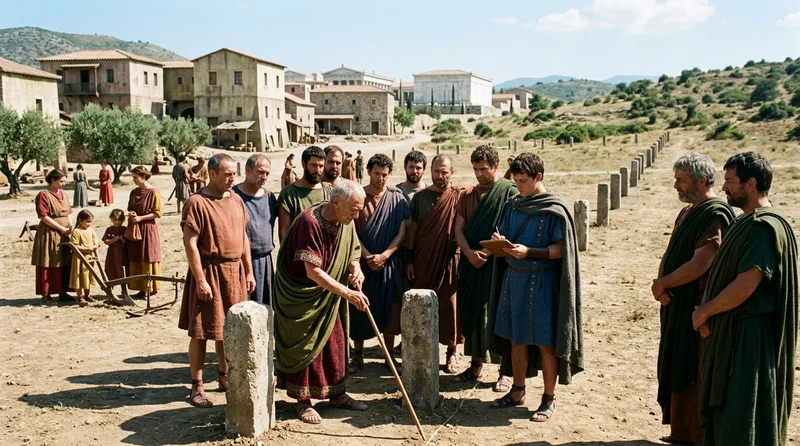
Lycurgus allegedly redistributed all Spartan territory into 9,000 equal plots called kleroi, with each citizen receiving an identical portion to eliminate wealth disparity. These land allotments remained state property that could neither be sold nor subdivided, passing only to direct heirs under strict inheritance laws. Each kleros came with helot laborers who worked the land, producing a fixed amount of barley, wine, and oil that supported the Spartan citizen and his family. Plutarch claimed Lycurgus intended for every allotment to yield exactly 70 medimnoi of barley for the man and 12 for his wife annually—approximately 525 and 90 kilograms respectively. This system theoretically created economic equality among the homoioi (equals), as Spartan citizens called themselves, preventing the wealth concentration that plagued other Greek city-states. However, archaeological surveys of Laconia reveal the system began failing by the 5th century BCE as some families accumulated multiple plots through inheritance and marriage loopholes. By 400 BCE, Aristotle observed that land ownership had concentrated in fewer hands, with perhaps only 1,000 citizens maintaining full kleros holdings. This economic inequality directly contributed to Sparta’s military decline as fewer citizens could afford the syssitia contributions required for full citizenship rights.
Source: britannica.com
5. The Syssitia Requirement: Mandatory Communal Dining for Life
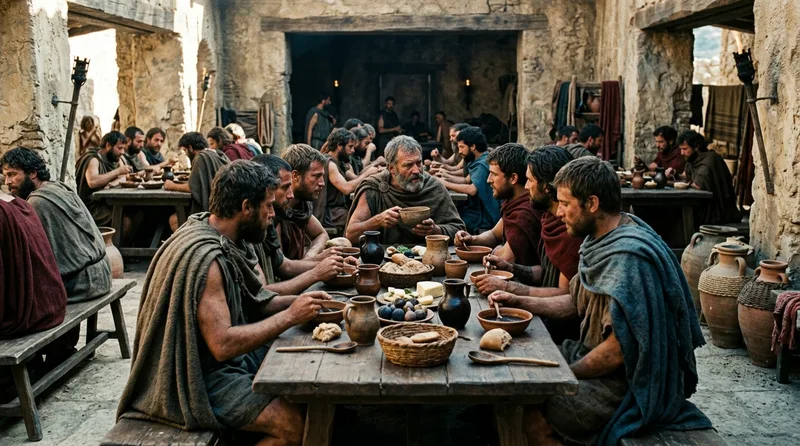
Every Spartan male over age 30 was legally required to join a syssition, a dining club of approximately 15 men who ate identical meals together every single day for the remainder of their lives. Missing meals without legitimate military excuse resulted in loss of citizenship rights and social disgrace. Each member contributed a fixed monthly amount of barley, wine, cheese, and figs from his land allotment—those who couldn’t pay faced demotion to the hypomeiones (inferiors) class and lost political privileges. Plutarch recorded the standard contribution as one medimnos of barley meal, 8 choes of wine (approximately 27 liters), 5 minae of cheese (about 2 kilograms), and 2.5 minae of figs, plus a small amount of money for meat and fish. The meals themselves were deliberately austere, featuring the notorious black broth—a blood-based soup so unappetizing that a visiting Syracusan supposedly remarked he now understood why Spartans didn’t fear death. New members required unanimous approval from existing syssition members, voted on by dropping bread balls into a container—a single squeezed ball constituted rejection. This system reinforced military cohesion by transforming dining clubs into combat units, as syssition members typically fought alongside each other in the phalanx formation. The practice persisted until the 2nd century CE when Roman influence finally eroded traditional Spartan customs.
Source: britannica.com
6. Marriage and Procreation Laws: Breeding the Perfect Warrior
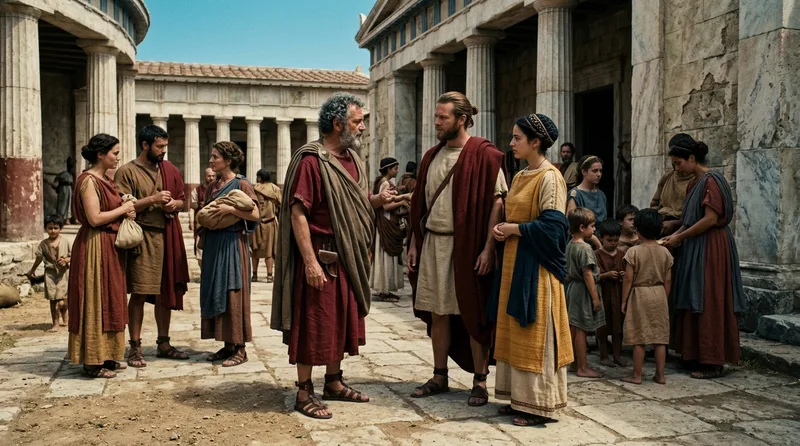
Spartan marriage laws prioritized state reproduction over romantic attachment, treating marriage as a civic duty designed to produce strong warriors. Men were legally required to marry by age 30 or face atimia (public dishonor), including exclusion from civic festivals and ritual humiliation where young women beat them publicly. The wedding ceremony itself reflected military priorities—grooms kidnapped brides in staged abductions, then consummated marriages briefly before returning to their military barracks for years. Wives remained in their fathers’ homes while husbands visited secretly at night, a practice intended to increase sexual vigor and fertility. Xenophon documented cases where elderly Spartan men with young wives legally arranged for vigorous younger men to impregnate them, prioritizing genetic quality over jealousy. The state encouraged eugenic practices: healthy men could share wives with brothers or friends, while the famous lawgiver Lycurgus allegedly punished celibate men by forcing them to march naked in winter singing self-degrading songs. Women who died in childbirth received the same honored burial markers as men who fell in battle, the only two categories of Spartans granted named tombstones. These procreation-focused laws created one of history’s first documented breeding programs, treating citizens as livestock serving state interests rather than autonomous individuals with personal reproductive rights.
Source: britannica.com
7. The Dual Kingship: Constitutional Checks Through Rivalry
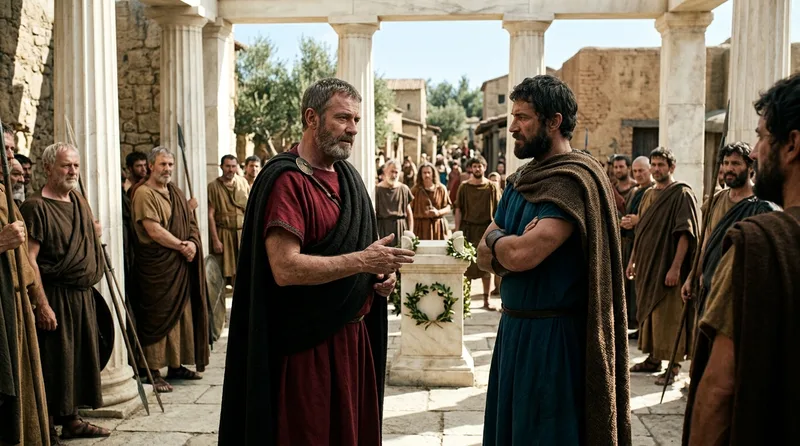
Sparta’s unique constitution mandated two hereditary kings ruling simultaneously, drawn from the separate Agiad and Eurypontid dynasties that traced ancestry back to the mythical twins Eurysthenes and Procles in the 10th century BCE. This dual monarchy created institutional rivalry where each king monitored and limited the other’s power, preventing tyranny through enforced competition. During military campaigns, only one king led the army while the other remained in Sparta, ensuring no single ruler commanded both military and domestic authority simultaneously. The constitutional arrangement granted kings religious authority as chief priests and military command, but the gerousia and ephors held actual legislative and judicial power. Herodotus recorded that kings received double food portions at the syssitia and preferential seats at public events, but faced prosecution for military failures or religious violations. When King Cleomenes I attempted to expand royal power in the 490s BCE, the ephors had him tried for accepting bribes, demonstrating that even kings answered to Spartan law. The system produced famous rivalries, including the clash between King Pausanias and King Leotychidas in 479 BCE after the Battle of Plataea. This dual kingship persisted for over 700 years until the 2nd century BCE, making it one of history’s longest-running constitutional experiments in limiting autocratic power.
Source: britannica.com
8. Xenelasia: The Expulsion of Dangerous Foreigners
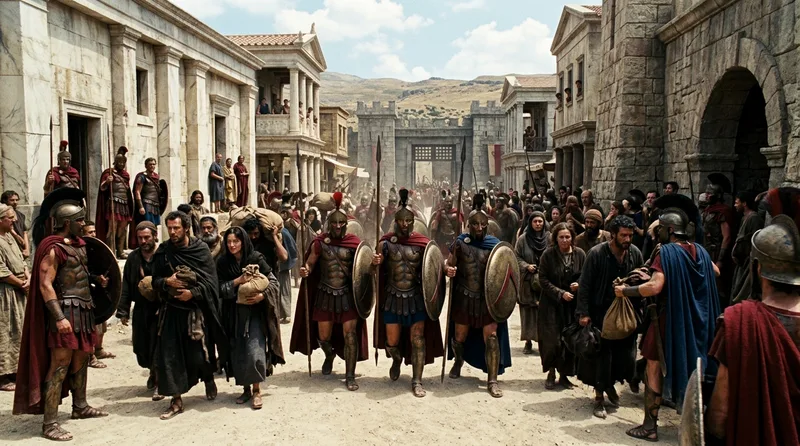
Xenelasia gave Spartan authorities legal power to expel foreigners deemed threatening to the state’s rigid social order, creating one of antiquity’s most isolated societies. This policy, instituted sometime before the 6th century BCE, banned foreign travel for citizens while restricting outsider access to prevent corrupting influences like philosophy, luxury goods, and democratic ideas. Thucydides noted that Sparta periodically conducted mass expulsions of foreigners, including Greek allies, whenever authorities feared ideological contamination. The most famous application occurred in 432 BCE when Sparta expelled all foreigners immediately before the Peloponnesian War, demonstrating xenelasia’s use as a security measure against espionage. Plutarch claimed Lycurgus designed the policy to prevent Spartans from learning foreign customs that might undermine military discipline, though modern scholars date the practice to later periods of social anxiety. The law particularly targeted intellectuals and merchants—Athens welcomed philosophers like Socrates while Sparta expelled them as threats to traditional values. Even Greek allies visiting Sparta required authorization and faced constant surveillance by the crypteia and ephors. This isolationist policy contributed to Sparta’s cultural stagnation; while Athens produced literature, philosophy, and art that defined Western civilization, Sparta’s xenelasia ensured it contributed primarily military innovations. The practice weakened only after Sparta’s defeat at Leuctra in 371 BCE exposed the bankruptcy of complete isolationism.
Source: britannica.com
9. Prohibition of Gold and Silver: Iron Currency by Law
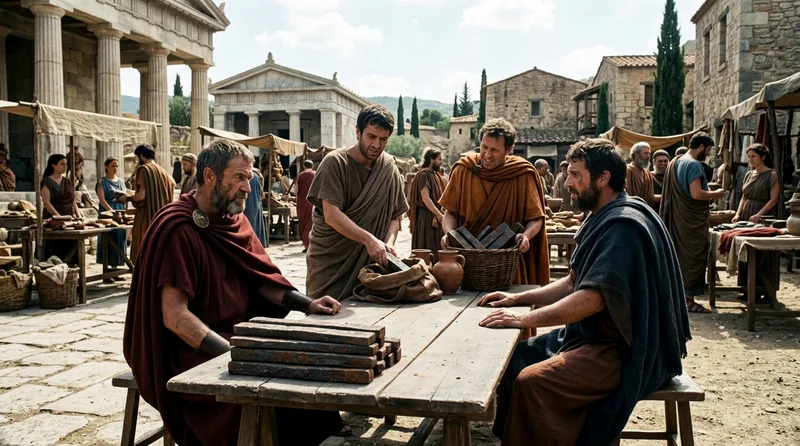
Lycurgan reforms allegedly banned gold and silver coinage, mandating that Spartans use only cumbersome iron bars called pelanors for currency, intentionally making wealth accumulation impractical. These iron obols were reportedly quenched in vinegar while red-hot to make them brittle and useless for other purposes, ensuring they held no intrinsic value beyond state-mandated worth. Plutarch claimed a cartload of iron money was required for modest purchases, making theft pointless and corruption difficult since bribes couldn’t be concealed. Archaeological evidence confirms Sparta minted no silver coins until the 3rd century BCE, unlike every other major Greek polis that adopted silver drachmas by 600 BCE. The ban extended beyond currency—Spartan law prohibited citizens from owning gold or silver objects, with ephors conducting house searches to enforce compliance. When the general Gylippus returned from Syracuse in 404 BCE with 1,500 silver talents, authorities prosecuted him for possession alone, forcing his exile despite his military victories. This monetary isolation aimed to eliminate luxury consumption and foreign trade that might create economic inequality among the homoioi class. However, the system failed spectacularly after Sparta’s victory in the Peloponnesian War when sudden access to Athenian tribute silver corrupted traditional values within a single generation. By 371 BCE, wealth concentration had destroyed the egalitarian economic foundations that once defined Spartan society.
Source: britannica.com
10. The Gerousia: Elder Council’s Life-and-Death Authority
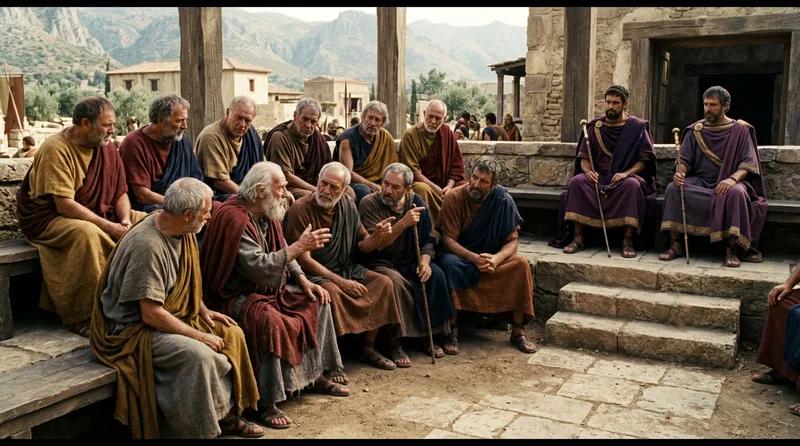
The gerousia consisted of 28 men over age 60 plus the two kings, forming an oligarchic council with extraordinary judicial power including authority to execute citizens without appeal. Members served for life after election through a peculiar process where candidates appeared before the assembly, with the loudest shouting from voters determining winners—a method Aristotle derided as childish. This gerontocracy held sole authority to propose legislation to the citizen assembly, which could only approve or reject proposals without debate or amendment. The council functioned as Sparta’s supreme court, trying cases involving loss of citizenship, exile, and capital punishment, with proceedings conducted in secret without defendant representation. Plutarch recorded that the gerousia’s 28 members represented the original followers who helped Lycurgus establish the Spartan constitution around 800 BCE, though historical evidence suggests the institution evolved gradually during the 7th century BCE. The age requirement of 60 years ensured members had completed military service and possessed extensive life experience, though it also meant the council frequently resisted necessary reforms. In 243 BCE, King Cleomenes III had to violently abolish the gerousia after it blocked his attempts to revive Sparta’s declining military power by redistributing land and expanding citizenship. This council of elders embodied Sparta’s fundamental conservatism, preserving traditional laws so rigidly that the state couldn’t adapt to changing military and economic realities, ultimately contributing to Sparta’s irreversible decline.
Source: britannica.com
Did You Know?
Did you know that Sparta’s legendary military prowess ultimately destroyed the society it was meant to protect? The same laws that created history’s most feared warriors—infanticide, forced separation of families, and economic rigidity—proved so inflexible that Sparta couldn’t adapt when warfare evolved beyond hoplite combat. By 371 BCE, citizen numbers had collapsed from 8,000 to fewer than 1,000, victims of their own eugenics and economic policies. The society that banned currency to prevent corruption was conquered by enemies who simply bought better mercenaries.