
Long before European ships reached Asia, Southeast Asian kingdoms controlled the world’s most valuable commodity: spices. A single pound of nutmeg could buy a house in medieval London, yet it grew only on a few tiny islands controlled by maritime empires that became fabulously wealthy.
1. Maluku Islands Nutmeg Route Created Asia’s First Monopoly
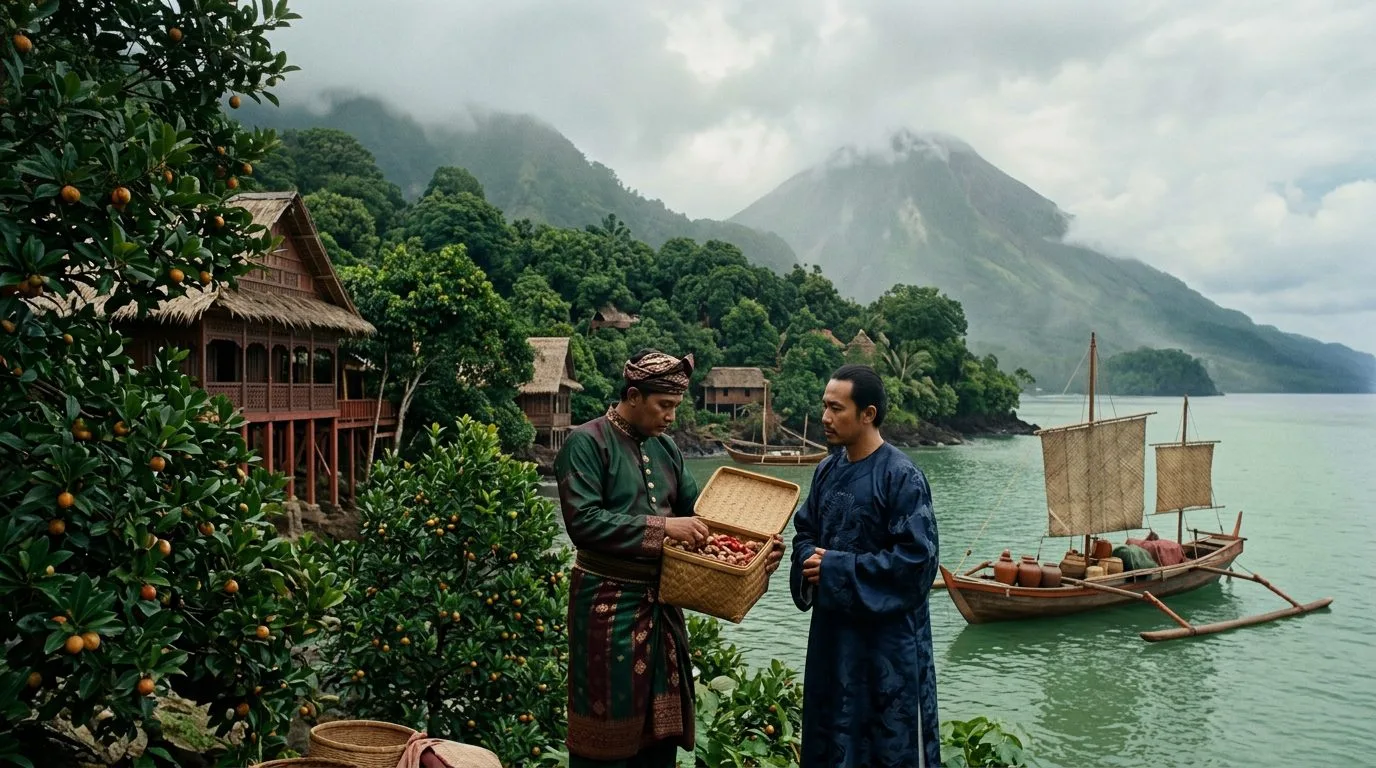
Spice traders dominated nutmeg commerce globally.
The Banda Islands produced the world’s entire nutmeg supply until 1621, and local rulers charged Chinese merchants up to 300 times the production cost. Ternate and Tidore, two volcanic islands barely 5 miles apart, controlled this trade through fortified ports where Arab, Chinese, and Javanese traders competed. A single ship carrying 400 pounds of nutmeg could finance an entire fleet’s construction. The Sultan of Ternate maintained a navy of 100 war canoes specifically to patrol these routes and prevent unauthorized harvesting.
Source: britannica.com
2. Srivijaya’s Pepper Monopoly Made Sumatra Richer Than Rome
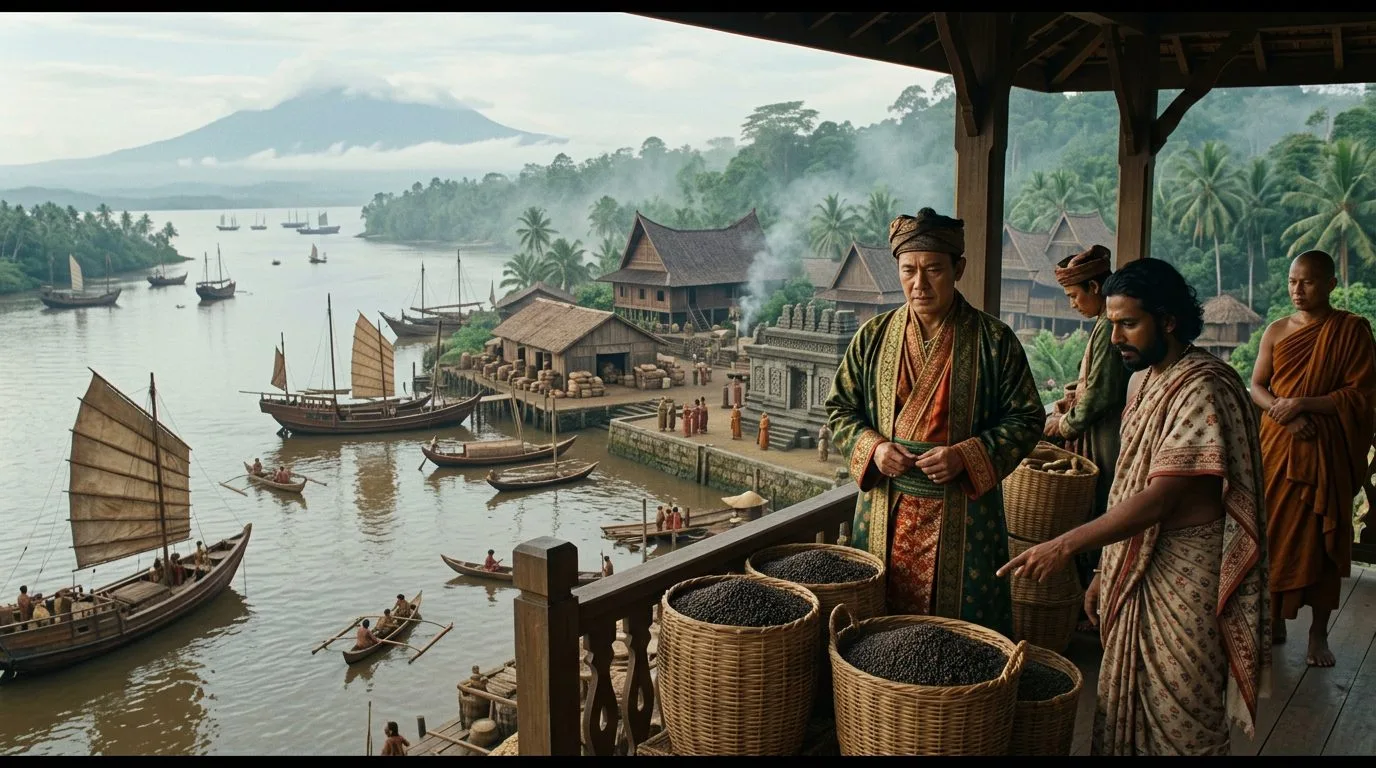
Spice wealth that built an empire.
From 650 CE to 1025 CE, the Srivijaya Empire controlled both sides of the Strait of Malacca and taxed every ship carrying Sumatran pepper to China and India. Chinese records from 671 CE describe Palembang as having more than 1,000 Buddhist monks and towering warehouses filled with black pepper worth its weight in silver. The kingdom stationed war galleys at 15 strategic points along the strait, collecting fees that filled temple complexes with gold-plated statues. A Tang Dynasty account noted that Srivijayan kings wore robes sewn with pearls and sat on thrones carved from single blocks of jade.
Source: britannica.com
3. Javanese Clove Ships Sailed 4,000 Miles to Arabian Markets
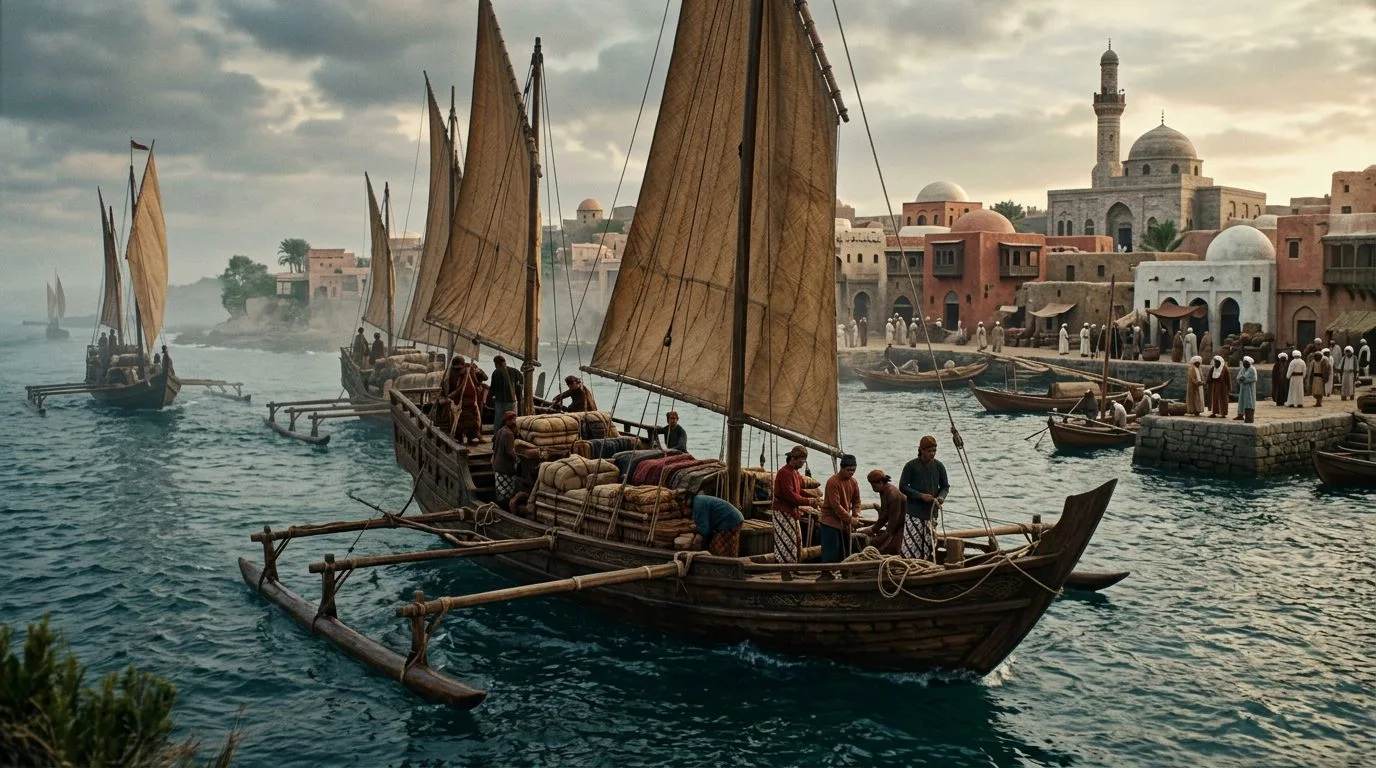
Javanese Clove Ships Sailed 4
By 800 CE, Javanese merchants had established direct routes from Moluccan clove islands to Basra and Aden, bypassing Indian middlemen entirely. These double-outrigger vessels could carry 40 tons of cargo and sailed using monsoon winds, making the journey in approximately 120 days. Arab geographer Al-Masudi recorded in 916 CE that a Javanese trading colony in Madagascar numbered over 3,000 people. The Sailendra Dynasty built Borobudur temple complex using clove trade profits, decorating it with 2,672 relief panels depicting maritime commerce scenes.
Source: britannica.com
4. Khmer Cinnamon Routes Fed China’s Imperial Court for Centuries
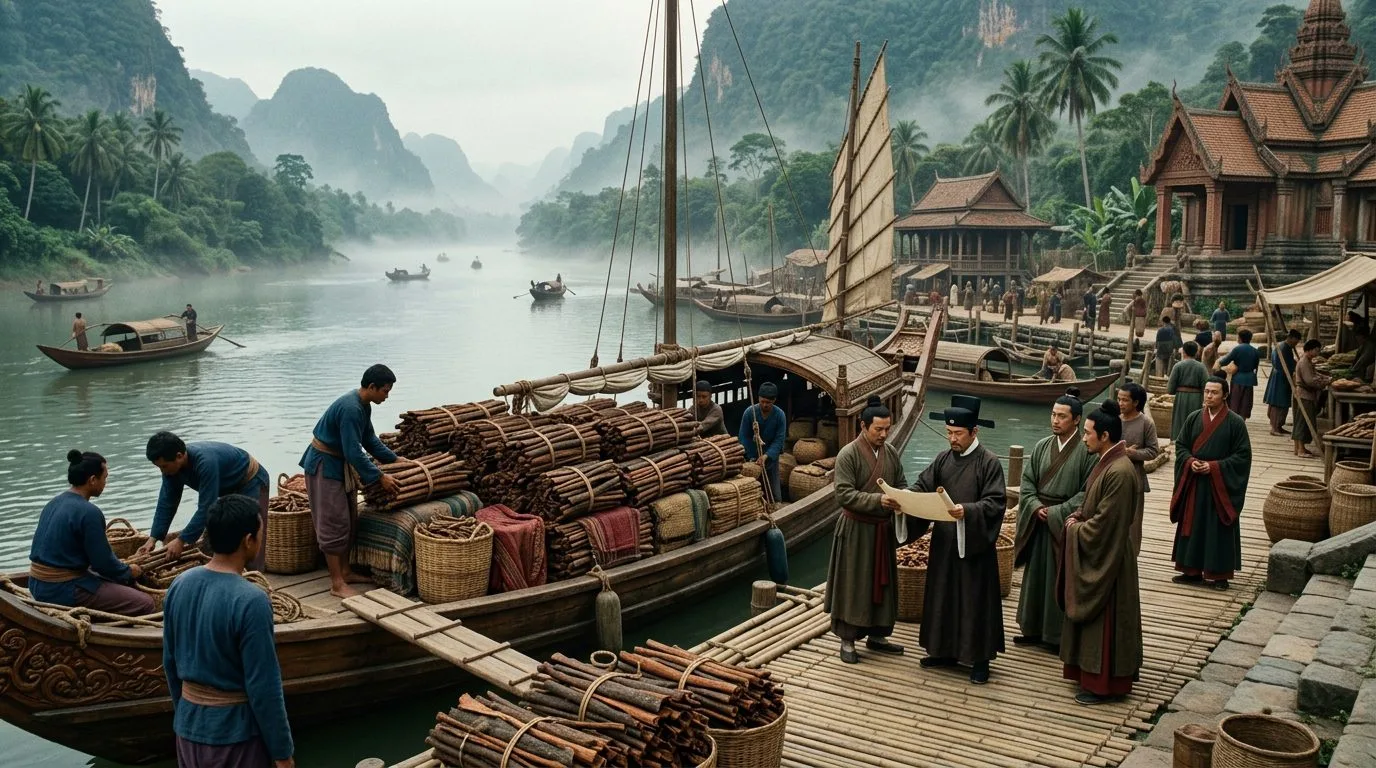
Precious spice caravans linked ancient kingdoms.
The Khmer Empire harvested Cinnamomum cassia from forests along the Mekong River valley and shipped it to Song Dynasty China via Champa ports after 900 CE. Chinese court records from 1225 CE list cinnamon among the top three imports, with annual shipments exceeding 200,000 pounds. Angkor Wat‘s bas-reliefs from 1113 CE depict merchant caravans carrying bundled cinnamon bark on elephant-back to riverine loading stations. Vietnamese records note that Khmer traders controlled 18 major ports along the Mekong Delta, each specializing in different grades of cinnamon bark.
Source: britannica.com
5. Champa Camphor Trade Supplied Chinese Medicine and Ritual
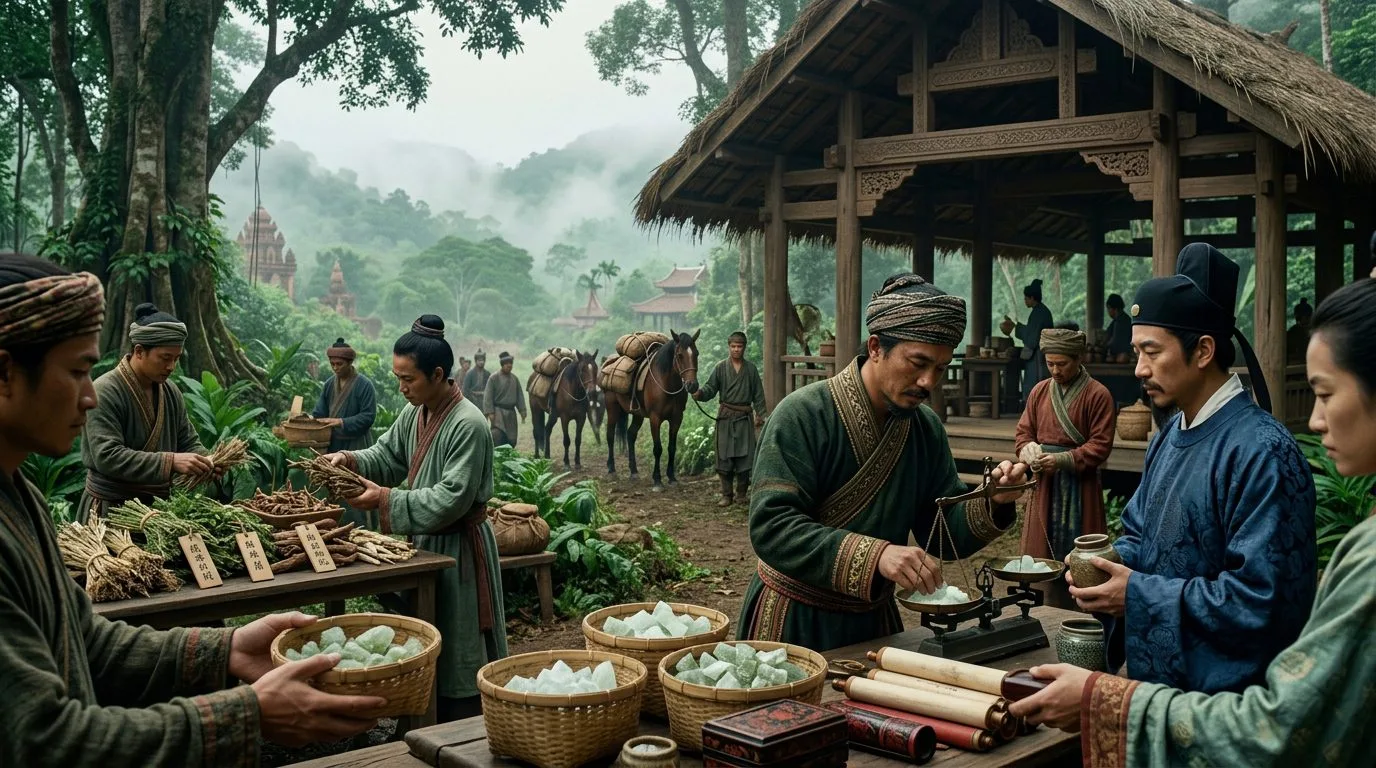
Champa camphor vessels used in Chinese medicine
The Kingdom of Champa monopolized camphor extraction from Dryobalanops trees growing only in central Vietnam’s highlands between 982 CE and 1471 CE. Song Dynasty texts valued Champa camphor at 10 times the price of Bornean varieties for its superior purity. Emperor Huizong‘s court records from 1100 CE show annual purchases of 8,000 pounds for Buddhist ceremonies and medical preparations. Cham traders maintained permanent warehouses in Guangzhou where camphor crystals were sorted into 12 quality grades, with the finest reserved exclusively for imperial use.
Source: britannica.com
6. Majapahit’s 98 Tributary Ports Created Asia’s Largest Spice Network
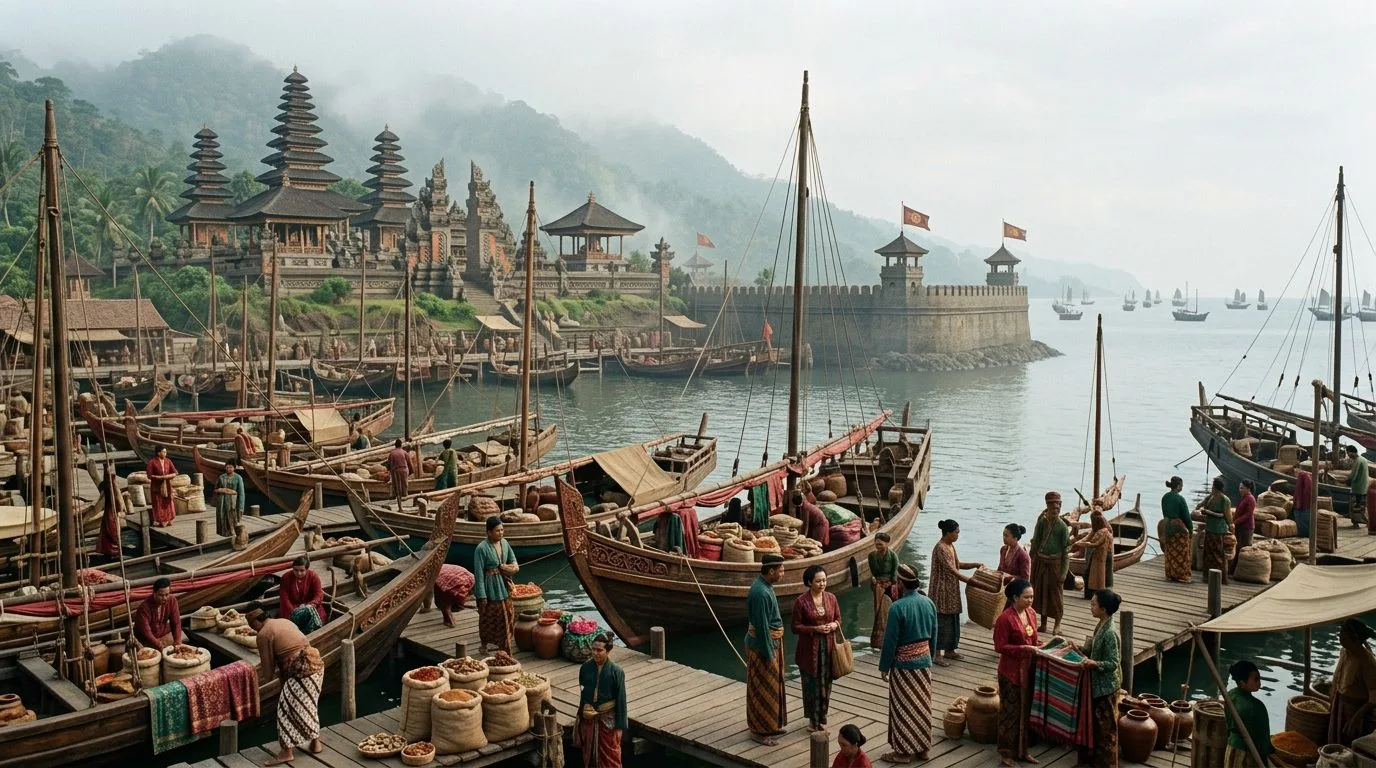
Trading ships at Majapahit’s bustling spice ports.
Under Prime Minister Gajah Mada‘s leadership from 1331 CE to 1364 CE, Majapahit controlled spice production from Sumatra to New Guinea through a network documented in the Nagarakertagama text. This empire’s ships transported nutmeg, cloves, and mace from 98 tributary ports to markets in Bengal, Siam, and Southern China. The capital city of Trowulan covered 40 square miles and contained specialized quarters where Arab, Chinese, and Indian merchants lived permanently. Majapahit’s navy comprised 400 jong warships, each capable of carrying 300 armed men to protect trade convoys.
Source: britannica.com
7. Ayutthaya Transformed Siam Into Southeast Asia’s Spice Redistribution Hub
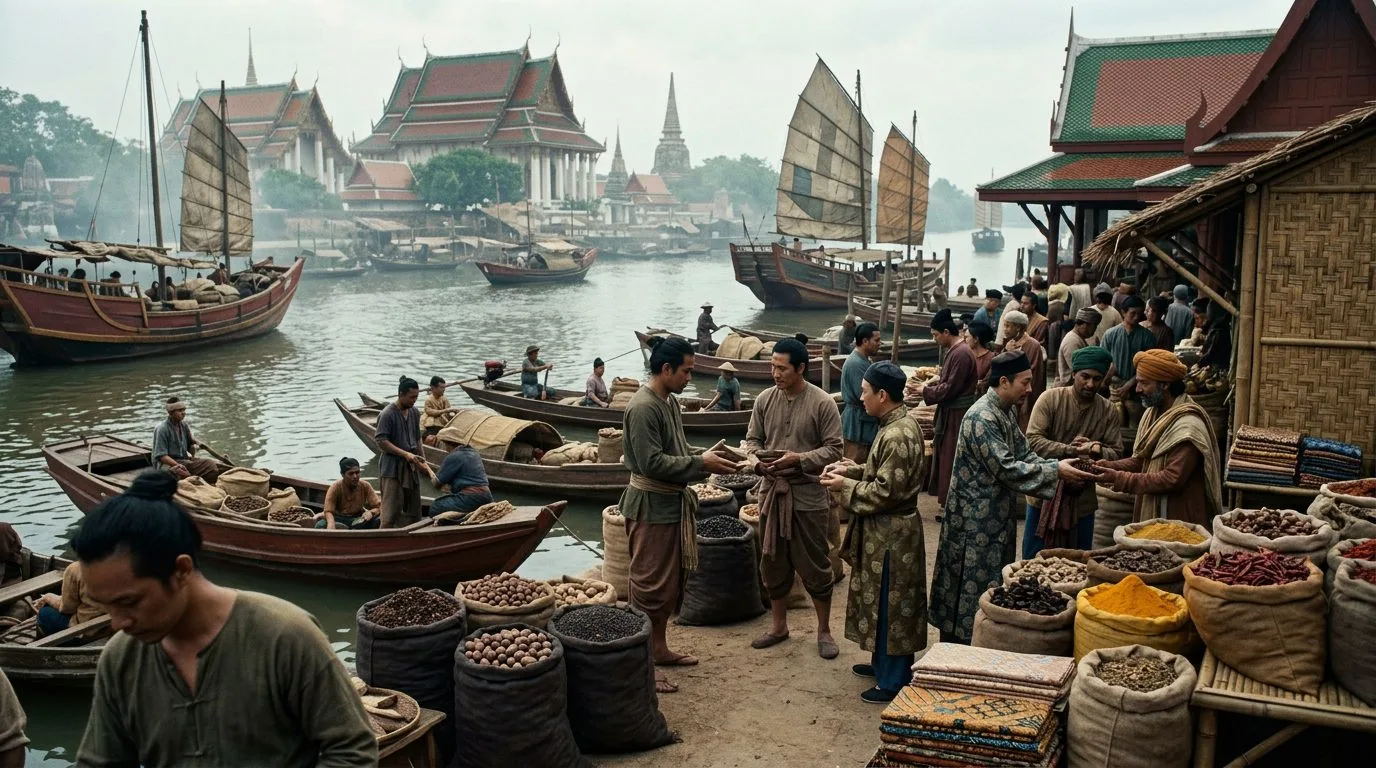
Ayutthaya’s strategic port controlled the spice
Founded in 1351 CE, Ayutthaya became the central marketplace where Indonesian spices met Chinese silk and Indian textiles. The kingdom’s strategic position on the Chao Phraya River allowed merchants to avoid pirate-infested maritime routes by using overland portage across the Kra Isthmus. Dutch merchant Jeremias van Vliet recorded in 1636 that over 3,000 foreign traders resided permanently in Ayutthaya’s international quarter. Royal warehouses stored up to 500 tons of cloves and nutmeg simultaneously, which the king’s monopoly resold to Chinese junks at markups approaching 400 percent.
Source: britannica.com
8. Southern Philippine Clove Cultivation Challenged Moluccan Monopolies
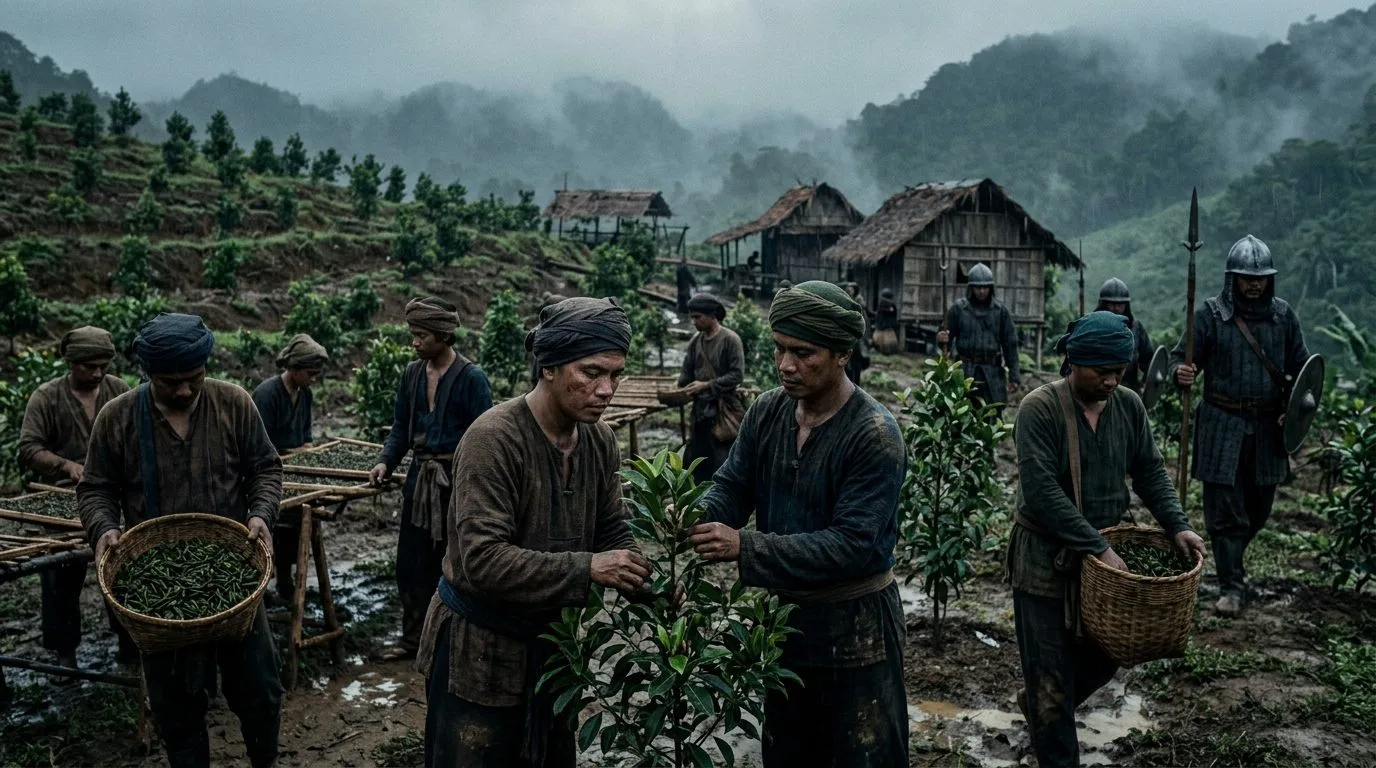
Southern Philippine Clove Cultivation Challenged
Sultanate of Sulu established clove plantations on Jolo Island around 1450 CE, breaking the Moluccan monopoly and creating competition that lowered Asian spice prices by 30 percent within two decades. Chinese records from 1417 CE describe Sulu traders bringing tribute gifts of cloves to the Ming court, proving established production. The sultanate’s location between Borneo and Mindanao created a natural entrepôt where Brunei, Majapahit, and Chinese merchants converged. By 1521, when Magellan’s expedition arrived, Sulu controlled 47 islands producing cloves and maintained a fleet of 200 warships.
Source: britannica.com
9. Vietnamese Port Cities Became Essential Links in China’s Spice Supply
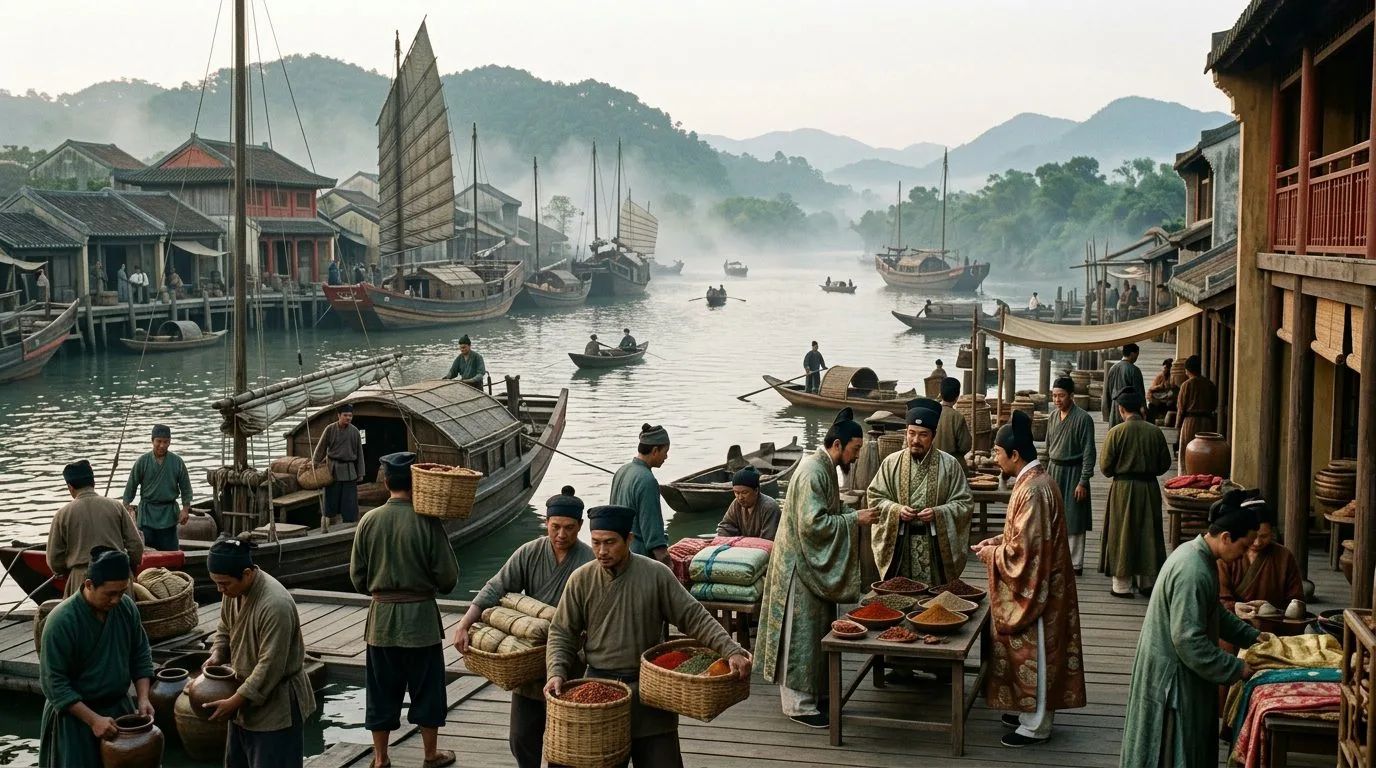
Vietnam’s Ports: Gateways for Chinese Spice Trade
Hoi An and Qui Nhon emerged as critical transshipment ports after 1306 CE when the Tran Dynasty formalized trade agreements with Champa and Java. Chinese records from 1430 CE show these ports handled 60 percent of spice imports entering Guangdong and Fujian provinces. Ships could wait in protected harbors during monsoon season while merchants sorted and repacked spices for Chinese markets. The ports maintained specialized guilds of spice inspectors who could identify 27 different varieties of cinnamon bark and detect adulterated pepper by taste alone.
Source: britannica.com
10. Burmese Overland Routes Connected Spice Islands to the Silk Road
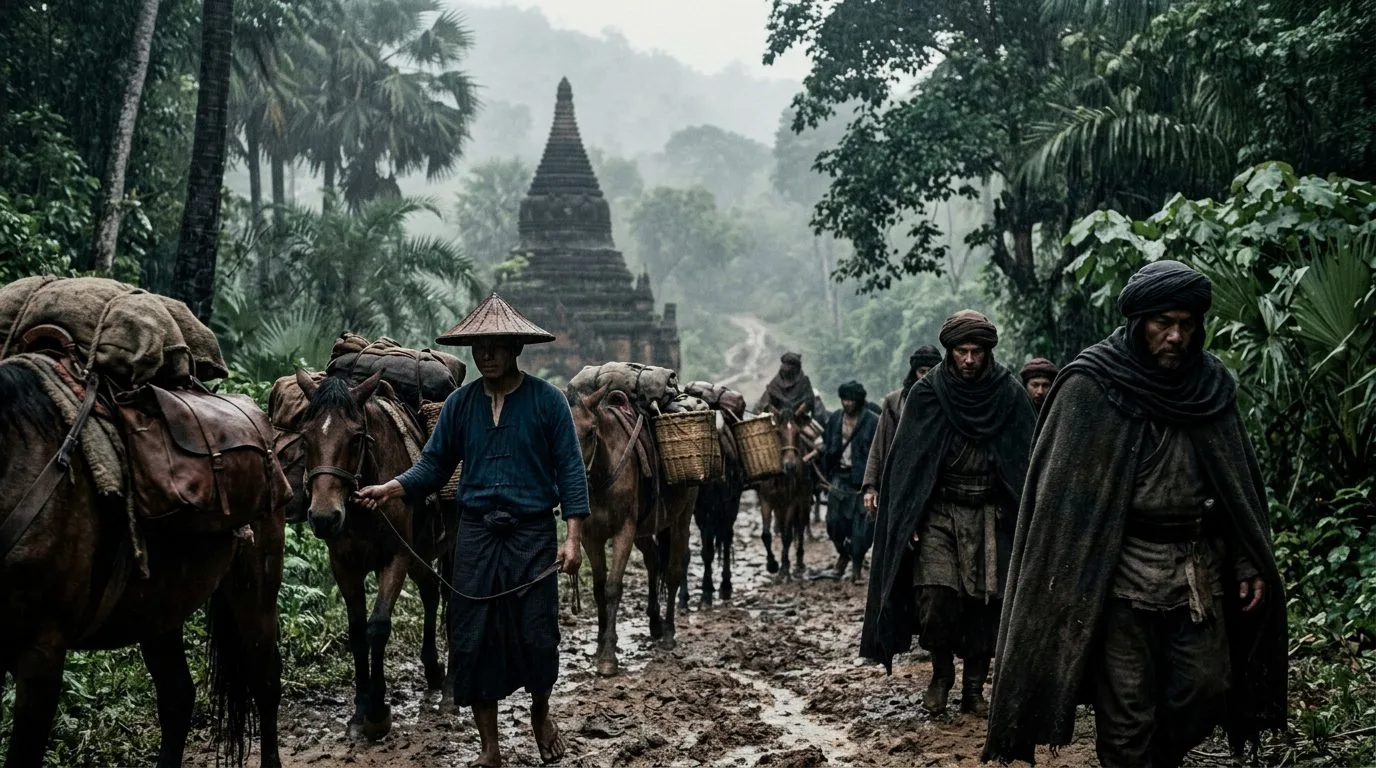
Burmese Overland Routes Connected Spice Islands
The Pagan Kingdom established overland routes from 1044 CE to 1287 CE that transported Indonesian spices through Burma to Yunnan and eventually to Central Asian markets. Caravans of 300 mules carried cloves and nutmeg from Martaban port through mountain passes to Chinese trading posts, completing the 800-mile journey in 45 days. Marco Polo‘s account from 1298 CE mentions Burmese merchants in Kublai Khan‘s court presenting spices as diplomatic gifts. These routes remained active even after Mongol invasions disrupted maritime trade, with annual spice volumes reaching 150 tons by 1250 CE.
Source: britannica.com
Did You Know?
Did You Know? The total value of spices traded through Southeast Asian routes between 650 CE and 1500 CE exceeded the combined GDP of medieval Europe. Yet when Portuguese conquistadors seized the Banda Islands in 1511, they found a local population of just 15,000 people controlling a trade network that had enriched Chinese emperors, Arab caliphs, and Javanese kings for eight centuries—proof that geography, not population, determined economic power in the medieval world.