
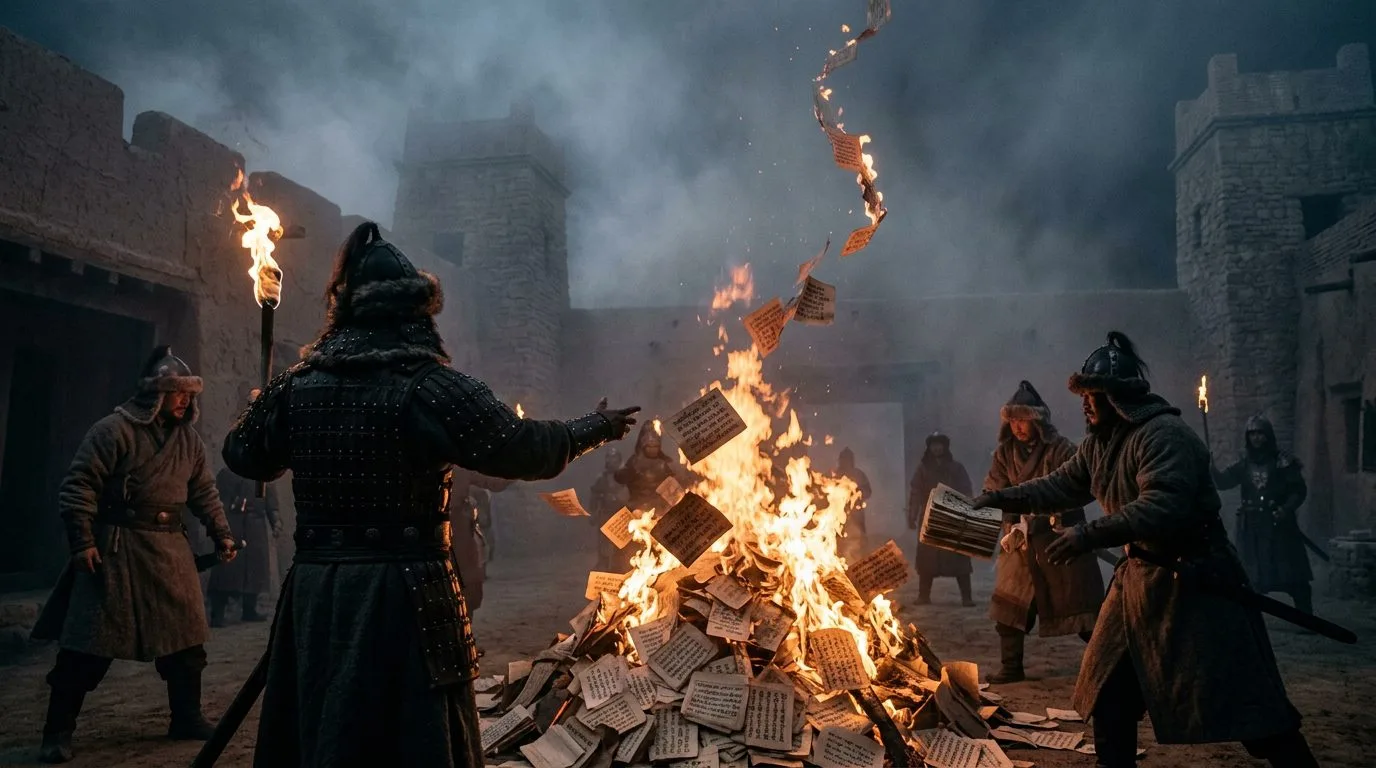
When the Mongols conquered Western Xia in 1227 CE, they didn’t just burn cities—they systematically destroyed every Tangut manuscript they found. This wasn’t unusual. History’s graveyards are filled with scripts so thoroughly erased that scholars can’t decipher them centuries later.
1. Linear A: The Minoan Mystery That Still Baffles Cryptographers

Linear A
Linear A covered thousands of clay tablets across Minoan Crete between 1800 and 1450 BCE, yet not a single sentence has been reliably translated. Unlike its successor Linear B (deciphered in the mid-20th century), Linear A recorded a non-Greek language that died when volcanic eruptions and Mycenaean invasions destroyed Minoan civilization. The script contains roughly 90 phonetic signs and 100 ideograms, all maddeningly consistent yet incomprehensible. Scholars can identify words for ’total’ and ‘sheep’ from context, but the underlying grammar remains opaque. The irony? We can read Minoan accounting records but have no idea what language the accountants actually spoke.
Source: britannica.com
2. Tangut Script: Genghis Khan’s Most Thorough Book Burning
Tangut Script
When Genghis Khan’s grandson destroyed the Western Xia Empire in 1227 CE, Mongol commanders received explicit orders to annihilate Tangut culture. The Tangut script—an intricate system of over 6,000 characters invented around 1036 CE—virtually disappeared within a generation. This wasn’t accidental. The Tanguts had killed Genghis Khan during the siege of their capital, prompting one of history’s most vengeful campaigns of cultural erasure. Monasteries were burned, scholars executed, and manuscripts shredded. Only Buddhist texts hidden in desert caves survived, rediscovered in the early 20th century near Dunhuang. Today we can read Tangut phonetically but struggle with meaning because the spoken language vanished completely.
Source: britannica.com
3. Rongorongo: Easter Island’s Script Lost to Slavers and Missionaries

Rongorongo
Only 26 wooden tablets bearing rongorongo script survived Peruvian slave raids in 1862 CE and subsequent missionary campaigns that branded the symbols demonic. Easter Island’s indigenous writing system—possibly the only independent invention of script in Oceania—remains undeciphered because everyone who could read it died. When Bishop Tepano Jaussen tried to find translators in the late 19th century, only one elderly islander claimed partial knowledge, providing contradictory readings. The glyphs themselves are bizarre: reverse boustrophedon (alternating direction each line) with pictograms of birds, fish, and humanoid figures. Some researchers argue it’s not true writing but ceremonial symbols. Either way, an entire intellectual tradition perished within 30 years.
Source: smithsonianmag.com
4. Proto-Elamite: Iran’s Forgotten Bureaucratic Revolution
Proto-Elamite
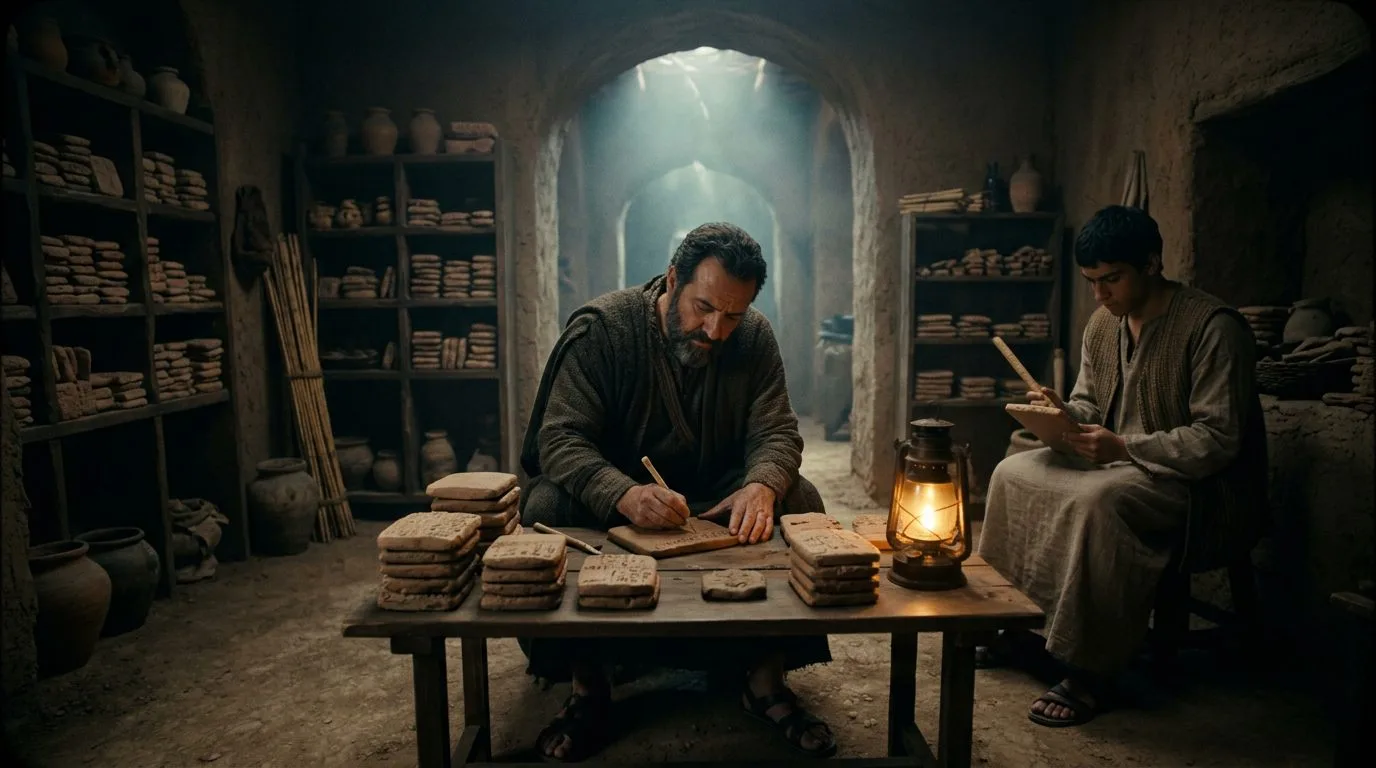
Between 3200 and 2700 BCE, scribes across the Iranian plateau developed proto-Elamite, one of the world’s earliest writing systems, to track grain shipments and livestock inventories. Over 1,600 tablets survive from cities like Susa, covered in geometric signs that resemble cuneiform but follow entirely different logic. The script disappeared as abruptly as it emerged, replaced by Elamite cuneiform borrowed from Mesopotamia. Crucially, we have no bilingual texts—the Rosetta Stones that unlocked Egyptian hieroglyphs and Persian cuneiform don’t exist for proto-Elamite. Scholars can identify number systems and recognize repeated administrative formulas, but the underlying language remains pure speculation. Entire centuries of Iranian thought exist only as indecipherable accountancy.
Source: britannica.com
5. Indus Valley Script: The Civilization That Left No Instructions

Indus Valley Script
Between 2600 and 1900 BCE, the Harappan civilization produced roughly 4,000 inscribed seals and tablets using a script of approximately 400 symbols—yet scholars can’t agree whether it even represents language. The symbols appear on seals depicting bulls, elephants, and mysterious horned figures, typically in sequences of five signs. No text exceeds 26 characters. The script vanished when Harappan cities collapsed around 1900 BCE, possibly due to climate change redirecting monsoon patterns. Without bilingual inscriptions or long texts, computational linguists have tried everything from Dravidian language models to AI pattern recognition. The frustration? We possess detailed city plans, sophisticated drainage systems, and standardized weights from this civilization—but cannot read a single word they wrote.
Source: britannica.com
6. Meroitic Script: Readable Words From a Forgotten Language
Meroitic Script
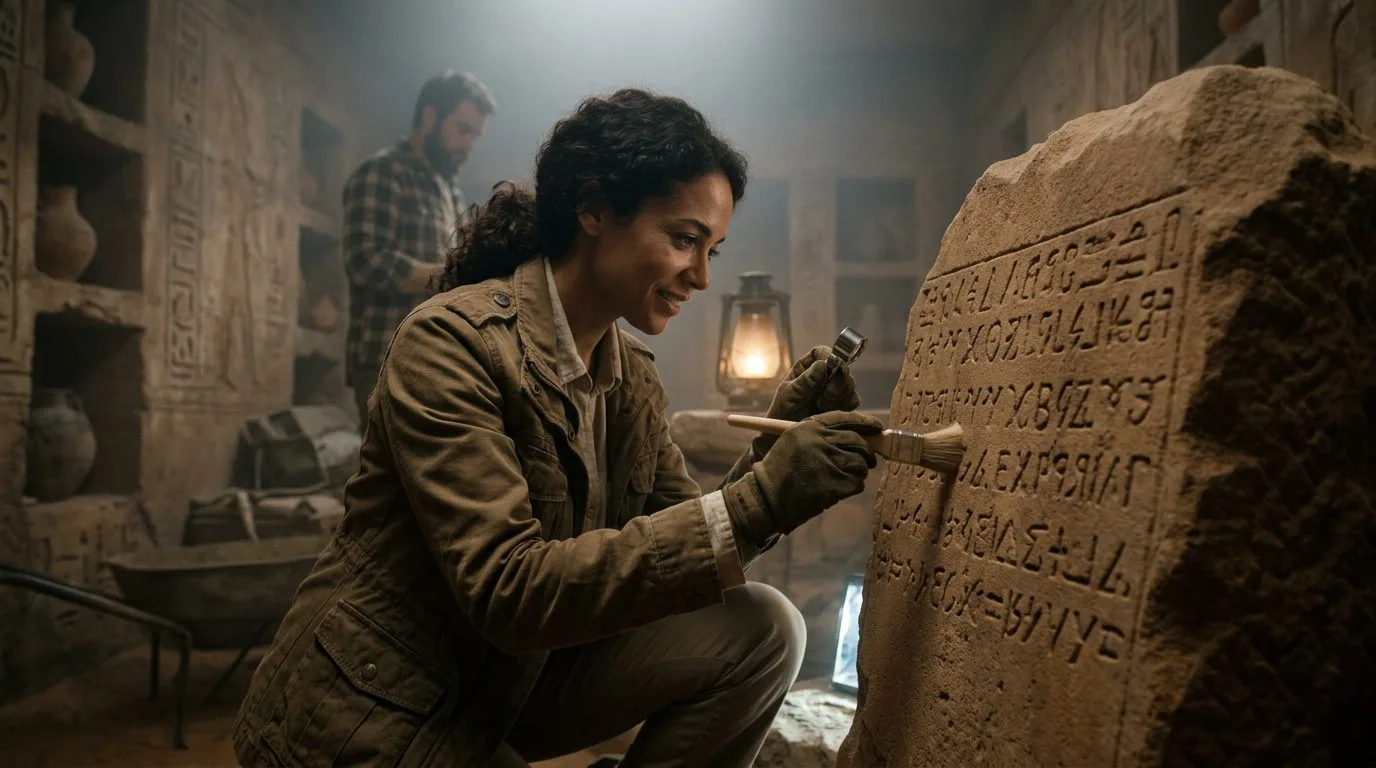
The Kingdom of Kush developed Meroitic script around 300 BCE to assert independence from Egyptian cultural dominance, creating the first alphabet in Africa. Scholars cracked the phonetic values in the early 20th century by comparing royal names with Egyptian records, but that solved only half the puzzle. We can now sound out Meroitic words perfectly—yet have almost no idea what they mean because the language died when Nubian kingdoms collapsed around 350 CE. Temple inscriptions at Meroe read like gibberish translated phonetically: we recognize personal names, a handful of words like ‘water’ and ‘bread,’ and ritualistic formulas, but cannot construct grammar or meaning. It’s linguistic purgatory—reading aloud a language nobody understands.
Source: britannica.com
7. Khitan Scripts: The Nomads Who Invented Writing Twice

Khitan Scripts
The Khitan people of the Liao Dynasty created not one but two writing systems in the early 10th century: Large Script (logographic) and Small Script (phonetic). Both vanished after the Jurchen Jin Dynasty conquered them in 1125 CE and subsequent Mongol campaigns scattered surviving communities. The scripts recorded legal codes, Buddhist texts, and administrative records across northern China for two centuries. Fewer than 30 scholars worldwide can partially read Khitan Small Script today, relying on trilingual tomb inscriptions that include Chinese. The bitter irony? The Khitan were semi-nomadic warriors who valued literacy enough to invent sophisticated writing systems—which their conquerors deliberately suppressed to erase political legitimacy.
Source: britannica.com
8. Old Persian Cuneiform: The Script Kings Forgot
Old Persian Cuneiform: The Script Kings Forgot
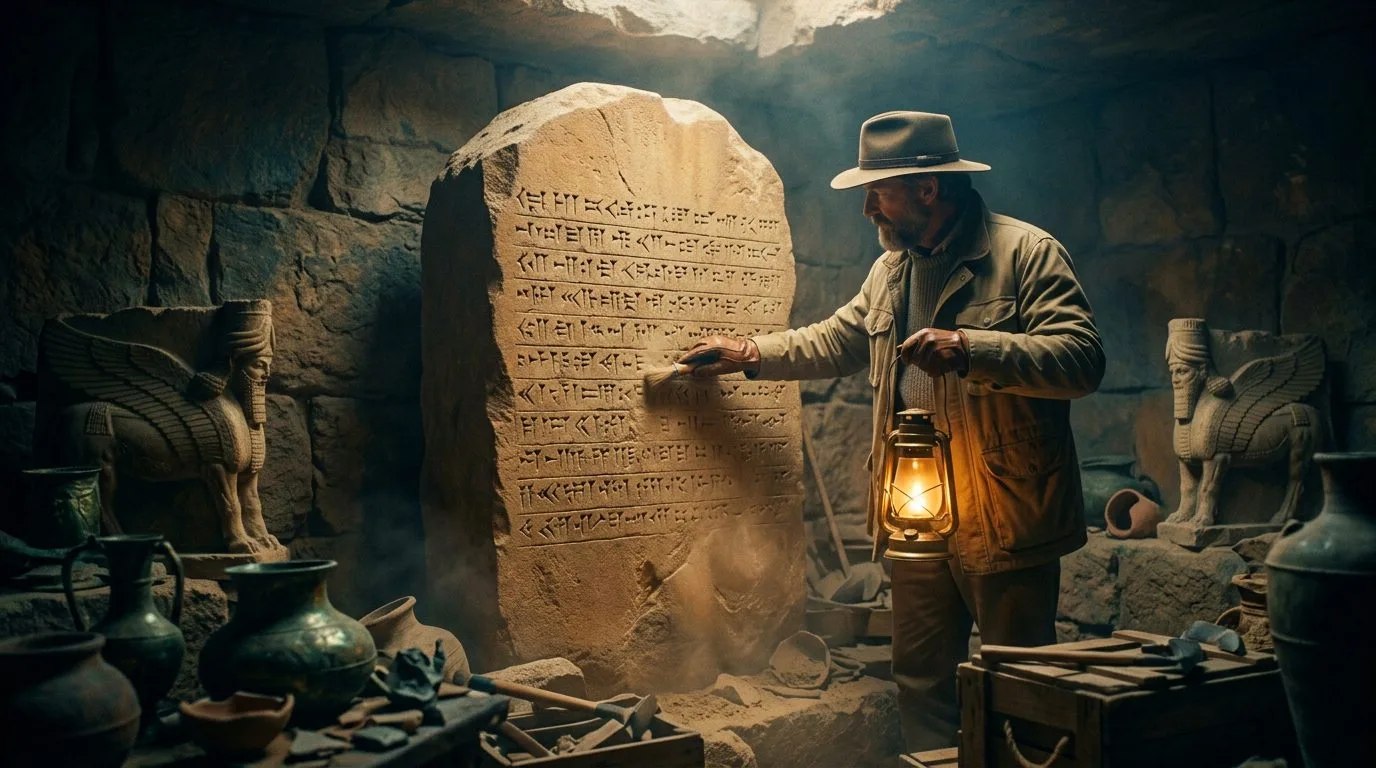
Darius I commissioned Old Persian cuneiform around 520 BCE specifically for royal propaganda—most famously the Behistun Inscription that saved his throne during civil war. The script was deliberately simple, containing only 36 phonetic signs compared to Mesopotamian cuneiform’s 600-plus symbols. Yet within three centuries of the Achaemenid Empire’s fall to Alexander in 330 BCE, nobody could read it. Persian administrators had preferred Aramaic for daily governance, relegating cuneiform to ceremonial monuments. When European scholars encountered Persepolis inscriptions in the 17th century, they assumed the wedge-shaped marks were decorative. The script wasn’t deciphered until the mid-19th century, when Henry Rawlinson risked his life copying the Behistun text from a cliff face—2,100 years after it was carved.
Source: britannica.com
9. Etruscan Alphabet: Reading Without Comprehension
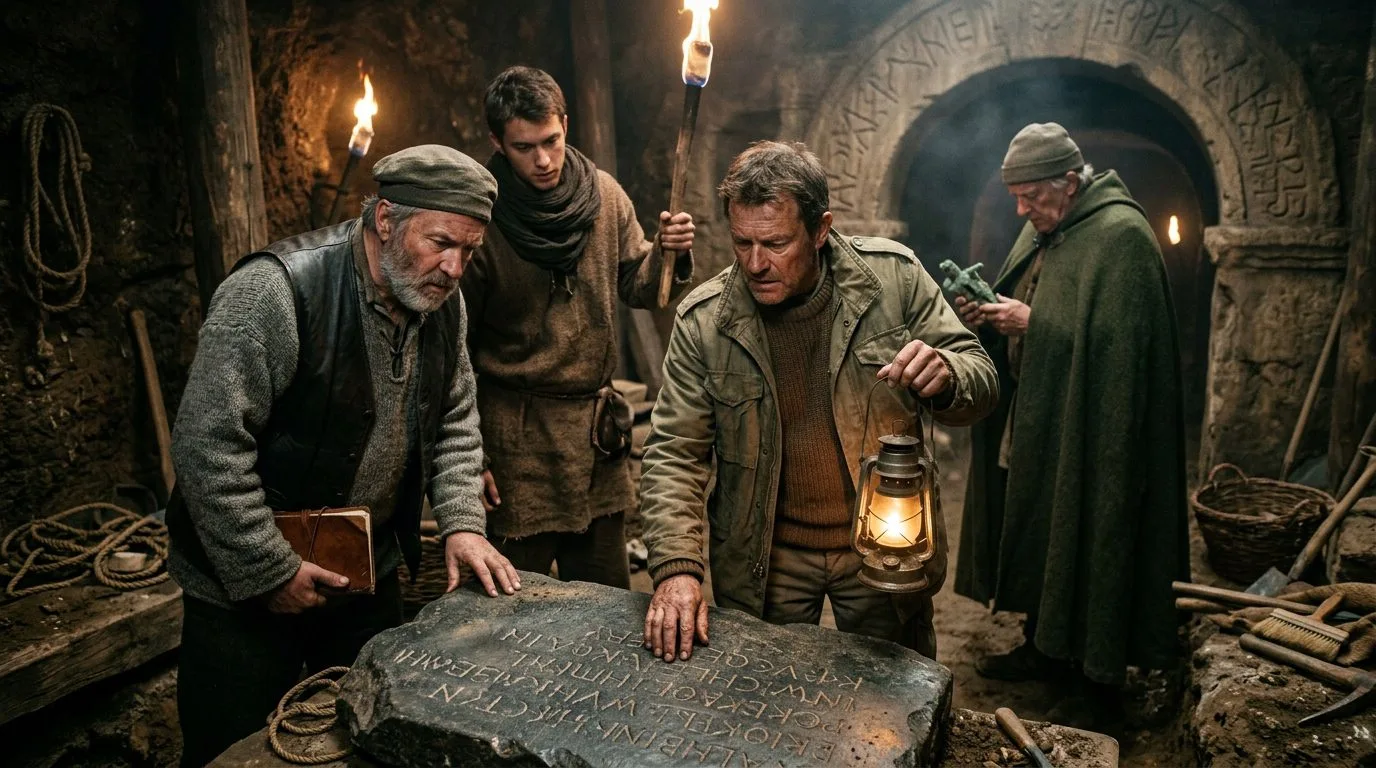
Etruscan Alphabet: Reading Without Comprehension
The Etruscans dominated pre-Roman Italy from roughly 700 BCE, developing an alphabet derived from Greek that we can read phonetically—yet meanings remain largely opaque. Over 13,000 Etruscan inscriptions survive, mostly short funerary texts and property markers. The longest coherent text, the Liber Linteus (a linen book reused as Egyptian mummy wrapping), contains 1,200 words of what appears to be religious ritual. We can sound it out perfectly but comprehend perhaps 250 words total. When Rome absorbed Etruria by 100 BCE, Latin replaced Etruscan so thoroughly that Emperor Claudius, who wrote a 20-volume Etruscan history in the first century CE, was already relying on antiquarian speculation rather than living knowledge.
Source: britannica.com
10. Olmec Glyphs: Mesoamerica’s Erased Genesis

Olmec Glyphs: Mesoamerica’s Erased Genesis
The Olmec civilization created the Americas’ first writing system around 900 BCE, predating Maya hieroglyphs by centuries—yet only fragments survive. The Cascajal Block, discovered in the late 20th century near Veracruz, contains 62 glyphs in serpentine stone dated to approximately 900 BCE. Fewer than a dozen other potential Olmec texts exist, mostly isolated symbols on monuments. The script vanished when Olmec civilization collapsed around 400 BCE, taking with it the origin story of Mesoamerican literacy. Later Maya and Zapotec scripts may descend from Olmec writing, but the connection remains speculative. We possess elaborate Olmec jade carvings, colossal stone heads weighing 20 tons, and evidence of long-distance trade networks—but cannot read the words of the culture that launched Mesoamerican civilization.
Source: smithsonianmag.com
Did You Know?
Did you know the Tangut script was so thoroughly destroyed that modern scholars only learned it existed when desert sands revealed hidden Buddhist manuscripts in the early 20th century—centuries after Mongol armies supposedly erased every trace? Even more surprising: we’ve now decoded how to pronounce Meroitic words perfectly, yet a Kushite accountant from 200 BCE could tell us nothing if resurrected, because the actual meanings died with the last native speaker roughly 1,700 years ago. These weren’t primitive cultures losing simple picture-writing—they were sophisticated civilizations whose entire intellectual frameworks vanished so completely that we’re left reading phonetic gibberish from minds we can never truly know.