
Modern democracy wasn’t handed down fully formed—it was cobbled together through trial, error, and bitter political fights in 5th-century Athens. The reforms that emerged from those struggles created the political vocabulary we still use today.
1. Cleisthenes Shattered Tribal Loyalties to Break Aristocratic Power
In 509 BCE, Cleisthenes faced a critical problem: Athens remained controlled by four ancient tribes whose aristocratic leaders traded power among themselves like trading cards. His solution was revolutionary—he abolished these blood-based tribes entirely and created ten new artificial tribes, each comprising citizens from coastal, inland, and urban areas randomly mixed together. A farmer from the coast now shared tribal identity with a merchant from the city center and a shepherd from the mountains. This geographic scrambling destroyed traditional patronage networks overnight. Each of the 139 demes (local districts) sent representatives to tribal assemblies, creating a citizenship system based on residence rather than ancestry. The reform forced Athenians to identify with their city rather than their clan, transforming political allegiance from family obligation into civic participation. Within one generation, the word “politics” itself emerged from this restructuring—derived from “polis” (city-state), it originally meant the art of managing these newly integrated communities. This geographic reorganization became the foundation for every subsequent democratic reform, proving that sometimes you have to redraw the map to change who holds the pen.
Source: britannica.com
2. The Council of 500 Turned Governance Into a Lottery Anyone Could Win
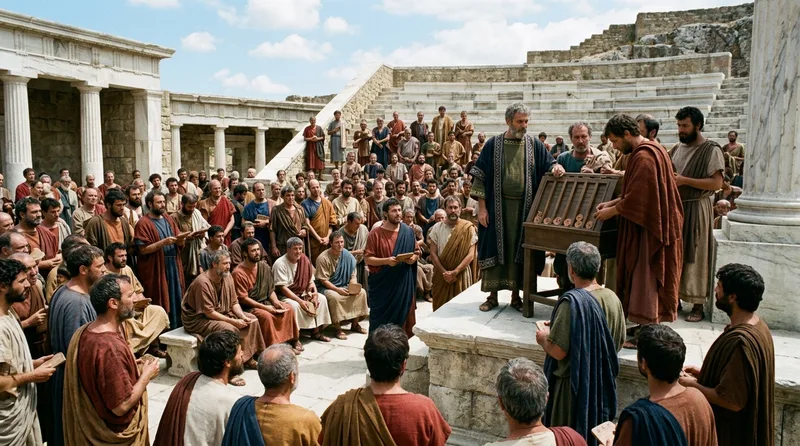
Around 508 BCE, Athens needed a body to prepare legislation for the Assembly, but traditional appointment methods favored the wealthy and well-connected. The solution was the Boule—a Council of 500 members selected by lot from citizens over thirty years old, with fifty representatives from each of Cleisthenes’ ten tribes. Every year, these 500 seats were filled by random selection, and citizens could serve a maximum of two non-consecutive terms in their lifetime. A carpenter might find himself drafting foreign policy one year, a wine merchant the next. The council met daily in the Bouleuterion building near the Agora, reviewing proposals before sending them to the full Assembly of all citizens. Each tribal contingent of fifty served as presiding officers (prytaneis) for one-tenth of the year—roughly 35 or 36 days. This rotation meant 5,000 different Athenians served as councilors each decade, creating a citizenry with firsthand legislative experience. The random selection principle—sortition—rested on a radical assumption that shocked aristocrats across the Mediterranean: ordinary citizens possessed sufficient judgment to govern. This lottery system prevented the emergence of a permanent political class and ensured that expertise in governance became democratically distributed rather than monopolized by elites.
Source: britannica.com
3. Ostracism Let Citizens Banish Politicians Without Trial or Explanation
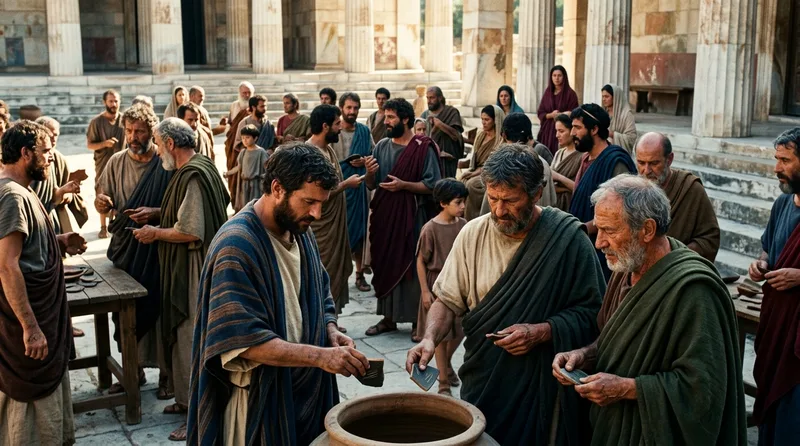
Introduced around 487 BCE, ostracism became Athens’ most distinctive and controversial political weapon—a way to exile dangerous politicians for ten years without confiscating property or charging crimes. Once annually, the Assembly voted on whether to hold an ostracism. If 6,000 citizens scratched a name onto broken pottery shards (ostraka) and that name received a plurality, the named individual had ten days to leave Attica. Themistocles, the architect of Athens’ naval victory at Salamis, was himself ostracized in 471 BCE despite his military genius—proof that gratitude had limits in Athenian politics. The system required no formal accusation, no defense speech, no jury deliberation. Citizens simply wrote a name, dropped their shard into urns in the Agora, and counting determined the outcome. Archaeologists have excavated thousands of ostraka, some inscribed by professional scribes for illiterate voters, suggesting organized campaigns to target specific individuals. The procedure acknowledged a hard truth: sometimes dangerous charisma or excessive ambition threatened democracy itself, and removal without martyrdom through execution served the state better than political trials. Ostracism disappeared after 417 BCE, but the principle—that popularity doesn’t grant immunity from democratic accountability—permanently altered how societies think about term limits and recall elections.
Source: britannica.com
4. Pericles Paid Jurors and Transformed Democracy From Rich Man’s Hobby to Everyman’s Job
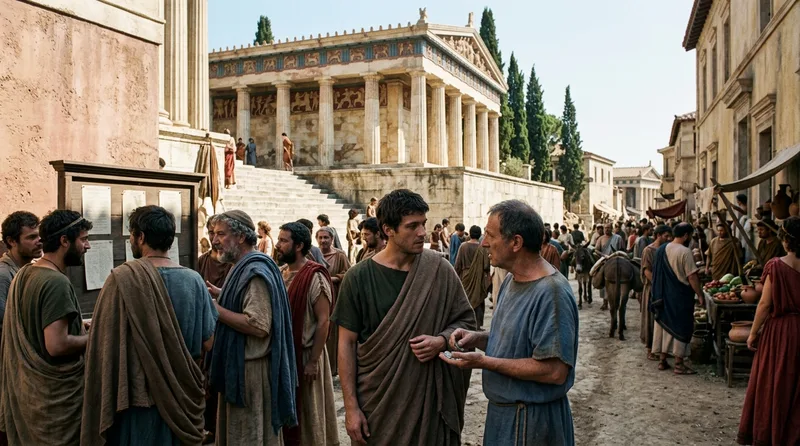
In 462 BCE, Pericles recognized that political rights meant nothing if poor citizens couldn’t afford to exercise them. A day spent in the law courts meant a day without wages—an impossible choice for laborers, small farmers, and craftsmen who lived hand-to-mouth. His reform introduced misthos dikastikos, payment of two obols daily (later raised to three obols under Cleon around 425 BCE) for jury service. This wage roughly equaled a day’s earnings for skilled labor, making court participation economically viable for the working poor. Juries in Athens were massive—typically 201 or 501 citizens for private cases, sometimes 1,001 or more for major political trials—because large numbers prevented bribery and better represented the demos. Men over thirty were eligible, and thousands registered for the annual jury pool. Each morning, potential jurors gathered at the Agora where a complex lottery system using colored balls and bronze tubes (kleroterion machines) randomly selected that day’s panels, preventing advance knowledge of who would judge specific cases. The payment system transformed Athens’ courts into the world’s first functioning legal aid system—poor citizens could now prosecute wealthy wrongdoers without financial ruin. Critics complained the reform turned citizens into state dependents, but Pericles understood that democracy without economic support for participation was merely oligarchy with better marketing.
Source: britannica.com
5. The Graphe Paranomon Made Laws Themselves Subject to Trial
Sometime in the mid-5th century BCE, Athens confronted a paradox: how do you prevent a democratic majority from passing unjust or unconstitutional laws without creating an unelected authority to overrule the people? The answer was the graphe paranomon—a public lawsuit that allowed any citizen to prosecute the proposer of a decree for introducing legislation contrary to existing laws. If prosecutors convinced a jury that a new measure violated constitutional principles or contradicted established statutes, the decree was nullified and its proposer faced penalties ranging from fines to disenfranchisement or even death in extreme cases. Between 415 and 322 BCE, at least 46 known graphe paranomon prosecutions occurred, with conviction rates around 35 percent. This procedure transformed abstract law into something citizens could defend in court, creating judicial review centuries before Marbury v. Madison. The reformer Demosthenes survived at least five such prosecutions himself while using the procedure against political rivals. The graphe paranomon forced legislators to consider constitutional consistency before proposing measures, imposing legal accountability on the democratic process itself. This reform acknowledged that democracy could threaten its own foundations through hasty or tyrannical majority decisions, and that the rule of law must sometimes constrain popular will to preserve the system that makes popular will meaningful.
Source: britannica.com
6. Ephialtes Gutted the Aristocratic Court That Had Ruled Athens for Centuries
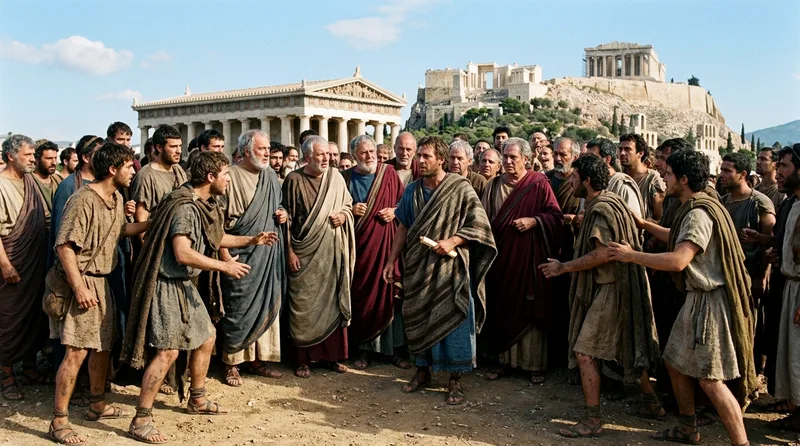
In 462 BCE, the Areopagus—an ancient council of former archons (chief magistrates) serving for life—still wielded enormous power as guardians of the laws and judges of serious crimes. This aristocratic body claimed authority to veto legislation and impeach officials, functioning as an unelected brake on democratic reforms. Ephialtes, working with the young Pericles, proposed stripping the Areopagus of all powers except jurisdiction over homicide and certain religious matters. The Assembly approved, and overnight Athens’ oldest institution lost its political teeth. The Areopagus’ guardianship functions transferred to the Council of 500, the Assembly, and the popular law courts—all democratic bodies. The reform eliminated the last structural advantage aristocracy held over common citizens, removing the constitutional mechanism through which old families had historically controlled Athens despite popular opposition. Ephialtes himself was assassinated shortly after—probably by oligarchic opponents—but his reforms survived. The Areopagus continued meeting on its rocky hill west of the Acropolis, but now as a ceremonial relic rather than a power center. This single reform demonstrated that ancient tradition, no matter how venerable, must yield to democratic authority—a principle that terrified conservatives throughout the Greek world and inspired democrats for generations.
Source: britannica.com
7. The Prytaneis System Gave 50 Citizens Executive Power Every Five Weeks
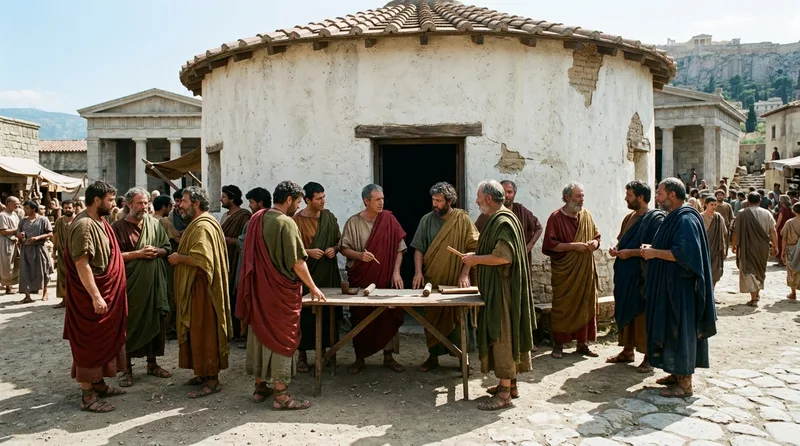
After Cleisthenes’ tribal reorganization, Athens needed an executive committee to handle daily governance—calling assemblies, receiving ambassadors, managing emergencies. The solution was the prytaneis system: each of the ten tribal contingents in the Council of 500 served as the presiding committee for one-tenth of the year (35 or 36 days). During their prytany, these fifty citizens practically lived in the Tholos, a circular building in the Agora where they took communal meals at state expense and remained on call around the clock. Each day, one prytanis was selected by lot as epistates—chairman for 24 hours—holding the state seal and keys to the temples and treasuries. This man, chosen randomly that morning, was effectively Athens’ head of state until sunset. A potter might wake up a private citizen and go to bed having presided over the Assembly. This daily rotation meant roughly 500 different Athenians served as epistates annually. No individual could accumulate executive power or develop dangerous personal followings. The system accepted inefficiency as the price of preventing tyranny—better to fumble through governance collectively than to risk another Peisistratos. Modern critics call this absurdly impractical, but Athens under this system defeated the Persian Empire, built the Parthenon, and dominated the Aegean for decades.
Source: britannica.com
8. Solon’s Property Classes Created Democracy’s First Imperfect Compromise
In 594 BCE, Athens teetered on the edge of civil war between debt-enslaved farmers and aristocratic creditors. Solon, appointed archon with extraordinary powers, enacted sweeping reforms that made him the father of Athenian democracy—though he himself would have rejected that title. He cancelled debts (seisachtheia—the “shaking off of burdens”), freed debt-slaves, and banned using one’s person as collateral. Then he restructured political rights according to four property classes based on annual agricultural production: pentakosiomedimnoi (500-bushel men), hippeis (cavalry class producing 300 bushels), zeugitae (yoked men producing 200 bushels), and thetes (laborers below 200 bushels). The wealthiest could hold archonships; the next two classes could serve as heavy infantry and hold lesser magistracies; thetes could vote in the Assembly and serve on juries but not hold office. This timocracy—rule by property qualification—seems anti-democratic today, but in 594 BCE it was revolutionary. For the first time, wealth rather than birth determined political rights, and even propertyless thetes gained Assembly votes. Solon’s constitution lasted barely a generation before tyrants seized power, but his principle that citizenship should correlate with stake in society (however measured) shaped Western political philosophy for 2,500 years. The contradiction between his egalitarian debt reforms and his hierarchical political structure reveals democracy’s founding tension: how do you balance equal rights with unequal contributions?
Source: britannica.com
9. The Nomothetai Separated Lawmaking From Everyday Politics
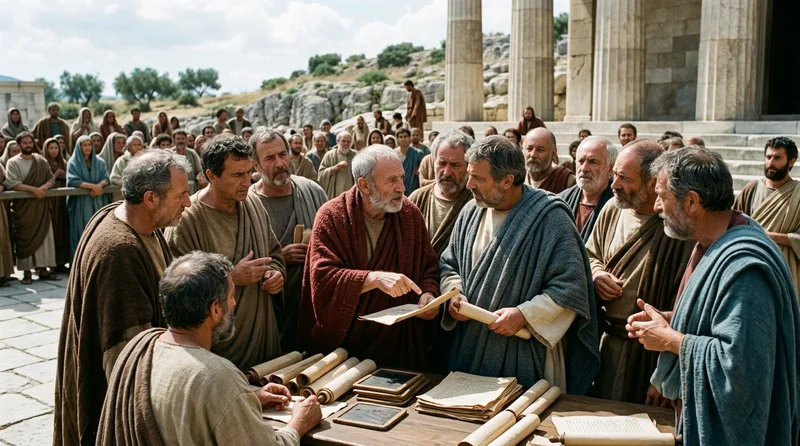
By 403 BCE, Athens faced legislative chaos—the Assembly had passed thousands of conflicting decrees over decades, and nobody could reliably identify which laws remained valid after the oligarchic coup and restoration of democracy. The solution was creating the nomothetai, special legislative juries of 1,001 or more citizens empowered to review and enact permanent laws (nomoi) as distinct from temporary decrees (psephismata). Any citizen could propose repealing or amending a law, but the proposal went to the nomothetai rather than the Assembly. These boards met annually, heard arguments from both proposers and defenders of existing legislation (creating adversarial legislative procedure), and voted on changes. The reform meant that while the Assembly could still pass decrees addressing immediate issues, fundamental constitutional changes required approval from a jury representing a broader cross-section of citizens and deliberating specifically on legal consistency. This two-tier system—quick Assembly decrees for practical matters, careful nomothetai review for permanent laws—recognized that different types of decisions require different decision-making processes. The distinction between nomoi and psephismata anticipated modern differences between constitutional law and ordinary legislation. By creating specialized legislative review boards, Athens acknowledged that popular sovereignty doesn’t mean every decision should follow identical procedures—sometimes democracy requires checking itself through more deliberative democratic institutions.
Source: britannica.com
10. Lottery Selection for Magistrates Declared That Luck Was Fairer Than Elections
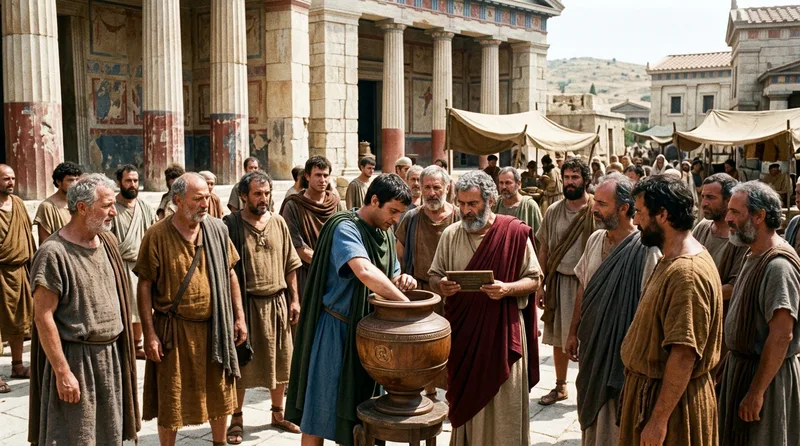
From the early 5th century BCE onward, Athens filled most magistracies through sortition—random lottery—rather than voting. Nine archons (including the eponymous archon whose name dated the year), financial officers, market inspectors, temple administrators, and dozens of other officials were selected by drawing lots from eligible citizens. Only the ten generals (strategoi) and a few specialized financial posts requiring expertise were elected, and even these faced annual reselection. The reasoning was counterintuitive but profound: elections favor the charismatic, wealthy, and well-connected, replicating aristocratic advantage through different means. Sortition gave every qualified citizen an equal chance regardless of eloquence, family connections, or campaign resources. The system assumed competence was widely distributed and that most civic administration required good judgment rather than rare expertise. Before taking office, randomly selected magistrates underwent dokimasia—examination by the Council to verify citizenship, civic rights, and basic qualification. After their term, they faced euthyna—public audit—where any citizen could prosecute them for misconduct. This combination—random selection, preliminary screening, and rigorous accountability—prevented both the entrenchment of political dynasties and the incompetence that critics predicted. Modern democracy reversed Athens’ logic, making elections primary and lottery selection almost unthinkable. Yet studies of sortition-based citizens’ assemblies in contemporary democracies suggest Athens may have understood something profound: that impartiality matters more than ambition in selecting public servants.
Source: britannica.com
Did You Know?
Did You Know? Athens’ radical democracy lasted only 186 years—from Cleisthenes’ reforms in 508 BCE to the Macedonian conquest in 322 BCE—yet this brief experiment created virtually every democratic mechanism we recognize today. Ironically, Athens’ democratic golden age relied on excluding the majority of residents from citizenship: women, slaves, and foreign residents (metics) couldn’t vote or hold office, meaning roughly 90 percent of Athens’ population had no political rights despite living under history’s most celebrated democracy.