
Wearing the purple was Rome’s deadliest profession. Of the first 50 emperors, fewer than 10 died peacefully—the rest met ends involving daggers, poison, military revolts, or ‘accidents’ that fooled no one. These deaths triggered civil wars and redirected the empire’s course.
1. Claudius: The Poisoned Mushroom That Changed an Empire
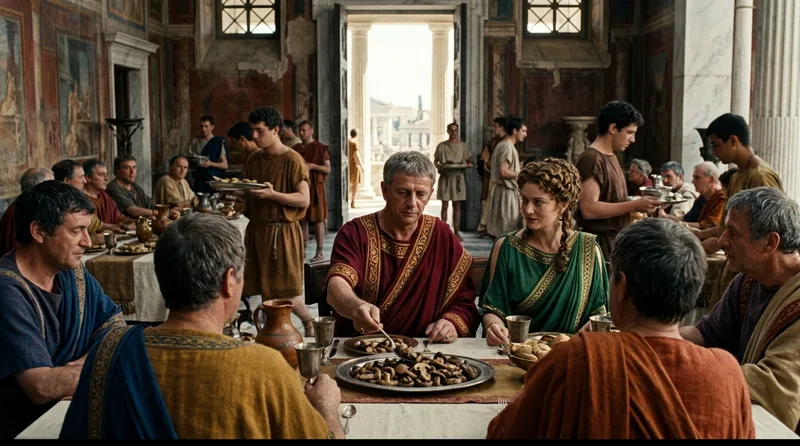
On October 13, 54 CE, Emperor Claudius died after eating his favorite dish—mushrooms served at a palace feast. Ancient historians Tacitus and Suetonius both pointed fingers at his fourth wife, Agrippina the Younger, who needed her son Nero on the throne before Claudius could name his own son Britannicus as heir. The symptoms Claudius displayed—violent convulsions, loss of speech, and death within hours—perfectly matched amatoxin poisoning from death cap mushrooms. Agrippina allegedly enlisted Locusta, Rome’s most infamous professional poisoner, who had already perfected her craft on multiple victims. The emperor’s official taster, a eunuch named Halotus, conveniently survived without symptoms. Some accounts claim Agrippina had poisoned only the finest mushrooms, knowing Claudius would eat those first. When Claudius initially survived and began vomiting, a physician named Xenophon allegedly finished the job by pushing a poisoned feather down the emperor’s throat under the guise of inducing further vomiting. Within hours of Claudius’s death, Nero was proclaimed emperor at age 16, exactly as Agrippina had planned. The suspicious death eliminated Rome’s surprisingly effective administrator and ushered in one of history’s most notorious reigns.
Source: britannica.com
2. Caligula: Butchered in Broad Daylight Beneath the Palace
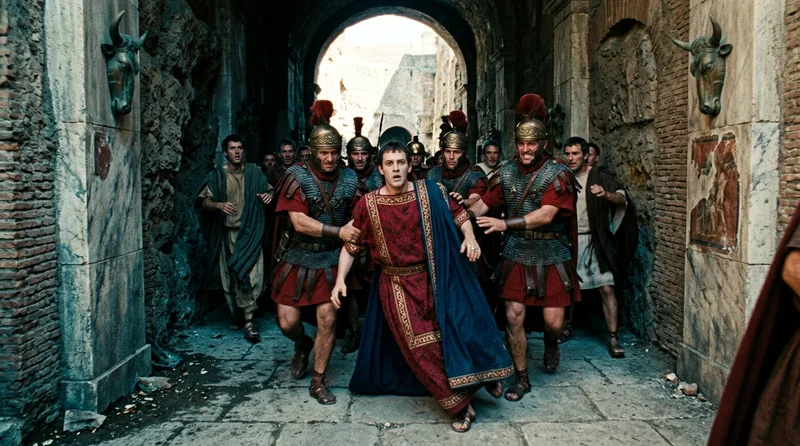
Emperor Caligula met his brutal end on January 24, 41 CE, stabbed 30 times in an underground passage of his own palace during the Palatine Games. After nearly four years of increasingly erratic rule, a conspiracy formed among his own Praetorian Guard, led by tribune Cassius Chaerea, whom Caligula had repeatedly mocked for his supposedly effeminate voice. The assassins cornered the 28-year-old emperor in a narrow corridor beneath the palace theater, where he had stopped to watch a rehearsal of dancers. Chaerea struck first, driving his sword into Caligula’s shoulder and shouting “Take that!” as the emperor fell. Other conspirators joined in, stabbing wildly until the emperor lay in a pool of blood. The assassination didn’t stop there—Caligula’s fourth wife Caesonia was immediately murdered by a centurion, and her infant daughter Julia Drusilla had her head smashed against a wall. The Praetorian Guard discovered Caligula’s uncle Claudius cowering behind a curtain in the palace and proclaimed him emperor, establishing a dangerous precedent: the imperial bodyguard could make and unmake emperors. What shocked Romans most wasn’t the violence but its location—murdered steps from the Senate, in the heart of imperial power, proving no emperor was truly safe.
Source: britannica.com
3. Domitian: The Palace Conspiracy That Included His Wife
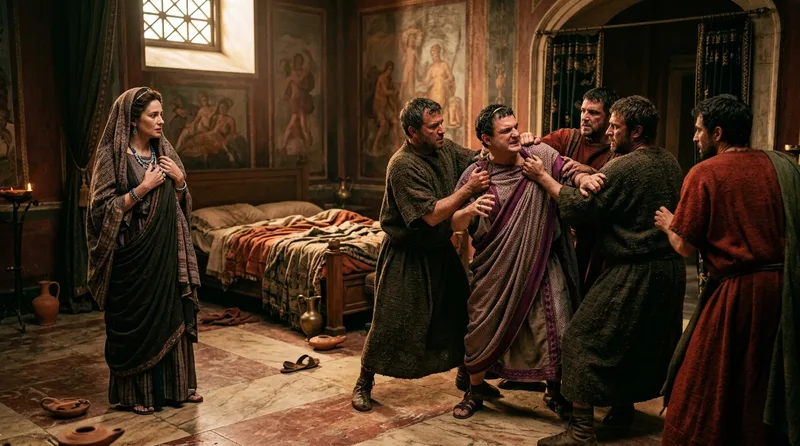
On September 18, 96 CE, Emperor Domitian was stabbed seven times in his bedroom by a coordinated group that may have included his own wife, Domitia Longina. The 15-year reign of this paranoid autocrat had created enemies everywhere—he had executed senators, confiscated estates, and maintained a network of informers that made Rome’s elite live in constant fear. The assassination plot involved Domitian’s chamberlain Parthenius, the steward Stephanus, and several palace freedmen who had access to the emperor’s private quarters. Stephanus pretended to have information about a conspiracy and was granted a private audience despite having his left arm in a sling for days—hiding a dagger in the bandages. When Stephanus struck, Domitian fought back fiercely, struggling for the weapon and trying to grab a blade he kept under his pillow, only to find it had been removed. The 44-year-old emperor wrestled with his attackers, even attempting to gouge out Stephanus’s eyes, before the other conspirators rushed in to finish the killing. Within hours, the Senate declared damnatio memoriae—Domitian’s name would be erased from all monuments. The efficiency and insider nature of the plot revealed that palace security meant nothing when those closest to the emperor wanted him dead.
Source: britannica.com
4. Commodus: When Poison Failed, Assassination Went Hands-On
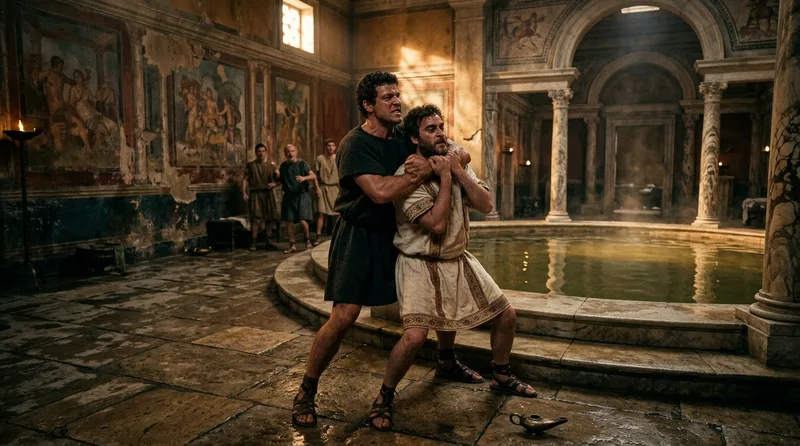
On December 31, 192 CE, Emperor Commodus was strangled to death in his bath by the wrestler Narcissus after poison failed to kill him hours earlier. The 31-year-old emperor, who notoriously fought as a gladiator in the Colosseum and declared himself the reincarnation of Hercules, had become so unstable that his inner circle decided he had to die. His mistress Marcia, chamberlain Eclectus, and Praetorian prefect Quintus Aemilius Laetus formed the conspiracy after Commodus drafted a death list with their names on it. Marcia administered poison in the emperor’s wine after his gladiatorial performance on New Year’s Eve, but Commodus survived by vomiting—his documented alcoholism and habit of purging may have saved him temporarily. When the conspirators realized the poison had failed and Commodus was recovering, they sent the athletic Narcissus to the emperor’s bath chamber to finish the job manually. The powerful wrestler throttled Commodus with his bare hands, ending a reign that had seen Rome’s treasury bankrupted for gladiatorial games and wild animal hunts. The assassination marked the beginning of the Year of the Five Emperors and plunged Rome into civil war, demonstrating how one emperor’s death could destabilize the entire imperial system.
Source: britannica.com
5. Elagabalus: Teenage Emperor Murdered in a Latrine at 18
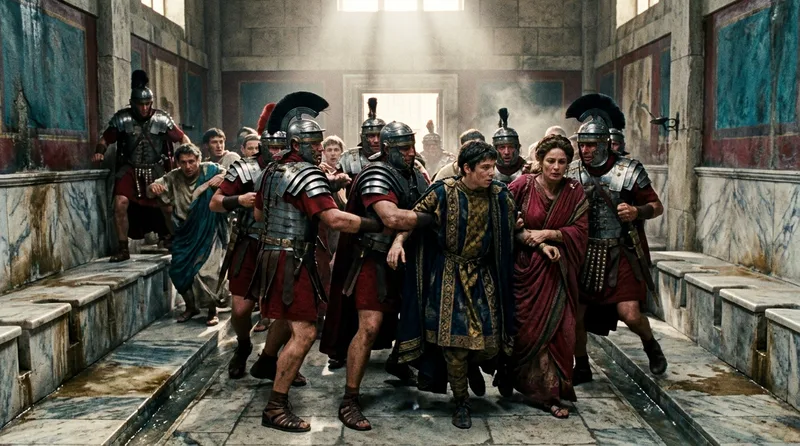
On March 11, 222 CE, the 18-year-old Emperor Elagabalus and his mother Julia Soaemias were assassinated by the Praetorian Guard and dumped in the Tiber River after a brutal attack in the palace latrines. The young emperor’s four-year reign had scandalized Rome with his devotion to the Syrian sun god Elagabal, his alleged transgender behavior, and his appointment of favorites to high office based on their physical attributes rather than merit. Elagabalus had married and divorced five times, allegedly sought surgical sex reassignment, and offered half the empire to any physician who could provide female genitalia. The final straw came when he attempted to sideline his popular cousin Alexander Severus, whom the Senate and military preferred. When Praetorian soldiers revolted, Elagabalus and his mother fled to the palace latrines, where guards dragged them out and hacked them to death. The Praetorians then stripped both bodies naked, dragged them through Rome’s streets, and threw them into the Tiber from the Aemilian Bridge—the ultimate humiliation for a Roman. The Senate immediately declared damnatio memoriae and elevated the 13-year-old Alexander Severus to emperor. Elagabalus’s death marked one of ancient Rome’s most complete character assassinations, with later Christian writers amplifying every scandalous detail to demonstrate pagan depravity.
Source: britannica.com
6. Caracalla: Stabbed While Urinating on a Roadside
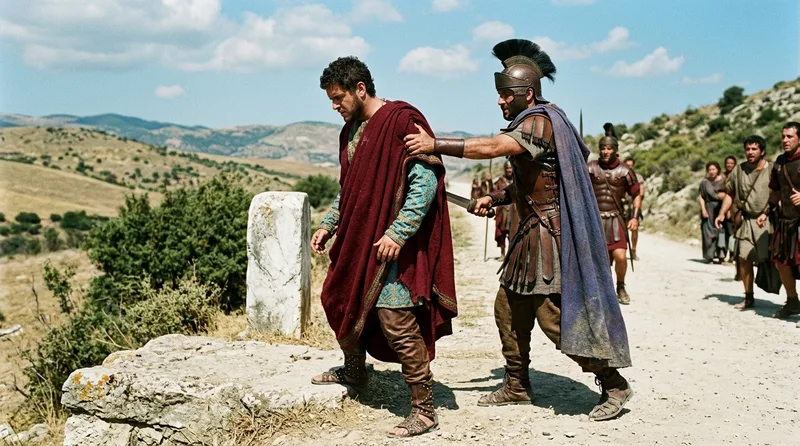
On April 8, 217 CE, Emperor Caracalla was assassinated by a Praetorian Guard officer named Julius Martialis while the emperor urinated beside the road near Carrhae in modern-day Turkey. The 29-year-old emperor had stopped his entourage during a journey to inspect Roman forces preparing for a Parthian campaign, dismounting his horse and stepping away from his bodyguards for privacy. Martialis, whose brother Caracalla had recently executed on dubious treason charges, seized the moment and stabbed the emperor through the back with a single, fatal thrust. The assassination had been orchestrated by the Praetorian prefect Marcus Opellius Macrinus, who had discovered his own name on Caracalla’s next execution list. Macrinus had carefully cultivated Martialis’s rage over his brother’s death and positioned him exactly where the emperor would be most vulnerable. Within days, Macrinus had eliminated potential witnesses—Martialis was immediately killed by a Germanic bodyguard, supposedly in revenge, though likely to silence him permanently. The soldiers proclaimed Macrinus emperor on April 11, just three days after the murder. Caracalla’s death demonstrated that even Rome’s most militaristic emperors weren’t safe from the very soldiers they relied upon, and that a moment of bodily necessity could become a fatal vulnerability.
Source: britannica.com
7. Pertinax: 87 Days from Senator to Slaughtered Emperor
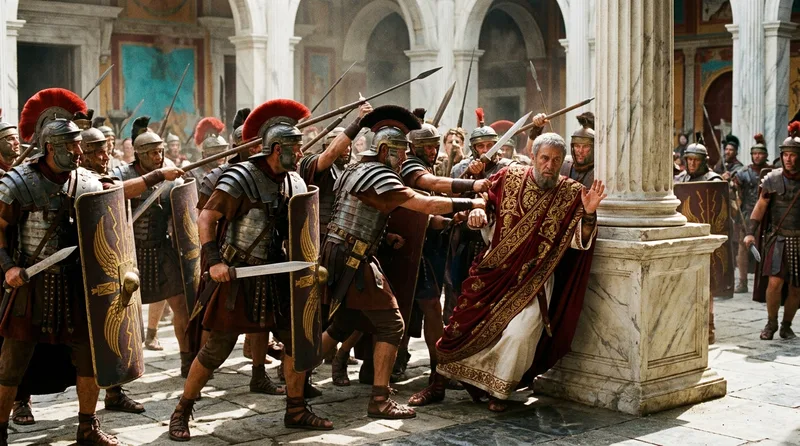
On March 28, 193 CE, Emperor Pertinax was murdered in his palace by approximately 300 Praetorian Guards after reigning for just 87 days. The 66-year-old senator had been proclaimed emperor following Commodus’s assassination on January 1, inheriting an empire with a bankrupt treasury and an undisciplined military. Pertinax immediately implemented strict reforms—canceling Commodus’s extravagant games, reducing military bonuses, and demanding discipline from the Praetorian Guard. The Praetorians, accustomed to bribes and privileges, grew increasingly hostile when Pertinax refused to match their financial expectations. On that fatal March day, a contingent of guards stormed the palace, initially claiming they came in peace. Pertinax’s advisors fled, but the elderly emperor stood his ground, attempting to reason with the soldiers and remind them of their oaths. A soldier named Tausius struck first, hurling a javelin that wounded Pertinax. Others rushed forward with swords, hacking the emperor to death as he tried to cover his head with his toga. The Praetorians decapitated Pertinax, mounted his head on a lance, and paraded it through Rome before auctioning the empire itself to the highest bidder—Senator Didius Julianus purchased the throne for 25,000 sesterces per soldier. The murder proved that attempting to reform the Praetorian Guard was a death sentence.
Source: britannica.com
8. Aurelian: Murdered Because of a Forged Document
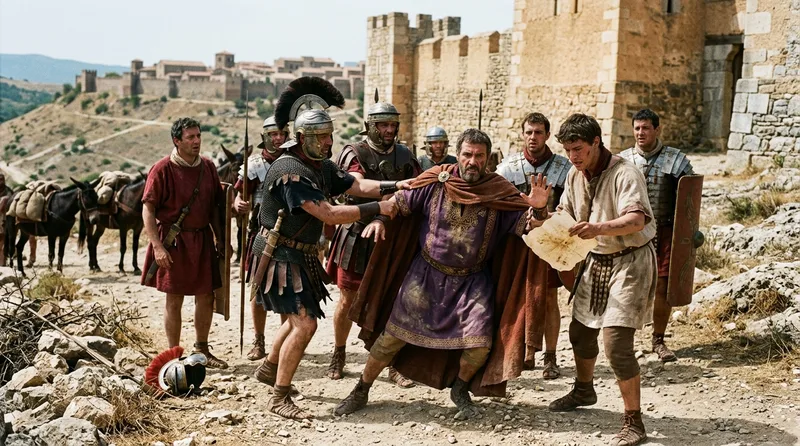
In September or October 275 CE, Emperor Aurelian was assassinated near Byzantium by his own officers after his secretary Eros forged a document listing senior commanders marked for execution. Aurelian, known as “Restorer of the World” for reuniting the fractured empire, had spent five years defeating breakaway kingdoms, crushing Germanic invasions, and restoring Rome’s borders. The 60-year-old emperor maintained strict military discipline and severe punishments for corruption—traits that made him effective but dangerous to those around him. Eros, Aurelian’s notarius (chief secretary), had been caught embezzling funds and faced certain execution when discovered. In desperation, Eros forged a death warrant bearing Aurelian’s seal and showed it to several high-ranking officers, claiming the emperor planned to execute them all for imagined offenses. The panicked officers, believing the document authentic, decided preemptive murder was their only survival option. They ambushed Aurelian during the march near the ancient city of Perinthus, stabbing the emperor to death before he could defend himself. When Eros’s forgery was discovered shortly after, the officers reportedly executed the scheming secretary in rage and remorse. The Senate and military both mourned Aurelian genuinely, recognizing they had killed one of Rome’s most capable emperors. The assassination demonstrated how a single forged document could topple even the mighty.
Source: britannica.com
9. Probus: Killed for Making Soldiers Do Actual Work
In September 282 CE, Emperor Probus was murdered by his own troops near Sirmium after forcing legionaries to drain marshes and plant vineyards instead of training for war. The 50-year-old emperor had ruled for six years, successfully defending the Rhine and Danube frontiers against constant Germanic invasions while attempting to restore Rome’s agricultural base. Probus believed idle soldiers caused discipline problems and civil unrest, so he assigned entire legions to massive public works projects—building roads, draining swamps, constructing fortifications, and establishing vineyards throughout Gaul and Pannonia. The soldiers, who considered such labor beneath their dignity as warriors, grew increasingly resentful. When Probus ordered another major drainage project at Sirmium in modern-day Serbia, the troops openly mutinied. Contemporary sources describe soldiers chasing the emperor into an iron tower built for storing military equipment, where they besieged him for hours. When Probus attempted to escape or surrender, the mutineers stabbed him to death on the spot. Some accounts claim soldiers later felt deep remorse, realizing Probus had been strengthening the empire’s infrastructure and economy. Within days, they proclaimed Marcus Aurelius Carus as emperor. Probus’s death illustrated the dangerous third-century reality that emperors depended on military support, and soldiers would murder any leader who threatened their comfortable position or traditional warrior identity.
Source: britannica.com
10. Valentinian III: Assassinated for Executing His Top General
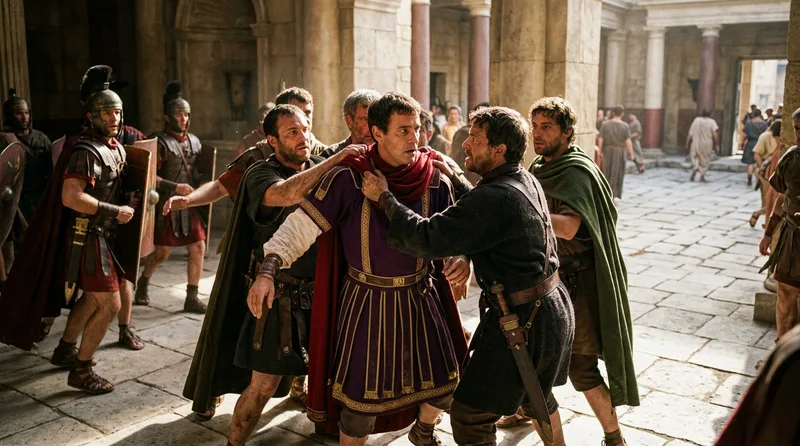
On March 16, 455 CE, Emperor Valentinian III was assassinated in Rome by two followers of the general Flavius Aetius, whom Valentinian had personally murdered six months earlier. The 35-year-old emperor had ruled the Western Roman Empire for 30 years, though real power had belonged to his general Aetius, the “Last of the Romans” who had defeated Attila the Hun at the Battle of Chalons in 451 CE. Valentinian, jealous of Aetius’s military reputation and fearing the general’s growing independence, had summoned Aetius to the palace on September 21, 454 CE, and stabbed him to death with his own hands while his chamberlain Heraclius struck simultaneously. The murder of Rome’s greatest military commander horrified the army and aristocracy. Two of Aetius’s loyal retainers, Optila and Thraustila, waited six months before approaching Valentinian on the Campus Martius during military exercises. As the emperor watched archery practice, the two men drew their swords and cut him down before his bodyguards could react. They also killed Heraclius, ensuring both assassins of Aetius died together. A senator allegedly told Valentinian afterward—too late—that he had “cut off his right hand with his left.” The double assassination marked the beginning of the Western Empire’s final collapse, falling completely just 21 years later in 476 CE.
Source: britannica.com
Did You Know?
Rome’s emperors faced a grimmer fate than any enemy could deliver: 70 percent were murdered by those sworn to protect them—bodyguards, generals, family members, and court officials. The most ironic twist? Emperors who killed their predecessors rarely learned the lesson. Valentinian III personally murdered his top general, only to be assassinated by that general’s followers six months later. History’s most powerful job came with a life expectancy shorter than a gladiator’s.