
When European knights arrived in the Holy Land during the First Crusade in 1099, they faced a daunting challenge: holding vast territories with small armies surrounded by hostile populations. Their solution? Revolutionary castles that combined Western feudal design with Byzantine and Islamic engineering.
1. Krak des Chevaliers: The Castle That Redefined Defensive Architecture
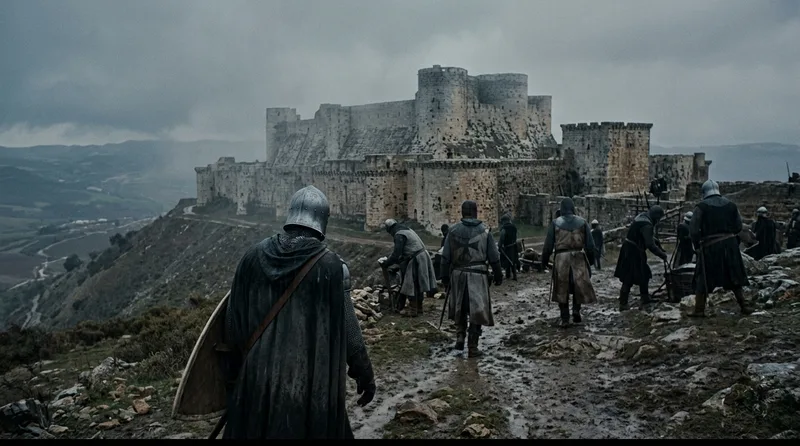
Perched on a 650-meter hill in western Syria, Krak des Chevaliers introduced the concentric castle design that would dominate military architecture for the next 200 years. The Knights Hospitaller transformed this modest Muslim fortress into an impregnable stronghold between 1142 and 1170, creating the first fully realized example of concentric defenses with two massive curtain walls separated by a defensive corridor. The outer wall stretched 3 meters thick, while the inner wall towered to 8 meters thick with 13 defensive towers positioned to provide overlapping fields of fire. During the siege of 1271, Sultan Baibars required 40 days and his entire army of 20,000 men to capture the castle—and only succeeded through deception rather than assault. The garrison of just 200 knights had withstood multiple previous attacks, including earthquakes in 1157 and 1170 that damaged but failed to breach the fortifications. The castle’s massive storage capacity allowed it to stockprovisions for five years and accommodate 2,000 people during emergencies. This revolutionary design influenced Edward I of England when he built his Welsh castles at Harlech and Beaumaris decades later. The concentric principle—multiple defensive rings forcing attackers to breach successive barriers while defenders rained arrows and boiling oil from protected positions—became the gold standard of medieval fortification across Europe and the Middle East.
Source: britannica.com
2. Kerak Castle: The Desert Fortress That Controlled a Kingdom’s Economy
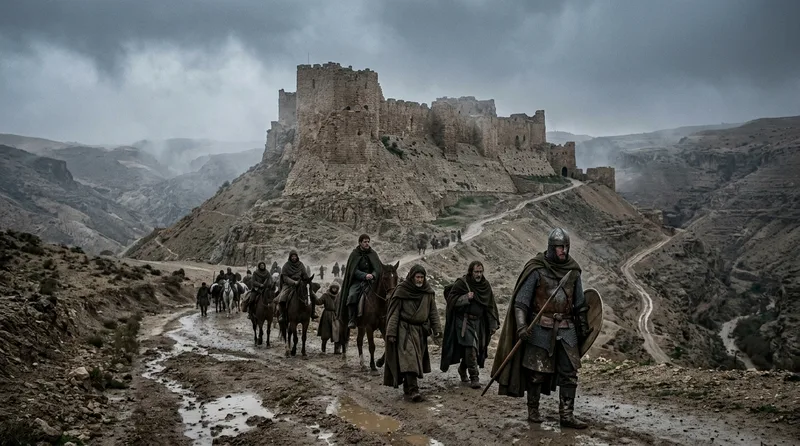
Rising from a triangular plateau 1,000 meters above sea level in southern Jordan, Kerak Castle commanded the vital caravan routes between Damascus, Egypt, and the Arabian Peninsula from 1142 onward. Built by Pagan the Butler, vassal of King Fulk of Jerusalem, this massive fortress contained seven levels of galleries carved directly into bedrock, creating storage chambers capable of holding supplies for 18 months of siege. The castle’s strategic position allowed Crusader lord Raynald of Châtillon to levy taxes on Muslim caravans worth 250,000 gold dinars annually—a sum exceeding the entire revenue of the Kingdom of Jerusalem. In 1183, Raynald’s audacious raid toward Mecca so enraged Saladin that he personally led four separate sieges against Kerak between 1183 and 1188. During the 1184 siege, Saladin’s forces surrounded the castle during a royal wedding feast, yet the defenders held for eight months while arrows fell into the courtyard. The castle’s curtain walls measured 3 meters thick and stretched 280 meters in length, punctuated by massive rectangular towers that projected outward to eliminate blind spots. Kerak’s deep moat, hewn from solid rock to depths exceeding 15 meters, proved impassable without siege towers. When the fortress finally surrendered in 1188 after Jerusalem’s fall, Saladin found it so strategically valuable he immediately repaired and expanded it rather than demolishing it like other Crusader strongholds.
Source: britannica.com
3. Château Pèlerin: The Templar Fortress That Never Fell
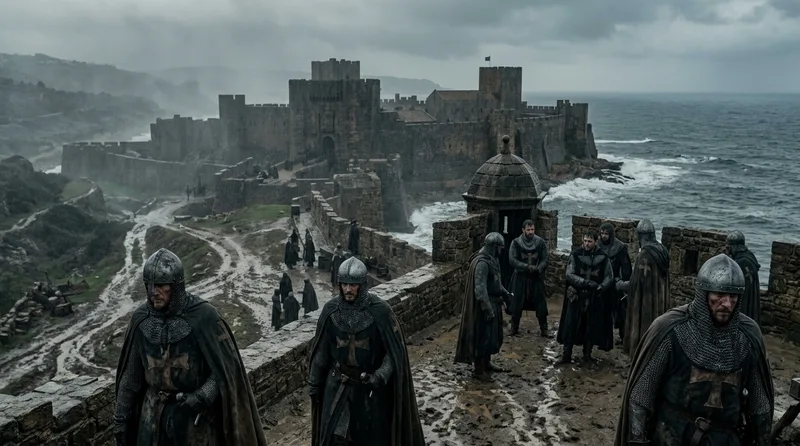
Constructed on a narrow promontory jutting into the Mediterranean Sea near Haifa in 1218, Château Pèlerin (Atlit Castle) became the only major Crusader fortress never captured by military assault. The Knights Templar designed this coastal stronghold with two massive parallel walls running east-west across the peninsula, each wall measuring 15 meters thick and 32 meters high with three enormous towers reaching 34 meters skyward. The southern tower alone required 12,000 cartloads of stone quarried from the seafloor and hauled into position by 4,000 workers and pilgrims over eight months of construction. The castle’s unique position allowed supply ships to dock directly at its seawall, making traditional siege tactics futile—Sultan Baibars besieged it twice in 1265 and 1271 without success. The fortress served as the Templar Order’s primary naval base and treasury, housing the Order’s emergency gold reserves estimated at 150,000 silver marks. When Acre fell in 1291, marking the end of Crusader presence in the Holy Land, the 400 Templars at Château Pèlerin evacuated by sea in perfect order rather than surrendering. The castle’s revolutionary design placed its strongest defenses landward rather than seaward, recognizing that naval superiority made attack from the Mediterranean impossible. Modern excavations revealed a sophisticated freshwater collection system that could sustain 5,000 people indefinitely, along with underground passages leading directly to the harbor for secret resupply missions.
Source: britannica.com
4. Belvoir Castle: The Perfectly Symmetrical War Machine
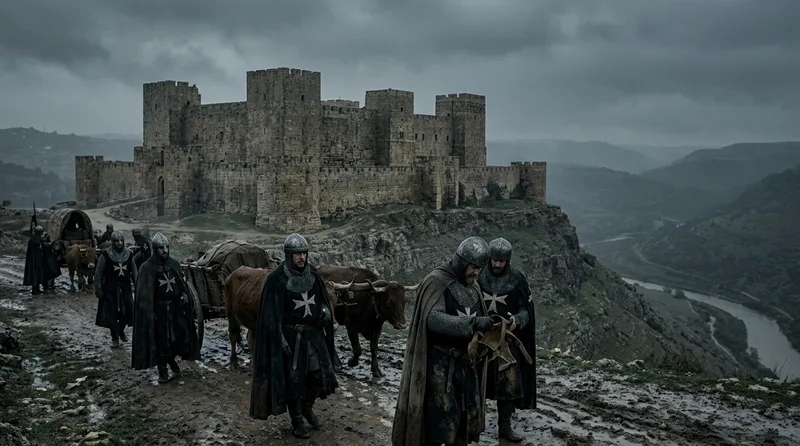
Overlooking the Jordan Valley from a plateau 500 meters above the valley floor, Belvoir Castle represented the ultimate expression of geometric military planning when the Knights Hospitaller completed it in 1168. This fortress achieved perfect concentric symmetry with a square inner fortress measuring 50 by 50 meters nested within a square outer wall measuring 110 by 110 meters, creating identical defensive arrangements on all four sides regardless of terrain. Each corner tower positioned defenders to deliver enfilade fire along two wall faces simultaneously, eliminating every blind spot through mathematical precision. The outer bailey contained stables for 200 horses, granaries holding grain for three years, and cisterns storing 650,000 liters of rainwater collected through an ingenious system of roof channels. During Saladin’s 1180 assault, 500 knights and men-at-arms defended against 10,000 attackers for 18 months before negotiating an honorable surrender in January 1189—they marched out with weapons and banners flying. The castle’s revolutionary feature was its internal organization: four identical residential blocks in the inner courtyard housed precisely 60 knights each, with communal dining halls, chapels, and armories arranged in mirror formation. This design allowed the garrison to respond with equal force to attacks from any direction without repositioning troops. After capturing Belvoir, Saladin ordered its systematic demolition in 1219, yet the ruins remained so formidable that Mamluk Sultan Baibars reinforced rather than completed the destruction in 1263, incorporating Crusader engineering into his own defensive strategy.
Source: britannica.com
5. Margat Castle: The Hospitaller Headquarters That Housed 1,000 Knights
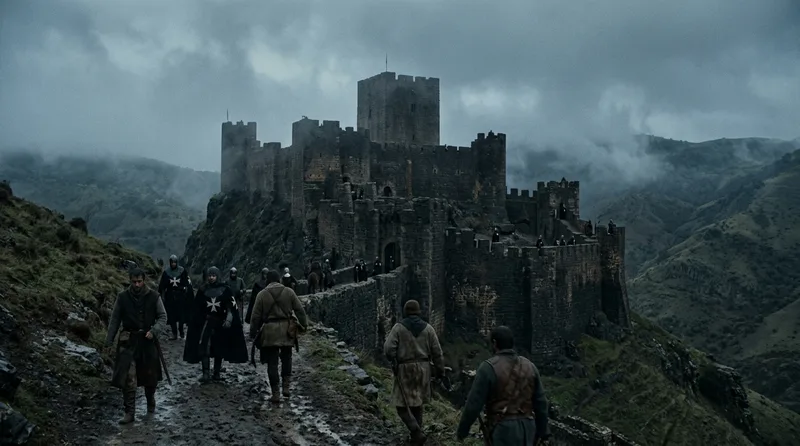
Towering above the Syrian coastal plain from a 360-meter volcanic plug, Margat Castle served as the Knights Hospitaller’s primary headquarters and largest fortress from 1186 until 1285, housing a permanent garrison of 1,000 knights and maintaining a war chest of 110,000 silver bezants. The castle’s massive donjon rose 25 meters high with walls 5 meters thick, while its curtain walls enclosed 16 hectares—making it the largest fortress in the Crusader states and larger than any contemporary castle in Western Europe. The Hospitallers purchased Margat from the Mazoir family in 1186 for 2,200 bezants annually, then invested another 100,000 bezants expanding it into an impregnable stronghold over the next 20 years. The fortress contained a chapel accommodating 500 worshippers, stables for 300 horses, separate residential quarters for knights and sergeants, and workshops for blacksmiths, armorers, and carpenters. During the 1285 siege, Mamluk Sultan Qalawun deployed 15 siege engines and personally commanded 10,000 troops for 38 days before Hospitaller engineers warned that Muslim miners had undermined a critical tower to the point of collapse. The knights negotiated surrender terms allowing 25 brothers to evacuate with their personal weapons and religious relics, while Qalawun granted them safe passage to Tripoli. The castle’s most innovative feature was its sophisticated water management system: five massive cisterns connected by underground channels stored 800,000 liters, while aqueducts channeled mountain springs directly into the fortress during peacetime.
Source: britannica.com
6. Montfort Castle: The Teutonic Knights’ Mountain Stronghold and Banking Center
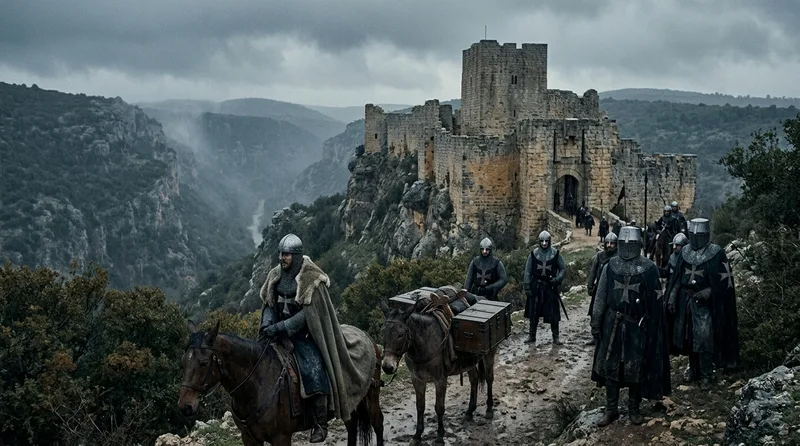
Perched on a narrow ridge 250 meters above the Keziv River gorge in Upper Galilee, Montfort Castle served as the Teutonic Knights’ administrative headquarters from 1229 until 1271, functioning simultaneously as fortress and financial center for the Order’s Mediterranean operations. The German knights acquired the partially ruined fortress in 1220 and rebuilt it with Gothic architectural elements unprecedented in the Holy Land, including pointed arches, ribbed vaults, and a great hall measuring 40 by 12 meters with elegant tracery windows. The castle’s archives housed property deeds for Teutonic holdings across Cyprus, Sicily, and Outremer, along with the Order’s treasury containing 150,000 marks in silver and gold. Unlike other Crusader castles designed for large garrisons, Montfort accommodated only 40 knights but included extensive administrative chambers, a scriptorium for document preparation, and strong rooms with reinforced iron doors for securing valuables. Sultan Baibars besieged Montfort twice—first in 1266, when the knights successfully defended for eight days before reinforcements arrived, then again in 1271 with 10,000 troops and eight siege engines. The second siege lasted only six days before mining operations breached the outer wall, yet Baibars offered generous surrender terms recognizing the castle’s administrative rather than military value. The Teutonic Knights evacuated with all their archives and treasury intact, relocating headquarters to Acre. Montfort’s innovative defensive feature was its single narrow approach along the ridgeline, forcing attackers into a killing zone only 8 meters wide where crossbowmen could inflict devastating casualties from protected positions.
Source: britannica.com
7. Saone Castle: The Byzantine-Crusader Hybrid With History’s Largest Defensive Ditch
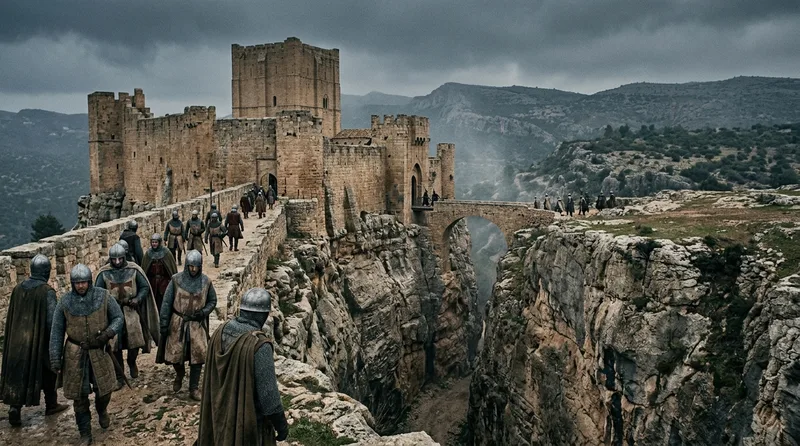
Commanding a strategic hilltop in the An-Nusayriyah Mountains of Syria, Saone Castle featured the most spectacular defensive excavation of the medieval world—a rock-cut ditch measuring 156 meters long, 28 meters deep, and 18 meters wide carved from solid limestone by Byzantine engineers before 975 CE. When Robert of Saone captured the fortress from the Byzantines in 1108, he found fortifications so advanced they required minimal modification: walls following natural contours, towers positioned at irregular intervals for optimal firing angles, and a lower citadel connected to the upper castle by a protected stairway carved through bedrock. The Crusaders added only a massive keep and modernized the 14 defensive towers along 550 meters of curtain wall. The famous ditch required removal of approximately 140,000 cubic meters of rock, with Byzantine engineers leaving a 28-meter stone needle standing in its center to support a wooden drawbridge—this pinnacle still stands today as testimony to 10th-century engineering prowess. During Saladin’s 1188 assault, 11,000 Muslim troops required only three days to capture Saone because the castle’s eastern approach lacked the ditch protection present on other sides. Saladin personally inspected the fortifications after victory and ordered immediate repairs to damaged sections, incorporating Saone into his defensive network against potential Crusader counterattacks. The castle’s hybrid design demonstrated how Crusaders learned from and adapted existing Byzantine and Islamic military architecture rather than simply imposing Western designs. Its water system alone contained 17 cisterns storing 2.5 million liters collected from mountain springs through ceramic pipe networks installed by Byzantine engineers 200 years before Crusader arrival.
Source: smithsonianmag.com
8. Beaufort Castle: The Mountain Pass Fortress That Changed Hands Seven Times
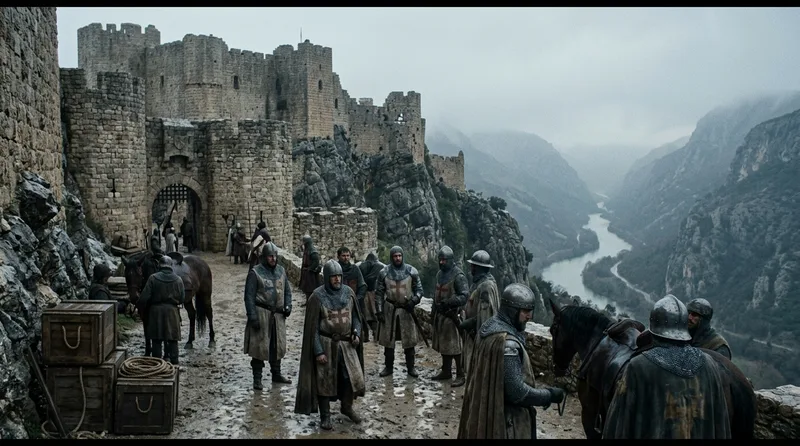
Dominating the Litani River gorge from a 700-meter peak in southern Lebanon, Beaufort Castle controlled the critical mountain pass between the Mediterranean coast and Damascus, making it the most contested fortress of the Crusader period with seven major sieges between 1139 and 1268. King Fulk of Jerusalem built the original fortress in 1139 on the ruins of an earlier Arab castle, creating a stronghold with walls 2.5 meters thick following the irregular mountaintop contours across 300 meters of fortifications. The castle’s strategic value derived from its position overlooking trade routes carrying goods worth 50,000 dinars monthly between Muslim territories. Saladin besieged Beaufort in April 1190 with 7,000 troops but withdrew after five months when the 100-man garrison inflicted 400 Muslim casualties through aggressive sorties and accurate archery from elevated positions. The Knights Templar acquired Beaufort in 1260 and immediately strengthened defenses with a massive rectangular keep measuring 20 by 12 meters with walls 3 meters thick. Sultan Baibars finally captured the castle in 1268 after a 48-day siege employing 12 trebuchets that hurled stones weighing up to 140 kilograms against the walls, yet only succeeded after mining operations collapsed a section of curtain wall. The castle’s most ingenious defensive feature was its water supply: engineers carved a 70-meter tunnel through solid rock descending to a natural spring inside the mountain, ensuring the garrison could never be forced to surrender through thirst. This underground passage, requiring 15 years to complete, allowed defenders to outlast sieges that would have starved out conventional fortresses within months.
Source: britannica.com
9. Chastel Blanc: The Templar Innovation That Revolutionized Castle Defense
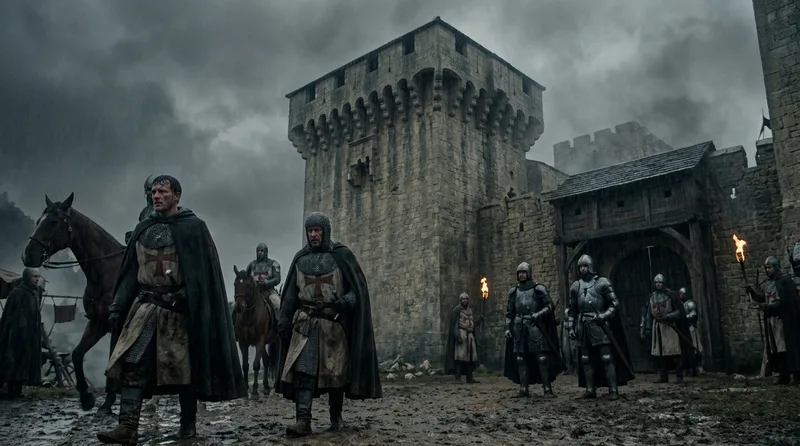
Rising from the Syrian coastal range near Safita, Chastel Blanc introduced advanced machicoulis—stone galleries projecting from tower tops with floor openings for dropping projectiles—that transformed defensive tactics when the Knights Templar completed construction in 1170. The castle’s massive donjon towered 28 meters high with walls 5 meters thick at the base, creating a nearly indestructible refuge that served simultaneously as fortress, church, and administrative center for Templar holdings worth 40,000 bezants annually. The donjon’s upper chapel accommodated 300 worshippers beneath stone vaulting while the ground floor contained armory chambers storing weapons for 200 knights. Chastel Blanc pioneered the use of continuous machicolations encircling tower tops rather than isolated openings—this innovation allowed defenders to protect every meter of wall base from protected positions overhead, making scaling ladders and mining operations deadly enterprises. During the 1202 siege by forces of Aleppo, 80 Templars defended against 3,000 attackers for nine months, inflicting an estimated 600 casualties through boiling oil and stones dropped through machicolations. The castle never fell by assault; Templars evacuated voluntarily in 1271 when Sultan Baibars’s conquest of surrounding fortresses made Chastel Blanc’s position untenable. The machicoulis design spread rapidly to European castles—Edward I incorporated them at Caernarvon and Conway in Wales by 1283, while French royal castles adopted the innovation throughout the 1280s. The donjon’s sophisticated architecture included a sophisticated ventilation system with air shafts allowing smoke from interior fires to escape while maintaining defensive strength, solving a critical problem that plagued earlier castle keeps.
Source: britannica.com
10. Giblet Castle: The Coastal Fortress That Withstood Saladin’s Personal Attention
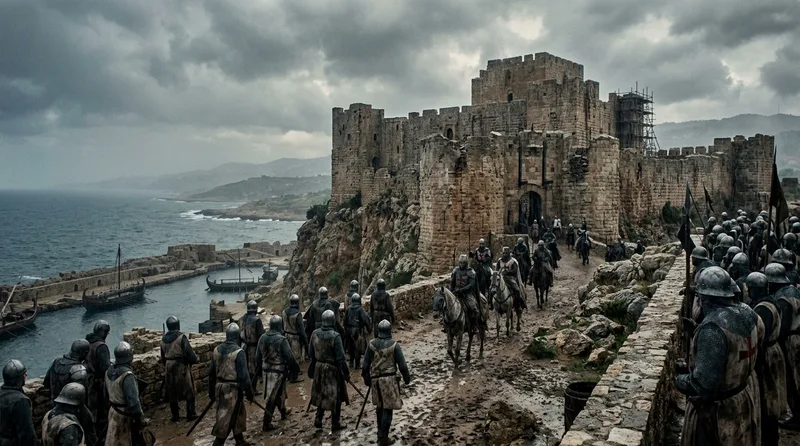
Overlooking the ancient Phoenician port of Byblos on the Lebanese coast, Giblet Castle combined 12th-century Crusader fortifications with foundations dating to Phoenician and Roman periods, creating a layered defensive system that successfully resisted Saladin’s 1187 siege despite the sultan’s personal command of the operation. The Genoese Embriaco family, who ruled Byblos as vassals of the County of Tripoli from 1104 onward, transformed earlier fortifications into a formidable stronghold with curtain walls 2 meters thick enclosing 3,500 square meters of defensive space. The castle’s unique advantage was its L-shaped design hugging the coastline, allowing the garrison of 150 knights to receive supplies by sea even during land siege—Genoese merchant vessels delivered 500 cartloads of grain during the 1187 siege, breaking Saladin’s blockade. The fortress incorporated a massive rectangular keep measuring 18 by 15 meters rising 30 meters above the harbor, with walls increasing to 4 meters thick at the base to withstand siege engine bombardment. After 43 days of siege in 1187, Saladin withdrew despite having breached the outer wall, recognizing that the castle’s maritime supply line made capture impossible without naval superiority. The Embriaco family held Giblet for 184 years until 1302, longer than any other Crusader dynasty maintained a single holding. The castle’s preservation of Roman masonry in its lowest courses demonstrated Crusader pragmatism—incorporating ancient stonework reduced construction costs by an estimated 30,000 bezants while creating foundations proven durable across 1,000 years. Modern archaeological excavations revealed sophisticated drainage systems and a freshwater well descending 18 meters to the water table, ensuring defenders could survive indefinitely even without maritime resupply.
Source: britannica.com
Did You Know?
Did You Know? The Crusader castles’ greatest military innovation wasn’t their impressive walls or towers—it was their sophisticated water management systems that allowed tiny garrisons to outlast massive armies for months or even years. Ironically, when Sultan Baibars finally captured most of these fortresses in the 1260s-1270s, he immediately repaired and reoccupied them using the exact same defensive principles developed by his Crusader enemies, proving that brilliant military engineering transcends religion, politics, and the outcome of any single war.