
In 268 BCE, Emperor Ashoka transformed from bloodthirsty conqueror to enlightened philosopher-king, carving revolutionary edicts across India that promoted religious tolerance, animal welfare, and state-funded healthcare—concepts centuries ahead of their time.
1. Rock Edict XII: The Ancient World’s First Declaration of Religious Freedom
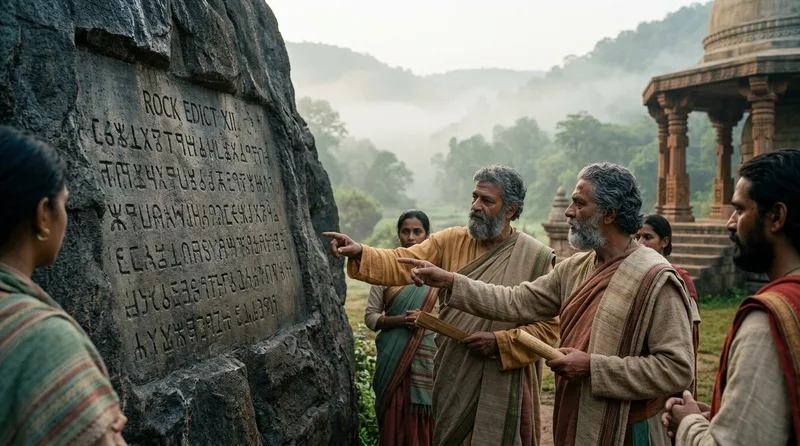
Carved around 250 BCE across multiple rock faces from Kandahar to Karnataka, Rock Edict XII stands as humanity’s earliest known governmental decree of religious tolerance. Ashoka explicitly commanded respect for all sects—Hindu, Buddhist, Jain, Ajivika, and others—declaring that “one should honor another man’s sect” and avoid criticizing competing beliefs. This edict appeared in at least 33 locations across the Mauryan Empire, covering over 2 million square miles. The inscription specifically protected the “essentials of all sects” and promoted inter-religious dialogue through state-sponsored gatherings. Before this decree, religious persecution was standard governmental practice across ancient civilizations. The edict established 3 core principles: respect for all spiritual paths, prohibition of sectarian violence, and state protection of minority religious communities. Ashoka’s officers enforced these principles through a network of dharma ministers who investigated religious discrimination complaints. This revolutionary policy allowed Buddhism, Jainism, and various Hindu traditions to flourish simultaneously within the same administrative framework, creating South Asia’s distinctive tradition of religious pluralism that persists today.
Source: britannica.com
2. Pillar Edict II: The World’s First State-Funded Universal Healthcare System
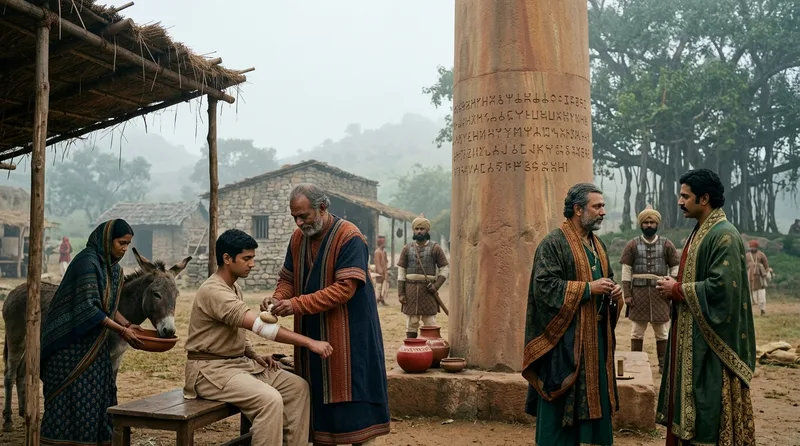
Inscribed on sandstone pillars circa 242 BCE, Pillar Edict II established an unprecedented network of free medical facilities serving both humans and animals throughout the Mauryan Empire. Ashoka ordered the planting of medicinal herbs in 256 designated locations and constructed hospitals in 14 major cities from Taxila to Pataliputra. The edict specifically mentions providing medical care for people and livestock along all major highways within his territory and in neighboring kingdoms. Archaeological evidence from Taxila confirms the existence of at least 7 animal hospitals with surgical facilities and pharmacy gardens containing over 50 species of medicinal plants. The system employed approximately 3,000 physicians trained in Ayurvedic medicine, who received state salaries and royal protection. Ashoka allocated one-eighth of the imperial treasury to this healthcare initiative—roughly 125,000 gold coins annually. This represented history’s first attempt at universal healthcare, predating similar European concepts by nearly two millennia. The edict’s emphasis on animal welfare was equally revolutionary, establishing veterinary medicine as a legitimate medical specialty and reflecting Buddhist principles of compassion toward all sentient beings.
Source: britannica.com
3. Rock Edict I: Ancient India’s Revolutionary Ban on Animal Sacrifice
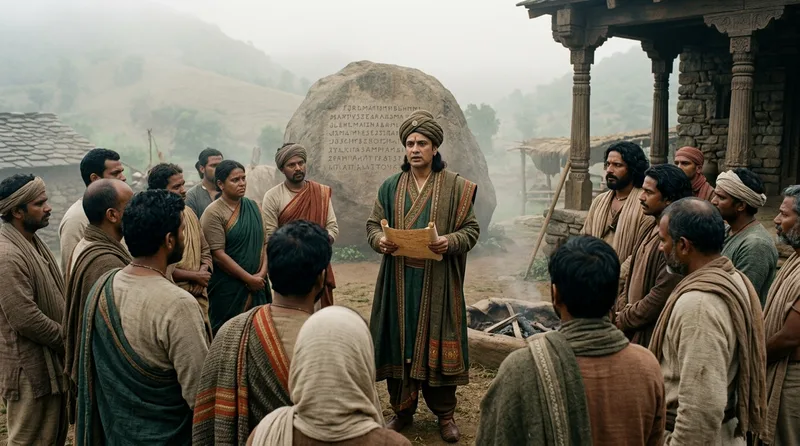
Promulgated around 257 BCE, Rock Edict I prohibited the slaughter of 23 specific animal species within royal kitchens and banned sacrificial killings across the empire’s ceremonial centers. This decree specifically outlawed the killing of parrots, mynahs, geese, wild ducks, bats, queen ants, tortoises, porcupines, and tree squirrels. The royal household, which previously consumed over 100,000 animals annually for feasts, was restricted to killing only 2 peacocks and 1 deer per day by 252 BCE. Ashoka extended this ban to all Buddhist holy days, creating approximately 84 no-kill days throughout the calendar year. This represented the ancient world’s most comprehensive animal rights legislation, directly challenging Brahmanical sacrifice traditions that formed the cornerstone of Vedic religious practice. The edict caused significant resistance from Hindu priests who lost substantial income from sacrificial ceremonies, yet Ashoka enforced it through fines reaching 1,000 silver karshapanas for violations. Archaeological excavations at Mauryan palace sites show a dramatic 90% reduction in animal bones post-257 BCE. This policy influenced Indian dietary practices for centuries, contributing to vegetarianism’s widespread adoption across the subcontinent.
Source: britannica.com
4. Pillar Edict VII: Engineering Ancient India’s First Welfare Infrastructure
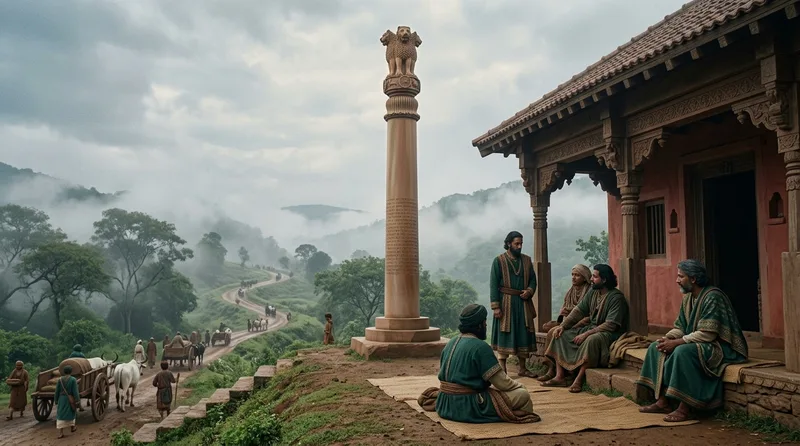
Carved circa 238 BCE, Pillar Edict VII ordered construction of rest houses every 8 krośa (approximately 10 miles) along the Mauryan highway system, creating the ancient world’s most extensive network of public accommodations. The decree mandated digging wells at half-krośa intervals, planting shade trees along 16,000 miles of imperial roads, and establishing fruit orchards at 500 designated rest stops. Historical records indicate Ashoka’s engineers constructed approximately 1,750 rest houses and dug over 32,000 wells between 238 BCE and 232 BCE. Each facility provided free food, water, and medical assistance to travelers regardless of caste, religion, or nationality. The edict specifically mentions planting banyan and mango trees to provide shade and sustenance, with archaeological surveys identifying Mauryan-era tree groves still surviving along ancient trade routes in Bihar and Uttar Pradesh. This infrastructure project employed an estimated 50,000 laborers and cost the imperial treasury 2 million gold coins over 6 years. The system facilitated unprecedented commercial expansion, reducing travel times between Pataliputra and Taxila from 90 days to 45 days. These facilities remained operational for over 300 years, creating a template for caravanserais throughout later Islamic and Central Asian empires.
Source: britannica.com
5. Rock Edict V: Creating History’s First Bureaucracy of Ethics
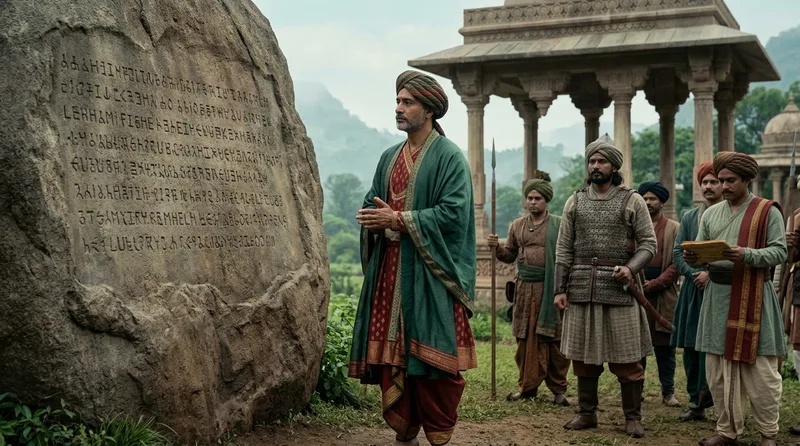
Issued around 256 BCE, Rock Edict V established the position of dharma-mahamatra—ministers of righteousness—creating the ancient world’s first governmental department dedicated exclusively to ethical oversight. Ashoka appointed 500 dharma officers distributed across 84 administrative districts throughout the empire, each supervising approximately 40,000 citizens. These officials monitored treatment of servants, behavior of merchants, management of prisons, care of the elderly, and religious harmony within their jurisdictions. The edict granted dharma officers authority to override local governors in matters involving social justice, with direct reporting lines to the emperor himself. Officers received annual salaries of 24,000 karshapanas—making them among the highest-paid imperial officials—and could impose fines up to 100,000 karshapanas for serious violations. Archaeological discoveries of administrative seals bearing the title “dharma-mahamatra” confirm these positions existed in regions from Afghanistan to Bengal. The system established regular inspection tours every 5 years, during which officers investigated complaints and reviewed local governance. This innovation represented the first systematic attempt to integrate moral philosophy into governmental administration, predating Plato’s philosopher-king concept in practical application by influencing governance across 50 million people.
Source: britannica.com
6. Kandahar Bilingual Edict: Ancient Globalism in Stone
Discovered in the mid-20th century in modern Afghanistan, the Kandahar Bilingual Edict dated to 255 BCE represents the Mauryan Empire’s most sophisticated attempt at cross-cultural communication. This inscription presented Buddhist ethical principles in both Greek and Aramaic languages, demonstrating Ashoka’s understanding that effective governance required speaking to subjects in their native tongues. The Greek text uses philosophical terminology familiar to Hellenistic audiences, translating “dharma” as “eusebeia” (piety) rather than attempting direct linguistic conversion. The Aramaic version employs Semitic religious concepts to explain Buddhist principles to Iranian and Mesopotamian populations within the empire’s northwestern territories. Archaeological evidence reveals at least 7 major edicts inscribed in Greek, with 3 additional bilingual or trilingual versions using Prakrit, Greek, and Aramaic simultaneously. This multilingual approach covered populations speaking 12 different languages across the empire, from Pali-speaking Sri Lankans to Greek-speaking Bactrians. The Kandahar edict specifically mentions Ashoka’s conquest of the “600,000 inhabitants” of Kalinga and his subsequent spiritual transformation. This pioneering use of state-sponsored translation services influenced later imperial powers, from the Achaemenid Persians to the Roman Empire, establishing multilingual governance as a hallmark of sophisticated administration.
Source: britannica.com
7. Rock Edict XIII: A Conqueror’s Unprecedented Public Confession
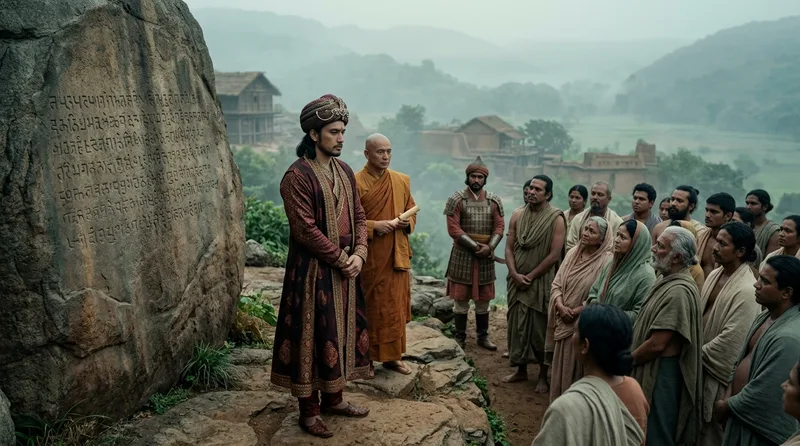
Carved around 258 BCE, Rock Edict XIII contains Emperor Ashoka’s extraordinary admission of war guilt following his brutal conquest of Kalinga in 261 BCE. The inscription explicitly states that 100,000 people were killed in battle, 150,000 were deported, and countless others died from war-related famine and disease. Ashoka declared himself “deeply pained” by this slaughter and vowed never again to wage offensive war, marking history’s first recorded instance of a victorious ruler publicly expressing remorse. The edict appeared on 8 major rock surfaces across the empire, ensuring millions would witness the emperor’s confession and transformation. Archaeological excavations at Kalinga battlefields in modern Odisha confirm the scale of carnage, with mass graves containing over 8,000 skeletal remains showing violent death. This rock edict explicitly renounced digvijaya (military conquest) in favor of dharmavijaya (spiritual conquest), fundamentally redefining imperial ambition. The confession transformed Mauryan foreign policy for the remaining 27 years of Ashoka’s reign, with the empire maintaining defensive postures while expanding Buddhist missionary activity. This unprecedented public acknowledgment of military atrocity influenced Buddhist political philosophy for centuries, establishing the ideal of the dharmaraja—a righteous king who rules through moral example rather than military force.
Source: britannica.com
8. Pillar Edict V: Ancient India’s Revolutionary Environmental Decree
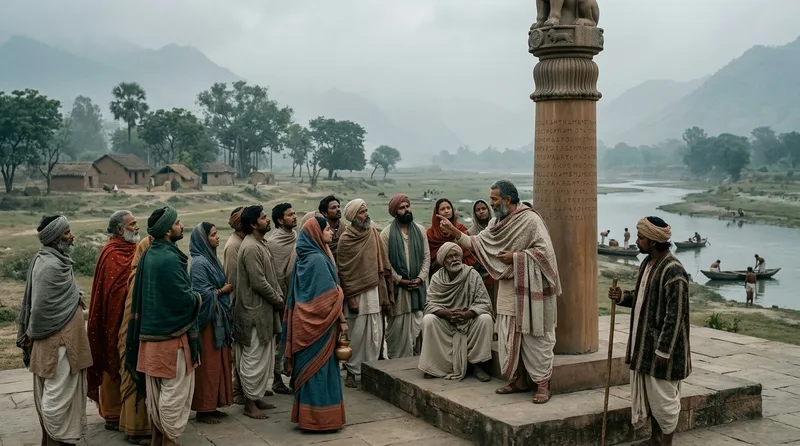
Inscribed circa 243 BCE, Pillar Edict V mandated environmental conservation on an unprecedented scale, prohibiting burning of forests “without reason” and protecting specific tree species from logging during breeding seasons. The decree banned killing of 15 animal species during mating and nesting periods, creating history’s first government-enforced wildlife protection zones. Ashoka ordered planting of 5 million trees across the empire between 243 BCE and 236 BCE, with designated fruit-bearing species along highways and sacred trees near villages and water sources. The edict established fines of 500 karshapanas for unauthorized tree cutting and 1,000 karshapanas for setting forest fires. Archaeological evidence from Mauryan-era sites shows sophisticated water management systems, including 12 major reservoirs constructed during Ashoka’s reign to support irrigation and prevent drought. The emperor appointed forest wardens earning 12,000 karshapanas annually to enforce conservation laws across 200 protected areas covering approximately 50,000 square miles. This policy reflected Buddhist environmental ethics emphasizing interdependence of all life forms. Modern analysis of soil samples from Mauryan sites reveals improved forest density during this period, confirming these policies’ effectiveness. The edict influenced subsequent Indian dynasties’ environmental policies for over one thousand years.
Source: britannica.com
9. Rock Edict XIII: Buddhist Diplomacy Reaches Mediterranean Shores
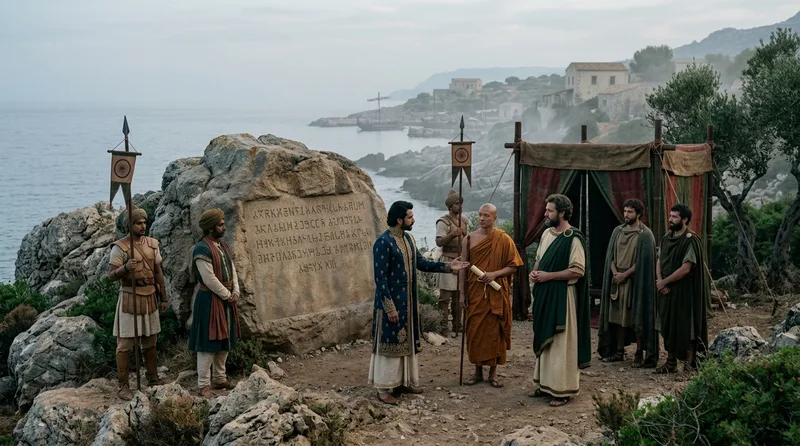
Dated to 255 BCE, Rock Edict XIII documents Ashoka’s dispatch of Buddhist missionaries to 5 Hellenistic kingdoms, creating history’s first recorded east-west religious diplomacy. The edict specifically names Antiochus II Theos of Syria, Ptolemy II Philadelphus of Egypt, Antigonus Gonatas of Macedonia, Magas of Cyrene, and Alexander of Epirus as recipients of Mauryan diplomatic missions carrying Buddhist teachings. These embassies traveled over 4,000 miles from Pataliputra to Alexandria, carrying gifts including medicinal herbs, scholarly texts, and diplomatic correspondence written on copper plates. Greek historical sources corroborate these missions, with Pliny the Elder mentioning Indian ambassadors at Ptolemy’s court in the mid-third century BCE. Ashoka sent approximately 64 missionary groups to foreign kingdoms during his reign, establishing permanent Buddhist communities in Bactria, Parthia, and Seleucid territories. The edict claims these missions achieved “victories of dharma” in regions stretching 600 yojanas (approximately 3,600 miles) beyond imperial borders. Archaeological discoveries of Mauryan coins and Buddhist stupas in Afghanistan and Uzbekistan confirm this cultural expansion. These diplomatic efforts established Buddhism as a trans-regional religion rather than merely an Indian sect, fundamentally shaping Asian civilization’s spiritual landscape for subsequent millennia.
Source: britannica.com
10. Border Edicts: Rewriting the Rules of Imperial Conquest

Carved along frontier regions around 244 BCE, Ashoka’s Border Edicts established revolutionary guidelines for treatment of conquered populations and tribal communities at the empire’s edges. These inscriptions, discovered at 6 border locations from Nepal to Karnataka, explicitly commanded frontier officials to treat forest tribes and border peoples as “my children” deserving protection and welfare. The edicts prohibited enslavement of conquered populations—standard practice throughout ancient empires—and mandated that tribal communities retain their traditional leaders and customs under Mauryan supervision. Ashoka ordered frontier governors to establish schools teaching both local languages and imperial Prakrit in 33 border districts, creating history’s first bilingual education system. The decree allocated 500,000 karshapanas annually for development projects in frontier areas, including well-digging, road construction, and agricultural assistance. Border officials received instructions to resolve disputes through persuasion rather than force, with military action authorized only for self-defense. Archaeological evidence from frontier forts shows Mauryan garrisons reduced by 40% after these edicts, replaced by civilian administrators and Buddhist monks serving as cultural mediators. This humane approach to frontier management proved remarkably effective, with historical records indicating minimal rebellions in border regions during Ashoka’s final 20 years of rule, contrasting sharply with constant revolts plaguing the earlier Mauryan Empire.
Source: britannica.com
Did You Know?
The most astonishing fact? Ashoka’s edicts remained largely forgotten for over two millennia until British archaeologist James Prinsep deciphered the Brahmi script in the early nineteenth century, revealing a philosopher-king whose progressive policies on healthcare, religious tolerance, and environmental protection remained unmatched by European monarchs until centuries later. A bloodthirsty emperor who killed 100,000 became history’s most unlikely humanitarian—and carved his transformation into stone for eternity.