
When European crusaders captured Jerusalem in 1099, they didn’t just raid and leave—they built kingdoms. For nearly two centuries, Latin Christian states ruled over a patchwork of Syrian, Greek, Armenian, and Muslim subjects. Here are ten crusader states that vanished after Saladin.
1. Kingdom of Jerusalem: The Crown Jewel That Lasted Two Centuries
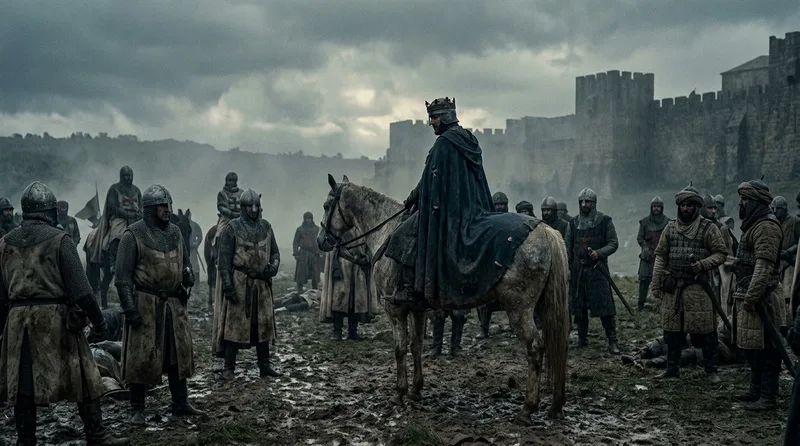
The Kingdom of Jerusalem stood as the paramount crusader state from 1099 until its final collapse in 1291, though Saladin dealt it a devastating blow in 1187. Godfrey of Bouillon became its first ruler, refusing the title of king in the city where Christ wore a crown of thorns, instead calling himself Advocatus Sancti Sepulchri. At its height in the early 12th century, the kingdom controlled approximately 20,000 square miles of territory from Beirut to the Gulf of Aqaba, governing an estimated 120,000 Latin Christians alongside 250,000 Muslims, Jews, and Eastern Christians. The royal court in Jerusalem developed its own legal code, the Assizes of Jerusalem, which blended European feudal law with local Byzantine and Islamic customs. After Saladin’s victory at the Battle of Hattin on July 4, 1187, where he captured King Guy of Lusignan and annihilated the crusader army of 20,000 men, the kingdom lost Jerusalem itself and was reduced to a coastal strip. Though crusaders briefly reclaimed Jerusalem through diplomacy in the early 13th century, the kingdom never recovered its former glory. The fall of Acre in 1291 to the Mamluks ended Latin Christian rule in the Holy Land after 192 years, scattering its nobility across Cyprus and Europe. This collapse marked the definitive end of the crusader experiment in establishing permanent European colonies in the Levant.
Source: britannica.com
2. County of Edessa: The First Crusader State to Fall
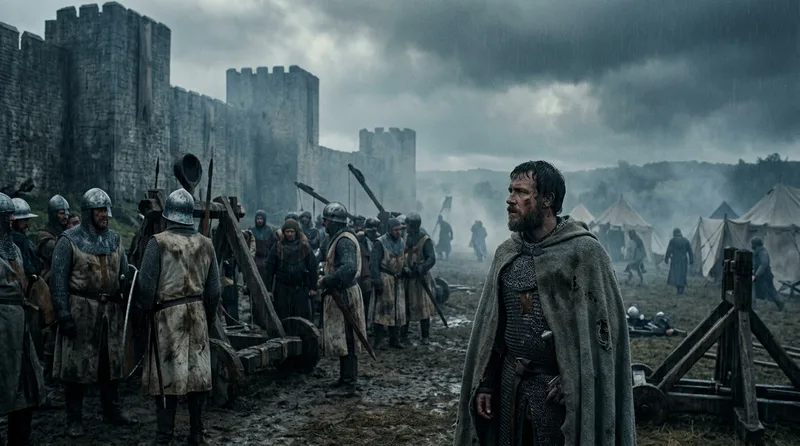
The County of Edessa holds the distinction of being both the first crusader state established in 1098 and the first to permanently fall in 1144, foreshadowing the eventual collapse of all Latin holdings in the East. Baldwin of Boulogne, brother of Godfrey of Bouillon, carved out this territory in northern Mesopotamia by adopting an Armenian prince and then conveniently inheriting the city when his benefactor died. The county stretched across the Upper Euphrates region, covering roughly 8,000 square miles with its capital in the ancient city of Edessa, today’s Şanlıurfa in Turkey. What made Edessa particularly vulnerable was its position as the northernmost and most isolated crusader state, located over 100 miles from the nearest Latin territory and surrounded by Muslim principalities of Mosul and Aleppo. The county’s population was predominantly Armenian Christian, numbering perhaps 30,000, with only 2,000 Latin settlers attempting to maintain control. When Zengi, the Turkish atabeg of Mosul, besieged Edessa in November 1144, the city fell within four weeks on December 24, with its Latin defenders massacred and the Armenian population enslaved or scattered. The loss shocked Christian Europe and directly prompted the Second Crusade of the mid-12th century, though attempts to recapture Edessa failed miserably. Edessa’s fall demonstrated that crusader states could not survive once Muslim forces achieved political unity, a lesson that would prove prophetic for the entire Latin East over the following 150 years.
Source: britannica.com
3. Principality of Antioch: Where East Met West for 170 Years
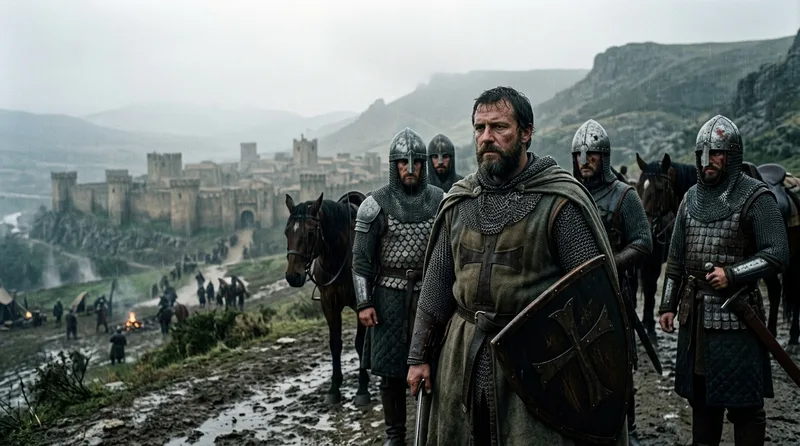
The Principality of Antioch emerged in 1098 when Bohemond of Taranto seized the ancient Syrian city during the First Crusade, creating a state that would endure until 1268 despite near-constant warfare with Byzantine emperors, Armenian kings, and Muslim emirs. Bohemond, a Norman adventurer from southern Italy, famously conquered Antioch through treachery, bribing a tower guard named Firouz to open the city gates on June 3, 1098, allowing crusaders to slaughter an estimated 10,000 inhabitants. At its zenith under Prince Raymond of Poitiers in the early 12th century, Antioch controlled 15,000 square miles from Cilicia to Latakia, with the city itself housing 40,000 residents including Greeks, Armenians, Syrians, and Latin settlers. The principality’s greatest weakness was its position between three hostile powers: the Byzantine Empire claimed Antioch as rightful imperial territory, the Armenian Kingdom of Cilicia pressed from the north, and successive Muslim dynasties attacked from the east. Saladin never conquered Antioch, but his systematic destruction of the principality’s castles and farmlands between 1187 and 1188 left it permanently weakened. The city finally fell to the Mamluk Sultan Baibars on May 18, 1268, who slaughtered 17,000 inhabitants and enslaved 100,000 more in one of medieval history’s most brutal sackings. Antioch’s fall eliminated the second-oldest crusader state and left only isolated coastal enclaves of Latin Christian power in Syria.
Source: britannica.com
4. County of Tripoli: The Library-Burning End of a Dynasty
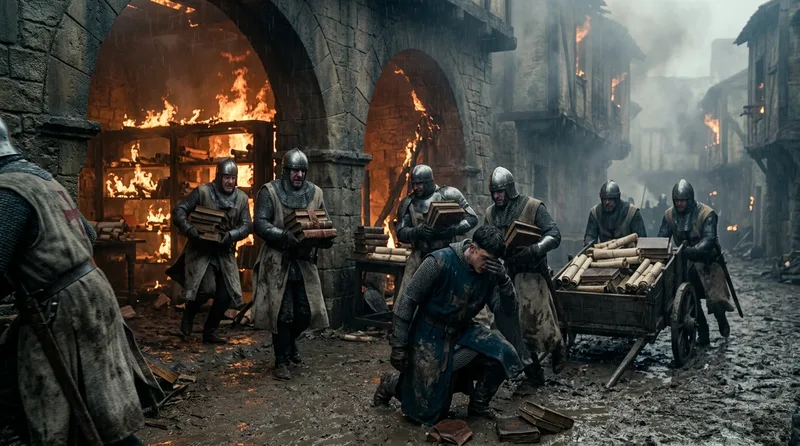
The County of Tripoli lasted from 1102 to 1289 as the smallest but longest-surviving of the major crusader states, ruling approximately 3,500 square miles of the Lebanese coast centered on the prosperous city of Tripoli with its famous library containing over 100,000 manuscripts. Raymond IV of Toulouse, the wealthiest and oldest leader of the First Crusade, began besieging Tripoli in 1102 but died in 1105 before capturing the city, which finally fell to his descendants in 1109 after a siege lasting seven years. The county developed a thriving economy based on silk production, glass manufacturing, and sugar cultivation, with the capital city of Tripoli supporting a population of 20,000 and serving as a major Mediterranean trading port. Despite its prosperity, Tripoli remained militarily vulnerable, maintaining only 4 major castles compared to Jerusalem’s 50, and depending heavily on the legendary fortress of Krak des Chevaliers held by the Knights Hospitaller just 40 miles inland. Saladin never seriously threatened Tripoli during his campaigns, but the Mamluk Sultan Qalawun laid siege to the city in March 1289 with an army numbering 40,000 soldiers and a massive bombardment train. When Tripoli fell on April 27, 1289, Mamluk forces systematically destroyed the city, burning its magnificent library—second only to Alexandria in the medieval world—and killing or enslaving the entire population of Latin Christians, estimated at 8,000 people. The county’s destruction left only Acre standing, which would fall just two years later, completing the elimination of crusader power in the Levant.
Source: britannica.com
5. Kingdom of Cyprus: The Crusader State That Outlived Them All
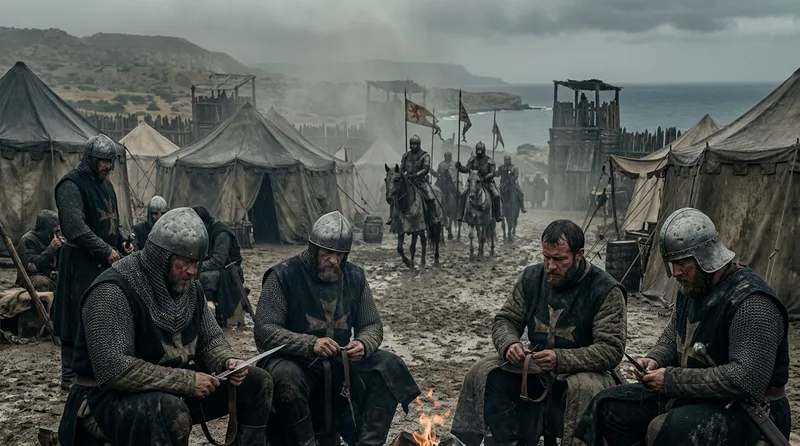
The Kingdom of Cyprus emerged in 1192 when Richard the Lionheart conquered the island en route to the Third Crusade and sold it to the dispossessed King Guy of Lusignan for 100,000 bezants, creating the only crusader state to survive beyond the 13th century. Guy, who had lost the Kingdom of Jerusalem at Hattin, transformed Cyprus into a Latin feudal kingdom spanning 3,572 square miles with a predominantly Greek Orthodox population of 80,000 governed by just 2,000 French-speaking nobles. The kingdom developed a unique political system where Latin Catholic bishops governed alongside Greek Orthodox priests who were forbidden from owning property, creating tensions that occasionally erupted into violence like the early 15th century Mamluk invasion that saw King Janus captured and Cyprus forced to pay annual tribute of 5,000 ducats. Unlike mainland crusader states constantly threatened by Muslim armies, Cyprus thrived through its maritime position, controlling crucial Mediterranean trade routes and exporting sugar, carobs, wine, and salt that generated annual revenues exceeding 200,000 ducats by the 14th century. The Lusignan dynasty ruled for 297 years, far longer than any mainland crusader state, maintaining French language and customs in their court and minting coins that depicted kings wearing crowns of both Cyprus and the long-lost Kingdom of Jerusalem. The kingdom finally ended in the late 15th century when Queen Catherine Cornaro, a Venetian noblewoman, abdicated under pressure and ceded Cyprus to the Republic of Venice, which governed it until Ottoman conquest in the 16th century. Cyprus thus survived as a crusader state for 297 years, nearly three times longer than the Kingdom of Jerusalem itself.
Source: britannica.com
6. Lordship of Sidon: The Trading Port That Changed Hands Seven Times
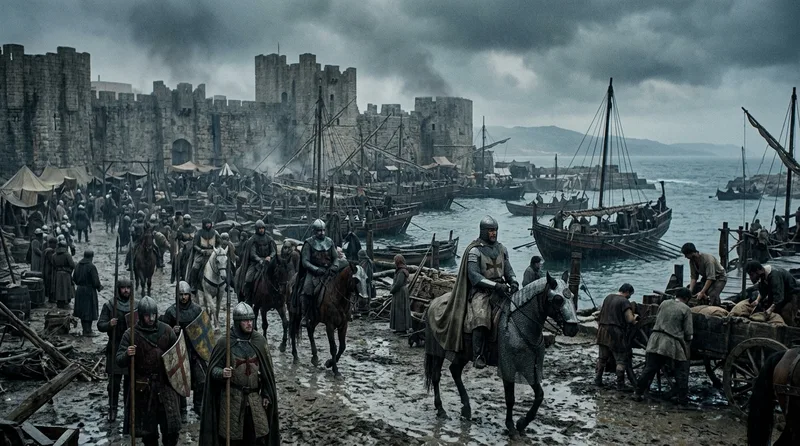
The Lordship of Sidon controlled one of the Mediterranean’s most lucrative trading ports from 1110 until 1260, though it changed hands between Christians and Muslims seven different times as its strategic position made it a perpetual target for conquest. Eustace Grenier, a French knight serving King Baldwin I of Jerusalem, captured the ancient Phoenician city in 1110 with Norwegian crusaders providing naval support, establishing a lordship covering roughly 400 square miles of the Lebanese coast. Sidon’s harbor could accommodate 50 ships simultaneously and generated enormous customs revenues from merchants trading in sugar, glass, silk, and spices, making its lords among the wealthiest crusader nobles with annual incomes exceeding 10,000 bezants. The city’s defensive weakness—sitting on a peninsula with inadequate fortifications—meant it fell to Saladin on July 29, 1187, then was recaptured by crusaders in 1197, lost again in the mid-13th century, and recovered in the mid-13th century in a dizzying succession of conquests. The lords of Sidon maintained a famous castle on a small island connected to the mainland by a causeway 80 meters long, which provided refuge during sieges but proved useless when enemies controlled the sea. Saladin himself ordered the destruction of Sidon’s fortifications in 1187 to prevent its use as a crusader base, demolishing walls that had stood since Phoenician times over two millennia earlier. The lordship’s final collapse came in 1260 when the Mongol invasion devastated the entire region and Mamluk forces occupied the ruins, ending 150 years of intermittent Latin control over this ancient commercial center.
Source: britannica.com
7. County of Jaffa and Ascalon: The Gateway Cities That Guarded Jerusalem
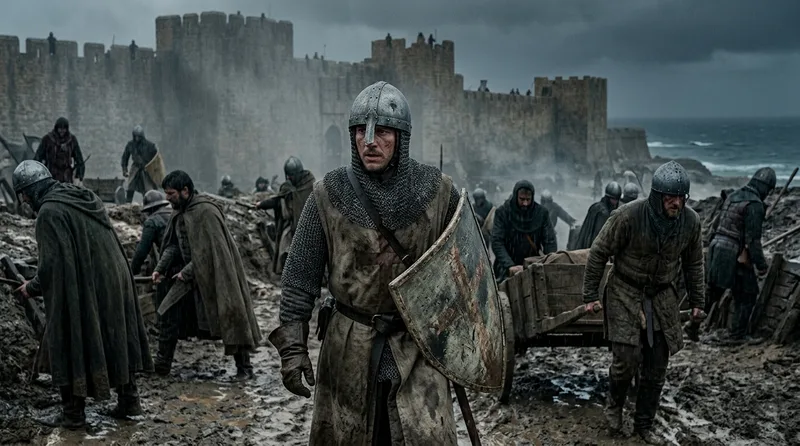
The County of Jaffa and Ascalon controlled the crucial coastal approaches to Jerusalem from 1100 until 1268, serving as the kingdom’s first line of defense and the personal domain of some of crusader history’s most fascinating characters. Godfrey of Bouillon created the County of Jaffa in 1100 by granting the port city to his ally Tancred, establishing control over roughly 800 square miles of territory including Jaffa’s harbor where pilgrims landed and the strategic city of Ascalon captured from the Fatimids in the mid-12th century after a siege lasting seven months. The county’s most notorious lord was Melisende, Queen of Jerusalem, who governed Jaffa from the mid-12th century to the mid-12th century after being forced from power by her son, turning the county into a virtually independent principality that coined its own money and maintained separate diplomatic relations. Jaffa’s harbor processed 10,000 pilgrims annually during peak years and generated customs revenues of 15,000 bezants, while Ascalon’s massive fortifications included walls 9 meters thick with 53 towers that made it nearly impregnable. Both cities’ positions on the coast made them vulnerable to naval assault, and Saladin captured Jaffa in September 1187, though Richard the Lionheart dramatically recaptured it in 1191 by personally leading his knights in a beach landing. The county’s final decades saw it reduced to little more than Jaffa itself after Ascalon was destroyed by crusaders themselves in the mid-13th century to prevent Muslim occupation. The Mamluk Sultan Baibars captured Jaffa in March 1268, massacring its 2,000 inhabitants and demolishing its fortifications so thoroughly that the city remained largely abandoned for the next three centuries.
Source: britannica.com
8. Principality of Galilee: The Inner Heartland Lost in One Catastrophic Battle
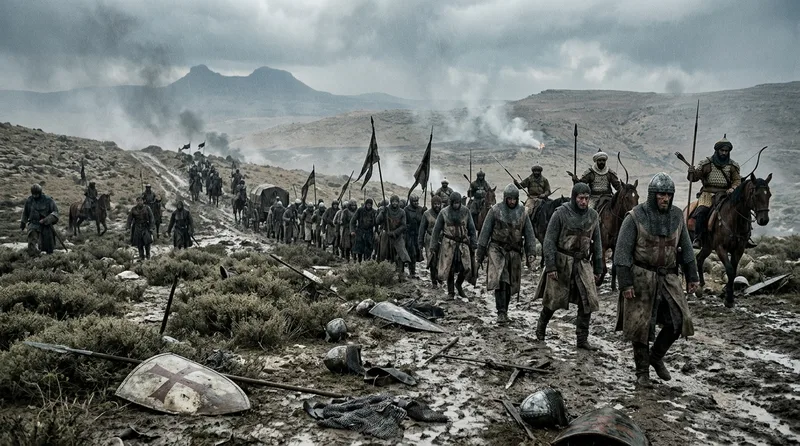
The Principality of Galilee formed the agricultural heartland of the Kingdom of Jerusalem from 1099 until its complete annihilation on July 4, 1187, when Saladin’s victory at Hattin destroyed not just an army but an entire functioning state in a single afternoon. Tancred of Hauteville, the brilliant Norman warrior who distinguished himself during the First Crusade, established Galilee as one of the kingdom’s four major baronies, controlling approximately 1,200 square miles including the fertile Jezreel Valley and the Sea of Galilee region that produced wheat, olives, and wine worth an estimated 25,000 bezants annually. The principality’s capital at Tiberias sat on the Sea of Galilee’s western shore with a population of 6,000, including large Jewish and Muslim communities who paid protection money to their Frankish lords while maintaining their own religious practices and courts. Prince Raymond III of Tripoli, who governed Galilee from the late 12th century to 1187, repeatedly warned King Guy that marching across waterless terrain in July to relieve Tiberias was suicidal, but Guy led 20,000 crusaders directly into Saladin’s trap. The Battle of Hattin lasted only 7 hours but resulted in the death or capture of virtually every fighting man in the Kingdom of Jerusalem, with Saladin personally witnessing the beheading of 230 captured Knights Templar and Hospitaller on July 5. Within three months of Hattin, all of Galilee’s castles, towns, and villages had fallen to Saladin’s armies without resistance, as no garrison remained to defend them. The principality simply ceased to exist, its lands absorbed into Saladin’s Ayyubid Sultanate and its Latin population either killed, enslaved, or fled to Tyre, making Galilee unique among crusader states for being destroyed in a single battle rather than gradual conquest.
Source: britannica.com
9. Lordship of Transjordan: The Desert Fortress That Controlled the Hajj Route
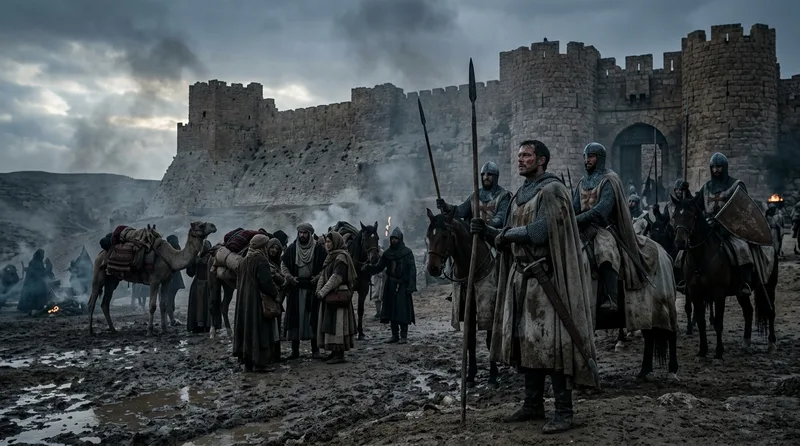
The Lordship of Transjordan stretched across the desert lands east of the Dead Sea from 1115 to 1189, controlling the vital hajj pilgrimage route from Damascus to Mecca and generating enormous revenues by extracting tolls from Muslim caravans passing through Christian territory. King Baldwin I of Jerusalem created this lordship by constructing the massive fortress of Montreal in 1115, which commanded the King’s Highway from its mountaintop position at 1,300 meters elevation, followed by the even more formidable Kerak Castle built in the mid-12th century with walls 8 meters thick. The lordship’s territory covered approximately 4,000 square miles of harsh desert terrain with fewer than 5,000 inhabitants, but its strategic position made it incredibly valuable, as Muslim pilgrimage caravans sometimes numbering 10,000 people paid protection money exceeding 30,000 dinars annually to pass safely. Reynald of Châtillon, who became Lord of Transjordan through marriage in 1177, proved so aggressive that he launched naval raids into the Red Sea in the early 1180s, threatening Mecca itself and outraging the entire Muslim world. Reynald’s capture of a Muslim caravan in 1186 that he refused to release despite a truce directly provoked Saladin to launch the campaign that culminated at Hattin, where Reynald was captured and personally beheaded by Saladin on July 4, 1187. After Hattin, Saladin besieged Kerak Castle for eight months before it surrendered in November 1188, and Montreal held out until May 1189 when its garrison, reduced to eating their horses and reduced to only 23 fighting men, finally capitulated. The lordship’s fall gave Muslims uncontested control of the hajj route for the first time in 74 years and eliminated the crusader state that had most consistently antagonized Saladin’s efforts to unite Islam against the Franks.
Source: britannica.com
10. Lordship of Tyre: The City That Refused to Fall to Saladin
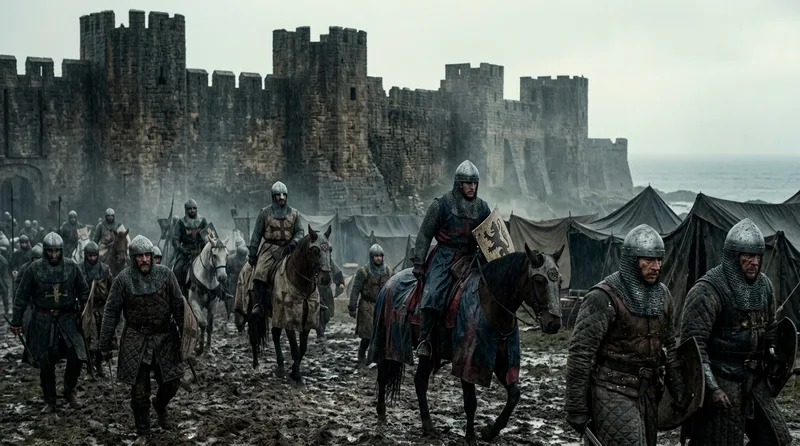
The Lordship of Tyre emerged as an independent power in 1124 when crusaders finally captured this ancient Phoenician city after a siege lasting 19 weeks, and paradoxically became the last crusader stronghold on the mainland after Saladin’s conquests, holding out until the final fall of Acre in 1291. Tyre’s position on a peninsula connected to the mainland by a narrow isthmus 500 meters long made it extraordinarily defensible, with double walls, 50 towers, and a harbor protected by massive chains that could be raised to block enemy ships. The city controlled only about 200 square miles of territory but possessed the Kingdom of Jerusalem’s finest harbor, capable of accommodating 80 ships simultaneously and generating customs revenues of 20,000 bezants from trade in purple dye, silk, sugar, and glass. After the Battle of Hattin in July 1187, refugees flooded into Tyre by the thousands, swelling its population from 8,000 to over 50,000, and Conrad of Montferrat assumed command, transforming the city into an impregnable fortress-republic that defied Saladin’s five-month siege from November 1187 to January 1188. Saladin brought 20 siege engines and attempted both land and naval assaults, but Tyrian defenders captured his entire Egyptian fleet of 10 galleys in a single engagement, forcing the sultan to abandon the siege in humiliation. Tyre’s survival proved crucial, providing a base for the Third Crusade and enabling partial recovery of the Kingdom of Jerusalem, though the kingdom never regained its pre-Hattin extent. The lordship technically endured until 1291 when the Mamluks systematically eliminated all remaining crusader holdings, making Tyre the longest-surviving crusader state on the Levantine mainland at 167 years and the last refuge of Latin Christian power in the Holy Land.
Source: britannica.com
Did You Know?
Did you know that while Saladin is famous for destroying the crusader states, he never actually conquered Tyre—the city’s defenders captured his entire fleet and forced him to retreat? Even more surprising, the Kingdom of Cyprus survived as a crusader state until the late 15th century, outlasting the Ottoman conquest of Constantinople by several decades and persisting nearly three centuries after Saladin’s death. The longest-lasting legacy of these vanished kingdoms lives on in the massive castles like Krak des Chevaliers, which remain so well-preserved that they’re still standing today, eight centuries after the last crusader abandoned them.