
Medieval guilds didn’t just control trades—they decided who could work, marry, and prosper. Their secret practices shaped European economies for 600 years, creating cartels more powerful than most modern corporations.
1. The Masterpiece Test: Secret Examinations That Made or Broke Careers
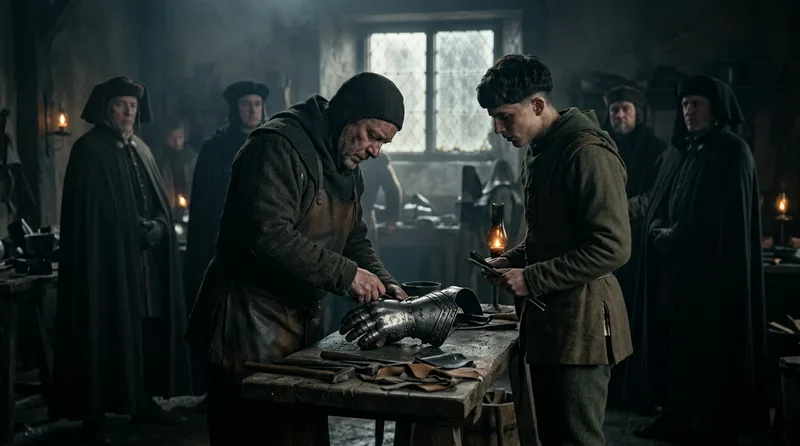
Before any craftsman could establish his own workshop in the mid-fourteenth century, he faced the masterpiece examination—a test so secretive that failure meant lifelong subordination. In the mid-fourteenth century, the Goldsmith’s Guild of London required candidates to craft an elaborate chalice containing at least 47 separate components, working under constant surveillance for 3 weeks straight. Master examiners deliberately withheld crucial techniques during apprenticeship, reserving knowledge of specialized alloys and finishing methods exclusively for those who passed. The Florentine silk weavers went further, demanding candidates replicate a pattern shown only once, testing both memory and skill simultaneously. These examinations cost between 15 and 30 florins—roughly 6 months’ wages for a journeyman—ensuring only wealthy candidates could attempt them. Failed applicants were blacklisted across entire regions through secret correspondence networks between guild halls. The Venice glassmakers’ guild on Murano island required masters to work molten glass at precisely 1,100 degrees Celsius without thermometers, a skill that took 20 years to develop. This artificial scarcity kept master numbers low—Paris hosted only 124 master goldsmiths in the late thirteenth century despite a population exceeding 200,000. The system created hereditary dynasties where mastership passed from father to son, effectively closing trades to outsiders for generations.
Source: britannica.com
2. Price-Fixing Cartels That Would Make Modern CEOs Jealous

In the mid-fourteenth century, the Worshipful Company of Fishmongers established London’s first documented price cartel, fixing cod prices at exactly 2 pence per pound regardless of supply fluctuations. Guild members met secretly in the crypts beneath St. Paul’s Cathedral each Sunday, agreeing on weekly prices for 17 different commodities before dawn markets opened. Any member undercutting agreed prices faced fines of 40 shillings—equivalent to 8 weeks’ income—or expulsion and business destruction. The Hanseatic League took this further, controlling prices across 160 cities from Novgorod to London between the mid-fourteenth century and the mid-fifteenth century. Their merchant guilds fixed prices on timber, grain, wax, fur, and beer, manipulating supply by coordinating shipping schedules and warehouse releases. When Lübeck bakers attempted to undercut cartel bread prices in the late fourteenth century, guild enforcers destroyed their ovens and bannished 12 families from the city permanently. The Cologne wine merchants maintained a 300-year monopoly by purchasing entire vineyard harvests before grapes ripened, artificially restricting supply while controlling 80 percent of Rhine wine trade. These cartels operated with legal protection—city councils granted guilds explicit authority to “maintain fair prices,” which guilds interpreted as price-fixing mandates. Records from the Strasbourg drapers’ guild show members who violated price agreements had their guild marks revoked, making their cloth legally unsellable throughout the Holy Roman Empire.
Source: britannica.com
3. Seven Years of Servitude: The Apprenticeship System’s Hidden Exploitation
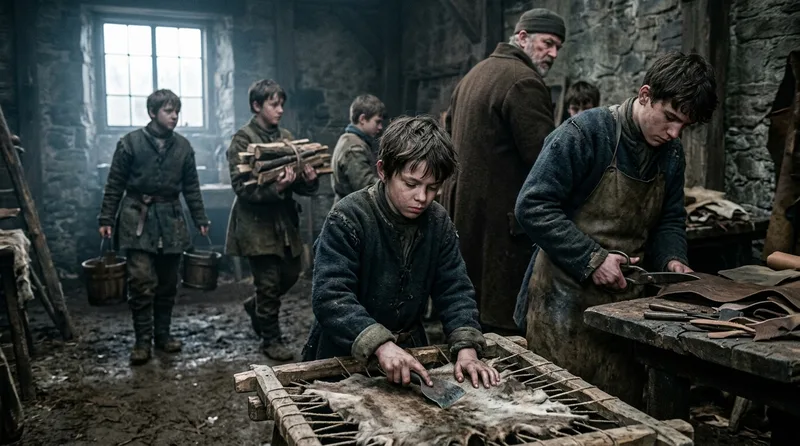
The standard guild apprenticeship contract bound children as young as 10 years old to masters for 7 years of unpaid labor—a period deliberately calculated to span their most productive teenage years. In the early fifteenth century, the Paris Mercers’ Guild contract stipulated apprentices worked from sunrise to sunset 6 days weekly, receiving only room, board, and two sets of clothing annually. Masters legally owned apprentices’ labor output, selling pieces crafted by talented pupils while crediting none of the work. The London Carpenters’ Guild in the early fourteenth century forbade apprentices from marrying, owning property, or even leaving their master’s house without written permission under penalty of contract extension. If an apprentice fled, guilds employed professional retrieval agents who tracked runaways across kingdoms—bounty hunters received 5 shillings per recovered apprentice. Contracts included clauses forcing families to pay 20-pound bonds, forfeited if apprentices quit, ensuring poverty-stricken families pressured children to endure abusive conditions. The system’s true genius lay in age restrictions: apprentices finishing at 17 still needed 5 to 10 years as journeymen before attempting master examinations, creating 15-year pipelines that suppressed labor supply. Ghent textile guilds in the mid-fourteenth century restricted new apprentice intake to just 30 positions annually despite 4,000 guild members, deliberately creating labor scarcity that inflated journeyman wages—which masters could then justify charging higher product prices to offset.
Source: britannica.com
4. Guild Halls: Fortresses of Power Hidden in Plain Sight
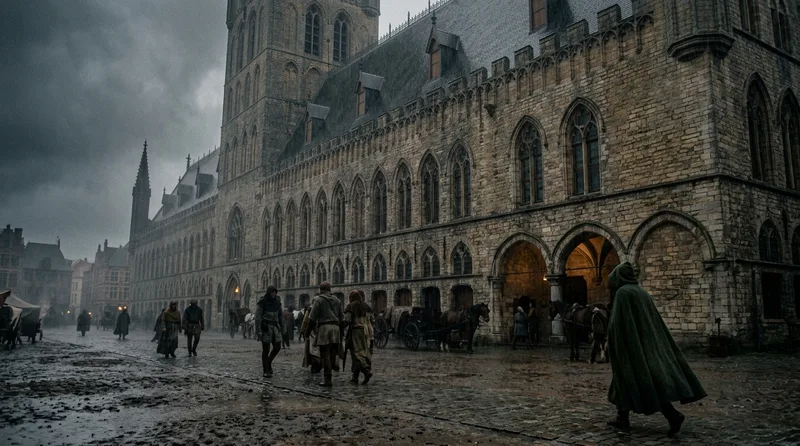
The Cloth Hall of Ypres, completed in the early fourteenth century, stretched 132 meters long with walls 2 meters thick—not for cloth storage but as a fortified headquarters for the weavers’ guild that controlled Flanders’ economy. Its central tower rose 70 meters, allowing guild watchmen to monitor approaching merchant caravans 5 kilometers away, giving members advance notice to adjust prices before outsiders arrived. Inside, the great chamber contained a iron-bound chest requiring 7 different keys held by separate guild officers, protecting trade secrets and cartel agreements. The Venice Scuola Grande di San Marco, built in the mid-fifteenth century, featured hidden passages connecting to the Doge’s Palace, enabling guild leaders to influence state policy through secret meetings. These halls contained specialized rooms for initiations where apprentices swore blood oaths on guild relics—the London Goldsmiths possessed a fragment of St. Dunstan’s anvil, while the Paris stone masons kept a piece of supposed Tower of Babel stone. The Brussels brewers’ guild hall installed a disguised court room in the late fourteenth century where members tried commercial disputes privately, bypassing city magistrates entirely. Ceremonial objects reinforced guild mysticism: the Nuremberg metalworkers used a fifteenth-century hammer allegedly forged by Tubal-Cain, requiring new masters to strike it during initiation while 40 guild members chanted in Latin. These buildings weren’t just meeting spaces—they were economic fortresses where Europe’s real power brokers operated beyond royal oversight.
Source: britannica.com
5. Quality Marks: Medieval Branding With Brutal Enforcement
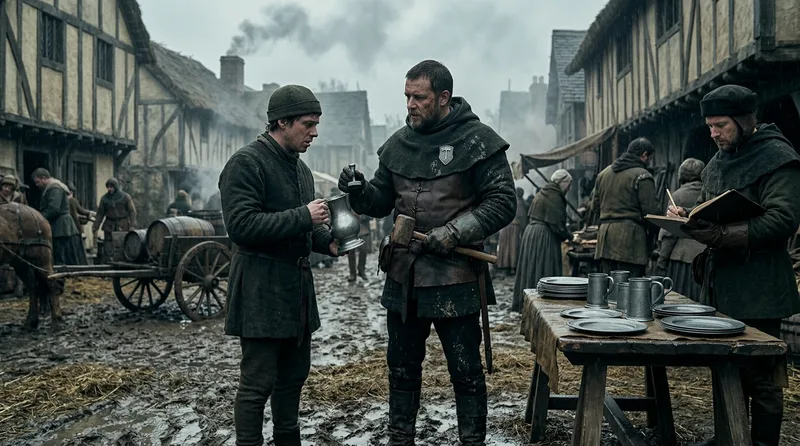
In the early fourteenth century, the London Pewterers’ Guild introduced touchmarks—unique symbols stamped into metal proving guild-certified quality—and hired 12 full-time inspectors who conducted surprise workshop raids searching for unmarked goods. Craftsmen discovered selling unmarked pewter faced public humiliation in pillories, 10-pound fines, and confiscation of all inventory. The Sheffield cutlers developed 230 different maker’s marks by the late fifteenth century, each registered in guild ledgers with precise drawings. Counterfeiters faced savage punishment—in the early fifteenth century, a French blacksmith caught forging a Toledo blade mark had his right hand amputated in Bordeaux’s market square. Guild marks became so valuable that wills specifically bequeathed them to heirs; the Cologne silversmith Johann Grasse’s mark sold for 150 gulden in the late fifteenth century, equivalent to 3 years’ master income. The Florentine Arte della Lana inspected every wool cloth bolt, stamping approved pieces with lead seals that couldn’t be removed without destroying fabric. Between the early fourteenth century and the mid-fifteenth century, they rejected 30 percent of submitted cloth, creating artificial scarcity that maintained premium pricing. Master weavers paid 2 florins per inspection—generating 40,000 florins annually for the guild while suppressing competition. These marks functioned as medieval patents, legally protecting manufacturing processes while building brand recognition that customers trusted more than royal authority. A genuine guild mark added 25 to 40 percent to product prices across medieval Europe.
Source: britannica.com
6. The Widow’s Loophole: How Guilds Excluded Women (Except When Profitable)
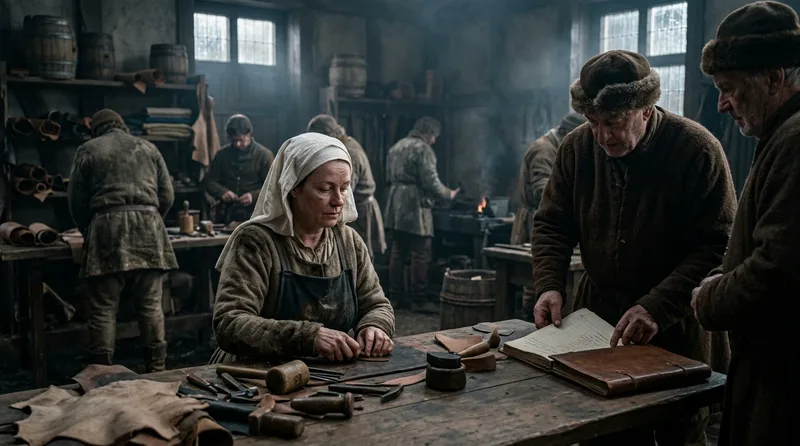
Medieval guilds systematically excluded women from membership—except when their husbands died, creating the “widow’s privilege” that revealed the system’s economic hypocrisy. In the mid-fifteenth century, the Paris silk weavers’ guild allowed widows to continue operating workshops for exactly 1 year, then forced them to remarry guild members or sell businesses at 40 percent below market value. This loophole transferred productive assets to male members while maintaining the fiction of protecting widows. The Cologne brewers’ guild in the late fourteenth century permitted widows to manage breweries indefinitely—but only if they employed male guild members as nominal “masters,” effectively working as managers in their own businesses. Some enterprising widows exploited these rules: Margery Kempe operated a successful brewing business in Lynn during the late fourteenth century by rapidly remarrying guild members, inheriting their privileges while maintaining control. The London silkwomen represented a rare exception, forming their own guild in the mid-fourteenth century, but with crucial restrictions—they couldn’t employ male workers, limiting production capacity to 30 percent of male-run shops. Hamburg’s guilds forbade women from touching tools in 14 different trades by the late fourteenth century, yet widows who hired male journeymen to do actual work could legally operate businesses, proving rules protected male employment rather than quality standards. Statistics from the late fifteenth century Nuremberg show widows controlled 22 percent of registered workshops, yet guild records listed zero female masters. This contradiction persisted because guilds profited from licensing fees widows paid for privileges they technically shouldn’t possess.
Source: britannica.com
7. When Guilds Became Governments: Florence’s Oligarchy by Craftsmen
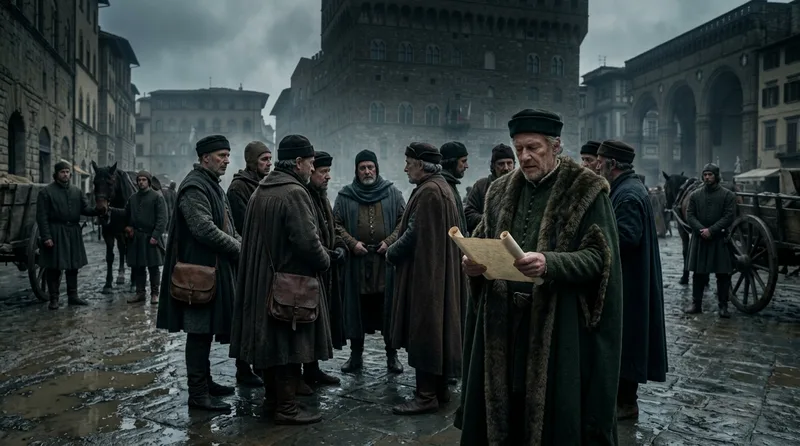
Between the late thirteenth century and the early sixteenth century, Florence’s government functioned as a guild oligarchy where the Seven Major Guilds—representing bankers, cloth merchants, lawyers, silk traders, doctors, furriers, and wool merchants—controlled all political offices through the Priorate system. Guild membership became mandatory for citizenship; non-guild residents couldn’t vote, own property within city walls, or access law courts. The Signoria, Florence’s ruling council, required 6 of 9 members to come from major guilds, with the remaining 3 representing 14 minor guilds, effectively disenfranchising 70 percent of the population. In the late fourteenth century, the Ciompi Revolt erupted when 8,000 wool workers demanded guild representation, temporarily creating three new guilds before wealthy merchants violently suppressed the movement, executing 160 workers. Bruges operated similarly—its city council in the mid-fourteenth century consisted entirely of guild representatives who voted commercial regulations that coincidentally favored their own trades. Guild politicians in Lübeck between the early and mid-fifteenth century passed 47 laws restricting foreign merchants while providing subsidies to guild members, essentially using government power for cartel enforcement. The wealth concentration was staggering: in the early fifteenth century, Florence’s major guild members comprised just 2 percent of the population but controlled 67 percent of taxable wealth. This wasn’t representative democracy—it was economic dictatorship where trade associations wielded state violence to eliminate competition and extract wealth from non-members.
Source: britannica.com
8. Industrial Espionage: When Trade Secrets Were Worth More Than Gold
In the mid-fifteenth century, the Venice glass guild decreed that any craftsman revealing mirror-making techniques to foreigners would be assassinated, along with his family—a law enforced by the Council of Ten’s secret police who tracked renegade artisans across Europe. Venetian mirror technology remained a state secret for 150 years because a single mirror sold for 150 ducats—the price of a small merchant ship. When glassmaker Giorgio Ballarin fled to Bohemia in the late fifteenth century, Venetian agents poisoned him within 6 months. The Lucca silk guild in the late fourteenth century required members to swear never to discuss dyeing formulas, with violators buried alive beneath guild hall foundations—archaeological excavations in the nineteenth century discovered 3 skeletons matching this description. **Damascus steel**workers guarded crucible techniques so jealously that masters took recipes to their graves; modern metallurgists still debate exact medieval methods. English guilds in the late fourteenth century forbade foreigners from entering workshops during production, posting armed guards during metalworking to prevent formula theft. The wool guild of Florence employed cryptography, recording dyeing instructions in cipher books requiring three separate keys to decode—one book discovered in the mid-fifteenth century took guild officers 2 weeks to decrypt after the keyholders died. Industrial espionage became professionalized: Milanese armor guilds in the early fifteenth century paid spies 50 ducats to infiltrate German workshops and report on steel tempering innovations. These secrets represented monopolies worth kingdoms—a single guild controlling specialized knowledge could dictate prices across entire continents for generations.
Source: britannica.com
9. Sacred Economics: How Religious Feast Days Controlled Labor Supply
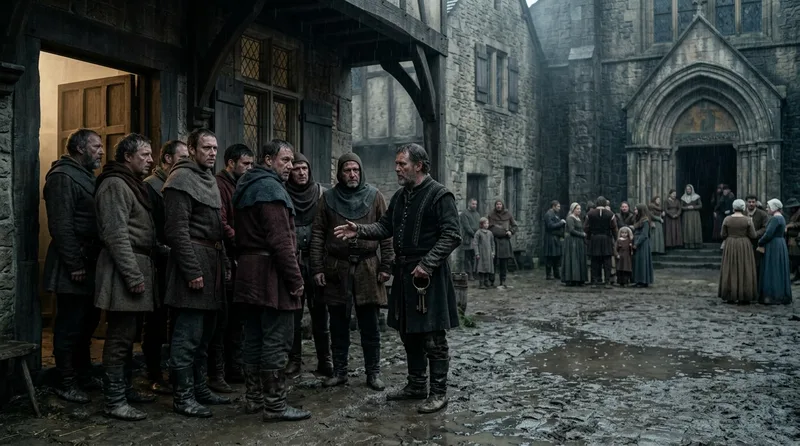
Medieval guilds weaponized Christianity by mandating business closures on 52 Sundays plus 47 feast days annually—shutting down production 99 days per year to artificially restrict supply and maintain prices. The London Cordwainers’ Guild in the late fourteenth century fined members 12 pence for working on St. Crispin’s Day, their patron saint’s festival, with inspectors conducting surprise raids on workshops. This wasn’t piety—it was calculated scarcity creation. The Bruges cloth guild expanded mandatory closures to 115 days by the late fourteenth century, including obscure saints barely recognized elsewhere. Fewer production days meant higher prices year-round. Guilds lobbied bishops to canonize new saints specifically to add holidays; the Paris bakers successfully petitioned for St. Honoratus’s feast day in the early thirteenth century, adding another mandatory closure that reduced annual bread production by 0.3 percent—enough to justify permanent price increases. These closures functioned as primitive supply management, preventing overproduction that would crash prices. The Cologne brewers calculated precisely: reducing brewing days from 265 to 150 annually doubled beer prices while cutting production costs only 30 percent, generating 40 percent higher profits. Violators faced excommunication threats—the Ghent weavers’ guild in the mid-fourteenth century convinced the Bishop of Tournai to declare feast-day work a mortal sin, using religious terror to enforce economic restrictions. Feast days also prevented journeymen from moonlighting, since working outside guild oversight risked both fines and damnation, maintaining masters’ labor monopolies through divine authority.
Source: britannica.com
10. Guild Warfare: When Craftsmen Became Soldiers Against Competition

In the late fourteenth century, the Ghent weavers’ guild deployed 800 armed members to destroy competing textile workshops in surrounding villages, burning 23 buildings and killing 14 craftspeople who dared operate outside guild control. This wasn’t mob violence—it was organized economic warfare with guild treasuries funding weapons, armor, and siege equipment. The Liège metalworkers’ guild maintained a standing militia of 350 men between the early and mid-fifteenth century, conducting raids against rural blacksmiths within a 40-kilometer radius. Chronicles describe guild soldiers wearing distinctive livery, carrying guild banners, and operating under formal military command structures. The Florence wool guild’s mid-fourteenth century attack on Prato manufacturers left 7 dead and destroyed looms worth 3,000 florins. Guilds framed this violence as “quality enforcement,” claiming unlicensed craftsmen produced inferior goods, but records prove they targeted any competition regardless of quality. Venice’s glass guild petitioned the Doge in the late thirteenth century for legal authority to burn unauthorized furnaces, receiving official sanction to conduct 40 raids annually—state-sponsored economic terrorism. German guild conflicts escalated into pitched battles: in the late fourteenth century, Cologne’s weavers and merchants fought a 3-day street war killing 130 people over import regulations. Guilds even conducted economic blockades—the Hanseatic League’s merchant guilds besieged Novgorod in the late fourteenth century, starving the city for 8 months until it granted trade monopolies. Violence wasn’t an aberration but a core enforcement mechanism ensuring monopolies persisted despite market pressures and human suffering.
Source: britannica.com
Did You Know?
The Venice glass guild’s assassination policy wasn’t exceptional—it was standard practice. When a Florentine wool dyer defected to England in the early fifteenth century, his former guild not only killed him but successfully lobbied to have his children stripped of citizenship. These organizations wielded power modern corporations can only dream of: combining government authority, religious legitimacy, and legal violence into economic engines that shaped European civilization for 600 years. Their legacy persists in trade unions, professional licensing, and apprenticeship systems that still control who enters skilled trades today.