
When Genghis Khan conquered half the known world, his secret weapon wasn’t just cavalry—it was information. The Mongol yam system created the world’s first intercontinental postal network, with relay stations every 25-30 miles enabling messages to travel 200+ miles per day.
1. Karakorum Central Relay Hub: The Empire’s Beating Heart
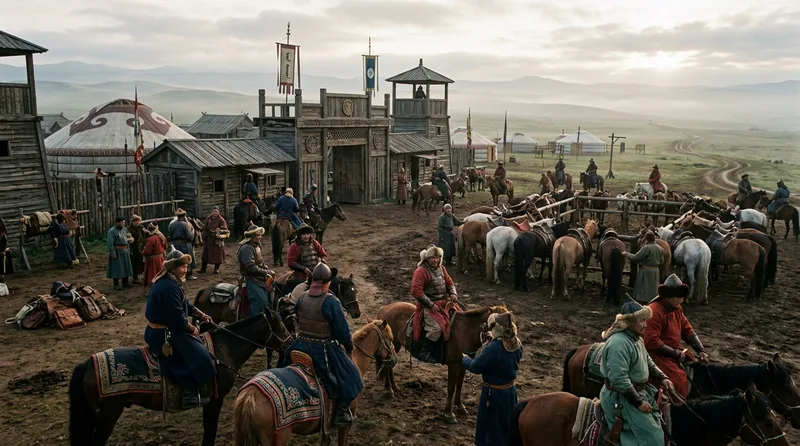
Established in 1220 as the Mongol Empire’s capital, Karakorum hosted the most sophisticated relay station in Central Asia, maintaining over 300 fresh horses at constant readiness. The station operated with military precision—messengers arriving from any direction could exchange mounts within five minutes, a logistical marvel that required a standing staff of 75 personnel working in shifts around the clock. Marco Polo documented that riders covered 250 miles in a single day through this hub, roughly ten times faster than contemporary European postal systems. The facility featured separate stables for imperial messengers (who wore silver tablets called paizas) and commercial travelers, with priority determined by the weight and decoration of their credential tablets. Located at coordinates that placed it equidistant from Beijing, Samarkand, and the Russian steppes, Karakorum’s relay station processed an estimated 2,000 riders weekly during peak campaign seasons. The station included granaries storing 500 tons of millet for horse feed, blacksmith forges for emergency shoe repairs, and dormitories where exhausted riders could rest between runs. When Ögedei Khan expanded the capital in 1235, he doubled the relay station’s capacity, transforming it into a complex covering 15 acres. This infrastructure enabled Karakorum to function as the empire’s central nervous system, where intelligence from frontier battles reached the Great Khan within seven days—a communications speed unmatched until the telegraph era several centuries later.
Source: britannica.com
2. Samarkand Strategic Junction: Where East Met West
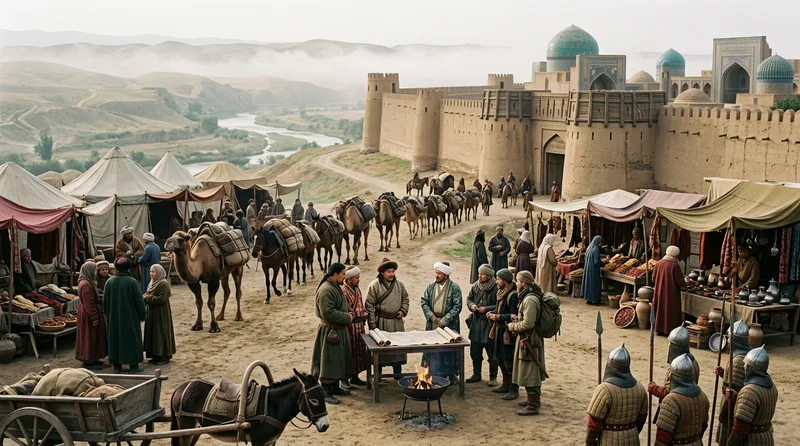
Conquered by Genghis Khan in 1220 after a brutal siege, Samarkand became the empire’s most crucial western relay station, positioned where routes from China, Persia, and the Caucasus converged. The facility maintained four separate courier wings, each dedicated to a different cardinal direction, processing messages in Persian, Chinese, Mongolian, and Arabic—making it the medieval world’s most linguistically diverse postal hub. Ibn Battuta, visiting in 1333, marveled at the station’s 400-strong horse herd and its system of colored flags that signaled message urgency visible from three miles away. Red flags indicated military emergencies requiring immediate Khan notification, while yellow flags marked commercial intelligence about trade route conditions or merchant caravan movements. The station employed 12 full-time translators who could render messages into any required language within an hour, ensuring diplomatic correspondence reached its destination without linguistic distortion. Chagatai Khan, who ruled the region from 1226 to 1242, invested heavily in expanding Samarkand’s relay infrastructure, constructing underground cooling chambers where horses could recover from desert heat and riders could access fresh water stored at constant cool temperatures. The station’s strategic importance meant it received priority supplies—during the 1258 campaign against Baghdad, Hulagu Khan’s battle plans reached Samarkand just 11 days after leaving Mongolia, enabling coordinated troop movements across 3,000 miles. This junction station transformed Samarkand from a conquered city into an imperial asset worth more than its considerable tax revenue.
Source: britannica.com
3. Shangdu Summer Capital: The Pleasure Dome’s Postal Network
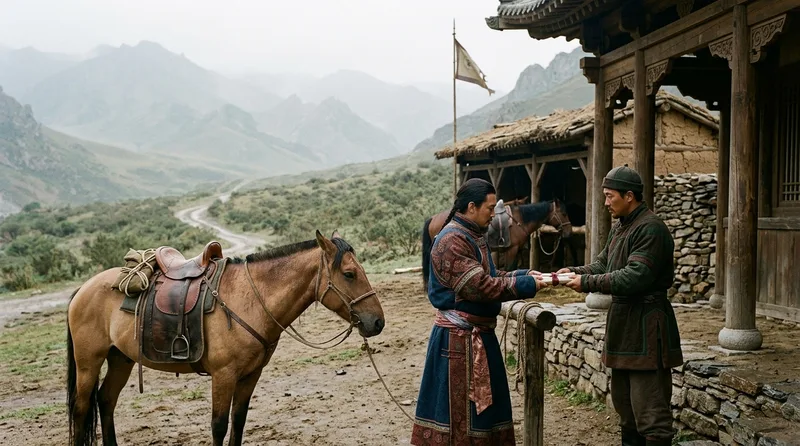
Built by Kublai Khan in 1256 as his summer retreat, Shangdu required a dedicated relay network connecting it to Dadu (Beijing) 180 miles south, with stations positioned every 22 miles along the imperial road. The network employed 2,400 horses exclusively for Khan family correspondence, with messengers required to maintain speeds of 25 miles per hour during urgent transmissions—achieved by riding two horses simultaneously and switching mounts without dismounting. Each Shangdu relay station featured heated rest houses where riders could recover in winter, when temperatures dropped to extreme cold but message delivery continued uninterrupted. The Italian merchant Francesco Balducci Pegolotti recorded in 1340 that Shangdu’s postal efficiency allowed the Khan to receive fresh lychees from southern China within three days, transported in sealed bamboo containers by relay riders who changed horses 16 times during the journey. The summer capital’s relay stations doubled as intelligence outposts, monitoring Mongol nobility who might plot against the Khan during extended hunting expeditions in the surrounding grasslands. When Kublai Khan declared himself Emperor of the Yuan Dynasty in 1271, he mandated that all correspondence from Shangdu carry special blue seals distinguishing imperial leisure communications from routine government business. The relay network required such massive horse herds that by 1290, the stations consumed 3,000 tons of hay annually, straining local agricultural production. Shangdu’s postal infrastructure survived the Khan’s reign, continuing operations until 1369 when Ming forces destroyed the city, ending the most luxurious relay network ever constructed for a single ruler’s seasonal convenience.
Source: britannica.com
4. Tabriz Western Terminus: Gateway to the Islamic World
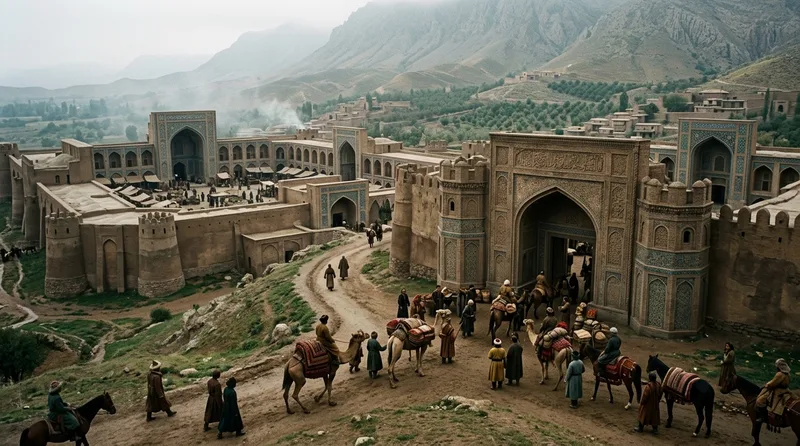
After Hulagu Khan captured Tabriz in 1256 and established the Ilkhanate, the city became the empire’s westernmost major relay station, connecting Mongol domains to Mediterranean trade networks and European diplomatic missions. The station maintained 600 horses and employed Persian administrators who adapted the yam system to local conditions, including camel couriers for desert crossings and boat messengers for Caspian Sea routes. Rashid al-Din, the Persian historian serving the Ilkhanate from 1298 to 1318, documented that Tabriz’s relay station processed messages in seven languages and employed Christian, Muslim, and Buddhist clerks who could read and authenticate correspondence from any corner of the empire. The facility featured specialized workshops producing paper from local flax, manufacturing 50,000 sheets monthly for official correspondence—a volume that made Tabriz one of medieval Asia’s largest paper production centers. During the 1260 diplomatic exchange between Hulagu Khan and King Louis IX of France, messages traversed from Tabriz to Paris in 87 days, a speed that astonished European courts accustomed to much longer communication delays. The station’s strategic value was demonstrated in 1295 when Ghazan Khan used its relay network to mobilize armies against Egyptian Mamluks, coordinating troop movements across 1,500 miles with daily situation updates. Tabriz’s relay infrastructure included a sophisticated signal tower system using mirrors and flags to transmit simple messages visually across mountainous terrain, reducing urgent communication times by 40 percent. The station’s decline began after 1335 with the Ilkhanate’s fragmentation, though its buildings served Persian postal services for another century.
Source: britannica.com
5. Kiev Frontier Post: Europe’s Eastern Warning System

After Batu Khan’s forces devastated Kiev in 1240, the Mongols established a frontier relay station to monitor the Golden Horde’s western boundaries and European political developments. Unlike interior stations serving government efficiency, Kiev’s outpost functioned primarily as an intelligence gathering center, employing Russian-speaking Mongol administrators who interrogated merchants and travelers for information about Polish, Hungarian, and German military preparations. The station maintained a modest stable of 80 horses but invested heavily in human intelligence networks, paying informants across Eastern Europe to report troop movements, harvest conditions, and political intrigues. Giovanni da Pian del Carpine, the Papal envoy who passed through in 1246, noted the station’s sophisticated document verification system using multiple wax seals and silk ribbons to prevent correspondence forgery—a necessary precaution on frontiers where message interception was common. The Kiev relay employed specialized riders called ortok who could speak Russian, Polish, and Mongolian, enabling them to gather intelligence while appearing as ordinary traders during market visits to border towns. Between 1240 and 1260, this station provided early warning of three European crusade attempts, giving Golden Horde commanders sufficient notice to position defensive forces weeks before attacks materialized. The facility processed approximately 200 riders monthly, far fewer than interior stations but strategically crucial for maintaining the empire’s western buffer zone. Archaeological excavations in the early 2000s discovered the station’s remains two miles north of Kiev’s historic center, revealing extensive underground storage pits where records were hidden during European raid threats. Kiev’s relay operated until approximately 1300, when the Golden Horde’s focus shifted southward toward richer Black Sea trade routes.
Source: britannica.com
6. Kashgar Silk Road Crossroads: Commercial Intelligence Hub
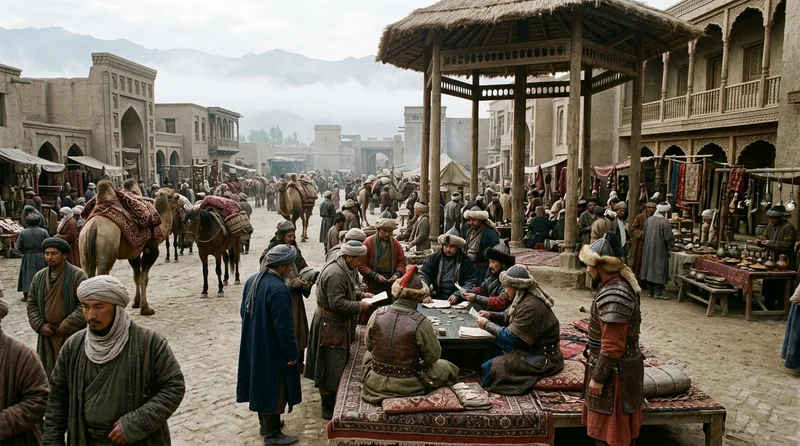
Captured by Mongol forces in 1218, Kashgar’s relay station became the empire’s primary monitoring point for Silk Road commerce, positioned where routes from India, China, and Central Asia intersected. The facility operated dual functions—official government correspondence and commercial intelligence gathering that tracked trade volumes, commodity prices, and merchant credit-worthiness across thousands of miles. Stationed clerks recorded every caravan passing through Kashgar, creating detailed logs that reached Karakorum within 21 days and enabled the Khan to levy appropriate taxes on arriving merchants before goods reached interior markets. The station maintained 350 horses and pioneered the use of yaks for mountain crossings into Tibet, animals that could navigate high-altitude passes where horses struggled with thin air. Between 1260 and 1280, Kashgar’s relay processed an average of 3,400 commercial messages annually, making it the empire’s busiest economic intelligence center and generating revenue through service fees charged to wealthy merchants wanting priority message delivery. The station employed multilingual specialists fluent in Persian, Arabic, Chinese, Turkic, and Sanskrit, essential for processing the linguistically diverse correspondence flowing through this cosmopolitan crossroads. When Marco Polo departed Kashgar in 1275 en route to Kublai Khan’s court, he carried letters of introduction processed through this station, documents that guaranteed him safe passage and quality accommodations at every subsequent relay station. Kashgar’s unique position meant it tracked not just commerce but religious movements—Buddhist missionaries, Muslim teachers, and Nestorian Christians all used the station’s services, providing Mongol administrators invaluable intelligence about ideological trends spreading across their territories. The relay remained operational until 1370, outlasting Mongol rule by processing messages for successive Timurid dynasties.
Source: britannica.com
7. Dadu Imperial Headquarters: The Dragon’s Postal Command
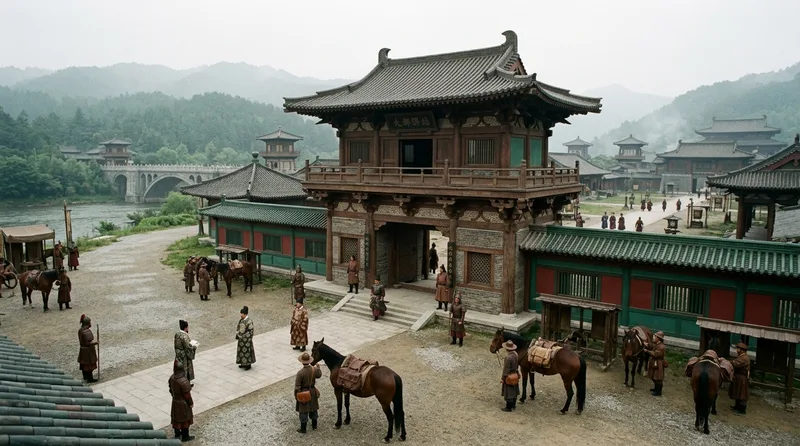
When Kublai Khan established Dadu (modern Beijing) as his permanent capital in 1267, he constructed the empire’s most elaborate relay headquarters, a facility covering 40 acres and employing 1,200 personnel who managed the entire postal system’s operations. The complex featured separate compounds for each cardinal direction, with specialized officials tracking every message’s progress through the empire using a proto-database system of wooden tablets filed by destination, date, and priority level. Dadu’s relay processed 50,000 messages annually at its 1290 peak, requiring 2,000 horses in constant rotation and consuming 800 tons of grain monthly to maintain operations. The headquarters pioneered the use of standardized message containers—sealed leather pouches with metal locks whose keys existed only in triplicate at origin, destination, and Dadu’s central registry. This system virtually eliminated message tampering, since any broken seal required investigation by imperial inspectors who reported directly to the Khan. The facility included a training academy where young Mongols learned literacy, horsemanship, and navigation skills necessary for relay service—graduates received prestigious appointments and tax exemptions that made postal careers highly desirable among ambitious provincial families. Archaeological evidence suggests Dadu’s relay headquarters included a cartography workshop producing updated maps quarterly, incorporating intelligence from returning messengers about new roads, river crossings, and hazard zones. When plague reached China in the mid-14th century, Dadu’s relay system inadvertently accelerated its spread by maintaining rapid contact between infected regions, demonstrating how efficiently the network moved not just information but biological threats. The headquarters continued operations under Chinese administration after 1368, though with reduced capacity and without the Mongol system’s signature speed.
Source: britannica.com
8. Lake Baikal Northern Monitoring Station: Siberia’s Frozen Outpost
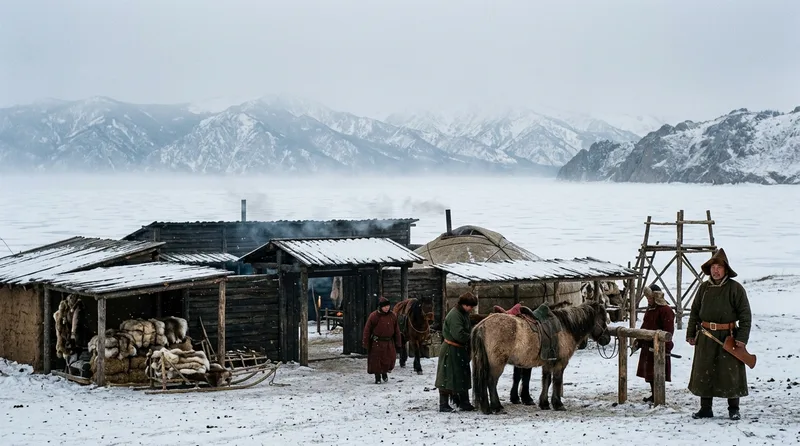
Established around 1240 during Mongol expansion into Siberia, the Lake Baikal relay station represented the empire’s northernmost permanent outpost, monitoring fur trade routes and forest peoples who paid tribute in sable pelts worth their weight in silver. Operating in conditions where winter temperatures reached extreme cold, the station pioneered cold-weather postal techniques including heated way-stations every 10 miles instead of the standard 25-mile spacing, and dog sleds that replaced horses during the harshest three months when even hardy Mongol ponies struggled. The facility processed approximately 120 riders monthly, far fewer than southern stations but critically important for maintaining contact with tribute-paying Siberian tribes whose loyalty required visible Mongol presence. Station records from the Yuan Dynasty archives indicate that Lake Baikal’s relay consumed 15 tons of dried fish annually, feeding both human personnel and the 60 sled dogs maintained for winter operations. The outpost employed local Buryat tribesmen as guides who knew safe lake crossings and could navigate by stars during the extended winter nights when darkness lasted 18 hours daily. Between 1250 and 1270, this station coordinated three major punitive expeditions against tribes refusing tribute, demonstrating that even in Siberia’s remoteness, Mongol postal infrastructure enabled rapid military response. The facility included specialized storage for fur tributes, maintaining quality through ventilated ice-houses that preserved pelts during the months-long journey to southern markets. When William of Rubruck passed near Lake Baikal in 1254, he marveled at finding Mongol postal efficiency functioning in forests so remote that local inhabitants had never seen horses before the conquest. The station operated until approximately 1310, abandoned as Mongol focus shifted away from expensive Siberian operations toward more profitable Chinese and Persian territories.
Source: britannica.com
9. Bukhara Intelligence Gathering Hub: The Spy Masters’ Station

After Genghis Khan razed Bukhara in 1220, killing an estimated 30,000 residents, the rebuilt city hosted a relay station specializing in intelligence operations rather than routine message delivery. The facility employed 40 full-time analysts who compiled reports from merchants, religious pilgrims, and captured prisoners, creating comprehensive assessments of political stability across Central Asia and Persia. Bukhara’s station pioneered the use of coded messages using substitution ciphers based on classical Persian poetry—messages appeared as innocent literary correspondence but contained military intelligence when decoded using keys maintained at only three locations empire-wide. The facility maintained a modest 150 horses but invested heavily in human intelligence networks, funding informants in every major city between the Caspian Sea and the Persian Gulf. Between 1230 and 1250, Bukhara’s intelligence gathering enabled Mongols to predict and preempt four major rebellion attempts, identifying conspirators before uprisings materialized and allowing preemptive arrests that maintained regional stability. The station employed former Islamic scholars who could read correspondence in Arabic, Persian, and Turkish, intercepting letters between Muslim leaders and identifying potential resistance movements. Archaeological evidence from excavations in the late 20th century revealed the station included a sealed underground chamber where sensitive documents were stored in ceramic jars protected from fire, water, and unauthorized access by multiple locked doors whose keys were held by different officers. When Kublai Khan requested information about potential invasion routes into India in 1273, Bukhara’s station compiled a 40-page report within six weeks, demonstrating sophisticated research capabilities rarely associated with medieval postal facilities. The intelligence hub continued operations until 1365, serving successive dynasties who recognized its strategic value even after Mongol political control ended.
Source: britannica.com
10. Almaliq Eastern Trade Route Station: The Merchant’s Gateway
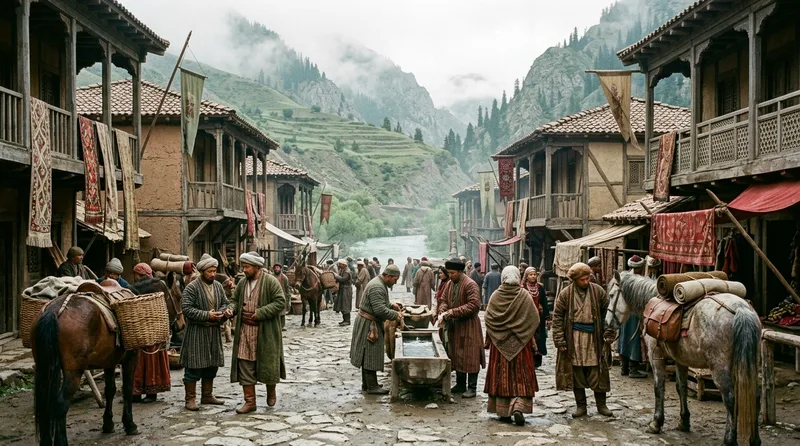
Founded in 1225 as a trade settlement that grew into an important relay station, Almaliq controlled the mountain passes connecting Central Asian steppes to western China’s Tarim Basin, making it essential for commercial correspondence traveling between Mongol domains and Chinese markets. The station specialized in serving merchant caravans, offering paid express services that guaranteed message delivery to Beijing in 35 days—a premium service costing 50 silver dirhams per message but attracting wealthy traders whose business decisions required timely information. Almaliq maintained 280 horses and employed professional scribes who could draft commercial contracts, letters of credit, and legal documents in five languages, transforming the relay station into a traveling notary service. Between 1250 and 1300, the station processed an estimated 15,000 commercial messages annually, generating revenue that made it financially self-sustaining unlike government-subsidized relay stations in less commercial regions. The facility pioneered courier insurance—for additional fees, merchants could purchase guarantees that compensated them if messages failed to arrive, creating one of history’s earliest commercial courier liability systems. Station records indicate that message delivery failures occurred in fewer than 2 percent of cases, a remarkable reliability rate given the treacherous mountain routes requiring crossings at elevations exceeding 12,000 feet. When Venetian merchant communities established permanent trading houses in Almaliq around 1280, they relied entirely on the relay station for correspondence with European business partners, effectively making Mongol postal infrastructure essential to East-West commercial integration. The station included specialized facilities for preserving perishable luxury goods like musk and silk samples that merchants sent as quality demonstrations to distant buyers. Almaliq’s relay operations declined after 1340 as changing trade routes shifted commerce southward, though the station continued processing local correspondence until the city’s destruction in 1370 during Timurid invasions.
Source: britannica.com
Did You Know?
Did You Know? The Mongol yam system was so efficient that a message could travel from Beijing to the Persian Gulf—covering over 4,000 miles—in just 37 days during the 13th century. This same journey took European merchants 6-9 months using conventional caravan travel. Even more surprising: when the Mongol Empire collapsed in the 14th century, no comparable intercontinental postal system existed until the British Empire established colonial mail routes several centuries later, making the yam network’s speed and reach unmatched for nearly half a millennium.