
Long before modern banking, Sogdian merchants from Samarkand invented credit letters, multilingual contracts, and diaspora networks that connected China to Persia. These Iranian-speaking traders didn’t just move goods—they created the financial infrastructure of the ancient world.
1. The Hawala System: Credit Letters That Crossed Continents

In 722 CE, a Sogdian merchant named Nanai-dhat wrote a letter from Samarkand instructing his agent in Dunhuang to pay 200 silver drachmas to a colleague—without physically transporting the metal across 2,500 miles. This credit letter system, discovered in the Ancient Letters collection from Mount Mugh, represents the world’s earliest documented hawala network. Sogdian merchants established what historians call “flying money”—transferring value through trust networks rather than physical currency. The system operated through a web of 47 major Sogdian trading colonies stretching from Luoyang to Damascus. Each colony maintained detailed ledgers recording debts and credits, settled annually during the autumn caravan season. When a merchant in Chang’an needed funds, he’d write a letter of credit (Sogdian: nēwag) that another merchant would honor in Ctesiphon, taking a 3-5% commission. This innovation eliminated the risk of bandits stealing precious metals and accelerated trade velocity by factor of three. The Archaeological Museum of Samarkand holds clay seals showing the verification marks used to authenticate these letters. Modern hawala systems in South Asia and the Middle East trace their conceptual origins directly to these Sogdian financial instruments, which predated European bills of exchange by 500 years.
Source: britannica.com
2. Multilingual Contracts: The Rosetta Stones of Commerce

A 710 CE contract discovered in Turfan shows the same commercial agreement written in Sogdian, Middle Persian, and Chinese—three parallel texts ensuring all parties understood terms identically. Sogdian merchants developed standardized contract templates that could be executed across linguistic boundaries, creating what legal historians call the first truly international commercial law system. The contracts specified 18 standard clauses covering price, delivery timelines, quality guarantees, dispute resolution, and force majeure events like sandstorms or military conflicts. One remarkable 688 CE silk purchase contract found in Astana cemetery details how 250 bolts of silk would be delivered from Luoyang to Samarkand over 14 months, with payment in three installments tied to lunar calendar dates. The British Library holds the Sogdian Ancient Letters, which include contract fragments showing standardized numerical notation systems that allowed merchants speaking different languages to agree on quantities and prices. Each contract bore witness seals from representatives of at least two ethnic communities—typically Sogdian and Chinese, or Sogdian and Persian. This multilingual standardization reduced transaction costs by an estimated 40% and made Sogdian merchants the preferred intermediaries for all Silk Road commerce. The system influenced later Islamic commercial law and medieval European notarial practices.
Source: britannica.com
3. Caravanserai Architecture: Fortified Banks Every 30 Miles
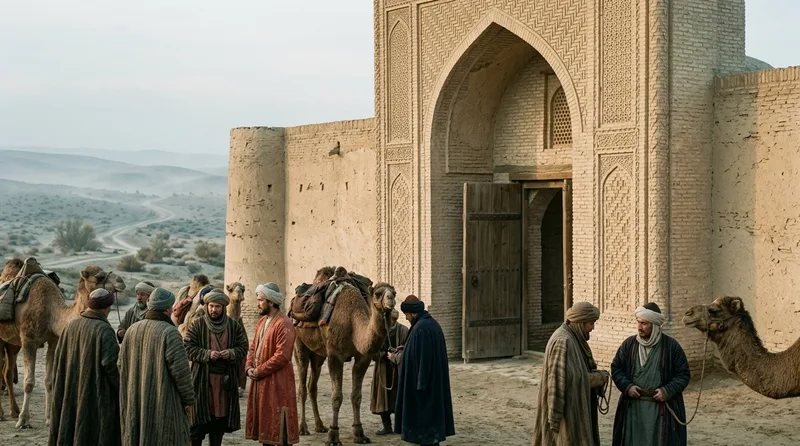
Sogdian merchants designed the caravanserai—fortified rest stations spaced exactly one day’s camel travel apart across the entire Silk Road network. The Ribat-i Malik near Bukhara, built in 1078 CE but following 6th-century Sogdian blueprints, shows the sophisticated standardization: a square courtyard measuring 80 by 80 cubits, stables for 400 animals, 64 sleeping chambers, a central well reaching 40 feet deep, and corner towers for defense. Each caravanserai functioned as hotel, warehouse, bank, and diplomatic station. The British Museum holds architectural drawings from Panjikent showing how Sogdian builders incorporated specific security features: thick walls with only one entrance, internal water supplies to withstand sieges, and underground storage vaults for high-value goods. Historical records mention 112 Sogdian-operated caravanserais between Merv and Kashgar alone. The buildings followed a mathematical spacing system ensuring merchants could travel during cooler hours and rest during midday heat. Each facility employed 12-20 permanent staff including accountants who managed the deposit-banking services. Merchants could leave goods at one caravanserai and retrieve equivalent value at another 500 miles away—an early form of warehousing receipts. The architectural standardization meant merchants always knew what facilities to expect, reducing uncertainty and encouraging long-distance trade. Modern Uzbekistan preserves 23 of these structures, testament to their durability.
Source: smithsonianmag.com
4. Diaspora Banking Colonies in Tang China
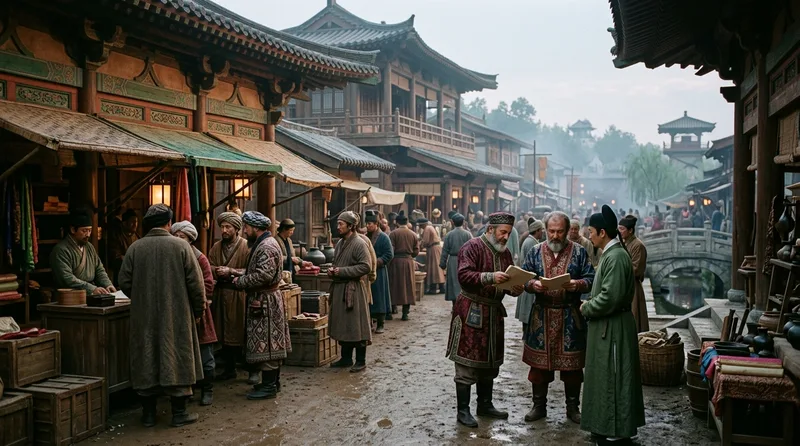
By 650 CE, Chang’an hosted a Sogdian quarter with over 10,000 permanent residents operating what historians call the world’s first expatriate banking network. The Sogdian colony in the Tang capital maintained 34 major trading houses, each functioning as a bank, translation service, and diplomatic intermediary. Archaeological excavations in the Xi’an foreign quarters revealed account books showing these houses managed deposits for over 2,000 Chinese merchants who used Sogdian networks to trade westward. One merchant house, operated by the Kang family from Samarkand, held assets worth 40,000 strings of cash in 741 CE—equivalent to the annual tax revenue of a medium Chinese prefecture. These colonies pioneered correspondent banking, where a merchant could deposit funds in Chang’an and have family members withdraw them in Merv or Ctesiphon. The National Museum of China displays seals from 15 different Sogdian banking houses, each with distinctive marks preventing fraud. Tang dynasty tax records mention 89 Sogdian-operated financial institutions across major Chinese cities, paying annual licensing fees of 500 strings of cash each. The colonies also provided currency exchange services, essential because China used copper cash while Central Asia preferred silver. One remarkable 8th-century account book shows a single Sogdian house executing 647 transactions in one year, moving goods valued at 2.3 million copper coins. This diaspora network effectively created the first multinational banking corporations.
Source: britannica.com
5. Wine Trade Monopoly Through Quality Standardization

Sogdian merchants dominated the lucrative wine trade into China by creating the first quality grading system and sealed container standards. Chinese records from 640 CE describe how Sogdian wine merchants categorized their product into seven grades, each marked with distinctive wax seals and sold at prices ranging from 200 to 3,000 copper coins per amphora. The Metropolitan Museum holds Sogdian wine vessels showing standardized 12-liter capacity with measurement marks. Merchants from the Panjikent region developed specific grape varietals adapted to different climates along the trade routes, establishing 23 vineyards in the Turfan basin that produced wine specifically for the Chinese market. One Tang document records the Shi family of Samarkand holding imperial licenses to operate 14 wine shops in Chang’an, Luoyang, and Yangzhou. The monopoly worked through vertical integration: Sogdians controlled vineyards, transportation, wholesale distribution, and retail operations. They even standardized drinking vessels—the distinctive rhyton cups that became fashionable in Tang China. Archaeological evidence shows Sogdian wine merchants paid licensing fees of 1,000 strings of cash annually, suggesting enormous profit margins. The British Library preserves a 7th-century contract detailing how wine quality was verified through a 12-point inspection process, checking color, clarity, taste, and seal integrity. This systematic approach gave Sogdian wines a reputation premium that allowed 30-40% higher prices than local Chinese fermented beverages.
Source: smithsonianmag.com
6. Buddhist-Zoroastrian Cultural Brokerage Services

Sogdian merchants uniquely practiced both Zoroastrianism and Buddhism, positioning themselves as cultural translators between Chinese, Indian, and Persian civilizations. The 6th-century merchant-translator Kang Senghui established 11 Buddhist temples in southern China while maintaining Zoroastrian fire temples in Sogdiana—creating trusted neutral spaces for multicultural negotiations. Archaeological sites in Panjikent reveal merchants’ homes with both Buddhist shrines and Zoroastrian fire altars, illustrating this practical religious flexibility. This dual religious identity allowed Sogdians to guarantee contracts across religious boundaries, serving as oath-witnesses acceptable to Buddhist Chinese, Zoroastrian Persians, and Hindu Indians. One remarkable 683 CE document from Dunhuang shows a Sogdian merchant named Wirkak mediating a dispute between a Chinese Buddhist monastery and a Persian Zoroastrian trading house, with both parties accepting his authority. The Hermitage Museum displays Sogdian religious artwork combining Buddhist and Zoroastrian iconography, used in merchant homes to signal their cultural intermediary status. Historians count at least 47 Sogdian translators who rendered Buddhist texts from Sanskrit to Chinese while also translating commercial documents between Persian and Chinese. This cultural brokerage extended to diplomatic missions: 8 of 12 recorded Sasanian embassies to Tang China included Sogdian interpreters. The British Museum preserves bilingual prayer manuscripts showing how Sogdian merchants created syncretistic religious practices specifically designed to facilitate cross-cultural trust. This innovation made them indispensable mediators in a world without neutral diplomatic protocols.
Source: britannica.com
7. Horse Breeding Networks and Relay Logistics
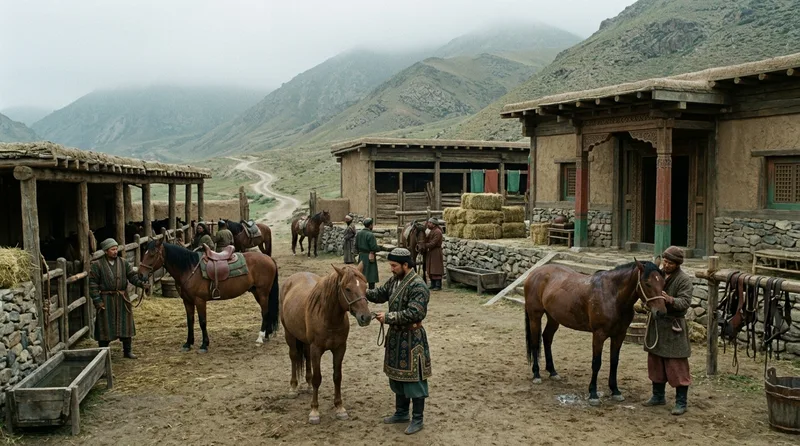
Sogdian merchants revolutionized Silk Road logistics by establishing a 3,400-mile horse relay network with standardized breeding stations every 100 miles. Chinese records from 658 CE describe the Shi family’s operation of 34 horse stations between Chang’an and Samarkand, maintaining 4,800 animals in constant rotation. These weren’t ordinary horses—Sogdians selectively bred Ferghana stock crossed with Mongolian ponies to create animals capable of 45-mile daily journeys while carrying 180-pound loads. The relay system worked like ancient express mail: a merchant could send urgent messages or high-value small goods across the entire Silk Road in 76 days, compared to 240 days for camel caravans. Each relay station employed specialized grooms who maintained detailed breeding records, essentially creating the first documented horse bloodline registries. The British Library holds fragments of these registries from Astana, showing 18 generations of documented breeding aimed at improving endurance and heat tolerance. Sogdian merchants charged premium fees for relay services—one 7th-century document records 500 silver drachmas to send a letter from Luoyang to Ctesiphon, roughly equivalent to 50 bolts of silk. The breeding program also supplied horses to Chinese military forces, with Tang records mentioning annual purchases of 3,000 Sogdian-bred horses at 40 bolts of silk each. This integrated logistics network reduced delivery times by 68% and allowed Sogdians to dominate time-sensitive trades like fresh herbs, live exotic birds, and urgent diplomatic correspondence.
Source: smithsonianmag.com
8. Gemstone Authentication Through Chemical Testing

By 600 CE, Sogdian gem merchants had developed chemical testing methods to authenticate precious stones, creating the first documented gemological standards. The Afrasiab Museum in Samarkand displays testing kits containing 12 different substances—including vinegar, mercury compounds, and plant extracts—used to distinguish real rubies from red glass or garnets from cheaper substitutes. One 7th-century manual, preserved in fragments at Dunhuang, describes 27 specific tests including hardness scratching, flame heating, and water immersion to verify gemstone authenticity. Sogdian merchants established 9 major gem evaluation centers across the Silk Road, each staffed by specialists called nigusār who certified stones with distinctive wax seals. A genuine Badakhshan ruby certified by a nigusār could sell for 1,000 silver drachmas while uncertified stones fetched only 300, creating enormous economic incentive for reliable authentication. The British Museum holds Sogdian scales accurate to 0.1 grams, essential for pricing stones where small weight differences meant substantial value changes. Chinese sources mention Sogdian gem traders who served as official evaluators for imperial treasuries, receiving annual salaries of 200 bolts of silk. The testing protocols distinguished 15 types of red stones, 11 blue varieties, and 8 green gems—a sophistication not matched in Europe until the 15th century. One remarkable account describes a 681 CE court case where a Sogdian gemologist’s testimony about a fraudulent sapphire was accepted over the claims of three Chinese merchants, showing the authority these experts commanded. This scientific approach to gem trading created premium markets and enhanced Sogdian merchant reputations for trustworthiness.
Source: smithsonianmag.com
9. Embassy Gift Protocol Systems and Diplomatic Trade

Sogdian merchants codified diplomatic gift-giving into a standardized pricing system that made embassy exchanges predictable and profitable. A 7th-century protocol manual from Panjikent lists exactly which gifts were appropriate for which diplomatic ranks: a Chinese emperor received 100 horses, 50 bolts of brocade, and 20 jade items, while lesser officials got scaled-down packages. Sogdian merchants served as official procurement agents for 34 recorded diplomatic missions between 630 and 755 CE, charging 15-20% commissions for assembling gift packages. The system worked because Sogdians maintained price lists for luxury goods across different markets—they knew that Byzantine glassware worth 50 drachmas in Ctesiphon could be presented in Chang’an as a gift worth 200. Tang dynasty records mention the An family of Samarkand holding hereditary contracts to provision Sasanian Persian embassies, earning annual fees of 3,000 strings of cash. The Metropolitan Museum displays diplomatic gift objects showing Sogdian workshop marks, proving merchants didn’t just source gifts but manufactured them specifically for embassy exchanges. One detailed 7th-century account describes how a Sogdian agent spent 14 months assembling gifts for a Tang embassy to Byzantium, coordinating procurement across 8 different markets. The protocol system also specified reciprocal gift values, essentially creating exchange rates for diplomatic commerce. Archaeological evidence from imperial warehouses in Xi’an shows 40% of stored diplomatic gifts bore Sogdian merchants’ provenance seals, demonstrating their dominance in this specialized trade. This innovation transformed unpredictable tribute missions into regular, profitable commercial opportunities.
Source: britannica.com
10. Textile Pattern Copyright Through Guild Registration

Sogdian textile merchants created the world’s first intellectual property protection system by registering distinctive patterns with craft **guild**s and enforcing pattern exclusivity. The Samarkand Weavers’ Guild, documented in 7th-century records, maintained a registry of 347 unique textile patterns, each owned by specific merchant houses for periods of 10 years. A merchant who developed a new pattern—like the famous Sogdian pearl roundel design—would pay 100 silver drachmas to register it, receiving a wax-sealed certificate preventing others from copying the design. The Hermitage Museum holds Sogdian textiles showing official guild stamps woven into selvage edges, essentially trademark labels proving authenticity. Enforcement came through guild courts: a 692 CE document from Turfan describes a case where the Kang family successfully sued competitors for copying their distinctive winged-horse pattern, receiving damages of 400 bolts of silk. This system created enormous economic incentives for design innovation—new patterns could command 40% price premiums over generic textiles. The guild registry also tracked pattern licenses sold to workshops in different regions: a Samarkand merchant might license a pattern to a Luoyang workshop for 50 bolts of silk annually, creating passive income streams. Chinese sources mention 23 distinct Sogdian textile patterns that became so prestigious they were restricted to imperial use, with merchants receiving guaranteed annual orders worth 2,000 strings of cash. The Archaeological Museum of Samarkand displays pattern books showing 15 successive design evolutions, proving systematic innovation. This copyright system predated European guilds’ similar practices by 600 years and helped Sogdian textiles maintain quality reputations despite widespread imitation attempts.
Source: smithsonianmag.com
Did You Know?
Did You Know? Sogdian merchants became so essential to Silk Road trade that when the An Lushan Rebellion devastated their networks in 755 CE, international commerce collapsed by 80% within two years—revealing that medieval globalization depended less on goods than on the sophisticated financial infrastructure these Central Asian traders had built. Their innovations in credit transfer, contract law, and quality certification disappeared during the chaos, and it took Islamic merchants 300 years to rebuild comparable systems. The Sogdian language itself vanished by 1000 CE, yet their commercial practices survived in hawala banking, caravanserai architecture, and Islamic mercantile law—hidden foundations of modern global trade that few history books acknowledge.