
In 1139, Pope Innocent II declared the crossbow ‘hateful to God’ and banned its use against Christians — yet within decades, every major army deployed crossbowmen. A peasant with a crossbow could kill an armored knight from 200 yards away, making years of knightly training irrelevant.
1. The Second Lateran Council’s Divine Ban of 1139
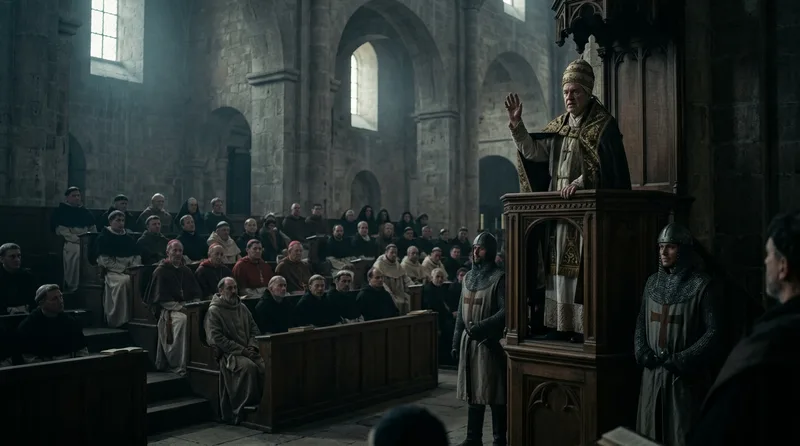
Pope Innocent II stood before assembled bishops at the Second Lateran Council in April 1139 and condemned the crossbow as a weapon ‘hateful to God and unfit for Christians.’ The papal decree, Canon 29, specifically prohibited its use against fellow Christians while permitting deployment against infidels. The Church feared this mechanical bow threatened the social order — a commoner required only weeks of training to operate a crossbow effectively, while knights spent decades mastering mounted combat and swordsmanship. Within two decades of the ban, King Richard I of England fielded entire companies of crossbowmen, and by the end of the 12th century, crossbow bolts had become standard military equipment across Europe. The papacy’s attempt to preserve feudal hierarchy through divine authority crumbled against practical military necessity. Ironically, the Third Crusade of 1189 saw Christian crossbowmen killing Muslim warriors with papal blessing, while those same soldiers would have faced excommunication for using identical weapons against French or German opponents. The ban remained officially in church law for centuries but was universally ignored by the start of the 13th century.
Source: britannica.com
2. English Kings Who Armed Their Enemies
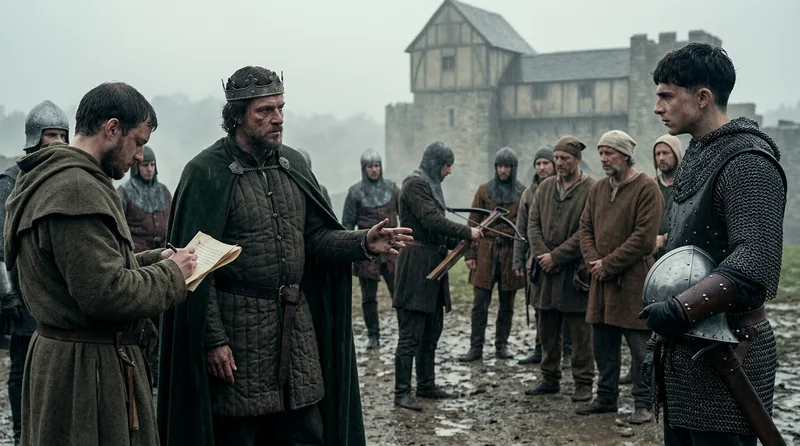
King John of England issued a royal ordinance in the early 13th century restricting crossbow ownership to crown-authorized personnel, fearing peasant uprisings more than foreign invasion. The law mandated that only royal garrisons and licensed nobles could possess crossbows, with unauthorized ownership punishable by confiscation of property. Yet John himself maintained a standing force of 700 crossbowmen at Windsor Castle and hired Flemish mercenary crossbowmen at 6 pence per day — double an English archer’s wage. His son Henry III renewed the restriction in the mid-13th century after Baron’s Revolt concerns, but records from the Tower of London armory show continuous crossbow production throughout his reign, with 2,000 crossbows manufactured in the mid-13th century alone. The contradiction was stark: kings banned civilian crossbow ownership while simultaneously stockpiling thousands in royal arsenals. By Edward I’s reign in the late 13th century, the pretense collapsed entirely. Edward employed over 1,000 crossbowmen during his Welsh campaigns and even established a royal crossbow-maker position at the Tower. The restrictions remained officially codified in English law into the 14th century but were never enforced against military personnel or nobility.
Source: britannica.com
3. French Nobles Who Hired the Men They Condemned
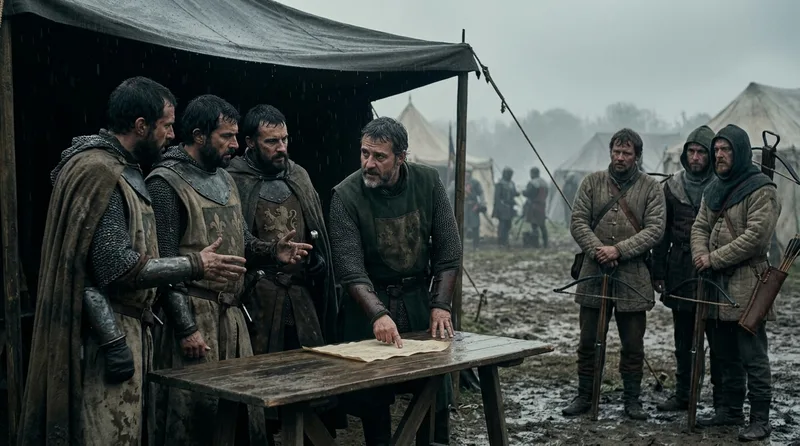
The French nobility issued collective declarations at assemblies in the late 12th and early 13th centuries denouncing crossbowmen as dishonorable mercenaries who corrupted warfare’s chivalric nature. Knights at the Assembly of Compiègne in the early 13th century swore oaths to refuse battlefield alliance with crossbow-wielding commoners, declaring such warriors beneath noble dignity. These same nobles routinely hired Genoese, Brabançon, and Flemish crossbow mercenaries for their private wars, paying them 8 to 12 deniers daily — premium wages that reflected their battlefield value. Philip II Augustus maintained 2,000 crossbowmen in royal service by the early 13th century, despite attending councils that condemned the weapon. The cognitive dissonance reached absurd heights at Bouvines in the early 13th century, where French knights fought alongside 300 hired crossbowmen while claiming moral superiority over their English opponents who used identical troops. Nobles justified this hypocrisy by claiming royal crossbowmen served legitimate authority while enemy crossbowmen were mere hired killers. The distinction fooled nobody, and by mid-13th century, every French duke maintained crossbow companies. French military ordinances continued condemning mercenary crossbowmen into the 14th century, the same period Philip IV recruited thousands of Genoese crossbowmen for his Flemish campaign.
Source: britannica.com
4. Holy Roman Emperors and the Arsenal Loophole
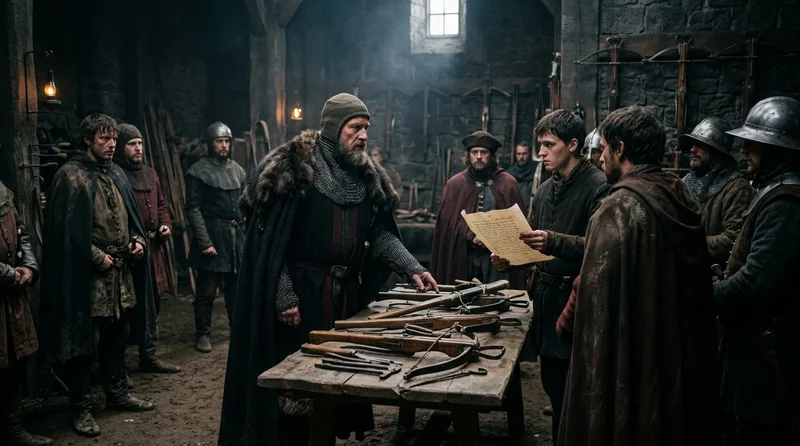
Emperor Frederick I Barbarossa proclaimed crossbow manufacturing restrictions across the Holy Roman Empire in the late 12th century, requiring imperial licenses for all crossbow workshops. The decree aimed to prevent Italian city-states from arming themselves against imperial authority, with penalties including workshop destruction and craftsmen imprisonment. Yet Frederick’s own armories at Speyer and Aachen produced 4,000 crossbows between the late 12th and early 13th centuries for his Third Crusade campaign. The imperial legislation included a critical exception: crossbows manufactured for ‘defense of Christendom’ remained legal, a loophole large enough to march entire armies through. German princes exploited this by classifying all crossbow production as defensive, and by the start of the 13th century, Nuremberg alone housed 47 registered crossbow workshops. Frederick II renewed his grandfather’s restrictions in the early 13th century with even harsher penalties, including hand amputation for unlicensed manufacturers. Within five years, imperial records document purchasing 8,000 crossbow bolts from Bavarian suppliers — the same workshops supposedly under prohibition. The regulations collapsed entirely during the mid-13th-century conflicts between Guelph and Ghibelline factions, when both sides armed themselves with crossbows regardless of imperial law.
Source: britannica.com
5. Genoese Crossbowmen Who Made Excommunication Profitable
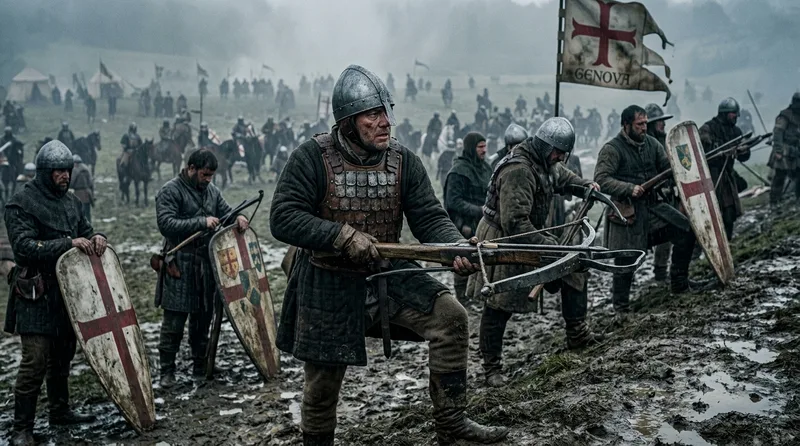
The Republic of Genoa established formal crossbow mercenary contracts in the mid-12th century, directly violating papal prohibitions by creating a professional military export industry. Genoese crossbowmen operated under standardized contracts guaranteeing 10 Genoese pounds monthly — roughly 40 times a peasant’s income — plus equipment maintenance and medical care. By the late 13th century, Genoa maintained a registry of 3,000 professional crossbowmen available for hire to any Christian monarch willing to pay, despite theoretical excommunication for using banned weapons against fellow Christians. French King Philip IV hired thousands of Genoese crossbowmen in the early 14th century for his Flemish wars, paying astronomical sums. The papacy issued renewed condemnations in the mid-13th and early 14th centuries, threatening both hirers and hired with spiritual penalties. These threats proved empty — Genoese mercenaries fought in every major European conflict from the 13th to the 15th centuries, and the Republic’s economy thrived on crossbow contracts worth an estimated 15% of total state revenue by the late 13th century. When Pope Clement V personally requested Genoa cease crossbow mercenary contracts in the early 14th century, the city’s council formally refused, citing economic necessity. The papal ban had transformed from moral imperative to negotiable suggestion within two generations.
Source: britannica.com
6. Tournament Rules That Nobody Followed
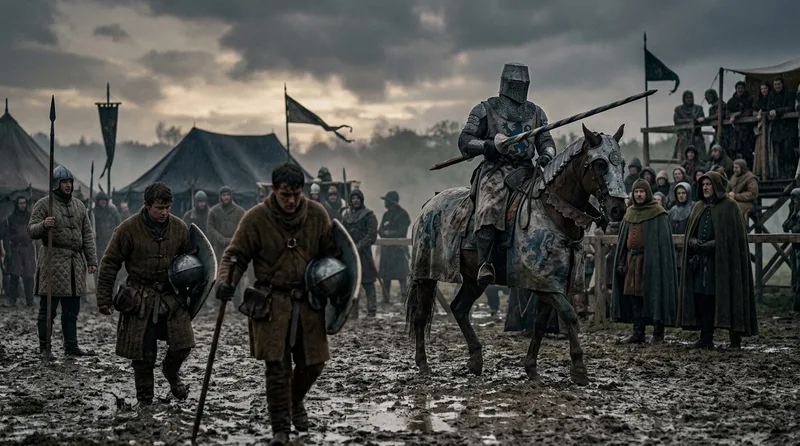
The Grand Tournament of Chauvency in the late 13th century featured elaborate rules prohibiting crossbows to preserve knightly combat traditions, with organizers declaring the weapon ‘unsuitable for noble sport.’ Tournament regulations across France, England, and Germany consistently banned crossbows from the mid-13th through the 15th centuries, insisting on lance, sword, and mace as appropriate chivalric weapons. Yet chronicler Jacques Bretel’s account of Chauvency reveals crossbow competitions occurred during the festival’s final three days, with knights openly participating despite official prohibitions. The Tournament Book of King René of Anjou, written in the mid-15th century, codified crossbow bans in elaborate detail across 42 illustrated pages while simultaneously depicting crossbow contests in marginalia drawings. German tournament societies issued membership requirements in the late 15th century explicitly excluding crossbow manufacturers and users from knightly orders, yet Emperor Maximilian I, himself a tournament enthusiast, maintained 400 crossbowmen in his personal guard. The contradiction revealed nobility’s deeper fear: crossbows threatened not just battlefield hierarchy but the entire cultural performance of knighthood. By the end of the 15th century, ceremonial tournaments maintained the fiction of crossbow prohibition while practical military training incorporated crossbow drills. The rules existed to preserve aristocratic fantasy, not to govern actual weapon use.
Source: britannica.com
7. Venice’s Arsenal: Industrial-Scale Defiance
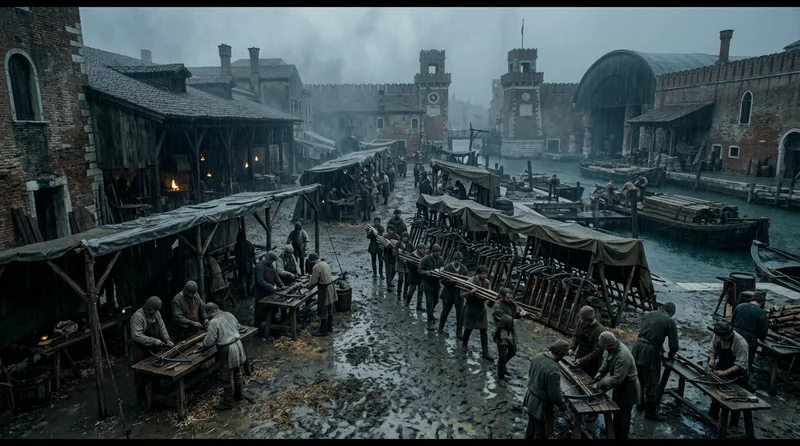
The Venetian Arsenal began mass-producing crossbows in the early 13th century, transforming weapon manufacturing from artisan craft to industrial process and completely ignoring papal condemnation. By the early 14th century, the Arsenal employed 300 specialized crossbow makers working in dedicated workshops that produced 50 crossbows daily during peacetime and 200 during military campaigns. Venice maintained stockpiles exceeding 20,000 crossbows by the mid-14th century, with standardized parts allowing field repairs — a revolutionary manufacturing approach centuries ahead of its time. When Pope John XXII issued renewed crossbow prohibitions in the early 14th century, the Venetian Senate formally responded that maritime defense required practical weapons regardless of ecclesiastical opinion. Arsenal records from the mid-14th century document producing 30,000 crossbow bolts monthly, requiring 12 tons of iron and 8 tons of wood. The operation’s scale made papal opposition irrelevant — Venice’s survival depended on naval superiority, and crossbows proved essential for ship-to-ship combat and galley defense. By the early 15th century, the Arsenal could equip an entire fleet of 100 galleys with crossbows within 48 hours. Venice’s defiance established a crucial precedent: when religious authority conflicted with state security, secular power would prevail.
Source: britannica.com
8. Richard the Lionheart’s Fatal Love Affair
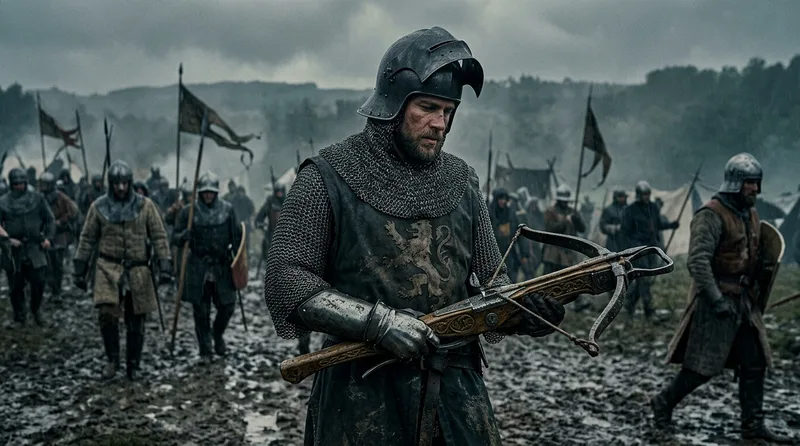
King Richard I of England openly embraced crossbows during the Third Crusade of 1189, deploying 1,000 crossbowmen at the Siege of Acre despite the weapon’s papal prohibition. Richard personally designed improved crossbow mechanisms and established royal workshops at Southampton and Portsmouth producing thousands of bolts annually in the 1190s. His enthusiasm proved both militarily successful and personally fatal. At the Siege of Chalus-Chabrol in 1199, a French crossbow bolt struck Richard in the shoulder — a wound that became gangrenous, killing England’s warrior king at age 41. The irony wasn’t lost on contemporaries: the monarch who championed the banned weapon died by the technology he promoted. Chronicles record Richard’s deathbed forgiveness of his killer, crossbowman Bertrand de Gourdon, whom Richard had previously hired as a mercenary. After Richard’s death, English military policy continued his crossbow advocacy. His brother King John maintained 400 royal crossbowmen in the early 13th century and paid premium wages of 7 pence daily to retain experienced operators. Richard’s reign definitively ended any pretense that papal bans constrained royal military decisions — every subsequent English monarch deployed crossbowmen extensively.
Source: britannica.com
9. Crécy’s Muddy Disaster That Changed Everything
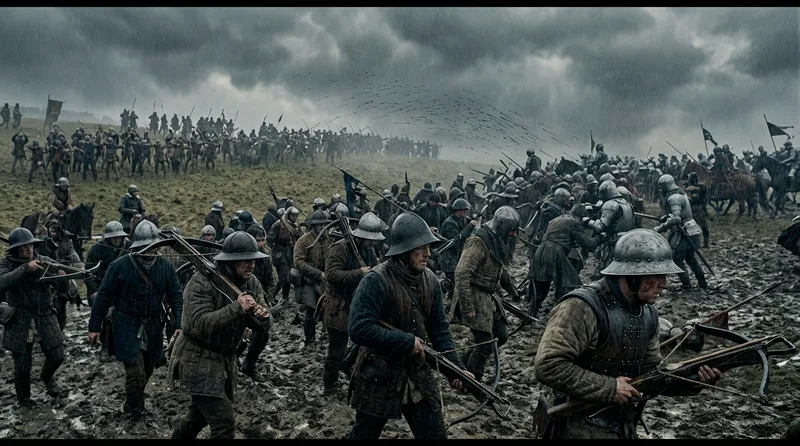
The Battle of Crécy in the mid-14th century featured 6,000 Genoese crossbowmen hired by Philip VI of France at enormous expense — 15,000 gold florins for three months’ service. These professionals represented the cream of European crossbow mercenaries, equipped with steel-armed crossbows capable of penetrating plate armor at 150 yards. Yet Crécy became history’s most famous crossbow failure. The Genoese arrived exhausted after a forced march, their bowstrings soaked by afternoon rain, facing 7,000 English longbowmen on elevated terrain. English archers fired 12 arrows per minute while crossbowmen managed 2 bolts, and the soaked crossbow strings lost 40% of their tension. Within 15 minutes, the crossbowmen broke and retreated, prompting Philip to order his knights to ride them down as cowards — French cavalry literally trampled their own crossbowmen. The battle killed 1,500 Genoese mercenaries and shattered crossbow prestige. Military theorists across Europe immediately began questioning crossbow dominance. While crossbows remained in use for siege warfare and naval combat, Crécy ended their supremacy in open-field battles. The failure wasn’t technological but tactical — yet it permanently damaged the weapon’s reputation among military planners.
Source: britannica.com
10. The Guild System’s Final Power Grab
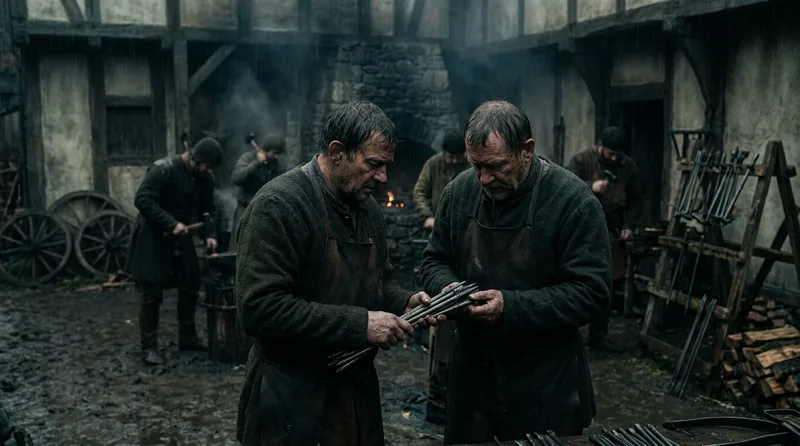
German and Italian craft guilds attempted final crossbow control through bolt production monopolies in the 15th century, after weapon bans had completely failed. The Nuremberg Armorers’ Guild established regulations in the mid-15th century requiring guild membership to manufacture crossbow bolts, with penalties of 50 gold florins for violations — enough to purchase a small house. Master craftsmen limited apprentice numbers to 2 per workshop and required 7-year training periods before certification. These restrictions aimed to control supply and maintain premium prices: guild-certified bolts cost 3 pfennigs each in the mid-15th century versus 1 pfennig for black-market versions. The system collapsed within two decades. Military demand during the Burgundian Wars of the late 15th century required 500,000 bolts annually, far exceeding guild production capacity. Cities began licensing non-guild manufacturers, and by the late 15th century, unregulated workshops in Bavaria and Austria produced 60% of European crossbow bolts. The guilds’ final attempt at control through manufacturing restrictions failed for the same reason papal bans had: military necessity trumped economic regulation. By the end of the 15th century, gunpowder weapons were rendering the entire debate obsolete. The crossbow survived in hunting and sport, but its military significance declined rapidly. The centuries-long effort to ban or control crossbows ended not through successful prohibition but through technological obsolescence.
Source: britannica.com
Did You Know?
Did You Know? The crossbow ban officially remained in Catholic canon law until the mid-20th century — six centuries after it stopped influencing any military decision. The weapon Pope Innocent II called ‘hateful to God’ killed more Christians in warfare than any other medieval technology precisely because the ban was universally ignored. Perhaps most ironic: the crossbow’s mechanical successor, the firearm, faced no comparable religious prohibition despite being exponentially more lethal.