
When Martin Luther nailed his 95 Theses to the church door in 1517, he sparked 130 years of religious warfare that killed millions. The Reformation Wars saw Catholics and Protestants devise brutal execution methods for heresy—turning theological disagreement into public spectacles of terror.
1. Burning at the Stake: The Standard Punishment for Heresy
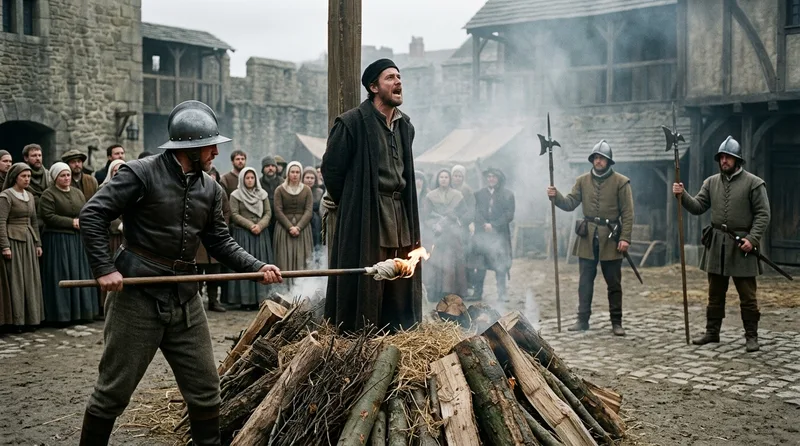
William Tyndale died screaming in flames on October 6, 1536, his crime being translating the Bible into English. Burning at the stake became the preferred execution method for heretics across Europe because religious authorities believed fire purified the soul before death. In Geneva alone, between 1542 and 1546, John Calvin’s consistory sent 58 people to the flames for theological crimes ranging from denying infant baptism to questioning predestination. The process was deliberately prolonged—executioners positioned victims upwind so smoke inhalation wouldn’t grant a quick death, and green wood was often used to extend suffering to 45 minutes or more. Michael Servetus, the Spanish theologian who questioned the Trinity, burned for over 30 minutes in Geneva on October 27, 1553, after Calvin personally approved his execution. The psychological terror was calculated: authorities forced entire communities to watch, creating what one Zurich magistrate called “a sermon written in smoke and screams.” Catholic authorities in Spain burned approximately 2,000 Protestants between 1520 and 1580, while Protestant regions like England under Mary I executed 283 religious dissenters by fire in just five years. The method’s popularity stemmed from biblical interpretation of heresy as spiritual pollution requiring cleansing flame, making it both punishment and theological statement that resonated with illiterate populations who understood fire’s symbolic power.
Source: britannica.com
2. The Breaking Wheel: Crushing Anabaptist Bones in Public Squares
Jakob Hutter felt each of his bones systematically shattered before Innsbruck crowds on February 25, 1536, strapped to a wooden wheel as the executioner worked methodically from ankles to shoulders. The breaking wheel—called das Rad in German territories—became the signature execution for Anabaptists because authorities deemed their rejection of infant baptism a crime against social order requiring spectacular punishment. The procedure followed precise protocol: the condemned was tied spreadeagled to a large wagon wheel elevated on a pole, then the executioner used an iron bar to break bones at prescribed intervals, typically 8 to 10 major strikes targeting joints. Witnesses recorded that victims often survived for days afterward, exposed to elements and birds. In 1528 alone, Austrian authorities broke 350 Anabaptist leaders on wheels across Tyrol, displaying their twisted bodies along main roads as warnings. The Catholic Archduke Ferdinand I specifically mandated wheel execution for Anabaptist preachers in his 1527 edict, prescribing it as more terrifying than beheading. The wheel’s effectiveness as deterrent proved questionable—Anabaptist communities grew despite the terror, with martyrologies circulating detailed accounts that paradoxically strengthened resolve. Some executioners developed variations, including braiding victims’ broken limbs through wheel spokes or applying the coup de grâce strike to the chest only after hours of suffering.
Source: britannica.com
3. Drowning in Sacks: The Dutch Method for Rebaptizers
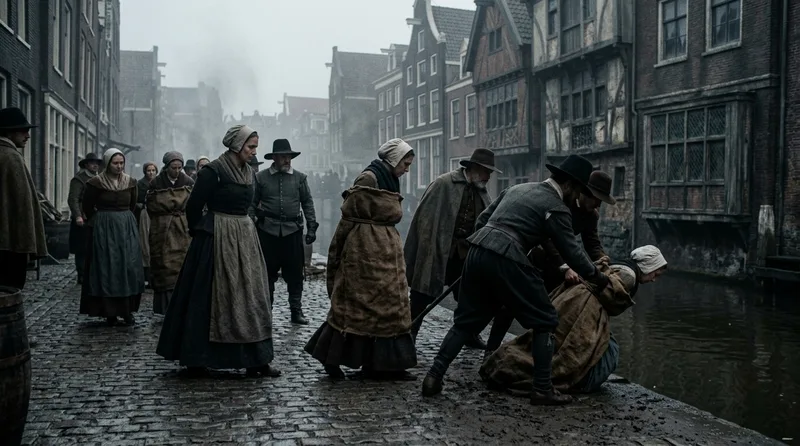
Dutch authorities bound Anabaptist women in weighted sacks and threw them into Amsterdam canals in gruesome irony—executing believers through forced “third baptism” in muddy water. Between 1531 and 1574, over 800 Anabaptists drowned in Netherlands waterways under this method, which magistrates justified as poetic punishment for those who insisted on adult rebaptism. The procedure involved sewing victims into burlap sacks with stones weighing 40 to 60 pounds, then dropping them from canal bridges during public market days when crowds gathered. Elizabeth Dirks died this way in Leeuwarden on March 27, 1549, after refusing to reveal other congregation members during interrogation. Authorities calculated the weight precisely—too light and victims might surface struggling, too heavy and death came too quickly to serve as spectacle. Witnesses described how sacks thrashed underwater for up to three minutes before stilling, the bubbles marking final breaths. The method gained popularity because it required no special equipment and converted everyday waterways into execution sites, embedding terror into urban geography. Some cities like Antwerp developed variations, including the “third baptism ceremony” where priests performed mock baptismal rites before drowning. Records from The Hague show 127 drowning executions between 1534 and 1566 alone, with one magistrate noting the method’s efficiency in processing multiple heretics during single public events without costly scaffold construction.
Source: britannica.com
4. Hanging and Quartering: Protestant Martyrs Disemboweled While Conscious
Edmund Campion’s executioner cut him down from the Tyburn gallows on December 1, 1581, while the Jesuit priest remained fully conscious—the worst part was yet to come. Hanging and quartering reserved its full horror for the quartering phase, where victims were disemboweled and dismembered before crowds numbering thousands in London. The method followed prescribed ritual: hang until nearly dead but not quite, revive, castrate, disembowel while showing the victim his own organs, behead, then hack the body into four quarters for display across the realm. Margaret Clitherow received modified treatment in York on March 25, 1586—as a woman, she was pressed to death instead, but male Catholic priests faced full quartering. Between 1535 and 1680, English authorities executed approximately 287 Catholics this way, while Catholic territories used similar methods on 189 Protestant preachers. The quartering served strategic purpose: distributing body parts to four different towns multiplied the warning across geography, with heads typically displayed on London Bridge where one German visitor counted 34 simultaneously in 1592. Executioners developed professional expertise, with records noting which practitioners could extract maximum suffering—one Tyburn executioner gained fame for keeping victims conscious through complete disembowelment. The process typically lasted 20 to 35 minutes from hanging to final dismemberment, with physicians sometimes attending to ensure victims remained aware as long as medically possible.
Source: britannica.com
5. Pressing with Stones: Crushing Those Who Refused to Plead
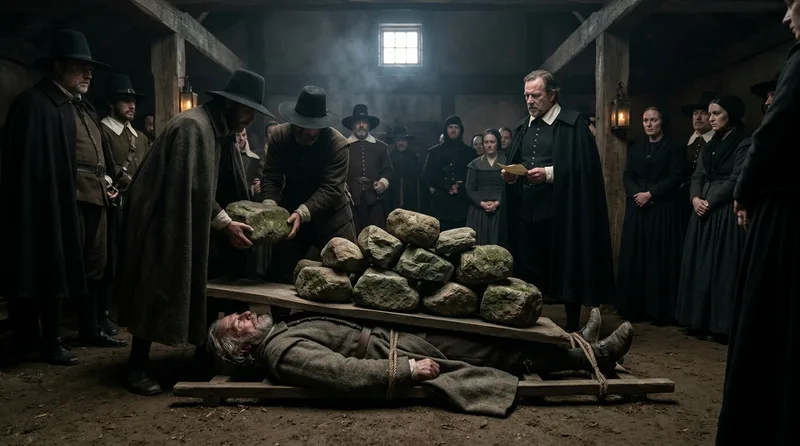
Giles Corey endured two days under increasing stone weight in Salem during September 1692, but the technique originated in European Reformation courts dealing with accused heretics who refused to enter pleas. Peine forte et dure—strong and hard punishment—involved placing the accused on their back, positioning a wooden board across their chest, then systematically adding stones until they either pleaded or died. The legal logic was circular: courts couldn’t try someone who wouldn’t plead, but they could compel plea through torture. In England, approximately 23 documented cases occurred between 1530 and 1650, many involving religious dissenters who refused to acknowledge court authority. The weight typically started at 50 pounds and increased by 25-pound increments every two hours, with some victims enduring over 400 pounds before death. Protestant martyr Anne Askew survived pressing in the Tower of London on June 28, 1546, though she was so broken that soldiers carried her to burning in a chair. The method’s psychological cruelty lay in its incremental nature—victims watched stones being added, knowing relief required only three words: “guilty” or “not guilty.” Records from Norwich show pressing sessions lasting up to 72 hours, with victims given minimal water and stale bread between stone additions. Some legal scholars argued pressing wasn’t technically execution since courts offered continuous escape through plea, making it the condemned’s choice—a theological justification that satisfied both Protestant and Catholic jurists who employed it against each other’s faithful.
Source: britannica.com
6. Tongue Boring: Piercing Blasphemers Before Burning Them
Before George Wishart burned in St. Andrews on March 1, 1546, Scottish authorities pierced his tongue with a red-hot iron, ensuring the Protestant preacher couldn’t speak final words to gathered crowds. Tongue boring became standard preliminary torture for condemned heretics whose preaching abilities threatened authorities even at execution—the goal was silencing dangerous theology literally. The procedure used either heated metal spikes or augurs that executioners drove completely through the tongue from top to bottom, often twisting before withdrawal to maximize tissue destruction. In Geneva, records from 1545 document 17 cases where Calvin’s consistory ordered tongue piercing before execution, specifically for those convicted of blasphemy against the Trinity or predestination doctrine. The Spanish Inquisition refined the technique, developing graduated severity: first offense brought tongue piercing with cold metal, second offense required heated iron, third offense meant tongue amputation followed by burning. One Madrid case from 1559 detailed how the condemned man’s tongue was nailed to a wooden block, then he was led to the stake with the board dangling from his mouth. The practice spread across Catholic and Protestant territories alike—both sides justified it through Leviticus 24:16 requiring death for blasphemy. Some theologians argued the piercing fulfilled dual purpose: physical punishment for the organ of sin and prevention of final heretical statements that might sway witnesses. Records from Antwerp show tongue boring in 43 of 67 heresy executions between 1550 and 1560, with executioners developing specialized tools including retractors to grip struggling tongues.
Source: britannica.com
7. Immurement: Walling Up Religious Dissidents to Starve in Darkness
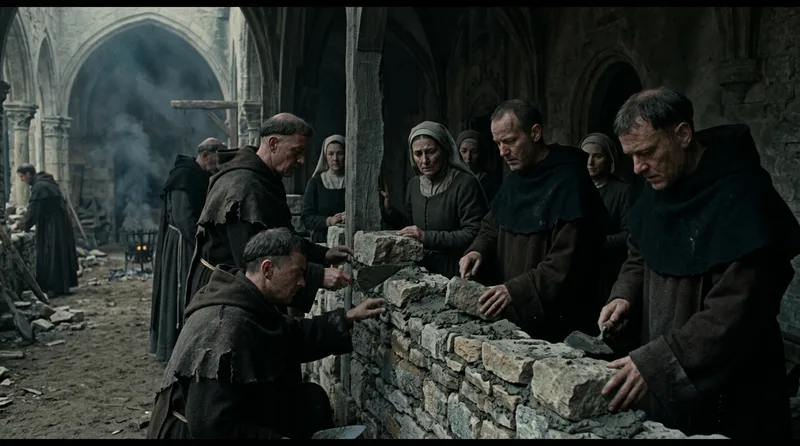
Dominican authorities in Toulouse bricked up four Huguenot women in convent walls on August 14, 1562, leaving only a small opening for passing bread and water—then gradually reduced rations until the opening was sealed completely. Immurement, or live burial within walls, represented the ultimate punishment for female heretics because it combined execution with symbolic burial in unconsecrated space, denying victims both life and Christian death. The practice targeted women specifically because contemporary theology held that female heretics corrupted through whispered influence requiring permanent silencing. Construction typically involved narrow vertical spaces between walls, barely wider than the victim’s body, where they remained standing or crouched until death from starvation, dehydration, or suffocation. Records from Bremen document 11 Anabaptist women immured between 1534 and 1548, with one surviving account describing how victims’ screams echoed through monastery walls for days before silence. The Catholic diocese of Würzburg immured at least 18 suspected Protestant sympathizers in cathedral walls between 1525 and 1555, later discovering skeletal remains during 1803 renovations. Some variations provided permanent but minimal opening, creating living tombs where victims survived months in darkness, fed just enough to prolong suffering. The method’s appeal to religious authorities lay in its permanent removal without public spectacle—victims simply disappeared into architecture, erased from both community and salvation. Immurement declined after 1580 as Protestant territories gained ground, though isolated cases continued in Spanish territories until 1614.
Source: britannica.com
8. Beheading: The ‘Merciful’ Execution Reserved for Noble Heretics
Thomas Cromwell’s head fell with a single stroke on Tower Hill on July 28, 1540, the executioner’s skill granting the Protestant reformer the quickest death available to condemned nobility. Beheading represented the aristocratic privilege even in religious executions—while commoners burned or quartered, nobles faced the sword or axe based on their rank. The distinction carried theological weight: quick death suggested residual respect for the soul despite doctrinal error, while prolonged execution implied deeper spiritual corruption. In Scotland, Patrick Hamilton died by beheading on February 29, 1528, his noble blood sparing him the flames prepared for common Protestant preachers. The method required professional expertise—executioners trained for years to achieve single-stroke decapitation, with records showing that botched executions requiring multiple strikes brought public outrage. Mary, Queen of Scots endured three axe strikes on February 8, 1587, the executioner’s incompetence becoming Protestant propaganda about Catholic brutality. Between 1530 and 1650, approximately 340 nobles died by beheading for religious crimes across Europe, compared to over 3,000 commoners burned or quartered for identical theological positions. The cost difference was substantial: hiring a skilled executioner for clean beheading cost 10 to 15 guilders, while burning required only firewood and a common hangman. Some Protestant territories eliminated the class distinction—Calvin’s Geneva used beheading for all heretics from 1555 onward, arguing that Reformation theology demanded equal treatment regardless of birth. This democratization of execution method itself became theological statement about spiritual equality.
Source: britannica.com
9. The Rack: Stretching Heretics Until Joints Separated
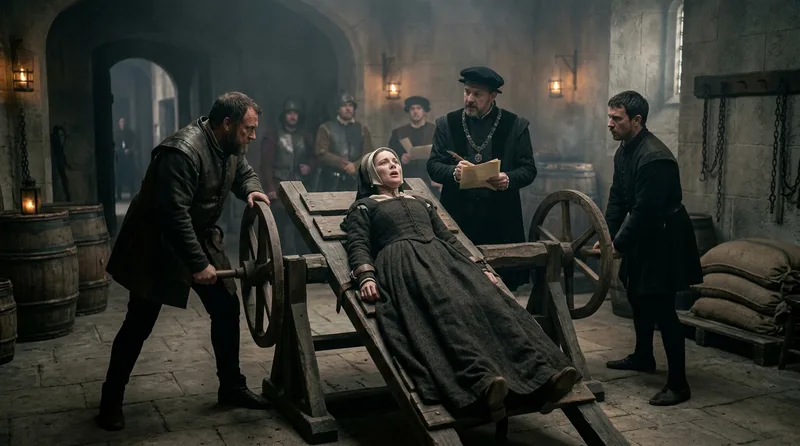
Anne Askew’s joints dislocated with audible pops as Tower of London interrogators turned the rack’s windlass on July 18, 1546, demanding she name other Protestant sympathizers at Henry VIII’s court. The rack—a rectangular wooden frame with rollers at both ends—became the Reformation era’s signature torture device because it extracted confessions while leaving victims alive for subsequent execution. The mechanism worked through opposite-direction rotation: ankles bound to one roller, wrists to the other, then incremental turning that stretched the body beyond natural limits. Operators typically applied tension in stages, pausing between turns to allow pain registration and question repetition. Records from the Spanish Inquisition show 412 documented racking sessions between 1540 and 1570, with average sessions lasting 45 minutes and involving 8 to 12 turns. Protestant authorities matched Catholic enthusiasm—the Duke of Norfolk personally supervised Anne Askew’s torture, turning the mechanism himself when professional torturers refused to continue. The rack’s effectiveness stemmed from its gradualism: victims watched their own bodies elongate, anticipating each increment of agony. Shoulder dislocation typically occurred after the fourth or fifth turn, hip joints failed around the eighth turn, and spinal damage became permanent after 10 turns. Most victims confessed before permanent injury, but authorities often continued to names and details, then executed them anyway—the torture served intimidation beyond immediate information. Geneva’s records document 67 racking sessions preceding executions between 1545 and 1560, with Calvin arguing that physical suffering proved divine judgment.
Source: britannica.com
10. Mass Hangings: Industrial-Scale Execution During the Thirty Years War
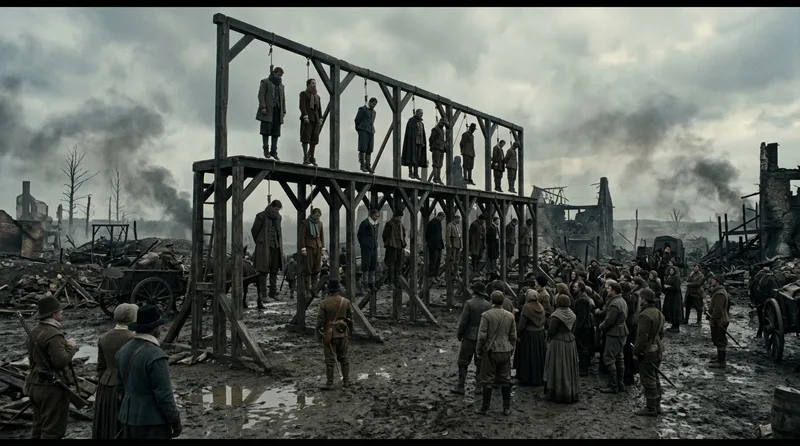
Jacques Callot’s 1633 engraving “The Hanging” depicted a single tree bearing 23 bodies, documenting the mass executions that became routine during the Thirty Years War when religious conflict merged with political violence. Military commanders developed efficient hanging procedures that could process dozens simultaneously, transforming execution from judicial ritual into battlefield logistics. At Magdeburg in May 1631, Catholic forces hanged approximately 300 Protestant civilians in three days using specially constructed multi-beam gallows that accommodated 12 victims per structure. The technique evolved from individual hanging’s careful procedure into assembly-line brutality: victims lined up, nooses prepared in advance, multiple executioners working simultaneously, bodies left hanging for weeks as warnings. Swedish forces matched this efficiency during their German campaigns—records from 1632 document Gustavus Adolphus’s army hanging 167 Catholic villagers in Bavaria over six hours using portable gallows carried between towns. The mass hanging’s psychological impact differed from individual executions: the sheer scale normalized death, transforming murder into landscape feature. By 1640, territories across German states reported permanent gallows positioned every 15 to 20 miles along main roads, constantly occupied with religious enemies. One Bavarian parish register from 1634 recorded 89 hangings in a single month, the priest noting he could no longer conduct individual burial rites. The Thirty Years War’s death toll reached approximately 8 million, with mass hangings accounting for roughly 340,000 religious-based civilian executions. These industrial-scale killings marked the Reformation Wars’ final phase, where theological dispute had devolved into mechanical slaughter emptied of its original religious justification.
Source: britannica.com
Did You Know?
Did You Know? The Reformation Wars’ execution methods were so brutal that they inadvertently created modern human rights concepts—the 1648 Peace of Westphalia emerged partly because European powers realized religious torture had become counterproductive, with martyrdom strengthening rather than destroying opposition movements. Ironically, the spectacular cruelty designed to enforce doctrinal conformity instead proved that theological uniformity was impossible to achieve through violence, fundamentally reshaping how Western civilization understood the relationship between state power and individual conscience.