
The guillotine has become shorthand for Revolutionary France’s brutality, yet nearly everything modern audiences believe about it contradicts the historical record. From Marie Antoinette’s final words to the speed of death itself, these ten myths reveal how pop culture rewrote the Terror’s darkest chapter.
1. The Guillotine Was Not a French Invention
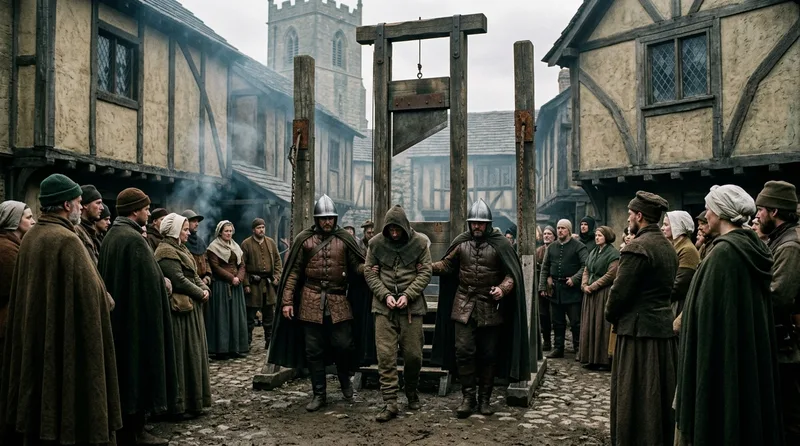
The Halifax Gibbet had been beheading criminals in Yorkshire, England since 1286—over 500 years before Joseph-Ignace Guillotin proposed his device to the National Assembly in 1789. This sliding-blade mechanism executed at least 53 people in Halifax alone before being discontinued in 1650. Meanwhile, the Italian Mannaia operated throughout Renaissance Italy, with documented uses in Genoa, Milan, and Naples dating back to the 1200s. Scotland employed the Maiden, a near-identical device that claimed 150 heads between 1564 and 1710, including the Earl of Argyll and the Regent Morton. Dr. Guillotin never claimed to invent the machine—he simply advocated for standardized, egalitarian execution across all social classes. The actual designer was Antoine Louis, secretary of the Academy of Surgery, who worked with German harpsichord maker Tobias Schmidt to build the prototype. The first blade fell on April 25, 1792, not during the Terror but during the constitutional monarchy, executing highwayman Nicolas Jacques Pelletier. Guillotin himself despised the machine bearing his name and petitioned unsuccessfully to have it changed. His family eventually altered their surname to escape the association with France’s most notorious execution device.
Source: britannica.com
2. Death By Guillotine Was Neither Instant Nor Painless
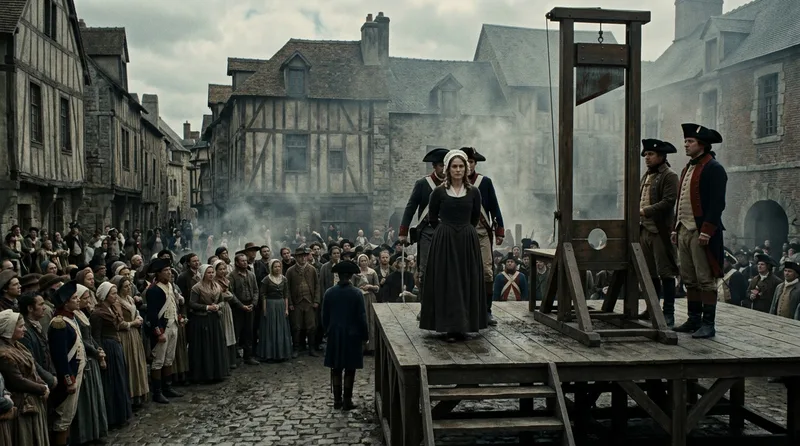
When Charlotte Corday was executed on July 17, 1793, the assistant executioner slapped her severed head, and witnesses reported her cheeks flushed with apparent indignation. This incident sparked decades of scientific debate about post-decapitation consciousness. German researchers in the early nineteenth century documented that severed animal heads responded to stimuli for up to 30 seconds after beheading. French physician Jean-Joseph Sue conducted experiments in 1794 concluding that electrical impulses continued in severed heads for several minutes. The human brain contains enough residual oxygen to sustain consciousness for approximately 13 to 20 seconds after decapitation, according to modern neurological studies based on guillotine data. Dr. Gabriel Beaurieux observed condemned prisoner Henri Languille in the early twentieth century, reporting that Languille’s eyes focused on his voice twice after execution, suggesting retained awareness. The blade itself traveled at 21 feet per second but required tremendous force to sever the spinal column and surrounding tissue. Dull blades—a frequent problem during the Terror’s peak in 1794 when 2,400 people were executed in six weeks—sometimes necessitated multiple drops. The Revolutionary government received 17 complaints from executioners about blade quality between March and July 1794. Even properly maintained blades caused the severed head to experience the sensation of falling, suffocation, and the visual perception of one’s own body below.
Source: smithsonianmag.com
3. Marie Antoinette Never Said ‘Let Them Eat Cake’
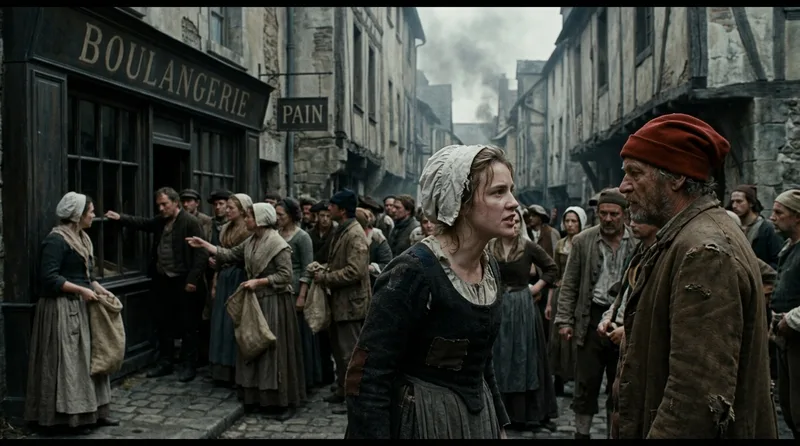
The phrase ‘Qu’ils mangent de la brioche’ appears in Jean-Jacques Rousseau’s ‘Confessions,’ written around 1765—when Marie Antoinette was nine years old and still living in Austria. Rousseau attributed the quote to ‘a great princess,’ never specifying who, and the anecdote described events from approximately 1740, a decade before Marie Antoinette’s birth in 1755. The story gained traction during Revolutionary propaganda campaigns that deliberately fabricated scandalous quotes to justify violence against the monarchy. Pamphlets printed in 1789 retroactively attributed the phrase to Marie Antoinette despite zero contemporary evidence. When she actually faced bread shortages in October 1789, palace records show she ordered the royal kitchens to provide soup and bread to hungry crowds at Versailles. Her actual final words on October 16, 1793, were ‘Pardonnez-moi, monsieur’ after accidentally stepping on executioner Charles-Henri Sanson’s foot while mounting the scaffold. Contemporary witnesses, including Sanson himself, recorded her composure and dignity, not defiant arrogance. The ‘cake’ myth served Revolutionary purposes by portraying her as callously indifferent to suffering, justifying her execution as righteous class vengeance. This false narrative proved so powerful that it persists in textbooks more than two centuries later, demonstrating how propaganda outlasts the regimes that create it.
Source: britannica.com
4. Commoners, Not Aristocrats, Filled the Guillotine’s Baskets

Of the approximately 16,594 official death sentences during the Terror between September 1793 and July 1794, only 8 percent were nobles and 6 percent were clergy—the remaining 85 percent were commoners from the Third Estate. In Paris alone, 2,639 executions included just 285 aristocrats, while 920 were workers, artisans, and peasants. The Revolutionary Tribunal’s records show that ‘crimes’ such as hoarding grain, spreading rumors, or showing insufficient revolutionary enthusiasm sent thousands of ordinary citizens to the scaffold. In the Vendée region, where counter-revolutionary activity was strongest, over 117,000 people died—mostly peasant farmers accused of royalist sympathies. Marie-Josephte Corriveau, a laundress, was executed for theft. Jacques Roux, a radical priest known as the ‘Red Priest,’ was imprisoned and died before his scheduled execution for opposing Robespierre. The Revolutionary government executed 1,515 people in Lyon, 1,880 in the Vendée, and 1,090 in Paris during June and July 1794 alone—the overwhelming majority were shopkeepers, laborers, and farmers. The myth of aristocratic victims persists because names like Marie Antoinette, King Louis XVI, and Madame du Barry generate historical interest, while the thousands of anonymous commoners remain forgotten. Class warfare devoured its own children with systematic efficiency that contradicts the romantic image of revolutionary justice.
Source: history.com
5. The Sanson Executioner Dynasty Was Wealthy and Respected
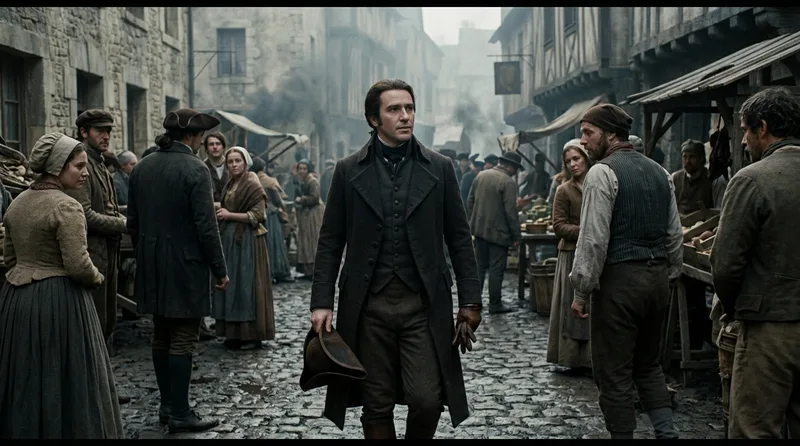
Charles-Henri Sanson, who executed Louis XVI on January 21, 1793, earned 24,000 livres annually—equivalent to a senior magistrate’s salary and roughly 48 times the average Parisian worker’s income. The Sanson family held the office of ‘Monsieur de Paris’ for seven generations spanning 174 years, from 1688 to 1847, accumulating considerable wealth and property. They maintained an elegant townhouse, employed servants, and educated their children in prestigious schools. Charles-Henri owned a private art collection and corresponded with Enlightenment philosophers. Contrary to popular belief, executioners were not forbidden from entering churches—Charles-Henri attended Mass regularly at Saint-Laurent parish. The Sanson family received payments per execution plus allowances for blade maintenance, assistant wages, and scaffold construction. During the Terror’s peak in 1794, these fees generated enormous income, with Charles-Henri processing up to 300 executions monthly. His son Henri inherited the position in 1795 and continued executing until 1840, maintaining the family’s social status. The Sansons dined with lawyers, doctors, and minor nobility, though they did face some social restrictions—guild regulations prevented intermarriage with certain professions. Far from outcasts, they were essential state functionaries whose expertise was valued, compensated, and even grudgingly respected within Revolutionary society’s complex hierarchy.
Source: smithsonianmag.com
6. The Terror’s Death Toll Was Vastly Exaggerated
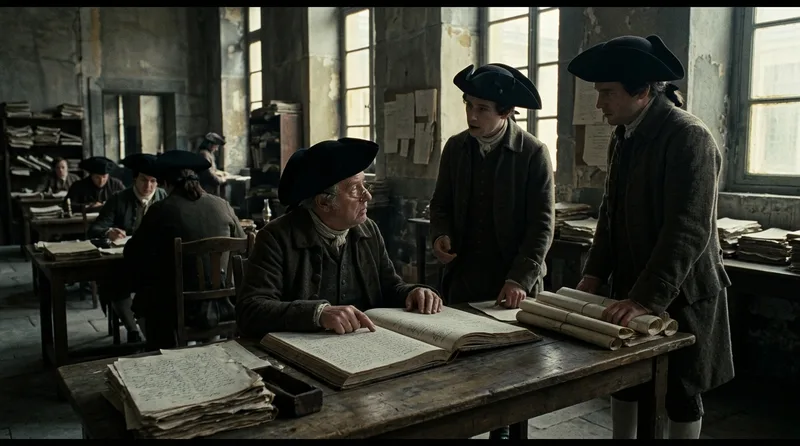
Official Revolutionary Tribunal records document approximately 16,594 legal death sentences between September 1793 and July 1794—not the hundreds of thousands claimed in Victorian histories. In Paris specifically, 2,639 people were guillotined during the entire Revolutionary period. Donald Greer’s comprehensive early twentieth-century study ‘The Incidence of the Terror’ analyzed departmental archives and confirmed that legal executions totaled around 17,000 nationwide. However, deaths from revolutionary violence extended beyond the guillotine: approximately 23,000 died in prison from disease and neglect, 25,000 were executed without trial during the Vendée uprising, and another 18,000 died in mass drownings at Nantes organized by Jean-Baptiste Carrier. The total mortality from revolutionary violence reached approximately 85,000—still far below the 300,000 to 500,000 figures popularized by Restoration-era historians seeking to demonize the Republic. The myth inflation served monarchist propaganda after 1815, when returning Bourbons needed to justify their restoration. British newspapers in 1794 reported 4,000 daily executions—a mathematical impossibility given guillotine mechanics and documented executioner schedules. Even Robespierre’s notorious June-July 1794 period, when the Terror peaked, averaged 80 executions daily in Paris, not the thousands claimed by contemporary British press. Modern scholarship has systematically debunked these inflated numbers, yet the myth of rivers of blood persists in popular imagination.
Source: britannica.com
7. Robespierre Did Not Personally Order Most Deaths

Maximilien Robespierre served on the twelve-member Committee of Public Safety, which made collective decisions—he wielded one vote among equals, not dictatorial power. Between July 1793 and July 1794, the Committee issued approximately 590 arrest warrants bearing Robespierre’s signature, but also signatures from Carnot, Saint-Just, Couthon, and other members. Provincial representatives-on-mission like Joseph Fouché and Jean-Baptiste Carrier operated independently, often exceeding Paris directives. Fouché executed 1,905 people in Lyon during November-December 1793 using firing squads and cannon fire—methods Robespierre later condemned as barbaric. Carrier drowned approximately 4,000 prisoners in the Loire River at Nantes without Committee authorization. The Revolutionary Tribunal, reorganized by Georges Couthon’s law of 22 Prairial on June 10, 1794, accelerated executions, but this legislation passed with Committee consensus, not Robespierre’s sole initiative. Jacques Nicolas Billaud-Varenne and Jean-Marie Collot d’Herbois actually advocated for harsher measures than Robespierre, who opposed dechristianization campaigns and questioned the necessity of mass executions by early 1794. Robespierre’s speeches from April-June 1794 called for moderating the Terror, contributing to his enemies’ decision to overthrow him on 9 Thermidor. The centralization myth serves historical narratives requiring a single villain, but Revolutionary violence emerged from decentralized power structures and competing radical factions.
Source: britannica.com
8. The Guillotine Failed Frequently and Gruesomely
On January 3, 1793, the blade failed to completely sever the neck of convicted counterfeiter Louis-Michel Lepeletier—executioners required three attempts before finally separating his head. Blade maintenance proved inadequate during the Terror’s peak when Charles-Henri Sanson processed 300 executions monthly, causing the 88-pound steel blade to dull rapidly. On May 8, 1794, the mechanism jammed mid-execution, trapping a victim’s neck in the lunette for eleven minutes while mechanics repaired the release mechanism. The blade’s sharpening required professional smiths, but Revolutionary government payments lagged months behind, forcing Sanson to cover maintenance costs personally. Documents from June 1794 show Sanson petitioning the Committee of Public Safety for 6,000 livres to repair the machine, warning that continued use risked catastrophic failures. The wooden frame splintered from constant use, requiring complete replacement every six months at considerable expense. Victims’ neck thickness varied dramatically—the 15-inch blade drop proved insufficient for particularly muscular or obese prisoners, necessitating blade re-elevation and second drops. Eyewitnesses recorded at least twelve instances between 1792 and 1795 where multiple blade drops were required, contradicting claims of humane instantaneous death. The Revolutionary government promoted the guillotine’s efficiency for propaganda purposes while executioners privately complained about mechanical unreliability that made their grim work even more horrifying.
Source: history.com
9. The Bloodthirsty Tricoteuses Were Mostly Fiction
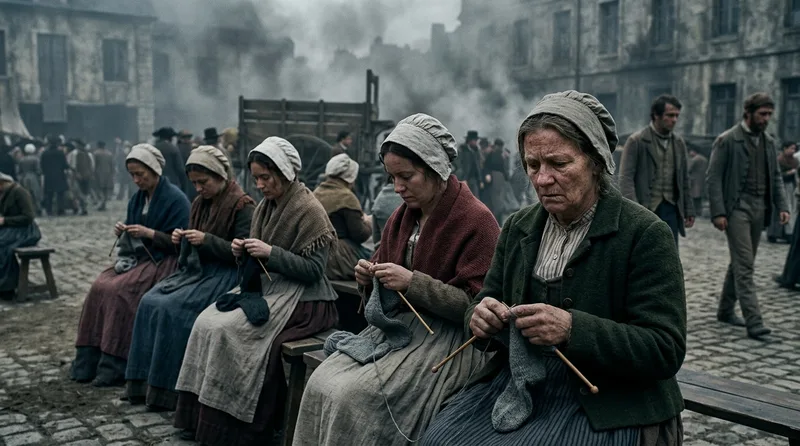
The iconic image of knitting women gleefully watching executions originated from Charles Dickens’ ‘A Tale of Two Cities,’ published in the nineteenth century—more than half a century after the Terror ended. Dickens’ character Madame Defarge and her knitting companions had no direct historical counterparts. Contemporary police reports from 1793-1794 describe execution crowds as predominantly male, with women comprising approximately 20-30 percent of spectators. The Society of Revolutionary Republican Women, founded by Pauline Léon and Claire Lacombe in May 1793, advocated political participation but never organized guillotine attendance as entertainment. Admission to Revolutionary Tribunal trials was regulated by ticket after September 1793, limiting public access to approximately 600 spectators. The Place de la Révolution (formerly Place Louis XV, now Place de la Concorde) accommodated crowds of 2,000-3,000 during major executions like Louis XVI’s death on January 21, 1793, but typical daily executions drew fewer than 500 observers. Prostitutes, pickpockets, and vendors frequented execution sites for business opportunities, not bloodlust—revolutionary authorities issued 47 ordinances between 1793 and 1795 attempting to regulate commercial activity around scaffolds. Contemporary accounts describe spectator reactions ranging from solemn silence to active sympathy for victims. The tricoteuse myth served later anti-revolutionary narratives by depicting female political engagement as unnatural bloodthirstiness, conveniently ignoring actual women’s complex roles in Revolutionary politics.
Source: smithsonianmag.com
10. France Used the Guillotine Until the Late Twentieth Century
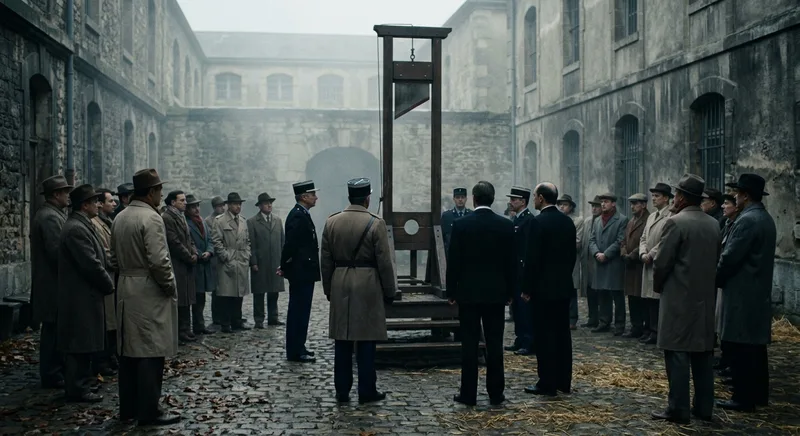
Hamida Djandoubi became the last person guillotined in Western Europe in the late twentieth century for the torture and murder of his former girlfriend. France had executed 65 people since World War II ended, all by guillotine, including Nazi collaborators, murderers, and the Algerian National Liberation Front members during the 1950s. Marcel Chevalier and Claude Buffet faced the blade together in the early seventies for killing a nurse and guard during a prison break attempt. The machine remained France’s sole legal execution method until abolition in 1981 under President François Mitterrand. Between Napoleon’s defeat in 1815 and abolition, France executed approximately 12,870 people by guillotine—far more than during the Revolutionary period. The devices themselves remained in service across French territories, with separate machines maintained in Marseille, Lyon, Paris, and Algiers. André Obrecht served as France’s last executioner through the mid-seventies, maintaining the machine in a warehouse between uses. The West German government abolished the guillotine in 1949, making France the last Western nation to employ the device. French Caribbean colonies used the guillotine until the mid-sixties, when an execution sparked international condemnation. The guillotine’s 185-year service life demonstrates how Revolutionary innovations became normalized state mechanisms, outlasting the ideology that created them by nearly two centuries.
Source: britannica.com
Did You Know?
Did You Know? The guillotine’s last victim was executed in the late twentieth century—Revolutionary France’s signature execution device operated into an era of space shuttles and personal computers. Even stranger, the Sanson executioner dynasty earned more annually than most doctors while maintaining respectable social standing, completely contradicting the outcast image. Perhaps most ironic: Dr. Guillotin, who advocated for the device as humane reform, never witnessed an execution and died naturally in 1814, his name forever linked to a machine he grew to despise.