
As the Black Death swept through Europe in 1347, killing millions, desperate believers formed processions of self-flagellation. These penitents marched naked to the waist through villages, whipping their backs bloody with spiked scourges, convinced their suffering would end God’s plague punishment.
1. The German Brotherhood of the Cross Terrorized Towns in 1349

In June 1349, massive processions of German flagellants descended upon Strasbourg, Cologne, and Frankfurt, forming what they called the Brotherhood of the Cross. Led by lay masters who claimed divine visions, groups of 200 to 300 men traveled in organized bands, performing ritualized scourging ceremonies twice daily for exactly 33 and a half days—representing Christ’s years on Earth. Each member wielded a leather scourge embedded with iron spikes that tore flesh with every blow. The movement originated in the Rhineland regions devastated by plague, where entire villages had been depopulated within weeks. These flagellants rejected Church authority, claiming their blood sacrifice was more powerful than priestly sacraments. They sang hymns while striking themselves 300 times per session, creating spectacles that drew thousands of onlookers. Archbishop Otto of Magdeburg reported that the Brotherhood recruited over 5,000 members across Germanic territories within three months. Their violence extended beyond self-harm—flagellant mobs blamed Jews for poisoning wells, triggering massacres in Mainz and Worms that killed over 3,000 people. The movement’s anti-clerical theology threatened papal authority, prompting Pope Clement VI to condemn them in October 1349. Despite Church opposition, the Brotherhood continued operating underground until military force disbanded them in 1350.
Source: britannica.com
2. Italy’s Bianchi Movement of 1399 Drew 15,000 White-Robed Penitents
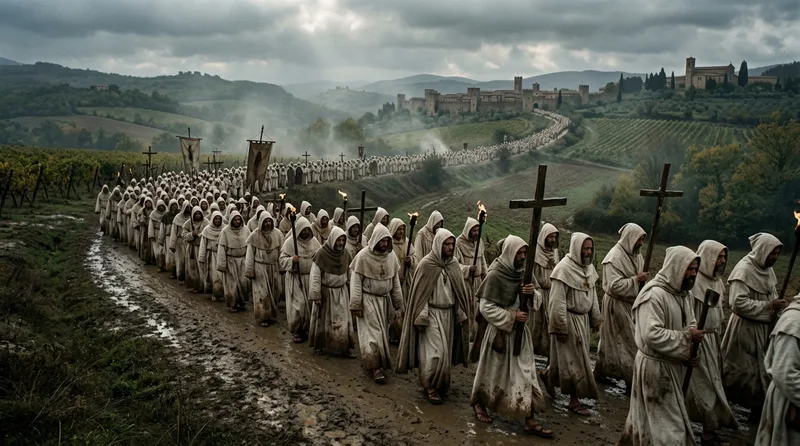
On September 22, 1399, a peasant from Piedmont named Giovanni claimed the Virgin Mary commanded him to lead a penitential movement to prevent apocalyptic divine punishment. Within weeks, the Bianchi—meaning “Whites” for their distinctive white robes—numbered 15,000 followers marching through northern Italian cities. Unlike earlier violent flagellant movements, the Bianchi emphasized peaceful procession, singing Marian hymns and carrying olive branches as symbols of mercy. They processed through Milan, Genoa, and Florence, where chronicler Goro Dati recorded processions lasting six hours with participants ranging from nobles to laborers. Each member committed to nine days of penitential pilgrimage, walking barefoot between churches while reciting Ave Marias. The movement emerged during heightened anxiety about renewed plague outbreaks and Turkish military advances threatening Christendom. Pope Boniface IX initially tolerated the Bianchi, recognizing their devotion to orthodox Catholic imagery, unlike heretical German flagellants. The processions attracted wealthy patrons who funded elaborate displays with silk banners depicting the Virgin Mary. By December 1399, the movement had spread to southern France and reached an estimated 100,000 participants. However, Church authorities grew suspicious when some Bianchi groups began prophesying imminent judgment. The movement dissolved peacefully by early 1400, leaving a legacy that influenced later Italian confraternity traditions.
Source: britannica.com
3. Bohemian Heretics Combined Flagellation with Hussite Theology in 1414
In Prague during 1414, radical followers of Jan Hus merged flagellant practices with reformist theology, creating a dangerous hybrid movement that challenged both Church and state authority. These Bohemian flagellants rejected papal supremacy, believing direct blood penance replaced the need for priestly confession and communion. Led by a priest named Matthias of Glogau, approximately 400 adherents gathered at Prague Castle square, publicly scourging themselves while denouncing clerical corruption and demanding vernacular scripture. Matthias claimed flagellation purified souls more effectively than sacraments administered by sinful priests. King Wenceslaus IV, already struggling with Hussite unrest, ordered the arrest of flagellant leaders in August 1414. Inquisitors discovered the movement possessed prohibited texts combining traditional flagellant hymns with Hussite critiques of transubstantiation. The combination of physical extremism and theological heresy alarmed Catholic authorities preparing for the Council of Constance. Archbishop Conrad of Prague executed three flagellant leaders in September 1414, burning them alongside their ritual scourges and manuscripts. Surviving members fled to rural Bohemia, where they merged with Taborite radical factions during the Hussite Wars beginning in 1419. The movement’s legacy influenced later Bohemian Brethren practices, though they abandoned flagellation while retaining reformist theology that emphasized direct divine relationship over institutional mediation.
Source: britannica.com
4. Hungarian Blood Cults Practiced Extreme Mortification During 1360 Plague Resurgence
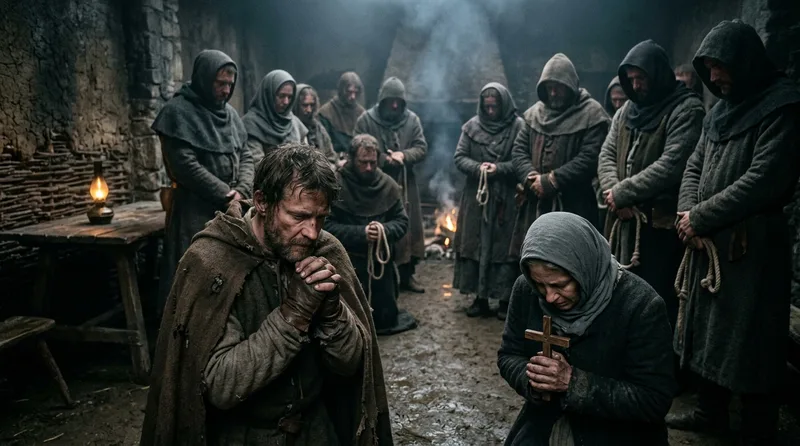
When plague returned to the Kingdom of Hungary in 1360, killing an estimated 20,000 residents in Buda alone, desperate peasants formed underground mortification cults that exceeded even German flagellant brutality. Dominican friar Stephen of Szeged documented these groups in his chronicle, describing rituals where members cut crosses into their flesh with knives before applying salt to increase suffering. These Hungarian penitents believed that matching Christ’s crucifixion wounds would invoke miraculous plague immunity. One cult near Esztergom numbered 80 members who gathered in forest clearings at midnight, scourging themselves until unconscious while invoking Saint Sebastian and Saint Roch as plague intercessors. Unlike organized flagellant movements, Hungarian cults operated in extreme secrecy, fearing both royal authorities and Church inquisitors. King Louis I of Hungary issued an edict in 1361 condemning “diabolical blood practices” and authorizing military suppression. Royal soldiers discovered cult sites containing crude altars adorned with bloodied scourges and primitive icons. Medical authorities noted that rather than preventing plague, flagellant wounds created infection risks that worsened mortality rates. The Hungarian Church established alternative plague devotions, promoting prayer to Saint Roch and constructing 14 new churches dedicated to plague saints between 1361 and 1365. These orthodox practices gradually displaced blood cults, though isolated mortification groups persisted in rural Transylvania until the early 1400s.
Source: britannica.com
5. King Philip VI Banned French Flagellants in October 1349
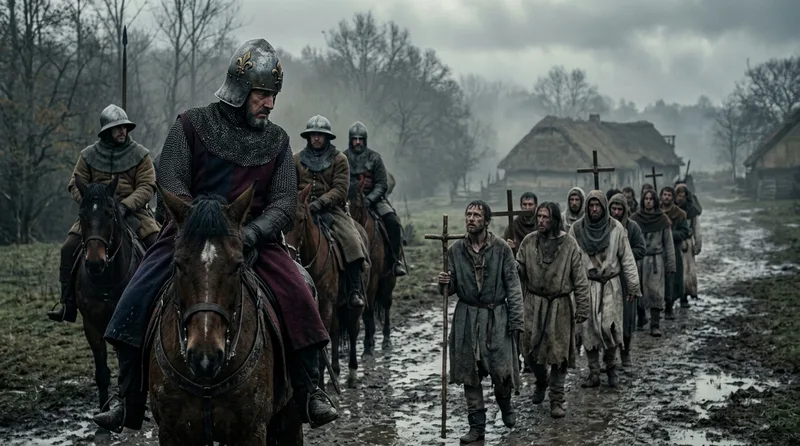
On October 20, 1349, King Philip VI of France issued a royal decree prohibiting flagellant processions throughout his kingdom, making France the first European realm to legally ban the movement. The edict came after German flagellant bands crossed into Burgundy and Champagne, performing their brutal rituals in Dijon, Reims, and Troyes before audiences that included French nobility. Philip’s advisors warned that flagellant theology—which denied the necessity of Church sacraments—threatened both religious and political stability in a kingdom already devastated by plague and recent military defeats to England. The French chronicler Jean de Venette recorded that Parisian crowds initially welcomed flagellants as holy men, with over 2,000 spectators gathering at Notre-Dame to witness their scourging ceremonies in September 1349. However, violence erupted when flagellants attacked a Jewish quarter in Verdun, killing 47 people they accused of spreading plague through well-poisoning. Philip ordered the provost of Paris to arrest any flagellants entering the city, sentencing leaders to imprisonment and followers to public whipping—ironically using corporal punishment to suppress the penitential movement. The papal legate in Avignon, Cardinal Pierre des Pres, supported Philip’s ban, declaring flagellant practices contrary to orthodox penance theology. French bishops reinforced the prohibition by threatening excommunication for anyone joining flagellant groups. The swift royal action prevented the movement from establishing permanent presence in France, unlike in Germanic territories where suppression took years.
Source: britannica.com
6. Low Countries Brotherhoods Created Regulated Flagellant Confraternities in 1370
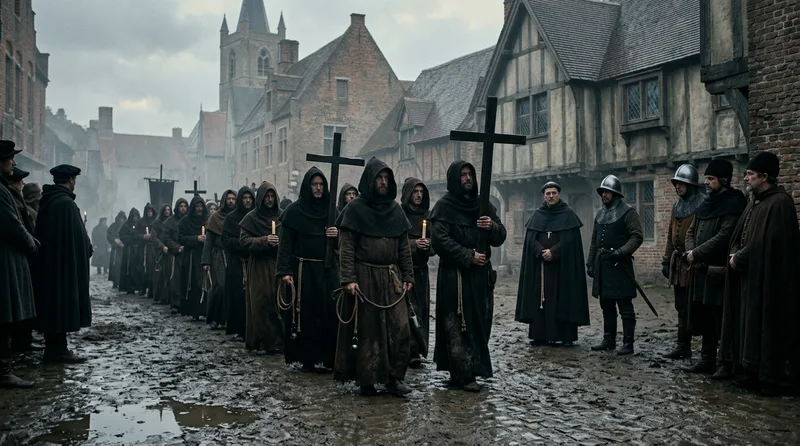
In Bruges during 1370, civic authorities and Church officials collaborated to transform dangerous flagellant practices into controlled confraternities that operated under strict ecclesiastical oversight. These Low Countries brotherhoods, called “Kruisbroeders” or Cross Brothers, numbered approximately 300 members organized into guilds that combined self-mortification with charitable works. Unlike earlier heretical movements, Kruisbroeders submitted to priestly authority, receiving confession before flagellation sessions and limiting scourging to 40 lashes—avoiding the excessive violence that characterized German groups. The Bruges confraternity met weekly in the Church of Saint Donatian, where a supervising priest ensured rituals remained orthodox. Members paid annual dues of 12 groats, funding hospitals for plague victims and maintaining 8 almshouses for widows. Similar brotherhoods emerged in Ghent, Antwerp, and Amsterdam between 1371 and 1375, creating a network of regulated penitential groups. The Bishop of Utrecht issued guidelines in 1373 requiring flagellant confraternities to maintain written rules, elect annual officers, and submit to episcopal inspection. These organizations attracted prosperous merchants and craftsmen seeking spiritual merit while maintaining social respectability. Confraternity membership peaked at over 1,000 across the Low Countries by 1380. The regulated model successfully channeled penitential impulses into controlled religious expression, preventing the violence and heresy associated with earlier movements while preserving modified flagellant practices within orthodox Catholic framework that persisted until the Protestant Reformation.
Source: britannica.com
7. Spanish Disciplinantes Established Holy Week Flagellation Tradition by 1340
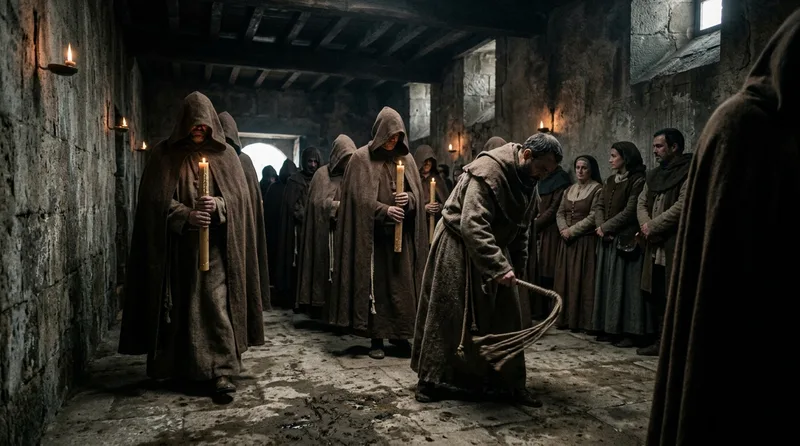
Before plague reached the Iberian Peninsula in 1348, Spanish religious confraternities had already developed distinctive disciplinante practices that would survive for centuries. The Brotherhood of Vera Cruz in Seville began organizing Holy Week flagellant processions in 1340, creating elaborate public rituals distinct from northern European movements. Spanish disciplinantes emphasized Passion devotion, timing their scourging to coincide with Christ’s crucifixion commemoration rather than plague prevention. During Holy Week 1350, over 500 penitents processed through Seville’s streets, bare-chested and hooded, striking their backs with disciplinas—multi-tailed scourges—while carrying wooden crosses. Unlike chaotic northern movements, Spanish confraternities maintained strict hierarchical organization under noble patronage and episcopal approval. King Alfonso XI had granted official recognition to Vera Cruz in 1342, establishing legal framework that protected regulated flagellant devotion. The tradition incorporated Islamic and Jewish penitential influences from Spain’s multicultural society, creating hybrid practices unique to Iberia. Confraternities in Toledo, Valladolid, and Zaragoza established permanent chapels between 1350 and 1370, institutionalizing disciplinante traditions. Spanish Inquisition records from 1400 document over 30 authorized flagellant brotherhoods operating across Castile and Aragon. These organizations required three-year apprenticeships before permitting public scourging, ensuring controlled practice. The Spanish model influenced New World colonization, with disciplinante confraternities established in Mexico and Peru during the 1500s, making Iberian flagellant tradition the longest-surviving medieval penitential movement.
Source: britannica.com
8. Archbishop Islip Criminalized English Flagellants in 1349 Parliamentary Statute

When German flagellants attempted to cross the English Channel in September 1349, Archbishop Simon Islip of Canterbury convinced King Edward III to preemptively ban the movement through parliamentary legislation. The Statute Against Flagellants, passed on October 12, 1349, made public self-scourging a criminal offense punishable by imprisonment and confiscation of property. England’s swift legal response reflected both theological concerns and practical fears about social disruption during plague crisis that killed approximately 40 percent of the population. Archbishop Islip issued a pastoral letter to all English bishops warning that flagellant theology denied the efficacy of Church sacraments, particularly penance and Eucharist, making the movement fundamentally heretical. Port authorities at Dover and Southampton received orders to arrest any flagellants attempting entry, with records showing 23 German penitents detained and deported in November 1349. The English Church promoted alternative plague devotions, establishing 156 new chantries between 1349 and 1352 where priests offered orthodox masses for plague victims’ souls. Parliamentary records indicate only three documented cases of English citizens attempting flagellant practices, all in Yorkshire villages, with perpetrators receiving public flogging as punishment—an ironic penalty for would-be self-flagellants. The legislation effectively prevented the movement from gaining foothold in England, demonstrating how coordinated Church-state action could suppress religious movements that threatened institutional authority during crisis periods.
Source: britannica.com
9. Polish Flagellants Incited Massacres Killing 3,000 Jews in Krakow Region During 1349
In August 1349, flagellant bands from Silesia entered Polish territories, bringing both their penitential practices and virulent antisemitism that would devastate Jewish communities. These groups convinced Christian populations that Jews had caused plague through well-poisoning conspiracies, despite King Casimir III’s protection of Jewish subjects. The flagellant-incited violence began in Wroclaw on August 15, 1349, when a procession of 200 penitents attacked the Jewish quarter, killing 189 residents. The violence spread rapidly across Polish lands, reaching Krakow by September, where mobs destroyed the Jewish district and murdered over 800 people. Polish chronicler Jan Dlugosz recorded that flagellants performed scourging ceremonies before synagogues, then led Christian crowds in attacks while claiming divine sanction for eliminating supposed plague-causers. Between August and December 1349, an estimated 3,000 Polish Jews died in flagellant-related pogroms across 14 cities. King Casimir attempted military intervention, executing 12 flagellant leaders in Krakow, but royal authority was weakened by plague deaths among nobility and soldiers. The massacres had devastating economic consequences, as Jewish merchants and moneylenders had played crucial roles in Polish commerce. Surviving Jewish communities fled eastward into Lithuania, which offered sanctuary. Archbishop Jaroslaw of Gniezno condemned both flagellants and anti-Jewish violence in a 1350 pastoral letter, but Polish flagellant activity continued sporadically until Papal legates suppressed the movement in 1352 through threat of interdict.
Source: britannica.com
10. Pope Clement VI’s 1349 Bull Declared Flagellant Theology Heretical and Satanic

On October 20, 1349, Pope Clement VI issued the papal bull “Inter sollicitudines” from his palace in Avignon, condemning flagellant movements as heretical and inspired by demonic forces. The document represented the Church’s most comprehensive theological response to the movement that threatened ecclesiastical authority across Europe. Clement declared that flagellants committed five fundamental heresies: claiming their blood sacrifice superseded Christ’s atonement, denying the necessity of priestly confession, rejecting papal authority, predicting apocalyptic dates, and encouraging violence against Jews. The bull ordered all bishops to suppress flagellant groups through excommunication, military force if necessary, and burning of flagellant writings. Clement specifically condemned the flagellant hymn “Nun treiben wir den Tod hinaus” (Now We Drive Death Out) as blasphemous for suggesting human suffering could coerce divine mercy. The papal condemnation drew on theological expertise from University of Paris scholars, including 12 doctors of theology who advised the Curia. Clement’s bull emphasized that authentic penance required humility and priestly mediation, not spectacular public displays that promoted spiritual pride. The document authorized inquisitorial proceedings against flagellant leaders, resulting in over 40 executions across Italy, France, and Germany between 1350 and 1352. Despite papal condemnation, some flagellant practices persisted in modified forms within regulated Spanish and Italian confraternities that submitted to Church oversight, demonstrating limits of papal authority even during efforts at comprehensive suppression.
Source: britannica.com
Did You Know?
Did You Know? The flagellant movement’s scourges—leather whips embedded with iron spikes—are preserved in 15 European museums, with metallurgical analysis revealing some spikes were intentionally rusted to increase infection risk. Ironically, medical studies suggest flagellant wounds created ideal bacterial breeding grounds that worsened plague mortality rather than preventing it. The movement’s legacy endures in Spanish Holy Week processions, where disciplinantes still practice ritual scourging 700 years later—making medieval flagellation one of the longest-surviving European religious traditions, outlasting the very Church authorities who condemned it.