
Long before multinational corporations, the Hanseatic League created Europe’s first commercial network—a federation of merchant cities that monopolized trade from England to Russia without raising a single army. Their fortified trading posts operated as sovereign economic zones with their own laws and private docks.
1. Bryggen (Bergen, Norway) - The Stockfish Empire
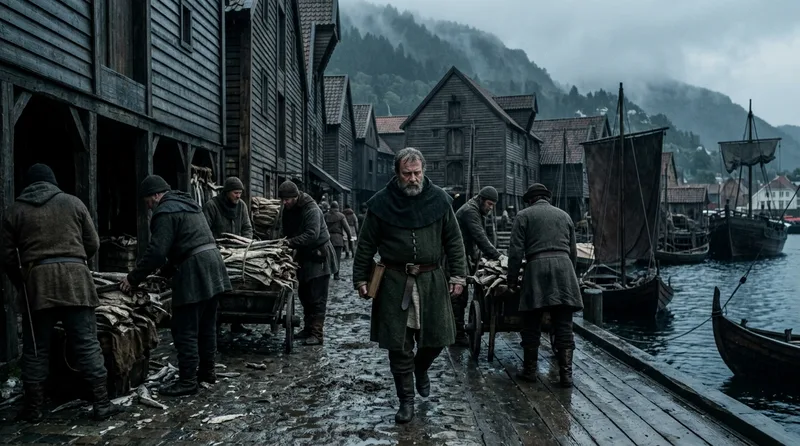
In 1360, German merchants seized control of Bergen’s waterfront and established Bryggen, a self-governing enclave that would monopolize Norway’s most valuable export for 400 years. The trading post consisted of 25 wooden warehouses stretching along the harbor, housing up to 2,000 German merchants who lived under their own legal system—the Law of Lübeck—completely separate from Norwegian jurisdiction. The prize was dried cod, or stockfish, which became medieval Europe’s protein source during the 200 fasting days required by Catholic law. Bergen produced over 15 million stockfish annually by 1500, shipped to markets from Portugal to Poland. The German merchants controlled every aspect: they set prices, managed fishing quotas, and even dictated which Norwegian fishermen could sell their catch. Norwegian locals were forbidden from entering the German residential quarters without permission. When Denmark-Norway tried to expel the Hanseatic merchants in the mid-16th century, Bergen’s economy collapsed within months, forcing authorities to invite them back. The wooden structures burned and were rebuilt 13 times between 1360 and the early 18th century, yet the merchants always returned. Bryggen’s economic stranglehold demonstrated how the Hanseatic League could dominate entire national economies without military occupation, relying instead on trade dependencies and legal exemptions negotiated when northern kingdoms desperately needed their commercial networks.
Source: britannica.com
2. Steelyard (London) - England’s German Quarter
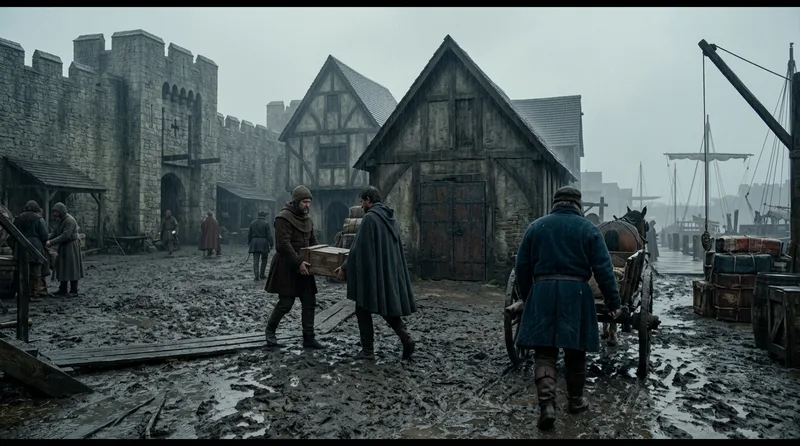
The Steelyard on Thames Street opened in 1320 as the Hanseatic League’s English headquarters, occupying a 3-acre compound with its own docks, warehouses, and a fortified wall that kept Londoners out. The name came from the steel weighing beam used to measure goods, symbolizing the merchants’ obsession with standardization and fair dealing. By 1400, German merchants controlled 70 percent of England’s wool exports and 60 percent of cloth imports, undermining English traders so thoroughly that Parliament passed the Navigation Acts specifically to break their monopoly. The compound housed 200 permanent residents who took vows of celibacy—women were strictly forbidden—and lived under monastic discipline enforced by an elected alderman. English merchants bitterly resented the Steelyard’s tax exemptions: while they paid 12 pence per cloth bale, Hanseatic traders paid only 4 pence. The Germans maintained their own brewery, bakery, and chapel, creating a self-sufficient German city within London. Their business records from 1422 show transactions worth £35,000 annually, equivalent to a vast sum in that era. Queen Elizabeth I finally expelled the Hanseatic merchants in the late 16th century after decades of English resentment, seizing the compound and selling it to private investors. The Steelyard’s fall marked the beginning of England’s transformation into a maritime trading power that would eventually surpass its German teachers.
Source: britannica.com
3. Peterhof (Novgorod) - Gateway to Russian Riches
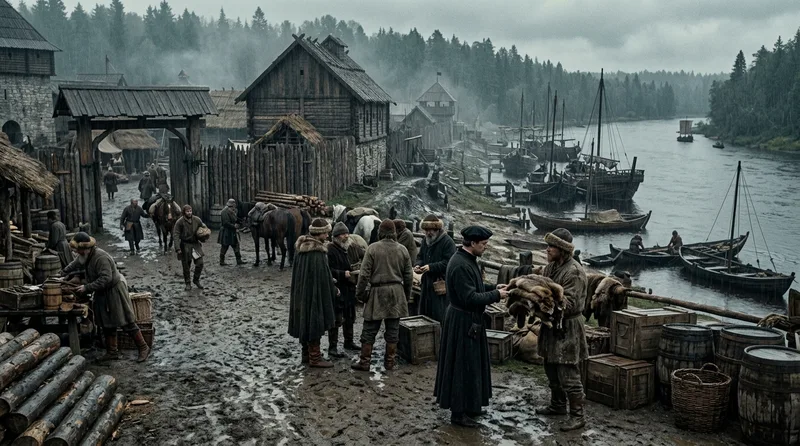
**Peterhof, Novgorod opened in Novgorod around 1192 as the easternmost outpost of Hanseatic power, connecting German merchants to Russian fur trappers, beekeepers, and the lucrative Silk Road trade networks. The complex occupied an entire city block near St. Peter’s Church, featuring massive warehouses, living quarters for 200 merchants, and a church where German priests conducted services in Latin while Russian Orthodox bells rang nearby. Novgorod’s strategic location made it irreplaceable: it was the only place where German merchants could legally purchase squirrel pelts, ermine, sable, and beeswax without traveling into the dangerous Russian interior. By 1350, Peterhof handled wax shipments exceeding 300 tons annually—essential for every church candle from Scotland to Sicily. The Germans and Russians maintained an elaborate dance of mutual distrust: merchants weren’t allowed to travel beyond Novgorod, Russians couldn’t enter German living quarters, and all transactions occurred through interpreters in neutral warehouses. When Ivan III of Moscow conquered Novgorod in 1478, he arrested the German merchants, confiscated their goods worth 96,000 Rhenish guilders, and imprisoned them until the late 15th century. The closure of Peterhof shifted the entire East-West trade balance, eventually forcing European merchants to seek new routes to Asia that would lead to the Age of Exploration. Russian fur exports never recovered their Hanseatic volume until the 18th century.
Source: britannica.com
4. Bruges Kontor (Flanders) - Where Luxury Met Necessity
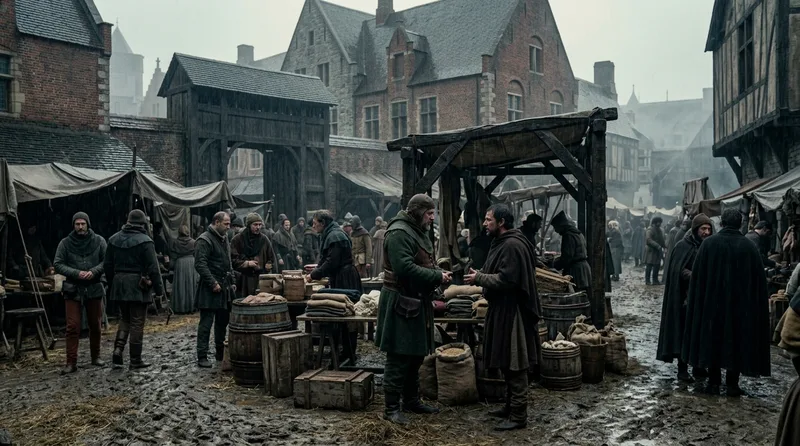
The Bruges trading post, established around 1252, became the Hanseatic League’s most prestigious outpost, where merchants from 17 nations conducted business in a single marketplace worth over 200,000 marks annually by 1350. Unlike other Kontore, Bruges operated as a distributed network of warehouses and hostels scattered throughout the city rather than a single fortified compound, reflecting Flanders’ merchant-friendly policies. Here German traders exchanged Baltic grain, timber, and furs for Flemish cloth, Italian silk, Spanish wine, and Oriental spices that arrived via Venetian galleys. The Hanseatic merchants maintained the Oosterlingenhuis (Easterlings’ House) as their administrative headquarters, employing 15 permanent staff members including translators, accountants, and lawyers. Bruges’ unique advantage was its access to the Zwin estuary, which allowed seagoing vessels to dock directly in the city until the waterway began silting up after 1400. A single convoy arriving in 1368 contained 73 ships carrying merchandise valued at 150,000 marks—more than the annual budget of most European kingdoms. The Germans established strict quality controls: every cloth bale was inspected, measured, and sealed before export, creating the standardization that made Hanseatic goods trusted across the continent. When the Zwin became unnavigable in the late 15th century, Hanseatic merchants shifted operations to Antwerp, and Bruges’ golden age ended abruptly, leaving the city frozen in medieval splendor as a warning about the fleeting nature of commercial dominance.
Source: britannica.com
5. Visby (Gotland) - The Baltic Sea’s Golden Gateway
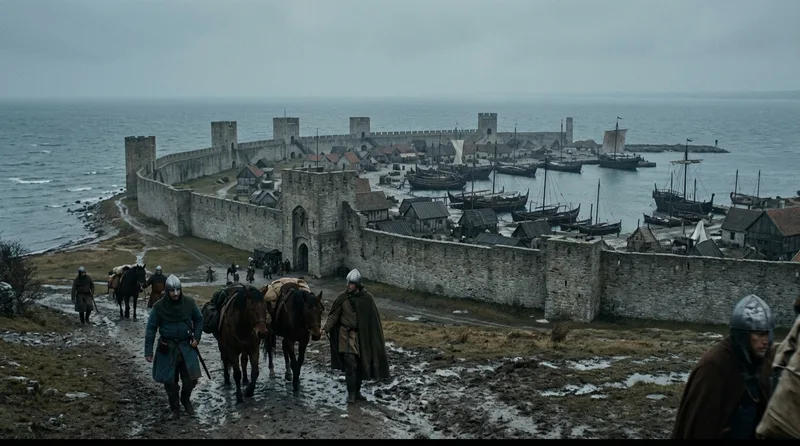
Visby on the island of Gotland dominated Baltic trade from 1161, when German merchants established a settlement that would become known as the “City of Roses and Ruins.” The town’s 3.5-kilometer stone wall, completed in 1288, enclosed 15 churches, over 200 warehouses, and a harbor that could accommodate 150 ships simultaneously. Visby’s geographic position made it unavoidable: any merchant sailing between Lübeck and Novgorod, or Stockholm and Danzig, had to stop at Gotland for fresh water, repairs, and to wait for favorable winds. By 1300, Visby’s population reached 10,000—massive for medieval Scandinavia—with German merchants controlling 80 percent of the island’s wealth. The city minted its own silver coins bearing the Hanseatic seal, which were accepted from England to Estonia. Visby’s 1361 fall to Danish King Valdemar IV marked the beginning of its decline; his forces massacred 1,800 defenders and imposed crushing taxes that drove merchants to mainland ports. Archaeological excavations in the early 20th century uncovered treasure hoards containing over 67,000 medieval coins, suggesting wealthy merchants buried their fortunes during the Danish invasion and never returned. The city’s remarkable preservation—with ruins of 13 medieval churches still standing—makes it a unique window into Hanseatic commercial architecture. Modern Visby’s UNESCO World Heritage status ironically profits from the same strategic location that made it rich 700 years earlier, now attracting tourists instead of herring traders.
Source: britannica.com
6. Danzig (Gdańsk) - The Grain That Fed Europe
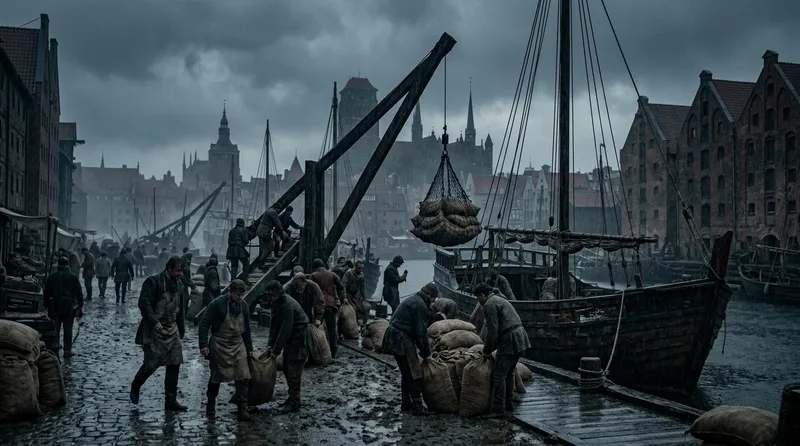
Danzig joined the Hanseatic League in 1361 and rapidly became its largest grain export center, shipping over 200,000 tons of rye and wheat annually by 1470—enough to feed 2 million people. The city’s location at the Vistula River mouth gave it access to the vast agricultural heartland of Poland and Lithuania, while its deep harbor accommodated the large cargo ships needed for bulk grain transport. Danzig’s merchants developed the koga, a 200-ton cargo vessel specifically designed for grain shipments that revolutionized Baltic shipping. By 1450, Danzig controlled 60 percent of all grain entering Western Europe, making it more economically important than Hamburg or Bremen. The city’s Great Crane, completed in 1444, could lift 4 tons and load a ship’s entire cargo in a single day—a technological marvel that European engineers traveled specifically to observe. Danzig’s wealth generated spectacular architecture: the Main Town Hall, completed in 1492, cost 40,000 marks and featured a 82-meter tower visible 30 kilometers at sea. The city’s power peaked when it fielded its own navy of 40 warships in the late 16th century, defeating Danish forces attempting to blockade Hanseatic shipping. Danzig’s grain monopoly made it a target during the Thirty Years’ War and the Swedish Deluge, when control of the city meant control of Northern Europe’s food supply. The trading infrastructure established during the Hanseatic period continued functioning for centuries, demonstrating medieval commercial engineering that lasted 500 years.
Source: britannica.com
7. Lübeck - The Hanseatic League’s Iron Fist
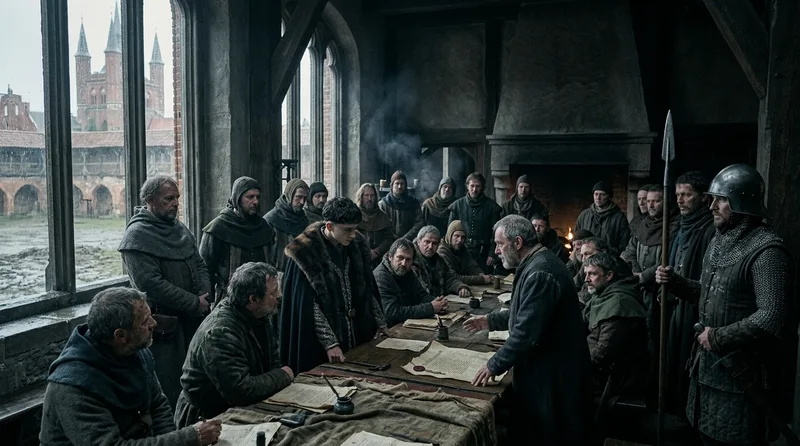
Lübeck became the Hanseatic League’s administrative headquarters in 1356, when representatives from 72 cities gathered for the first general assembly, establishing the organizational structure that would govern Northern European trade for three centuries. The city’s founding in 1143 by Adolf II of Holstein created a revolutionary urban model: Lübeck was granted autonomous legal status from the beginning, with merchants governing themselves under written law rather than feudal custom. This “Lübeck Law” was copied by over 100 cities across Eastern Europe, creating a standardized legal framework that made cross-border trade predictable and enforceable. The city’s brick Gothic architecture—notably St. Mary’s Church, completed in 1350 with vaults reaching 38.5 meters—physically demonstrated Hanseatic power to visiting merchants and kings. Lübeck’s council of 24 merchants enforced trade regulations ruthlessly: in 1494, they embargoed Bruges for seven years after Flemish authorities arrested Hanseatic traders, forcing Flanders to apologize and pay reparations. The city maintained archives documenting every trade agreement, treaty, and dispute settlement from 1350 to the late 17th century—over 50,000 documents that reveal the bureaucratic sophistication behind medieval commerce. Lübeck’s famous marzipan, first produced in the early 15th century, became a luxury export symbolizing how the city transformed raw Mediterranean almonds and Asian sugar into Northern European delicacies. The city’s motto “Concordia Domi Foris Pax” (Harmony at Home, Peace Abroad) ironically described a mercantile empire that used economic coercion as effectively as any military power.
Source: britannica.com
8. Reval (Tallinn) - Where Amber Became Gold
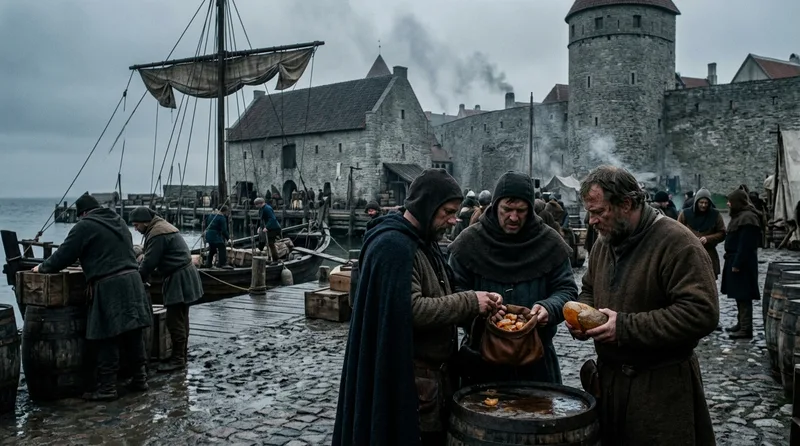
Reval joined the Hanseatic League in 1285 and immediately became the primary export hub for Baltic amber, the “gold of the north” that medieval Europeans believed had medicinal and spiritual properties worth more per ounce than silver. The city’s lower town housed German merchant quarters with 16 massive stone warehouses, while Estonian laborers lived in wooden structures outside the city walls—a physical manifestation of Hanseatic economic apartheid. Reval’s merchants controlled the entire amber supply chain: they purchased raw amber from Prussian gatherers for 3 marks per pound, processed it into jewelry and religious objects in Reval workshops, then sold finished pieces for 15 marks per pound in Western markets. By 1400, Reval exported over 2,000 pounds of worked amber annually, generating profits exceeding 20,000 marks. The city also dominated timber exports, shipping 30,000 oak logs yearly to shipyards in England and the Netherlands—so many that medieval chroniclers complained Reval was deforesting Estonia. The German merchants established St. Olaf’s Church in 1267, which reached 159 meters in the mid-16th century, making it the world’s tallest building at that time and a navigation landmark visible 70 kilometers at sea. Reval’s survival strategy was flexibility: the city paid tribute to Danish kings, Teutonic Knights, and Swedish monarchs simultaneously, ensuring trading privileges regardless of who conquered whom. When the Livonian War devastated the region in the mid-16th century, Reval switched allegiance to Sweden and continued trading, demonstrating that Hanseatic merchants valued commercial continuity over national loyalty.
Source: britannica.com
9. Riga - The Flax and Hemp Fortress
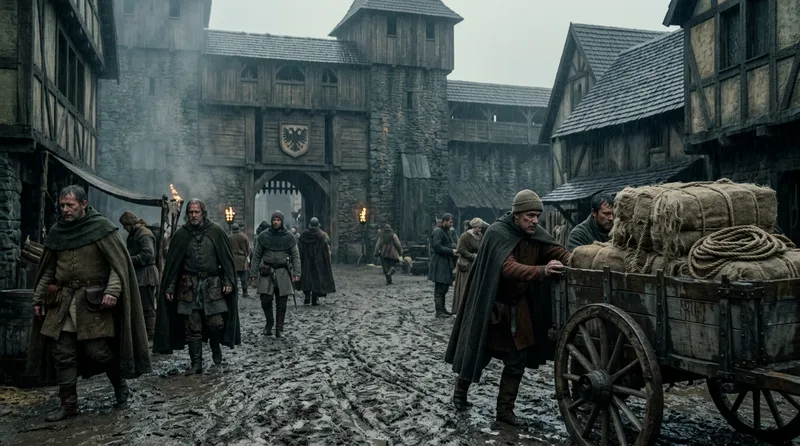
Riga became a Hanseatic member in 1282 and dominated the flax and hemp trade that provided rope and sailcloth for every ship in Northern Europe—without Riga’s exports, maritime commerce would have literally ground to a halt. The city’s location at the Daugava River mouth gave German merchants access to the vast flax fields of Livonia and Lithuania, which produced the finest fiber in Europe due to the region’s cold climate and long daylight hours. By 1400, Riga shipped over 10,000 tons of flax annually, along with 3,000 tons of hemp used exclusively for rope production. A single large merchant vessel required 80 kilometers of hemp rope and 2,000 square meters of flax sailcloth—all likely sourced through Riga’s warehouses. The city’s merchants established standardized grading systems for fiber quality that were adopted across Europe: “Riga flax” became synonymous with premium quality, commanding prices 40 percent higher than competing sources. The Brotherhood of Blackheads, established in 1334, represented unmarried German merchants and maintained a fortified headquarters that still stands—one of medieval Riga’s most impressive buildings. When the Reformation reached Riga in the early 16th century, the city’s Lutheran conversion split it from Catholic Poland, leading to decades of warfare that devastated the flax trade. The Swedish conquest of the early 17th century restored order, but Riga never regained its Hanseatic-era dominance. Modern Latvia’s flag colors—maroon and white—allegedly derive from the bloodstained sheet used to carry a wounded Latvian chief in the 13th century, but the design was only officially adopted after Riga’s Hanseatic merchants had long established the city’s international identity.
Source: britannica.com
10. Stockholm Kontor - Sweden’s Copper Crown
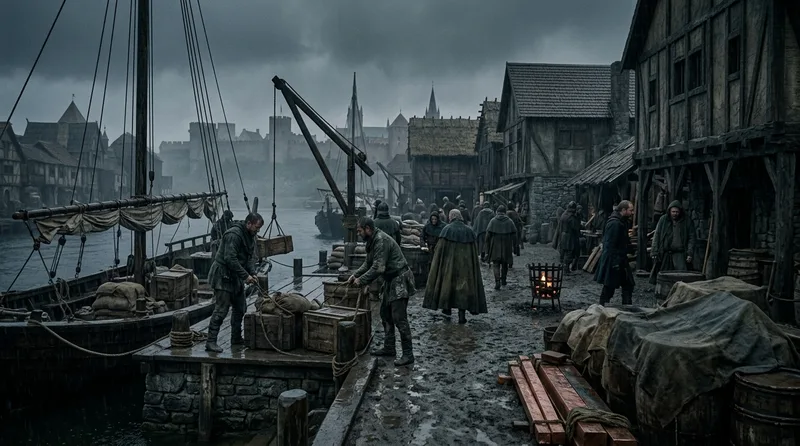
Stockholm’s Hanseatic trading post opened around 1370 and became essential when the Falun copper mine—discovered in the late 11th century—began producing over 1,000 tons annually by 1450, supplying two-thirds of Europe’s copper demand. The metal was critical for bronze cannon production, church bells, and coinage, making Stockholm’s German merchants kingmakers in Swedish politics. The Tyska Kyrkan (German Church), built in the late 16th century on the site of an earlier 14th-century chapel, served as the architectural center of the German merchant quarter in Gamla Stan, where signs and business records were kept in German until the late 16th century. Unlike other Kontore, Stockholm’s Germans integrated more deeply with Swedish society—many married into noble families and served as royal advisors, though they maintained separate legal privileges until the mid-15th century. The German merchants financed Swedish kings in exchange for mining monopolies: in 1288, they loaned King Magnus Ladulås 6,000 marks, receiving copper export rights worth ten times that amount. By 1500, Stockholm exported copper valued at 100,000 marks annually, along with iron, timber, and dried fish. The Danish “Stockholm Bloodbath” of the early 16th century, when Christian II executed 82 Swedish nobles and merchants (including several Germans), paradoxically strengthened Hanseatic influence—Gustav Vasa’s subsequent rebellion relied on Lübeck’s financial and military support. Stockholm’s transition from Hanseatic outpost to Swedish capital represented a unique reversal: the trading post absorbed its host city rather than being absorbed, with German merchant dynasties becoming Swedish aristocrats who ruled for centuries.
Source: britannica.com
Did You Know?
Did You Know? The Hanseatic League never had a formal constitution, standing army, or permanent headquarters—yet it controlled Northern European trade for 400 years through nothing more than merchant agreements and economic leverage. When the last official Hanseatic assembly met in the late 17th century, only nine cities attended, but by then the trading networks they created had already evolved into the modern concepts of free trade zones, standardized commercial law, and multinational corporations. The medieval merchants who lived under celibacy vows in wooden warehouses essentially invented globalization five centuries before anyone coined the term.