
When Pope Urban II called for the First Crusade in 1095, warrior monks emerged who followed religious vows yet trained for combat. These military orders became bankers, diplomats, and standing armies that permanently altered medieval warfare and reshaped European politics for centuries.
1. Knights Templar: From Nine Knights to Banking Empire
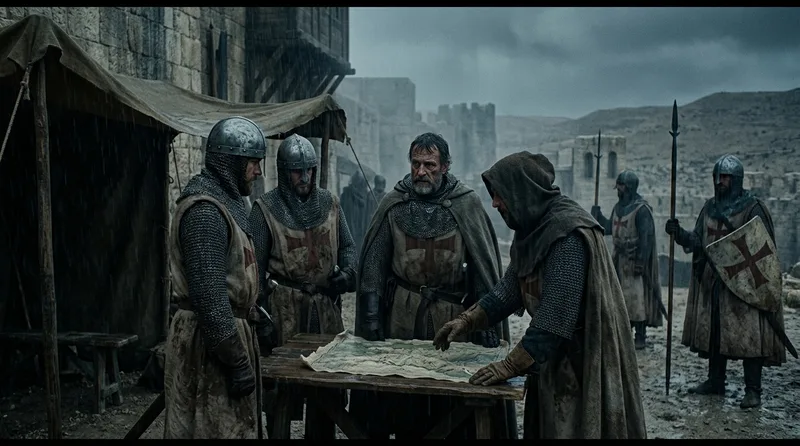
In 1119, nine French knights led by Hugues de Payens founded the Poor Fellow-Soldiers of Christ in Jerusalem, vowing to protect pilgrims traveling to the Holy Land. King Baldwin II granted them headquarters in the Al-Aqsa Mosque, built atop Solomon’s Temple ruins, giving them their famous name. By 1129, the Council of Troyes officially recognized the order, and Bernard of Clairvaux wrote their strict Rule requiring vows of poverty, chastity, and obedience. Within 50 years, the Templars commanded over 870 castles and fortifications across Europe and the Levant. Their military prowess proved devastating at battles like Montgisard in 1177, where 500 Templar knights helped defeat Saladin’s army of 26,000. The order pioneered early banking systems, issuing letters of credit that allowed pilgrims to deposit funds in Europe and withdraw them in Jerusalem without carrying gold through bandit-infested territories. Their white mantles bearing red crosses became synonymous with Crusader military might. King Philip IV of France, deeply indebted to the order, orchestrated their downfall through heresy charges in the early fourteenth century, leading to mass arrests and confessions extracted through torture. Pope Clement V officially dissolved the order in the early fourteenth century, ending nearly two centuries of unprecedented religious-military power. Their sudden destruction created power vacuums across Europe and established dangerous precedents for monarchs attacking Church institutions.
Source: britannica.com
2. Knights Hospitaller: Medical Mission to Naval Supremacy
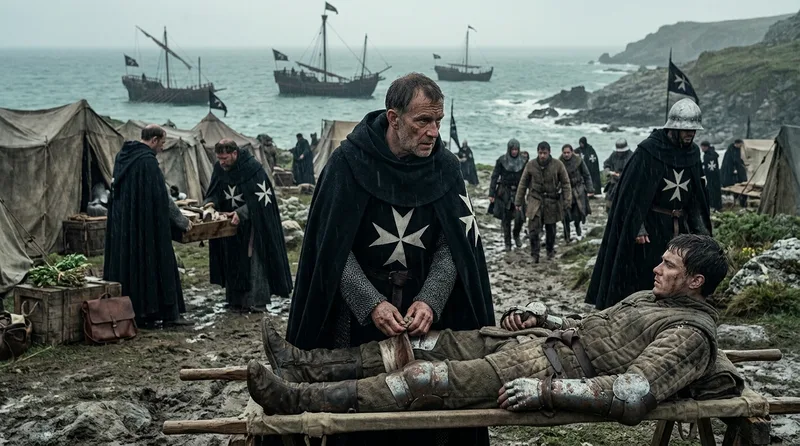
Founded around 1048 by merchants from Amalfi, the Order of St. John initially operated a hospital in Jerusalem serving sick pilgrims decades before the First Crusade. Brother Gerard Thom transformed the charitable organization into a military order after 1099, when Crusaders captured Jerusalem and the hospital’s strategic importance became clear. Pope Paschal II officially recognized them in 1113, granting unprecedented independence from local bishops. The order maintained the Hospital of St. John, capable of treating 2,000 patients simultaneously, while fielding armies that defended the Kingdom of Jerusalem. After Saladin’s conquest of Jerusalem in 1187, the Hospitallers relocated to Margat Castle in Syria, then Acre until 1291. Unlike the Templars, they survived medieval persecution by adapting: conquering Rhodes in the early fourteenth century after a four-year campaign and transforming into a naval power. Their fleet of 50 galleys dominated Eastern Mediterranean trade routes, protecting Christian shipping while intercepting Ottoman vessels. Grand Master Jean Parisot de Valette led their legendary defense of Malta against 40,000 Ottoman troops in the mid-sixteenth century, withstanding a brutal four-month siege with just 6,100 defenders. The Great Siege of Malta became one of history’s most decisive battles, halting Ottoman expansion into Western Europe. In the late eighteenth century, Napoleon captured Malta, finally ending their 700-year military independence. Today, the Sovereign Military Order of Malta maintains diplomatic relations with 110 countries and operates medical missions worldwide, returning to their original charitable mission while retaining sovereign status under international law.
Source: britannica.com
3. Teutonic Knights: Germanic Crusaders Who Built an Empire
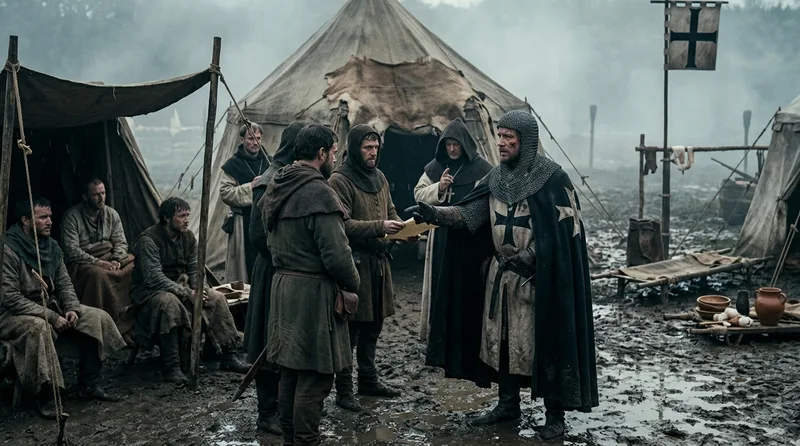
German merchants established a field hospital during the Siege of Acre in 1190, which Duke Frederick of Swabia transformed into the Order of Brothers of the German House of Saint Mary in Jerusalem the following year. Pope Celestine III officially recognized the order in 1192, modeling their rule after the Templars’ military discipline and Hospitallers’ charitable mission. Unlike other orders serving in the Holy Land, the Teutonic Knights maintained a distinctly Germanic character, recruiting primarily from German-speaking nobility. Hermann von Salza, Grand Master from 1209 to 1239, redirected the order’s focus toward northeastern Europe after recognizing the Crusader states’ inevitable collapse. In 1226, Holy Roman Emperor Frederick II granted them sovereignty over Prussia, beginning a brutal 50-year conquest of pagan Baltic tribes. The order methodically constructed over 100 castles across Prussia and Livonia, including the formidable Marienburg fortress completed in the early fourteenth century, which became Europe’s largest brick castle covering 52 acres. At their height around the early fifteenth century, the Teutonic state controlled territories from Estonia to Prussia, generating massive wealth through Hanseatic League trade monopolies. The Battle of Grunwald in the early fifteenth century shattered their military supremacy when Polish-Lithuanian forces killed Grand Master Ulrich von Jungingen and decimated 18,000 Teutonic troops. The order never recovered its territorial power, ultimately secularizing into the Duchy of Prussia in the early sixteenth century when Grand Master Albert of Brandenburg-Ansbach converted to Lutheranism. Their legacy of Germanic eastward expansion profoundly influenced Central European politics through subsequent centuries.
Source: britannica.com
4. Order of Montesa: Templar Assets Reborn in Aragon
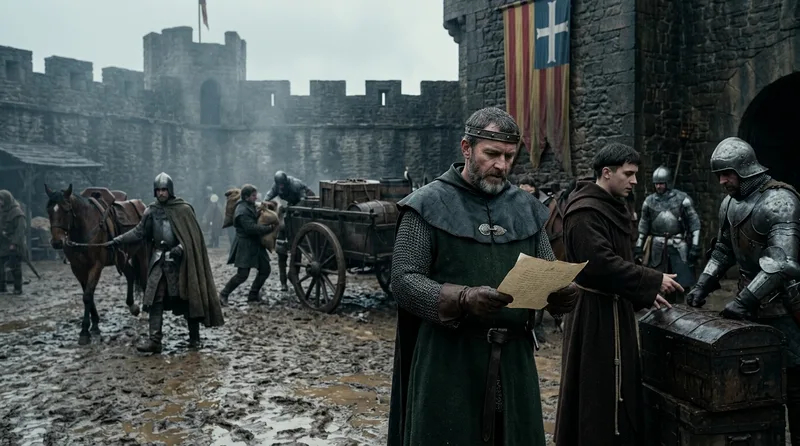
When Pope Clement V dissolved the Knights Templar in the early fourteenth century, King James II of Aragon moved swiftly to prevent Hospitaller absorption of valuable Templar properties in his kingdom. In 1317, Pope John XXII authorized creation of the Order of Montesa, named after Montesa Castle in Valencia, specifically to inherit Templar holdings in Aragon and Valencia. The new order comprised former Templars and Calatrava knights, combining institutional memory with fresh legitimacy. King James II personally oversaw their formation, ensuring crown influence over their considerable estates valued at over 80,000 gold florins annually. Unlike international orders, Montesa operated exclusively within Aragonese territories, defending the frontier against Moorish Granada and participating in Mediterranean naval campaigns. The order played crucial roles in suppressing the Revolt of the Brotherhoods in the early sixteenth century, when craft guilds challenged royal authority in Valencia. Grand Master Francisco Lanzol de Romani died defending Valencia against the rebels in the early sixteenth century, demonstrating the order’s loyalty to the Spanish crown. King Philip II absorbed the order into the Spanish crown in the late sixteenth century, following the model established with other Iberian military orders. Their extensive agricultural estates, particularly rice cultivation in Valencia’s wetlands, generated wealth that funded Spanish naval power in the Mediterranean. The order maintained ceremonial functions until Spanish liberals dissolved religious military orders in the early nineteenth century. Montesa demonstrated how quickly monarchs could replicate Templar institutional structures when it served royal interests, creating loyal military-religious corporations that blurred distinctions between church and state power.
Source: britannica.com
5. Order of Santiago: Iberian Reconquista’s Elite Warriors
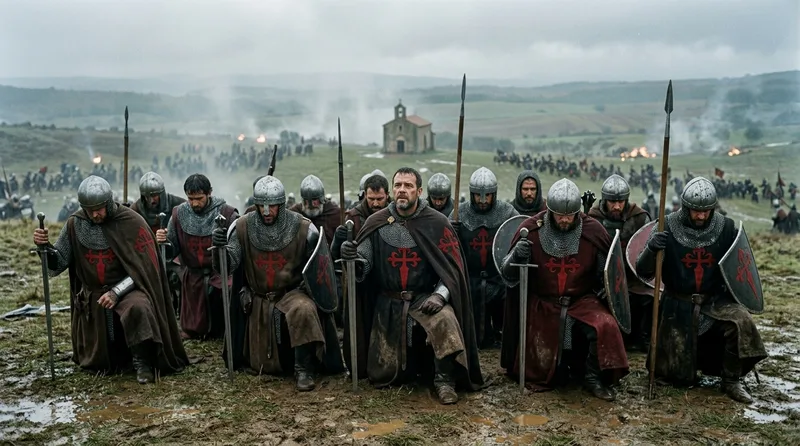
Founded in 1170 in the Kingdom of León by thirteen knights led by Pedro Fernández de Fuentencalada, the Order of Santiago took its name from Saint James the Moor-slayer, Spain’s patron saint. King Ferdinand II of León granted them Uclés Castle in 1174, establishing their first major commandery in central Castile. Unlike monastic military orders, Santiago knights could marry and retain family property, attracting Iberian nobility who rejected celibacy vows required by Templars and Hospitallers. Pope Alexander III approved their rule in 1175, recognizing their unique contribution to the Reconquista. The order fielded over 400 knights at the Battle of Las Navas de Tolosa in 1212, where Christian forces decisively defeated the Almohad Caliphate, permanently shifting Iberian power dynamics. Grand Master Pelay Pérez Correa conquered vast territories in Extremadura and Andalusia between 1242 and 1275, expanding the order’s holdings to over 200 commanderies controlling approximately 83,000 square miles. Their distinctive white robes marked with red sword-shaped crosses became symbols of Castilian military might. The order accumulated such wealth and political influence that Catholic Monarchs Ferdinand and Isabella personally assumed the Grand Mastership in the late fifteenth century, subordinating Santiago to royal authority. Christopher Columbus wore the Order of Santiago’s cross during his voyages, and numerous conquistadors belonged to the order, extending its influence to the Americas. Spanish monarchs used Santiago mastership to reward loyalty, making membership a coveted mark of noble status through the eighteenth century.
Source: britannica.com
6. Order of Calatrava: Cistercian Monks Turned Warriors
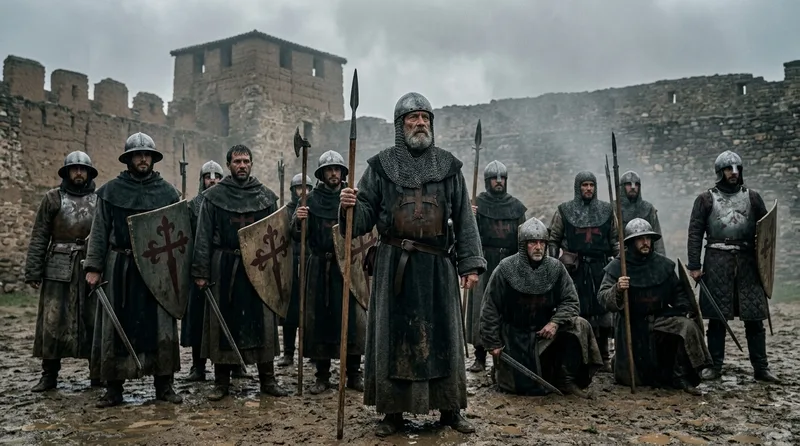
In 1158, Templar knights abandoned the strategically vital Calatrava la Vieja fortress in central Castile, deeming it indefensible against advancing Almohad forces. Cistercian Abbot Raymond of Fitero shocked King Sancho III by offering to defend the fortress with monks from his monastery, believing religious devotion would overcome military disadvantages. On January 1, 1158, Pope Alexander III sanctioned this unprecedented fusion of Cistercian monasticism and military service, creating the first military order native to Iberia. The order successfully defended Calatrava against a major Almohad assault in 1158, validating their unconventional approach. King Alfonso VIII granted them extensive territories along the Castilian-Almohad frontier, and by 1200 they controlled 350,000 acres across La Mancha. Their red cross emblem on white mantles distinguished them from international orders, emphasizing Castilian identity. Calatrava fielded 1,300 knights at Las Navas de Tolosa in 1212, losing their Grand Master in the battle but contributing decisively to Christian victory. The order’s strict observance of Cistercian fasting and prayer schedules, maintained even during military campaigns, created exceptional discipline among their ranks. Internal disputes over succession led to armed conflicts in the fourteenth century, weakening their military effectiveness. King Ferdinand the Catholic assumed the Grand Mastership in the late fifteenth century, incorporating Calatrava into the Spanish crown’s permanent structure. Their transformation from contemplative monks to frontier warriors demonstrated medieval Christianity’s flexibility in adapting religious institutions to political necessities, creating warrior-mystics who prayed seven times daily between battles.
Source: britannica.com
7. Order of Alcántara: From Suárez Knights to Crown Servants
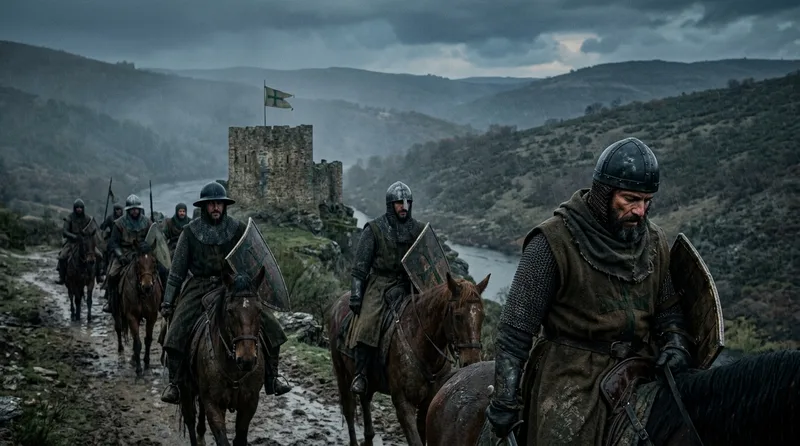
Brothers of the Order of San Julián del Pereiro established a small military order in 1156 along the Portuguese-Leonese border, initially controlling just two fortresses. In 1218, King Alfonso IX of León granted them the newly conquered town of Alcántara in Extremadura, a strategic crossing of the Tagus River separating Christian and Muslim territories. The order adopted their new headquarters’ name and expanded rapidly along the Portuguese frontier, controlling 37 commanderies by 1250. Their green cross emblem differentiated them from Calatrava’s red and Santiago’s sword-shaped crosses, reflecting intense competition among Iberian military orders for noble recruits and royal favor. The order fielded 300 knights during the conquest of Seville in 1248, earning substantial land grants from King Ferdinand III. Grand Master García Fernández participated in dynastic conflicts supporting King Alfonso XI, demonstrating how military orders became entangled in succession disputes that undermined their religious mission. The order accumulated approximately 60,000 head of sheep by the early fifteenth century, making them major participants in Castile’s wool trade with Flanders, which generated more revenue than military activities. Their involvement in the Castilian Civil War in the mid-fourteenth century saw rival factions elect competing Grand Masters, permanently damaging their unity. King Ferdinand the Catholic assumed the Grand Mastership in the late fifteenth century after the death of the last independent master, completing the Catholic Monarchs’ systematic absorption of Iberian military orders. Unlike international orders, Alcántara never extended beyond Iberia, remaining a distinctly regional institution. Their transition from frontier defenders to agricultural landlords reflected broader changes as the Reconquista neared completion, leaving warrior monks without military purpose.
Source: britannica.com
8. Knights of St. Thomas: England’s Forgotten Crusader Order
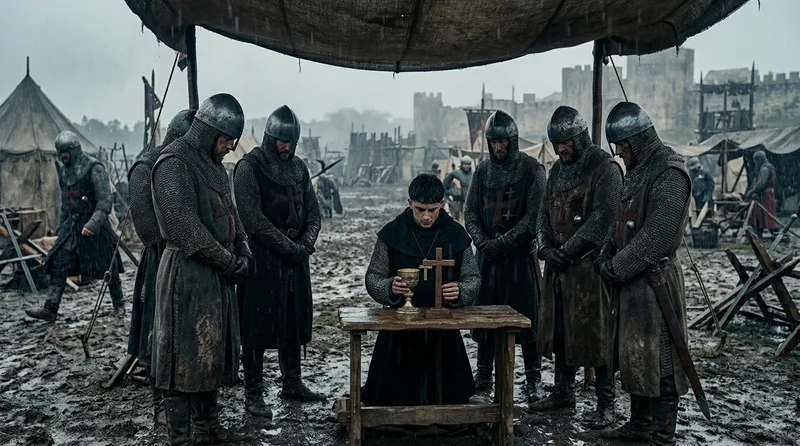
During the Siege of Acre in 1191, English Crusaders established a chapel dedicated to Thomas Becket, the murdered Archbishop of Canterbury canonized just two decades earlier. Chaplain William transformed this religious community into the Order of St. Thomas of Acre in 1192, receiving recognition from Pope Celestine III. The order followed the Augustinian Rule but adopted military functions modeled on the Templars, creating England’s only indigenous military order in the Holy Land. King Richard I granted them property in Acre valued at 100 marks annually, establishing their financial foundation. Unlike international orders drawing recruits across Europe, St. Thomas maintained distinctly English character, with all Grand Masters coming from England throughout their existence. The order operated the Hospital of St. Thomas in Acre, treating wounded Crusaders while maintaining a small military contingent of approximately 50 knights. After Acre’s fall to the Mamluks in 1291, the order relocated to Cyprus, then ultimately to London in the early fourteenth century. Their transformation from military order to peaceful religious community occurred with minimal resistance, unlike the violent Templar suppression. In England, they maintained property in Cheapside, London, generating steady income from rents rather than military exploits. The order survived until King Henry VIII’s Dissolution of the Monasteries in the sixteenth century, making them the longest-surviving English military order. Their relative obscurity compared to Templars or Hospitallers reflected English Crusader efforts’ smaller scale and their rapid evolution away from military functions. The order demonstrated that not all military orders required vast international networks to survive, though their limited resources prevented meaningful impact on Crusader politics.
Source: britannica.com
9. Order of Saint Lazarus: Leper Knights of Jerusalem
The Order of Saint Lazarus emerged from a leper hospital outside Jerusalem’s walls, established before 1142 to care for knights afflicted with leprosy during Crusader campaigns. Unlike other military orders that expelled diseased members, Saint Lazarus embraced them, creating history’s only military order specifically for leper knights. King Baldwin IV of Jerusalem, himself suffering from leprosy diagnosed around 1169, personally supported the order and may have considered joining them. The order fielded approximately 80 knights at the Battle of Hattin in 1187, where Saladin’s forces annihilated the Crusader army and captured Jerusalem. Contemporary accounts describe leper knights fighting with terrifying ferocity, knowing they had nothing to lose and seeking honorable deaths in battle. After Jerusalem’s fall, the order relocated to Acre, maintaining their leper hospital while continuing military operations until 1291. Grand Master Thomas de Sainctis led the order’s evacuation to Cyprus, then France, where they established new headquarters at Boigny by the early fourteenth century. Unlike the Templars, their charitable mission protecting them from persecution, as shuttering a leper hospital would have generated public outcry. King Louis VIII of France granted them extensive properties in the early thirteenth century, recognizing their unique contribution to Christian charity. The order gradually admitted non-leper members after losing their Holy Land presence, diluting their original identity. By the early sixteenth century, most members had never had leprosy, transforming Saint Lazarus into a conventional charitable order. Their original mission created unprecedented social inclusion, offering diseased warriors continued purpose when medieval society typically abandoned lepers to isolation and death.
Source: britannica.com
10. Livonian Brothers of the Sword: Baltic Crusade’s Fierce Warriors
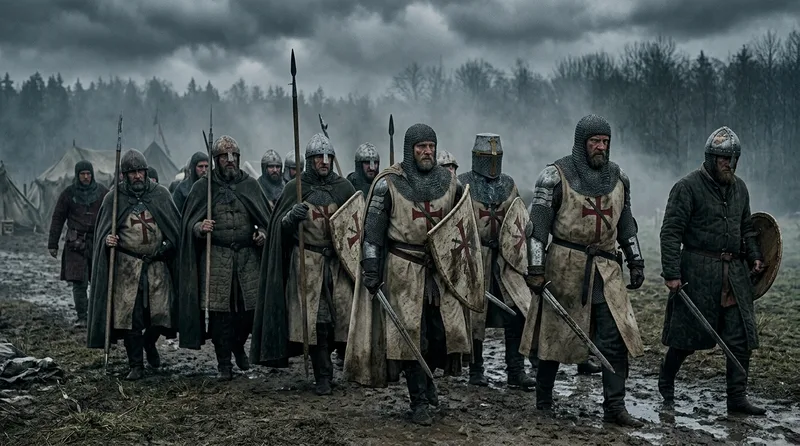
Bishop Albert of Riga founded the Livonian Brothers of the Sword in 1202 to conquer and convert pagan Baltic tribes in what became Latvia and Estonia. Theodoric of Treyden served as the first Master, commanding an initial force of approximately 120 knights granted by Pope Innocent III. The order adopted a white mantle bearing a red sword and cross, distinguishing themselves from Templars while signaling their martial mission. They systematically conquered Livonia between 1202 and 1227, building stone castles every 30 miles to maintain control over hostile populations. The order brutally suppressed the Estonian uprising of 1223, killing thousands and resettling German colonists on confiscated lands. Their expansion brought conflict with Orthodox Christian forces, culminating in the disastrous Battle of Saule in 1236, where Lithuanian-Semigallian forces killed Master Volquin and annihilated two-thirds of the order’s knights. The catastrophic defeat forced the order’s 60 surviving knights to merge with the more powerful Teutonic Knights in the mid-thirteenth century, becoming the Livonian branch of that larger order. Before their absorption, the Sword Brothers had established German political and cultural dominance across the eastern Baltic that persisted for seven centuries. Their aggressive missionary tactics, combining forced baptism with military occupation, created lasting resentment among Baltic peoples. The order demonstrated how smaller military orders operating on peripheral frontiers faced existential risks that international orders with diversified holdings could withstand. Their brief 35-year independence contrasted sharply with centuries-long Templar and Hospitaller survival, illustrating how military orders required either vast resources or powerful patrons to endure defeats that would destroy conventional armies.
Source: britannica.com
Did You Know?
Did You Know? The Knights Templar invented an early form of travelers’ checks 900 years ago, and their innovative banking network spanned from London to Jerusalem. Ironically, the same financial genius that made them medieval Europe’s most trusted bankers provided King Philip IV the perfect excuse to destroy them: he simply couldn’t afford to repay his massive debts. The order that helped finance Crusades ultimately fell not to Muslim armies but to royal bankruptcy and political greed.