
Gothic cathedrals bankrupted medieval cities. Behind soaring spires lie crushing taxes, fake relics sold for funding, and generations who never saw completion. Some took 600+ years to finish—here’s why.
1. Beauvais Cathedral: The Tallest Choir That Collapsed Twice
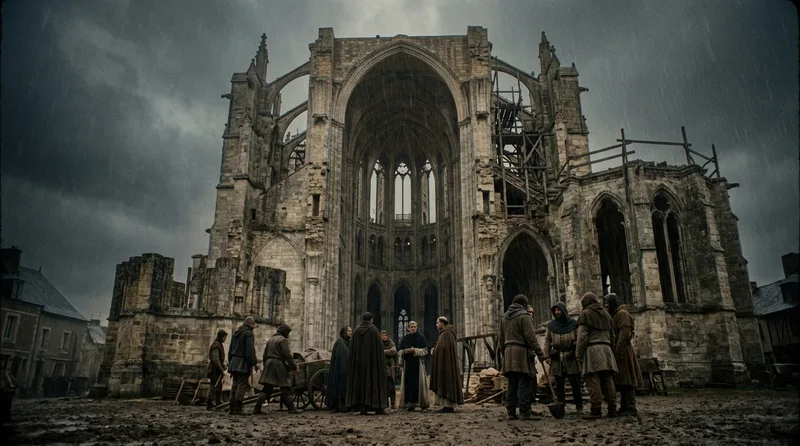
Beauvais Cathedral’s choir vault soared to 157 feet—the tallest in Christendom—until it spectacularly collapsed in 1284, just twelve years after completion. Bishop Miles of Nanteuil had launched construction in 1225, determined to outdo nearby Amiens Cathedral, but the ambitious height required buttressing beyond medieval engineering capacity. The city council borrowed 40,000 livres tournois from Italian bankers, pledging tax revenues for the next 30 years as collateral. When the vaults crashed down, killing worshippers during services, the city faced financial ruin from both reconstruction costs and unpaid debts. Engineers added additional piers and flying buttresses, but the crossing tower collapsed again in 1573, this time on Ascension Day. The cathedral remains incomplete today—only the choir and transept stand, a monument to architectural hubris. Beauvais never recovered economically; its population declined by 40 percent between 1300 and 1400, partly due to the crushing debt burden that prevented investment in trade infrastructure during the crucial period when neighboring cities prospered.
Source: britannica.com
2. Cologne Cathedral: 632 Years From Foundation to Completion
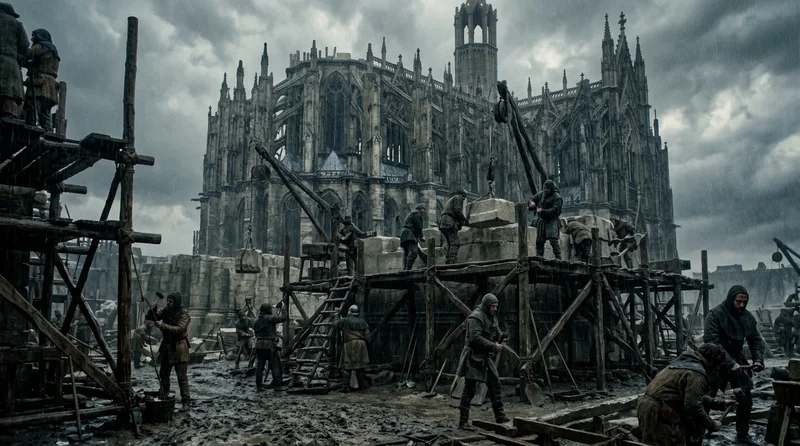
Construction began on Cologne Cathedral in 1248 under Archbishop Konrad von Hochstaden, but the building wouldn’t be finished until the nineteenth century—a span of 632 years. The initial phase consumed approximately 60 percent of Cologne’s municipal budget between 1250 and 1400, forcing the city council to impose a 5 percent sales tax on all goods entering the city gates. Master builder Gerhard von Rile designed the structure to house the relics of the Three Magi, which Cologne had acquired in 1164, hoping pilgrimage revenue would offset construction costs. Work stopped completely in 1473 when the city treasury was depleted by guild wars and competition from Antwerp’s rising merchant class. For four centuries, a massive wooden crane stood atop the unfinished south tower—visible for miles as a monument to municipal bankruptcy. The nave stood roofless, open to rain, while citizens paid taxes for a building that served no function. When construction finally resumed in the mid-nineteenth century, it was funded by Prussian state intervention and nationalist fervor, not municipal coffers. The medieval phase had cost Cologne its economic dominance in the Rhineland, as rival cities invested in commercial infrastructure instead of stone monuments.
Source: britannica.com
3. Siena Cathedral: Black Death Killed the Dream of Italy’s Largest Church
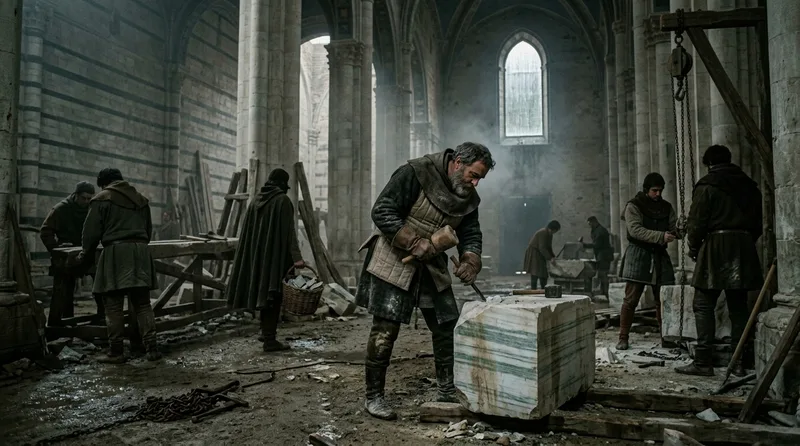
Siena’s city council voted in 1339 to expand their cathedral into the largest church in Italy—a project so ambitious it would have made the existing cathedral merely the transept of a new structure. The plan required demolishing 47 private homes and businesses, for which the commune paid 12,000 florins in compensation while simultaneously raising 8,000 florins through forced loans from wealthy merchant families. Construction master Lando di Pietro designed walls that would enclose 100,000 square feet, but the expansion’s foundations were laid on unstable clay hillsides that immediately showed cracking. When the Black Death struck in 1348, Siena lost 65 percent of its population within four months, including most of the city’s tax base and skilled masons. The partially built new nave walls—still standing today as haunting ruins—bankrupted the city twice: once in their construction, and again when the council attempted demolition in 1357 to recover building materials. Siena never regained its pre-plague prosperity; the cathedral debt had prevented investment in grain storage facilities that might have cushioned the economic collapse. The city’s banking families, once rivals to Florence’s Medici, disappeared from European finance by the early fifteenth century.
Source: britannica.com
4. Strasbourg Cathedral: Tax Revolts and the Guild Uprising of 1332
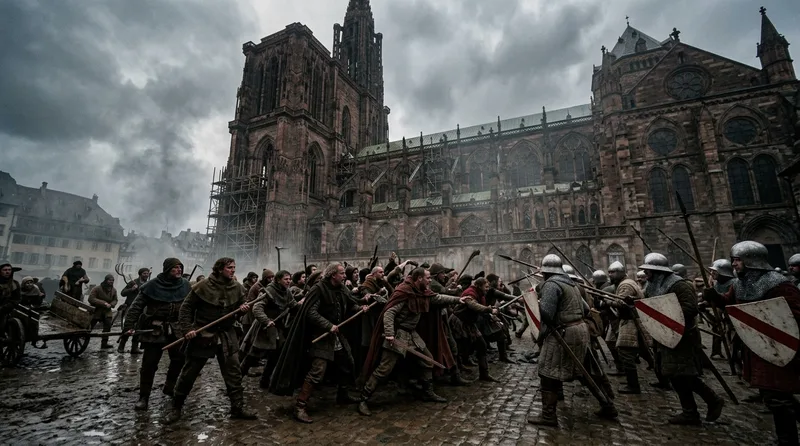
Strasbourg Cathedral’s single spire reached 466 feet in 1439, making it the world’s tallest building for 227 years, but the construction costs triggered the bloodiest municipal revolt of 14th-century Germany. Bishop Conrad III of Lichtenberg imposed a hearth tax in 1261 that required every household to contribute 3 pfennigs monthly—equivalent to two days’ wages for a journeyman mason. The tax burden increased sixfold by 1330 as the nave construction accelerated under master builder Erwin von Steinbach. In February 1332, the guilds seized control of city government in a violent uprising that left 14 patrician councilors dead and suspended cathedral funding for eight years. The mason’s guild itself split over the controversy, with junior members refusing to work on the cathedral while their own workshops lacked commissions. Construction consumed 22,000 tons of pink Vosges sandstone, quarried 30 miles away and hauled by oxcart at enormous expense. The astronomical clock installed in 1354 cost 800 marks—enough to build 40 workers’ houses—while the city council cut funding for bridge repairs and grain warehouses. Strasbourg’s merchants lost competitive advantage to Basel and Zurich, whose trade infrastructure received the investment Strasbourg squandered on verticality.
Source: britannica.com
5. Wells Cathedral: When the Marshland Foundations Began Sinking
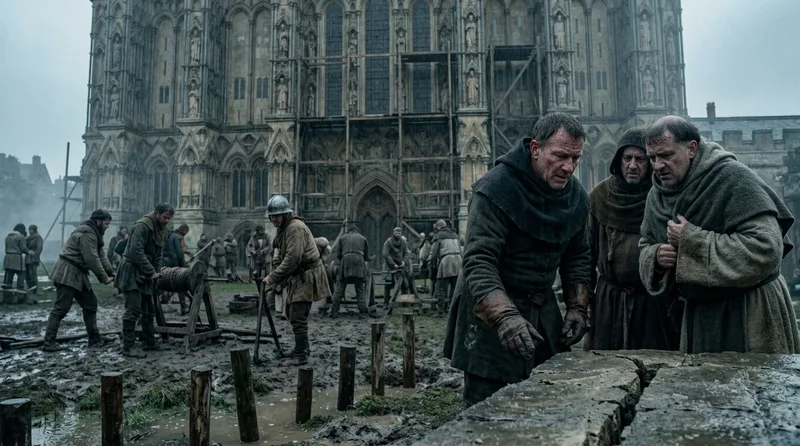
Wells Cathedral’s west front displays 293 medieval statues, but beneath this glory lies a foundation crisis that nearly bankrupted Somerset in the 1330s. Built on marshy ground beginning in 1175, the cathedral showed alarming subsidence by 1313 when cracks appeared in the crossing tower that threatened total collapse. Bishop Ralph of Shrewsbury commissioned emergency stabilization using the revolutionary scissors arches—inverted stone braces that remain engineering marvels—at a cost of 1,200 marks. The diocese imposed a tithe increase of 2 percent on all agricultural production within 40 miles, devastating tenant farmers already struggling with failed harvests. Master mason William Joy designed underground piling that required draining the water table, employing 150 laborers for three years in hand-dug excavations 30 feet deep. The foundation repairs consumed funds allocated for maintaining bridges and roads, causing the collapse of the Axbridge wool market when merchants couldn’t transport goods reliably. Wells never developed into the regional commercial center it might have become; the cathedral debt diverted resources from the canal improvements that made Bristol wealthy. The city’s population stagnated at 3,000 inhabitants for two centuries while cathedral finances drained municipal investment capacity.
Source: britannica.com
6. Milan Cathedral: 600 Years of Disputes and Bankruptcy
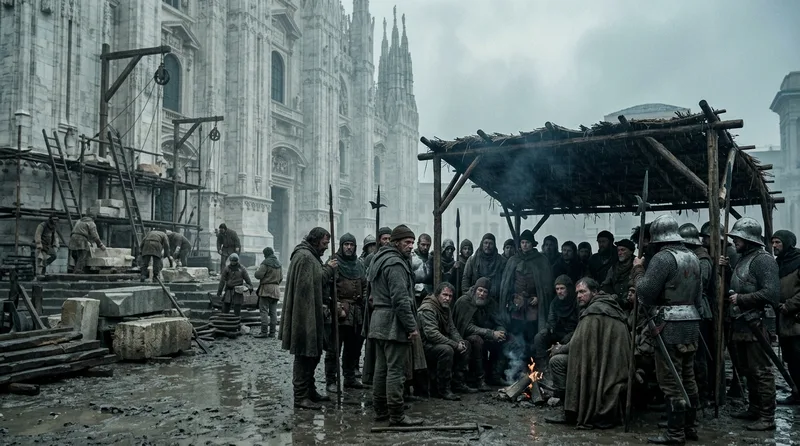
Milan Cathedral’s first stone was laid in 1386 under Archbishop Antonio da Saluzzo, but the building wouldn’t be substantially complete until the twentieth century—a construction timeline spanning 579 years. Duke Gian Galeazzo Visconti initially funded work through a salt tax that added 8 denari to every pound sold, triggering bread riots in 1389 when cascading food costs made wheat unaffordable for laborers. The project required 300,000 tons of Candoglia marble transported via specially constructed canals, infrastructure that cost more than a decade of the duchy’s tax revenues. Design disputes paralyzed construction repeatedly: French master Nicolas de Bonaventure clashed with local builders over flying buttress placement in 1391, delaying work for six years while consultants from across Europe were paid 50 florins each to render opinions. Milan’s treasury declared bankruptcy in 1407, 1428, and 1476, each time due to cathedral cost overruns coinciding with military expenditures. The building consumed approximately 40 percent of municipal revenues through the 15th century—funds that might have fortified the city against French invasions. The cathedral’s 135 spires, each requiring individual carved decoration, employed 72 sculptors simultaneously in 1450, but the Duchy’s obsession with architectural glory left city walls crumbling and plague hospitals unfunded.
Source: britannica.com
7. Chartres Cathedral: Fake Relics and Miracle Tours to Fund Reconstruction
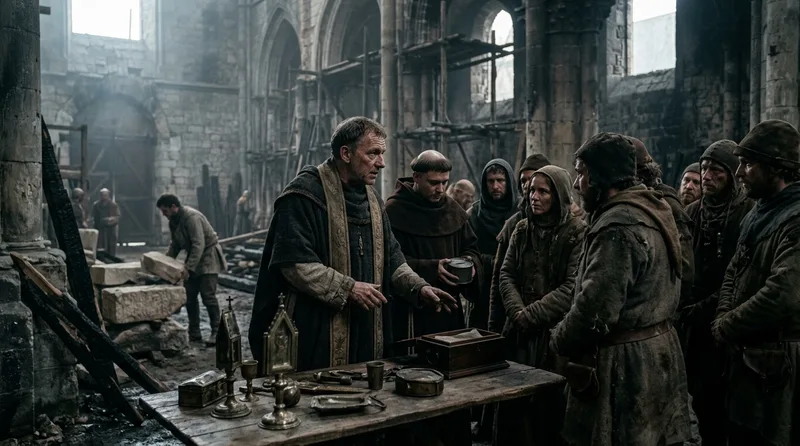
When fire destroyed most of Chartres Cathedral in 1194, Bishop Renaud de Mouçon launched Europe’s most successful medieval fundraising campaign—and one of its most fraudulent. The cathedral housed the Sancta Camisia, supposedly the tunic worn by the Virgin Mary during Christ’s birth, which miraculously survived the fire. Within months, the bishop organized relic tours across France, charging pilgrims 2 deniers to view the tunic and 5 deniers to touch its reliquary. Modern analysis has proven the garment dates to the seventh century at earliest, but it generated 9,000 livres in the first year—enough to employ 400 masons. The reconstruction consumed 10,000 tons of limestone and required 176 stained glass windows, each costing between 100 and 300 livres depending on size. Chartres imposed a construction tax of 1 sou per household annually from 1195 to 1220, driving 2,000 residents to emigrate to Paris where economic opportunities weren’t drained by cathedral obligations. The building’s 37,000 square feet of stained glass alone cost more than constructing three fortified bridges across the Loire. By 1230, Chartres had the finest cathedral in France but lacked funds to repair its Roman-era aqueduct, forcing residents to draw water from contaminated wells that caused recurring dysentery outbreaks.
Source: britannica.com
8. Barcelona Cathedral: The 500-Year Wait for a Facade
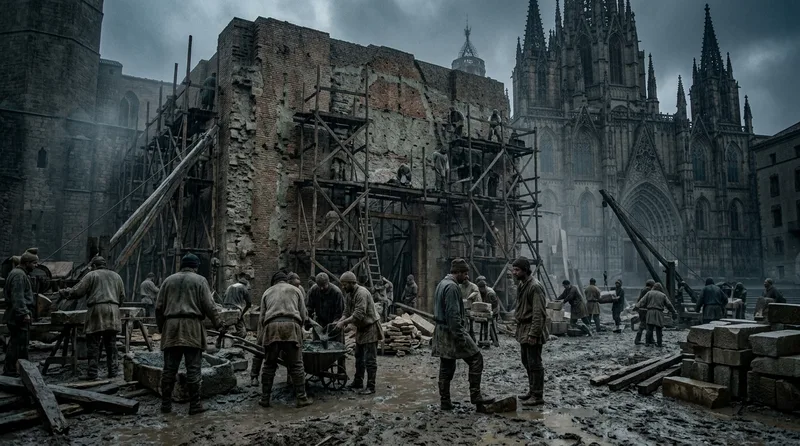
Barcelona Cathedral’s main structure was completed in 1448 under King Alfonso V of Aragon, but the facade remained an unfinished brick wall until the early twentieth century—a 465-year gap that mirrored the city’s recurring fiscal crises. Construction began in 1298 under Bishop Bernat Pelegrí, funded by a tax on wine sales that added 3 dinars per amphora, immediately devastating Barcelona’s tavern economy. The cathedral chapter accumulated debts of 40,000 sueldos by 1330, forcing them to sell ceremonial gold vessels and lease cathedral properties at unfavorable terms. Master architect Jaume Fabre designed an elaborate Gothic facade in 1408, but the city council rejected funding, prioritizing harbor fortifications against Genoese pirates instead. For five centuries, worshippers entered through a makeshift wooden entrance while the unfinished front wall sprouted weeds and graffiti. The city attempted to raise completion funds in 1521, 1640, and 1714, but each campaign collapsed due to war expenses or plague-related economic disruption. Barcelona’s merchant guild repeatedly petitioned for cathedral debt relief, arguing that tax money diverted to the church prevented commercial expansion that could compete with Valencia and Seville. When the facade was finally built in the early twentieth century, it was funded by a private industrialist, not public coffers—a tacit admission that the medieval financing model had been catastrophically flawed.
Source: britannica.com
9. Prague Cathedral: Hussite Wars Halted Construction for 140 Years
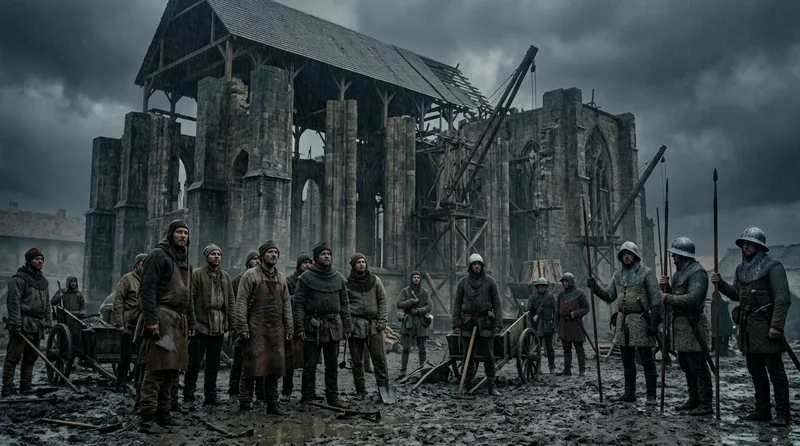
Construction on St. Vitus Cathedral in Prague began in 1344 under Holy Roman Emperor Charles IV, who hired French architect Matthias of Arras to create a coronation church worthy of imperial majesty. The project immediately strained Bohemian finances, requiring new taxes on beer production that added 2 groschen per barrel and sparked protests in 1348. Master builder Peter Parler took over in 1356 after Matthias died, accelerating construction by employing 180 stoneworkers simultaneously—an unprecedented labor force that cost the royal treasury 12,000 marks annually. When Jan Hus launched his religious reformation in 1415, criticizing church wealth while citizens paid cathedral taxes, Prague descended into civil war. Hussite forces damaged the partially built cathedral in 1421, smashing stained glass windows and melting down bronze bells to cast cannons. Construction stopped completely, not resuming until the mid-sixteenth century—a 140-year gap during which Prague’s economy contracted by an estimated 60 percent due to war and the lingering debt burden. The wooden roof protecting the unfinished structure rotted away by 1480, exposing choir stonework to weather damage that required expensive restoration. Bohemia’s silver mines, which might have funded economic recovery, instead continued paying off cathedral construction loans until the early sixteenth century, a full century after work had stopped.
Source: britannica.com
10. Winchester Cathedral: Diving into Flooded Foundations to Prevent Collapse

Winchester Cathedral’s foundations began catastrophically failing in the early twentieth century, but the crisis originated in medieval construction decisions made 800 years earlier. Bishop Walkelin ordered construction in 1079 on water-saturated ground above the River Itchen, using timber piles and chalk rubble instead of stone foundations to save money—approximately 3,000 marks according to surviving accounts. The Norman-era savings created a ticking time bomb that began manifesting in the thirteenth century when the east end subsided 6 inches, requiring emergency buttressing in 1268 under Bishop Nicolas of Ely that cost 800 pounds. Winchester’s cathedral chapter borrowed heavily from Italian merchants, pledging wool export revenues as collateral, which locked the city into disadvantageous trade agreements for 90 years. Additional foundation repairs in 1315 and 1361 each cost more than 500 marks, draining funds during critical periods when England’s wool economy was restructuring. The chronic instability prevented Winchester from maintaining its status as England’s capital—the royal treasury relocated to Westminster partly because Winchester’s infrastructure investments were constantly diverted to cathedral preservation. By 1400, the city’s population had declined to 5,000 from a peak of 12,000, as merchants and craftsmen moved to more fiscally stable towns. The medieval foundation failures cost Winchester its economic primacy in southern England, a position it never recovered.
Source: britannica.com
Did You Know?
Did you know that Cologne’s unfinished cathedral crane stood for 400 years as Germany’s most visible monument to municipal bankruptcy? More ironically, many of these cathedrals bankrupted their cities while attempting to attract pilgrimage revenue that never materialized at projected levels—the very economic logic that justified construction proved fatally optimistic. These monuments forced us to reconsider whether medieval piety built them, or whether financial hubris simply dressed itself in religious language.