
The Inquisition created modern legal procedure while burning heretics. These tribunals invented witness testimony, written evidence, and appeal systems—innovations that shaped Western law for centuries, even as they condemned thousands to death.
1. The Cathar Trials at Toulouse Established Inquisitorial Procedure
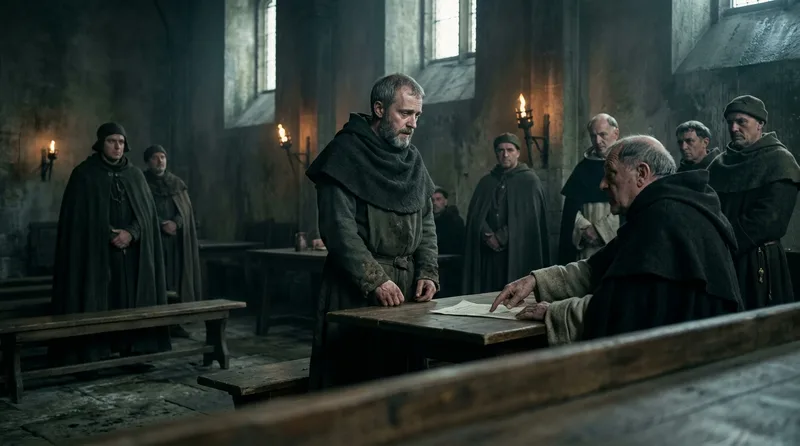
In 1229, the Council of Toulouse created the first permanent inquisitorial courts to prosecute the Cathars, a dualist sect flourishing in southern France with an estimated 200,000 followers. Pope Gregory IX appointed Dominican friars as inquisitors with unprecedented judicial powers—authority to investigate, judge, and sentence without episcopal oversight. The tribunal at Toulouse developed standardized procedures: sworn testimony recorded by notaries, cross-examination of witnesses, and a two-witness minimum for conviction. Raymond VII, Count of Toulouse, was forced to support 4,000 armed men to hunt heretics across Languedoc. The inquisitors confiscated property from condemned families, creating a self-funding legal machine. By 1244, the siege of Montségur resulted in 200 Cathar perfecti burned simultaneously, yet the procedural innovations—written depositions, defendant representation, and graduated sentencing—became templates for secular courts. The Toulouse model established that heresy prosecution required systematic documentation rather than mob violence, transforming religious persecution into bureaucratic machinery that European kingdoms would adopt for civil justice over the following three centuries.
Source: britannica.com
2. Bernard Gui’s Manual Standardized Medieval Interrogation
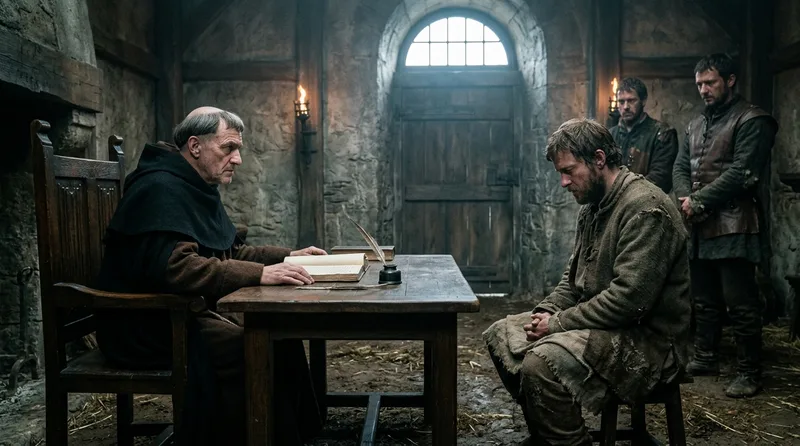
Between the early 14th century, Dominican inquisitor Bernard Gui compiled his Practica Inquisitionis Heretice Pravitatis, documenting 930 cases he personally prosecuted in Toulouse. Gui executed 42 heretics, sentenced 307 to perpetual imprisonment, and exhumed 88 corpses for posthumous trial—a practice allowing property confiscation from heirs. His manual detailed interrogation techniques still recognizable in modern police procedure: isolating suspects, confronting them with contradictory testimony, and using prolonged questioning to extract confessions. Gui identified seven distinct heretical sects, providing inquisitors with doctrinal checklists to detect dissent. He recommended observing defendants’ body language during questioning and noting who hesitated before answering about transubstantiation. The manual prescribed graduated torture—starting with threats, progressing to displaying instruments, then applying pain in measured increments. Gui’s systematic approach transformed heresy prosecution from theological debate into procedural investigation. His text was copied throughout Europe and influenced secular criminal codes for 400 years. The irony remains profound: a handbook for religious persecution became foundational to evidence-based justice, establishing that convictions required documented proof rather than mere accusation.
Source: britannica.com
3. Joan of Arc’s Trial Exposed Political Manipulation of Religious Courts
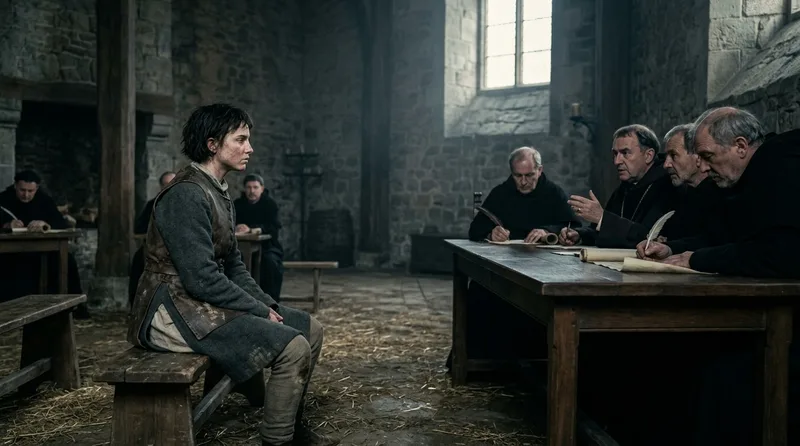
On January 9, 1431, nineteen-year-old Joan of Arc faced 70 charges of heresy before Bishop Pierre Cauchon in Rouen, culminating in her execution on May 30, 1431. The trial transcript—131 pages preserved in Paris—reveals systematic judicial corruption: Cauchon received 10,000 livres from English occupiers to secure conviction, while 9 of the 131 assessors who participated had English financial ties. Joan, denied legal counsel despite Canon law requirements, was interrogated in her prison cell by hostile clerics. The charges focused on her male clothing and claim of direct divine revelation, bypassing Church authority. During 14 interrogation sessions spanning three months, Joan defended herself brilliantly—when asked if she was in God’s grace, she replied that if she wasn’t, may God place her there; if she was, may God keep her there, a theologically perfect answer that frustrated prosecutors. The tribunal violated inquisitorial procedure by denying her appeal to the Pope and holding sessions in her cell rather than public court. A quarter-century later, a rehabilitation trial declared the conviction fraudulent. Joan’s case demonstrated how inquisitorial courts could be weaponized for political ends, establishing precedents for separating legitimate religious jurisdiction from manufactured charges.
Source: britannica.com
4. Spanish Limpieza de Sangre Cases Created Racial Religious Testing
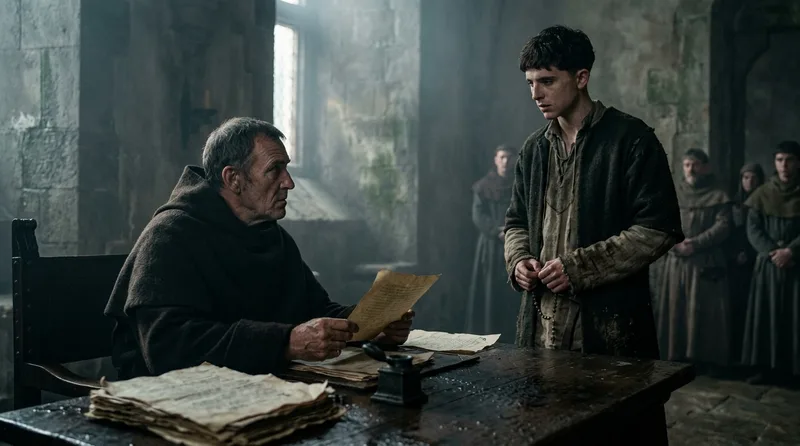
Beginning in 1480, the Spanish Inquisition under Tomás de Torquemada initiated limpieza de sangre investigations, examining the ancestry of conversos—Jews who converted to Christianity following the 1391 pogroms that killed 50,000 and forced 200,000 conversions. During the subsequent half-century, approximately 2,000 conversos were burned at the stake in Spain, with 15,000 more convicted of crypto-Judaism. Inquisitors demanded genealogical proof extending back four generations, creating Europe’s first systematic ancestral documentation requirements. The tribunal at Toledo established protocols requiring 12 witnesses to testify about a family’s religious practices: Did they change linens on Saturdays? Avoid pork? Face eastward during prayer? These investigations transformed religious orthodoxy into a question of bloodline rather than belief—baptism offered no protection if one possessed Jewish or Moorish ancestry. By 1492, the same year Columbus sailed, Ferdinand and Isabella expelled 165,000 Jews who refused conversion. The limpieza statutes spread to universities, religious orders, and guilds, barring anyone with non-Christian ancestry from positions of authority. This racialization of religion pioneered bureaucratic discrimination, establishing documentation systems and ancestral investigation methods that modern totalitarian regimes would later emulate with horrifying efficiency.
Source: britannica.com
5. Giordano Bruno’s Trial Condemned Cosmological Heresy
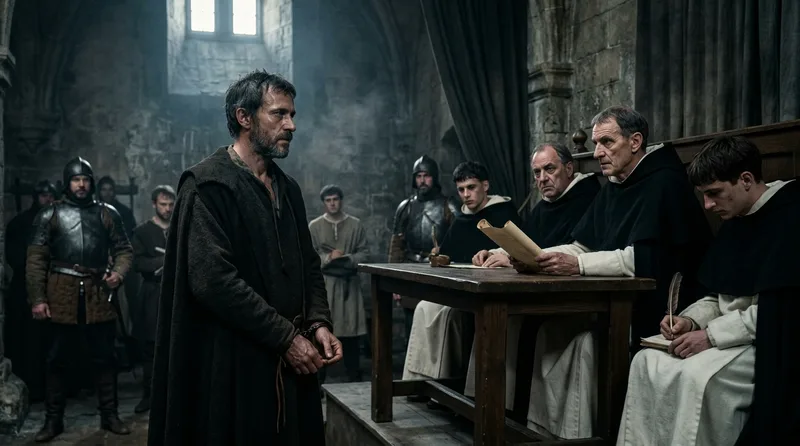
On February 17, the end of the 16th century, Giordano Bruno was burned alive in Rome’s Campo de’ Fiori after an eight-year inquisitorial trial beginning with his arrest in Venice in 1592. The Roman Inquisition, re-established in 1542, charged Bruno with denying transubstantiation, claiming Christ was a magician, and teaching the existence of infinite worlds—a cosmological position contradicting Aristotelian doctrine that Earth occupied the universe’s center. Bruno had fled Italy in 1576, spending 16 years publishing works arguing that stars were distant suns with their own planetary systems, that the universe was infinite and eternal, and that matter possessed inherent divine properties. When Venetian nobleman Giovanni Mocenigo lured him back with a false tutoring offer, he immediately denounced Bruno to authorities. During interrogation, Bruno refused to recant eight propositions deemed heretical, particularly his belief in the plurality of worlds and the idea that the soul was material. The trial record shows nearly a decade of theological debate before Cardinal Robert Bellarmine—who would later prosecute Galileo—authorized execution. Bruno’s case established that cosmological theories contradicting scripture constituted heresy punishable by death, setting the stage for the Church’s conflict with empirical science that would define the next century of intellectual history.
Source: britannica.com
6. Galileo’s Trial Defined Ecclesiastical Authority Over Empirical Evidence
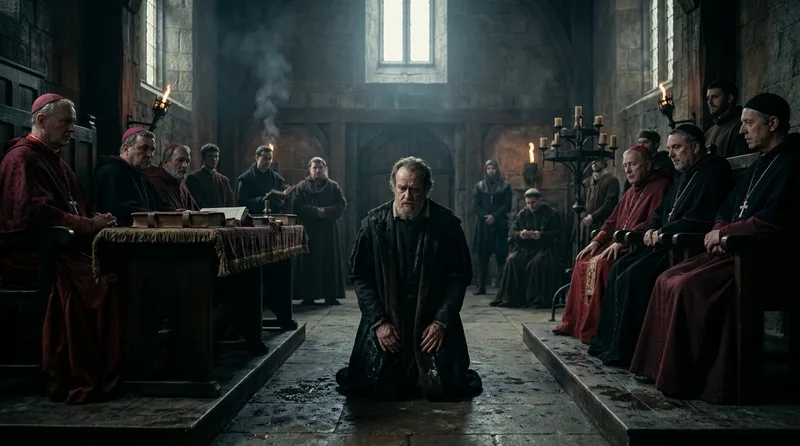
In the early 17th century, sixty-nine-year-old Galileo Galilei knelt before the Roman Inquisition and recanted his support for heliocentrism—the theory that Earth orbited the Sun—after a trial lasting several months. Cardinal Robert Bellarmine had warned Galileo in 1616 not to teach Copernican theory as fact, yet Galileo’s 1632 publication of Dialogue Concerning the Two Chief World Systems presented heliocentric cosmology as superior to geocentric models. Pope Urban VIII, once Galileo’s friend, felt personally betrayed when the dialogue’s simpleton character, Simplicio, voiced arguments the Pope himself had made. The Inquisition charged Galileo with violating the 1616 injunction and holding opinions contrary to Holy Scripture, specifically Psalm 93:1 stating that “the world is firmly established; it cannot be moved.” Ten cardinals presided over interrogations where Galileo’s telescopic observations of Jupiter’s four moons and Venus’s phases—empirical evidence supporting Copernican theory—were deemed irrelevant to theological truth. Threatened with torture, Galileo signed a confession and spent his remaining years under house arrest. The trial established that Church doctrine superseded observational evidence, creating a two-century conflict between religious authority and scientific method that wouldn’t be resolved until modern times.
Source: britannica.com
7. The Templars’ Suppression Demonstrated Coordinated Multinational Prosecution
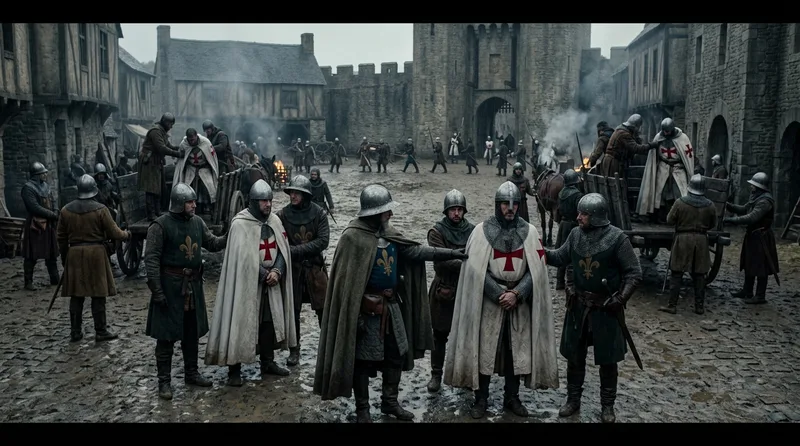
On Friday, October 13, 1307, King Philip IV of France simultaneously arrested 2,000 Knights Templar across his kingdom in history’s first coordinated international police action. Pope Clement V issued the papal bull Pastoralis praeeminentiae on November 22, 1307, ordering all Christian monarchs to arrest Templars and seize their property—estimated at 9,000 properties worth the equivalent of modern billions. The charges included denying Christ, spitting on the cross during initiation, worshipping an idol called Baphometh, and engaging in sodomy. Under torture authorized by Clement in 1310, 54 Templars confessed, though 36 later recanted and were burned as relapsed heretics in Paris on May 12, 1310. Jacques de Molay, the order’s Grand Master since 1292, initially confessed under torture but recanted on March 18, 1314, declaring the Templars innocent before being burned alive alongside Geoffrey de Charney. The prosecution synchronized interrogations across France, Aragon, Castile, Portugal, England, Cyprus, and Italy, requiring unprecedented diplomatic coordination and establishing legal precedents for extradition and mutual recognition of evidence. Philip gained access to Templar wealth to pay debts from his wars against England, demonstrating how inquisitorial procedure could be deployed for state financial gain while maintaining the appearance of religious necessity.
Source: britannica.com
8. Waldensian Trials Criminalized Lay Bible Translation
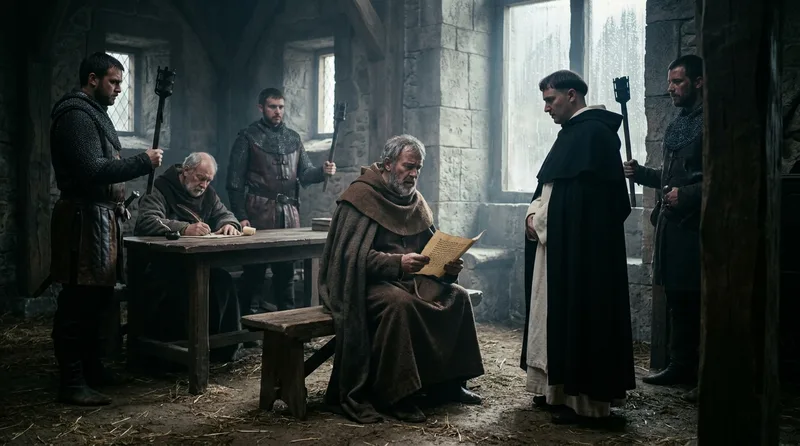
Beginning in 1184, Pope Lucius III issued the decretal Ad abolendam targeting the Waldensians, followers of Lyon merchant Peter Waldo who had commissioned vernacular Bible translations around 1173. Inquisitorial tribunals across southern France, northern Italy, and the Alpine valleys prosecuted Waldensians throughout the thirteenth century for the crime of preaching without ecclesiastical authorization and possessing scripture in Romance languages rather than Latin. The 1229 Council of Toulouse explicitly forbade laypeople from owning biblical texts in the vernacular, establishing that unauthorized translation constituted heresy. In 1252, Inquisitor Peter of Verona prosecuted 168 Waldensians in Milan, executing 5 and sentencing the remainder to perpetual imprisonment or crusade service. The trials documented Waldensian communities of up to 4,000 believers who memorized entire biblical books because written texts invited arrest. Interrogators developed techniques to identify Waldensians: asking suspects to recite the Lord’s Prayer revealed vernacular versions rather than Latin formulae, and questions about confession exposed their rejection of priestly mediation. These prosecutions established the Church’s monopoly over scriptural interpretation, making vernacular Bible access a crime punishable by death—a prohibition that would fuel Protestant Reformation conflicts centuries later when vernacular translations became widespread.
Source: britannica.com
9. Converso Trials in Aragon Investigated Forced Converts
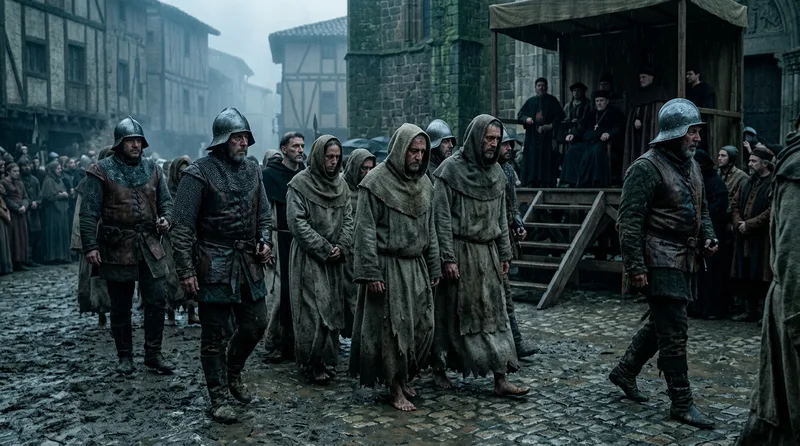
Between the late 15th century, the Spanish Inquisition conducted 5,000 converso trials in Aragon, executing 1,000 and reconciling 4,000 more through public penance ceremonies called autos-da-fé. The Aragonese tribunal at Zaragoza, established by Tomás de Torquemada in 1484, focused on converso families descended from Jews who converted during the 1391 violence rather than the 1492 expulsion. Inquisitor Pedro Arbués was assassinated on September 15, 1485, in Zaragoza’s cathedral by converso conspirators, triggering mass arrests of wealthy merchant families. The tribunal examined household practices with forensic precision: servants testified whether employers prepared food on Fridays for Saturday consumption, avoided mixing meat and dairy, or recited Hebrew prayers. Financial records were scrutinized for evidence of avoiding business transactions on Jewish holidays. The trial of Diego de Susón in Seville revealed he possessed 15 Hebrew manuscripts hidden behind a false wall, while testimony from 23 witnesses documented his family’s continued observance of Yom Kippur fasting. These investigations produced the most extensive documentation of crypto-Jewish practices in European history, creating archives of 300,000 pages that modern historians mine for understanding converso culture, while establishing investigative techniques based on material evidence and witness testimony that became templates for secular criminal investigation.
Source: britannica.com
10. Papal Inquisition Witchcraft Trials Distinguished Sorcery From Heresy
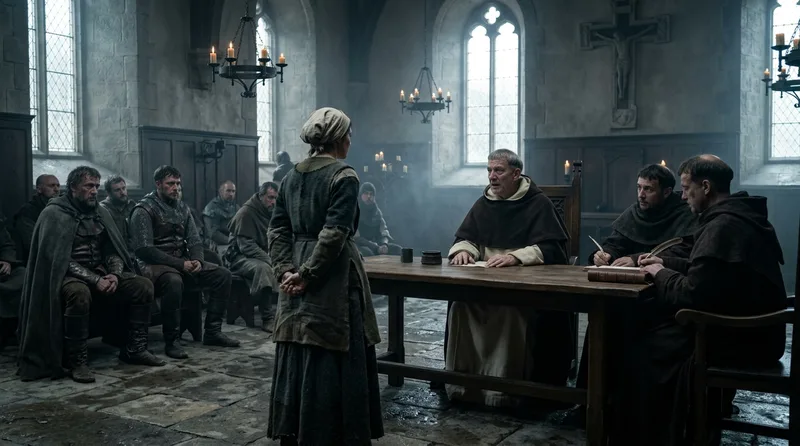
In 1484, Pope Innocent VIII issued the bull Summis desiderantes affectibus, authorizing Dominican inquisitors Heinrich Kramer and Jacob Sprenger to prosecute witchcraft in southern Germany. Their subsequent manual, Malleus Maleficarum, published in 1487, sold 30,000 copies within the following decades and established witchcraft as a heretical sect rather than simple sorcery. The Papal Inquisition distinguished between maleficium (harmful magic, a civil offense) and diabolism (pact with Satan, a heresy). During the late 15th and early 16th centuries, inquisitorial courts in Germany, Switzerland, and northern Italy tried approximately 1,000 witchcraft cases, executing 300 accused witches—predominantly women over 50 years old. The trials pioneered guilt by association: witnesses testified that accused witches attended nocturnal gatherings with 50 to 100 other witches, creating lists of suspects requiring further investigation. Kramer’s prosecutions in Innsbruck in 1485 examined midwives, claiming they killed 41 children through demonic means, though local bishop eventually expelled him for procedural violations. The trials established that witchcraft constituted organized heretical conspiracy rather than individual delusion, transforming prosecution from local ecclesiastical jurisdiction into systematic campaigns that produced an estimated 40,000 to 60,000 executions across Europe during the following two centuries, making it inquisitorial procedure’s most lethal legacy.
Source: britannica.com
Did You Know?
The greatest irony of the Inquisition? Its procedures became the foundation for modern justice systems worldwide. The requirement for documented evidence, witness testimony, and written transcripts—innovations designed to efficiently prosecute heretics—evolved into protections ensuring fair trials. Jacques de Molay’s final words before execution in 1314, cursing Pope Clement and King Philip to join him within a year, proved prophetic: both died within nine months, yet the legal frameworks they employed to destroy the Templars endured for seven centuries.