
When authorities burn books, they often ignite revolutions instead. The Enlightenment’s most transformative ideas spread through banned manuscripts and underground reading societies. These ten forbidden texts challenged church and crown so profoundly that each suppression only multiplied their influence.
1. Voltaire’s Philosophical Letters Sparked France’s Censorship Crisis

Voltaire’s Philosophical Letters landed like a bombshell in Paris on June 10, 1734, when authorities publicly burned the book and issued a warrant for the author’s arrest. The work praised English constitutional monarchy and religious tolerance while subtly mocking France’s absolute rule and Catholic dominance. French censors immediately recognized the threat: Voltaire had smuggled revolutionary English ideas—including praise for John Locke’s philosophy and Isaac Newton’s science—into elegant French prose that aristocrats devoured in their salons. The Parlement of Paris ordered all copies seized and destroyed, forcing Voltaire to flee to the Château de Cirey near the German border. Yet the ban backfired spectacularly. Underground printers in Amsterdam and Geneva produced over 20,000 pirated copies within two years, making it one of the most widely read French works of the 1730s. The scandal established Voltaire as Europe’s leading critic of tyranny and demonstrated that censorship could transform controversial philosophy into bestselling contraband. This single banned book accelerated the spread of Enlightenment skepticism throughout France’s educated classes, proving that ideas become more dangerous when authorities try to suppress them.
Source: britannica.com
2. Rousseau’s Social Contract Redefined Political Authority

Jean-Jacques Rousseau’s The Social Contract exploded onto European consciousness in April 1762 with its opening declaration that “Man is born free, and everywhere he is in chains.” Within weeks, both Paris and Geneva banned the work for asserting that legitimate political authority derives from citizens’ consent rather than divine right. The Archbishop of Paris condemned it on August 19, 1762, and French authorities issued an arrest warrant forcing Rousseau into Swiss exile. The book’s core argument—that sovereignty belongs to the people and governments exist only through social contract—directly challenged every crowned head in Europe. Geneva burned the book publicly on June 19, 1762, despite being Rousseau’s birthplace. Holland’s calvinist authorities added it to their prohibited list by September. Yet these bans ensured the book’s immortality. Underground editions proliferated across Europe, with at least 14 different printings appearing before 1770. French revolutionaries would quote it endlessly after 1789, treating Rousseau’s forbidden philosophy as their intellectual foundation. The Social Contract’s systematic demolition of absolute monarchy provided the theoretical framework that justified revolution as a legitimate political act, transforming abstract philosophy into a manual for overthrowing kings.
Source: britannica.com
3. Diderot’s Encyclopedia Democratized Knowledge Despite Royal Suppression

Denis Diderot’s monumental Encyclopedia began publication in 1751 as a 28-volume attempt to catalog all human knowledge, but French authorities recognized its radical agenda immediately. On February 7, 1752, the Royal Council suppressed the first two volumes for containing “maxims tending to destroy royal authority and establish the spirit of independence and revolt.” The Catholic Church placed it on the Index of Forbidden Books in 1759, and repeated royal decrees attempted to halt production throughout the 1760s. What terrified authorities was Diderot’s subversive method: seemingly innocent entries on crafts and trades contained hidden criticisms of church doctrine and aristocratic privilege. The article on “Philosopher” defined reason as superior to revelation, while technical descriptions of printing emphasized how books spread ideas beyond elite control. Despite facing jail time—Diderot spent 102 days imprisoned in Vincennes in 1749—he completed publication in 1772 with help from 150 contributors including Voltaire and Rousseau. The encyclopedia’s 71,818 articles and 2,885 illustrations reached approximately 25,000 subscribers across Europe, creating an international network of enlightened readers. By systematically organizing knowledge and making it accessible, Diderot’s banned masterwork undermined the intellectual monopoly of church and crown more effectively than any political pamphlet.
Source: britannica.com
4. Spinoza’s Treatise Challenged Biblical Interpretation and State Power

Baruch Spinoza published his Theological-Political Treatise anonymously in Amsterdam in 1670, knowing its explosive contents would provoke immediate condemnation. The book argued that the Bible should be read as a historical document rather than divine revelation and insisted that freedom of thought was essential for social peace. Dutch calvinist authorities banned it on July 19, 1674, calling it “a book forged in hell by a renegade Jew and the devil.” The Catholic Church added it to the Index in 1679. Spinoza’s systematic dismantling of biblical miracles and prophetic authority struck at the foundations of religious control over society. He argued that true religion required only justice and charity, not obedience to priests or dogmas. The treatise sold approximately 2,000 copies before the ban, then circulated in manuscript form throughout Europe’s intellectual underground. Its influence on later Enlightenment thinkers proved profound—Diderot, Hume, and Voltaire all absorbed Spinoza’s arguments about separating philosophy from theology. The ban lasted over a century in most European countries, yet Spinoza’s forbidden philosophy gradually eroded traditional religious authority. By treating scripture as human literature requiring rational analysis, this single banned book helped create the secular worldview that defines modernity.
Source: britannica.com
5. Locke’s Treatises Provided the Blueprint for Revolution

John Locke published Two Treatises of Government anonymously in December 1689, just months after England’s Glorious Revolution deposed James II. The book’s radical argument—that citizens possess natural rights to life, liberty, and property that no government can legitimately violate—directly challenged absolute monarchy throughout Europe. While England tolerated it after 1689, France banned it immediately and it remained prohibited in most Catholic countries until the 19th century. Locke’s second treatise systematically demolished the theory of divine right by arguing that political authority derives from consent of the governed and that people retain the right to overthrow tyrannical rulers. This philosophy terrified European monarchs because it provided moral justification for rebellion. The book circulated underground in France throughout the 18th century, with approximately 8 different French translations appearing between 1690 and 1795. American colonists embraced Locke’s philosophy so completely that Thomas Jefferson essentially paraphrased the Treatises when writing the Declaration of Independence in 1776. The work’s influence extended to the French Revolution, where it provided intellectual ammunition for dismantling feudalism. By establishing that governments exist to protect natural rights rather than divine mandates, Locke’s banned philosophy transformed political theory from justifying monarchy to justifying revolution.
Source: britannica.com
6. Helvétius’s On the Mind Faced Dual Condemnation
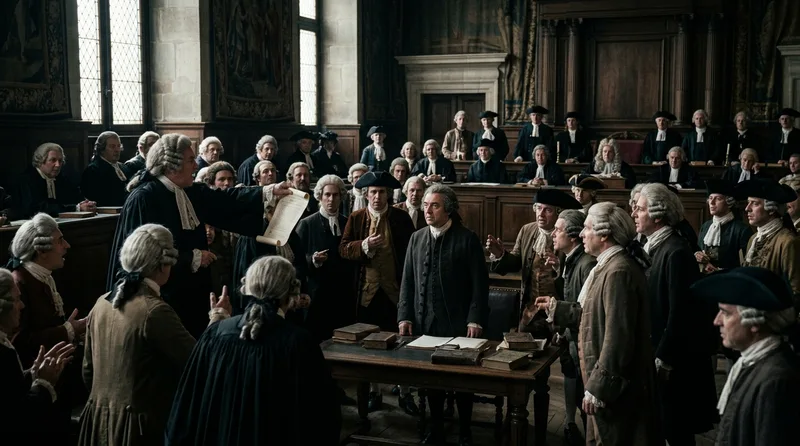
Claude Adrien Helvétius released On the Mind in July 1758, arguing that all humans are born equal and that education alone determines character and ability. Within months, both the Parlement of Paris and the Catholic Church condemned this materialist philosophy. On January 31, 1759, the book was burned by the public executioner at the Palais de Justice—one of only 17 books to receive this extreme punishment in 18th-century France. The Archbishop of Paris denounced it on January 22, 1759, calling it “blasphemous and heretical.” Pope Clement XIII added it to the Index on January 31, 1759, the same day as the burning. Helvétius’s crime was arguing that human behavior resulted from physical sensations rather than divine souls, eliminating the basis for religious morality. His egalitarian premise threatened aristocratic privilege by suggesting nobility resulted from education rather than breeding. The simultaneous condemnation by church and state paradoxically made On the Mind Europe’s most discussed philosophical work of 1759. Dutch printers produced at least 11 editions between 1758 and 1765, with approximately 15,000 copies circulating illegally across Europe. Jeremy Bentham and other utilitarians built their philosophies on Helvétius’s forbidden foundation. By reducing morality to maximizing pleasure and minimizing pain, this banned book helped create modern secular ethics.
Source: britannica.com
7. d’Holbach’s System of Nature Promoted Atheism Openly

Baron d’Holbach published The System of Nature in August 1770 under a false name and claimed it was written by a deceased French diplomat. This calculated deception barely protected him because the book openly promoted atheism and materialism with unprecedented boldness. The Parlement of Paris condemned it on August 18, 1770, ordering all copies burned and warning booksellers that selling it meant prison. The Catholic Church added it to the Index within weeks. D’Holbach systematically argued that the universe operates through matter and motion alone, rendering God unnecessary and religion a fraud perpetuated by priests and kings. He devoted 350 pages to demolishing every traditional argument for God’s existence and another 200 pages to explaining how religion enslaves humanity. Even Voltaire, no friend of Christianity, called the book too extreme and dangerous. Yet d’Holbach’s uncompromising atheism found an eager underground audience. Approximately 10,000 copies circulated in France before 1789, with readers passing manuscripts hand-to-hand to avoid detection. German and English translations appeared in the 1770s despite official bans. The French Revolution’s anti-clerical fury drew heavily on d’Holbach’s forbidden philosophy. By arguing that eliminating religion would liberate humanity from fear and superstition, this burned book provided the intellectual foundation for 19th-century secularism and atheistic philosophy.
Source: britannica.com
8. Paine’s Rights of Man Turned Author into Fugitive

Thomas Paine published Rights of Man in February 1791 as a defense of the French Revolution against Edmund Burke’s conservative critique. The British government responded by charging Paine with seditious libel on May 21, 1792, forcing him to flee to France just hours before police arrived to arrest him. A London court convicted him in absentia on December 18, 1792, and the book remained banned in Britain until 1792. Paine’s crime was arguing that hereditary government violated natural rights and that every generation possessed the authority to choose its own political system. He attacked monarchy and aristocracy with devastating clarity, calling hereditary succession as absurd as hereditary mathematics professors. The book sold approximately 200,000 copies in Britain before the ban—an extraordinary figure when Britain’s literate population numbered perhaps 3 million. Authorities prosecuted at least 100 booksellers for selling it, and workingmen’s clubs circulated it in cheap editions costing just sixpence. Paine’s accessible prose brought Enlightenment political philosophy to mechanics, shopkeepers, and artisans who had never read Locke or Rousseau. The ban paradoxically increased demand, with radicals treating possession of Rights of Man as a badge of political courage. By translating abstract philosophy into plain English that ordinary citizens could understand and act upon, this banned book helped create modern democratic movements.
Source: britannica.com
9. Montesquieu’s Persian Letters Satirized French Society

Charles-Louis de Secondat, Baron de Montesquieu, published Persian Letters anonymously in Amsterdam in May 1721, using fictional letters from Persian visitors to satirize French politics, religion, and society. The Catholic Church placed it on the Index of Forbidden Books in 1729 after recognizing how its exotic framing disguised devastating criticism of European absolutism and religious hypocrisy. French authorities never officially banned it but suppressed several editions and prevented Montesquieu from acknowledging authorship until 1754. The book’s clever device—presenting French society through supposedly naive Persian eyes—allowed Montesquieu to mock Louis XIV’s despotism, Catholic intolerance, and aristocratic decadence while claiming he merely reported foreign observations. Letter 24 compared the Pope to a magician who convinces people that bread becomes God, while Letter 46 described French government as Oriental despotism dressed in European clothes. The work became a bestselling phenomenon, with approximately 30,000 copies circulating by 1730 across at least 10 different editions. Voltaire praised it as liberating French literature from classical constraints. Montesquieu’s satirical method influenced generations of Enlightenment writers who learned that indirect critique evaded censors more successfully than direct attack. By demonstrating cultural relativism and showing that European institutions appeared absurd from outside perspectives, this banned book undermined assumptions about the naturalness of French social hierarchy.
Source: britannica.com
10. Bayle’s Dictionary Weaponized Skepticism Through Footnotes

Pierre Bayle published his Historical and Critical Dictionary in Rotterdam in November 1697, creating a biographical encyclopedia where the footnotes contained more radical philosophy than the main text. French authorities banned it in 1698, and the Catholic Church added it to the Index in 1703, recognizing that Bayle’s skeptical commentary systematically undermined religious certainty. The Dictionary’s 2,000 entries appeared innocent—biographies of biblical figures, ancient philosophers, and historical personages—but Bayle’s extensive footnotes questioned miracles, exposed theological contradictions, and argued that atheists could be more moral than Christians. His article on David emphasized the king’s adultery and murder, while the entry on Manichaeism suggested that evil in the world contradicted God’s goodness. Authorities understood that Bayle was teaching readers to doubt everything they had been taught to believe. The banned Dictionary became the Enlightenment’s most influential reference work, with at least 9 editions appearing between 1697 and 1740. Voltaire called it his “portable arsenal” of arguments against religious authority. Diderot modeled his Encyclopedia’s skeptical method on Bayle’s approach. Approximately 3,000 copies circulated in France alone by 1750, making it one of the 18th century’s most frequently cited works. By demonstrating that historical scholarship revealed religion as human invention rather than divine revelation, Bayle’s forbidden dictionary taught European intellectuals the corrosive power of critical inquiry.
Source: britannica.com
Did You Know?
Did You Know? The book burnings intended to destroy Enlightenment philosophy created the publishing industry’s first international bestsellers—banned works often sold 10 times more copies than approved books because readers assumed forbidden knowledge must be valuable. Ironically, Catholic censors inadvertently taught Europeans which books contained the most dangerous ideas by publishing annual Index updates that functioned as shopping lists for underground booksellers across the continent.