
Before universities embraced Enlightenment ideas, they flourished in private drawing rooms where women excluded from academia hosted Europe’s greatest minds. These salons tested dangerous ideas about freedom and reason that would topple monarchies.
1. Madame Geoffrin’s Monday and Wednesday Gatherings Launched the Encyclopédie
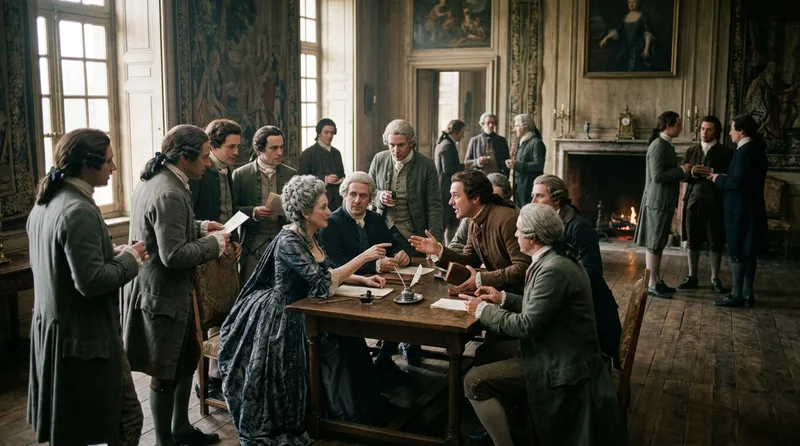
Marie Thérèse Rodet Geoffrin transformed her Rue Saint-Honoré apartment into Enlightenment Europe’s most influential intellectual hub between 1749 and 1777. Every Monday, artists including François Boucher gathered around her table, while Wednesdays belonged exclusively to philosophers and writers. Denis Diderot relied on these Wednesday sessions to coordinate the Encyclopédie project, using Geoffrin’s neutral ground to unite 150 contributors working on the 28-volume masterwork. She maintained strict rules: no religious disputes, no personal attacks, and dinner served precisely at 2 PM. Geoffrin’s salon operated like a venture capital firm for ideas—she personally funded struggling philosophes, paying d’Alembert’s rent for years and supporting artists with monthly stipends totaling over 100,000 livres annually. When the French government banned the Encyclopédie in 1759, Geoffrin’s financial backing kept the project alive underground. Her influence extended beyond France; Catherine the Great invited her to Saint Petersburg in 1766, and King Stanisław II Augustus of Poland credited her mentorship with shaping his reform policies. The salon produced more than discourse—it created the Enlightenment’s distribution network, with guests carrying ideas across Europe through an informal republic of letters that bypassed official censorship.
Source: britannica.com
2. Madame du Deffand’s Salon Hosted Voltaire’s Most Dangerous Conversations
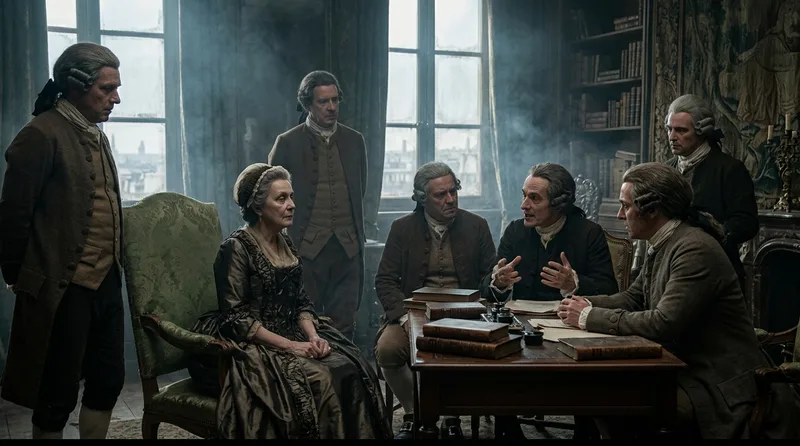
Marie de Vichy-Chamrond, Marquise du Deffand, ruled Parisian intellectual life from her apartment at the Convent of Saint-Joseph from 1739 until her death in 1780. Despite going blind in 1753, she maintained such sharp wit that Voltaire called her letters “the best written in French.” Her evening gatherings, starting at 9 PM and lasting until dawn, attracted Montesquieu, d’Alembert, and Horace Walpole, who became her obsessive correspondent after meeting in 1765—their 15-year exchange produced over 1,700 letters. Du Deffand demanded intellectual rigor above all; she expelled sentimentalists and banned Rousseau permanently after finding his Émile tedious. The salon witnessed history’s pivots—in 1748, Montesquieu read draft chapters of The Spirit of the Laws aloud for critique, and guests dissected every argument about separation of powers that would later influence America’s founders. Her gathering operated under one iron rule: conversation must sparkle with irony and reason, never emotion. This cool rationalism shaped Enlightenment discourse’s distinctive style—philosophical argument delivered with aristocratic detachment. When du Deffand died at 83, she left behind not just 6,000 preserved letters but a template for how ideas should be debated: with elegance, precision, and devastating wit that demolished opponents without raising one’s voice.
Source: britannica.com
3. Julie de Lespinasse’s Rival Salon Championed Radical Democracy
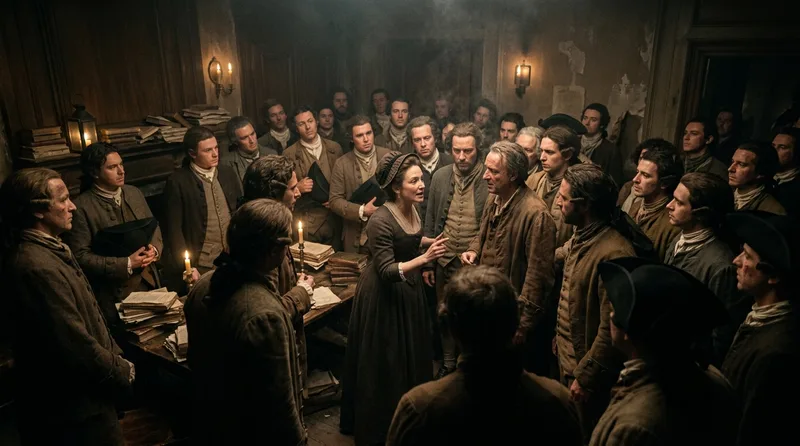
Julie de Lespinasse split Madame du Deffand’s salon in 1764 when the elder hostess discovered her protégée holding secret pre-meetings to plan the evening’s conversations. Moving to Rue de Belle-Chasse, Lespinasse created something unprecedented—a salon where merit, not birth, determined speaking order. Between 1764 and her death in 1776, she hosted 5 PM gatherings where d’Alembert, her platonic companion, debated Jean-Baptiste le Rond with 20 to 30 guests packed into two small rooms. Unlike hierarchical salons where aristocrats spoke first, Lespinasse orchestrated conversations like musical compositions, drawing out shy scholars while restraining verbose nobles. The mathematician Condorcet developed his theories of social progress in these rooms, ideas that directly influenced the Declaration of the Rights of Man drafted in 1789. Turgot, Louis XVI’s future finance minister, tested his economic reforms here in 1774 before implementing them nationally—and facing dismissal two years later when they threatened aristocratic privilege. Lespinasse’s salon proved that Enlightenment ideals could govern social interaction itself; birth meant nothing if you couldn’t argue brilliantly. Her sudden death at 44 from consumption devastated the movement—d’Alembert never fully recovered, and the salon’s democratic spirit died with her, its model too radical for Revolutionary France to embrace.
Source: britannica.com
4. Henriette Herz’s Berlin Salon Launched the Jewish Enlightenment
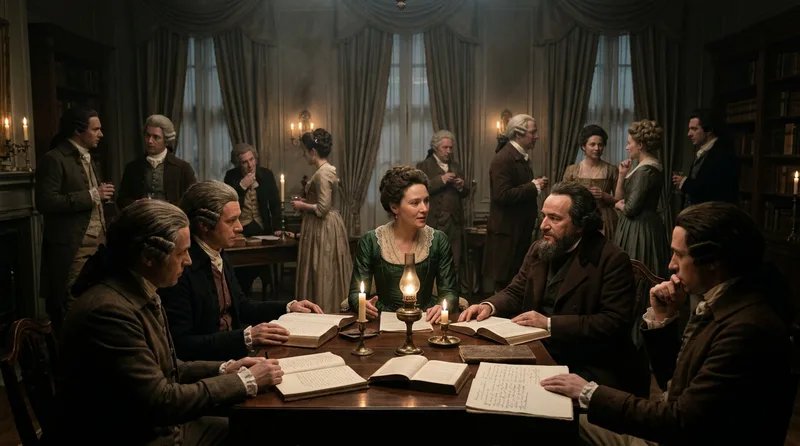
Henriette de Lemos Herz transformed her Berlin home into the Haskalah movement’s intellectual engine from 1780 through 1803, hosting gatherings that merged Jewish scholarship with German Enlightenment philosophy. Married at 15 to physician Marcus Herz in 1779, she mastered eight languages by age 20 and created a salon where Moses Mendelssohn’s followers debated how Jews could embrace modernity without abandoning tradition. Her Tuesday evening gatherings attracted 40 to 50 guests, including Wilhelm von Humboldt, Friedrich Schleiermacher, and the Romantic poet Friedrich Schlegel. The salon operated bilingually—German for philosophy, Hebrew for Talmudic references—creating a hybrid discourse that challenged both Jewish orthodoxy and Christian exclusion. In 1783, Mendelssohn himself attended regularly, developing his arguments for religious tolerance that he published in Jerusalem in 1783. Herz’s salon proved Jewish women could be Enlightenment leaders; she tutored Humboldt in Hebrew while he taught her ancient Greek, an exchange that shaped his later linguistic theories. The gathering’s influence extended beyond ideas—it provided social proof that Jewish intellectuals belonged in German cultural life, laying groundwork for 19th-century emancipation. When Mendelssohn died in 1786, Herz’s salon became the movement’s headquarters, preserving Haskalah ideals through three decades of political upheaval.
Source: britannica.com
5. Madame Necker’s Friday Dinners Shaped Pre-Revolutionary Economic Policy
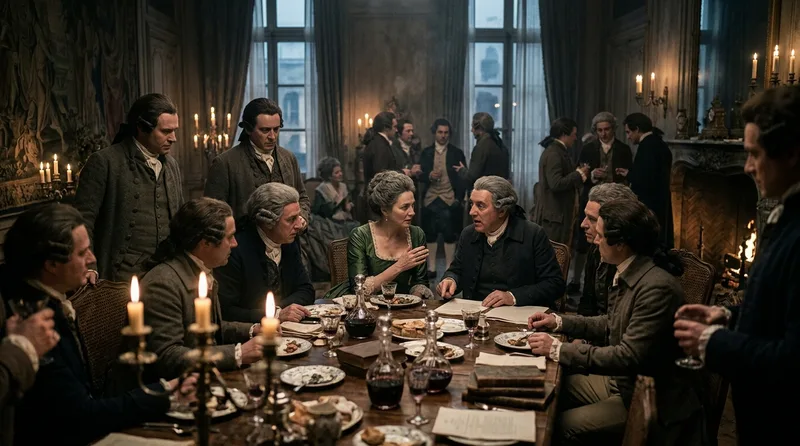
Suzanne Curchod Necker hosted Paris’s most politically powerful salon from 1765 to 1789, gathering every Friday at 5 PM in her Rue de Cléry mansion where economic theory met practical governance. Wife of Jacques Necker, Louis XVI’s finance minister, she turned dinner parties into policy laboratories where 30 guests debated how to save France from bankruptcy—the national debt had reached 4 billion livres by 1788. Edward Gibbon, who had courted her unsuccessfully in Switzerland, attended regularly when visiting from England, as did Denis Diderot and the economist Abbé Morellet. Her salon’s unique contribution was translating abstract philosophy into actionable policy; when Necker proposed taxing aristocratic privilege in 1778, the plan had been stress-tested through months of Friday debate. The gatherings operated under strict protocols—guests submitted topic requests in advance, discussion lasted exactly three hours, and Necker herself moderated to prevent shouting matches. In 1781, when her husband published the Compte Rendu au Roi, the first public accounting of royal finances, its arguments had been refined in her drawing room. The salon’s influence proved double-edged; its reforms threatened aristocratic power so directly that courtiers engineered Necker’s dismissal in 1781, then again in 1789—this second firing helped trigger the Bastille’s storming on July 14.
Source: britannica.com
6. Germaine de Staël’s Inherited Salon Became Revolution’s Conscience
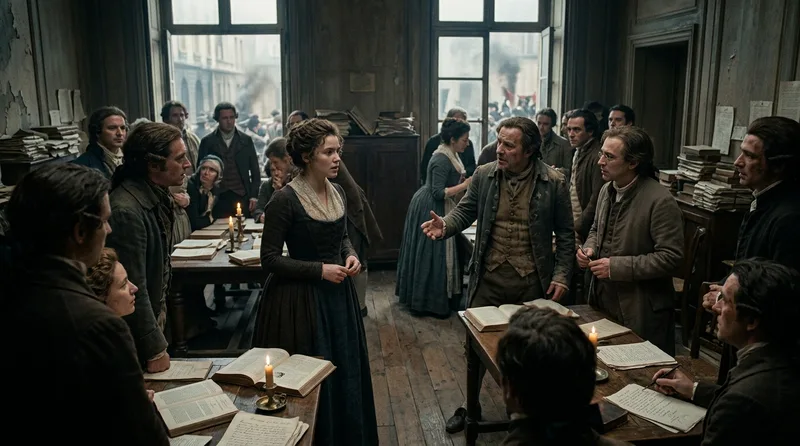
Anne Louise Germaine de Staël, daughter of Suzanne and Jacques Necker, inherited her mother’s salon mantle in 1789 at age 23 and transformed it into Revolutionary France’s most dangerous discussion forum. Operating from the Swedish Embassy where her diplomat husband provided immunity, she hosted gatherings through the Terror that debated constitutional monarchy versus republicanism—conversations that could mean guillotine for wrong answers. Her salon attracted Lafayette, Talleyrand, and constitutional monarchists seeking middle ground between ancien régime and radical Jacobinism. In 1791, she hosted 50 to 60 guests nightly, serving Swiss chocolate while they drafted constitutional proposals that Louis XVI would never accept. Unlike her mother’s measured economic debates, Staël’s salon crackled with existential urgency—attendees were crafting arguments they might literally die for. She personally hid aristocrats from Revolutionary tribunals in her embassy apartments, sheltering 23 fugitives during September Massacres of 1792. When Robespierre consolidated power in 1793, he closed her salon and exiled her, recognizing that constitutional debate threatened totalitarian control. Staël’s intellectual courage produced concrete results; her 1796 essay On the Influence of the Passions articulated liberal principles that would shape 19th-century European politics. Napoleon later banned her writings and exiled her again, understanding that salon-tested ideas could threaten emperors as easily as kings.
Source: britannica.com
7. The Bluestocking Society Proved Women Could Master Philosophy
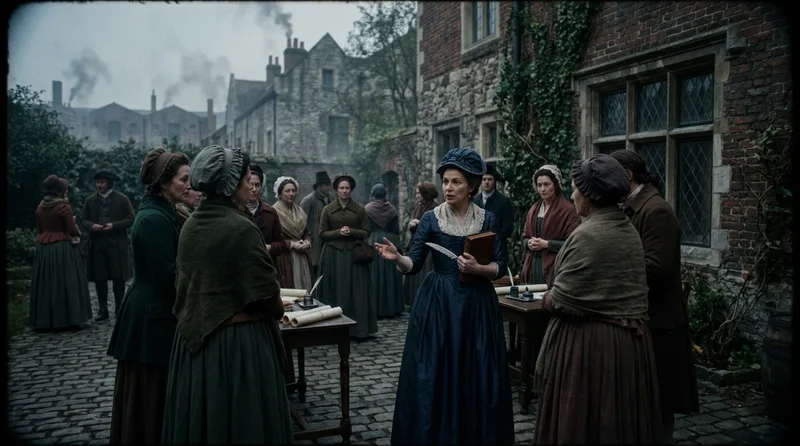
Elizabeth Montagu founded London’s Bluestocking Society around 1750, creating England’s first salon explicitly dedicated to proving female intellectual equality. The nickname came from botanist Benjamin Stillingfleet’s informal blue worsted stockings, but the gatherings at Montagu’s Hill Street mansion were anything but casual—they operated like philosophical seminars where 20 to 30 participants, including Samuel Johnson, Edmund Burke, and historian Catherine Macaulay, debated literature and moral philosophy. Unlike French salons where women orchestrated male discourse, Bluestockings centered female scholars; Elizabeth Carter published her acclaimed Epictetus translation in 1758, and Hannah More’s Sacred Dramas sold 19,000 copies by 1782. The society met Thursday evenings from 8 PM to midnight, serving tea instead of alcohol to emphasize rational debate over aristocratic carousing. Montagu’s 1769 Essay on Shakespeare systematically refuted Voltaire’s criticism of the Bard, demonstrating that women could produce original literary criticism, not just host conversations. The gatherings influenced British education policy—More’s Strictures on Female Education, refined through Bluestocking debate, shaped curricula for middle-class girls’ schools opening across England in the 1790s. The society’s greatest achievement was social proof; by 1780, denying female intellectual capacity required arguing against visible evidence that women philosophers excelled.
Source: britannica.com
8. Émilie du Châtelet’s Salon Made Newton French
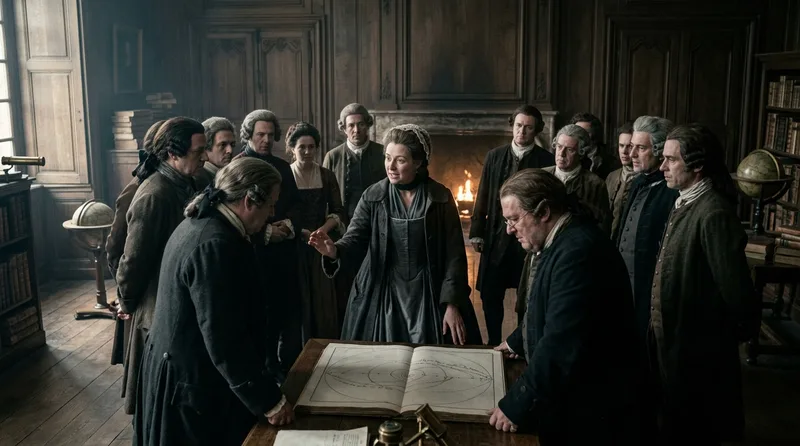
Gabrielle Émilie Le Tonnelier de Breteuil, Marquise du Châtelet, hosted scientific gatherings at Château de Cirey from 1734 to 1749 that imported Newtonian physics into Continental Europe despite Cartesian orthodoxy. Living openly with Voltaire, she transformed their shared estate into a laboratory-salon where France’s mathematicians gathered monthly to debate celestial mechanics and gravitational theory. Her 1740 Institutions de Physique reconciled Leibniz’s metaphysics with Newton’s mathematics, selling 2,000 copies and establishing her as Europe’s leading physics expositor. The salon operated unlike traditional gatherings—mornings were reserved for laboratory experiments testing Newton’s predictions, while evenings featured structured debates where du Châtelet refereed disputes between competing interpretations. She completed her masterwork, the French translation of Newton’s Principia Mathematica with extensive commentary, in 1749 while pregnant; she died in childbirth days after finishing the manuscript, but her translation remained the standard French text for 200 years. The salon’s influence was methodological as much as theoretical—du Châtelet insisted that physics claims required experimental verification, not philosophical authority. Her approach shaped French scientific culture; by 1760, Paris Academy of Sciences had abandoned Cartesian vortex theory for Newtonian gravity. The salon proved that empirical science could flourish in drawing rooms as effectively as universities, democratizing knowledge production.
Source: britannica.com
9. Amsterdam Coffeehouses Preserved Spinoza’s Banned Philosophy
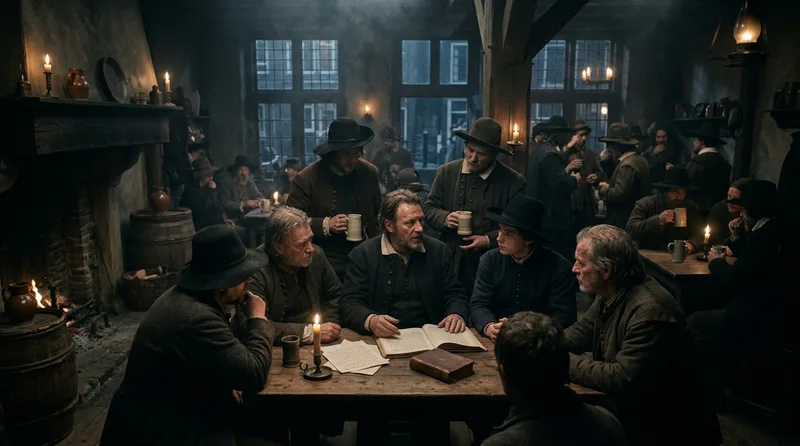
Amsterdam’s network of over 40 coffeehouses became Enlightenment philosophy’s underground railroad after the Dutch Reformed Church banned Spinoza’s works in 1670. Following Baruch Spinoza’s death in 1677, disciples like Adriaan Koerbagh and Lodewijk Meyer gathered at establishments like Café Ouden, transforming these commercial spaces into philosophical safe houses where dangerous ideas about pantheism and biblical criticism circulated through coded discussions. The coffeehouse format offered advantages over traditional salons—any man with 2 stuivers could enter, creating unexpected class mixing where merchants debated theology with university dropouts. Between 1680 and 1750, these gatherings produced a radical subset of Enlightenment thought; participants discussed Spinoza’s Ethics in whispered exchanges over tobacco and coffee imported from Dutch colonies at 4 guilders per pound. Pierre Bayle’s Dictionnaire Historique et Critique, published in Rotterdam in 1697, was dissected article by article in these spaces, spreading skeptical philosophy across the Netherlands. The coffeehouses operated in legal gray zones—authorities knew subversive talk occurred but couldn’t prove it without infiltrators, and café owners protected profitable customers. This network connected to French and English radicals; John Locke visited Amsterdam coffeehouses during his 1683-1689 exile, encountering Spinozist arguments that influenced his religious tolerance writings. The cafés proved that philosophy needed neither formal institutions nor aristocratic patronage—just caffeine and conversation.
Source: britannica.com
10. Edinburgh’s Select Society Engineered Scotland’s Intellectual Revolution
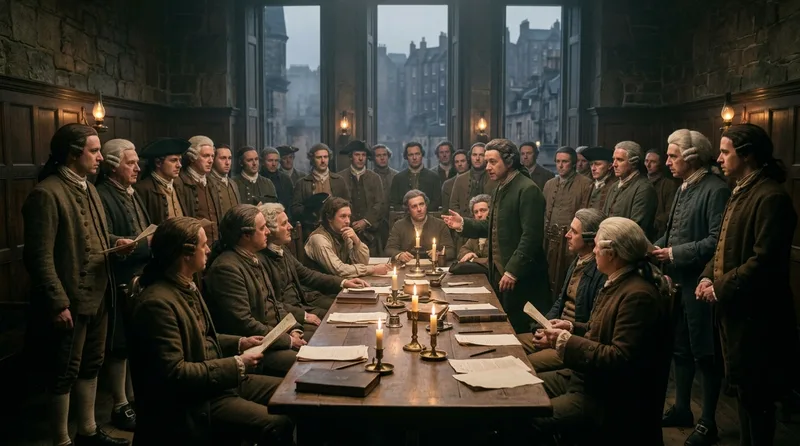
The Select Society of Edinburgh, founded in 1754 by painter Allan Ramsay, transformed Scotland from cultural backwater into Enlightenment powerhouse within 20 years. Meeting Tuesday evenings at 6 PM in various taverns, the society’s 135 members included David Hume, Adam Smith, William Robertson, and James Hutton—an unprecedented concentration of genius. Unlike salons built around single hosts, the Select Society operated democratically; members proposed debate topics by ballot, and each question received structured pro-and-con arguments lasting 90 minutes total. In 1755, they debated “Whether a general naturalization of foreign Protestants would be advantageous to Britain”—Smith’s arguments formed the basis for Wealth of Nations published 21 years later in 1776. The society created Edinburgh’s intellectual infrastructure; in 1755, they founded the Edinburgh Review, and in 1759, they established the Society for the Encouragement of Arts to fund Scottish manufactures. Membership selection was ruthless—only 3 of every 10 applicants gained entry based on published work and speaking ability. This meritocracy produced astonishing results; between 1755 and 1764, members published 43 major works that defined Scottish Enlightenment thought. The society dissolved in 1764 due to internal disputes, but its model spread—similar societies appeared in Glasgow, Aberdeen, and Dublin by 1770. Edinburgh proved that provincial cities could rival Paris and London if they institutionalized intellectual ambition.
Source: britannica.com
Did You Know?
Did You Know? The Enlightenment’s most radical idea—that reason should govern society—wasn’t born in universities but in spaces where women wielded intellectual authority men couldn’t exercise officially. Madame Geoffrin funded the Encyclopédie when governments tried to suppress it, while Émilie du Châtelet’s physics challenged Newton himself. These salons didn’t just discuss philosophy; they proved that merit could trump birth, that women could master science, and that conversations over coffee might topple kings. The French Revolution’s architects learned liberty in drawing rooms before practicing it in streets, making salon hostesses history’s unlikely revolutionaries.